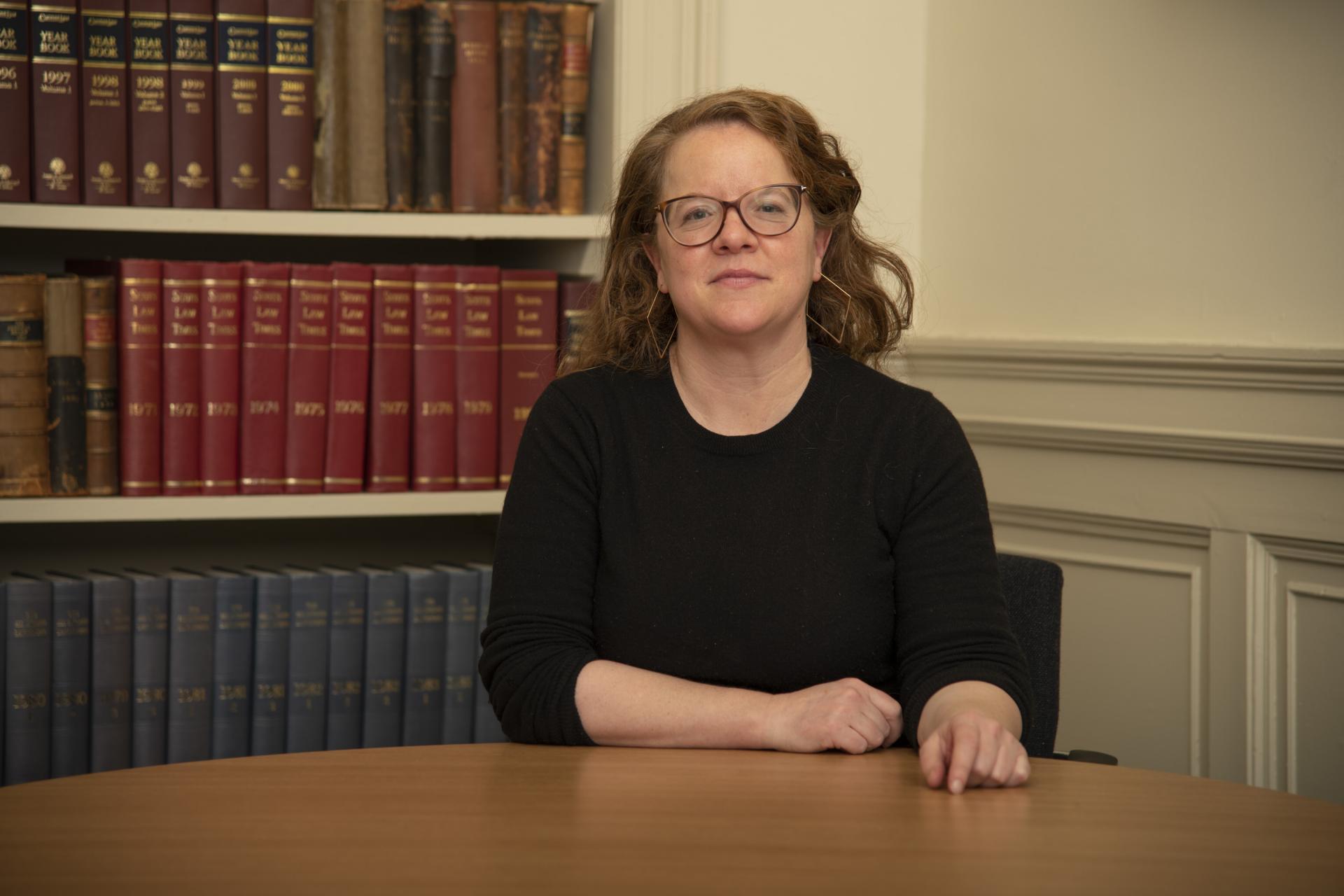
Chris van der Lee Dr. Chris van der Lee is an Assistant Professor at Tilburg University's Tilburg School of Humanities and Digital Sciences (TSHD),隶属 Department of Communication and Cognition. His work focuses on human evaluation of natural language generation systems, data-to-text generation, and reproducibility challenges in computational linguistics. He actively contributes to advancing methodologies for assessing AI-generated content and improving transparency in research practices. Research Interests Key areas include: Human evaluation frameworks for automated text generation Data-to-text generation using small datasets Reproducibility in NLP research Conversational AI and chatbot interactions Awards Best Paper Award (2019) Best Thematic Paper Award (2021) Outstanding Reviewer Recognition (2020) Collaborations Dr. van der Lee collaborates with international researchers on projects like the ReproHum initiative, investigating reproducibility barriers in human evaluations. His work also involves interdisciplinary projects, such as developing digital health assistants for medication reconciliation.
Kristina Rand is an Associate Professor in the Department of Psychology at the University of Utah, specializing in spatial cognition and visual perception. She directs the Visual Perception and Spatial Cognition Lab , focusing on how perceptual limitations affect navigation and spatial learning. Education: Ph.D. in Psychology (2014), University of Utah; M.S. in Psychology (2009), Montana State University; B.S. in Psychology (2006), University of Oregon. Her research examines spatial memory, environmental complexity, and cognitive adaptations for individuals with visual impairments. Key themes include the interplay between attention, mobility monitoring, and perceptual cues in navigation tasks. Her publications since 2009 highlight applications in accessibility design, human-computer interaction, and aging cognition. Articles analyze spatial learning impairments, distance perception biases, and assistive technologies like physical guidance and low-vision simulations. Contact details include office 630 BEHS and phone 801-581-8081 .
Sanjay Mishra serves as Professor in the Department of Marketing and Business Law at the University of Kansas School of Business, where he integrates quantitative methodologies with consumer behavior research. His academic foundation includes a Ph.D. and MBA from Washington State University, an M.S. from Ohio State University, and a B.S. from the Indian Institute of Technology, establishing technical rigor across his career spanning four decades. Ph.D., Washington State University MBA, Washington State University M.S., Ohio State University B.S., Indian Institute of Technology Professor Mishra's research centers on consumer preference modeling, choice inconsistencies, advertising processing, and conjoint analysis applications, with significant contributions to new product development and innovation management. His work bridges theoretical marketing frameworks with practical business strategy, particularly examining cognitive processes in consumer decision-making and methodological validation in survey research. Recent expansions demonstrate interdisciplinary reach while maintaining core marketing science principles. Analysis of his 2022-2025 publications reveals strategic diversification into medical research (ophthalmology, immunology), environmental science (sustainable materials, biomimicry), and sociopolitical studies, yet consistently applies his expertise in choice architecture and quantitative modeling. Key trends include repulsion/attraction effect investigations, cross-cultural consumer behavior, and translational applications of marketing science to health and sustainability challenges. His scholarly impact is evidenced through publications in premier outlets including the Journal of Marketing Research, Journal of Business Research, and Marketing Letters, though specific awards remain unlisted in source materials. Professor Mishra's teaching portfolio spans Business in India, Marketing Management, New Product Development, Categorical Data Analysis, and multiple entrepreneurship courses, reflecting his commitment to bridging academic theory with real-world business applications. While student names and grant details are unspecified, his extensive publication record across marketing, engineering, and medical journals suggests active research mentorship and cross-disciplinary collaboration. Current work indicates growing engagement with health sciences and environmental sustainability through methodological innovations in consumer behavior analysis.
Ann Christin Posten is an Associate Professor in the Department of Psychology and the Centre for Social Issues Research at the University of Limerick. She holds a PhD from the University of Cologne, Germany. Her research focuses on cognitive mechanisms underlying judgment, decision-making, and social interactions, with particular emphasis on trust, distrust, memory, and institutional corruption. Education: PhD in Psychology, University of Cologne, Germany Her research interests include the cognitive foundations of trust and distrust, how these influence memory and perception, and the role of judgmental uncertainties in social contexts. She also investigates institutional corruption and its psychological underpinnings, employing experimental methods. Her work spans interdisciplinary areas such as social psychology, forensic psychology, and behavioral economics. Recent publications explore dominant response tendencies in social reactions, habitual trust behaviors, and the impact of formal sanctions on institutional efficiency. Her studies often highlight the interplay between cognitive processes and societal structures. Grants & Advising: Accepting PhD students. No specific grants listed. Labs/Teams: Active within the Centre for Social Issues Research at the University of Limerick.
Tim Blackwell is a Senior Lecturer in the Computing Department at Goldsmiths, University of London. He holds a BSc in Physics (1980), a DPhil in Theoretical Physics (1984), and an MSc in Computer Science (2001). His research focuses on swarm intelligence, computational music, and optimization algorithms, with notable contributions to particle swarm optimization and tomographic reconstruction. Education: BSc Physics, 1980 DPhil Theoretical Physics, 1984 MSc Computer Science, 2001 His work bridges computational methods with artistic and scientific applications, including projects like 'A Sound You Can Touch' and 'Swarm Techtiles.' Recent research explores optimization benchmarks, environmental applications (e.g., illegal fishing detection), and evolutionary algorithms. Key publications span journals like IEEE Transactions on Evolutionary Computation and conferences such as GECCO. His work emphasizes interdisciplinary approaches, integrating computational techniques with fields like music, image processing, and environmental science.
Dr. John Flibotte is an Associate Professor of Clinical Pediatrics at the Perelman School of Medicine, University of Pennsylvania, and holds multiple leadership roles at Children's Hospital of Philadelphia (CHOP). As Co-Medical Director of the Neonatal Neurocritical Care Program and Associate Program Director for both the Neonatal-Perinatal Fellowship and Pediatric Residency programs, he bridges clinical care, education, and research. His expertise spans neonatal neurocritical care, infant brain injury, and medical education innovation. Dr. Flibotte graduated from Harvard College and Harvard Medical School, completing residency and fellowship training at CHOP. His research focuses on neurodevelopmental outcomes after hypoxic-ischemic encephalopathy, hydrocephalus management, and neonatal neuroimaging. He collaborates with Neurology, Neurosurgery, and Radiology teams in the Neonatal/Infant Intensive Care Unit (N/IICU) and participates in high-risk prenatal consultations through the Special Delivery Unit. His educational contributions include mentorship programs for junior faculty and trainees, earning awards such as the Istvan Seri Teaching Award. He leads quality improvement initiatives addressing developmental follow-up for preterm infants and CLABSI reduction in neonatal care. Dr. Flibotte also serves on multiple institutional committees, including the Data Safety Monitoring Board for clinical trials in neonatal conditions. His publications span 20+ years, emphasizing translational research in neonatal neurology and critical care innovations. Key areas include predictive modeling for neurodevelopmental outcomes, parental decision-making in trials, and novel imaging techniques for brain injury detection. Awards: Early Career Honor Roll (Pediatric Residents Teaching) Istvan Seri Teaching Award (Neonatology Fellows) Schmidt-Kirpalani Mentoring Award (Fellows/Junior Faculty) His clinical and research teams collaborate across CHOP's Neonatology, Fetal Diagnosis and Treatment Center, and Neurocritical Care Program, integrating translational science with bedside care to improve outcomes for neonates with complex neurological conditions.
Michael Sinkey is an Associate Professor of Economics at the University of West Georgia's Richards College of Business, Department of Economics. He specializes in econometrics, sports economics, and behavioral finance. He has taught courses such as Statistics for Business II, Economics of Sports, Forecasting, and Business Analytics Capstone since 2020. Education: B.B.A. in Economics from University of Louisville (2005), M.A. and Ph.D. in Economics from The Ohio State University (2006, 2011). Research focuses on topics like socioeconomic impacts on labor contracts in sports, cognitive biases in expert decision-making, and market efficiency in betting markets. His work combines empirical analysis with behavioral theories, particularly in non-traditional economic environments like sports and gambling. Recent publications explore the intersection of sports economics and labor market dynamics, as well as behavioral finance principles applied to betting markets. His 2025 study examines socioeconomic factors in MLB contract timing, while earlier works analyze expert belief revision and hot-hand fallacy in college football betting. No scientific awards explicitly listed, but his research demonstrates significant contributions to behavioral and sports economics. Teaching responsibilities include advanced statistical methods and capstone projects in business analytics.
Yuri Mishina is an Associate Professor of Organisational Behaviour & Strategy at the Department of Management and Entrepreneurship, Imperial College Business School. He holds a Ph.D. and MBA from the University of Illinois at Urbana-Champaign and a B.A. in Economics from the University of Chicago. Previously, he served as an Assistant Professor at Michigan State University. His research focuses on informal corporate governance, exploring how top management teams and stakeholder beliefs shape strategic choices, with an emphasis on reputational dynamics, stigma, cognitive biases, and illegal corporate activities. He has published in top journals like the Academy of Management Journal and Strategic Management Journal . Mishina serves on the editorial review boards of several prestigious journals and holds an International Research Fellowship at the Oxford University Centre for Corporate Reputation. His work bridges organizational theory, strategic management, and behavioral economics to understand ethical and unethical firm behaviors.
Ethan H. Shagan is a Professor in the Department of History at the University of California, Berkeley, holding the Jane K. Sather Professorship since 2011. He is a historian of early modern Europe with a focus on religious history, particularly the contested role of religion in societal and political transformation. PhD, Princeton University (2000) MA, Princeton University (1996) AB, Brown University (1994) His research traces the evolution of belief in the Christian West, analyzing how religious concepts intersected with political power and social negotiation in early modern England and Europe. Key themes include moderation ideologies, confessional identity, and the interplay between faith and judgment. Shagan's publications reveal trends in interpreting religious history through political, social, and intellectual frameworks, emphasizing the cultural construction of belief and religious identity. His work bridges medieval, early modern, and Enlightenment historiography. Leo Gershoy Prize (European history) for The Rule of Moderation John Ben Snow Prize for The Rule of Moderation Herbert Baxter Adams Prize for Popular Politics and the English Reformation Morris D. Forkosch Prize for Popular Politics and the English Reformation Roland Bainton Prize for Popular Politics and the English Reformation Whitfield Prize from Royal Historical Society for Popular Politics and the English Reformation E. LeRoy Hall Award for Distinguished Teaching (2005) As a scholar and educator, Shagan has mentored students in early modern European history while contributing to debates on religious transformation, political ideology, and historiographical methodology.
Dr. Emily Postan serves as Senior Lecturer and Chancellor's Fellow in Bioethics at the University of Edinburgh's Edinburgh Law School, where she also holds the position of Deputy Director of the Mason Institute for Medicine, Life Sciences and the Law with lead responsibility for policy engagement. Her academic leadership extends to Director of Postgraduate Academic Guidance within the Law School. Her educational background includes a PhD from the University of Edinburgh (2017), LLM (Distinction), MA(Hons), and MLitt by research in Philosophy from the University of Edinburgh and University of Stirling. Prior to her academic career, she spent a decade in policy management at the Scottish Government. Postan's research centers on the intersection of biomedical technologies, personal information, and identity formation, with particular focus on how health informatics shapes our self-conception. Her work critically examines ethical governance frameworks for bioinformation, emphasizing the narrative dimensions of identity. She explores how AI-driven health data classification impacts belonging and social categorization, particularly through her current project 'Identity by Algorithm: Ethical Impacts of Categorisation by Health AI'. Her scholarly output reveals consistent engagement with neuroethics, genomic regulation, and AI ethics, with publications spanning from foundational identity theory to practical policy recommendations. The trajectory shows increasing focus on algorithmic governance in healthcare, culminating in the 2025 international consensus paper on AI trust frameworks. 2018 Rising Star lecture at International Neuroethics Society Annual Meeting Project leadership for Nuffield Council on Bioethics’ 2013 Novel Neurotechnologies report Key contributions to Scottish policy through Mason Institute submissions on organ donation, human tissue legislation, and Adults with Incapacity Act reforms As a doctoral supervisor, she mentors researchers in bioethics and medical law, currently guiding Gokce Kolukisa's work on 'Genome Editing in International Law'. Her Wellcome Trust-funded project 'Confronting the Liminal Spaces of Health Research Regulation' (2017-2021) established her as a leading voice in health research governance. Postan actively engages with media and policymakers on bioethics issues, bridging academic research and real-world application through the Mason Institute's policy portfolio.
Linda Zerilli is the Charles E. Merriam Distinguished Service Professor of Political Science at the University of Chicago. She has served as Faculty Director of the Center for the Study of Gender and Sexuality (2010-2016) and remains a leading scholar in feminist theory, democratic theory, and continental philosophy. Her work integrates political philosophy with feminist critiques of liberalism, focusing on judgment, truth, and freedom in democratic contexts. Her research interests span Hannah Arendt’s political thought, Michel Foucault’s genealogical critique, Wittgensteinian language philosophy, and the intersection of aesthetics with political action. Key publications include Signifying Woman (1994), Feminism and the Abyss of Freedom (2005), and A Democratic Theory of Judgment (2016). She explores how judgment operates in democratic processes, particularly in navigating tensions between truth-telling, political persuasion, and ethical responsibility. Recent work engages with post-truth politics, the epistemological challenges of contemporary democracy, and rethinking Arendtian concepts of action and judgment for modern crises. Her interdisciplinary approach bridges feminist theory, continental philosophy, and political science, influencing debates on gender, sexuality, and democratic legitimacy. Zerilli’s awards include the prestigious Charles E. Merriam Distinguished Service Professorship. Her scholarship emphasizes the necessity of aesthetic and philosophical frameworks for understanding political life, challenging reductionist approaches in both feminist and democratic thought.
Jemma Collova is a Senior Research Fellow at the University of Western Australia's School of Indigenous Studies, located on Whadjuk Noongar Country. She holds a PhD in Psychology from UWA and focuses on Indigenous-led mental health research, emphasizing decolonization and cultural safety in healthcare. Her work bridges academic research with practical government and police sector collaborations. She is a Chief Investigator on two NHMRC grants aimed at transforming mental health service delivery for Aboriginal and Torres Strait Islander peoples. Education: PhD in Psychology (UWA), prior studies not detailed. Research interests include mental health equity, participatory research methods, and policy development with Indigenous communities. She has co-designed culturally responsive programs in prisons and universities, emphasizing co-creation and Indigenous authorship. Key projects include evaluating the Cultural, Social and Emotional Wellbeing Program for incarcerated Aboriginal women and developing culturally safe mental health frameworks through participatory action research. Her work also addresses pandemic impacts on Indigenous mental health and suicide prevention strategies. Awards include the Dean's List Honourable Mention (2020) and grants from the Experimental Psychology Society and APR Internship. She has engaged in policy advocacy through media collaborations and community reporting initiatives. Labs/Teams: Active in interdisciplinary teams focusing on Indigenous health research, including collaborations with Elders and cultural healers. Her work emphasizes reflexive thematic analysis and mixed-methods approaches to ensure Indigenous voices shape research outcomes.
James Doherty is an Associate Professor in the Department of Civil, Environmental and Mining Engineering at The University of Western Australia (UWA), affiliated with the UWA Oceans Institute. His work focuses on geotechnical engineering and cloud computing technologies, emphasizing automation of data interpretation and optimization of engineering design workflows. He leads research in numerical methods, soil-structure interaction, and offshore wind infrastructure, with over 80 peer-reviewed publications. Doherty founded the open-access geocalcs.com platform, serving 1,000+ users globally with engineering design tools derived from his research. He has developed cloud-based platforms for companies like Fugro, achieving significant computational efficiency gains. His expertise aligns with UN Sustainable Development Goals related to infrastructure and sustainable energy.
Professor Karen Niven is a distinguished academic and leader in organizational psychology at the Sheffield University Management School . She holds the position of Professor of Organisational Psychology and serves as the Associate Dean for One University , overseeing Equality, Diversity, and Inclusion (EDI), staff wellbeing, and sustainability. Her academic journey includes roles as Head of the Work Psychology Group and previously at Alliance Manchester Business School. Niven earned her BSc (Psychology) from the University of Leeds and her MSc and PhD in Psychology from the University of Sheffield. Education: BSc Psychology – University of Leeds MSc Work Psychology – University of Sheffield PhD Psychology – University of Sheffield Her research focuses on interpersonal emotion regulation and the 'darker side of workplace relationships' , including bullying and aggression. Key themes include AI-driven emotion monitoring, bystander behavior in mistreatment, and age-related differences in emotion regulation effectiveness. She employs diverse methodologies, such as diary studies and social network analysis, and collaborates globally with researchers in Spain, the Netherlands, Chile, and beyond. Professor Niven’s work has been funded by prestigious bodies like the ESRC, UKRI, and the Richard Benjamin Trust. She sits on editorial boards of high-impact journals, including Journal of Management and Journal of Organizational Behaviour . Her publications bridge academic and practical insights, such as co-editing Should I Strap a Battery to My Head? (And Other Questions About Emotion) and Making a Difference with Psychology . In advising, she supervises doctoral researchers like Aishwarya Verma, exploring age dynamics in emotion regulation. Her grants and collaborations underscore a commitment to addressing real-world challenges, such as workplace well-being and bullying intervention. She leads the Work Psychology Group and contributes to initiatives like the Dean’s List at the Management School. Notably, Niven’s research on bystander dynamics and the psychological impacts of workplace mistreatment has shaped organizational policies and interventions. Her recent focus on pandemic-era homeworking further highlights her adaptability to contemporary challenges.
Zahida Sarwary is an Associate Professor at Linköping University's Department of Management and Engineering, within the Business Administration school. She specializes in capital budgeting techniques, entrepreneurial finance, and strategic financial management. Her research focuses on managerial discretion in SMEs, SME financing challenges, and the interplay between entrepreneurial structures and financial decision-making. Her work bridges theoretical frameworks with practical applications in small and medium-sized enterprises, emphasizing how strategic choices in capital allocation impact organizational growth. Notable research areas include the analysis of bank-SME relationships and the role of professionalism in fostering financial trust. Dr. Sarwary's publications highlight recurring themes such as SME financial decision-making processes, the moderating effects of entrepreneurial environments, and the application of capital budgeting methodologies in high-growth contexts. While no formal awards or grants are listed, her contributions to SME finance research demonstrate a sustained commitment to advancing understanding in this domain.