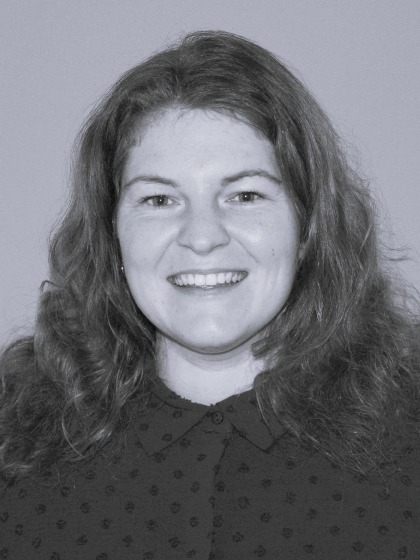
Dr. Nienke Smit is an Assistant Professor in the Department of Education at Utrecht University's Faculty of Social and Behavioural Sciences. Her research focuses on scaffolding processes, adaptive teaching, and classroom observational research from a complex dynamic systems perspective. Specializes in teacher-student interaction Expert in adaptive instruction and observational methods Collaborates with Data Science department Develops tools for classroom observation Research interests include language learning and teaching , judgment and decision-making in education , and professional development of teachers . She leads projects like Eye Get It (joint attention in classrooms) and a replication study on adaptive instruction effectiveness. Her work applies dynamic systems theory to second language development and foreign language pedagogy. Recent publications address translanguaging in multilingual classrooms, replication studies , and process-oriented research . She teaches at Utrecht's Graduate School of Teaching and works on initiatives to reduce teacher shortages through improved training programs.
Raquel Fernández is Full Professor of Computational Linguistics and Dialogue Systems at the University of Amsterdam, where she leads the Dialogue Modelling Group at the Institute for Logic, Language & Computation (ILLC). As Vice-Director for Research at ILLC and a Fellow of the ELLIS Society, she bridges computational linguistics, cognitive science, and artificial intelligence through her research on language use in multimodal and conversational contexts. PhD in Computational Linguistics from King's College London Prior research positions at University of Potsdam and Stanford University's CSLI Her work explores how cognitive constraints, social interaction, and perception shape language use, with a focus on: Visually-grounded language processing Multimodal dialogue modeling Model uncertainty and calibration Language grounding in multimodal data Language learning and semantic change Dialogue reference resolution Recent publications analyze multimodal reasoning limitations, cross-lingual knowledge consistency, and uncertainty modeling in dialogue systems. She has received multiple accolades including an ERC Consolidator Grant , NWO VENI/VIDI/Aspasia fellowships , and EMNLP/GenBench awards . Outstanding Paper Award (EMNLP 2023) Best Data Award (GenBench Workshop 2023) ELLIS Society Fellow ERC Consolidator Grant #819455 recipient NWO VENI/VIDI/Aspasia awardee As a leader in academic service, she serves on the SIGDAT Executive Committee and chairs multiple conference committees. Her lab develops models for multimodal dialogue, visual storytelling, and grounded language understanding.
Mohammad Aliannejadi is an Assistant Professor at the IRLab (formerly ILPS) within the Informatics Institute at the University of Amsterdam. His research focuses on Information Retrieval (IR), machine learning, natural language processing (NLP), and conversational systems, particularly in modeling user information needs on mobile devices and conversational search systems. He holds a Ph.D. in Informatics from Università della Svizzera italiana (USI), Lugano, Switzerland, and a M.Sc. in Computer Engineering from Tehran Polytechnic. During his Ph.D., he visited the CIIR Lab at the University of Massachusetts Amherst, USA. His research interests include conversational search systems, recommender systems, unified search frameworks, and user-centric evaluation methodologies. Notable contributions include work on clarifying questions in open-domain dialogues, contextual suggestion systems, and cross-market recommendation. Aliannejadi has organized major shared tasks and workshops, including the IGLU Contest (NeurIPS 2021) and XMRec Workshop (RecSys 2021). He serves on program committees of top IR conferences like SIGIR, CIKM, and ECIR, and has authored over 50 peer-reviewed publications in these areas. His work has received recognition, including top performance in TREC Contextual Suggestion tracks (2015, 2016). He actively contributes to the IR community through teaching, including courses on Information Retrieval and Human-in-the-Loop Machine Learning at the University of Amsterdam.
Femke van Horen is a Full Professor of Consumer Behavior at the Marketing Department of the School of Business and Economics, Vrije Universiteit Amsterdam. She serves as Scientific Director of the VU Behavioural Lab and Associate Editor for the International Journal of Research in Marketing . Her research focuses on product imitation strategies, environmental uncertainty's impact on consumer decisions, and nudging for sustainability. She co-chaired the 2023 EACR Conference and was a visiting scholar at Stanford University. Education: PhD from Tilburg University (2013), followed by postdoctoral research at the University of Cologne's Social Cognition Lab. Joined VU Amsterdam in 2013. Research Interests: Product Imitation: Effectiveness of copycat strategies and brand evaluation dynamics. Environmental Uncertainty: Consumer decision-making during crises or elections. Sustainability Nudging: Behavioral methods to promote eco-friendly actions. Awards & Grants: AMA Research in Practice Award 2019 (for Out-of-Category Brand Imitation ). IJRM Outstanding Reviewer Award 2023. Grants from ACR/Sheth Foundation, University of Cologne, and others. Advising: Co-supervises two PhD students on sustainability and product imitation, and a postdoc on plant-based meat adoption. Labs & Teams: Leads the VU Behavioural Lab, focusing on interdisciplinary consumer research.
Mark D. Smucker is a Professor in the Department of Management Science and Engineering at the University of Waterloo, cross-appointed with the David R. Cheriton School of Computer Science (Faculty of Mathematics). His research focuses on interactive information retrieval systems, including search engines and recommendation systems, aiming to enhance evaluation methods for better prediction of human search performance. He co-organized the TREC Health Misinformation Track (2019–2022) and currently co-leads the TREC DRAGUN Track, addressing health misinformation and trustworthiness assessment in news. Education: PhD (Computer Science, UMass Amherst, 2008), MSc (Computer Science, UW-Madison, 1996), BSc (Physics & Computer Science, Iowa State, 1994). Research interests include design/analysis of interactive IR systems, evaluation frameworks, and human-computer interaction. He has been recognized with the ACM SIGIR 2012 Best Paper Award and teaching excellence awards from the University of Waterloo. Teaching includes courses like Search Engines (MSCI/MSE 541/720) and Databases/Software Design (MSCI 245). Active in organizing TREC tracks and publishing over 50 peer-reviewed articles.
Stefano Puntoni is a Professor of Marketing and a behavioral scientist at the Rotterdam School of Management, Erasmus University. He serves as Head of the Department of Marketing Management at RSM and as Director of the Psychology of AI Lab at the Erasmus Centre for Data Analytics. His academic journey began with a "Laurea" in Statistics and Economics from the University of Padova in 2000, followed by a Ph.D. in Marketing from London Business School in 2005. His primary research focuses on autonomous technology adoption in consumer markets and production, with particular emphasis on the value of human labor in the age of AI. Additional research areas include advertising language, consumer identity, and numerical cognition. Puntoni's work spans interdisciplinary boundaries, connecting marketing, psychology, and artificial intelligence. An analysis of his recent publications reveals a strong trend toward understanding human-AI interactions in consumer contexts. His research examines how consumers perceive decisions made by algorithms versus humans, preferences for material versus digital products in identity-based consumption, and psychological reactions to human versus robotic job replacement. These studies collectively explore the tension between technological advancement and human elements in decision-making processes. Scientist in Residence, Experiments in Arts and Economics, ZKM Centre for Art and Media (2021) Science Communication Grant, Royal Dutch Academy of Sciences (€10,000) (2021) Case Centre's Marketing Case Award (2021) EFMD Case Writing Award (2020) Case Centre's Outstanding Case Writer Award (2020) C.W. Park Award, Journal of Consumer Psychology (2019) Puntoni has mentored numerous doctoral students, including Phyllis (Jia) Gai, Eugina Leung, and Elisa Maira, many of whom have gone on to prestigious academic positions. He currently serves as Associate Editor for both the Journal of Consumer Research and the Journal of Marketing. His teaching spans marketing strategy, innovation and technology adoption, brand management, and decision making across multiple institutions including RSM, Lancaster University, London Business School, and Bocconi University. As Director of the Psychology of AI Lab at the Erasmus Centre for Data Analytics, Puntoni leads a research team exploring the intersection of human psychology and artificial intelligence in business contexts. His lab focuses on understanding consumer and worker reactions to AI implementation, with practical applications for businesses navigating the digital transformation.
Dr. Franziska Pannach is an Assistant Professor at the Faculty of Arts of the Rijksuniversiteit Groningen (Netherlands), affiliated with the Centre for Language and Cognition (CLCG) . She specializes in Computational Linguistics , Digital Humanities , and Semantic Web Technology , focusing on modeling narratives and mythological texts using NLP and ontologies. Her work emphasizes Open Science and cross-cultural comparisons of folktales and myths. Education : Dr. rer. nat. (PhD) in Applied Computer Science (Digital Humanities/Computational Linguistics), University of Göttingen, Germany (2024) MSc in Applied Computer Science (Digital Humanities), University of Göttingen (2019) BSc in Applied Computer Science (Computational Neuroscience), University of Göttingen (2013) Research Interests include computational approaches to mythological and folkloristic analysis, shallow ontologies for narrative comparison, and semantic web applications in cross-cultural studies. She leads the GOLEM (Graph Ontologies for Literary Evolution Models) project and contributed to the STRATA (Stratification Analyses for Mythic Narrative Materials) project. Teaching : Semantic Web Technology (MSc), Database-driven Web Technology (BSc), Digital Humanities: Tools and Methods (MSc), Analysing Data (MSc) Supervision : PhD students Pritha Majumdar (RUG) and Kristina Schneider (RUG/University of Mainz) Publications focus on narrative ontologies, mythological event annotation, and NLP for under-resourced languages. Her recent work includes the GOLEM Triple Store and shallow ontologies for myth comparison. Networks & Memberships : Member, Digital Humanities Association of Southern Africa (DHASA) since 2019 Co-founder and editor of the Journal of Digital Humanities Association of Southern Africa (JDHASA) Collaborations with institutions in Germany, South Africa, and Denmark
Floor Middel serves as an Assistant Professor in the Department of Pedagogical and Educational Sciences at the Faculty of Behavioural and Social Sciences, University of Groningen. Her academic work bridges research, teaching, and practical application in child protection systems with a focus on decision-making processes and addressing systemic biases. Dr. Middel's research interests center on understanding and improving decision-making in child protection systems through rigorous examination of how ethnicity, migration background, and gender influence child welfare investigations and outcomes. Her work employs intersectional analysis to uncover disparities in decision-making processes and examines how stereotypes might mediate these disparities. She also explores the role of digital technologies in modern social work practice and develops assessment tools to measure meaningful participation of children in protection systems. Analysis of Dr. Middel's scholarly output reveals a cohesive research trajectory focused on equity and evidence-based practice in child protection. Her publications demonstrate growing international recognition, with work spanning comparative analyses of child protection systems across Europe, investigations into decision-making ecology, and development of practical assessment tools. The research consistently addresses the UN Sustainable Development Goals related to reducing inequalities and promoting just, peaceful, and inclusive societies. Fulbright scholarship (2019) Jo Kolk travel grant (2019) NWO idea generator (2019) Travel grant for U4 Summer school 'Methods and Methodologies: Complexities and Responsibilities in Gender Research' (2018) Travel grant Swiss National Science Foundation (2018) As an educator, Dr. Middel mentors undergraduate students and teaches across multiple courses including Interview Practical, Report Practical, Statistical Models 2, and Qualitative Research Methods. She delivers guest lectures on Decision-making in Child Protection for master's students, supervises traineeships and theses in Orthopedagogy, and coordinates the international summer school 'The Future of Child and Family Welfare Policy: Looking Through Different Lenses.' Her teaching directly connects with her research expertise, providing students with evidence-based perspectives on contemporary child protection challenges.
Stephan Kramer is an Associate Professor of Accounting and Control at the RSM, Erasmus University . He holds a PhD from WHU – Otto Beisheim School of Management and an MSc in Business Information Systems from the University of Münster. Research interests focus on incentive system design , governance mechanisms , target setting practices , and performance evaluation . His work bridges archival/experimental methods with practical applications in management accounting , corporate governance , and managerial behavior . Recent articles explore color-coded feedback in decision-making , CEO incentives under competition , and age-related executive biases . Scientific awards include the David Solomons Prize (2016) European Accounting Review Outstanding Reviewer Award (2021) Professor of the Year Award (2023) IMA/CIMA research grants Teaching spans Financial Analytics , Management Accounting , and Fraud Investigations across bachelor, master, and executive programs. He has served as AACSB/NVAO accreditation team member and Academic Director at RSM.
Chantal D'Amore is a Postdoc researcher at the Department of Social Psychology within the Faculty of Behavioural and Social Sciences at the University of Groningen. Her work focuses on political polarization, morality, and attitude moralization, often employing quantitative methods to analyze social dynamics and political discourse. She has contributed to studies on the psychosocial impact of gas extraction in Groningen and the theoretical integration of intergroup conflict models. Teaching: Research Practicum and Master thesis supervision Science communication: Blogging for The Inquisitive Mind Magazine (Dutch) Her research explores how perceived polarization influences moralization processes, with longitudinal studies during significant events like the 2020 U.S. election. Collaborations involve projects on community well-being, entrepreneurship in turbulent contexts, and intergroup value protection dynamics. Awards: Best Scientific Paper Award (2024), Jan Brouwer Thesis Award (2020) Publications include analyses of Dutch societal issues (e.g., Zwarte Piet controversy) and international frameworks explaining conflict escalation in democratic societies.
Dr. Kenza Lamot is an Assistant Professor at the Department of Language and Communication, Vrije Universiteit Amsterdam (Faculty of Humanities). She specializes in the intersection of data, technology, and journalism practices, particularly focusing on journalist-audience dynamics and the role of analytics in newsrooms. Her research examines how technological innovations shape journalism's evolution, including content promotion strategies, social media engagement metrics, and ethical implications of audience-driven reporting. Research Interests: Her work spans digital journalism, media ethics, audience engagement, and the impact of analytics on news decision-making. She explores topics like Facebook content strategies, paywall models, and political journalists' perceptions of public opinion. Recipient of the ICA Journalism Studies Division Outstanding Dissertation Award (2022) Received NWO-Talentprogramma Veni Grant (2024) and Regeling Journalistiek Onderzoek Grant (2024) Teaches courses on journalism practice, media ethics, and emerging technologies in journalism Grants & Awards: Lamot has been recognized for her research on journalism analytics, including studies on newsroom metrics and their influence on content creation. Her work bridges theoretical and applied perspectives, addressing contemporary challenges in digital media.
Robin Kranendonk MSc is a Postdoctoral Researcher at the Netherlands Institute for the Study of Crime and Law Enforcement (NSCR), holding a concurrent affiliation with the Free University of Amsterdam where she served as Lecturer in Forensic Psychology in 2018. Her academic career spans police interrogation research, victimology, and forensic evidence communication since 2009, with current work focused on the NSCR-Police Academy collaboration developing the Strategic Police Research Agenda 2023-2026. Her research expertise centers on vulnerable populations within criminal justice systems, particularly suspects with mild intellectual disabilities. Key investigation areas include: Police interrogation techniques adaptation for cognitively vulnerable suspects DNA evidence report comprehensibility for legal professionals Victim needs assessment in criminal proceedings Official police report accuracy and bias analysis Impact of recording media (audio/video/text) on evidence interpretation Her doctoral research demonstrated how interrogation training improves outcomes for suspects with intellectual disabilities, directly influencing policy implementation. Analysis of her publication history reveals consistent focus on evidentiary reliability across three interconnected domains: suspect vulnerability (60% of works), victim procedural needs (25%), and forensic documentation standards (15%). Recent work emphasizes technological solutions for interrogation quality improvement and specialized knowledge application in diverse interview contexts. Award recognition: Master's Thesis Prize in Criminology (Vrije Universiteit Amsterdam, 2012) Kranendonk actively bridges academic research and police practice through her NSCR-Police Academy partnership, collaborating with experts like Nicolien Kop (Criminaliteitsbeheersing) and Christianne de Poot (Forensic Research). Her secondary roles include Board Membership for the Study & Work Customised Foundation, focusing on quality management for vulnerable job seekers. Current projects examine memory-enhancing techniques in witness interviews and waiver of legal rights by intellectually disabled suspects. She operates within NSCR's Evidence-based Policing research group, strengthening scientific-practical integration for evidence-based police methodology through the Kenniscentrum Opsporing en Criminaliteitsbeheersing knowledge center.
Pauline Phoa is an Assistant Professor at Utrecht University's School of Law, specializing in International and European Law. She is affiliated with the RENFORCE research group and Utrecht's 'Governing the Digital Society' initiative, focusing on EU competition law and the challenges posed by Big Tech ('Modern Bigness'). Utrecht University School of Law International and European Law RENFORCE Research Group Governing the Digital Society Her research bridges EU law with philosophical and literary methodologies, particularly through the Hermeneutic Approach inspired by Paul Ricoeur and James Boyd White. She investigates tensions between economic and fundamental rights in EU jurisprudence, as well as regulatory frameworks for digital platforms and sustainable policies (e.g., CRISPR food, circular economy). Recent publications highlight her expertise in EU internal market law , Big Tech regulation , and legal philosophy . Themes include digital governance, forensic culture, and EU citizenship rights. Stichting Praemium Erasmianum Dissertation Prize (2022) Vereniging voor Wijsbegeerte van het Recht Dissertation Prize (2023) Phoa co-organizes the Festival Europa and contributes to EU Law Live and SEW Tijdschrift . She supervised research in the ERC-funded 'Modern Bigness' project and serves on advisory boards for legal and policy initiatives.
Jan de Wit is an Assistant Professor at Tilburg University's Tilburg School of Humanities and Digital Sciences (Department of Communication and Cognition). His research focuses on human-robot interaction, conversational agents, and the ethical evaluation of AI systems. He is affiliated with the Academic Collaborative Center for Digital Health & Mental Wellbeing. Key research interests include social robotics, NLP evaluation methodologies, and the psychological impacts of digital interactions. Recent work explores mood contagion in human-robot collaboration and the use of LLMs for simulated user testing. He has organized workshops like EduCUI 2024 and contributed to projects such as the scoping review on intersectionality in technology design. Notably, he received a Best Paper Award in 2019 and has collaborated with institutions on interdisciplinary research.
David Terburg is Associate Professor in Social Neuroscience at Utrecht University's Department of Psychology (Faculty of Social and Behavioural Sciences). His research examines neurobiological mechanisms of social behavior using multimodal approaches including hormone administration, fMRI, and lesion studies. His research focuses on: Neural basis of social motivation and aggression Amygdala function in threat processing and escape behaviors Hormonal modulation of social decision-making Cross-species validation of social neuroscience findings Analysis of his publications shows strong emphasis on the basolateral amygdala's role in rapid threat responses, and hormonal influences (testosterone, oxytocin) on social cognition. Recent work develops neurocomputational models of cerebellum-amygdala interactions. Scientific awards include: NWO Veni Award (2013) for research on neuroendocrine mechanisms of defense behaviors He teaches courses in neuropsychology and social neuroscience, employing methods like eye-tracking and psychophysiology. His lab uses pharmacological interventions and neuroimaging to study clinical populations including psychopathy and social anxiety. Research is supported by Dutch Science Foundation grants and involves international collaborations across Europe and South Africa.