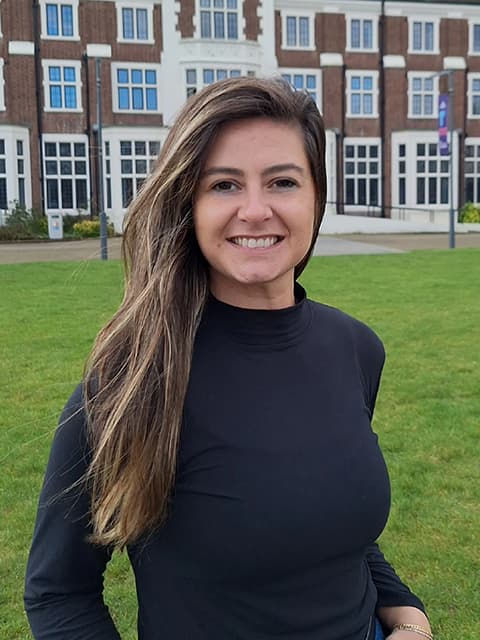
Sabrina Furtado is a Lecturer in Sport Management and Dean’s Associate Fellow at Loughborough University’s School of Sport, Exercise and Health Sciences. She holds a BSc, MSc, and PhD. Previously, she taught at the Federal University of Paraná and State University of Santa Catarina in Brazil, focusing on sport management, sports law, and entrepreneurship in the sports sector. Her research focuses on sports governance, strategic planning, and policy development in public and private sports entities. Key areas include Olympic and Paralympic federations, sports financing, and the impact of media representation on disability inclusion. She contributes to the Sport, Business and Society and Lifestyle for Health and Wellbeing research groups, as well as the Inteligência Esportiva Research Institute . Recent work analyzes governance structures in Santa Catarina municipalities, business intelligence applications in sports management, and modernization processes in Brazilian Olympic federations. Her publications span topics like Paralympic organizational roles, media stigma in disability sports reporting, and funding mechanisms for sports initiatives. No scientific awards are mentioned. Sabrina advises master’s students on sport management and policy but no grant details are provided. Her current projects aim to strengthen sports policies and enhance stakeholders’ engagement in the sport system.
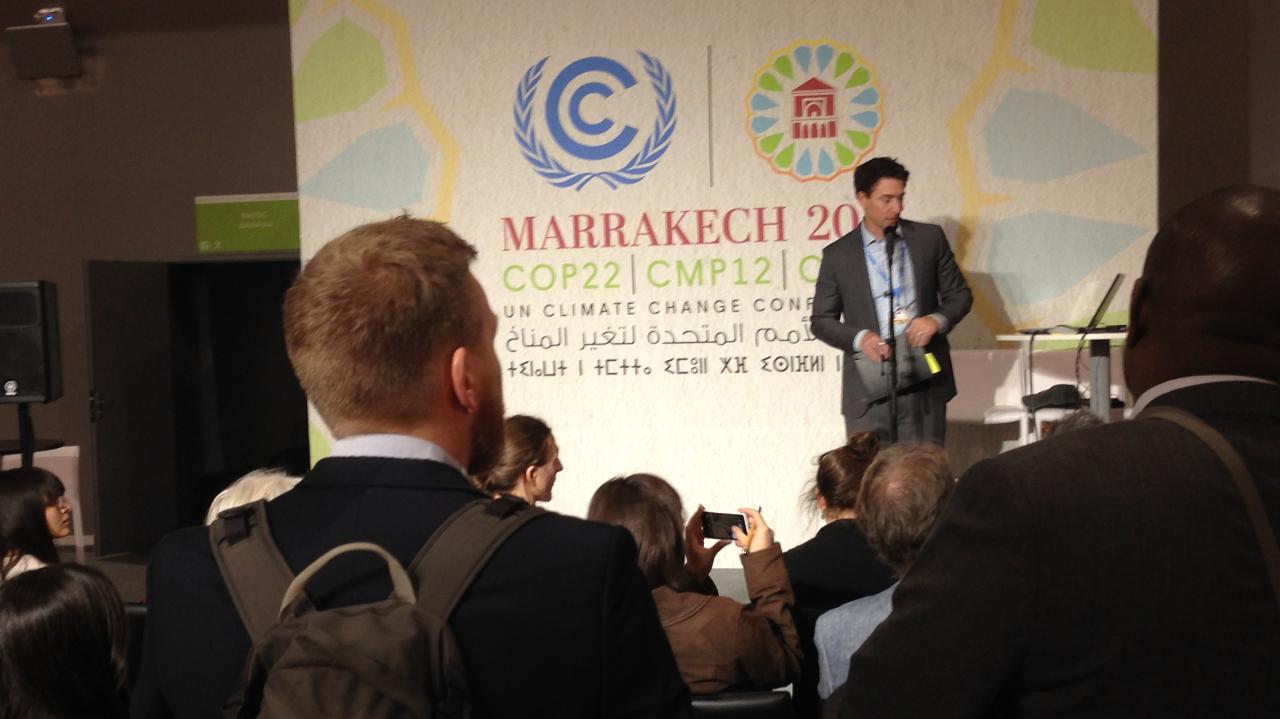
Maxwell (Max) Boykoff is a Professor in the Environmental Studies department at the University of Colorado Boulder and a Fellow in the Cooperative Institute for Research in Environmental Sciences (CIRES). He holds a PhD in Environmental Studies from the University of California, Santa Cruz (2006) and an MBA from the University of Colorado Boulder (2023), complementing his BS in Psychology from The Ohio State University. His research focuses on two primary arenas: the cultural politics of science, climate change and environmental issues, examining how attitudes and behaviors shape action possibilities; and transformations of carbon-based economies, with emphasis on science-policy interfaces and decarbonization politics. His work explores how climate science finds meaning in everyday life and feeds back into policy decisions. Boykoff's publications demonstrate consistent focus on climate communication, media representations, policy conflicts, and societal transformations. His recent work emphasizes digital communication strategies, climate health connections, countermovement analysis, and creative engagement methods. Article trends show increasing attention to social media dynamics, global comparative studies, and interdisciplinary approaches spanning environmental studies, communication, and political science. Awards & Recognition: CU Excellence in Leadership Program (2022) Contributing Author to IPCC Sixth Assessment Report Deputy Editor at Climatic Change journal (over a decade) He leads significant research initiatives including the Media and Climate Change Observatory (MeCCO) monitoring global climate coverage across 82 sources in 40+ countries, Inside the Greenhouse (creative climate communication project), and the Colorado Local Science Engagement Network . He serves on the Independent Science Panel for New Zealand's Deep South Challenge. Boykoff teaches courses including Climate Change Politics & Policy, Creative Climate Communication, Political Economy and the Environment, and Science & Environmental Communication. He mentors through the Red Cross/Red Crescent Climate Centre Internship Program and integrates research with teaching and service commitments.
Irene Albers is a full Professor at Free University of Berlin's Department of Philosophy and Humanities, holding dual appointments at the Peter Szondi Institute for General and Comparative Literature and Institute for Romance Philology since 2004. She chairs both the Examination Board and Doctoral Committee for General and Comparative Literature, serves as Trustee of Studienstiftung des deutschen Volkes since 2004/05, and has been Principal Investigator for the Friedrich-Schlegel Graduate School for Literary Studies and Cluster Languages of Emotion since 2007. Her research bridges comparative literature, anthropology, and visual culture with institutional leadership spanning editorial projects and international conferences. Her educational background includes: Born in Bremen (1967) Romance Studies, Philosophy, and German Studies at Universities of Tübingen, Tours, and Konstanz M.A. from University of Konstanz (1993) Ph.D. from University of Konstanz (1999) on literature and photography in Émile Zola, Proust, and Claude Simon Albers' core research examines literary anthropology through colonial/postcolonial lenses, focusing on French literary engagement with Africa, surrealism, and literature-photography intersections. She pioneered studies on Michel Leiris' ethnological poetics and Claude Simon's photographic techniques, extending to historical emotion research (anatomy of affects, body language) and romance novella traditions. Her work consistently challenges Eurocentric literary canons through primitivism critique and heteronomy aesthetics, emphasizing textual restitution and cultural reclamation. Recent publications (2018-2025) reveal a sharp turn toward colonial restitution ethics, particularly in oral literature provenance. Articles increasingly analyze literature as colonial loot, connecting French modernism with African/Caribbean contexts through collaborative projects with anthropologists like Eléonore Devevey. This trajectory builds from earlier surrealist studies to concrete frameworks for decolonizing literary scholarship, spotlighting institutional complicity in cultural appropriation while advancing symmetrized modernity revisions. Scientific awards include: Senior Fellow and Prize Winner of the Zukunftskolleg, University of Konstanz (2009) Albers supervises master's and doctoral students through dedicated AVL colloquia while securing major research funding as Principal Investigator for Friedrich-Schlegel Graduate School (2007-present) and Cluster Languages of Emotion (2007-2012). Her current DFG-funded project 'Literature as Colonial Loot?' with Andreas Schmid pioneers philological provenance research. Earlier, she contributed to Collaborative Research Center 511 'Literature and Anthropology' (Konstanz, 1999-2002) and DFG-funded conferences on Claude Simon. She leads the DramaNet research project and co-edits the 'machina' series at transcript Verlag since 2010. As board member (2007-2009) and deputy (2008-2012) of Cluster Languages of Emotion, she coordinates Area D 'Cultural Codings of Emotions'. Her Zukunftskolleg fellowship (2012-2013) and Marcel Proust Society collaborations underscore sustained engagement with literary anthropology networks.
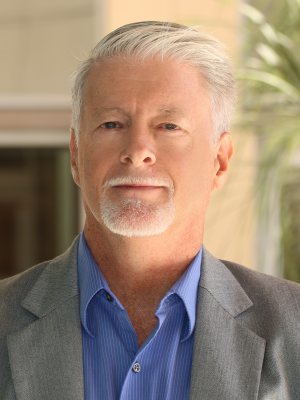
Ronald E. Rice is a Distinguished Professor and Arthur N. Rupe Endowed Professor in the Department of Communication at the University of California, Santa Barbara. He has held visiting positions at Nanyang Technological University in Singapore and the University of Amsterdam. His research focuses on environmental communication, public communication campaigns, organizational theory, and digital technology impacts. He has authored/co-authored numerous books, including the Oxford Handbook of Digital Technology and Society . Education: Columbia University (B.A., English Literature, 1971), Stanford University (M.A. and Ph.D., Communication Research, 1978/1982). Professional roles include Department Chair at UCSB (2013–2015), Co-Director of the Carsey-Wolf Center, and President of the International Communication Association (2006–2007). Research interests span environmental communication, digital divide analysis, and organizational communication. Recent work examines media multitasking, online misinformation, and pro-environmental behavior drivers. Over 230 refereed articles and book chapters highlight his contributions to media effects and technology studies. Notable awards include the Honorary Doctorate from Université de Montréal (2010), ICA Fellowship, and Fulbright Scholarships. His research integrates interdisciplinary methods, emphasizing social networks, media affordances, and policy implications. Advising and grants include leadership in public health communication campaigns and environmental initiatives. Collaborations span global institutions, reflecting his commitment to applied research in digital society challenges.
Kurt Sengul is a Macquarie University Research Fellow (MQRF) in the School of Communication, Society and Culture. He holds a PhD in Media and Communications from the University of Newcastle (2022). His research focuses on media populism, far-right movements, and critical discourse analysis, with projects exploring the nexus between media and far-right politics in Australia. He has taught at the University of Sydney and University of Newcastle, specializing in political communication, social media, and digital cultures. Research interests include far-right communication strategies, media populism's impact on democracy, critical discourse studies, and anti-gender movements. His work examines topics like far-right humor, online radicalization via platforms like X/Twitter Spaces, and the discursive construction of victimhood. He has published in journals such as Critical Discourse Studies , Television & New Media , and Communication Research and Practice . Professional roles include serving as NSW Representative for ANZCA and secretary of APSA’s Queer Caucus. Media engagements include commentary for The New York Times , The Guardian Australia , and The Sydney Morning Herald . His forthcoming monograph Far-Right Populism in Australia (Bloomsbury) explores communication and discourse strategies of Australian far-right groups.
David Ryfe is a Professor and Director of the School of Journalism and Media at The University of Texas at Austin. He previously served as Director of the School of Journalism and Mass Communication at the University of Iowa. His research focuses on the sociology and history of news, political communication, and the evolving role of journalism in democratic societies. He has conducted extensive ethnographic studies of newsrooms and explored the challenges facing journalism in the digital age. His key works include *Can Journalism Survive?* (2012) and *Journalism and the Public* (2017), which examine the adaptability of journalism and its societal role. His current research investigates local news systems in a Midwestern city to assess the near-term future of journalism. Ryfe’s academic leadership emphasizes preparing journalists for industry changes through curricular innovation. He has contributed to debates on media policy, journalism ethics, and the institutional foundations of news practices. His work bridges theoretical frameworks like actor-network theory and institutional theory with empirical studies of newsroom dynamics. He holds a leadership role in fostering collaborative journalism education models and has written on the necessity of public subsidies for sustainable journalism. His research consistently addresses how journalism intersects with democratic processes and public life.
Dr Glenda Cooper is Reader in Journalism Studies and Head of the Department of Journalism at City St George's, University of London , where she leads a team of 25 staff, 50 visiting lecturers, and over 500 students from 53 countries. She holds a PhD in Journalism from City and an MA in English Language and Literature from Oxford, and has played a pivotal role in elevating the BA Journalism programme to 1st place nationally in the Guardian and Complete University Guide (2023), as well as 1st for Graduate Prospects (Sunday Times 2022). Education: MA in Academic Practice, City, University of London (2022) PhD in Journalism, City, University of London MA in Creative Writing, City, University of London BA (Hons) English Language and Literature, St Hilda's College, University of Oxford PG Diploma in Newspaper Journalism, City University of London Glenda's research focuses on crisis and humanitarian reporting , journalism ethics , live journalism , and the intersection of media and politics, particularly through the legacy of Alistair Cooke’s Letter from America . She has led major funded projects with the British Academy, ESRC, Google Digital News Initiative, and HEIF. Her current research explores AI’s impact on journalism through the DMINR project and innovative storytelling formats via the News on Stage initiative and the Contemporary Narratives Lab . Her recent publications span topics such as AI in newsrooms, humanitarian scandals (#AidToo), refugee representation, and digital narrative innovation. These works reflect a strong interdisciplinary trend, combining journalism studies with media technology, ethics, performance, and political communication. The articles indicate a growing focus on digital transformation, ethical challenges in sourcing, and the evolving role of journalists in public discourse. Scientific Awards and Recognition: Laurence Stern Fellow at the Post (2001) Guardian Research Fellow at Nuffield College, Oxford (2006–2007) AURORA Role Model for Future Women Leaders in Academia (2018) Glenda has supervised PhD students on topics ranging from political communication in Istanbul to the manosphere's influence on journalism. She has been instrumental in curriculum development, notably designing a core ethics module for final-year journalism students. She also serves as Reviews Editor for Journalism: Theory, Practice and Criticism , UK Director of the European Journalism Observatory, and Board Member of The Conversation UK . She co-founded and co-presented the Knowhow podcast, bridging academia and media. She co-directs the Contemporary Narratives Lab and co-founded the News on Stage project, which merges journalism with theatre through live events such as News Cabaret and News on the Street . Her play Aid Memoir , based on her PhD research, was performed at the Pleasance Theatre and featured in the ESRC Festival of Social Science.
Stephen D. Perry is a Professor and Department Chair of Journalism and Communication Studies at Regent University. He has held leadership roles including interim dean of the Robertson School of Government and associate dean of the School of Communication & the Arts. Perry holds a B.S. from Trevecca Nazarene University (1987) and M.A./Ph.D. from the University of Alabama (1993/1995). His research focuses on media ethics, broadcast history, and peace journalism, with notable work on tsunami warning systems and religious media impacts. He has authored/co-authored books like *Communication Theories for Everyday Life* and founded *Communication Research Replication*. Perry served as a Fulbright Scholar in Mauritius and has received multiple awards for scholarly excellence. His academic career includes 17 years at Illinois State University, elected school board service, and work in media analysis. Perry's research spans topics from celebrity influence to historical radio programming analysis. He currently edits *Artifact Analysis* and previously led *Mass Communication and Society*. His interdisciplinary work bridges media studies with religious studies, emphasizing journalism's role in societal healing. Award-winning investigations include examinations of media effects on public opinion and peacebuilding through journalism. Perry's work often combines historical analysis with contemporary societal challenges, such as addressing mental health stigma through film studies. He actively contributes to scholarly discourse through editorial leadership and conference presentations.
Lea Hellmueller is Associate Dean of Research in the School of Communication & Creativity and Reader (Associate Professor) in the Journalism Department at City, University of London. She is also an Affiliated Researcher with the Violence & Society Centre. Previously, she served as Assistant Professor at the University of Houston and Texas Tech University, and was a visiting professor at the University of Zurich and visiting fellow at the Reuters Institute for the Study of Journalism, University of Oxford. Dr. Hellmueller holds a Ph.D. in Economics and Social Sciences from the University of Fribourg, Switzerland, with dissertation co-supervision from the University of Missouri-Columbia. She completed postdoctoral training at the University of Texas at Austin. Her research focuses on the role of media and journalism in a globalized world, particularly in areas such as global risk journalism, transnational reporting, journalistic role performance, media and social justice, and violence & media. Fluent in multiple languages, she brings a comparative and international perspective to her scholarship. Her recent publications explore transnational journalism, digital media discourse, journalistic cultures, credibility, and terrorism coverage. The articles reflect a strong trend toward computational and comparative analysis of global media practices, emphasizing power, identity, and the transformation of journalistic norms across borders. Faculty Research Award, AEJMC (2019) Honorary Mention, ICA Journalism Studies Division (2018) Outstanding Research Award, University of Houston (2018) First Place Teaching Contest, AEJMC (2016) Top Faculty Paper, AEJMC (2016) Top Paper Award, ICA (2016) Dr. Hellmueller has secured multiple competitive grants, including from the Swiss National Science Foundation (SNF) and Fulbright. She has supervised PhD students, currently mentoring Namrata Acharya. She serves on editorial boards of Journalism Practice and International Communication Gazette , and holds leadership roles in AEJMC and ICA. She is also the North America Regional Lead for the Global Risk Journalism Hub. She is active in collaborative research networks and has contributed to major reports, including with the Reuters Institute. Her work bridges academic research, policy, and global media practices.
Sara De Vuyst is an Assistant Professor of Contemporary Visual Culture at Maastricht University’s Department of Literature and Art within the Faculty of Arts and Social Sciences. Her research focuses on feminist/queer media studies, ageing representations, and gender issues in media/journalism/technology. She previously held postdoctoral appointments at Ghent University (ERC project Later-in-Life Intimacies) and was a Visiting Professor at Vrije Universiteit Brussel. Education: PhD in Communication Studies (Ghent University) Professional Roles: Chair of ECREA’s Gender, Sexuality & Communication section National Coordinator for Global Media Monitoring (Belgium) Research Interests: Her work critically examines age/gender/sexuality intersections in media and art, with a focus on queer feminist resistance and digital spaces. She created the website LILI to challenge societal norms around ageing and identity. Key areas include: Queer ageing narratives Gendered digital journalism practices Feminist critiques of media representations Publications: Authored Hacking Gender and Technology in Journalism (2020), published widely in gender/media studies journals. Engages interdisciplinary methods combining quantitative/qualitative approaches. Advocacy: Actively addresses gender inequalities in media through policy work and educational initiatives. Serves as a thought leader in intersectional digital media ethics.
Aleksandra Krstić is a full professor at the Faculty of Political Science, University of Belgrade, where she teaches courses including Political Journalism , Visual Representation of Politics , and Media and Journalism in a Global Context . She serves as Vice-Dean for Research Activities and leads the Center for Media and Media Research. PhD in Culture and Media (2015) from University of Belgrade Master's and BA in Journalism from Faculty of Political Science Her research examines media representation of EU institutions , authoritarian communication , digital journalism ethics , and migrant portrayal in Serbian media . Recent work analyzes visual security narratives , presidential communication strategies , and opinion dynamics in social media . Scientific awards include the Đoko Vlajković Foundation Award (2018) and multiple European integration media awards. She leads international projects like DepolarisingEU (COST Action 22165) and Strengthening Local Media in Serbia (US Alumni Grant). Krstić collaborates with institutions including International Organization for Migration (IOM) and European Commission, and serves on editorial boards for Journal of Regional Security and Political Perspectives .
Robert Peaslee is an Associate Professor in the Journalism & Creative Media Industries program of the College of Media & Communication at Texas Tech University , where he also serves as Associate Dean of the Honors College . His scholarship bridges media anthropology, fan studies, and adaptation theory, with particular attention to the cultural politics of superheroes, screen tourism, and global media flows. Education Ph.D., University of Colorado, Boulder, 2007 Research Interests Peaslee’s work interrogates how media texts and industries shape social power relations. Employing ethnographic and textual methods, he has examined: fan cultures and participatory audiences the spatial politics of screen tourism destinations such as Hobbiton and Game of Thrones filming sites the global circulation of superhero narratives and their moral economies representations of place, memory, and identity in film and television Across these strands he explores how media producers and consumers co-create meaning, often through transnational and digital contexts. Publication Trajectory His recent publications display a consistent focus on adaptation and transmedia storytelling, especially where comic-book superheroes and cult texts intersect with tourism and fan labor. The 2020 co-edited volume The Supervillain Reader and the 2016 collection Marvel Comics into Film exemplify his leadership in consolidating critical discourse around comic-to-screen adaptation. Parallel articles on screen tourism investigate how locations such as New Zealand’s Hobbiton or Northern Ireland’s Game of Thrones sites become contested spaces of authenticity and commodification. Awards & Honors Member, TTU Teaching Academy TTU President’s Excellence in Teaching Award Professing Excellence Award, Research Chair, Visual Communication Division, AEJMC (2011) 2nd Place, Top Faculty Papers Competition, AEJMC Visual Communications Division (2010) 2009–2010 Professing Excellence Award, Texas Tech University 2010 Nominee – Outstanding Faculty, Student Disability Services, Texas Tech University Teaching, Service & Leadership Peaslee teaches undergraduate and graduate courses that integrate critical theory with creative practice, including Visual Communication, Writing for Series Television, and Qualitative Research Methods. He has coordinated the TTU International Film Series and formerly served as Programming Chair for the Flatland Film Festival in Lubbock. His record of service includes editorial board membership for the American Communication Journal and leadership roles within AEJMC’s Visual Communication Division. Labs & Creative Spaces While no formal lab is listed, his ongoing longitudinal ethnographic projects on screen-tourism sites and his editorial collaborations function as de facto research collectives involving graduate students and international scholars.
Dr Andrea Jean Baker is a Senior Lecturer in Journalism at Monash University's Faculty of Arts, where she has held significant leadership roles including Acting Head of Journalism and Undergraduate, Honours, and Research Coordinator. She is currently serving as Unit Coordinator for Journalism and Global Change and Lifestyle Journalism courses, and is an active member of Monash's Artificial Intelligence in Education Working Group. As an award-winning journalism scholar and journalist, her work integrates Artificial Intelligence and constructive journalism into her teaching of large enrollment units. PhD in Digital Communications from Monash University (2012) Certificate in Human-Centred Artificial Intelligence from Stanford University (2025) Graduate Diploma in Health Management from La Trobe University (1996) Bachelor of Arts in Media and Politics from Swinburne University of Technology (1994) Dr Baker's interdisciplinary research spans feminist journalism studies, criminology, ethnomusicology, and urban studies, with a focused emphasis on violence against women, urban communication, and the safety of journalists in the AI era. Her scholarly work includes over 80 academic publications across 4 books, 38 book chapters, 20 peer-reviewed journal articles, and 2 industry reports. She has pioneered Australia's first student-led net-only radio station at Monash and the nation's first international journalism study tours to major global cities. Her recent publications demonstrate a clear trajectory toward examining the intersection of AI with journalism ethics, safety of journalists, and media representation of violence against women. Baker's work increasingly focuses on applying intersectional frameworks to media coverage of gender-based violence, while exploring how AI is transforming journalism practices globally, particularly in the Global South context. Finalist, International Book Awards, Best Education/Academic Book (2019) International Association for Media and Communications Research Publication Award Nominated for the 2024 Hazel Gaudet-Erskine Best Book Award Hampton Press prestigious publishing award for Virtual Radio Ga Ga (2012) Entry into Jane Jacobs Book Award (2019) Entry into Robert E. Park Book Award (2020) Dr Baker has supervised or examined 12 PhDs and Masters theses and 16 Honours research projects to successful completion. She has secured competitive research grants from governments, NGOs, and university sources for projects including 'Media coverage of violence against women from an intersectional lens' (2024-2026) and 'Examining Sexual Violence in the Music City of Melbourne' (2021). As Editor-in-Chief of Journalism Practice journal since 2022, she plays a significant role in shaping scholarly discourse in the field. Her research extends beyond the university through external positions including City of Melbourne's Music Cities advisor (2013-2017) and City of Port Phillip's Music Taskforce member (2012). Dr Baker's work is cited by international bodies including UNESCO, UN Women, and UNICEF, demonstrating significant policy impact in the areas of gender equality and media ethics.
Valentino Larcinese is a full Professor of Public Policy at the Department of Government, London School of Economics (LSE). He holds a PhD in Economics from LSE and a Laurea from Bocconi University, with additional degrees from York and Milan. His research focuses on political economy, democratization, media influence, and redistribution policies. He has held visiting roles at MIT, Sciences Po, and other institutions. Education: PhD in Economics, LSE Doctorate in Economics, Milan MSc in Economics, University of York Laurea in Economic and Social Disciplines, Bocconi University Research Interests: Larcinese explores how political institutions, media, and information shape policy outcomes. Key areas include electoral systems, media bias, and the impact of economic inequality on political processes. His work bridges theoretical models with empirical analysis, often using historical or contemporary case studies like Italy and South Africa. Key Contributions: Notable studies include analyses of the MPs’ expenses scandal in the UK, the role of media in voter behavior, and federal budget allocations in the US. His work on suffrage expansion in Italy provides foundational insights into democratization processes. Awards & Grants: No specific awards listed, but his extensive publications reflect recognition in political science and economics fields. Research has been supported by institutions like STICERD (LSE’s research center). Labs/Teams: Associated with LSE’s Department of Government and STICERD, contributing to interdisciplinary projects on political economy.
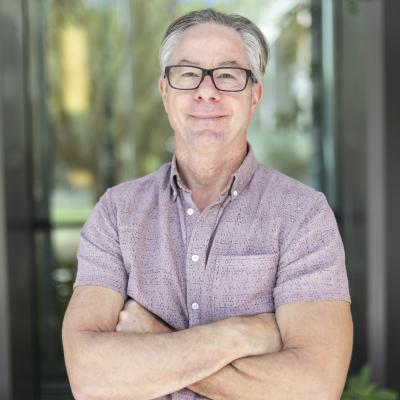
Adam Love is an Associate Professor in the Department of Kinesiology, Recreation, and Sport Studies at the University of Tennessee, Knoxville. He holds a BS, MS, and PhD in Sport Management and Sport Studies from Washington State University and the University of Tennessee. His research focuses on ethical and just practices in sport, including gender and racial ideologies, public sociology discourse, and sport participation motivations. Love has held editorial roles with journals like Sociology of Sport Journal and Engaging Sports , and served as President of the Applied Sport Management Association. His work critically examines racial representation in media, athlete activism, and structural barriers in sport organizations. He teaches courses like Socio-Cultural Foundations of Sport and Recreation , emphasizing social justice themes. Love’s recent publications analyze NCAA administrative diversity patterns and media framing of controversial sport issues. Education: BS (Washington State U), MS/PhD (UT Knoxville) Professional Service: Editorial boards for 4 journals, leadership roles in sport management associations Research Labs: Affiliated with the Applied Sport Psychology Laboratory His research bridges sociology and management, addressing topics like transgender inclusion, racial discourse in fan communities, and global sport leadership. Recent projects include analyzing racial stereotypes in college football media and developing scales for measuring organizational citizenship in sport contexts.