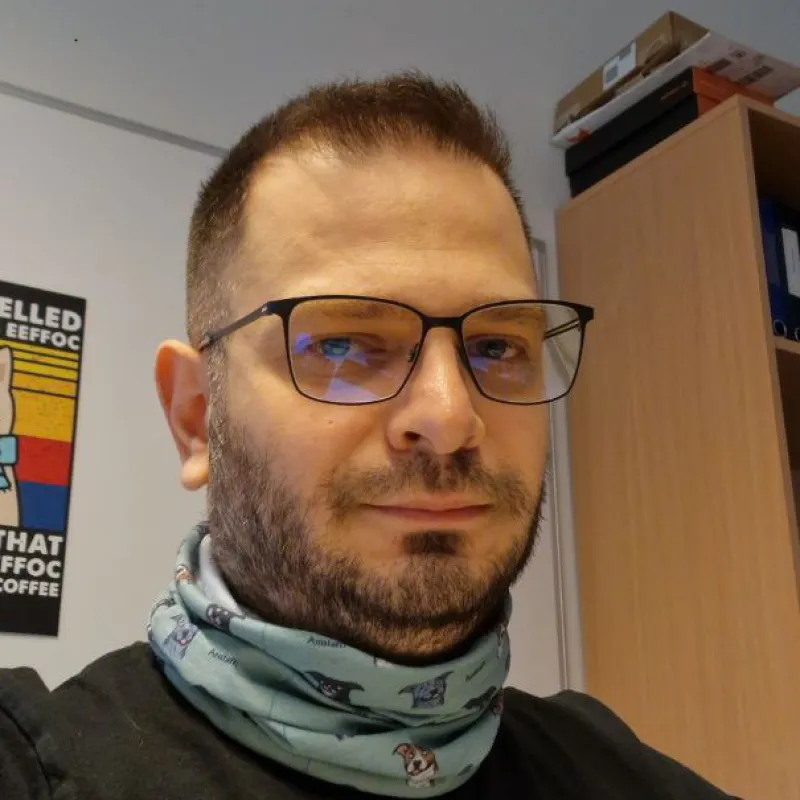
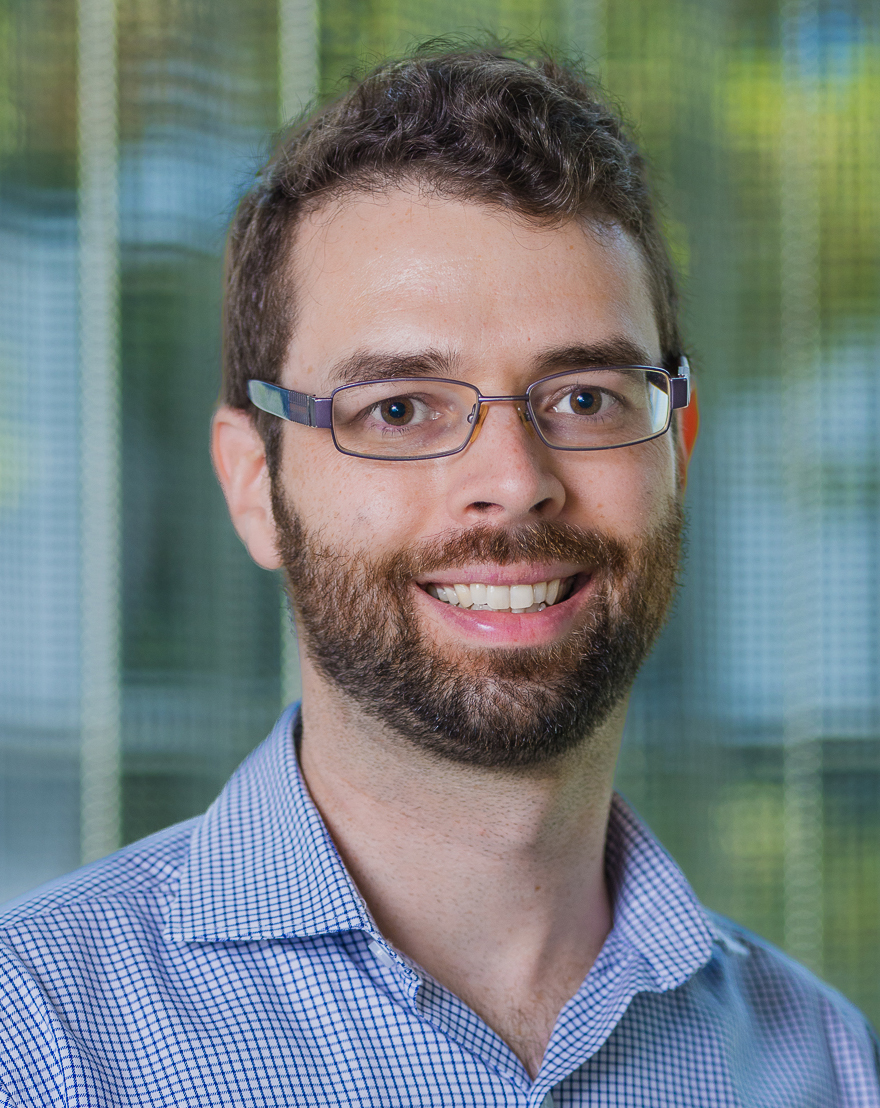
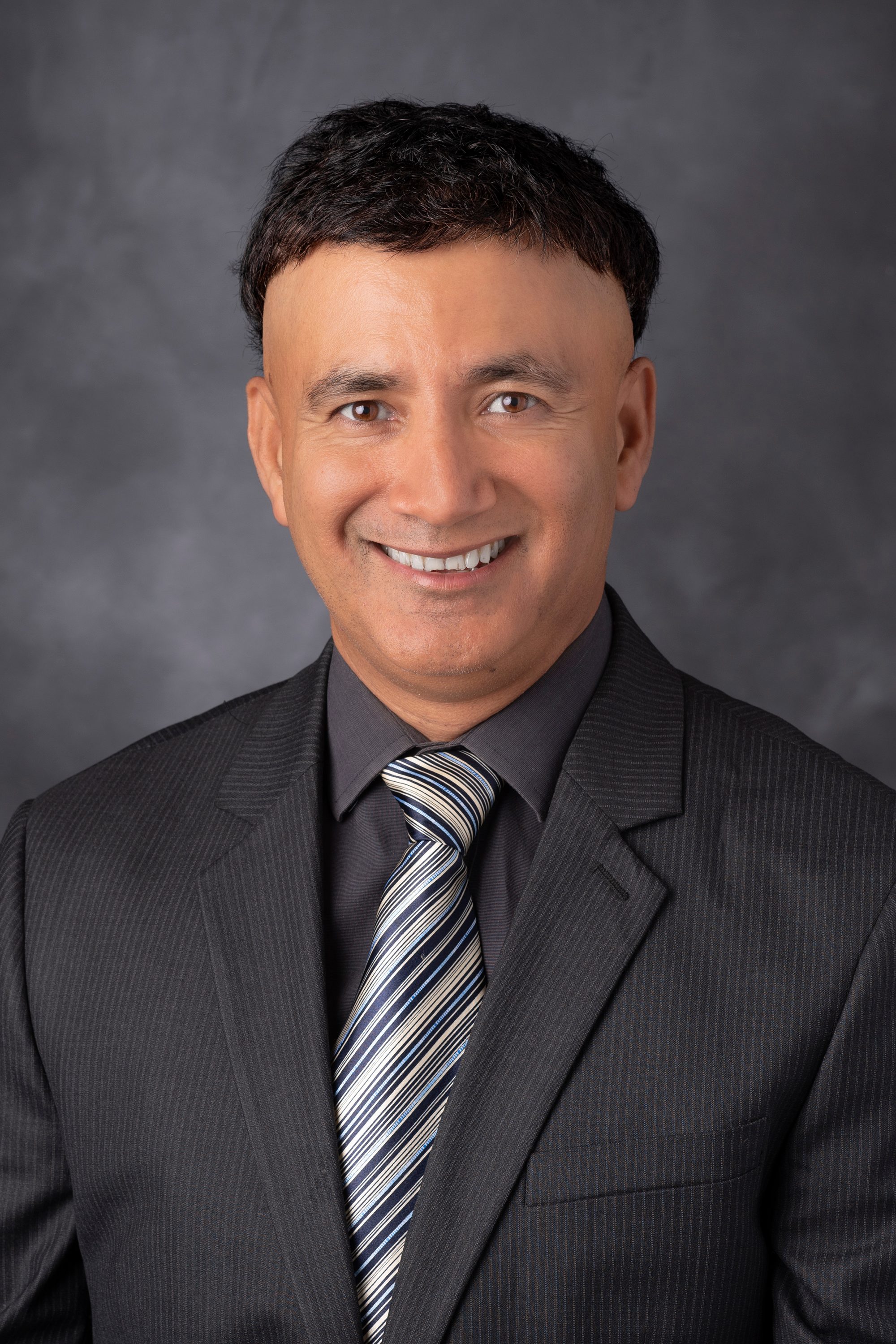
Shahriar Afkhami is a Researcher in the Department of Mechanical Engineering at LUT School of Energy Systems, LUT University. His research focuses on advanced materials science, additive manufacturing processes, and mechanical properties of high-strength steels and dissimilar joints. He specializes in fatigue analysis, welding technologies, and the optimization of structural components for industrial applications. His work integrates experimental methods with computational modeling to address challenges in material behavior under extreme conditions. Key research areas include: Welding of ultra-high strength steels and dissimilar materials Mechanical performance of additively manufactured components Fatigue life assessment of welded joints and cut edges Thermomechanical behavior of heat-affected zones Material characterization of laser powder bed fusion (LPBF) steels Publications highlight trends in additive manufacturing for industrial applications, particularly in optimizing 3D-printed metal structures and analyzing their mechanical integrity. His work on notch-load interactions and fatigue strength has advanced methodologies for predicting component failure under complex loading conditions. Notable contributions include the VERKOTA project exploring 3D printing networks for enhanced industrial adoption. No scientific awards are listed in the provided information. Afkhami's research has been supported by collaborative projects such as the VERKOTA initiative, though specific grants are not detailed here. He maintains an active presence on professional networks including LinkedIn and Google Scholar.
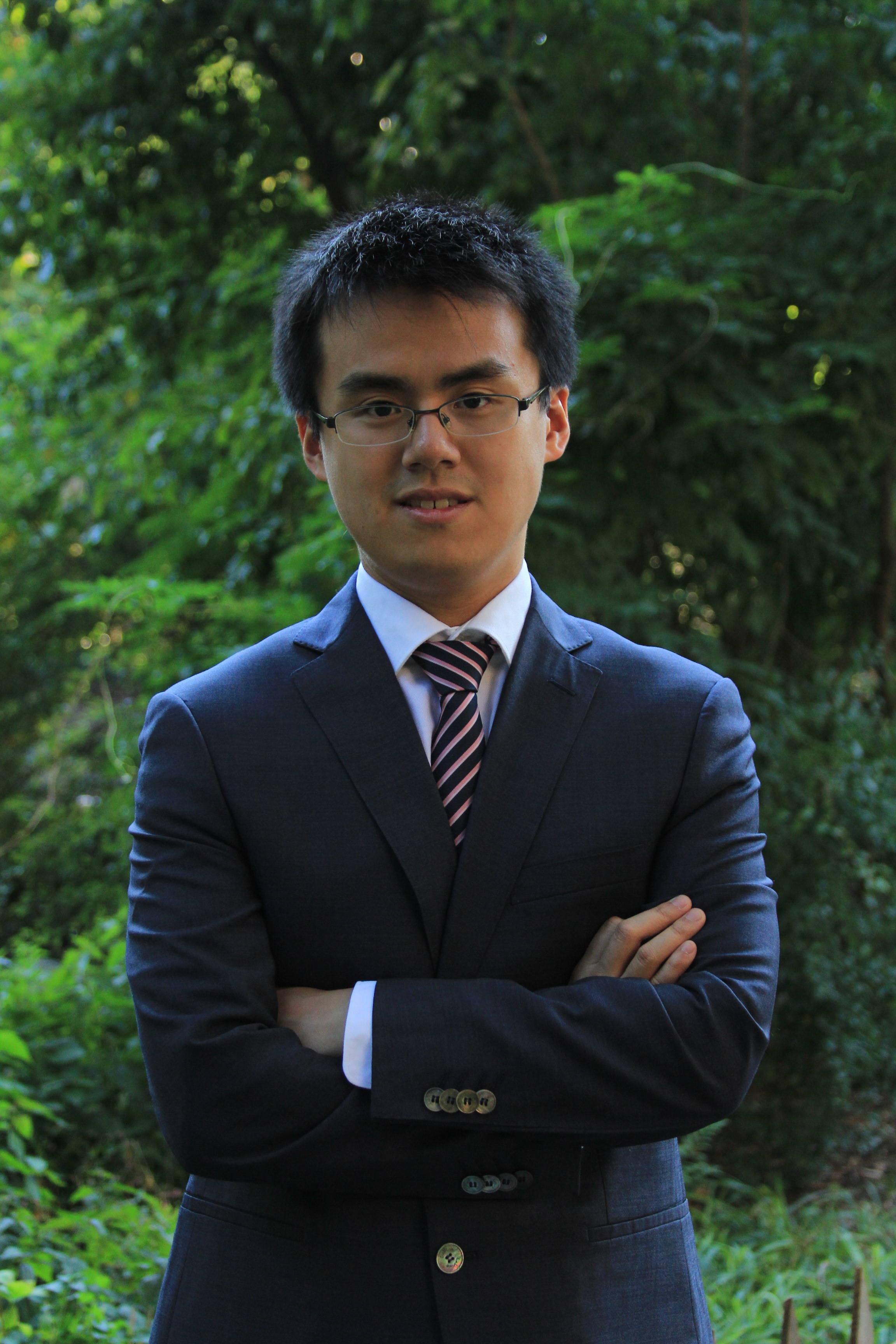
Anru Zhang is the tenured Eugene Anson Stead, Jr. M.D. Associate Professor with joint appointments in Biostatistics & Bioinformatics, Computer Science, Electrical and Computer Engineering, and Statistical Science at Duke University. He holds a Ph.D. from the University of Pennsylvania (2015, advised by T. Tony Cai) and a B.S. in Mathematics from Peking University (2010). Current roles: Associate Professor at Duke (2024–present), previously Assistant Professor at UW-Madison (2018–2021) Research focus: Tensor learning, high-dimensional statistics, EHR analysis, and healthcare applications Mentorship: Supervises active research team including postdocs (Jianbin Tan, Qiuyi Wu) and PhD students (Runshi Tang, Yinrui Sun) Research Trends : His recent publications emphasize tensor methods in biomedical data (EHR, microbiome, Alzheimer’s), Riemannian optimization for high-dimensional problems, and hybrid statistical-computational approaches. Key themes include healthcare AI, EHR analysis, and non-convex optimization. Scientific Awards : COPSS Emerging Leader Award (2024) IMS Tweedie New Researcher Award (2022) ASA Gottfried E. Noether Junior Award (2021) NSF CAREER Award (2020) AMIA Data Science Outstanding Paper Award (2023) Advising & Grants : Mentored 16+ students/postdocs, including Yuetian Luo (IMS Lawrence D. Brown Award) and Yuchen Zhou (IMS Hannan Travel Award). Current grants include NIH-funded projects on sepsis detection, mental health AI, precision genetic testing, and telehealth interventions, plus NSF CAREER funding for statistical inference in high-dimensional structures. Labs & Teams : Leads a research group at Duke focusing on tensor learning, statistical theory, and healthcare AI applications. Collaborates with Duke’s AI Health initiative and serves as Associate Editor for leading journals like Annals of Statistics and JASA.
Torgeir Welo is a Professor at the Department of Mechanical and Industrial Engineering , Norwegian University of Science and Technology (NTNU) . He specializes in metal forming , particularly aluminum alloy structures , with a focus on plastic bending behavior , dimensional stability , and 3D forming technologies . His research also encompasses Lean Product Development , emphasizing knowledge reuse and maximizing customer value in automotive and aerospace applications. Key Research Areas : Metal Forming, Aluminum Processing, Springback Control, Lean Development, Additive Manufacturing, Material Substitution Teaching : Courses on Aluminum Technology , Metal Forming Analysis , and Machine Element Design Publications (15 most recent): Focus on springback monitoring , charge weld evolution , flexible forming , machine learning applications , and circular economy frameworks in metal manufacturing.
Professor Rob Dwyer-Joyce is a leading academic in Tribology and Lubrication Engineering at the University of Sheffield , School of Mechanical, Aerospace and Civil Engineering. He serves as Director of the Centre for Doctoral Training in Integrated Tribology and manages the Leonardo Centre for Tribology. A Fellow of both the Royal Academy of Engineering and the Institution of Mechanical Engineers, his work focuses on developing ultrasonic sensors for real-time lubrication and wear monitoring in industrial systems. Academic Affiliation: University of Sheffield (since 1994) Education: BEng Mechanical Engineering (Imperial College), PhD Tribology Industry Experience: Former British Gas engineer (Rough gas field) His research interests center on industrial wear problems , lubrication metrology , and acoustic sensor development . Key applications include wind turbine bearings, marine diesel engines, and automotive systems. His team’s innovations in tribo-acoustic sensors have enabled non-invasive oil film thickness and viscosity measurements in challenging environments. Recent scientific contributions span lithium-ion battery monitoring, wind turbine bearing dynamics, and marine engine lubrication, with over 30 publications since 2020. Awards include the EPSRC Advanced Career Fellowship in Tribo-Acoustic Sensors and recognition as a Royal Academy of Engineering Fellow . Contact: r.dwyer-joyce@sheffield.ac.uk
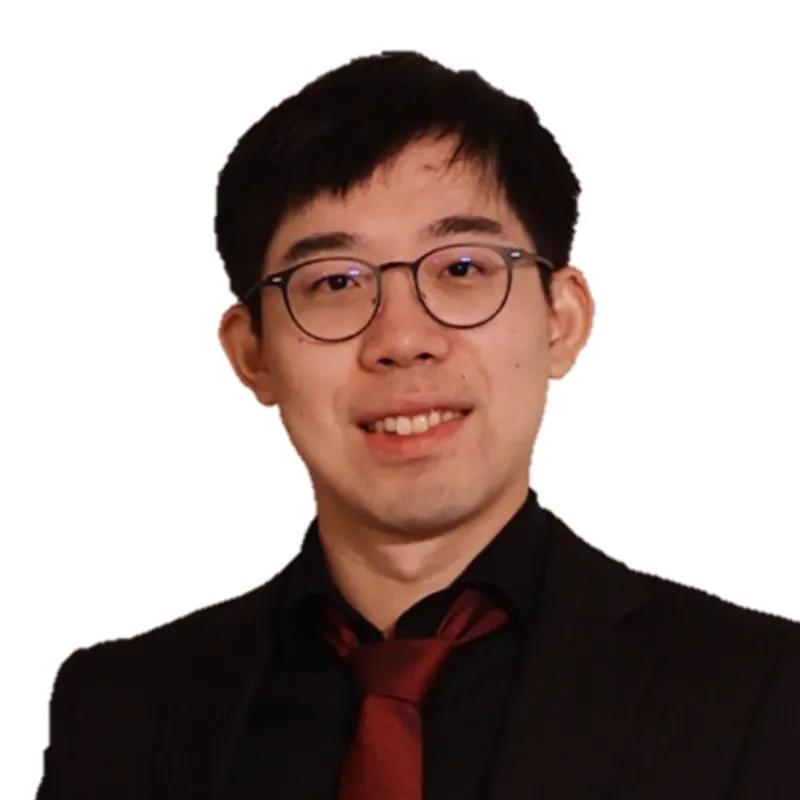
Changyang Li serves as a University teacher in the Department of Mechanical Engineering at LUT University's School of Energy Systems in Lappeenranta, Finland. His institutional contact includes email Li.Changyang@lut.fi and phone +358 50 301 7482. Dr. Li's research specializes in robotics for nuclear fusion infrastructure, with emphasis on remote maintenance systems for tokamak reactors. His work addresses critical engineering challenges in vacuum vessel assembly, port-based maintenance, and heavy-duty manipulator design for next-generation reactors like DEMO and CFETR. Key methodologies include multi-objective optimization, kinematic mechanism analysis, and data-driven modeling of robotic systems operating in high-radiation environments. Analysis of his 15 publications (2019-2025) reveals concentrated expertise in DEMO reactor maintenance robotics, particularly mobile parallel mechanisms and cable-driven systems. His research demonstrates consistent focus on enhancing remote maintainability through innovations in elephant trunk robots, port closure tools, and in-situ machining solutions, directly supporting international fusion energy initiatives. No scientific awards are documented in available sources. No information is available regarding student supervision or research grant acquisitions. Specific laboratory affiliations or research team structures are not disclosed in the source materials.
Farzin Zareian is a Professor in Civil and Environmental Engineering at the Samueli School of Engineering, University of California, Irvine. His research focuses on performance-based earthquake engineering, collapse analysis, structural reliability, and structural control. Ph.D. in Structural Engineering, Stanford University (2006) M.S. and B.S. in Civil/Earthquake Engineering, Sharif University of Technology (1997, 1995) Zareian's research integrates analytical and experimental approaches to advance earthquake resilience in structural systems. Key areas include base plate connections, seismic response of asymmetric structures, and validation of simulated ground motions. His work with the Performance Based Earthquake Engineering Laboratory emphasizes practical applications in structural safety. Recent publications highlight innovations in column base modeling, seismic demand prediction, and infrastructure recovery frameworks. Notable trends in his 2021–2025 articles include machine learning for ground motion prediction, resettable structural systems, and probabilistic drift profile analysis for multistory buildings.
Ed Pickering is a Senior Lecturer in Metallurgy and Materials Engineering at the University of Manchester. He has held roles since 2015, advancing to Reader in 2023. His affiliations include the Henry Royce Institute (Research Area Lead for Advanced Metals Processing), the Advanced Metallics System CDT and Fusion CDT Management Boards, and industrial technical advisory panels. Ed’s work bridges academic and industrial collaboration with Rolls-Royce, UKAEA, Airbus, EDF, and Sheffield Forgemasters. Ed completed his undergraduate studies (2011) and PhD (2014) in Materials Science at the University of Cambridge, followed by a Research Associate role in Cambridge’s Rolls-Royce UTC. His academic trajectory includes: Senior Lecturer (2019–present) Reader (2023–present) Ed’s research focuses on phase transformations, microstructural characterization, and alloy development for nuclear (fission/fusion) and aerospace applications. Key themes include optimizing processing routes to enhance material properties while minimizing waste and environmental impact. His studies frequently address steel, high-entropy alloys, and novel refractory alloys, emphasizing their service performance under extreme conditions. His scientific contributions span structural integrity assessment of welded joints, machine learning applications in metallurgy, and material flow uncertainties in forging. He has also advanced heat treatment optimization for reactor steels and explored cobalt-free hardfacing alloys. Frank Fitzgerald Medal (2017) Grunfeld Memorial Medal (2021) In advising and grants, Ed leads the Materials Performance Centre (MPC) and co-leads the NEWAM project on wire-additive manufacturing. He supervises research across these initiatives and collaborates with over 30 PGR students in interdisciplinary teams. His work also involves managing technical facilities like the Advanced Metal Processing platform. Ed’s laboratory affiliations include the MPC and WAAM-based Engineering and Process Metallurgy groups, where he explores sustainable materials solutions for energy and aerospace industries.
Christopher Bailey is a Professor of Advanced Semiconductor Packaging and Director of the Centre for Advanced Semiconductor Packaging at Arizona State University (ASU). He previously served as Professor of Computational Mechanics & Reliability and Associate Dean for Research at the University of Greenwich, UK. At ASU, he leads research on advanced semiconductor packaging, including roles as Principal Investigator (PI) and Co-Investigator (Co-I) on major projects such as the SRC-funded Thermo-Mechanical Modelling and US Chips Act initiatives (e.g., SWAP-Hub, SHIELD, ITSI). His research focuses on semiconductor packaging reliability, thermal management, co-design methodologies, and multiphysics modeling. Education: MBA (Technology Management), Open University, UK PhD, Thames Polytechnic, UK Research Interests: Advanced Semiconductor Packaging Thermal Management Solutions Co-Design and Multiphysics Modeling Reliability of Electronic Components His work integrates computational mechanics, materials science, and engineering to address challenges in high-reliability electronics. Recent projects emphasize predictive modeling for semiconductor packaging failures under thermal-mechanical stress. Awards: IEEE Region 8 Europe Award (2024) IEEE David Feldman Award (2022) Visiting Professorships at IIT Kharagpur (2018/2022) and Hong Kong (2018) Service & Leadership: Former President of IEEE Electronics Packaging Society (2020–2021) Associate Editor for IEEE Transactions on Components, Packaging, and Manufacturing Technology Conference Leadership (e.g., Program Chair for IEEE PAINE 2024) He has secured over $40M in research funding and authored 400+ archival papers, with expertise spanning industry collaborations (e.g., BAe Systems, Rolls Royce) and government advisory roles (EPSRC Peer Review College, UK Research Excellence Framework).
Mike Rubenstein is an Assistant Professor with joint appointments in the Department of Computer Science and Department of Mechanical Engineering at Northwestern University. He holds the Lisa Wissner-Slivka and Benjamin Slivka Professorship in Computer Science and is affiliated with the Center for Robotics and Biosystems. His educational background includes a Ph.D. in Computer Science from the University of Southern California, an M.S. in Electrical Engineering from USC, and a B.S. in Electrical Engineering from Purdue University. Prior to joining Northwestern, he completed a postdoctoral fellowship at Harvard University's Self-Organizing Systems Research Group. Rubenstein's research focuses on advancing multi-robot systems to enable capabilities beyond traditional single robots, emphasizing parallelism, adaptability, and fault tolerance at scale (hundreds to millions of robots). His work spans swarm shape control, modular self-reconfigurable robotics, bio-inspired satellite constellations, and novel sensing for air vehicle swarms. Key themes include algorithmic control for large-scale systems and hardware innovations to overcome current limitations in swarm robotics. His advising has produced notable student achievements, including Petras Swissler's Best Student Paper Award at DARS 2021 and Drew Curtis's NDSEG Fellowship. Research trends across his publications reveal a consistent emphasis on scalability, real-world applicability, and bridging hardware constraints with algorithmic innovation in swarm systems. Rubenstein actively mentors graduate students and leads projects involving swarm robotics platforms like FireAnt and PCBot. His lab focuses on developing systems where simplicity in individual robots enables emergent complexity at the swarm level, with applications ranging from space exploration to medical imaging.
Dr. Andrew Lacey is a Lecturer at the School of Civil and Mechanical Engineering, Curtin University (Perth campus), within the Faculty of Science and Engineering. He holds a BE(Hons) from the University of Western Australia and a PhD from Curtin University. He is a Chartered Professional Engineer (CPEng) and a Member of Engineers Australia (MIEAust). His research focuses on affordable, resilient, and environmentally friendly structural systems, particularly in modular steel construction, sustainable materials, and structural response to dynamic loads. Key areas include prefabricated modular structures, inter-module connections, CO2 mineralization concrete, and lightweight wall panels. His work bridges experimental testing, numerical modeling, and practical applications in sustainable infrastructure development. Dr. Lacey’s publications emphasize modular building systems’ structural performance under wind, earthquake, and other dynamic loads. Notable 2025 contributions include reviews on volumetric mining structures and CO2-mixing concrete optimization. His research also addresses challenges in delignification detection in timber components and GFRP connector performance in composite panels. He teaches engineering mechanics, structural analysis, and structural dynamics. His professional networks include ORCID (0000-0003-1171-5282), Google Scholar, and LinkedIn profiles.
Dr. Zhen Peng is a Research Fellow at Curtin University's School of Civil and Mechanical Engineering, part of the Faculty of Science and Engineering. He holds an ARC Early Career Industry Fellowship (2025–2028), focusing on developing cost-effective bridge monitoring systems using computer vision and edge computing in collaboration with Main Roads WA. His work bridges structural engineering, IoT/edge computing, and machine learning to enhance infrastructure safety. Dr. Peng earned his PhD from Curtin University (Chancellor's Commendation, 2022). His research emphasizes structural dynamics, nonlinear damage detection, and mobile crowdsensing frameworks for infrastructure monitoring. He has published extensively in top journals like Engineering Structures and Structural Control and Health Monitoring , receiving notable awards such as the 2023 Best Paper Award and a Gold Medal in the China Postdoctoral Innovation Competition. His current projects include deploying IoT-driven systems for real-time bridge condition assessment and training students via available 2025 PhD scholarships. Dr. Peng teaches courses in civil engineering and structural analysis, contributing to both academia and industry through innovation in smart infrastructure technologies.
Naratip Santitissadeekorn is a Senior Lecturer in Data Assimilation at the School of Mathematics and Physics, University of Surrey, where he is affiliated with the Mathematics at the Interface Group. His work bridges mathematics, data science, and real-world applications in urban planning, crime analysis, and geophysical fluid dynamics. Dr. Santitissadeekorn received his PhD from Clarkson University in 2008, with a dissertation titled "Transport Analysis and Motion Estimation of Dynamical Systems of Time-Series data." His doctoral research was supervised by Professor Erik Bollt. Following his PhD, he completed two significant postdoctoral positions: from 2008-2011 at the University of New South Wales, Sydney, Australia, working with Professor Gary Froyland on numerical techniques for finite-time Lagrangian coherent set identification, with applications to delimiting the polar vortex and Agulhas rings; and from 2011-2014 at the University of North Carolina-Chapel Hill, working with Professor Chris Jones on data assimilation projects. Dr. Santitissadeekorn's research focuses on inverse problems and data assimilation in geophysical fluid dynamics, the applications of Lagrangian Coherent Structures (LCS), and computational ergodic theory. His work combines theoretical mathematics with practical applications, particularly in urban growth modeling and crime analysis. He has developed innovative methods for identifying coherent structures in fluid flows, estimating transition probabilities from spatiotemporal data, and creating data-driven frameworks for urban expansion scenarios. His research demonstrates how mathematical techniques can be applied to solve real-world problems in environmental science, urban planning, and public safety. An analysis of Dr. Santitissadeekorn's recent publications (2020-2023) reveals a strong focus on urban expansion modeling and network analysis. His work on urban growth has evolved from basic cellular automata models to sophisticated frameworks that manage uncertainty through parameter clustering and growth mode identification. His research on Hawkes processes has advanced ensemble-based filtering techniques for analyzing count data in large networks. These publications demonstrate a consistent pattern of applying mathematical rigor to complex spatiotemporal phenomena, with increasing emphasis on data-driven approaches and practical applications. Dr. Santitissadeekorn has made significant contributions to data assimilation methods, particularly through the development of the extended Poisson-Kalman filter (ExPKF) for urban crime modeling. His teaching includes courses in Algebra and Bayesian Statistics, reflecting his expertise in both theoretical and applied mathematics. While specific awards are not mentioned in the available information, his extensive publication record in high-impact journals demonstrates recognition within his field. Dr. Santitissadeekorn's research has practical implications for urban planning and law enforcement. His work on urban expansion models helps planners understand different growth trajectories, while his crime modeling research contributes to improved police patrolling strategies. His interdisciplinary approach, combining mathematics, computer science, and domain-specific knowledge, positions him at the forefront of applying data science to societal challenges.
Luigi Bruno is an Associate Professor of Machine Design at the Department of Mechanical, Energy and Management Engineering (DIMEG), University of Calabria. He has held this position since 2014, following 12 years as an Assistant Professor at the same institution and Visiting Professorships at IIT Gandhinagar (2012), University of Alabama at Birmingham (2013-2017), and Free University of Bozen-Bolzano (2021). 1999 : Master's in Mechanical Engineering, University of Calabria (110/110 cum laude) 2003 : PhD in Mechanical Engineering, University of Pisa His research interests span: Experimental Mechanics : Pioneering speckle interferometry for micro-displacement measurement and residual stress analysis. Materials Science : Elastic characterization of anisotropic materials, biomedical applications of soft substrates, and 3D-printed composites. Biomedical Engineering : Mechanical behavior of biological tissues, ocular biomechanics, and dental implant material testing. Recent research trends focus on: Integrating artificial muscles into rehabilitation devices Advancing full-field optical measurement via microCT/DVC Optimizing 3D printed polymer adhesion for industrial components Exploring neuronal biomechanics on soft surfaces Scientific contributions include: CS2007A00010 patent for dual-focus speckle interferometers Deputy Editor of Optics and Lasers in Engineering (2019-present) Guest Editor for special issues on optical methods in experimental mechanics and nanobiotechnology Academic leadership extends to coordinating Mechanical Engineering committees (2021-present), serving on editorial boards, and organizing international conferences like AIAS National Conference (2018). He has secured multiple MIUR research grants and industry collaborations with Alfagomma, 3DNA, and Ferrovie della Calabria. His laboratory, Mechanics of Materials and Structures , supports both research and teaching activities with advanced optical measurement systems and computational tools for mechanical design.
Arjan P.H.W. Habraken is an Assistant Professor at the Department of the Built Environment, Eindhoven University of Technology (TU/e), specializing in lightweight and resource-efficient structural design. His work bridges architectural vision with material-efficient engineering, focusing on structural form-finding, lifespan optimization, biological materials, and adaptive systems. Academic Appointments: Assistant Professor (TU/e, 2015–present) Professional Roles: Founder of SIDstudio (2012) and MDLX (2017), structural designer collaborating with architects globally Research Interests center on sustainable structural solutions, including: Long-lifespan structures Biological material integration Topology, form, and adaptive optimization His publications emphasize innovative structural control (e.g., semi-active vibration damping) and biocomposite applications . Key projects include the Smart Circular Bridge (SCB) and Living Lab structural health monitoring. Awards include the 2021 BOOST Innovation Grant and 2020 Structural Engineer of the Year. Supervised work spans 106 projects, with teaching contributions to courses like 'Design Project High Rise Building' and 'Resource Efficient Structural Engineering.'
Pratip K. Bhattacharya, Ph.D. , is an Associate Professor in the Department of Cancer Systems Imaging and the Department of Imaging Physics at The University of Texas MD Anderson Cancer Center, with a joint appointment in the Graduate School of Biomedical Sciences at The University of Texas Health Science Center. He is a principal investigator leading the Bhattacharya Laboratory, dedicated to advancing magnetic resonance imaging (MRI) through hyperpolarization techniques for applications in cancer and cardiovascular diseases. His research focuses on developing real-time metabolic and molecular imaging methods using hyperpolarized 13 C and 15 N-labeled compounds and silicon nanoparticles. These innovative probes significantly enhance MRI sensitivity, enabling non-invasive assessment of tissue metabolism and targeted imaging. His lab's work spans three primary areas: real-time metabolic MR imaging, targeted molecular MR imaging with functionalized silicon nanoparticles, and high-resolution MR metabolomics. These efforts are aimed at improving disease diagnosis and therapy monitoring. Analysis of his recent publications reveals a strong and consistent focus on hyperpolarized MRI, particularly using silicon particles and metabolic tracers like succinate, to visualize cancer metabolism and cardiovascular conditions in vivo. His research integrates physics, chemistry, and biomedical engineering to create novel imaging tools with direct clinical translational potential. PHIP Hyperpolarization Dynamic Nuclear Polarization (DNP) Hyperpolarized Silicon Nanoparticles Real-Time Metabolic Imaging Cancer and Cardiovascular Imaging Theranostic Applications Dr. Bhattacharya actively mentors graduate students and postdoctoral fellows, including Saleh Ramezani, Jose Enriquez, Dontrey Bourgeois, and Kang-Lin Hsieh. He collaborates closely with physician-scientists, radiologists, and oncologists to ensure his imaging science innovations address critical clinical needs. His laboratory is supported by grant funding, facilitating the development of cutting-edge imaging technologies. The Bhattacharya Laboratory is a key component of the Division of Diagnostic Imaging at MD Anderson, fostering a collaborative environment for interdisciplinary research. The lab focuses on translating fundamental discoveries in hyperpolarization physics into practical tools for improving cancer care.