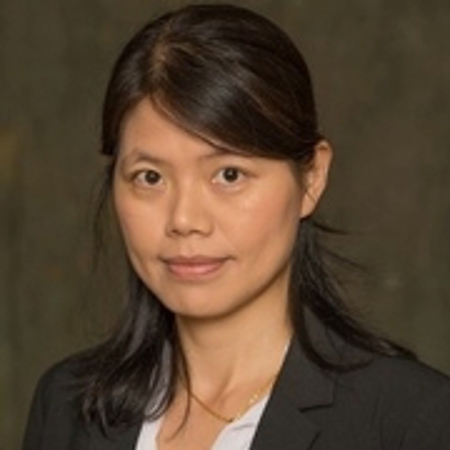
Huey-Wen Lin is an Associate Professor at Michigan State University with joint appointments in the Department of Computational Mathematics, Science and Engineering and the Department of Physics & Astronomy. She joined MSU in 2016 as a high-energy particle theorist specializing in lattice Quantum Chromodynamics (QCD). Her research utilizes high-performance computing to study proton/neutron structure and fundamental particle interactions. Education She earned her Ph.D. in Physics from Columbia University in 2006. Research Focus Her work bridges theoretical particle physics and computational mathematics, with emphasis on: Lattice QCD simulations of hadronic structure Parton distribution functions and gluon dynamics Machine learning applications in particle physics Quantum computing algorithms for QCD Precision studies of nucleon properties Recent publications demonstrate strong focus on gluon distributions in hadrons, lattice-informed machine learning frameworks, and theoretical tools for neutrino scattering experiments. Her work consistently integrates high-performance computing with fundamental physics. Awards and Leadership NSF CAREER Award (2017) for research on "Constraining Parton Distribution Functions for New-Physics Searches" Organizing Chair of the 36th International Symposium on Lattice Field Theory Contributions She has co-edited foundational texts ( Lattice QCD for Nuclear Physics ) and develops computational methodologies advancing precision in hadronic physics. Her leadership in large-scale collaborations (e.g., CTEQ-TEA) strengthens synergy between lattice calculations and experimental particle physics.
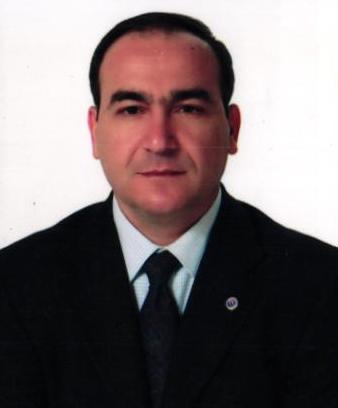
Jose Angel Cid Araujo is a full-time Professor in the Department of Mathematics at the University of Vigo, Spain. He is affiliated with the School of Computer Engineering and the CITMAga Interuniversity Research Center, based at the Ourense campus. His research focuses on mathematical analysis, particularly differential equations and boundary value problems. Dr. Cid Araujo earned his Doctorate from the University of Santiago de Compostela in 2005 with a thesis titled 'Extremal solutions for discontinuous differential equations,' supervised by Dr. Rodrigo López Pouso and Dr. Alberto Cabada Fernandez. His research interests include Ordinary Differential Equations, Boundary Value Problems, Fixed Point Theory, and Mathematical Analysis. He has made significant contributions to discontinuous differential equations, Hill's equation, and the Liebau phenomenon, combining analytical methods with applications to physical systems. His work on Green's functions, maximum principles, and stability analysis has been widely cited in the mathematical community. Analysis of his recent publications (2015-2023) reveals continued focus on differential equations, exploring stability, periodic solutions, and existence theorems. His work increasingly incorporates topological methods and fixed point theory to address complex nonlinear problems, with applications to fluid dynamics and the Liebau pumping effect. Dr. Cid Araujo maintains productive collaborations with mathematicians worldwide, most notably Alberto Cabada (23 joint publications) and Rodrigo López Pouso (18 joint publications), as well as international collaborators like Feng Wang and Mirosława Zima. His research appears in prestigious journals including Journal of Mathematical Analysis and Applications and Nonlinear Analysis.
Roma Kačinskaitė is a Professor at the Department of Mathematics and Statistics within the Faculty of Informatics at Vytautas Magnus University. Her research focuses on analytic number theory, probability theory, and gender equality policies in education. Doctor of Sciences (2002) ORCID: 0000-0003-2656-1052 Scopus ID: 6504101661 Her work spans zeta function theory (Riemann, Hurwitz, Matsumoto classes), joint universality theorems, and computational mathematics. Recent supervised theses explore topics like: ICT integration in calculus pedagogy Discrete universality theorems for zeta function classes Functional independence of periodic zeta functions Public-key cryptographic algorithms Computer-assisted evaluation of Hurwitz zeta function values Student advising emphasizes mathematical olympiads, zeta function analysis, and computational methods. Publications reflect interdisciplinary approaches combining pure mathematics with educational innovation and cryptographic applications.
Roland Tomašiūnas is a Professor at Vilnius University's Faculty of Physics and a Principal Investigator at the Institute of Photonics and Nanotechnology (IPN) . His research spans Materials Engineering (T 008) and Physics (N 002) , focusing on semiconductor technologies and photonic materials. Research Focus : MOCVD technology, GaN-based compounds, perovskite materials, quantum structures, and photonic crystals. Publication Trends : Recent work explores carrier dynamics in LEDs, polarity inversion in GaN structures, and oxide film characterization. His studies integrate nanotechnology with optoelectronics , emphasizing advanced device interfaces. Academic Leadership : Coordinated international projects like SMART (2018-2021) and JSPS Japan-Lithuania joint research (2021-2023). Supervises PhD candidate Marek Kolenda and teaches graduate courses in Advanced Material Microscopy and Metamaterials . Collaborative Impact : Active in doctoral committees and standards boards, with roles in the Committee for Doctoral Studies (Materials Engineering) and Technical Committee 73 Nanotechnologies .
Professor Uwe Ring at Stockholm University's Department of Geological Sciences specializes in structural geology and tectonics, with a focus on mountain building, extensional tectonics, and climate-tectonic interactions. His research spans diverse regions including the East African Rift, Southern Alps (New Zealand), Al Hajar Mountains (Oman), Swedish Caledonides, and the Aegean Sea. Key research themes: Tectonic-climate feedback loops, fault zone permeability, geothermal field characterization, and transdisciplinary projects bridging Earth and Life Sciences Current projects investigate: Uplift mechanisms in extensional settings (Rwenzori Mountains); stress tensor control on joint formation in fault zones; and the evolution of the Southern Alps foreland system Scientific contributions include: Over 40 Google Scholar publications (2016-2025) applying advanced geochronology (U-Pb, garnet diffusion, carbonate dating) to resolve tectonic histories Innovative structural analysis of fault systems in Greece, Turkey, New Zealand, and Sweden Development of transdisciplinary frameworks linking geological processes with biodiversity and human evolution studies Technical expertise includes: LA-ICPMS U-Pb dating Thermochronology and (U-Th)/He age analysis Geophysical methods for fault zone characterization 3D geological modeling using remote sensing and field data
Sadettin Kapucu is a Professor at the Department of Mechanical Engineering , Faculty of Engineering , Gaziantep University , Turkey. With over 30 years of academic experience, he specializes in robotics, mechatronics, TRIZ-based inventive problem-solving, and vibration control systems. His career spans roles from Research Assistant (1987-1990) to Professor (2006-present) at Gaziantep University, and he has served as Head of the Mechanics and Dynamics Division since 2016. His educational background includes a PhD (1994) and MS (1990) in Mechanical Engineering from Gaziantep University and METU, respectively. PhD: Gaziantep University (1994) MS: Middle East Technical University (1990) BS: Middle East Technical University (1987) Kapucu’s research focuses on robot dynamics , TRIZ methodology , flexible systems control , and mechatronic design . He has pioneered techniques like hybrid input shaping for vibration suppression and variable stiffness actuators for rehabilitation robotics. His work bridges theoretical innovation and practical applications in industrial, medical, and agricultural robotics. Scientific achievements include the 2019 2nd Best Paper Award at ICICT 'xx19 and the 2009 Elginkan Foundation Technology Award . He has supervised over 18 graduate theses and secured 13 research grants, including TÜBİTAK-funded projects on olive oil processing and telehandler design.
Eugene Demidenko, PhD, is a Professor with multiple appointments at Dartmouth College, holding positions in Biomedical Data Science, Community and Family Medicine, Mathematics, and Engineering at the Geisel School of Medicine. His academic career spans several decades with significant contributions to statistical methodology and applications. Dr. Demidenko earned his PhD from the Central Economics-Mathematics Institute of Academy of Sciences in 1975 and an MSD from Moscow Pedagogical University in 1971. His educational background laid the foundation for his interdisciplinary approach to statistics and data science. His research focuses on developing exact optimal statistical inference methods for small samples, challenging traditional approaches that rely on asymptotic approximations. Dr. Demidenko's work bridges theoretical statistics with practical applications in biomedical research, epidemiology, and engineering. He has pioneered the M-statistics framework, which combines maximum concentration (MC) and mode (MO) approaches under a single methodological umbrella. His research extends to statistical analysis of images, tumor regrowth modeling, ill-posed inverse problems, and optimal portfolio allocation. Dr. Demidenko's publications demonstrate a consistent focus on improving statistical methodology across diverse fields. His work shows particular strength in developing exact inference procedures that avoid the limitations of traditional methods when sample sizes are small. The progression from his earlier work on mixed models to his recent M-statistics framework reveals an evolving research trajectory focused on addressing fundamental limitations in statistical practice. Ziegel Book Award in Statistics 2022 for "M-statistics: Optimal Statistical Inference for a Small Sample" Ranked among Top 2% World scientists according to Stanford University database Dr. Demidenko teaches a range of courses including QBS 124 (Advanced Biomedical Data Science), QBS 180 (Data Visualization), QBS 177 (Methods of Statistical Learning for Big Data), and mathematics courses on probability and statistical inference. While specific grant information isn't detailed in the provided text, his research output suggests substantial funding support for his methodological developments and applications. His work has significant implications for biomedical research where small sample sizes are common. His laboratory and research team focus on developing and implementing novel statistical methodologies, with a GitHub presence showing active development of R code for statistical methods. This computational approach enables practical implementation of his theoretical advances for researchers across disciplines.
Koray Aydin is an Associate Professor of Electrical and Computer Engineering at Northwestern University's McCormick School of Engineering. He leads the Metamaterials and Nanophotonic Devices Lab (MNDL) and holds a joint appointment in the PhD Program in Applied Physics, with research spanning multiple departments and interdisciplinary collaborations. Dr. Aydin earned his Ph.D. in Physics from Bilkent University in 2008 and his B.S. in Physics from the same institution in 2002. His academic trajectory demonstrates a clear progression from foundational physics training to leadership in applied photonics research, culminating in his promotion to tenured Associate Professor. His research program centers on nanophotonics , strategically positioned at the intersection of electrical engineering, applied physics, materials science, and nanoscience. The MNDL investigates optical metamaterials, plasmonics, and solid-state nanophotonics to understand and manipulate light-matter interactions at the nanoscale. Current research thrusts include metamaterials for subwavelength light control, plasmonic absorption engineering, 2D materials for optoelectronics, inverse-designed millimeter-wave and optical metadevices, and tunable nanophotonic systems using phase transition materials like vanadium dioxide. His group employs advanced electromagnetic simulation, nanofabrication techniques, and nanoscale optical characterization to develop devices with novel functionalities. Analysis of his publication record reveals a strategic evolution toward machine learning-enabled inverse design methodologies and DNA-assembled dynamic metamaterials. Recent work demonstrates increasing focus on practical applications in telecommunications (including 5G networks), defense technologies, and healthcare diagnostics, with particular emphasis on creating tunable, reconfigurable optical systems that overcome traditional limitations of bulkiness and narrow bandwidth. Dr. Aydin's research has been recognized through invitations to present at prestigious conferences including SPIE Optics and Photonics and the Gordon Research Conference on Plasmonics and Nanophotonics. His work has received significant media attention, highlighted by Northwestern News, Newsweek, photonics.com, phys.org, and Science Daily, particularly for breakthroughs in DNA-assembled metamaterials and 3D-printed optical devices. As an educator and mentor, Dr. Aydin has successfully guided multiple graduate students through thesis completion, with alumni like Dr. Liu and Francois Callewaert transitioning to impactful careers in industry (Microsoft) and academia. His research program is supported by substantial external funding that sustains a vibrant team of postdocs, graduate students, and visiting researchers from institutions worldwide, including collaborations with Chad Mirkin's group on DNA-mediated nanoparticle assembly. The Metamaterials and Nanophotonic Devices Lab maintains state-of-the-art facilities for nanofabrication and optical characterization, while fostering international collaborations with researchers from Tel Aviv University and other institutions. Current projects focus on developing next-generation photonic devices with applications ranging from ultra-compact eyeglasses to invisible smartphone cameras and adaptive sensor systems for aerospace applications.
Jun Zhang, M.Eng., serves as a Tutor at the Technical University of Munich (TUM) under the Professorship for Environmental Sensors and Modeling. His work focuses on portable laser-based sensor development and inverse modeling of urban CO 2 emissions, aligning with TUM's research in environmental monitoring and atmospheric science. Education : Master of Engineering (M.Eng.) Research Interests : Portable laser-based calibration-free gas sensor development Inverse estimation of urban CO 2 emissions using surface and column observations Teaching : Tutor - Advanced Seminar Environmental Sensing Tutor - Joint practical course: Electromagnetic Sensors and Measurement Systems Awards : Hans Fischer Fellowship Contact: Room N2307, Phone +49 (89) 289 23328
Carlos Torres-Verdín is Full Professor at The University of Texas at Austin's Cockrell School of Engineering, holding the Brian James Jennings Memorial Endowed Chair and Zarrow Centennial Professorship in Petroleum Engineering. He directs the Joint Industry Research Consortium on Formation Evaluation and leads the Electromagnetics and Acoustics Group. His educational background includes a B.Sc. in Engineering Geophysics from Mexico's National Polytechnic Institute, M.S. in Electrical Engineering from UT Austin (1985), and Ph.D. in Engineering Geoscience from UC Berkeley (1991). Prior industry experience includes roles at Schlumberger-Doll Research (1991-1997) and YPF S.A. (1997-1999). Research focuses on computational geosciences for energy applications, integrating Geophysics, Well Logging, Petrophysics, and Machine Learning to solve inverse problems in reservoir characterization. His work bridges theoretical modeling with industrial field applications, emphasizing multi-physics approaches for complex formations. Honorary Membership, SEG (2017) Conrad Schlumberger Award, EAGE (2017) Texas Ten Award, UT Austin (2018) Gold Medal, SPWLA (2014) Formation Evaluation Award, SPE (2008) Research is funded by DOE, NSF, and 40+ energy companies through his industry consortium. He mentors graduate students in advanced formation evaluation techniques with direct industry collaboration. His editorial roles include Editor of Petrophysics and Assistant Editor for Geophysics. The Electromagnetics and Acoustics Group provides students access to state-of-the-art instrumentation and proprietary field data through its industry consortium, fostering innovation in well logging and reservoir characterization technologies.
Anton Antonov is a Lecturer in Japanese Linguistics at the National Institute of Oriental Languages and Civilizations (INALCO), affiliated with the Department of Japanese Studies. He is a research member of the Center for Linguistic Research on East Asia (CRLAO), focusing on the 'Sino-Tibetan and its East Asian Context' team. His professional address is CRLAO, INALCO, 2 rue de Lille, 75007 Paris. He obtained his PhD from INALCO in 2007 with a dissertation titled 'Le rôle des suffixes en /+rV/ dans l'expression du lieu et de la direction en japonais et l'hypothèse de leur origine altaïque' (The role of /+rV/ suffixes in expressing location and direction in Japanese and the hypothesis of their Altaic origin). Antonov's research centers on: Historical and comparative linguistics of Japanese, Korean, and Altaic languages (Turkic, Mongolic, Tungusic) Diachronic and diatopic variations of Japanese Accent reconstruction in Japanese, Korean, and Basque Direct/inverse systems and allocutive phenomena cross-linguistically His publications (2011-2022) demonstrate consistent focus on linguistic typology, historical reconstruction, and language contact in East Asia. Recent work challenges the Transeurasian hypothesis while maintaining expertise in Altaic-Japonic-Korean connections. Articles frequently address grammaticalization, verb systems, and pragmatic marking across diverse language families. Antonov participates in research projects including: Creation of a database of phonogram-notated ancient Japanese texts with glosses/translations Compilation of a dictionary of ancient Japanese He collaborates internationally through conferences like the Paris Meeting on East Asian Linguistics and Phon-UDL workshops. His lab affiliation is CRLAO (CNRS-EHESS-Inalco joint research unit) at Campus Condorcet.
Assoc. Prof. Dr. Ali Özgün Konca serves as Associate Professor in Bogazici University's Geophysics Department at the Kandilli Observatory and Earthquake Research Institute (KRDAE), holding this position since September 2019 after serving as Assistant Professor from 2011-2019. His research centers on earthquake modeling and fault behavior analysis using strong-motion, teleseismic, and geodetic data to investigate slip distribution, rupture velocity, and long-term fault coupling mechanisms. Education Ph.D. in Geophysics, California Institute of Technology (2008) B.S. in Physics, Koc University (2000) Kocaeli Korfez Oruc Reis Anatolian High School (1995) Dr. Konca's research examines earthquake source processes through integrated analysis of seismic and geodetic datasets. His work spans crustal deformation monitoring, fault zone mechanics, and rupture dynamics across diverse tectonic settings including subduction zones and continental strike-slip systems. He specializes in joint inversion techniques combining teleseismic, GPS, InSAR, and strong-motion data to resolve complex earthquake kinematics. His publication portfolio (2000-2021) reveals consistent focus on major seismic events in Turkey and surrounding regions, including the Van, Bodrum-Kos, and Silivri earthquakes, alongside international events like Pisco (Peru) and Zakynthos (Greece). These studies demonstrate methodological evolution toward multi-data integration for precise rupture characterization. Dr. Konca has secured TUBITAK funding (2013-2015) for Van earthquake research and actively recruits graduate students from engineering, physics, mathematics, and geophysics backgrounds. His teaching includes Mathematical Methods in Geophysics (GPH 503), Crustal Dynamics (GPH 520), and Geophysical Inverse Methods (GPH 644). As part of Bogazici University's earthquake research ecosystem, he contributes to the institution's leadership in Mediterranean seismic monitoring through the Kandilli Observatory infrastructure.
Stephen Boedo is a Professor in the Department of Mechanical Engineering at the Rochester Institute of Technology's Kate Gleason College of Engineering. His research focuses on computational methods and design guidelines for dynamically loaded conformal fluid-film bearing systems. Dr. Boedo serves as course coordinator for advanced strength of materials, mechanics of solids, finite elements, and lubrication courses. Dr. Boedo received his BA in Computer Science from the State University of New York at Buffalo, and his MS in Theoretical and Applied Mechanics and PhD in Mechanical Engineering from Cornell University. He has also served as a Visiting Professor at Cornell University. Dr. Boedo's primary research area focuses on the development of new computational methods and design guidelines for dynamically loaded conformal fluid-film bearing systems. He studies the interaction of thin lubricant films with structurally compliant surfaces, including effects of geometric irregularity, lubricant supply, and lubricant cavitation on predicted mechanical system performance. His analytical methods have proven useful for understanding engine and compressor bearings, the nonlinear behavior of fluid-film rotors, and the lubrication of artificial human joints. Experimental and numerical studies pertaining to the tribological characteristics of MEMS bearing systems and spherical bearings for optical polishing applications are also part of his research agenda. Analysis of Dr. Boedo's recent publications reveals a strong focus on mass-conserving approaches to lubrication modeling, squeeze film dynamics, and computational methods for bearing analysis. His work spans traditional mechanical engineering applications like engine bearings while also extending into biomedical applications such as artificial hip joints. The integration of computational methods with practical engineering design appears to be a consistent theme throughout his research career. Editorial Board, IMechE Journal of Engineering Science Former Associate Editor, ASME Journal of Tribology Dr. Boedo teaches several key courses in mechanical engineering including MECE-117 Introduction to Programming for Engineers, MECE-350 Strengths II, MECE-605 Finite Elements, and MECE-785 Mechanics of Solids. As course coordinator, he oversees curriculum development for advanced strength of materials, mechanics of solids, finite elements, and lubrication courses. Dr. Boedo's research involves both theoretical computational work and experimental studies, particularly in the areas of tribology and bearing systems. His patent portfolio includes innovations in artificial hip joint replacement systems and microbearing devices, demonstrating the practical applications of his theoretical work.
Mehmet Alper holds the following academic positions: Visiting Professor at Beibu Gulf University (BGU) Former Assistant Professor in Internet of Things at EMU-Beibu Gulf Joint College (July 2024 – July 2025) Former Postdoctoral Engineer in Cybersecurity at Eastern Michigan University (July 2023 – July 2024) Former R&D Engineer at Warren Tech Center, Detroit (July 2022 – July 2023) His educational background includes: PhD in Electrical & Computer Engineering, Michigan State University, East Lansing, MI, 2022 Alper's research integrates Internet of Things, Cybersecurity, and Biomedical Engineering through advanced signal processing and computer vision techniques. His work on tremor detection systems and pose estimation algorithms demonstrates practical applications in neurological disorder assessment, while his materials science research on nanocomposite diodes bridges electronic hardware development. This interdisciplinary approach uniquely connects hardware engineering with medical diagnostics. Analysis of his 2017-2020 publications reveals a consistent focus on biomedical signal processing—particularly tremor quantification via optical flow fusion—and electromagnetic methods for subsurface imaging. The trajectory shifts from materials-focused diode research (2018) toward AI-driven motion analysis (2020), indicating evolving expertise from hardware characterization to real-time biomedical software solutions with applications in remote healthcare monitoring.
Dr. Jonghyun Harry Lee is an Associate Professor at the University of Hawai'i at Manoa with joint appointments in the Water Resources Research Center and Department of Civil and Environmental Engineering. He holds a PhD in Civil and Environmental Engineering from Stanford University (2014), MS from Colorado State University (2009), and BS from Seoul National University (2007). His research integrates high-performance computing with environmental modeling, focusing on: Scalable inverse methods for subsurface systems Physics-informed neural operators for coastal dynamics Uncertainty quantification in hydrological systems Machine learning applications for satellite hydrology Generative models for geophysical characterization Recent publications (2021-2025) demonstrate strong emphasis on ML-enhanced environmental modeling, with 70% of articles combining deep learning with traditional physical models. Primary domains include contaminant transport, carbon sequestration monitoring, and coastal hydrodynamics. Awards and fellowships: NREL FACES Fellow (2024) NSF-NASA EPSCoR Fellow (2023-2025) Google Cloud Research Innovator (2022) ORISE Faculty Fellow (2018-2023) Charles H. Leavell Fellowship, Stanford Dr. Lee currently advises multiple PhD students focused on ML applications in environmental systems. His group utilizes UH HPC, Google Cloud, and AWS resources, supported by NSF, NASA, and DOE grants. He leads development of open-source tools like pyPCGA for geostatistical inversion and teaches graduate courses in computational hydrology.