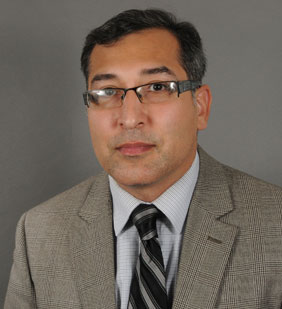
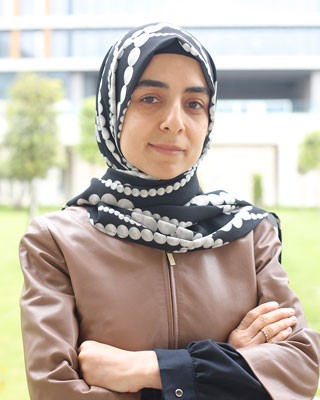
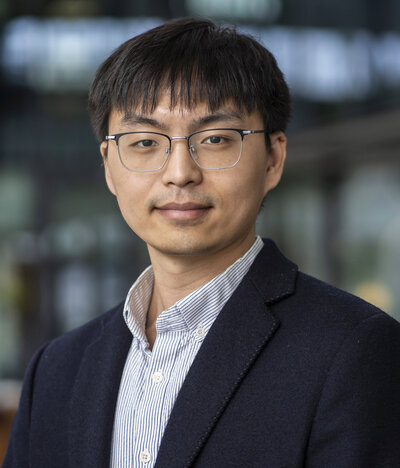
Davood Golmohammadi is an Associate Professor in the Department of Management Science & Information Systems at the University of Massachusetts Boston's College of Management. His research focuses on operations management, supply chain modeling, lean manufacturing, six sigma, and machine learning applications in healthcare and logistics. Research Interests : Golmohammadi explores interdisciplinary intersections of Lean/Six Sigma methodologies with healthcare operations, green logistics, and service disruptions. Recent work integrates machine learning for uncertainty reduction in outpatient scheduling and analyzes environmental policy impacts on manufacturing financial performance. Scientific Awards : Best Paper Award (2022, Decision Sciences Institute) Fulbright Award (2019, Hungary) Research Fellowship (2017, Iran's National Elites Foundation) Dean’s Award for Distinguished Research (2010) Certified Six Sigma Black Belt (ASQ, 2007) Contributions : Over 25 refereed publications across journals like International Journal of Logistics Management , Omega , and IEEE Transactions on Engineering Management , with systematic reviews on remanufacturing and carbon tax impacts. His work bridges machine learning with traditional operations frameworks in airline, automotive, and healthcare sectors.
Ahmet Kürşad Türker is a Professor at the Department of Industrial Engineering , Faculty of Engineering and Natural Sciences, Sakarya University. He earned his doctorate in Industrial Engineering from Sakarya University, following undergraduate and master's degrees from ITU Sakarya Faculty of Engineering and Yıldız Technical University, respectively.
Alexander Lincoln Read is a Professor at the University of Oslo's High Energy Physics department, specializing in precision measurements of the Higgs boson through the ATLAS experiment at CERN. His research bridges particle physics and advanced statistical/data analysis methods. Education: BS (1981, University of Illinois) | PhD (1986, University of Colorado) Employment: NAVF Scientific Assistant (1986-89) | CERN Scientific Associate (1989-91) | Professor (1993-present) Research Focus: Higgs boson properties, Dark Matter connections, CLs statistical technique, Compressed Sensing, Gaussian Processes, and Machine Learning applications in particle physics. Scientific Contributions: Key role in Higgs boson discovery (2012), development of the CLs method, and detector calibration innovations. Scientific awards: CLs technique creator | Higgs discovery contributor Projects: ATLAS experiment, NorLHC (extreme collision rates), Insights ITN (statistics network), Strategic Dark Matter Initiative.
Dr. Zeynep ADAK serves as a full-time Lecturer at 29 Mayis University, specializing in computational optimization and industrial systems. Her academic foundation includes doctoral research in multiprocessor scheduling and master's work in computational wave modeling. Her educational journey features: Bachelor of Science in Industrial Engineering, Marmara University (2007) Master of Science in Computational Science and Engineering, Boğaziçi University (2011) Doctor of Philosophy in Industrial Engineering, Marmara University (2020) ADAK's research bridges theoretical optimization with industrial applications, focusing on job shop scheduling and metaheuristic methods. Her work extends to artificial intelligence in production management and smart manufacturing systems, demonstrating strong interdisciplinary connections between operations research and practical engineering solutions. Recent investigations include disaster response network analysis during the 2023 Kahramanmaraş earthquakes. Publication trends reveal consistent contributions to scheduling theory since 2013, with accelerating output after her 2020 doctorate. Her work spans operations research, computer science, and industrial engineering domains, increasingly incorporating real-world applications in digital manufacturing and crisis management while maintaining core expertise in combinatorial optimization.
Prof. Yossi Bukchin is a Professor in the Department of Industrial Engineering at The Iby and Aladar Fleischman Faculty of Engineering, Tel Aviv University. His research focuses on manufacturing systems, production engineering, and operations research with particular expertise in assembly line design and optimization. His primary research interests include: Assembly systems design Assembly line balancing Facility design Operational scheduling Human factors engineering Warehouse and storage systems Prof. Bukchin's recent work demonstrates a strong focus on puzzle-based storage systems, assembly line optimization, and operations management. His research spans both theoretical developments in scheduling algorithms and practical applications in manufacturing and logistics systems. He has made significant contributions to the understanding of Bucket Brigade systems, puzzle-based storage optimization, and assembly line balancing with mixed-model production. His scholarly output shows evolution from early work on robotic assembly lines to contemporary research on machine learning applications in warehouse systems and advanced optimization techniques for modern manufacturing challenges. Contact information: Email: bukchin@tau.ac.il Phone: 03-6407941 Fax: 03-6407669 Office: Wolfson - Engineering
Prof. Tal Raviv is an Associate Professor in the Department of Industrial Engineering at the Iby and Aladar Fleischman Faculty of Engineering, Tel Aviv University. He serves as head of the Shlomo Shmeltzer Institute for Smart Transportation and co-heads the Transportation and Logistics Lab. His educational background includes: BA in Economics from Tel Aviv University (1993) MBA from Recanati School of Business, Tel Aviv University (1997) PhD in Operations Research from Technion (2003) Postdoctoral fellowship at Sauder School of Business, University of British Columbia (2004-2006) Prof. Raviv's research focuses on operations research with emphasis on transportation and logistics, particularly smart transportation and sustainable logistics. His work develops optimization models for bike-sharing systems, vehicle routing, and urban mobility to enhance efficiency and user satisfaction while addressing sustainability challenges. Recent publications reveal a strong trend in shared mobility systems optimization, including inventory control and repositioning strategies for bike-sharing networks, analysis of user dissatisfaction due to unusable vehicles, and flexible delivery solutions using parcel lockers. His research bridges theoretical operations research with practical industry applications in transportation networks. Prof. Raviv has advised startup companies, applying his expertise to real-world business challenges. While specific grant details are not provided, his work demonstrates significant industry relevance through practical implementations. He leads the Transportation and Logistics Lab and the Shlomo Shmeltzer Institute for Smart Transportation, where his team develops innovative solutions for modern transportation challenges including data-driven routing, sustainable logistics, and smart infrastructure optimization.
Dr. Panagiotis Repoussis serves as Associate Professor of Operations Research and Supply Chain Management at the Department of Marketing and Communication within the School of Business at Athens University of Economics and Business (AUEB). Previously, he held positions as Assistant Professor at Stevens Institute of Technology and visiting Lecturer at the University of Piraeus and Bayes School of Business at City University of London. His academic foundation includes a Diploma in Chemical Engineering from the National Technical University of Athens (2002), followed by graduate studies at Imperial College London and AUEB where he completed his doctoral dissertation in November 2008. His educational trajectory reflects a strategic shift from chemical engineering to operations research specialization. Dr. Repoussis specializes in Operations Research with concentrated expertise in Supply Chain Management , Vehicle Routing and Scheduling , and Production Systems Optimization . His research integrates mathematical modeling with computational intelligence to solve complex combinatorial optimization problems across logistics networks, manufacturing operations, and transportation systems. Key methodological contributions include advanced algorithms for dynamic scheduling under uncertainty and real-time decision support frameworks. Analysis of his 15 most recent publications (2019-2025) reveals a strong research trajectory toward Industry 4.0 applications, with increasing focus on IoT/AGV integration in manufacturing, disruption-resilient logistics, and robust optimization under stochastic conditions. Vehicle routing problems remain his dominant research theme, now extended to cross-docking operations, profit-oriented routing, and humanitarian logistics contexts. As principal investigator, Dr. Repoussis has secured research funding from NSF, EU programs, non-profit organizations, and private sector partners across Europe and North America. His academic service includes editorial board membership for Transportation Research Part E and Advances in Operations Research, leadership roles in the Hellenic Operational Research Society and Production and Operations Management Society, and organization of major conferences including Odysseus and MathSports. His professional activities demonstrate deep engagement with both theoretical advancements and practical implementations, particularly through development of decision support systems for waste management, healthcare logistics, and energy-aware production scheduling. Current initiatives emphasize the convergence of prescriptive analytics with emerging digital technologies in operational planning contexts.
Yingqian Zhang is an Associate Professor in the Information Systems group at the Industrial Engineering and Innovation Sciences department of Eindhoven University of Technology (TU/e). She is affiliated with the Eindhoven Artificial Intelligence Systems Institute (EAISI), specifically with the EAISI High Tech Systems and EAISI Foundational groups. Her research focuses on applying Artificial Intelligence to solve complex decision-making problems across various domains including logistics, transportation, manufacturing, and e-commerce. Dr. Zhang received her PhD in Computer Science from the University of Manchester, UK. Prior to joining TU/e, she served as an Assistant Professor in the Econometrics Institute at Erasmus University Rotterdam and as a postdoc researcher in the Algorithmics group at TU Delft. She was also a visiting professor at the Institute for Advanced Computer Studies at University of Maryland, College Park, USA. Her research expertise lies at the intersection of Artificial Intelligence and optimization, with particular focus on machine learning, deep reinforcement learning, and trustworthy data-driven optimization. Dr. Zhang develops socially aware algorithms that can optimize decisions in data-rich environments. Her work bridges the gap between theoretical AI advancements and practical applications in industrial settings, addressing real-world challenges through innovative algorithmic solutions. She is particularly interested in how AI can support human decision-making while maintaining transparency and trustworthiness. Dr. Zhang's recent publications reveal a strong trend toward applying graph neural networks and reinforcement learning to complex scheduling and optimization problems. Her work demonstrates increasing sophistication in handling stochastic elements in decision-making processes, with applications spanning healthcare diagnostics, logistics, transportation, and manufacturing. She has made significant contributions to the field of neural combinatorial optimization, particularly for job shop scheduling problems and vehicle routing. Dr. Zhang has received several prestigious awards recognizing her contributions to the field: Winner of the MLVRP2023 GECCO competition (2023) Best Paper Award from Omega-International Journal of Management Science (2017) Best Industrial Paper Award (2020) Best Student Paper Award (2019) Best Student Paper Award of ICAART 2022 (2022) As a dedicated mentor, Dr. Zhang supervises numerous PhD students including Mohsen Abbaspour Onari, Abdo Abouelrous, Luca Begnardi, Xia Jiang, Chengpeng Hu, Minshuo Li, Robbert Reijnen, Jesse van Remmerden, Bart von Meijenfeldt, Ya Song, and Igor Smit. Her research is supported by various grants, including the LEO (Learning and Explaining Optimization) project co-funded by Holland High Tech | TKI HSTM via the PPP allowance scheme for public-private partnerships. Dr. Zhang actively contributes to the academic community as the Chair of the Benelux Association for Artificial Intelligence (BNVKI) and as a member of the Technical Board for the European Big Data Value Association (BDVA). She serves as an associate editor for the "Annals of Mathematics and Artificial Intelligence" journal and participates in the technical Program Committee for major AI conferences such as IJCAI, AAAI, AAMAS, and ECAI. She is also on the executive committee of the Data Science meets Optimisation (DSO) working group of EURO to promote collaboration between AI and Operations Research communities.
Yaoxin Wu is an Assistant Professor at the Eindhoven University of Technology, affiliated with the Department of Industrial Engineering and Innovation Sciences. His research bridges deep learning and combinatorial optimization to solve complex problems in transportation, scheduling, and network design. Education : PhD in Computer Science from Nanyang Technological University (2023). Wu specializes in artificial intelligence and operations research , focusing on graph neural networks, stochastic programming, and multi-objective optimization. His work has significant applications in UAV routing and on-demand delivery systems. His 2025 publications highlight trends in neural combinatorial optimization for stochastic job shop scheduling, ride-hailing, and drone logistics. Key subfields include deep reinforcement learning, preference modeling, and topological graph learning. He has supervised 9 students, including PhD candidates Xia Jiang and Igor Smite, and Master’s students like Venkata Roshan Mannepu and Floor Halkes. Wu's research is funded by projects like LEO (Holland High Tech | TKI HSTM) and SURF Cooperative grants. His educational activities include teaching Fundamentals of Algorithmic Programming and AI-Driven Business Operations , emphasizing data-driven methods for manufacturing processes.
Тетяна Сергіївна Дьячук є старшим викладачем кафедри комп'ютерних систем та мереж Факультету комп'ютерних наук і технологій Запорізької національної технічної політехніки, де працює з 2006 року після закінчення університету з відзнакою. Вона є активним членом академічної спільноти, зосереджуючись на сучасних напрямках комп'ютерних наук та технологій. Освіта: Запорізька національна технічна політехніка, 2006 рік, спеціальність "Комп'ютерні системи та мережі", кваліфікація "Магістр комп'ютерних систем та мереж" (з відзнакою) Запорізька національна технічна політехніка, 2006 рік, кваліфікація "Менеджер-економіст" Наукові інтереси Тетяни Сергіївни охоплюють ключові напрями сучасних комп'ютерних технологій, зокрема розподілені та паралельні обчислення, блокчейн-технології, децентралізовані платформи та оптимізацію обчислень. Вона також активно займається дослідженнями в галузі Android-програмування та розробки мобільних додатків. Її наукова робота характеризується практичною спрямованістю, що знаходить відображення в численних публікаціях та конференціях. Аналіз наукових публікацій Тетяни Сергіївни показує чітку еволюцію її наукових інтересів від фундаментальних досліджень розподілених систем та алгоритмів планування ресурсів до сучасних технологій блокчейну, штучного інтелекту та автоматизації процесів програмування. Особливо вражає її здатність поєднувати теоретичні дослідження з практичними застосуваннями в різних галузях, від медичної діагностики до розробки мов високого рівня. Наукові досягнення: Понад 15 наукових публікацій в провідних наукових виданнях Активна участь у міжнародних наукових конференціях Реєстрація в наукометричних базах: Scopus, Web of Science, Google Scholar, ORCID Тетяна Сергіївна активно бере участь у науково-педагогічній діяльності, викладаючи курси, що відповідають сучасним тенденціям в комп'ютерних науках. Вона також займається науковою роботою зі студентами, сприяючи їх інтеграції в наукову спільноту через участь у наукових конференціях та проєктах. Незважаючи на те, що конкретні науково-дослідні гранти не зазначені в доступних джерелах, її публікаційна активність та участь у конференціях свідчать про продуктивну наукову діяльність. Хоча конкретні лабораторії або наукові групи, якими керує Тетяна Сергіївна, не зазначені в доступних джерелах, її наукова робота тісно пов'язана з розвитком сучасних технологій розподілених систем та обчислень, що ймовірно відбувається в рамках кафедри комп'ютерних систем та мереж Запорізької політехніки.
Peter Fettke is a Professor of Business Informatics at Saarland University and serves as a Principal Researcher , Research Fellow , and Research Group Leader at the German Research Center for Artificial Intelligence (DFKI) in Saarbrücken. His work focuses on the intersection of business informatics and artificial intelligence. Primary Affiliation: Saarland University Secondary Affiliation: German Research Center for Artificial Intelligence (DFKI) Research Group: ~30 members Research Interests: Dr. Fettke specializes in computer-integrated systems modeling, enterprise information systems architecture, and AI-driven process optimization. His work includes digital twins for knowledge transfer, audit automation, and adaptive learning platforms. Current projects address AI-supported knowledge transfer in research institutions (DiMeKI) AI-auditing frameworks (PM4Audit) Process mining in public administration (ProMOEV) Digital drilling for workforce training (TripleAdapt) Textile industry information systems (AdjUST) Publication Trends: His recent work demonstrates application of AI techniques to tax document analysis, predictive process monitoring, and scheduling optimization. Keywords reflect integration of machine learning with business systems, uncertainty quantification, and counterfactual reasoning. Leadership Roles: Co-Editor-in-Chief of Enterprise Modelling and Information Systems Architectures (EMISAJ) , and leader of the DFKI KI-Lab eurodata.
Laurent BOBELIN serves as a Contractual Lecturer-Researcher at INSA Centre Val de Loire, holding dual roles as SDS Board Member and Team Leader. His research is institutionally anchored at LIFO (Laboratoire d'Informatique Fondamentale d'Orléans), a joint research unit between INSA Centre Val de Loire and the University of Orléans, focusing on fundamental computer science. His research portfolio demonstrates deep expertise in Cybersecurity and Cloud Computing , with significant extensions into Formal Methods for complex system architectures. He has pioneered applications in Health Informatics , developing the E-HandicapScale diagnostic platform for disabled patients, and recently expanded into Agricultural Technology with federated learning-based intrusion detection systems. His methodological approach consistently integrates formal verification with practical security enforcement across domains. Analysis of his publication trajectory reveals a strategic evolution from foundational cloud security architectures (2014-2016) toward interdisciplinary applications. His work increasingly bridges cybersecurity with domain-specific challenges—notably in healthcare diagnostics and agricultural IoT—while maintaining rigorous formal methods as the unifying thread. The 2023 agricultural security paper exemplifies his current focus on securing emerging technology ecosystems through distributed learning paradigms. Scientific Awards: No awards were documented in the source materials. Advising and Grants: The provided information contains no details regarding graduate students, research grants, or funded projects. Labs and Teams: As Team Leader and SDS Board Member at INSA Centre Val de Loire, BOBELIN directs research activities within his team while contributing to strategic governance. His primary research affiliation with LIFO connects him to a major French computer science laboratory specializing in algorithms, formal methods, and security, located at the University of Orléans campus (Building IIIA).
Andreas Mild serves as Associate Professor and Deputy Head of Institute at the Institute for Production Management within the Department of Information Systems and Operations Management at Vienna University of Economics and Business (WU). His academic career spans over two decades with continuous research and teaching activities at WU, where he completed both his doctoral and habilitation degrees in Social Science and Economics. Dr. Mild's research focuses on quantitative approaches to business problems, particularly in new product development, revenue management, and decision support systems. His work bridges theoretical models with practical applications, especially in retailing and e-commerce contexts. Recent research has increasingly focused on the intersection of data science, artificial intelligence, and operations management, with significant contributions to understanding e-grocery operations and prediction markets. His publication record shows consistent scholarly output across top journals in operations research and management science, with recent work concentrating on food waste reduction in e-grocery systems, consumer preference modeling, and efficient last-mile delivery solutions. These publications demonstrate his ability to address contemporary challenges in retail operations through rigorous quantitative methods. Among his notable recognitions are the VHB Best Paper Award (2008) and multiple finalist positions for prestigious awards including the INFORMS Society for Marketing Science Practice Prize (2005, 2006) and the Franz Edelman Award for Achievement in Operations Research (2006). Dr. Mild maintains an active research agenda with current projects exploring the potential of Large Language Models for HR documentation (2025) and automated job description generation (2024), demonstrating his ability to adapt research focus to emerging technological trends while maintaining core expertise in decision support systems. His international teaching experience across Europe, Asia, and Australia reflects a global perspective in his academic work. His research activities are closely tied to practical business applications, with collaborations spanning multiple institutions and industries, particularly in the retail and logistics sectors where his work on e-grocery operations has gained significant attention.
David Lowenthal is a Professor at the University of Arizona specializing in parallel and distributed computing, operating systems, and run-time systems, with his office located in GS 705. His research directly addresses critical challenges in modern high-performance computing infrastructure. His educational background includes: Ph.D. in Computer Science from the University of Arizona (1996) Professor Lowenthal's research centers on optimizing large-scale computing systems through innovative scheduling algorithms, power management techniques, and network optimization strategies. Key contributions include mitigating inter-job interference in cluster environments, developing quality-of-service mechanisms for MPI applications, and pioneering coscheduling approaches like the Jigsaw scheduler. His work bridges theoretical computer science with practical system implementation to enhance resource utilization under power constraints. Analysis of his 15 most recent publications (2016-2023) reveals three dominant research thrusts: intelligent job scheduling (particularly coscheduling and backfilling), power-aware computing for energy-constrained HPC systems, and network performance optimization in dragonfly/fat-tree topologies. These publications consistently demonstrate collaborative NSF-funded research with emphasis on real-world system implementation and performance evaluation. No scientific awards were documented in the provided text. While no student advisees were listed, his research program has secured substantial NSF funding through collaborative grants including "Collaborative Research: SHF: Medium: Co-Optimizing Computation and Data Transformations for Sparse Tensors" (2022) and "Collaborative Research: OAC Core: Improving Utilization of High-Performance Computing Systems via Intelligent Co-scheduling" (2021), indicating active grant management and interdisciplinary collaboration. No specific laboratories or research teams were mentioned in the source material.
George D Konidaris serves as Associate Professor of Computer Science at Brown University, where his research bridges artificial intelligence, machine learning, and robotics with emphasis on autonomous decision-making systems. His work focuses on developing algorithms that enable robots and AI agents to learn hierarchical structures, discover reusable skills, and operate effectively in complex environments. Education: 2010: PhD, University of Massachusetts, Amherst 2003: MS, University of Edinburgh 2001: BS, University of the Witwatersrand 2000: BS, University of the Witwatersrand His research spans reinforcement learning , robotic motion planning , and hierarchical abstraction , with significant contributions to skill discovery, temporal abstraction, and model-based methods. Current work integrates visuo-haptic perception for manipulation tasks and explores language-guided robotics using large language models. His approach emphasizes creating systems that learn compact world representations for efficient long-horizon planning in partially observable environments. Analysis of his 2025 publications reveals strong trends in model-based reinforcement learning with focus on memory mechanisms, uncertainty quantification, and hierarchical skill composition. Key themes include temporal abstraction for planning efficiency, visuo-haptic fusion for robotic manipulation, and language grounding for task specification. His work increasingly connects cognitive science concepts like theory of mind with AI capabilities. Teaching responsibilities include CSCI 1410 (Artificial Intelligence) and CSCI 2951X (Reintegrating AI), where he bridges theoretical foundations with practical robotics applications.