Paolo Ceravolo is an Associate Professor of Computer Science at State University of Milan, affiliated with the SEcure Service-oriented Architectures Research Lab. His research spans process mining, fairness in AI, knowledge representation, and inclusive technologies. At Human Hall, he directs the Inclusive Artificial Intelligence project and HH4AI initiative focused on human rights impact assessment under the EU AI Act. Publications address fairness assurance in data augmentation, gender bias detection in translation systems, and process mining frameworks for fraud reduction. Technical contributions include the CoSMo simulation framework for business processes and ReJOOSp for SPARQL optimization. His work combines theoretical research with practical applications in criminal investigations, healthcare systems, and regulatory compliance. Ceravolo co-founded Inpolitix (political platform development) and contributed to the Smart Bear project for elderly care monitoring.
Dr. Patricia Dina Pariona-Cabrera is a Lecturer in People and Organisation at the School of Management, RMIT University. She holds a PhD in Human Resource Management (HRM) focused on the role of wellbeing-oriented HRM practices in mitigating workplace violence effects on healthcare workers' mental health. With over 10 years of HRM experience as a psychologist, she bridges academic research with industry collaboration through partnerships with organizations like the Australian Nursing and Midwifery Federation and Victorian Ambulance Union. Her research emphasizes HR analytics, workplace violence, and mental health in healthcare, aged care, and disability sectors. She co-authored articles in journals like Personnel Review and Health Care Management Review , earning awards such as the 2022 Early Career Researcher Award. As Course Coordinator for People Analytics (undergraduate) and Predictive HR Analytics (postgraduate), she integrates teaching excellence with student-centered goals. Teaching: Undergraduate/Postgraduate HR Analytics, Mixed Methods Approaches Research: Over 30 peer-reviewed outputs; guest-edited journals on HRM and AI Supervision: Open to Masters/PhD students focusing on neurodiverse work pathways and mental disability disclosure Awards include the 2019 Best Research Publication Award and 2022 HDR Prize. Her work addresses critical issues like paramedic resilience, anti-violence policies, and HRM in extreme healthcare settings.
Dr. Asanka Gunasekara is a Lecturer in Human Resource Management/People Analytics at RMIT University's Management Department. She holds a PhD in Management from Swinburne University of Technology, focusing on skilled migrant employees' wellbeing and job satisfaction. With over 15 years in Australian higher education, her expertise spans HRM, organisational behaviour, and leadership. She has led innovative postgraduate People Analytics courses and received multiple teaching awards for course design. Her research emphasizes employee wellbeing, migrant integration, and mindfulness in workplaces. Education: PhD in Management, Swinburne University of Technology Research Interests: Employee wellbeing and career development Migrants' acculturation and workplace integration Applied emotional intelligence and mindfulness People analytics and industry-focused teaching Supervision & Grants: Supervised PhDs on servant leadership, Abu Dhabi Police decision-making, and leader embodiment Advances scholarship in teaching and learning
Dr Christian Darko is an Associate Professor in Labour and Development Economics at the Department of Management, Birmingham Business School, University of Birmingham. His interdisciplinary research focuses on human capital development and labour market outcomes in developing countries, with a strong emphasis on marginalised populations, gender inequality, and poverty. He is actively involved in research initiatives on global innovation and work inclusivity, serving as a stream lead for 'Gender barriers within and into work' at the Institute for Global Innovation and co-lead for 'Labour Market Inequalities and Disadvantages' at the Work Inclusivity Research Centre. PhD, University of Birmingham MSc Business Economics and Finance, University of Surrey B.A. Economics, KNUST, Ghana Dr Darko's research spans key areas in development and labour economics, including the economics of education, school-to-work transitions, education and skills mismatch, intergenerational inequality, and firm-level productivity. His work often investigates how socio-economic and gender disparities affect educational and employment outcomes in low- and middle-income countries. He employs rigorous empirical methods using large-scale datasets from countries such as Ghana, India, Ethiopia, and others across sub-Saharan Africa and South Asia. His recent publications demonstrate a consistent focus on gender, inequality, and development, with studies on time poverty, early marriage, educational mismatch, and the impact of school closures. These works span high-impact journals in economics, education, and development studies, reflecting a multidisciplinary approach to understanding structural barriers in labour and education systems. Fellow of the Higher Education Academy Dr Darko has been involved in significant research projects, including an ESRC-funded study on minority ethnic doctors' career transitions and a British Academy/Leverhulme project on school-to-work transitions in Ghana. He teaches courses such as Business Strategies in Emerging Economies, Economics & Economic Policy for Business, and Research Methods at both MA and PhD levels, contributing to the academic development of future economists and business leaders. He is affiliated with key research centres at the University of Birmingham, including the Institute for Global Innovation and the Work Inclusivity Research Centre, where he collaborates on interdisciplinary projects aimed at addressing global inequalities in work and education.
Associate Professor Rebecca Collie is an academic at the University of New South Wales (UNSW), School of Arts, Design & Architecture. Her research focuses on teacher and student motivation, wellbeing, and social-emotional development, with recent work exploring generative AI's role in education. She holds editorial roles at top journals, including Journal of Educational Psychology . Education: BEd (Hons), University of Melbourne MA and PhD, University of British Columbia Research Interests: Combines quantitative methods to study factors influencing academic and social-emotional thriving. Key areas include: Teacher motivation and wellbeing Student motivation and resilience Generative AI in teaching practices Awards & Recognition: Ranked Top 50 in Education globally (ScholarGPS, 2020–2025) Featured in Stanford’s List of Most Cited Researchers (2021–2023) Australian Research Council DECRA Fellowship (2020) Grants & Impact: Secured over $4M in grants, authored 140+ peer-reviewed publications, and influenced 130+ international policy documents. Her work emphasizes practical applications in education systems worldwide. Supervision & Mentorship: Supervises students in motivation, wellbeing, and social-emotional development. Current projects include teachers’ workplace experiences and students’ academic transitions.
Professor Kirk Chang is a leading academic in Human Resource Management and Technovation at the University of East London (Royal Docks School of Business and Law). He holds a PhD in Occupational Psychology from the University of Manchester and has held academic roles across institutions including the University of Sharjah (UAE) and Kaohsiung Medical University (Taiwan). Known for his research on AI's impact on workplaces and organizational behavior, Chang's work spans employee behavior, team dynamics, and technovation strategies. He has secured significant research funding and collaborated internationally, contributing to academic knowledge through over 300 publications in journals like the British Journal of Management and Journal of Occupational Health Psychology (h-index 25). His research focuses on three main branches: 1) organizational/employee behaviors (e.g., community cohesion studies), 2) HR discrimination issues (e.g., agency worker stigma), and 3) AI-driven management (e.g., ethics of AI recruitment). Awards include the Yin-Shu-Tien Professorship and recognition from the British Royal Society. Chang also serves as editor for journals like Journal of Psychological Research and advises governments/HE institutions globally on innovation policy. His recent work addresses AI's environmental impact and geopolitical implications, reflecting his interdisciplinary approach to modern management challenges. As a Chartered Scientist and Chartered Psychologist, he advises SMEs/MNEs on AI adoption and chairs committees for institutions like the Chinese Academy of Personnel Science. Teaching modules include AI in Business Management and Quantitative Methods. His current projects explore mission-oriented innovation strategies and IP financing frameworks for UK SMEs.
Vic Benuyenah is an Assistant Professor and Interim MBA Programme Director at the University of Birmingham Dubai, under the Birmingham Business School. He is also a full visiting Professor at Alliance Business School, Alliance University and ALU Business School, Mauritius/Kigali. His academic base is in Dubai International Academic City, where he teaches in the MSc HRM programme and supervises postgraduate research. PhD in Organisational Psychology – University of London Master of Business Administration – Staffordshire University B.A. (Hons) Economics with Sociology Oxford Certificate in Public Policy Economics Vic Benuyenah's research sits at the intersection of organisational psychology, economic theory, and human resource management. He explores how managerial decisions create deadweight loss, how cross-cultural conflict impacts performance, and how interpretative phenomenological analysis can uncover employee attitudes. His work integrates critical HR theory, evidence-based recruitment, and organisational citizenship behaviour within complex global organisations. His recent publications reflect a strong trend in ethical HR practices, cross-cultural dynamics, gender equity, and the application of economic models to HRM. Themes such as CSR in recruitment, lean management in academia, and postpartum mental health in the workforce demonstrate a commitment to socially relevant and methodologically diverse research. Senior Fellow, Higher Education Academy (HEA) Member, Chartered Institute of Personnel and Development (MCIPD) Fellow, Royal Economic Society of England Associate Editor – Journal of Work-Applied Management, Springer Humanities and Social Sciences Communications, Emerald Journal of Research in Innovative Teaching & Learning Editorial Board Member – Management Decision Economics and Business Examiner – Oxford, Cambridge and RSA (OCR) Exams (2009–present) Vic has extensive experience supervising and mentoring postgraduate students in areas such as labour markets, cross-cultural conflict, coaching, IPA applications, and critical HR theory. He has led curriculum development, served as Head of Quality and Programme Director, and contributed to research development in federal higher education institutions in the UAE. His leadership extends to editorial roles and shaping HRM education policy. He has been involved in leading academic programmes in Vietnam and the UK, and has served as Course Leader for CIPD-accredited HRM programmes. His prior industry experience includes roles at Royal Mail, Vatrixx Ltd, and RWE Npower in the UK, providing real-world grounding for his academic work.
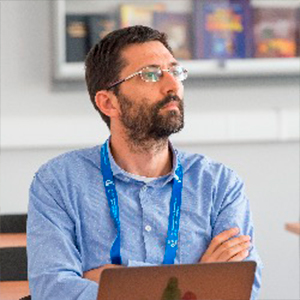
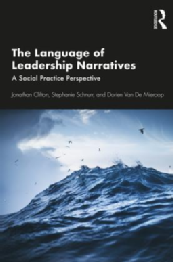
Stephanie Schnurr is a Professor in the Department of Applied Linguistics at the University of Warwick, Faculty of Social Sciences. Her research centers on professional and medical communication, with a strong focus on leadership discourse, gender, humour, politeness, identity construction, and cross-cultural dynamics. She actively supervises PhD and postdoctoral researchers and collaborates internationally across disciplines. Her research interests include analyzing how leadership is constructed through discourse in diverse settings such as workplaces, healthcare, and sports. She investigates the strategic use of humour, gender ideologies, cultural influences, and identity negotiation in interactions. Her work spans organizational, medical, and educational contexts, often using discourse and narrative analysis to uncover power relations and social practices. She is particularly known for her studies in multicultural Hong Kong and more recently in sports environments like boxing and Formula One. The recent publications reflect a strong trend in leadership discourse, medical communication (especially hospital discharge processes), gender and identity, and humour in institutional settings. Her work bridges applied linguistics, organizational studies, and health communication, often employing qualitative and discourse-analytic methods to explore real-world interactions. Stephanie Schnurr has been involved in significant research projects funded by ESRC, Innovate UK, and the Rugby Football Union, focusing on coaching language in sports and improving discharge communication in healthcare. She is a founding co-lead of the Academic Mobilities and Immobilities research network and contributes to key journals like Leadership , Discourse and Communication , and Journal of Pragmatics . She also collaborates on major publications including edited volumes and special journal issues on globalization, gender, and organizational narratives. She leads and participates in interdisciplinary research teams, particularly within the Sports, Culture and Communication Research Cluster at Warwick. Her projects involve collaboration with colleagues across the UK, Belgium, France, and Denmark, focusing on discourse in professional contexts, academic mobility, and communication in healthcare and sports.
Josep Lluís Raymond Bara is a Professor at the Universitat Autònoma de Barcelona (UAB), affiliated with the Department of Applied Economics within the Faculty of Economics and Business. He is also a Researcher at the Institute of Economic Analysis (IEB), where he contributes to research in human capital, transport economics, and applied econometrics. Research Interests: His work focuses on the economic impact of education, regional disparities in human capital, labor market accessibility, and transportation economics. He employs advanced econometric methods to analyze policy-relevant issues such as job accessibility, car ownership, and returns to education in Spain. The trend in his recent publications shows a consistent focus on empirical microeconomics, particularly the intersection of education, labor, and urban transport. His research often involves longitudinal data analysis and policy evaluation, contributing to regional development and sustainability. Scientific Contributions: Extensive work on human capital and its private and social returns in Spain. Key studies on transport economics, including job accessibility and car ownership. Application of hedonic pricing models to consumer markets. Advising and Grants: While specific students or grant projects are not mentioned in the provided text, his active research output and institutional affiliations suggest ongoing involvement in research supervision and funding initiatives. He has collaborated with prominent economists such as A. Matas, J.M. Pastor, and J.L. Roig. Labs and Teams: He is affiliated with the Institute of Economic Analysis (IEB), a leading research center in Spain, and contributes to its research programs on human capital and regional development.
Mitch Millstein is an Assistant Teaching Professor and faculty member in the Department of Supply Chain and Analytics at the University of Missouri-St. Louis College of Business. He serves as Associate Director of the Center for Business and Industrial Studies and brings 18 years of industry experience as a Lean and Supply Chain Consultant. PhD in Logistics and Supply Chain Management (University of Missouri-St. Louis, 2014) MBA (Washington University in St. Louis, 1996) BS in Engineering (Rutgers University, 1988) His research focuses on: Applied optimization modeling Manufacturing workflow methods Supply chain performance metrics Ecommerce logistics Healthcare supply chains Recent publications highlight: Optimization of hospital tier contracts ABC inventory classification models Kanban-flow manufacturing implementations Sports equipment omnichannel logistics Industry-academia collaboration outcomes
Stephen Turner is a Professor of Computer Science at the University of Michigan-Flint, affiliated with the College of Innovation and Technology and the Department of Mathematics and Applied Sciences. He currently serves as Vice Provost for Assessment and Accreditation and leads the Sustainability Research Cluster. He has held several key administrative roles, including Associate Provost and Dean of Graduate Programs (2017–2021), and has been continuously promoted from Assistant to full Professor since joining the faculty in 2000. B.S. in Computer Science and Applied Mathematics, Western Michigan University (1987) M.S. in Computer Science, Michigan State University (1989) Ph.D. in Computer Science, Michigan State University (1989) His research focuses on Intelligent Transportation Systems, Blockchain, Software-Defined Networking, Internet of Things, Smart Cities, and next-generation digital learning environments . He has made significant contributions to sustainable computing, virtual lab infrastructures, and educational technologies. His recent work emphasizes integrating SDN and blockchain for secure IoT networks and building automated systems for accreditation and assessment. The analysis of his recent publications reveals a strong trend toward interdisciplinary research at the intersection of networking, sustainability, and education. His work spans technical innovation in SDN and blockchain, applied research in smart cities and transportation, and pedagogical advancements in flipped classrooms, cognitive load, and virtual learning. The keywords across his publications indicate deep engagement with both foundational computer systems and emerging societal challenges in education and environmental justice. Scientific Awards: ACE Fellow (2015), The American Council on Education Distinguished Service Award (2014), University of Michigan-Flint Meritorious Paper Award (2011), ACM SIGITE Stephen Turner has served as Principal Investigator on multiple grants from the National Science Foundation and the Environmental Protection Agency, including projects such as Data Buddies and the Environmental and Climate Justice Community Change Grants , totaling over $1.5 million in funding. He has advised on curricular development, graduate education, accreditation, and sustainability initiatives. His leadership includes directing the MS in Computer Science program and serving as Accreditation Liaison Officer. He leads the Sustainability Research Cluster , focusing on interdisciplinary projects that integrate technology with environmental and social justice, particularly in urban settings like Flint. His team works on community solar, smart infrastructure, and equitable access to technology and education.
Prof. Dr. Heike Solga is Director of the Research Department 'Education and Labor Market' at the Social Science Research Center Berlin (WZB) and holds a W3-S Professorship in Sociology at the Free University of Berlin, specializing in work, labor markets, and employment. Her leadership includes directing the completed bridge project on 'Recruitment behavior of companies on training and labor markets'. Her research examines structural inequalities in education and labor systems, with focus areas including: Vocational training systems and school-to-work transitions Social stratification in educational access Gender disparities in academic recruitment Labor market integration of low-skilled individuals Cross-national comparisons of educational policies Recent publications demonstrate strong emphasis on experimental methodologies in studying academic hiring biases, educational disadvantage mechanisms, and comparative analyses of European labor markets. Her work consistently engages with policy implications for reducing social inequalities. She leads significant research initiatives including: Einstein Center Population Diversity (ECPD) Mapping inequalities through the life course (Mapineq) MATH+ as a Research Object Social inequality in access to prestigious degree programs International comparison of appointment standards Her department focuses on interdisciplinary investigations of education-labor market linkages, employing quantitative and experimental approaches to address societal challenges in workforce development and educational equity.
Erich C. Dierdorff serves as a Professor and William E. Hay Leadership Fellow in the Department of Management & Entrepreneurship at DePaul University's Driehaus College of Business. An award-winning instructor across executive, graduate, and undergraduate business programs, he specializes in organizational behavior, human resource management, and data science applications. His research examines individual/team learning effectiveness, work analysis, and leadership practices with significant industry impact. Education: PhD in Industrial-Organizational Psychology, North Carolina State University MS in Industrial-Organizational Psychology, North Carolina State University BS in Psychology (Minor: Sociology), University of Florida Research Focus: Professor Dierdorff investigates job crafting dynamics, team resilience under stress, and data-driven work design. His work integrates multilevel analysis of psychological collectivism in teams, goal orientation variability, and reciprocity mechanisms in organizational citizenship behavior, often applying data science to human capital problems. Publication Trends: Recent articles (2017-2025) reveal consistent emphasis on team training evaluation, job crafting motives, and work design consequences. He frequently publishes in top-tier journals like Journal of Applied Psychology and Academy of Management Journal, with growing focus on contextual moderators and longitudinal team performance patterns. Scientific Awards: William E. Hay Leadership Fellow Advising and Grants: While specific students or grants aren't listed, his industry partnerships with General Electric, Amazon Web Services, Siemens, and the U.S. Department of Labor indicate substantial contract research funding. He contributes evidence-based interventions in leadership development, competency modeling, and selection system design across corporate, sports, and military sectors. Labs and Teams: Professor Dierdorff developed TeamMATE® for team training evaluation (2016) and works with cross-functional industry teams. His research on O*NET tools and the greening of occupations involves U.S. Department of Labor collaborations, focusing on real-world human capital analytics.
Antónia de Jesus Henriques Correia is an Assistant Professor with Habilitation at Universidade do Algarve, where she has established herself as a prominent researcher in tourism economics and consumer behavior. Her academic journey began with a B.A. in Management from Universidade do Algarve (1990), followed by an M.Sc. in Strategy from ISEG/UTL (1994), and culminated in a Ph.D. in Economics from Universidade do Algarve (2000). Her research spans multiple dimensions of tourism and consumer behavior, with particular expertise in destination image, luxury markets, and pandemic-era travel behavior. Her work demonstrates a consistent focus on understanding tourist motivations, satisfaction, and behavioral intentions through sophisticated methodologies including discrete choice models and structural equation modeling. Analysis of her recent publications reveals a strong trend toward examining pandemic impacts on tourism behavior, luxury consumption patterns, and the evolving nature of hospitality experiences. Her research increasingly incorporates cross-cultural perspectives and advanced analytical techniques to address contemporary challenges in the tourism industry. As an academic supervisor, she has guided numerous doctoral and master's students through their research journey, contributing significantly to the development of new scholars in tourism management. Her projects portfolio includes nationally and internationally funded research initiatives focusing on tourism competitiveness, destination development, and sustainable tourism practices.
Ulaş Akküçük is a faculty member at Boğaziçi University with the academic rank of Associate Professor . His teaching areas include Linear Programming, Probability and Statistics, Multivariate Analysis, Marketing Research, and Production and Operations Management . His research focuses on Multidimensional Scaling (MDS), Nonlinear Optimization, Clustering, Network Models Applied to Marketing, and Green Supply Chain Management .