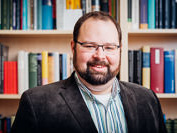
Jonathan Miles Robker is a Lecturer (Privatdozent) at the University of Münster's Faculty of Protestant Theology. He holds a Habilitation in Old Testament (2018), Doctor of Theology (2011), Master of Theological Studies (2006), and dual Bachelor's degrees in History and Philosophy (2003). Since 2020, he serves as Editor for Biblical Studies and has held research positions at the university since 2013. His research focuses on textual criticism, ancient Near Eastern epigraphy, Deuteronomistic history, and literary analysis of biblical texts. Primary interests include the Book of Kings, history of Israel, and comparative ancient Near Eastern traditions. Robker's publications demonstrate consistent engagement with textual variants across ancient manuscripts, particularly examining the Deuteronomistic History through Septuagint and Masoretic textual traditions. His works frequently analyze political theology, prophetic literature, and the development of biblical canons.
Gabriele Boccaccini is a Professor of New Testament and Second Temple Judaism in the Department of Near Eastern Studies at the University of Michigan since 2002. He holds a Ph.D. in Judaic Studies from the University of Turin (1991) and has held visiting professorships at BIBLIA (Italy), Institute for Secular Humanistic Judaism (Detroit), Ecumenical Theological Seminary, and Waldensian Faculty of Theology. His research focuses on Second Temple Judaism Jewish-Christian relations Apocalyptic literature Dead Sea Scrolls Rabbinic origins Jewish intellectual history He has received numerous awards including the LSA Excellence in Education Award (1999), University of Turin Post-Doctoral Grant (1992), and the Italian Doctoral Grant in Judaic Studies (1987). His work spans over 50 publications, including monographs on Middle Judaism and edited translations of key biblical scholarship. As a leader in interfaith dialogue, Boccaccini has served on the founding committees of the Camaldoli Conferences Italian Ecumenical Association Greater Detroit Interfaith Round Table and contributed extensively to journals like Henoch and Amicizia Ebraico-Cristiana .
Eve Krakowski is an Associate Professor of Near Eastern Studies and Judaic Studies at Princeton University, specializing in medieval Middle Eastern social history with a focus on Jewish communities in Fatimid and Ayyubid Egypt (969–1250). Her work examines family life, law, and religion in everyday contexts, leveraging the Cairo Geniza documents for insights into ordinary life. Her research explores how legal frameworks and religious practices shaped gender roles and communal structures. She authored Coming of Age in Medieval Egypt , which won multiple awards, including the National Jewish Book Award. Currently, she is working on Written Torah: The Reinvention of Judaism in the Islamic Mediterranean , analyzing medieval Jewish writing practices. Teaching: Courses include Cairo Geniza studies, religious conversion in the Islamic Middle East, and Near Eastern humanities. Collaborations: Co-edited a Geniza research handbook and leads projects to enhance accessibility of Geniza documents through interdisciplinary methods. Her work bridges archival analysis with social history, emphasizing how material evidence reveals lived experiences of medieval Jews. She also contributes to Princeton’s Humanities Council programs and has held post-doctoral fellowships at Yale and Columbia. Awards: National Jewish Book Award, Jordan Schnitzer Book Award, AAAS Honorable Mention. Labs/Projects: Geniza Lab (external link), Documents and Institutions in the Medieval Middle East collaborative.
Nessim Znaien serves as Assistant Professor of History of Colonial and Postcolonial Maghreb at Philipps University of Marburg's Center for Near and Middle Eastern Studies (CNMS) since 2022, where he heads the Maghreb Field of Expertise team. His academic trajectory spans French institutions including Aix-Marseille University and research roles at the French Research Institute on Contemporary Maghreb in Tunis. His educational background includes: PhD in History, Université Paris 1-Panthéon Sorbonne (2012-2017) with thesis 'The Grapes of domination. Social History of Alcohol in Tunisia under Protectorate (1881-1956)' MA in History, École Normale Supérieure de Lyon (2011-2012) CAPES in History (2009) Bachelor’s degree in Modern Standard Arabic, Aix-Marseille University (2014-2018) University degrees in Italian (B2) and Turkish (B1) from Aix-Marseille University (2018-2021) Znaien's research centers on 19th-20th century North African history through material and food studies, examining colonial societies' structures and Tunisian historiography. His work uniquely bridges alcohol history with broader socio-economic patterns, revealing how substances like wine, bread, and harissa became sites of colonial control, cultural resistance, and identity formation. This approach illuminates the intersection of environmental, economic, and cultural forces in Mediterranean colonial contexts. His extensive publication record demonstrates consistent thematic focus on colonial North Africa's social history, with recurring analysis of alcohol systems, food economies, and material culture. The work shows sophisticated methodological integration of environmental history, economic anthropology, and postcolonial theory, particularly examining how colonial policies reshaped local consumption patterns and production systems across Tunisia, Algeria, and Morocco. No scientific awards are documented in the provided materials. Znaien actively contributes to academic infrastructure through research leadership and peer review. He coordinated a €30,000 Foundation for Research on Alcoholism project (2014-2019) on 'Alcohol under the French Empire,' participated in ERC's TARICA project (2017-2020) analyzing post-Arab Spring North Africa, and contributed to the French 'Bourgeon Project' (2017-2019) on Muslim world alcohol histories. He serves on scientific boards for L'Année du Maghreb and the Digital Encyclopedia of European History, while reviewing for journals including Journal of Medical History and Journal of North African Studies. As head of the Maghreb Field of Expertise team at CNMS, Znaien directs research on contemporary North African societies while maintaining strong connections to Tunisian academic networks through his editorial roles and ongoing historiographical analyses of post-revolutionary Tunisia.
Elisheva Carlebach is the Salo Wittmayer Baron Professor of Jewish History, Culture, and Society at Columbia University, where she serves as Co-Director of the Institute for Israel and Jewish Studies . Her work bridges Jewish Studies, cultural history, and religious studies. University: Columbia University Unit: Institute for Israel and Jewish Studies Academic Title: Professor Contact: ec607@columbia.edu Research Interests focus on the intersection of Jewish and Christian cultures in Early Modern Europe, examining: Religious tolerance and dissent Conversion dynamics Messianic movements Communal governance structures Temporal traditions (e.g., calendar systems) Intercultural influences on Jewish identity Publications reveal consistent engagement with Jewish cultural evolution during transitional historical periods, combining textual analysis with material culture studies. Scientific Awards : 2017 Lenfest Distinguished Faculty Award 2011 AJS Schnitzer Prize 1990 National Jewish Book Award NEH Fellowships (x2) Prestigious fellowship appointments at NYPL, NYU, and University of Pennsylvania Leadership Roles include past presidency of the American Academy for Jewish Research, editorial work for Association for Jewish Studies Review , and board membership at the Center for Jewish History.
Jeffrey A. Bowman is Professor of History and Provost at Kenyon College, where he has served as chief academic officer since 2020. He previously held leadership roles including Chair of the Faculty and Associate Provost, and served as Interim President from 2022 to 2023. A member of the History Department since 1997, he contributes to interdisciplinary programs in Law & Society, Religious Studies, and global curriculum development. Education: Ph.D. in Medieval Studies, Yale University (1997) M.Phil., Yale University (1994) M.A., Yale University (1992) B.A. in English, Carleton College, cum laude (1988) His research centers on medieval Europe, particularly the Mediterranean world between 300 and 1500 C.E., with emphasis on law and society, gender, hagiography, and interfaith relations in Iberia. He has taught courses on medieval Spain and Portugal, travel narratives, and food history, promoting a transdisciplinary and inclusive curriculum. His scholarship explores how legal systems, religious identities, and gender roles shaped social structures in premodern societies. Bowman's publications reveal a sustained focus on property, legal disputes, elite women, and religious narratives in medieval Catalonia and Iberia. His work combines archival research with cultural analysis, contributing to broader understandings of legal pluralism, female authority, and cross-cultural interaction in the medieval Mediterranean. The articles span historical, legal, religious, and gender studies, showing interdisciplinary depth and chronological coherence. Scientific Awards: Premio del Rey Book Prize (American Historical Association) for Shifting Landmarks: Property, Proof, and Dispute in Catalonia around the Year 1000 Bowman has played a significant role in academic leadership and faculty development at Kenyon. As Provost and former Interim President, he has guided strategic planning, expanded computing programs, and strengthened student support systems. While specific advisees are not listed, his long tenure implies mentorship of numerous undergraduate and possibly graduate-level researchers. He has not been associated with formal labs or research teams, but his collaborative interdisciplinary work suggests engagement with broader scholarly networks.
Ass.Prof. Mag. Christian Domenig is an Assistant Professor at the University of Klagenfurt's Institute of History, specializing in Medieval History and Historical Auxiliary Sciences. His research focuses on the Counts of Cilli, medieval social structures, source criticism, and interdisciplinary approaches linking medieval studies with modern media like Star Trek. He holds a doctoral degree from the University of Klagenfurt (2004) and completed diploma studies in History and Media Communication (1999). Education: 1994-1999: Diploma in History & Media Communication, University of Klagenfurt 1999-2004: Doctoral Studies in History, University of Klagenfurt His research interests include medieval administrative practices, cultural history, and the intersection of medieval themes with contemporary media. Notable projects include the 'Documents and Letters of the Counts of Cilli' (2002-2005) and exhibitions on medieval calendars. He received the Rome Scholarship (2005) for research at the Austrian Cultural Forum in Rome. His publications explore topics like medieval catastrophe narratives, castle politics, and the role of Jewish communities in feudal power structures. He also engages with pop culture interpretations of the Middle Ages, such as analyzing Star Trek's portrayal of pre-modern societies. Awards: Rome Scholarship, Federal Ministry of Education (2005) He advises projects on medieval source criticism and collaborates on digital humanities initiatives like the Klagenfurt Charter Database. His work often bridges traditional historiography with modern pedagogical methods.
Paul Kosmin is the Philip J. King Professor of Ancient History and Director of Undergraduate Studies in the Department of the Classics at Harvard University. His research focuses on Greek history (especially the Hellenistic period), ancient historiography (e.g., Herodotus, Polybius), and the intersection of kingship, imperialism, and cultural interaction in the ancient Mediterranean. He has authored and edited multiple influential works on the Seleucid Empire, Hellenistic historiography, and Second Temple Judaism. His interdisciplinary approach bridges archaeology, epigraphy, and textual analysis. Key publications include The Ancient Shore (2024), Cultures of Resistance in the Hellenistic East (2022), and Time and Its Adversaries in the Seleucid Empire (2018). His work often explores themes of space, time, and identity in ancient empires. He is actively involved in Harvard’s Classics program, advising undergraduate studies and contributing to the Harvard Studies in Classical Philology.
Maria Piechocka-Kłos is an Adjunct Professor at the Department of Philosophy and Canon Law, Faculty of Theology, University of Warmia and Mazury. Her academic career focuses on theology, history, and anthropology, particularly in the context of Early Christianity and Late Antiquity. Current affiliation: Faculty of Theology, University of Warmia and Mazury Academic rank: Adjunct Professor Her research explores intersections between religious practices, cultural transformations, and historical narratives in the Roman Empire (4th–6th centuries). Key areas include pagan-Christian conflict, liturgical calendar development, hagiographic texts, and legal frameworks affecting religious minorities. With 53 publications and a total ministerial score of 1,254, her work emphasizes patristic studies, classical reception in medieval theology, and symbolic interpretations of historical sources. Articles analyze early Christian synodal documents, Roman legislation, and classical texts like Aulus Gellius' Attic Nights. Notable research themes: Temple destruction in Late Antiquity, saint veneration in heraldry, and anti-Jewish legislation Methodological focus: Textual analysis, historical context, and interdisciplinary synthesis
Jonathan Ben-Dov serves as Professor of Bible and Second Temple Literature in the Department of Bible at Tel Aviv University. His academic work bridges traditional biblical scholarship with innovative approaches to ancient Jewish texts and practices. His research interests focus on the intersection of biblical studies, calendrical systems, and Second Temple period literature. Ben-Dov examines how ancient Jewish communities understood time, ritual, and divine authority through textual analysis of biblical and extrabiblical materials. His work particularly emphasizes the Dead Sea Scrolls and their contribution to understanding Jewish thought during the Second Temple period. Ben-Dov's publications reveal consistent engagement with how ancient communities interpreted divine commands regarding social justice, sacred space, and ritual practice. His work demonstrates how modern scholarship can illuminate ancient debates about power structures, religious authority, and calendar systems that continue to influence contemporary Jewish practice. As co-author of Material and Digital Reconstruction of Fragmentary Dead Sea Scrolls (Brill, 2022) and author of multiple other scholarly books including Head of All Years: Astronomy and Calendars at Qumran in Their Ancient Context , Ben-Dov has established himself as a significant voice in the field of ancient Jewish studies, with particular expertise in calendrical systems and their theological implications.
John Steele is the Charles Edwin Wilbour Professor of Egyptology and Assyriology at Brown University. He holds affiliations in Egyptology and Assyriology and is a senior fellow at New York University's Institute for the Study of the Ancient World. Previously, he served as a Royal Society University Research Fellow at Durham University, an E.P. May Fellow at the University of Toronto, and a Dibner Institute Postdoctoral Fellow. Education: PhD in Durham University (1998) BS in Durham University (1995) Research Interests: John specializes in the history of exact sciences in antiquity, particularly Babylonian astronomy. His work explores the intersection of astronomy, mathematics, and culture in ancient Mesopotamia. He has edited major book series like Scientific Writings from the Ancient and Medieval World and contributes to journals such as Isis and Journal for the History of Astronomy . Publications Trends: His recent work focuses on Babylonian astronomical records, cross-cultural comparisons of ancient sciences, and the reception of Mesopotamian knowledge in European scholarship. Key themes include planetary observations, lunar phenomena, and the methodological foundations of ancient astral sciences. Awards & Honors: Fellow, Institute of Advanced Studies, Durham University (2016) Nominated to Shaanxi Province's Experts Database (2015–present) Guest Professor, Shanghai Jiao Tong University (2014–present) Caeno Chronology Scholar Prize (2003) Teaching & Editorial Roles: He teaches courses on ancient sciences, Assyriology, and Babylonian astronomy. Editorial roles include associate editorships for SCIAMVS and advisory roles for Isis and Journal for the History of Astronomy . His research lab focuses on deciphering cuneiform astronomical texts and their global historical impacts.
School for Advanced Studies in the Social SciencesFrance
Davide Mano is a CNRS Research Fellow affiliated with the Centre de Recherches Historiques (CRH) at École des Hautes Études en Sciences Sociales (EHESS) in Paris, France. Specializing in Modern History with a focus on European Jewish life during the 18th and 119th centuries, his work examines transformative periods like the French Revolution and Napoleonic era in Italy, exploring how Jewish communities navigated tradition and modernity while maintaining political and social identities. His research interests span Jewish community structures, Enlightenment impacts, revolutionary dynamics, and emancipation processes. He contributes to debates on belonging, authority, and reciprocity in Jewish-European contexts, with particular attention to Hebrew language evolution, cultural translations, and archival preservation. Recent publications analyze Italian Jewish poetry as heritage, liturgical translations, and temporal negotiation under political upheaval. PhD in Modern History (Tel Aviv University, 2014) Specializes in 18th-19th Century European Jewish communities Co-editor of Dentro e fuori ghetto (2023) Mano actively participates in academic conferences and collaborative projects, including co-convening international research groups like the EJ (Jewish Studies) collective. His work intersects with digital humanities through CRH's data platforms and scénographic projects.
John Steele is the Charles Edwin Wilbour Professor of Egyptology and Assyriology at Brown University. He is a leading historian of the exact sciences in antiquity, with a primary focus on Babylonian and Mesopotamian astronomy. He is also a Senior Fellow at the Institute for the Study of the Ancient World, New York University, and holds editorial roles in multiple prestigious book series and journals, including Scientific Writings from the Ancient and Medieval World and the Journal for the History of Astronomy . PhD, Durham University, 1998 BS, Durham University, 1995 John Steele's research centers on the history of astronomy in the ancient Near East, particularly Babylonian celestial observations, eclipse prediction, calendar systems, and the mathematical methods used in Mesopotamian astronomy. His work bridges philology, archaeology, and scientific analysis to reconstruct ancient astronomical practices. He has extensively studied cuneiform astronomical texts, including the Astronomical Diaries, MUL.APIN, and planetary ephemerides, exploring how Babylonian scholars combined empirical observation with theoretical modeling. His recent publications reveal a sustained focus on lunar and planetary phenomena, timekeeping, zodiacal development, and the cultural contexts of astronomy. Themes include the use of shadow-length schemes, the transmission of knowledge between Babylon and Uruk, and cross-cultural comparisons with early Chinese astronomy. His articles frequently appear in top journals such as Archive for History of Exact Sciences and Journal for the History of Astronomy , demonstrating both technical depth and historical breadth. His scientific awards and honors include: Caeno Chronology Scholar prize (2003) Wepster Lecturer, Archaeological Institute of America (2010–2011) Fellow, Institute of Advanced Studies, Durham University (2016) Senior Fellow, Institute for the Study of the Ancient World, NYU (2010–present) Guest Professor, Shanghai Jiao Tong University (2014–present) John Steele has supervised numerous collaborative projects and edited key volumes such as Calendars and Years and Under One Sky . He has held major research fellowships at the Royal Society, University of Toronto, and the Dibner Institute. His editorial leadership in journals like SCIAMVS and Isis underscores his influence in the field. While no specific lab or research team is mentioned, his co-authored works and edited volumes indicate active collaboration with an international network of scholars in Assyriology, history of science, and archaeoastronomy.
Claude Eilers is an Associate Professor in the Department of Greek & Roman Studies at McMaster University. His research focuses on Roman imperialism, ancient diplomacy, civic patronage systems, and the intersection of epigraphy with historical narrative. He has authored influential works like Roman Patrons of Greek Cities (2002) and Diplomats and Diplomacy in the Roman World (2009). Teaching spans undergraduate and graduate courses including Latin language, Roman historical literature, and specialized topics like Josephus' writings. His recent publications analyze Roman-Jewish relations through Josephus' texts, re-examine Delian decrees, and explore civic patronage dynamics in the High Empire. Research emphasizes critical analysis of inscriptions, legal documents, and historical sources to reconstruct governance structures and elite interactions in the Roman East. No academic awards are explicitly noted in the profile, though his work has been referenced in multiple Wikipedia pages and syllabi.
Dr. Michał Klukowski is a faculty member at the John Paul II Catholic University of Lublin, affiliated with the Faculty of Theology, Institute of Theological Sciences, Biblical Section, and the Center for Studies on Second Temple Judaism. He is an active researcher specializing in the Dead Sea Scrolls, Qumran manuscripts, biblical exegesis, and Second Temple Judaism. His research interests include: Second Temple Judaism and its theological developments Textual and legal analysis of the Dead Sea Scrolls, especially 4QMMT Calendar systems in ancient Judaism, particularly the 364-day calendar Messianic interpretation in Qumran literature New Testament exegesis, with focus on the Gospel of Matthew and Pauline writings History of biblical interpretation and hermeneutics Dr. Klukowski's recent publications reflect a strong engagement with Qumranic texts, Jewish law, and biblical theology. His work demonstrates a deep familiarity with primary sources and contemporary scholarship, placing him at the forefront of Polish research on the Dead Sea Scrolls. He frequently publishes in leading journals such as Verbum Vitae , Biblical Annals , and Revue de Qumran . His scientific achievements include: Ministry of Education and Science scholarship for outstanding young scientists (18th edition) Principal investigator of the National Science Centre Sonata 19 project on paleographic analysis of 4QMMT manuscripts Participant in a MEiN-funded project on the evolution from 1 Enoch to the Sibylline Oracles Dr. Klukowski has presented papers at national conferences on topics such as the historical Jesus, messianic interpretations, and the role of women in salvation history. He has also completed a research internship at the prestigious École biblique et archéologique française de Jérusalem, underscoring his international scholarly engagement. His editorial and review work, including contributions to The Qumran Chronicle and Biblical Annals , further demonstrates his active role in the academic community.