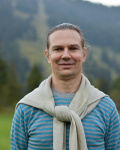
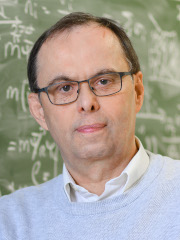
Eduardo Plörer is a Researcher at Vrije Universiteit Brussel under the Faculty of Sciences and Bioengineering Sciences , focusing on High Energy Physics and Detector Development . His work bridges Particle Physics and Machine Learning .
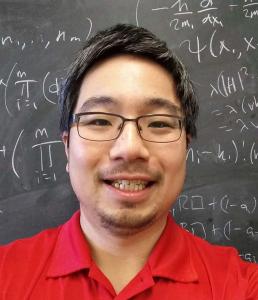
Spencer Chang is an Associate Professor in the Department of Physics at the University of Oregon, affiliated with the College of Arts and Sciences and the Institute for Fundamental Science. His research focuses on theoretical high-energy physics, exploring phenomena beyond the Standard Model, dark matter, cosmology, and applications of machine learning in collider physics. Chang earned a Ph.D. from Harvard University in 2004 and has been at the University of Oregon since 2010. He contributes to interdisciplinary research initiatives and collaborates with affiliated centers, emphasizing precision physics and innovative computational techniques. His research spans Effective Field Theory (EFT) applications for quantifying uncertainties in LHC searches Dark matter phenomenology, including WIMPs and direct detection experiments Cosmological implications of new physics Machine learning interpretability for high-energy physics . The 15 most recent publications highlight his work on collider observables, dark matter detection, Higgs physics, and ML-driven anomaly detection. Notable themes include Standard Model extensions, precision measurements, and experimental design for future colliders. Contact information: Email: chang2@uoregon.edu , Office: 476 Willamette Hall, Phone: 541-346-0797.
Shen Wang is a Postdoctoral Associate at the Massachusetts Institute of Technology 's Center for Energy and Environmental Policy Research (CEEPR). His work focuses on energy transition strategies through Power resource planning Electricity market design Hydropower optimization for decarbonization in Northeastern North America. Academic background includes: PhD in Energy Economics & Management, Johns Hopkins University MS in Applied Mathematics, Johns Hopkins University MSE in Environmental & Health Engineering, Johns Hopkins University Research interests integrate policy analysis with technical optimization of energy systems, particularly examining Quebec hydropower's role in climate change mitigation. Despite publishing extensively in particle physics ( Google Scholar ), current work emphasizes environmental policy frameworks rather than fundamental physics.
Reinhard Schwienhorst is a Professor in the Department of Physics & Astronomy at Michigan State University's College of Natural Science, where he conducts cutting-edge research in particle physics. He is a leading member of the ATLAS collaboration at CERN's Large Hadron Collider (LHC) and previously contributed to the DØ experiment at Fermilab since 2000, co-convening the group that discovered single-top quark production. His research focuses on probing fundamental physics at the energy frontier, with primary expertise in top quark measurements and exotic physics searches connected to top quark phenomena. He actively investigates Higgs boson properties—building on ATLAS/CMS's 2012 discovery—and explores dark matter through experimental and outreach initiatives, including executive-producing the planetarium show Phantom of the Universe with MSU students. His work bridges theoretical predictions with experimental validation at the highest-energy particle collisions. Recent 2025 publications reveal a strong emphasis on precision top quark and Higgs boson analyses, advanced jet substructure techniques, and searches for beyond-Standard-Model physics. Key trends include machine learning integration for data analysis, novel methods for heavy-flavor tagging, and investigations into CP violation and rare decay channels, leveraging the full LHC Run 2 dataset. Prof. Schwienhorst mentors students in research and science communication projects, such as the international planetarium production. His work is embedded within ATLAS's top quark and exotics physics groups, utilizing MSU's high-energy physics infrastructure and global collider facilities.
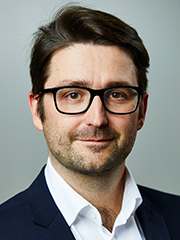
Tobias Golling is a Professor at the University of Geneva , Department of Nuclear and Particle Physics, actively involved in the ATLAS experiment at CERN. His research spans high-energy physics, machine learning applications in particle physics, and neutrino reconstruction techniques. Role: Academic leader in ATLAS collaboration Location: Office AEM 025 Research Interests Developing diffusion models and normalizing flows for particle cloud generation Advancing anomaly detection in jet physics through machine learning Applying graph neural networks to topological reconstruction of particle processes Article Trends show a focus on integrating maximum likelihood estimation , optimal transport , and conditional flows into high-energy physics simulations. Key domains include neutrino reconstruction , event generation , and ML-driven detector optimization . Supervision includes doctoral student Bálint MÁTÉ . Collaborations frequently involve Prof. Voloshynovskiy and the ATLAS collaboration .
Dr. Sebastiaan Krijt is a Senior Lecturer in Astrophysics at the University of Exeter, specializing in protoplanetary disc evolution and planetary system formation. His research bridges observational astronomy with theoretical modeling. University of Exeter (2020-present) NASA Hubble Fellow (University of Arizona, 2024) NASA Hubble Fellow (University of Chicago, 2017-2020) Postdoctoral Scholar (University of Chicago, 2015-2017) His research focuses on: Protoplanetary disk physics and chemistry Water enrichment mechanisms Pebble drift dynamics Accretion processes Carbon/oxygen fractionation Stellar wind morphology Recent publications (2024-2025) emphasize JWST/MIRI and NIRSpec observations, disk chemical composition, and transport mechanisms. Key themes include carbon-rich environments, mid-infrared diagnostics, and dust-water coupling. Scientific awards include: NASA Hubble Fellowship (2017-2024) Dr. Krijt supervises postgraduate research in planetary formation, participates in media outreach, and welcomes collaborations on protoplanetary disk studies.
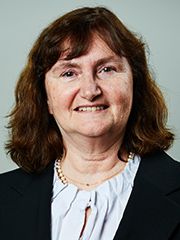
Prof. Dr. Elisabetta Gallo is a Principal Investigator and Diversity Director at the University of Hamburg and Deutsches Elektronen-Synchrotron (DESY), where she has held a W3 Professorship for Experimental Particle Physics since 2015. She leads research at the CMS experiment of the Large Hadron Collider (LHC) at CERN and contributes to future collider projects. Academic Career : 2015–present: Lead Scientist at DESY and Professor (W3) at University of Hamburg 2007–2014: Senior Staff Scientist at INFN Florence, Italy 1995–2006: Staff INFN Researcher at INFN Florence, Italy 1992–1995: Research Associate at Imperial College London, UK 1989–1992: PhD in Particle Physics at University of Florence, Italy 1982–1989: Diploma in Physics at University of Florence, Italy Institutional Roles : 2023–2025: Collaboration Board Chair of the CMS Collaboration, CERN 2022–present: Member of the Steering Committee, Cluster of Excellence 'Quantum Universe' 2019–present: Member of the Plenary European Committee for Future Accelerators (ECFA) 2015–present: Member of the Academy of Sciences in Hamburg 2015–present: Mentor in the dynaMENT mentoring program, Hamburg 2010–2014: Coordinator of High Energy groups in Florence, Italy 2010–present: International Advisory Committee, DIS Workshop series Research Interests span Experimental Particle Physics with a focus on Higgs boson studies , Dark Matter searches , Top Quark Physics , and quantum chromodynamics . She drives detector upgrade projects like the CASTOR calorimeter and beam condition monitoring systems at CMS and contributes to the University of Hamburg's 'Quantum Universe' Cluster of Excellence. Recent Publications analyze inclusive jet production, charm baryon multiplicity, dimension-6 EFT operators, and detector upgrades. Her work connects collider physics with cosmological implications, particularly in future accelerator design. Scientific Recognition : 2015: Member of the Hamburg Academy of Sciences Education : Diploma in Physics, University of Florence (1989) PhD in Particle Physics, University of Florence (1992) Her group at DESY, the largest German CMS team (90 members), is involved in detector operation, data quality monitoring, and LHC computing as a Tier-2 site. She also contributes to outreach initiatives like 'Art Meets Science' and public talks.
Gregor Kasieczka is a Professor (W2) for Machine Learning in Particle Physics at Universität Hamburg's Faculty of Mathematics, Informatics and Natural Sciences, affiliated with the Institute of Experimental Physics. His academic journey includes a doctorate from Universität Heidelberg (2013), postdoctoral research at ETH Zürich (2013–2017), and progression from Junior Professor (2017–2022) to full Professor at Universität Hamburg (since 2023). He leads the Emmy Noether Group Kasieczka, focusing on machine learning applications in particle physics. Key responsibilities include: Speaker of KISS consortium (BMBF-funded AI-based simulation initiative) Platform coordinator at Cluster of Excellence 'Quantum Universe' Former Software/Algorithms coordinator for DIG-UM community First convener of CMS Collaboration's Machine Learning group Research interests span machine learning-driven particle physics, including jet substructure analysis, generative models for calorimeter simulations, anomaly detection, and quantum theory applications. His publications emphasize AI/ML integration with experimental particle physics, particularly for LHC/CMS data analysis. Notable research trends from recent works include advances in generative models for fast calorimeter simulation, foundation models for LHC data, self-supervised learning in astrophysics, and model-agnostic anomaly detection techniques. He directs significant projects on AI-based simulation and coordinates cross-institutional ML initiatives. No scientific awards are documented in the provided materials. Kasieczka leads multiple research consortia and advises projects at the intersection of AI and fundamental physics, including generative model development and anomaly detection frameworks. His group actively contributes to the CMS collaboration and quantum universe research platforms.
Prof. Dr. Peter Schleper is a leading figure in particle physics at the University of Hamburg , affiliated with the Faculty of Mathematics, Informatics and Natural Sciences and the Department of Physics . His research focuses on probing the Standard Model at the highest energies through the Compact Muon Solenoid (CMS) Experiment at CERN’s Large Hadron Collider (LHC), where he investigates Higgs physics , top quark mass measurements , and Supersymmetry using advanced machine learning techniques . Education: 1997: Habilitation in Physics, University of Heidelberg 1992: Doctorate in Physics, RWTH Aachen 1988: Physics Degree, RWTH Aachen His recent work emphasizes Higgs self-coupling and flavor-violating decays , top quark mass precision via kinematic fitting, and SUSY signatures with long-lived particles. Publications reveal a strong trend toward leveraging deep learning for detector calibration, event reconstruction, and background suppression in tt̄ and HH → bb𝜏𝜏 analyses. The group maintains a robust record in silicon pixel detector development and trigger optimization for b-physics. Students under his guidance have explored topics spanning neural network regression for top mass measurements, displaced track searches for dark matter, and jet substructure algorithms for Higgs reconstruction. Their theses reflect a blend of detector R&D , QCD studies , and novel analysis techniques at the LHC.
Christos Anastopoulos is a Senior Lecturer in Particle Physics and Particle Astrophysics at the School of Mathematical and Physical Sciences , University of Sheffield. He is a key member of the ATLAS collaboration at CERN, contributing to the discovery and study of the Higgs boson and exploring phenomena beyond the Standard Model. Research focus on experimental particle physics, Higgs boson properties, and detector performance. Active in electron reconstruction, Z boson decays, and quantum entanglement studies. Recent publications analyze displaced leptons, supersymmetry, jet substructure, top quark mass, and b-jet triggers, reflecting his role in advancing ATLAS detector capabilities and uncovering new physics. 2015-2023 Royal Society Research Fellow 2013-2015 Leverhulme Early Career Fellow His work involves collaboration with international teams, grants from prestigious institutions, and mentorship within the ATLAS group.
Faiz Ahmad Khan, MD, MPH is an Associate Professor in the Department of Medicine, Faculty of Medicine and Health Sciences at McGill University. He serves as a Scientist at the Research Institute of the McGill University Health Centre (RI-MUHC) at the 5252 de Maisonneuve site, where he is part of the Translational Research in Respiratory Diseases Program within the Centre for Outcomes Research and Evaluation. His work focuses on the Division of Respiratory Medicine at the MUHC. Dr. Khan's research interests include: Tuberculosis diagnosis and management Global health initiatives Indigenous health, particularly with Inuit communities in Nunavik HIV and tuberculosis co-infection Multi-drug-resistant tuberculosis (MDR-TB) AI-based chest X-ray analysis for tuberculosis detection His recent work has focused on leveraging artificial intelligence for chest X-ray analysis to detect tuberculosis and collaborating with Inuit communities to develop and evaluate tuberculosis training programs for community health workers in Nunavik. His past research has informed tuberculosis treatment and diagnosis guidelines for the World Health Organization. Dr. Khan's publication record spans multiple disciplines including respiratory medicine, infectious diseases, epidemiology, and AI applications in healthcare, with recent publications covering topics from tuberculosis diagnostics to molecular biology and even contributions to particle physics research. Dr. Khan maintains an active research program that bridges clinical practice, public health, and technological innovation to address critical health challenges, particularly in vulnerable populations. His interdisciplinary approach combines clinical expertise with epidemiological methods and technological innovation to improve health outcomes worldwide.
Qi Feng is an Assistant Professor at the Department of Physics and Astronomy, University of Utah since January 2024. Previously held academic positions include Astrophysicist at Harvard-Smithsonian Center for Astrophysics (2022-2023), Postdoctoral Research Scientist at Barnard College and Columbia University (2017-2022), and Postdoctoral Research Fellow at McGill University (2015-2017). Education: PhD in Physics from Purdue University (2015), BS in Physics from University of Science and Technology of China (2009) Research Focus: High-energy and multi-messenger astrophysics through gamma-ray observations, dark matter searches, cosmic ray acceleration studies, and advanced instrumentation development Collaborations: Active in VERITAS Collaboration, CTAO Consortium, and IceCube neutrino follow-up campaigns Teaching: Instructs Observational Astronomy and supervises graduate research projects at University of Utah Current research group includes postdoc Ashwani Pandey, graduate students Simon Filbert and Michael Martin, and undergraduate researcher Rachel Freeman. Previous students include Sneha Singh, Rumman Neshat, and several REU/SURF program participants.
Professor Tim Greenshaw is a faculty member at the University of Liverpool, Department of Physics, specializing in experimental particle physics and medical physics. His research spans high-energy proton-electron collisions, detector technology for colliders, and radiation-hard silicon sensors. Role: Professor in Physics Institution: University of Liverpool His research focuses on: Quantum Chromodynamics (QCD) via HERA experiments Cherenkov Telescope Array (CTA) development Medical physics applications in dosimetry and electrodiagnostics Detector design for the Super-LHC and International Linear Collider Recent publications emphasize Event shape observables in DIS Pulsar halos and blazar flares with CTA Radiation-hard CCDs and silicon pixel detectors Microbunching in free-electron lasers Comet assay data modeling Scientific awards include: Chartered Scientist (IoP, 2007) PPARC Senior Fellowship (2002) SERC Advanced Fellowships (1992, 1997) He supervises thesis projects in medical physics and detector technology while participating in international collaborations like ATLAS and Cockcroft Institute.
Professor Uta Klein is a leading researcher in high energy particle physics at the University of Liverpool , focusing on collider experiments at CERN's LHC and DESY's HERA. Her work spans precision measurements of W/Z bosons, QCD dynamics, and searches for new physics phenomena like heavy gauge bosons (Z', W') and lepton flavor violating Higgs decays. She co-leads the LHeC/FCC-he Higgs and Top Group and serves as Deputy Team Leader of the ATLAS Liverpool group since 2017. Key collaborations: ATLAS (2007–present), ZEUS (2002–2025), HERMES (1996–2002). Research grants: UK STFC Consolidated Awards (2015–2019), Rolling Grants (2009–2016). Her recent publications (2025) with ATLAS emphasize jet energy calibration, Higgs boson decays, and W/Z boson production, reflecting her expertise in experimental and phenomenological collider physics. She contributes to software development and computing infrastructure for LHC Run 3 and advocates for student employability through innovative project frameworks. As a referee for journals like Physics Letters B and Physical Review D , she shapes scientific discourse. Her career bridges experimental leadership, theoretical interpretation (e.g., Drell-Yan QCD corrections), and education reform, including new modules like Foundations of Modern Physics and Advanced Quantum Physics .
Dr. Enoch Ejopu is an active researcher in High Energy Physics and Particle Physics, with a focus on rare decay processes, CP violation, and jet substructure analysis. His work appears in leading journals like the Journal of High Energy Physics, contributing to understanding fundamental particle interactions and Standard Model parameters. Recent research includes studies on: Observation of rare Σ+ decays involving muon pairs CP asymmetry measurements in Bs0 meson transitions Angular analysis of B0 → K*0 e+ e− decays Search for exotic Bc+ → χc1(3872)π+ decay channels His work spans jet physics (including Lund plane analysis and b-jet mass measurements), precision Z-boson mass determination, and exploration of local/nonlocal decay amplitudes. All publications are from 2025, indicating ongoing active contributions to the field despite limited institutional information.