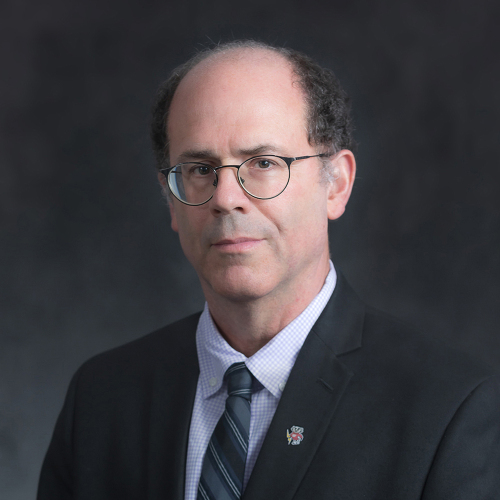
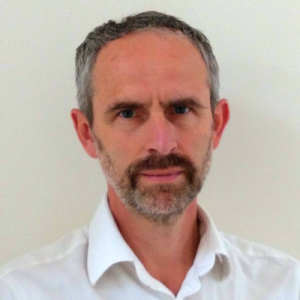
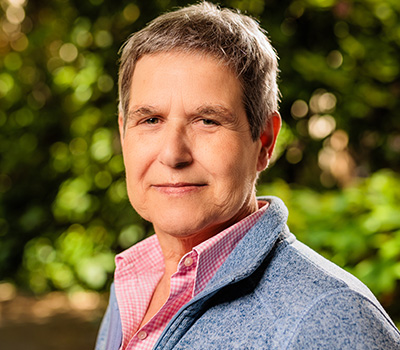
Zhiqiang Que is a Research Associate in the Department of Computing at Imperial College London, affiliated with the Faculty of Engineering and the Centre for High-Throughput Digital Electronics and Machine Learning. His research focuses on computer architecture, embedded systems, high-performance computing, and CAD tools for hardware design optimization. His research interests include FPGA-based acceleration of machine learning models, hardware-software co-design, and real-time signal processing for scientific applications such as particle physics and gravitational wave experiments. He has contributed to projects involving low-latency graph neural networks (GNNs), Bayesian neural networks, and efficient stream processing on FPGAs. Recent work includes advancements in trustworthy design flows for deep learning acceleration, reconfigurable architectures for recurrent neural networks, and optimizing FPGA-based systems for high-energy physics experiments at the HL-LHC.
Jonathan E. Martin is a Professor in the Department of Atmospheric and Oceanic Sciences at the University of Wisconsin–Madison since 1994. He received his Ph.D. in Atmospheric Sciences from the University of Washington in 1992. Research Focus: Mid-latitude cyclones, jet stream dynamics, and weather-climate interactions Key Methods: Multi-scale observational analysis, high-resolution mesoscale modeling, potential vorticity diagnostics Recent Projects: Jet stream waviness trends, subtropical-midlatitude cyclone transformation, snow cover-cyclone feedback His 2025-2024 publications examine extratropical cyclone precipitation distribution, Pacific basin rapid cyclogenesis, and Earth system model validation for cyclone occlusion. Earlier work (2023-2019) addresses: Jet superposition climatology Self-organizing map analysis of jet variability Cyclone-induced Southern Hemisphere waviness Nonlinear jet retraction mechanisms Tornado outbreak jet influences Historical cold pool contraction trends Awarded the 2021 Atmospheric Sciences Librarians International Choice Runner Up for his historical meteorology work, he also authored the textbook Mid-Latitude Atmospheric Dynamics: A First Course (2013). His research spans cyclogenesis, frontogenesis, and climate change impacts on jet streams, with applications in extreme weather forecasting and climate modeling validation.
Maarten Ambaum is Professor of Atmospheric Physics and Dynamics at the University of Reading's Department of Meteorology. His research focuses on fundamental atmospheric processes including energy transfer mechanisms, cloud electrification phenomena, and storm track variability using theoretical modeling and experimental approaches. Research interests span thermodynamics of climate systems, electrical properties of cloud droplets, geophysical fluid dynamics, and applications of Bayesian statistics to atmospheric science. Current projects investigate convective energy cycles, electrical aspects of rainfall generation, and storm track transitions. Publications demonstrate expertise in atmospheric electricity, cloud microphysics, and climate system modeling. Recent work examines fog electrification, aircraft-based charge emission systems, and storm track responses to climate oscillations. Develops novel instrumentation for atmospheric measurements including corona current monitoring systems. Authored textbook 'Thermal Physics of the Atmosphere' with second edition published in 2020.
Dr. Alexander J. Baker is a Senior Research Scientist at the National Centre for Atmospheric Science (NCAS) and the University of Reading's Department of Meteorology. His research focuses on high-resolution climate modeling, particularly examining tropical cyclones, North Atlantic climate variability, and paleoclimate reconstruction through stable water isotopes. Senior Research Scientist, NCAS High-Resolution Climate Modelling group member Project Manager, Huracan project Co-organizer, NCAS Climate Modelling Summer School Dr. Baker's research interests span: Tropical and post-tropical cyclones Global km-scale climate model evaluation Air-sea interactions in cyclones Atmospheric circulation patterns North Atlantic climate extremes Paleoclimatology using speleothems He supervises: Lewis Grant (PhD 2025-2028): High-resolution sub-seasonal tropical cyclone predictions Elliott Sainsbury (PhD 2019-2022): Post-tropical cyclones in European extreme weather His publication record (2014-2025) reveals: Leading research in tropical cyclone modeling Expertise in global storm-resolving climate models Major contributions to understanding Atlantic Multidecadal Variability Current focus on model resolution impacts on climate simulations Interdisciplinary work combining meteorology and paleoclimatology Industry collaboration through Insurance Special Interest Group Scientific contributions: Advancing High-Resolution Climate Modelling group's research Website administrator for HRCM research group Co-organizer of influential climate seminars
Edmund Chang is a Professor at Stony Brook University's School of Marine and Atmospheric Sciences , focusing on mid-latitude storms, climate dynamics, and tropical-extratropical interactions. His work bridges observational analysis, climate modeling, and mechanistic studies. Ph.D., Princeton University (1993) Research Interests span atmospheric dynamics, storm track variability, and societal impacts of extratropical cyclones. He investigates how global warming affects storm intensity and frequency, using tools ranging from climate models to real-time observations. His article trends show increasing focus on subseasonal forecasting, MJO modulation of storm tracks, and Southern Hemisphere cyclone intensification. Recent work addresses Arctic amplification effects and QBO interactions. Scientific Awards : Editor’s Award, American Meteorological Society Fellow, American Meteorological Society Advising includes numerous graduate students like Chingyuan Zheng and Albert Yau. Grants from NASA and NOAA support his climate change research. He contributes to IPCC assessments and leads international climate task forces.
Yvette Spitz is a Professor and Interim Associate Dean for Faculty Advancement at Oregon State University's College of Earth, Ocean, and Atmospheric Sciences (CEOAS). Her research focuses on marine ecosystems, coupled physical-biological models, and biogeochemical processes in coastal and open-ocean environments. She holds BS degrees in Physics and Oceanology from the University of Liège (Belgium), an MS from Florida State University, and a PhD from Old Dominion University. Her work investigates carbon cycle dynamics in the North Pacific, coastal upwelling systems off Oregon, and eutrophication in the North Sea. She employs data-assimilative models with satellite data to refine model parameters and estimate errors. Key contributions include studies on phytoplankton blooms, nutrient cycling, and ecosystem responses to environmental drivers. Publications span over two decades, emphasizing physical-biological interactions, model development, and climate impacts. Notable projects include the PARADIGM Program for global ocean modeling and the MIRO model for North Sea eutrophication. Her interdisciplinary approach bridges observational data with computational modeling to address critical oceanographic challenges. Labs and collaborations are centered within CEOAS, though specific lab affiliations are not explicitly detailed in the text. Grants and advising roles are not listed, but her extensive publication record underscores sustained research engagement.
Prof. Dr. Stefan Brönnimann serves as a Professor and Unit Leader of Climatology at the Institute of Geography, University of Bern. His extensive research portfolio spans historical climatology, climate dynamics, and atmospheric circulation reconstruction, with particular focus on the past 400 years. He plays a leadership role in major international climate initiatives including the IPCC assessment reports and various climate reanalysis projects. Brönnimann's research centers on reconstructing historical weather and climate patterns through the innovative combination of early instrumental data, proxy records, and climate models. His work examines large-scale climate variability, interannual-to-decadal atmospheric circulation patterns, volcanic eruption effects on climate, and climate-society interactions. His methodologies often involve transforming historical documents into usable climate datasets and applying advanced machine learning techniques to weather reconstruction challenges. Recent publications reveal a strong emphasis on European climate patterns, hydroclimate extremes, and the development of novel datasets and tools for climate research across high-impact journals in climate science, paleoclimatology, and climate informatics. Notable scientific achievements include: Lead author for Chapter 2 of the IPCC Working Group I 5th Assessment Report President of the Commission 'Atmospheric Chemistry and Physics' (ACP) of sc.nat Editorial leadership for multiple prestigious journals including Meteorologische Zeitschrift, Climate of the Past, and Geographica Bernensia Leadership roles at the Oeschger Centre for Climate Change Research Active participation in international initiatives like the Twentieth Century Reanalysis Project and Atmospheric Circulation Reconstructions over the Earth (ACRE) Brönnimann has secured substantial funding through numerous national and international projects including SNF, NCCR Climate, EU FP-7, HORIZON2020, COST, and ERAnet.RUS. He has organized multiple international workshops on weather and climate extremes, atmospheric circulation variability, and historical climate events like the Tambora eruption. His work connects closely with the Oeschger Centre for Climate Change Research at the University of Bern, where he leads Work Package 2 and serves on the Steering Group, demonstrating his significant institutional leadership within Bern's climate research community.
Dr. Jon Shonk is a Senior Scientist in Urban-scale Modelling Research at the MetOffice@Reading, affiliated with the Department of Meteorology at the University of Reading. His research focuses on urban climate dynamics, aerosol radiative forcing, and monsoon systems. He specializes in improving high-resolution weather models through thermal remote sensing and addressing biases in climate simulations. Key research interests include urban microclimate impacts, aerosol-cloud interactions, and the predictability of Indian monsoons. He has contributed to advancing ECMWF seasonal forecasting systems and analyzing historical climate reconstructions to understand global monsoon behavior. His work spans interdisciplinary approaches, integrating remote sensing data with numerical modeling to address challenges in urban meteorology and tropical climate systems. He has collaborated closely with the Met Office and academic institutions to enhance model accuracy in representing complex atmospheric phenomena.
Larry O'Neill is an Associate Professor and Director of the Oregon Climate Service at Oregon State University's College of Earth, Ocean, and Atmospheric Sciences (CEOAS). He is based in Burt Hall at the Corvallis campus and serves as a key figure in climate monitoring and research for the state of Oregon and the broader Pacific Northwest region. Dr. O'Neill received his Ph.D. in Oceanography from Oregon State University in 2007 and his B.S. in Atmospheric Sciences from the University of California at Davis in 2000. His educational background bridges the disciplines of oceanography and atmospheric sciences, providing him with a unique perspective on air-sea interactions. Dr. O'Neill's research focuses on air-sea interactions and their role in climate variability, with particular expertise in satellite meteorology and oceanography, atmospheric boundary layer dynamics, and ocean mixed layer processes. His work examines Pacific Northwest and North Pacific weather, ocean, and climate variability, with applications to water resource management and climate monitoring. He teaches courses in Satellite Oceanography/Ocean Remote Sensing and Fluid Earth, training the next generation of oceanographers and atmospheric scientists. His publication record demonstrates consistent contributions to understanding how oceanic features like the Gulf Stream and California Current System influence atmospheric processes. Recent work has increasingly focused on climate extremes in the Pacific Northwest, including drought, heat waves, and wildfires, with direct applications to state-level climate services. NASA's Ocean Vector Winds Science Team Jet Propulsion Laboratory's PO.DAAC Users Working Group NASA's Ocean Surface Topography Science Team Co-Chair of US CLIVAR Working Group on Air-Sea Interactions State of Oregon Water Supply Availability Committee Oregon Climate Extremes Committee Oregon Drought Monitor Advisory Committee Dr. O'Neill advises graduate students including Emily Hayden (Ph.D. candidate in Physics of Oceans and Atmospheres) and Rose Una (M.S. candidate in Physics of Oceans and Atmospheres). His research is supported by multiple federal agencies including NASA and NOAA, as evidenced by his participation in various working groups and his extensive publication record spanning two decades. As Director of the Oregon Climate Service, Dr. O'Neill leads efforts to monitor and analyze climate conditions across Oregon, providing critical information to state agencies, water managers, and the public. His work has been featured extensively in media coverage of climate extremes in the Pacific Northwest, particularly regarding drought conditions and wildfire risks.
Chiel van Heerwaarden is an Associate Professor of Meteorology at Wageningen University & Research. His work focuses on cloud dynamics, radiative transfer, and their impacts on climate processes. He leads projects on solar irradiance variability, convective cloud organization, and atmospheric modeling. He has received a NWO Vidi grant for his research on cloud shadows and radiative effects. His research integrates machine learning, large-eddy simulations, and observational data to advance understanding of boundary layer processes and climate feedbacks. Key research areas include: irradiance variability under broken clouds, 3D radiative effects in shallow cumulus clouds, and the interaction between clouds and land surface processes. He collaborates on field experiments like CloudRoots-Amazon22 and Fesstval, advancing multiscale modeling approaches. His team addresses challenges in kilometer-scale Earth system modeling and wildfire-atmosphere interactions. Recent achievements include developing efficient radiative transfer parameterizations and analyzing extreme weather phenomena like heatwaves linked to soil drought. He advises five PhD candidates on topics ranging from convective self-aggregation to forest fire plumes. His work bridges computational science and observational data to improve climate projections and atmospheric understanding. Grants: NWO Vidi Grant (2019) Labs/Teams: Meteorology and Air Quality Group at Wageningen University Key Projects: CloudRoots-Amazon22, Shedding Light on Cloud Shadows, Real-Weather Large Eddy Simulation
Volkmar Wirth is a full Professor of Theoretical Meteorology and Atmospheric Physics at the Institute for Atmospheric Physics, Johannes Gutenberg-University Mainz. His research focuses on Rossby wave packets, forecast error dynamics, tropopause behavior, mountain meteorology, and tropical cyclone processes. Full Professor since 2000 Specialist in midlatitude waveguidability and extreme weather predictability Active in mountain meteorology (banner clouds) and hurricane dynamics Teaching includes graduate courses on atmospheric hydrodynamics, predictability, and potential vorticity applications. He supervises project assignments involving numerical modeling in FORTRAN-90 and leads meteorology practicals with time series analysis experiments. Recent publications analyze Rossby wave propagation in changing climates, temperature extremes, and waveguide limitations. His group collaborates extensively on "Waves to Weather" predictability research. Current affiliations: Johannes Gutenberg-University Mainz , Institute for Atmospheric Physics.
Nivedita Gupta serves as Professor and Chair of Chemical Engineering & Bioengineering at the University of New Hampshire (UNH), where she teaches core courses including CHBE 400 (ChE and BioE Lectures), CHBE 502 (Energy Balances), CHBE 601 (Fluid Mechanics and Unit Ops), CHBE 940 (Advanced Transport Phenomena), and CHBE 999 (Doctoral Research). Her office is located in Kingsbury Hall, Room W313, Durham, NH 03824, and she can be contacted at Nivedita.Gupta@unh.edu. Her academic credentials include: Ph.D. in Chemical Engineering from Pennsylvania State University B.S.E.T. from the Indian Institutes of Technology Dr. Gupta's research centers on fundamental fluid dynamics with emphasis on interfacial phenomena in multiphase systems. She investigates surfactant-laden bubble and drop dynamics, capsule hydrodynamics in confined flows, nanoparticle synthesis in microreactors, and thermocapillary convection in layered fluids. Her work bridges theoretical modeling with experimental validation, addressing challenges in transport phenomena relevant to chemical, biological, and materials engineering applications. Analysis of her 15 most recent publications (2007-2019) reveals consistent focus on multiphase flow mechanics, particularly surfactant effects on deformable interfaces in microscale and macroscale systems. Key trends include computational modeling of drop/bubble motion in confined geometries, synthesis of functional nanomaterials in continuous-flow reactors, and rheological characterization of nanowire suspensions for printable electronics. Her work appears predominantly in high-impact journals like Industrial & Engineering Chemistry Research , Physics of Fluids , and Chemical Engineering Science . No scientific awards were documented in the available sources. As Doctoral Research course instructor (CHBE 999), Dr. Gupta supervises Ph.D. candidates, though specific student names and grant funding details remain unreported in the provided materials. Her leadership as department chair indicates significant administrative responsibilities alongside research and teaching duties.
Professor Andy Baker is a leading academic at the School of Biological, Earth and Environmental Sciences , UNSW Sydney. With a career spanning over three decades, he has also held prestigious positions at the University of Birmingham, University of Newcastle upon Tyne, and University of Exeter. PhD in Speleothem Growth Rate and Paleoclimate, Bristol University (1990-1993) BSc (Hons) in Geographical Science, Bristol University (1987-1990) His research focuses on the intersection between geology and water , utilizing stalagmites to reconstruct past climates, groundwater recharge patterns, and fire history. He specializes in isotopic and geochemical techniques for analyzing organic matter in natural and human environments, from groundwater systems to drinking water quality. Recent publications highlight interdisciplinary applications of stalagmite analysis in climate science, fire history reconstruction through geochemical signatures , and groundwater recharge modeling using cave drip water networks. His work spans from Mediterranean karst systems to sub-Antarctic lakes , with a focus on global environmental change and hydrological sustainability . Awardees include: Clarke Medal for Geology (2023) Fellow of Royal Society of NSW (2024) Over $75 million in successfully managed research grants He currently supervises PhD students in projects related to climate modeling , groundwater sustainability , and karst hydrology . His outreach includes regular media engagement with ABC, The Conversation, and international cave science training programs.
Dr. James Tyacke is a Senior Lecturer in Aerospace Engineering (Aerodynamics) at Brunel University London within the Mechanical and Aerospace Engineering department of the College of Engineering, Design and Physical Sciences. He serves as Director (numerical methods) of the Brunel Aerospace Research Centre (ARC) and as Aerospace MSc Course Director. Dr. Tyacke's research focuses on Large Eddy Simulation (LES) of complex flows, with particular interest in Urban Air Mobility Vehicles (Air Taxis), Jet Aeroacoustics, Turbomachinery, Electronics Cooling, and Geothermal Energy. His work emphasizes multi-fidelity modeling approaches, leveraging modern High Performance Computing (HPC) architectures for both simulation and analysis of large datasets to reveal unsteady flow physics. He actively develops methods to increase CFD automation through mesh generation and optimization, with recent work incorporating Machine Learning and AI for solution analysis. His publication record demonstrates a strong focus on applying advanced computational methods to challenging aerospace problems, particularly in jet aeroacoustics and turbomachinery. Recent work has increasingly addressed installed jet configurations with flight stream effects, serrated nozzle designs for noise reduction, and optimization of labyrinth seals. His research spans both fundamental fluid dynamics investigations and practical industrial applications, often employing hybrid LES-RANS approaches to balance computational cost with accuracy. Dr. Tyacke actively supervises PhD, MSc, and undergraduate projects, with current opportunities including an EPSRC-funded Doctoral Landscape Award PhD studentship for 'Next-Generation CFD modelling of High-Pressure Turbine cooling' and scholarships for Chinese applicants. He teaches several key courses including Applied Fluid Dynamics and CFD, Aerodynamics, and Aerospace MSc group design projects. As Director of numerical methods for the Brunel Aerospace Research Centre, he leads a multi-disciplinary research culture focused on solving pressing aerospace challenges. The ARC supports researchers at all career stages and collaborates with both large and small industries to address real-world problems.
Prof. Filip Sadlo is a Full Professor of Computer Science at Heidelberg University's Interdisciplinary Center for Scientific Computing (IWR), leading the Visual Computing Group. He serves as Dean of Studies for the Department of Informatics since 2022 and holds roles in multiple academic organizations including VGTC Executive Committee (2022–2025) and Associate Director of IWR (2022–present). His research focuses on visualization of complex scientific data, flow analysis, vector field topology, and high-performance computing. Education: PhD in Computational Visualization from ETH Zurich (2010), with prior roles at European Forest Institute and University of Freiburg. Research Interests: Specializes in visualization techniques for fluid dynamics, vector fields, and uncertainty quantification. Key areas include Lagrangian coherent structures, advection-diffusion processes, and interactive visualization systems. His work bridges computational methods with real-world applications in engineering and environmental science. Publications: Over 80 peer-reviewed papers since 2004, emphasizing visualization algorithms for dynamic systems, topological data analysis, and scientific computing. Recent work explores metacognition in data visualization and discontinuous vector field analysis. Grants & Projects: Principal investigator in DFG-funded projects on visualization in meteorology and MRI-based diagnostics, as well as initiatives in data integration and simulation science (e.g., SFB-TRR 191, HIDSS4Health). Labs & Teams: Heads the Visual Computing Group, fostering interdisciplinary research in computational visualization and scientific computing.