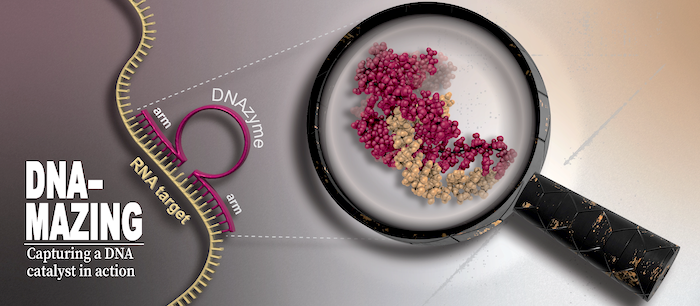
Dr. Manuel Etzkorn leads the Heisenberg Research Group at the Institute of Physical Biology, Heinrich Heine University Düsseldorf. His work bridges structural biology, biophysics, and biocatalysis, with a focus on membrane proteins and DNAzymes in native environments. The team develops advanced NMR methodologies and nanodisc systems to study molecular dynamics. Faculty of Mathematics and Natural Sciences Institute of Physical Biology Research emphasizes overcoming structural biology limitations through tailored methods. Key areas include membrane protein stabilization (e.g., aescin-lipid nanoparticles), DNAzyme structural analysis (8-17 and 10-23 DNAzymes), and NMR spectroscopy innovations (local deuteration, solid-state NMR). Recent publications (2022-2025) reveal trends in RUNX1-ETO inhibition , electroneutral nanodiscs , and DNA catalyst therapeutic applications . Notable scientific recognitions include Inside cover article (2016) PNAS highlight commentary (2014) "Article of the month" award (2008) The group actively mentors PhD students (Justin Boecker, Ci Chu, Lora Denson, Christopher Ruth, Jessica Schmuck) and collaborates on projects involving ubiquitin dynamics , α-synuclein aggregation , and PAS domain signal transduction .
Dr. Jing Liu is a Research Fellow at the Max Planck Institute for Terrestrial Microbiology in Marburg, Germany, working within the Bode Research Group led by Prof. Helge Bode. Her position focuses on microbial natural product biosynthesis, utilizing genomic and biochemical approaches to investigate enzymatic mechanisms in secondary metabolism. Dr. Liu's research centers on the enzymology of bacterial secondary metabolite pathways, particularly diketopiperazine derivatives and related compounds. She specializes in characterizing cytochrome P450 enzymes, prenyltransferases, and oxidases involved in regiospecific modifications such as prenylation, guaninylation, and C-C bond formation. Her work bridges microbiology, biochemistry, and drug discovery to elucidate biosynthetic pathways for anti-infective agents. Analysis of her 15 most recent publications (2012-2023) reveals consistent focus on Streptomyces-derived natural products, with emphasis on genomic-guided discovery of biosynthetic gene clusters and enzymatic characterization of novel catalytic mechanisms. Key trends include regiospecific enzymatic modifications generating structural diversity in diketopiperazines, and exploration of enzyme promiscuity for metabolic engineering applications. No scientific awards were documented in the available source material. As a Research Fellow, Dr. Liu conducts independent research under Prof. Bode's mentorship. The source material contains no information regarding student supervision, grant funding, or collaborative projects beyond her core research activities. Dr. Liu operates within the Bode Research Group, which employs integrated approaches combining microbial genetics, enzymology, and analytical chemistry to investigate bacterial secondary metabolism. The group specializes in elucidating biosynthetic pathways for bioactive natural products with pharmaceutical potential.
Thorsten Dieckmann is an Associate Professor at the University of Waterloo, where he also serves as Associate Chair (Graduate Studies and Research). He directs the Dieckmann Lab and the Institute of Biochemistry and Molecular Biology, focusing on RNA and RNA-protein complexes using advanced Nuclear Magnetic Resonance (NMR) spectroscopy techniques. Education : Dr. rer. nat. Chemistry (Technical University of Braunschweig, 1993); Dipl. Chem. Chemistry (Technical University of Braunschweig, 1991). His research spans RNA structure and function , including ion-binding dynamics, molecular interactions, and catalytic properties. He investigates RNA-protein complexes through heteronuclear NMR and isotopic labeling, while also developing biochemical devices and analytical methods . Recent work highlights trends in RNA-ligand interactions , protein dynamics , and structural biochemistry , particularly in calmodulin antagonism and tautomerism analysis. His lab employs differential mobility spectrometry for metabolite and drug transformation studies. Scientific Awards : Human Frontier Science Program Organization fellowship (1994); 'Dr. rer. nat' with honors (1993). Thorsten contributes to academic governance as a steering committee member of the Guelph-Waterloo Centre for Graduate Work in Chemistry and Biochemistry and serves on the Faculty of Science Foundation board. He teaches graduate and undergraduate courses in biochemistry and biomaterials.
Christoph Krafft serves as Group Leader ( Arbeitsgruppenleiter ) at the Leibniz Institute of Photonic Technology (Leibniz-IPHT) in Jena, Germany, where he leads the Raman and IR Spectroscopic Analytics research group within the Spectroscopy/Imaging Research Department. His research program bridges physics, chemistry, and biomedical applications through advanced optical technologies. Dr. Krafft's expertise centers on vibrational spectroscopy techniques, particularly Raman and infrared methods. His research spans biomedical diagnostics (cancer detection, cellular analysis, infection mechanisms) and environmental applications (microplastic detection). He has developed innovative instrumentation including specialized Raman imaging systems, 1064 nm fiber probe spectrometers, and high-throughput screening platforms that address fluorescence interference challenges in biological samples. Analysis of his publication record reveals a strategic focus on clinical translation of spectroscopic technologies. His recent work demonstrates progression from fundamental methodology development toward practical diagnostic applications, particularly in intraoperative settings. The consistent collaboration with Jürgen Popp and international research teams across multiple disciplines highlights his position within a robust scientific network focused on advancing optical technologies for real-world challenges. Dr. Krafft actively participates in large-scale collaborative efforts, including international interlaboratory comparisons for microplastic detection standardization. His laboratory at Leibniz-IPHT maintains a dual focus on pushing technical boundaries in spectroscopic instrumentation while ensuring practical applicability in medical and environmental contexts.
Julian Whitelegge is an Adjunct Professor in the Department of Psychiatry & Biobehavioral Sciences at the David Geffen School of Medicine, University of California, Los Angeles . He serves as Director of Proteomics at the Pasarow Mass Spectrometry Laboratory , specializing in advanced mass spectrometry techniques for protein analysis. Ph.D., Imperial College of Science and Technology, University of London (1989) Visiting Scientist, Cornell University (1999), focusing on Fourier-transform mass spectrometry Dr. Whitelegge's research spans mass spectrometry-based proteomics with applications in neurodegenerative diseases (ALS, Alzheimer's) and membrane protein structure-function relationships . His work includes top-down proteomics for intact protein analysis, amyloid protein characterization , and lipid-protein interactions . Recent publications highlight studies on Alzheimer's therapies , SARS-CoV-2 spike protein trafficking , and bacterial microcompartment assembly . His expertise in Fourier-transform mass spectrometry has advanced membrane protein analysis and structural proteomics . Dr. Whitelegge contributes to scientific literature with over 150 publications and editorial roles, including Molecular and Cellular Proteomics . He trains postgraduate and postdoctoral researchers in advanced protein mass spectrometry techniques.
Corey M. Johnson is an Associate Professor at Samford University within the Howard College of Arts and Sciences, Department of Chemistry and Biochemistry. He joined Samford in 2012 after serving as an American Heart Association Research Fellow at the Oklahoma Medical Research Foundation and a Senior Research Fellow in Medicinal Chemistry at the University of Texas at Austin. BS, Chemistry, East Central University, 1998 PhD, Biochemistry, University of Oklahoma, 2004 Johnson's research focuses on the functional characterization of enzymes, particularly their kinetic mechanisms and catalytic pathways. His lab investigates Tetrahydrodipicolinate N-succinyltransferase (DapD) as a potential antibiotic target for bacterial lysine biosynthesis and explores industrial and environmental applications of laccase in wastewater pollutant degradation. Techniques include kinetic analysis, substrate specificity testing, pH dependence studies, inhibition assays, and mutation effects. His recent work on laccase involves collaborative biosensor and biofuel cell development, reflecting a broader interest in applying enzymatic catalysis to environmental and industrial challenges. Publications highlight expertise in enzyme kinetics, mechanism elucidation, and therapeutic target identification. American Heart Association Research Fellow Senior Research Fellow in Medicinal Chemistry, University of Texas at Austin Johnson's lab integrates molecular biology, protein purification, and spectroscopic methods to train students in essential biochemical techniques. He also emphasizes interdisciplinary collaboration and practical applications of enzymatic research.
Dr. Timothy Eubank is a Professor in the Department of Microbiology, Immunology & Cell Biology at West Virginia University School of Medicine. He also serves as a Senior Advisor at the WVU Health Sciences Center in the Department of Research & Graduate Education and is a Member of the WVU Cancer Institute Research Programs. Dr. Eubank's research focuses on the role of myeloid cells and mononuclear phagocytes in tumor growth and angiogenesis, with particular expertise in monocyte and macrophage HIF (hypoxia inducible factor) biology. His lab has made several groundbreaking discoveries, including being the first to report that GM-CSF stimulates tumor macrophages to overexpress soluble VEGFR-1, which sequesters tumor-produced VEGF, and the first to identify the disparate functions of HIF-1α and HIF-2α in tumor-associated macrophages, discovering that HIF-2α can be anti-angiogenic. Analysis of Dr. Eubank's recent publications reveals a strong focus on tumor microenvironment, particularly examining macrophage subsets in breast and pancreatic cancers using advanced Electron Paramagnetic Resonance (EPR) imaging techniques. His work spans multiple disciplines including cancer biology, immunology, biomedical engineering, and molecular imaging, with a consistent theme of understanding how tumor hypoxia and immune cell interactions drive cancer progression. K99/R00 Pathway to Independence Award from the National Cancer Institute Dr. Eubank's research is supported by multiple collaborations across WVU, working with colleagues in Biochemistry, Pharmaceutical Sciences, Radiology, and Surgery to develop novel molecular probes for in vivo measurement of tumor oxygenation, pH, and inorganic phosphate. His lab's work on understanding how different macrophage HIFs regulate chemotherapy success in breast cancer models has significant implications for improving cancer treatment efficacy. Dr. Eubank's lab occupies spaces 5612, 5608, 5607, and 5602 in the Health Sciences South building, where his team conducts research on the 'In vivo Multifunctional Magnetic Resonance Research' program, investigating the origin and role of macrophages that initiate and maintain treatment resistance in breast and pancreatic cancers.
Céline Masclaux-Daubresse is a Researcher at the Jean-Pierre Bourgin Institute (IJPB), a joint unit of University of Paris-Saclay, INRAE, and AgroParisTech, where she leads the SATURNE team (Senescence, Autophagy, Nutritional Recycling and Nitrogen Use Efficiency). Her work centers on plant adaptation mechanisms to environmental stressors through cellular self-digestion processes. Education: Magistère in Biology, École normale supérieure de Paris (1989) DEA in Phytopathology PhD in Phytopathology, Pierre and Marie Curie University (1995) Research Focus: Dr. Masclaux-Daubresse investigates how autophagy enables plants to recycle nutrients during leaf senescence and climate stress. Her work demonstrates that autophagic machinery clears damaged cellular components and remobilizes nitrogen, iron, and sulfur to sustain growth under drought, heat, and nutrient limitations. Using Arabidopsis thaliana mutants and multiomic approaches, she has uncovered critical links between autophagy, membrane lipid homeostasis, and endoplasmic reticulum stress responses. Scientific Awards: No specific awards were documented in the source material. Research Funding: Major support from the French National Research Agency (ANR) and Marie Skłodowska-Curie ITN FP7 program enabled her autophagy mutant characterization and cargo identification studies. Laboratory: The SATURNE team employs isotopic labeling (15N), metabolomics, transcriptomics, and proteomics to dissect autophagy mechanisms in model plants and agronomic species (barley, canola, rice), with current emphasis on cargo-target identification and stress-signaling networks.
Jeffrey Macdonald serves as an Associate Professor at the University of North Carolina at Chapel Hill School of Medicine, with a primary appointment in the Department of Biomedical Engineering. He holds significant leadership roles as the Founder and Scientific Director of the Metabolomic Facility and Co-Scientific Director of the joint UNC/NCSU/NOAA Marine MRI facility at Pivers Island near Beaufort, NC. Dr. Macdonald's educational background includes a Ph.D. in Pharmaceutical Chemistry from the University of California at San Francisco (1995), an M.S. in Environmental Toxicology from the University of California at Davis (1988), and a B.A. in Aquatic Biology from the University of California at Santa Barbara (1984). His academic journey continued with post-doctoral training at the National Institute of Environmental Health Sciences under Dr. Robert London, a pioneer in fluxomics. His research program centers on metabolomics and fluxomics , with a particular focus on using stable isotope-labeled nutrients ( 13 C, 15 N, 2 H) to trace metabolic networks. Dr. Macdonald has developed innovative NMR-compatible bioreactors, including a patented multi-coaxial membrane bioartificial liver and a fluidized-bed bioreactor for hepatocyte culture. His work spans from fundamental metabolic studies to environmental applications, with recent emphasis on comparative multi-omics across mammalian species and bat aging research. Analysis of his publication record reveals consistent research activity with a clear evolution from foundational metabolomic techniques to broader applications in environmental science, cancer research, and comparative biology. His work demonstrates increasing interdisciplinary collaboration, connecting metabolomics with fields as diverse as marine science, neurology, and public health. Dr. Macdonald has secured NIH funding for developing novel fluxomic applications and established the first Metabolomic Facility at UNC in 2002. His research program has facilitated numerous collaborations across diverse biological systems, from diatoms and bacteria to rodents and humans, with recent expansion into environmental metabolomics of wild populations including mollusks, sea turtles, and bats. His laboratory work focuses on the integration of metabolomics with tissue engineering to enable quantitative biosystem analysis. The Marine MRI facility represents a significant expansion of his research capabilities into marine environmental systems, while his ongoing work with the Metabolomic Facility continues to support diverse research projects across campus and beyond.
Dr. Ljiljana (Lili) Paša-Tolić is a distinguished Lab Fellow and Lead Scientist for Visual Proteomics at Pacific Northwest National Laboratory (PNNL), where she works within the Environmental Molecular Sciences Division and the Environmental Molecular Sciences Laboratory (EMSL) user program. She brings world-leading expertise in native-state and top-down proteomics, mass spectrometry, and the Biomolecular Pathways Integrated Research Platform, combining these with Functional Bioimaging and Cell Signaling platforms to develop transformational capabilities for dynamic spatio-temporally resolved proteomic imaging in cells. Shipley Capturing Federal Business Course (2013) Emerging Leader Program (2012) Management Skills Development Program (2003) Postdoc, National High Magnetic Field Laboratory (1995–1997) Postdoc, PNNL (1993–1995) PhD in Chemistry, University of Zagreb (1992) MS in Theoretical and Physical-Organic Chemistry, University of Zagreb (1989) BS in Chemistry, University of Zagreb (1986) Dr. Paša-Tolić specializes in developing sophisticated analytical methods with emphasis on Fourier transform mass spectrometry and micro-separations. Her research focuses on applying these techniques to accurately quantify spatiotemporal changes in protein (metabolite) abundance, identity, and activity. Her work bridges the gap between advanced instrumentation development and biological applications, particularly in environmental systems, microbial communities, and plant-microbe interactions. She has pioneered approaches for single-cell metabolomics, top-down proteomics, and mass spectrometry imaging that have transformed how researchers study complex biological systems at unprecedented resolution. The trend in Dr. Paša-Tolić's recent publications demonstrates her leadership in advancing mass spectrometry technologies while applying them to increasingly complex biological questions. Her work spans environmental science, microbiology, plant biology, and immunology, showing how fundamental advances in analytical methodology can be leveraged across diverse research domains. Key themes include single-cell analysis, interlaboratory standardization, top-down proteomics, and the development of novel instrumentation approaches that push the boundaries of detection sensitivity and spatial resolution. The Analytical Scientist Power List (2019) Spectrometry Global Impact Award (2015) Director's Award, EMSL (2010) Systems Biology Fellows Mentor Award (2007) Outstanding Merit Award, International Immunology (2007) Key Contributor Award, PNNL (2002, 2003) Outstanding Performance Award, PNNL (1998, 1999, 2000) International Institute of Quantum Chemistry and Solid-State Theory Award (1988) As a leader in her field, Dr. Paša-Tolić has served in numerous professional capacities including Treasurer of the American Society for Mass Spectrometry (2020–2022), Editorial Board Member for the Journal of the American Society for Mass Spectrometry (2017–Present), and Member at Large on the Board of Directors for the Consortium for Top-Down Proteomics (2012–Present). She has organized and lectured at the 'Mass Spectrometry in Biology and Medicine' summer school in Dubrovnik, Croatia since 2007, demonstrating her commitment to training the next generation of scientists. Her research has been supported by multiple federal agencies including the Department of Energy, National Institutes of Health, and National Science Foundation. Dr. Paša-Tolić leads a dynamic research team at PNNL focused on visual proteomics, which combines advanced mass spectrometry with imaging techniques to study biological systems at unprecedented resolution. Her group works at the intersection of the Functional and Systems Biology group, the Biomolecular Pathways Integrated Research Platform, and the Functional Bioimaging platform, creating a synergistic environment for innovation. The team has developed novel capabilities for single-cell analysis, top-down proteomics, and mass spectrometry imaging that are being applied to diverse research areas from environmental systems to human health.
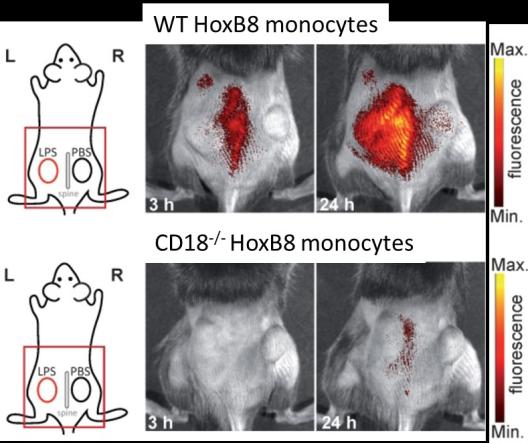
Prof. Dr. Michael Schäfers is a Full Professor of Technology and Imaging at the University of Münster and Head of the European Institute for Molecular Imaging (EIMI), operating within the Multiscale Imaging Centre (MIC). His research focuses on multimodal molecular imaging of inflammation using advanced in vivo methodologies across diverse disease models. His educational background includes: 1987-1994: Study of Medicine at the University of Münster 1994-1995: Postdoctoral research at MRC Cyclotron Unit, Imperial College School of Medicine, London 1995-1999: Postdoctoral work in Department of Nuclear Medicine, University Hospital Münster Schäfers' research centers on developing imaging techniques to visualize molecular and cellular dynamics in inflammation. His team identifies targets like matrix-metalloproteinases and S100A8/A9, develops high-affinity ligands labeled with radioactive isotopes or fluorescent dyes, and applies these in disease models including biopellet inflammation, autoimmune arthritis, and myocardial infarction using PET/CT, SPECT/CT, optical, and photoacoustic imaging systems. Analysis of his 2016-2018 publications reveals a strong focus on cardiovascular and neurological inflammation imaging. Key themes include MMP activity in atherosclerosis plaque phenotyping, leukocyte penetration in multiple sclerosis blood-brain barrier, CRISPR/Cas9-modified monocyte tracking, and novel probe development for MMP-13 inhibition, demonstrating integration of molecular biology with advanced imaging technologies. No specific scientific awards were mentioned, though Schäfers has held leadership roles as Coordinator of DFG CRC 656 'Cardiovascular Molecular Imaging' (2011) and Co-Coordinator of DFG Cluster of Excellence EXC 1003 'Cells in Motion' (2012). He supervises PhD students in interdisciplinary projects combining molecular imaging with immunology and genetics, supported by major DFG grants. His group provides comprehensive training in state-of-the-art imaging technologies and disease modeling approaches. The Schäfers lab comprises an interdisciplinary team with in-house chemistry capabilities for probe synthesis, operating high-resolution small animal PET/CT, SPECT/CT, optical, photoacoustic, and ultrasound systems alongside molecular biology and surgical facilities for integrated in vivo studies.
Juan Cortés is a CNRS Research Director at LAAS-CNRS (Toulouse), leading the Robotics and Interactions Team. He holds a PhD in automated systems/robotics from the National Polytechnic Institute of Toulouse (2003). His research spans robotics, artificial intelligence, and computational biology, with focus areas including: Protein conformational dynamics and disordered proteins Robotic motion planning and multi-agent systems Development of computational tools for structural biology (e.g., AFflecto, MoMA-LoopSampler) His publications emphasize algorithm development for molecular flexibility analysis and robotic coordination. Recent work explores Wasserstein distance metrics for protein ensemble comparisons and optimization methods for energy landscapes. Cortés contributes to understanding pathogenic protein structures (e.g., huntingtin) and surface-molecule interactions. He advises on doctoral committees and collaborates internationally but currently lists no direct students or major awards.
Dr. Molly Moynihan serves as Assistant Professor in the Department of Geosciences at Florida Atlantic University, where she leads the Coral Reef Geochemistry & Microbiology Lab (Reef GeM Lab). Her research bridges marine geology, biogeochemistry, and microbial ecology to investigate fundamental processes sustaining coral reef ecosystems. Her academic training includes: Ph.D. in Marine Biogeochemistry from Nanyang Technological University, Singapore (2021) M.S. in Oceanography & Marine Environments from Sorbonne University, France (2014) B.S. in Earth Science from Cornell University (2011) Dr. Moynihan's work centers on the intricate relationships between coral skeletons, endolithic microbes, and biogeochemical cycles. She employs isotope labeling , microsensor technology , and microbiome analysis to unravel how microbial communities within reef frameworks influence skeletal formation, mechanical properties, and nutrient cycling. A significant focus examines green sulfur bacteria in coral microenvironments and their role in sulfur cycling under changing environmental conditions. Her research has particular relevance for understanding coral resilience mechanisms in equatorial reef systems. Analysis of her 11 publications (2012-2025) reveals a strategic evolution from coastal pollution studies toward specialized coral-microbe interactions. Recent work demonstrates sophisticated integration of biomechanical testing with microbial ecology, particularly in high-impact studies on Porites skeletal anisotropy (2022) and coral-associated nitrogen fixation (2022). Her research consistently targets equatorial reef systems, with fieldwork concentrated in the Singapore Strait and Southeast Asian waters. Dr. Moynihan actively mentors graduate students through PhD recruitment in the Reef GeM Lab, emphasizing hands-on training in both field and advanced laboratory techniques. Her lab maintains operational funding through university support and collaborative grants with coral restoration initiatives, enabling participation in regional conservation efforts. Current projects focus on enhancing outplanted coral resilience through microbial community management. The Reef GeM Lab operates as a dynamic research hub where field observations from active reef sites directly inform controlled laboratory experiments . The lab's collaborative framework connects FAU with international research institutions and local restoration practitioners, creating a pipeline from fundamental discovery to applied conservation solutions for threatened coral ecosystems.
Professor Alpaslan Tasdogan leads the Tumor Metabolism Group at the Institute for Tumor Metabolism, Clinic and Polyclinic for Dermatology, Allergology and Venereology at University Hospital Essen, which is part of the University of Duisburg-Essen's Faculty of Medicine. His research focuses on cancer cell metabolism , particularly the metabolic changes that occur during tumor metastasis and in stem cells. The Tumor Metabolism Group investigates how cancer cells adapt their metabolism to survive the complex process of metastasis, with special attention to hematopoietic stem cells where metabolic processes are tightly regulated during regeneration. The group employs modern mass spectrometry techniques and stable isotope-labeled nutrients to precisely analyze cellular metabolism and metabolic flux within cells. Their research spans multiple cancer types with emphasis on melanoma and stem cell metabolism. Analysis of Dr. Tasdogan's publication record reveals a strong focus on tumor metabolism , metastasis mechanisms , and stem cell biology . His recent work spans diverse areas including purine synthesis in tumors, intestinal stem cell regulation via polyamines, and lymphatic protection of metastasizing melanoma cells from ferroptosis. His research demonstrates significant interdisciplinary collaboration, with publications appearing in top journals including Nature , Cell , and Science , often in collaboration with prominent researchers like Morrison SJ and Schadendorf D. The Tumor Metabolism Group's ultimate goal is to gain significant new insights into metastasis to identify metabolic adaptations, with plans to apply their metabolic testing methods to other cancer types and stem cells to examine the transferability of their findings.
Stefan Stürup is an Associate Professor in the Department of Pharmacy at the Faculty of Health Sciences, University of Copenhagen. His research focuses on advanced analytical chemistry applications for drug product characterization and identification of falsified/substandard pharmaceuticals. His primary research interests include: Application of isotope ratio analysis ($$\delta^{13}\text{C}$$, $$\delta^{2}\text{H}$$, $$\delta^{18}\text{O}$$, $$^{87}\text{Sr}/^{86}\text{Sr}$$, $$^{207}\text{Pb}/^{206}\text{Pb}$$) for drug characterization Trace element pattern analysis in pharmaceutical products ICP-MS/ICP-OES based instrumentation for trace elemental impurity determination Uptake and biotransformation of metal-based drugs Development of novel drug delivery vehicles including nanoparticles and metal complexes His recent research has focused on analyzing ibuprofen drug products, investigating isotopic patterns, trace elements, and impurities to ensure pharmaceutical quality and detect falsified products. He has also conducted significant research on metal-based drugs including platinum compounds and gold(I) complexes, examining their cellular distribution, toxicity mechanisms, and potential therapeutic applications. Dr. Stürup has supervised 7 PhD students and 34 master students, with recent projects focusing on isotope ratio analysis in pharmaceuticals and analytical method development. He teaches Pharmaceutical Analytical Chemistry and Kemiske Principper (Chemical Principles) at the bachelor's level. His professional activities include membership in COST actions focused on metal complexes and metallo-drug design, serving as a technical assessor for the Danish Accreditation and Metrology Fund (DANAK), and reviewing for 15 analytical chemistry journals since 1995. His work bridges analytical chemistry, pharmaceutical sciences, and toxicology with practical applications for drug quality control and therapeutic development.