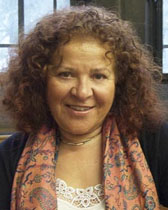
Prof. em. Volker Gottowik is a retired Associate Professor at Goethe University Frankfurt's Faculty of Social and Cultural Anthropology. His research focuses on Southeast Asia (Indonesia, West Africa, Ethiopia), with expertise in anthropology of religion, ritual practices, intercultural hermeneutics, and gender studies. He has published extensively on topics like Islamic-Javanese rituals, pilgrimage sites, and modernity's impact on religious dynamics. Key research areas include multi-religious rituals in Indonesia, the Lingsar Festival on Lombok, and the socio-religious significance of pilgrimage sites like Gunung Rinjani. His work critiques classical anthropological theories (e.g., Clifford Geertz) while engaging with contemporary issues like migration and cultural hybridity. Publications span academic books, journal articles, and conference presentations, with a focus on ritual transgression, sacred landscapes, and interreligious dialogue. Gottowik has delivered keynotes and lectures globally, including at universities in Indonesia, Thailand, and Israel. His research often bridges fieldwork in Southeast Asia with theoretical debates in cultural anthropology.
Lucas Marchante-Aragón is an Associate Professor specializing in early modern Hispanic culture at the College of Staten Island, City University of New York (CUNY). His research centers on Hapsburg imperial politics, propaganda, and their intersections with gender, ethnicity, and nation-building, particularly as expressed through performance and literature. He earned his PhD in Romance Languages from the University of Pennsylvania, an MA from Villanova University, and a Bachelor’s degree from the University of Cádiz, Spain. Dr. Marchante-Aragón’s research interests include early modern Hispanic culture, imperial masculinity, Morisco studies, chivalric literature, and the role of performance in constructing national identity. His work critically examines how power, gender, and ethnicity were negotiated in the Spanish Hapsburg Empire, with a particular focus on symbolic discourses of domination, forced marriage, and hybridity. He is currently studying the symbolic discourse of sexual domination and forced marriage in the Spanish Hapsburg Empire’s interactions with colonized cultures. His recent publications reveal a consistent thematic focus on empire, performance, and identity in early modern Spain. Articles and his monograph explore topics such as the crisis of imperial masculinity in Don Quixote , the expulsion of the Moriscos as imperial spectacle, the ritualization of divine kingship in court festivals, and the construction of national origins through chivalric reenactment. His scholarly output spans prestigious journals in medieval and early modern studies, demonstrating a deep engagement with interdisciplinary approaches to Hispanic cultural history. Dr. Marchante-Aragón is the author of the monograph Performing the King Divine: The Early Modern Spanish Aulic Festival (2017) and co-editor of Cultural Connections in the Hispanic World (2023). He has published in journals including Viator , Journal of Early Modern Cultural Studies , Nueva Revista de Filología Hispánica , Hispanófila , and Analecta Malacitana . He serves as Secretary of the Association for Hispanic Humanities, contributing to the broader academic community. While no specific information about student advising, grants, or awards is available in the provided text, his active publication record and professional roles indicate ongoing scholarly engagement.
Torsten Janson is a Senior Lecturer in Islamic Studies at the Center for Theology and Religious Studies, Lund University, within the Faculties of Humanities and Theology. He maintains an active research and teaching profile with current courses including ISLA11 (Islamology: Grundkurs), ISLA20 (Muhammad, Koranen och den tidiga historien), ISLA23 (Islamologi: Islam i imperiernas tid), and ISLA24 (Islamologi: Det muslimska Europa). His research explores cultural practices, politics, materialities, and aesthetics emerging from religion's engagement with (late) modernities. Key areas include Islamic activism and education among Muslim minorities, Turkish religious politics and nationalism through museums and public space in Istanbul, and a longitudinal life-story project on higher education among Palestinian refugees in Lebanon. Recent publications demonstrate his focus on spatial politics in Jerusalem, Turkish memory politics, and Islamic children's literature. His work contributes to UN Sustainable Development Goals related to education, reduced inequalities, and peace and justice. Janson leads or participates in multiple research projects including 'Beyond Sacred/Secular Cities,' 'SWEMENA: Swedish Middle East and North Africa Network,' and 'MECW 2.0: The Middle East in the Contemporary World.' He frequently engages as a public lecturer on Islamic studies, refugee studies, education and migration at various events and educational settings.
Dr. Sarah Gador-Whyte is a Research Fellow at the Institute for Religion and Critical Inquiry within the Faculty of Theology & Philosophy at Australian Catholic University . She holds a PhD in Classics and Applied Mathematics from the University of Melbourne, with her dissertation evolving into the monograph Theology and Poetry in Early Byzantium (Cambridge University Press, 2017). Her work bridges Late Antique cultural interactions, Byzantine liturgical practices, and emotional theology. Current roles include Chief Investigator on the Australian Research Council Discovery Project 'Night Vision in the Late Ancient Mediterranean' (2025). Co-leader of Strand 3 ('Flourishing Communities: Ecologies and Places') in the ACURF project 'Flourishing in Early Christianity' . Her research emphasizes dialogue as a theological tool , particularly in contexts of religious conflict, and explores women's liturgical roles in Late Antiquity. She contributes to the Byzantina Australiensia series as co-editor and is affiliated with the Gender and Women’s History Research Centre at ACU. Recent publications include Hymns, Homilies and Hermeneutics in Byzantium (Brill, 2021) and analyses of Romanos the Melodist's kontakia. Her work interrogates how liturgical performance shapes communal identity through repentance, baptism, and eucharistic practice. She is actively involved in professional networks such as the Australasian Association for Byzantine Studies and serves as a mentor for Australasian Women in Ancient World Studies .
Prof. Dr. Christoph Günther holds a Heisenberg Professorship for Religious Studies at the University of Erfurt's Faculty of Philosophy, where he leads research on contemporary Muslim preaching and religious media practices. His work bridges Islamic studies, media analysis, and political violence, with affiliations to the Max-Weber-Kolleg research institute. Günther's research centers on jihadist media ecosystems, particularly the Islamic State's symbolic communication. He examines how religious authority is constructed through audiovisual propaganda, iconoclasm, and digital da'wa (proselytization). His interdisciplinary approach connects theological narratives with media theory and political sociology. Analysis of Günther's recent publications reveals three dominant themes: 1) The Islamic State's manipulation of prophetic symbolism to legitimize violence, 2) Technical and aesthetic strategies in jihadi audiovisual production, and 3) Global reception of extremist media spectacles. His work consistently demonstrates how media practices reshape religious-political authority in conflict zones. Scientific Recognition: Heisenberg Professorship (prestigious German research award for senior scholars)
Syed Akbar Hyder serves as Professor in the Department of Asian Studies within the College of Liberal Arts at the University of Texas at Austin, where he also directs the South Asia Institute and holds the Marlene and Morton Meyerson Centennial Chair fellowship. With a PhD from Harvard University, he has taught at UT Austin for approximately twenty-five years, previously teaching at Harvard University before joining the Texas faculty. Hyder's research centers on aesthetics, comparative literary traditions, religious reform, mysticism, and gender, particularly drawing from the intersectional archives of Urdu and Persian worlds. His scholarly focus encompasses Islam in South Asia, Urdu language and literature, and aesthetics in South Asian and Middle Eastern contexts. He has developed expertise in Shia Islam, Sufism, literary theory from the Global South, gender and sexuality in Urdu and Hindi literature, Partition literature and film, literary rivalries, Urdu Marsiyah, and the aesthetics of Ghalib and Mir. His publications reveal a strong focus on South Asian literary traditions, with particular attention to Urdu writers and poets. Hyder's work demonstrates consistent engagement with themes of memory, movement, and polyvocality across South Asian literary traditions. His scholarship spans both primary literary analysis and language pedagogy, reflecting his dual commitment to research and teaching in South Asian studies. Outstanding Graduate Teacher award (2023) Multiple teaching awards at both Harvard University and UT Austin Professor Hyder has mentored numerous graduate students who have gone on to teach at prestigious institutions including the University of Chicago, Northwestern University, Harvard University, Columbia University, University of California at Berkeley, and several other major research universities. His courses regularly attract significant student interest across multiple departments including Asian Studies, Middle Eastern Studies, Religious Studies, and Comparative Literature.
Fiona McLaughlin is a Professor of Linguistics & African Languages at the University of Florida’s College of Liberal Arts and Sciences, holding joint appointments in the Departments of Linguistics and Languages, Literatures, and Cultures. She specializes in sociolinguistics of urban Africa, multilingualism, and Atlantic languages’ phonology. Her research focuses on trans-Saharan literacies, including Ajami and Tifinagh scripts, challenging colonial-era narratives about the Sahara as a cultural divide. Her academic journey includes a PhD in Linguistics from the University of Texas at Austin, MA in French from the George Washington University, and BA in English from Louisiana State University. She has conducted extensive fieldwork in Senegal, Niger, and Algeria, supported by grants from the NEH, NSF, and Fulbright programs. McLaughlin’s work bridges formal linguistic analysis with sociocultural inquiry, examining how language contact, urbanization, and Islamization shape linguistic practices. Recent projects include studying vernacular literacies across the Sahara and analyzing Dakar’s linguistic landscape. She also contributes to global scholarship through edited volumes on African linguistics and serves as a research affiliate with the Sahel Research Group.
Marta Dominguez Diaz is a Part-time Lecturer at the School of Humanities and Social Sciences (SHSS-HSG) of the University of St. Gallen, Switzerland. Her research focuses on the Anthropology of Islam, Study of Religion, and Transnational Islam, with particular attention to North African contexts. She explores themes such as Sufi orders, gender dynamics in religious practices, and the intersection of historical memory with contemporary religious identity formation. Her work examines transnational religious movements, cultural hybridity, and the visibility of Muslim communities in Europe. Key areas include Moroccan female religious agency, the evolution of Sufi traditions in global contexts, and diaspora narratives among Morisco descendants. She has contributed to debates on Islamophobia and the role of religious practices in shaping identity, particularly in border regions between Spain and Morocco. Martí’s publications analyze historical and contemporary issues such as domestic slavery in Tetouan, the reinterpretation of Sufi rituals in Western Europe, and the cultural politics of religious visibility. Her research bridges anthropology, history, and sociology, offering critical insights into the lived experiences of Muslim communities in transnational and local contexts.
Christopher Humphrey Hartney is a Senior Lecturer in the Department of Studies in Religion within the School of Humanities at the University of Sydney. He serves as Chair of Discipline for Studies in Religion and is a member of both the Sydney South East Asia Centre (SSEAC) and The Vere Gordon Childe Centre. His academic work focuses on the intersection of religion, culture, and contemporary society, with particular expertise in Vietnamese religious traditions and new religious movements. Hartney's research interests span a diverse range of topics including religion and violence, civil religion, Confucianism, ritual studies, religion in film, multiculturalism, universalism, and new religious systems. His primary research focus centers on new religions in East Asia, with special attention to Vietnam and the syncretic tradition of Caodaism. He has conducted extensive work on translating and analyzing major texts from Caodaism, particularly those by the influential Vietnamese religious leader Phạm Công Tắc. His recent scholarly output reveals a consistent engagement with themes of religious syncretism, civil religion (particularly ANZAC traditions), Vietnamese religious traditions, and the critical study of religion in secular contexts. His work demonstrates a methodological approach that combines textual analysis, fieldwork, and performance studies to examine religious phenomena across different cultural contexts. Editor of Journal of Religious History (2006-) Editor of Literature and Aesthetics (2010-) President of Australian and New Zealand Association for Literature and Aesthetics (2010-) President of Sydney Society for Literature and Aesthetics (2010-) Hartney actively supervises graduate students and offers PhD and master's project opportunities focused on new religious systems. His teaching and research reflect a commitment to understanding religion's evolving role in contemporary society, particularly examining how traditional religious concepts adapt in modern contexts and how new religious movements emerge and develop. His work bridges academic religious studies with practical concerns about religious literacy in secular educational settings.
Nathalie Hester serves as Giustina Family Associate Professor in the Department of French, Italian, and Romance Languages within the School of Global Studies and Languages at the University of Oregon. Her research bridges Italian Baroque literature with global travel narratives, examining colonial encounters through gendered and cross-cultural lenses. Her scholarly focus centers on Italian travel writing and Baroque epic poetry , particularly investigating how early modern texts construct identity through cross-Mediterranean and transatlantic encounters. Key interests include: Gender dynamics in royal court narratives Representation of Africa and the Americas in European literature Ethnographic discourse in colonial contexts Manuscript circulation across imperial boundaries Female authorship networks in early modern Europe Analysis of her 15 most recent publications reveals a consistent trajectory exploring Mediterranean cultural intersections, with increasing attention to warrior women archetypes and satirical colonial accounts. Her work demonstrates methodological innovation through comparative analysis of French, Spanish, and Italian travel texts. Professor Hester maintains active scholarly engagement through editorial work on critical editions, including her 2021 translation of Letters from Spain: A Seventeenth-Century French Noblewoman at the Spanish Royal Court . Her research methodology combines archival depth with theoretical frameworks from postcolonial and gender studies.
Meredith S Martin is a Professor of Art History at New York University and the Institute of Fine Arts. She holds a Ph.D. and M.A. from Harvard University and a B.A. from Princeton University . Her research focuses on 18th- and 19th-Century French and British art, architecture, and material culture , with particular attention to histories of empire, colonialism, enslavement, art and gender politics, cross-cultural encounters, and historical revivalism . She is a founding editor of Journal18 and co-creator of the Ballet des Porcelaines , a reimagined 18th-century French ballet that premiered at the Met and toured internationally in 2021–22. Her current projects include a study of links between late 18th-century Saint-Domingue (Haiti) and the Paris art world, supported by a Kress Digital Art History Award (2025–26) and a NYU Digital Humanities Seed Grant (2024) . She has also co-written and produced a film with the National Gallery in London and is co-curating a 2026 exhibition at the Institut du monde arabe on enslaved Muslims in the early modern Mediterranean. Her 15 most recent publications span topics such as maritime art and galley slavery in Louis XIV’s France, porcelain’s cultural symbolism , and colonial intersections in global art history . These works emphasize visual culture, postcolonial critique, and materiality across Europe, the Caribbean, and Asia. Martin has received numerous scientific awards , including the Iris Foundation Outstanding Mid-Career Scholar Award (2025) , the Kress Digital Art History Award (2025–26) , and multiple 2023 accolades for her book The Sun King at Sea , such as the Leo Gershoy Prize and David F. Pinkney Prize . She also secured significant fellowships, including the Provost's Global Research Initiatives Fellowship (2019–2020) and the ACLS Collaborative Research Fellowship (2016–2018) . Her teaching includes courses like Art and Money in the Early Modern World and Architectural Space and Decoration in Eighteenth-Century Europe . She has advised numerous institutions and exhibitions, including collaborations with the Morgan Library and Museum and the Metropolitan Museum of Art .
Inna Naroditskaya is a Professor of Musicology at Northwestern University's Bienen School of Music, where she has taught for 22 years. Her academic career spans ethnomusicology, music history, and cultural studies with a focus on Russian, Azerbaijani, and diasporic music cultures. Her research interests include: Azerbaijani and Eastern music cultures, particularly mugham tradition Russian music and opera, with emphasis on gender and political dimensions Music and diasporas, especially wedding traditions across cultural boundaries Gender studies in music performance and creation The intersection of music, politics, and national identity Naroditskaya's scholarly work demonstrates a consistent engagement with how music functions as both cultural expression and political force. Her research often crosses disciplinary boundaries, connecting historical analysis with contemporary ethnographic observation. She has developed particular expertise in Russian imperial opera, Azerbaijani musical traditions, and the musical expressions of diasporic communities. Her publications reveal evolving scholarly interests from Soviet and post-Soviet musical cultures to broader explorations of music in diasporic contexts and gendered performance practices. Recent work shows increased attention to transnational musical connections, particularly in tango studies and Middle Eastern musical traditions. Scientific Awards and Recognition Rockefeller Bellagio Scholarly Residency Harvard University Davis Senior Fellowship Center for the Education of Women prize Rackham research grant from the University of Michigan Funding from the International Institute and School of Music at the University of Michigan Naroditskaya has been an active mentor, with several former students now established as scholars and performers in American academic institutions. Her teaching reflects her diverse research interests, including courses on Music and Islam, European pop culture, and Russian Modernism. She has presented her work internationally at institutions including UC Berkeley, The University of Michigan, The University of Chicago, The Ethnology Institute in Osaka, and Hebrew University. Her scholarly collaborations span the globe, working with researchers in Austria, Israel, Japan, Wales, Portugal, and Azerbaijan. She has served in leadership roles for the International Council for Traditional Music and the Society for Ethnomusicology.
David Thurfjell är professor i religionsvetenskap vid Stockholms universitet, avdelningen för historia och samtidsstudier. Han är forskningsledare för IMS och koordinator för forskningsplattformen PLUPOL. Hans forskning fokuserar på tvärvetenskapliga studier av religiösa rörelser och sekularism. Stockholm University Institute for Multidisciplinary Studies (IMS) PLUPOL Research Platform Research Interests: Thurfjell kombinerar studier av Shiite Islamism, romsk pentekostalism och svenska sekularismtrender. Hans arbete behandlar religiösa revivalrörelser, emotionella riter och samtidens sekulära fenomen genom etnografiska och historiska perspektiv. Projects: Negotiating Authority in Contemporary Shiite Thought and Practice (internationalt ledarskap) The Relocation of Transcendence: Silence and the Sacred of Seculars around the Baltic Sea (ledarroll) The Muslim Mainstream: Co-producing Secularity in Sweden (ledarroll) Publications: Har utgivit monografier om shiaislam (2006), romsk pingst (2011) och svenska sekularism (2015, 2020). Organiserade det globala symposiumet "Romani Pentecostalism" (2009) tillsammans med Adrian Marsh.
Benjamin Gatling is an Associate Professor in the English Department at George Mason University. He specializes in folklore studies with a focus on oral traditions, performance, and cultural heritage in Central Asia and the Middle East. Gatling holds a Ph.D. and M.A. in Near Eastern Languages and Cultures from The Ohio State University and a B.A. from the University of North Carolina at Chapel Hill. Prior to his current role, he lectured at Duke University’s Thompson Writing Program. His research explores narrative forms, Sufi cultural expressions, and refugee experiences, supported by NEH, IREX, and Fulbright fellowships. He edits Folklorica: the Journal of the Slavic, East European, and Eurasian Folklore Association . Key publications include Expressions of Sufi Culture in Tajikistan (2018) and studies on migration narratives and Tajik pilgrimage practices. Education: Ph.D. and M.A. in Near Eastern Languages and Cultures, The Ohio State University B.A., University of North Carolina at Chapel Hill Research interests span Persianate oral traditions, Islam in Central Asia, and the ethnography of communication. His work bridges folklore theory with contemporary socio-political issues like refugee storytelling and heritage politics. Courses taught include Folklore Theory, Ethnography of Communication, and Central Asian cultural studies. Awards: NEH Fellowship IREX Fellowship Fulbright Program Fellowship Recent scholarship emphasizes narrative’s role in activism and policy, cultural continuity in post-Soviet contexts, and the intersection of tourism with sacred practices in Tajikistan. His interdisciplinary approach integrates ethnography, textual analysis, and oral history methodologies.
K.D. Thompson is the Evjue-Bascom Professor in the Humanities and Professor of Religious Studies at the University of Wisconsin–Madison, with affiliations in African Cultural Studies, Anthropology, Gender & Women’s Studies, and the Middle Eastern Studies Program. Their interdisciplinary research combines critical ethnography and critical discourse analysis to explore intersections of Islam, gender, sexuality, cultural identity , and language across Zimbabwe, Tanzania, North America, and digital spaces.