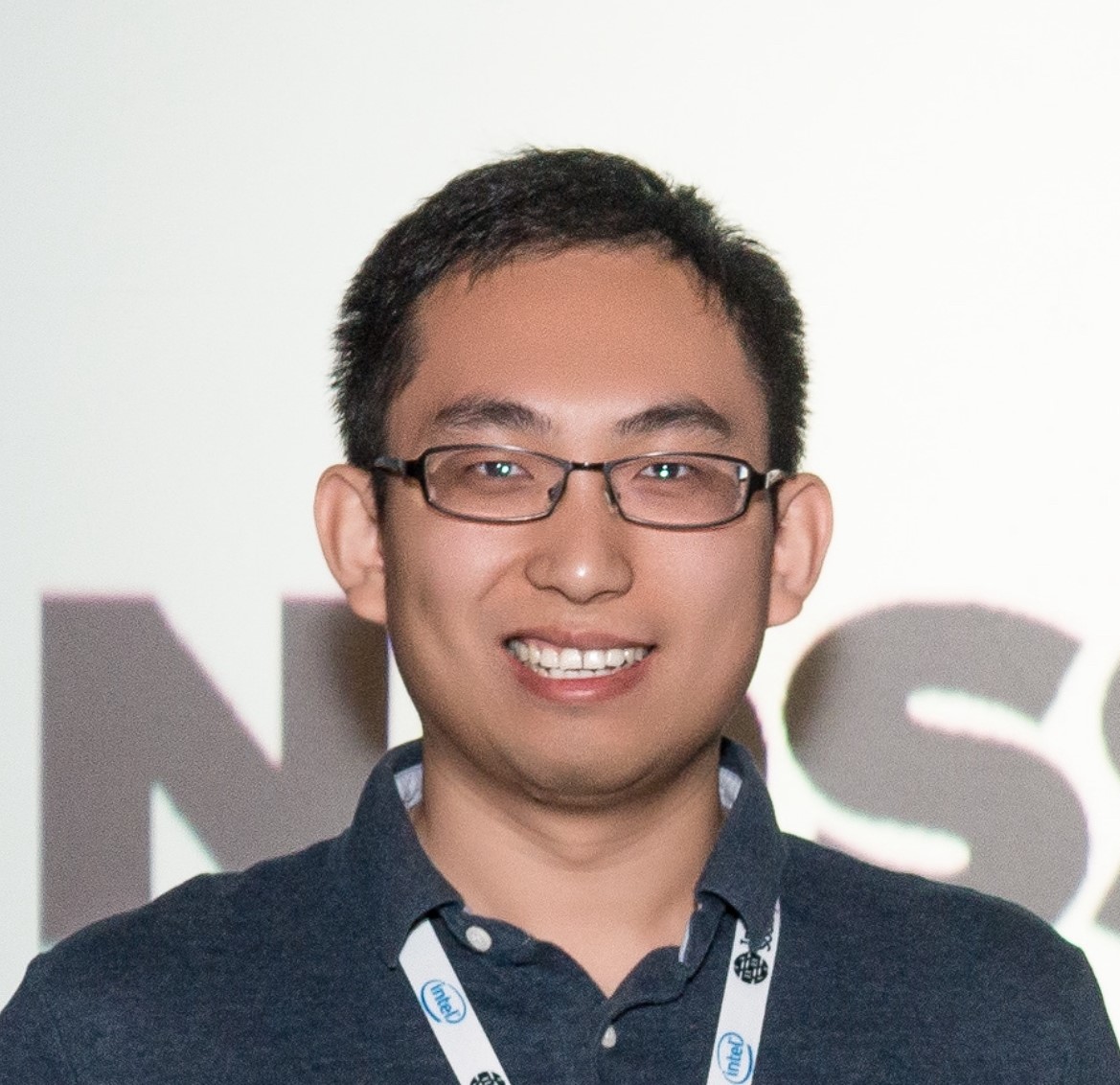
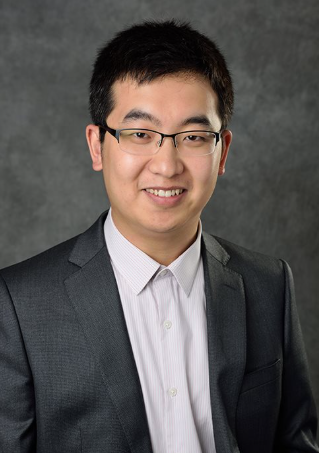
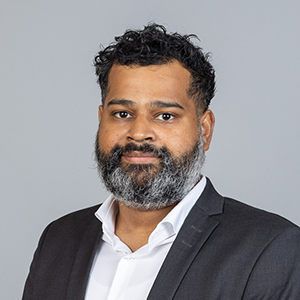
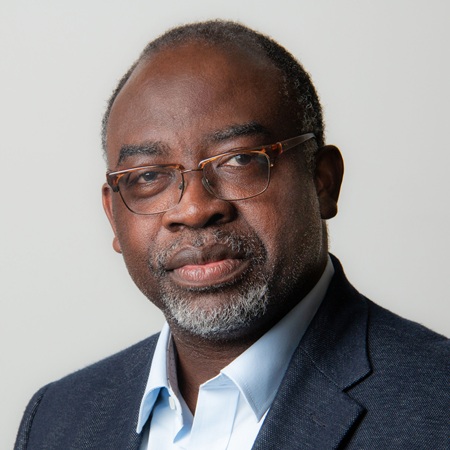
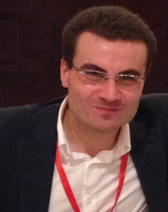
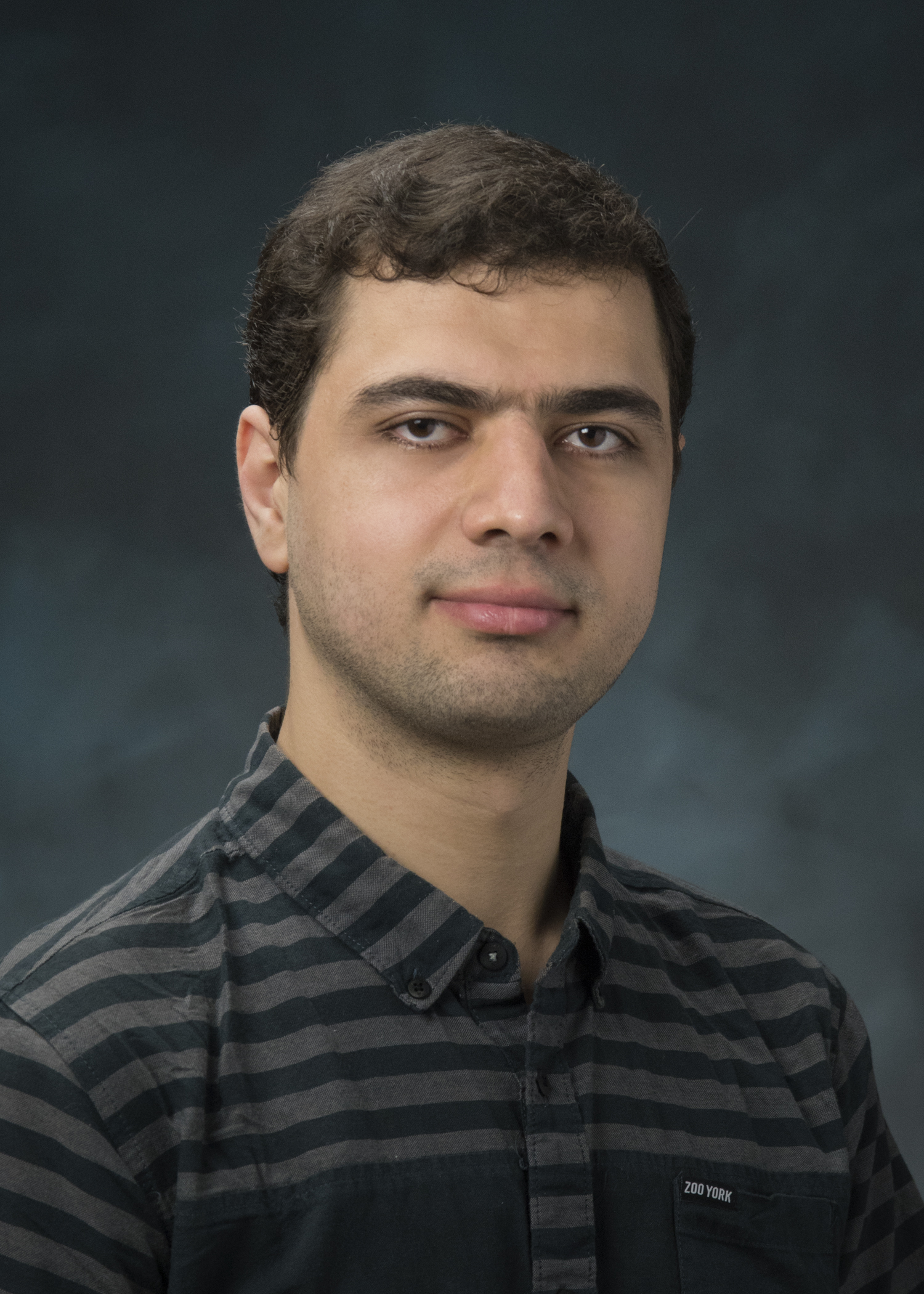
Andrew Stephen is the L’Oréal Professor of Marketing and Deputy Dean for Faculty and Research at Saïd Business School, University of Oxford. He leads the Marketing faculty and directs the Oxford Future of Marketing Initiative, focusing on emerging technologies like AI and data-driven strategies in marketing, media, and advertising. His research explores digital marketing, consumer behavior, and the impact of new technologies, earning him recognition as a top global marketing scholar. His academic contributions span leading journals such as the Journal of Consumer Research and Harvard Business Review. He serves as editor of the Journal of Consumer Research, co-editor of the International Journal of Research in Marketing, and actively engages with industry through councils like the Mobile Marketing Association’s Brand Safety Council. Teaching responsibilities include marketing curriculum oversight and courses across MBA, Executive MBA, and DPhil programs, focusing on digital transformation, marketing analytics, and the future of marketing. His work bridges academic rigor with industry relevance, addressing challenges in tech-enabled marketing and global brand strategies. Awards: Top marketing academic in the UK (AMA), featured in Poets & Quants’ top 40 under 40, multiple research excellence awards. Labs/Initiatives: Oxford Future of Marketing Initiative, fostering collaborations with leading companies to tackle industry challenges. Grants/Advising: Extensive industry partnerships and academic grants not explicitly detailed in the text.
Ming-Syan Chen is a distinguished academic holding dual roles as a Distinguished Research Fellow and Director of the Research Center for Information Technology Innovation (CITI) at Academia Sinica, Taiwan, and a Distinguished Professor jointly appointed across multiple departments at National Taiwan University (NTU), including Electrical Engineering (EE), Computer Science and Information Engineering (CSIE), and the Graduate Institute of Communication Engineering (GICE). His career spans academia and industry, with prior roles as a research staff member at IBM Watson Research Center and leadership positions in Taiwan's technology sector. Education: He earned a B.S. in Electrical Engineering from National Taiwan University, followed by M.S. and Ph.D. degrees in Computer, Information, and Control Engineering from the University of Michigan, Ann Arbor. Research Interests: Chen's work focuses on databases, data mining, machine learning, multimedia networking, and cloud computing. He has authored over 350 papers and holds numerous patents, contributing to foundational advancements in query processing, data management, and networked systems. Award Highlights: Recipient of ACM and IEEE Fellowships, National Chair Professorship (lifetime honor), Teco Award, Pan Wen Yuan Distinguished Research Award, and IBM's Outstanding Innovation Award. His contributions span research, teaching, and technology commercialization. Leadership & Service: Former Dean of NTU's College of Electrical Engineering and Computer Science, CEO of Taiwan's Networked Communication Program, and Editor-in-Chief of the International Journal of Electrical Engineering. He has chaired international conferences and served on editorial boards of journals like IEEE TKDE and VLDB. Labs & Teams: Leads the Network Database Laboratory and collaborates on national initiatives in information and communication technologies. His research groups focus on data science, distributed systems, and social network analysis.
Qi Alfred Chen is an Assistant Professor in the Department of Computer Science at the University of California, Irvine (UCI), within the Donald Bren School of Information and Computer Sciences. He also holds affiliations with the Department of Electrical Engineering and Computer Science (EECS), the Institute of Transportation Studies at UC Irvine (ITS-Irvine), the Center for Embedded and Cyber-physical Systems (CECS), the Institute for Software Research (ISR), and the UC Irvine Cybersecurity Policy & Research Institute (CPRI). His research focuses on network and systems security, with particular emphasis on autonomous vehicle and IoT security. Dr. Chen received his Ph.D. from the University of Michigan in 2018. His educational background has prepared him for his current research in security of critical computer systems. His work bridges theoretical security principles with practical implementations in real-world systems. Chen's research interests center on network and systems security , with a major focus on smart systems and IoT security , particularly in transportation and autonomous vehicle systems . His work addresses security challenges through systematic problem analysis and mitigation, discovering and mitigating security problems in next-generation transportation systems, smartphone OSes, network protocols, DNS, GUI systems, and access control systems. His research has high impact in both academic and industry contexts, with over 10 top-tier conference papers, a DHS US-CERT alert, multiple CVEs, and coverage in major news media like Fortune and BBC News. His publication record shows a clear evolution from foundational work on network protocols and smartphone security toward increasingly sophisticated security analyses of autonomous vehicle systems and AI-powered transportation technologies. The research trajectory demonstrates growing technical sophistication and real-world impact, with recent work focusing on physical-world adversarial attacks against autonomous driving perception systems, LiDAR spoofing, and security of multi-sensor fusion in autonomous vehicles. NSF CAREER Award (2022) on securing the AI stack in emerging autonomous and connected CPSs Chancellor's Award for Excellence in Undergraduate Research Mentorship, UC Irvine (2021) 5th place nation-wide at National CCDC competition (2021, as faculty advisor) 1st place (Gold Medal) at CCDC Western Regional competition (2021) ProQuest Distinguished Dissertation Award, University of Michigan (2019) Dr. Chen has mentored numerous successful students, including PhD candidates and undergraduates who have gone on to positions at major tech companies like Meta, Uber, Amazon, and Intel. His research group has secured significant funding, including an NSF CAREER award, and has made substantial contributions to the field through high-impact publications and vulnerability disclosures. He is also the co-founder of the ISOC VehicleSec Symposium and has organized the AutoDriving CTF contest at DEF CON. Chen leads the AV & IoAT Security Research Group at UCI, focusing on security challenges in autonomous vehicles and the broader Internet of Autonomous Things. His team has developed numerous attack demonstrations and security analyses that have received significant media attention and influenced industry practices. The group maintains an active YouTube channel showcasing their security research.
Mi Zhang is an Associate Professor in the Department of Computer Science and Engineering at The Ohio State University and Director of the OSU AIoT and Machine Learning Systems Lab. He holds multiple affiliations including the Institute for Cybersecurity and Digital Trust, Translational Data Analytics Institute, and 5G and Broadband Connectivity Center. Dr. Zhang received his Ph.D. from University of Southern California and B.S. from Peking University, followed by a postdoctoral position at Cornell University. His academic journey previously included a position at Michigan State University before joining OSU. His research focuses on Empowering Billions of Everyday Devices with AI to realize the Artificial Intelligence of Things (AIoT) vision. His lab works across several interconnected domains including efficient generative AI (multimodal LLMs, diffusion models), edge AI for mobile/AR/wearables, systems for AI agents, spatial computing, foundation models for IoT, and human-centered mobile health applications. This interdisciplinary work draws from mobile/edge computing, AI/machine learning, distributed systems, computer networks, and human-centered computing. Analysis of his recent publications reveals a strong focus on making AI more efficient and accessible for resource-constrained devices. His research trajectory shows increasing emphasis on large language models and their optimization for edge deployment, alongside continued work in federated learning for IoT applications. The publications demonstrate both theoretical contributions and practical applications across healthcare, wireless networks, and human-computer interaction. Best Paper Award, IEEE Internet Computing Magazine (2024) University of Chicago Outstanding Educator Award (2024) Best Paper Award, ECCV'24 Workshop (2024) USC ECE SIPI Distinguished Alumni Award (2023) Multiple Best Paper Awards from ACM/IEEE conferences NSF CRII Award Facebook/Meta Faculty Research Award Amazon Research Award MSU Innovation of the Year Award (2020) Dr. Zhang actively mentors students at all levels, with a current group of Ph.D. students working on cutting-edge AI/ML systems. His lab has secured significant funding including Meta Reality Labs Faculty Awards, NVIDIA academic grants, and NSF grants. The OSU AIoT and Machine Learning Systems Lab serves as the central hub for his research activities, fostering collaboration across multiple disciplines to advance the field of AIoT.
Professor Tulika Mitra is the Dean of the School of Computing and Vice Provost (Special Projects) at the National University of Singapore (NUS). She holds the Provost’s Chair Professor in the Department of Computer Science and has been instrumental in shaping academic policies and strategic initiatives at NUS since joining in 2001. PhD in Computer Science, Stony Brook University (2000) M.E. in Computer Science, Indian Institute of Science (1997) B.E. in Computer Science, Jadavpur University (1995) Her research focuses on hardware-software co-design for energy-efficient computing systems, particularly in real-time embedded systems, heterogeneous architectures, and AI accelerators. She leads major research programs such as the NRF Competitive Research Programme on Low-Power Edge Accelerators and the MOE Tier-3 Programme on Green AI , collaborating with industry leaders like ARM, AMD, and Meta. Her recent publications highlight innovations in CGRA optimization , sparse attention mechanisms , photonic-digital hybrid architectures , and low-power ML inference . These works often integrate compiler techniques, architectural design, and real-time constraints for edge computing applications. Scientific Awards : ESWEEK Test-of-Time Award (2022), ACM SIGDA Distinguished Service Award, IEEE CEDA Outstanding Service Recognition Award, Teaching Excellence Award (2006), and multiple best paper recognitions. Education Leadership : Spearheaded the Computer Engineering (CEG) Programme at NUS, a joint initiative between Engineering and Computing. As a mentor , she has supervised over 25 PhD students , many now in prominent academic or industrial roles. Her research group eCO Lab focuses on embedded computing challenges, while her grant collaborations include projects on 5G base stations, reconfigurable architectures, and IoT-optimized SoCs.
Ambuj Varshney is an Assistant Professor at the National University of Singapore (NUS) School of Computing , leading the WEISER research group . His work bridges electronics, wireless communication, computer science, and AI with a focus on creating ultra-low-power embedded systems for sustainable IoT deployments. University of California, Berkeley: Postdoctoral Scholar (2020-2022) Uppsala University: PhD in Sustainable Networked Systems NXP Semiconductors: Software Engineer (prior to PhD) Bachelors in Information & Communication Technology Research interests center on overcoming wireless systems' energy asymmetry through tunnel diode oscillators , LiFi-RF hybrid networks , and battery-free communication architectures . His group develops STICORS —sticker-like computers for industrial and medical monitoring. Recent publications demonstrate AudioCast 's FM-band utilization for 130m transmission, TunnelSense 's vital monitoring, and PixelGen 's diffusion model cameras. These works combine IoT sustainability, spectrum efficiency, and hardware innovation . 2024: Google Research Scholar Award 2023: MobiSys Best Demonstration 2021: Berkeley FORM+FUND Fellowship 2019: ABB's $300K Research Award As an educator, he teaches CS4222 Wireless Networking and CS5272 Embedded Software Design . Past students include Wenqing Yan (NUS/UCB PhD), Qiao Yukai , and Kunjun Li . His team collaborates with Prabal Dutta (UCB), Christian Rohner (Uppsala), and Prateek Saxena (NUS).
Oswald Lanz is a tenured full professor at the Faculty of Engineering of the Free University of Bozen-Bolzano , leading the Visual Computing Lab . He holds a Ph.D. in Computer Science and a Mathematics degree from the University of Trento. Prior to his current role, he was a researcher and head of research at FBK Trento. He is an endowed professor collaborating with Covision Lab , an AI hub in Bressanone, and coordinates the board of professors for the PhD in Computer Science program since 2025. His research focuses on Computer Vision, Deep Learning, and Video Analytics , with applications in sports technology, medical imaging, and industrial automation. Key achievements include the Amazon AWS Machine Learning Research Award (2020) , ACM Multimedia Best Paper (2015) , and Best Student Paper at ICIAP (2007) . He co-organized the ELLIS-VISMAC Winter School (2025) and chaired ICIAP 2019 . His work spans novel view synthesis, action recognition, and anomaly detection, supported by patents in video tracking and detection. He teaches courses like Deep Learning and Artificial Intelligence in undergraduate and graduate programs. Recent projects such as 5VREAL integrate 5G, edge computing, and AI for sports analysis. His collaborations bridge academia and industry, exemplified by his role in Covision Lab and multidisciplinary initiatives like DSS4LCO for food supply chains. Lanz’s publications emphasize spatiotemporal modeling, neural architecture search, and hybrid machine vision systems.
Chaowei Xiao is an Assistant Professor at the University of Wisconsin-Madison (starting 2023), affiliated with the School of Computer, Data & Information Sciences. His research focuses on securing AI systems, particularly exploring robustness in trustworthy machine learning, autonomous systems, and large language models (LLMs). He holds a Ph.D. from the University of Michigan, Ann Arbor, and a B.S. from Tsinghua University. Before joining UW-Madison, he worked as a research scientist at NVIDIA (2020–2022) and at Arizona State University (2022–2023). His work bridges model and system perspectives to ensure practical robustness and provable guarantees in AI applications like autonomous driving, healthcare, and IoT. Key research areas include adversarial robustness, AI security, and ethical AI. Recent contributions include frameworks for detecting LLM hallucinations, mitigating jailbreak attacks, and securing multi-modal systems. His work on diffusion models for adversarial purification and physical-world attacks on autonomous driving systems has been widely recognized. Notable awards include the 2024 USENIX Security Distinguished Paper Award, ACM Gordon Bell Finalist (2024), and Schmidt Sciences AI2050 Fellowship. He has advised students like Xiaogeng Liu (NVIDIA Fellow) and secured grants from Amazon, Apple, and UW-Madison. His lab actively publishes at top venues like NeurIPS, ICML, and CVPR.
Dr. Kanchana Thilakarathna is a Senior Lecturer in Distributed Computing at the University of Sydney's School of Computer Science, and a member of the Centre for Distributed and High Performance Computing. They hold a PhD from the University of New South Wales (UNSW) and a B.Sc. Eng (Hons) from the University of Moratuwa, Sri Lanka. Prior to academia, they worked as a Research Scientist at CSIRO/Data61 and had industry experience as a Mobile Radio Network Engineer. Research Interests : Dr. Thilakarathna focuses on cybersecurity, privacy in mobile and IoT systems, mixed reality privacy, and distributed computing platforms. Their work emphasizes user-centric solutions like the Yalut social media app, which enables decentralized data sharing. Key themes include privacy-preserving techniques, edge computing, and secure federated learning frameworks. Recent Work : Recent articles (2023–2025) explore machine unlearning for large language models, federated learning security, and IoT network slicing using P4 programmability. Their work on synthetic video traffic generation (VideoTrain++) and drone detection (DronePrint) demonstrates cross-disciplinary innovation. Awards : Malcolm Chaikin Prize (2015), Meta Research Awards (2020/2022), and Heidelberg Laureate Fellowship (2019). Grants : ARC Research Hub for Future Digital Manufacturing (2024), NSW Defence Innovation Network Projects (2024/2021), and Facebook Research Awards (2022/2020). Students : Advising 4 current PhD students on topics like wireless trust establishment and machine unlearning. Labs/Teams : Part of the Centre for Distributed and High Performance Computing and Sydney Nano Institute.
Dr. Adegboyega Ojo is a Professor at the School of Public Policy and Administration (SPPA), Carleton University , holding the prestigious Canada Research Chair (Tier 1) in Governance and Artificial Intelligence since 2014. His work bridges digital government , AI governance , and smart city development , with a focus on public sector innovation and policy analytics . Research Interests Smart Cities and Urban Digital Infrastructure Open Government Data and Transparency Blockchain Applications in Public Administration AI Ethics and Algorithmic Governance Electronic Participation and Citizen Engagement Publication Trends : His research emphasizes interdisciplinary approaches to digital governance, often involving data-driven policy analysis , smart city frameworks , and open data platform design . Collaborations span institutions in Ireland, Poland, and the U.S., with citations exceeding 5,200. Scientific Awards : Canada Research Chair in Governance and AI (Tier 1) Labs & Teams : Collaborates with the Insight Centre for Data Analytics (Ireland), Delft University of Technology , and United Nations University on projects like OpenGovIntelligence and BOLD (Big and Open Linked Data).
Yuanbo Xiangli is a postdoctoral researcher at Cornell University , advised by Prof. Noah Snavely. Previously, he obtained his Ph.D. from the Multimedia Lab in the Department of Information Engineering at the Chinese University of Hong Kong (CUHK) , supervised by Prof. Dahua Lin. His research focuses on 3D computer vision and deep generative modeling for urban scene reconstruction. 3D scene reconstruction from sparse images Neural rendering and Gaussian splatting Deep generative modeling for urban environments Multi-source geospatial data processing City-scale modeling and synthetic datasets His recent work includes advanced NeRF extensions (BungeeNeRF, GridNeRF), Gaussian splatting enhancements (GSDF, Scaffold-GS), and urban scene datasets (MatrixCity, OmniCity). A pioneer in combining classical vision techniques with modern deep learning approaches. ICLR 2020 Spotlight Award Collaborates with leading researchers in photorealistic rendering, including Noah Snavely and Dahua Lin. Develops systems enabling efficient 3D reconstruction from diverse data sources like satellite imagery and street-level panoramas.
Felix Xiaozhu Lin serves as Associate Professor and William Wulf Faculty Fellow in the Department of Computer Science at the University of Virginia's School of Engineering and Applied Science, where he directs the Computer Science Ph.D. Program and MCS/MS Program. Previously a tenured Associate Professor at Purdue University's School of Electrical and Computer Engineering, Lin joined UVA Engineering in August 2020 after completing his doctoral research at Rice University. His educational credentials include: Ph.D. in Computer Science, Rice University (2014) M.S. in Computer Science, Tsinghua University (2008) B.S. in Automation, Tsinghua University (2006) Lin's research centers on systems software at the intersection of operating systems, compilers, and computer architecture, with emphasis on accelerating and safeguarding software systems. His current projects target on-device large language models and speech processing for low-cost hardware ( Analysis of his recent publications reveals a strong trajectory in edge computing and efficient AI systems. His research demonstrates increasing focus on hardware-software co-design for autonomous devices, with significant contributions in video analytics for energy-constrained cameras, kernel virtualization for heterogeneous architectures, and stream processing frameworks leveraging emerging memory technologies. The work consistently addresses real-world constraints like power limitations and network intermittency while maintaining rigorous academic standards. His scientific recognition includes: National Science Foundation CAREER Award (2019) Google Faculty Research Award (2016) NSF CISE Research Initiation Initiative Award (2015) ACM ASPLOS Best Paper Award (2014) Lin leads the XSEL research group mentoring graduate and undergraduate students in systems software development. His educational initiatives include CS4414/CS6456, a modern operating systems course featuring Arm64 baremetal kernel development, multicore systems, trusted execution environments, and filesystem forensics. The course's experiential approach has received strong student feedback for its modern content and practical relevance. His group actively recruits for projects spanning on-device AI, hardware-accelerated speech processing, and next-generation OS development. Based in Charlottesville, Virginia, Lin's research benefits from UVA's proximity to Shenandoah National Park and collaborative opportunities within the university's vibrant computing ecosystem, including the 2024 LLM Workshop he co-organized with Professor Yangfeng Ji.
Marco Di Renzo is a CNRS Professor (Directeur de Recherche Titulaire) at University of Paris-Saclay, affiliated with CentraleSupelec and the Signals and Systems Laboratory (L2S). He serves as Coordinator of the Communications Networks Area at the DigiCosme Laboratory of Excellence and Editor-in-Chief of IEEE Communications Letters. His academic leadership includes membership in the Ph.D. School on ICT Admission Committee at Paris-Saclay University. His educational background includes a Laurea (cum laude) and Ph.D. in Electrical Engineering from University of L'Aquila, Italy (2003, 2007), and a Habilitation à Diriger des Recherches from University Paris-Sud (2013). Laurea (cum laude), Electrical Engineering, University of L'Aquila (2003) Ph.D., Electrical Engineering, University of L'Aquila (2007) Habilitation à Diriger des Recherches, University Paris-Sud (2013) Di Renzo's research focuses on next-generation wireless communications, particularly reconfigurable intelligent surfaces (RIS), 6G technologies, and stochastic geometry modeling. His work bridges theoretical communication theory with practical implementations in cellular networks, millimeter-wave communications, and ultra-wide band systems. Recent publications demonstrate leadership in holographic metasurfaces, integrated sensing and communication (ISAC), and AI-empowered network design, establishing him as a pioneer in electromagnetic wave manipulation for future networks. His award-winning publications span RIS-aided communications, channel modeling, and security frameworks. Analysis of his recent work reveals consistent focus on three pillars: (1) fundamental electromagnetic theory for wave manipulation, (2) practical RIS implementations across frequency bands, and (3) integration with AI for network optimization. His articles frequently address industrial applications including factory automation and space-air-ground networks. Di Renzo's scientific recognition includes: IEEE Fellow (2020) and IET Fellow (2020) Highly Cited Researcher (Web of Science, 2019) SEE-IEEE Alain Glavieux Award (2017) Multiple Best Paper Awards (IEEE ICC, EURASIP) Nokia Foundation Visiting Professorship (2020) As Principal Investigator for CNRS, he coordinates multiple Horizon 2020 projects including SURFER, PathFinder, and MetaWireless. His leadership extends to serving as Project Coordinator for H2020 5Gwireless, 5Gaura, MAPNET, and REDESIGN. With over 350 publications, 17,000+ citations, and h-index of 66+, his research group maintains strong industry partnerships with Nokia and other telecommunications leaders. Di Renzo directs the Signals and Systems Laboratory (L2S) at Paris-Saclay and coordinates the DigiCosme Excellence Lab's Communications Networks Area. His team specializes in electromagnetic modeling for wireless networks and has pioneered the European Telecommunications Standards Institute (ETSI) Industry Specification Group on RIS. The group maintains active collaborations with Aalto University (Finland), University of Technology Sydney (Australia), and University of L'Aquila (Italy).
Dr. David Wright is a Professor in the Department of English and Technical Communication at Missouri University of Science and Technology (Missouri S&T). He joined the faculty in 2007 after prior roles at NASA’s Education Project, Oklahoma state government, and the software industry. He holds a Ph.D. in Technical Communication (Oklahoma State University, 2007), an M.S. in Higher Education Administration (1996), and a B.S. in Organizational Psychology (1993), all from Oklahoma State University. His research focuses on smart home technology and artificial intelligence, particularly examining human-AI interaction through usability and user experience (UX) testing. He also explores technology diffusion, technical communication practices in emerging technologies, and educational methodologies for technical fields. His work integrates interdisciplinary approaches, blending engineering, sociology, and computer science. Recent publications highlight his contributions to IoT usability, smart home adoption challenges, and the intersection of AI ethics with virtual assistants. He has also authored studies on knowledge graph design, technical documentation in software development, and educational initiatives in computer science and healthcare. Dr. Wright teaches courses in technical writing, usability studies, and web-based communication. His academic service includes curriculum development and advising on technical communication pedagogy. While no specific awards are listed, his extensive publication record reflects sustained scholarly impact in his fields.
Mohammad Rostami is a Research Assistant Professor at the University of Southern California (USC) in the Department of Computer Science and Electrical and Computer Engineering, with a joint appointment at the USC Information Sciences Institute (ISI). He holds a PhD in Electrical and Systems Engineering from the University of Pennsylvania and additional degrees in Robotics, Philosophy, Electrical Engineering, and Pure Mathematics from prestigious institutions including the University of Waterloo and Sharif University of Technology. His research focuses on machine learning in data-scarce environments, particularly transfer learning, domain adaptation, low-shot learning, and improving learning efficiency through continual and collective learning. He incorporates symbolic logic and neuro-symbolic approaches to address challenges in catastrophic forgetting and knowledge retention. Applications span medical imaging, computer vision, and explainable AI. Rostami has received several accolades including the UPenn Best PhD Dissertation Award, IJCAI Distinguished Student Paper Award, and University of Waterloo Outstanding Achievement Award. His work bridges theoretical advancements with practical implementations, emphasizing real-world applications in healthcare and autonomous systems. He teaches graduate courses in applied natural language processing and knowledge graph construction. Rostami advises students at all academic levels and collaborates with remote researchers, emphasizing motivated, long-term project commitments.