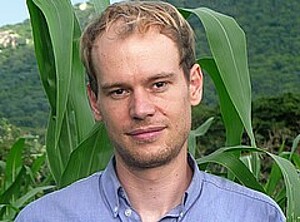
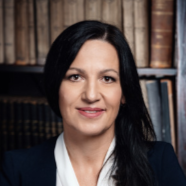
Wolfgang Wiedermann is a Professor and William A. and Jean S. Stauffer Faculty Fellow in the Department of Educational, School & Counseling Psychology at the University of Missouri's College of Education & Human Development. He holds a Ph.D. in Quantitative Psychology from the University of Klagenfurt, Austria. His research focuses on: Developing statistical methods for causal inference and direction dependence analysis Person-oriented research methodologies Analysis of intensive longitudinal data Risk perception in substance use and health contexts His publications demonstrate strong emphasis on: Advanced psychometric modeling (55% of recent articles) Causal inference techniques (30%) Person-centered analytical approaches (15%) with consistent applications in psychological and behavioral sciences. Awards include the William A. and Jean S. Stauffer Faculty Fellowship. He serves as associate editor for Behaviormetrika and Journal of Person-Oriented Research .
Dr. Fahim Ullah is a Senior Lecturer and Program Director for Construction Programs at the School of Surveying and Built Environment, University of Southern Queensland (Australia). He holds a PhD in Built Environment from UNSW Sydney and has over 8 years of tertiary teaching experience in Construction Management, Project Management, and Digital Technologies. Recognized as a top 2% global researcher in Construction (Elsevier/Stanford 2024), he specializes in Smart Cities, Industry 4.0/5.0 technologies, and disaster management. His achievements include Editor's Choice Awards in journals like Drones and Sustainability , and leadership roles as Associate Editor for Management, Procurement and Law and Frontiers in Built Environment . Education : Bachelor of Civil Engineering (NUST, 2013) Master of Science (NUST, 2015) Doctor of Philosophy (UNSW Sydney, 2021) Research Interests : Dr. Ullah's work focuses on Construction Innovation , Smart Technologies , and Sustainable Development . He explores applications of AI, drones, BIM, and IoT in construction, disaster management, and urban planning. Recent studies include modular construction for climate mitigation, UAV-based flood detection, and blockchain frameworks for real estate transactions. Awards : Top 2% Global Scientist (Elsevier/Stanford, 2024) Editor's Choice Award (Drones Journal, 2022) Best Conference Paper (Curtin University Singapore/AUBEA, 2018) Grants & Supervision : He leads grants like the UNISQ Intra Faculty Collaboration Grant (2021) and supervises doctoral research on topics like Automation in Construction Recycling and AI in Flood Modeling . His supervision record spans 10+ PhD candidates since 2021. Professional Roles : Serves as HDR Coordinator at UniSQ, and chairs international conferences (CAHEM 2024, CONVR2024). Active in editorial roles for multiple Q1 journals.
Nuno Miguel Ventura de Oliveira is an Assistant Professor at the School of Health, Polytechnic Institute of Setúbal, Portugal, where he has held this position since 2015. His career spans over two decades in nursing, including roles as a Specialist Nurse at the Almada-Seixal Local Health Unit and a practicing nurse at Garcia de Orta Hospital. He holds a Bachelor’s Degree in Nursing (2001) and advanced postgraduate qualifications in Medical-Surgical Nursing and Emergency Care. His research focuses on patient safety, emergency care protocols, and simulation-based nursing education. Notable contributions include studies on intra-hospital patient transport safety and emotional management of ICU patients’ families. He has authored textbooks on BLS, AED, and nursing standards, and actively participates in organizing national and international medical conferences. Dr. Oliveira has received multiple awards, including recognition for pandemic-era contributions (2022), competence in emergency nursing (2018), and academic merit (2013). He has supervised over 15 master’s theses in critical care and emergency nursing, emphasizing clinical supervision and quality improvement in healthcare delivery.
Jan-Paul Lüdtke serves as Professor and Head of both the Bachelor's and Master's E-Commerce programs at Wedel University of Applied Sciences. He leads the Intra- and Entrepreneurship field and manages multiple startup support initiatives including EXIST Leveraging Potential projects and StartupConnect. His academic journey began with a Business Administration degree from the University of Passau, followed by a Dr. rer. pol. from Hamburg University of Technology. His research focuses on applied digital marketing with emphasis on Direct-to-Consumer business models, CEO influencers on social media, retail media effectiveness, and AI applications in e-commerce. His work combines experimental methods with practical business applications, often in collaboration with industry partners like Otto, Zalando, and various startups. Lüdtke's publications reveal a consistent trajectory from foundational work on innovation evaluation through increasingly applied research on digital marketing effectiveness, customer experience optimization, and emerging business models. Recent work shows particular focus on D2C strategies and the evolving relationship between brands and platforms. UNIPRENEUR Award from Federal Ministers of Education and Economics as one of Germany's top 20 professors for startup support Gründerszene Growth Ranking 2017 - 2nd place in Software/SAAS category Winner of Rising Star 2016 from Federal Association of Electronic Mail Order Companies Nominations at IntelliAd DRIVE Award and Performance Marketing Awards (2016) As head of E-Commerce programs, Lüdtke supervises numerous Bachelor's and Master's theses, with recent topics spanning AI applications, customer experience optimization, retail media, and gaming business models. His current EXIST-funded projects (2020-2026) focus on startup ecosystem development, including Startup Port FH Wedel and StartupSH 2.0, creating substantial grant funding for entrepreneurial activities at the university. Lüdtke directs the StartupConnect co-working space and leads the university's participation in regional startup networks, fostering connections between students, faculty, and industry partners in the digital commerce ecosystem.
Tommy Cheung is a Senior Lecturer and Department Chair in the Department of Aviation, School of Engineering at Swinburne University of Technology, Australia. His research focuses on aviation network development, global airport connectivity, blockchain applications in air travel, and data-driven route planning. He holds a PhD in Computer Engineering from the University of New South Wales, Sydney, and has prior academic experience at Hang Seng University of Hong Kong and the Hong Kong University of Science and Technology. PhD in Computer Engineering, University of New South Wales, Sydney, Australia Former Assistant Professor, Hang Seng University of Hong Kong (2014–2018) Former academic, HKUST, Department of Electrical and Electronic Engineering 12+ years in advanced manufacturing and supply chain management in Hong Kong and Shenzhen Dr. Cheung's research interests span aviation network resilience, airport connectivity indices, smart technologies in air travel, and sustainable aviation. He investigates how global disruptions like pandemics and geopolitical conflicts affect air transport systems. His work integrates machine learning, Bayesian modeling, and spatial econometrics to analyze aviation networks and optimize operations. His recent publications reveal a strong trend in applying data analytics and AI to aviation policy, route planning, and service quality. Topics include flight delay forecasting, blockchain integration, self-connection optimization, and pilot remuneration. His work often involves large-scale datasets and interdisciplinary methods, contributing significantly to air transport policy and network modeling. Dr. Cheung has secured industry research funding, including a major grant from Textron Systems Australia for the Regional AAM Surrogate Trial. He actively supervises PhD and Master’s students on topics such as hydrogen in aviation, pilot fatigue monitoring, and advanced air mobility. His leadership extends to curriculum and departmental strategy as Chair of Aviation. He is involved in several research teams and collaborations, particularly in intelligent transportation systems and aviation innovation. His lab and project work integrate UAVs, IoT, and AI for infrastructure-less environments, contributing to next-generation mobility solutions.
Theodore Papageorgiou is the Felter Family Professor of Economics at Boston College, holding a Ph.D. from Yale University and a B.A. from the University of Athens. His research focuses on labor economics, macroeconomics, transportation economics, and urban economics, with notable contributions to understanding trade costs, transportation frictions, and occupational matching. His work has been published in top journals like Econometrica and the Quarterly Journal of Economics , earning him the Frisch Medal (2022) for groundbreaking research. Education: B.A., University of Athens; Ph.D., Yale University Research interests emphasize spatial economics, transportation networks, and the interplay between geography and economic outcomes. His recent work explores supply chain disruptions, oil price impacts on trade, and infrastructure investments. He has held faculty positions at Penn State and McGill, with visiting roles at Harvard, Princeton, and MIT. His research has been funded by NSF, NBER, and SSHRC. As Co-Editor of Economic Theory , he contributes to advancing theoretical economic scholarship. Awards include the Raymond Powell Teaching Prize (2006) and Fellow status in the Society for the Advancement of Economic Theory.
Ric Topolski is a Professor at the Augusta University in the Pamplin College of Arts, Humanities, and Social Sciences , specifically the Department of Psychological Sciences . He holds a Ph.D. in Cognitive Psychology and Psycholinguistics from the State University of New York, with prior degrees from the same institution. Education Ph.D., Cognitive Psychology and Psycholinguistics (1997) MA, Cognitive Psychology and Psycholinguistics (1994) BA, Psychology, General (1989) His research spans cognitive psychology, evolutionary psychology, and interdisciplinary applications in medicine and military science. Recent work examines chondrotoxicity in anesthetics, music’s physiological effects, and trauma care optimization. His teaching includes courses in Cognitive Psychology, Human Sexuality, and Quantitative Methods. Key scientific awards include the Lewis K. Bell Alumni Research Award, Augusta State University Outstanding Researcher Award (2010), and multiple teaching recognitions. He serves on university and college committees, including the Faculty Development and Recognition Committee (Chair), and contributes to grant reviews for organizations like CUR and Pamplin Student Research.
Olivia Brown is an Associate Professor in Digital Futures at the University of Bath's School of Management, affiliated with the Management Institute for Digital Security and Behaviour (IDSB), Applied Digital Behaviour Lab, Centre for Qualitative Research, Centre for Future of Work, and Centre for Business, Organisations and Society (CBOS). She serves as Deputy Director of the Bath Institute of Digital Security and Behaviour and is part of the Centre for Research and Evidence on Security Threats (CREST), while also contributing to the Bath Beacon initiative focused on the value of digital data. Her research sits at the intersection of psychology and behavioral science, examining how intra- and inter-group processes shape behavior in online and offline contexts. Key focus areas include: High-reliability organizations and teamwork in extreme environments Using online communications data to predict offline behavior Online extremism and terrorism dynamics Psychological impacts of digital traces Behavioral data ethics and reproducibility Her recent work analyzes cognitive task analysis methodologies, ethical frameworks for digital data exploration (DECIDE Framework), computational tools for research attendance (Optimeet), and dementia-inclusive digital workplaces. Brown holds editorial roles as Associate Editor for the Journal of Cognitive Engineering and Decision Making and Editorial Board Member for the Journal of Occupational and Organizational Psychology. She chairs the Social Science Research Ethics Committee and serves as Research Staff Coordinator in the School of Management, actively supervising doctoral students. Her collaborative projects include: Policing Academic Centre of Excellence (2025-2028) Networks and Radicalisation - University Innovation Concept (2023-2024) CREST 3.0 funded by the Economic and Social Research Council (2020-2024)
Valérie Bélanger is an Associate Professor at HEC Montréal's Department of Logistics and Operations Management. She holds a Ph.D. in Administration from HEC Montréal, an M.Sc. and B.Eng. in Mechanical Engineering from Université Laval. Her research focuses on healthcare logistics, emergency management, transportation systems, and operations research. She is a member of Pôle santé HEC Montréal and the Centre interuniversitaire de recherché sur les réseaux d’entreprise, la logistique et le transport (CIRRELT). Her expertise includes optimizing healthcare supply chains, emergency resource deployment, and real-time operational systems. Recent research topics include pandemic response strategies, ambulance dispatch systems, and wildfire risk mitigation. She has supervised over 47 graduate students in logistics and operations management since 2019, focusing on healthcare, emergency management, and supply chain optimization. In 2023, she received the Prix d'impact en recherche from HEC Montréal for exceptional research impacting healthcare supply chains. She teaches courses such as Design and Analysis of Operational Systems and collaborates with organizations like the CHUM and EMS providers to translate research into practical solutions. Her work bridges academic research with real-world applications, addressing challenges in healthcare systems, disaster management, and logistics efficiency through advanced analytical methods.
Mithun Goutham is an Assistant Teaching Professor in the Department of Mechanical, Materials, and Aerospace Engineering at Illinois Institute of Technology. He holds a Ph.D. in Mechanical Engineering (expected 2025) from The Ohio State University, where he also earned an M.S. (2020) and previously obtained an M.Tech. in Design Engineering (2018) from Birla Institute of Technology & Science. His expertise spans Combinatorial Optimization, Cyber-Physical Systems, Operational Resilience, and Internal Combustion Engines. Dr. Goutham has received notable awards including the Best Student Research Award (2024) and the ENGIE-Axium Scholarship (2024). He focuses on optimizing fleet management, energy systems, and autonomous robotics. His research integrates machine learning, control systems, and operations research to address challenges in smart homes, manufacturing logistics, and renewable energy integration. His work on fleet composition and energy management has led to patents at The Ohio State University (2024) and a prior patent in vehicle exhaust design (2017). His articles explore topics like Monte Carlo-based fleet allocation, resilient intra-factory logistics, and user activity prediction in smart environments.
Dr Łukasz Kański is an Adjunct Assistant Professor at the Department of Information Systems and Logistics , Institute of Management and Quality Studies , within the Faculty of Economics at Maria Curie-Skłodowska University in Lublin, Poland. His academic work bridges information technology and business management , focusing on optimizing project, program, and portfolio management through advanced methodologies and standards. Academic Appointment: Faculty of Economics Department: Information Systems and Logistics Research Focus: Project Management, Industry 4.0/5.0, ICT in Business Łukasz’s research explores the intersection of IT/ICT and business processes , with particular emphasis on: Effectiveness of project management frameworks in dynamic business environments Impact of intellectual capital and organizational culture on project success Integration of collaborative robots (cobots) in Industry 5.0 manufacturing systems Role of fuzzy logic and BPMN 2.0 in modeling complex enterprise challenges Strategic value creation through mergers and acquisitions in knowledge-based sectors His recent publications reveal a strong focus on Industry 4.0/5.0 technologies, including autonomous mobile robots for intra-logistics, agile project management frameworks, and AI-driven business process modeling . The research consistently examines how digital transformation and technological innovation influence organizational performance and project outcomes. While no specific educational background or scientific awards were explicitly mentioned in the source materials, his work has been cited with indices including: Google Scholar h-index: 5 Scopus h-index: 3 Web of Science h-index: 4 Total Impact Factor: 23.5 Total Ministerial Score: 1,140
Dr. Thomas Daum is a researcher at the University of Hohenheim's Institute of Agricultural Science in the Tropics (Hans-Ruthenberg-Institute), focusing on sustainable agricultural development and food security in Africa and Asia. His work spans agricultural mechanization, digital agriculture, youth aspirations, and intra-household dynamics. He holds a B.A. in Business Administration (Mannheim/Budapest) and an M.Sc. in Agricultural Economics from Hohenheim. Daum's research examines technology adoption in smallholder farming, labor-nutrition linkages, and crisis-responsive food systems. His recent publications analyze digital tools for extension services, conservation agriculture adoption barriers, and climate-smart financing models across Africa and South Asia. Awards: Josef G. Knoll - European Science Award (2020) GEWISOLA Communication Award (2020) Landmark in the Land of Ideas Award (2018) He leads research in the Program of Accompanying Research for Agricultural Innovation (PARI 2014-2022) , a German government initiative promoting sustainable agricultural growth in Africa and India through mechanization, livestock development, and digital solutions.
Professor Hu Zuohao serves as Professor in the Department of Marketing at Tsinghua University's School of Economics and Management, where he teaches Marketing Management, Channel Management, and Brand Management. He concurrently holds the position of Executive Associate Director at the China Business Research Center and maintains active membership in the American Marketing Association (AMA) and Academy of International Business (AIB). Education: Bachelor in Mechanics, Huazhong University of Science and Technology (1985) M.A. in Management, Zhejiang University (1988) Ph.D. in Economics, Kyoto University, Japan (2000) His research centers on Marketing Strategies with specialized focus on International Marketing of Chinese Firms, Channel Design, and Brand Management. Recent investigations examine financial constraints' impact on consumer variety-seeking and nostalgia's role in brand preference, while earlier work established foundational frameworks for Chinese exporter typologies and buyer-supplier governance mechanisms. His interdisciplinary approach bridges marketing theory with financial services applications. Publication analysis reveals a strategic evolution from export strategy research (2006-2011) toward digital commerce and consumer psychology (2017-2021), with consistent emphasis on Chinese market contexts. Key journals include Journal of Business Research and Journal of International Marketing, reflecting his dual expertise in theoretical marketing and emerging market applications. Scientific Awards: Teaching Award at School of Economics and Management, Tsinghua University (2005) Professor Hu serves as Vice Chairman of the Chinese Marketing Research Association and has held Independent Director positions at two corporations, demonstrating industry-academia integration. His research is supported through the China Business Research Center, where he leads projects connecting academic theory with practical business challenges in Chinese multinational contexts. He directs the China Business Research Center's initiatives on Chinese enterprise globalization, focusing on case-based analysis of brand development and channel strategies for firms like Haier and TCL, while mentoring next-generation researchers through Tsinghua's doctoral programs.
Dr. Joanna Żukowska serves as an Associate Professor in the Department of Transportation Engineering at the Faculty of Civil and Environmental Engineering, Gdańsk University of Technology. Her interdisciplinary work bridges transportation systems engineering with public health policy development. Her research focuses on Transportation Engineering and Public Health Policy , specifically examining Interventions for reducing car dependency Effectiveness of sport and dietary policies in promoting physical activity Health-enhancing policy evaluation frameworks Sustainable mobility solutions Rail transport infrastructure optimization Her approach integrates engineering analysis with behavioral health outcomes. Recent publications reveal a strong trend toward systematic evaluations of transport and health policies, with significant contributions to European policy networks like PEN. Her 2022-2024 work demonstrates increasing focus on quantitative meta-analyses of intervention effectiveness across both transportation and public health domains. Dr. Żukowska has secured competitive research funding through multiple international projects: IMPAQT (Era4Health Partnership, 2024-present): Improving Physical Activity policies PEN (ERA-HDHL, 2019-2022): Policy Evaluation Network for lifestyle interventions CEI (Regional Operational Program, 2018-2020): Eco-innovation Center development INTRAS (ERASMUS+, 2017-2020): Intelligent Transport Systems curriculum development These projects demonstrate sustained success in securing European and national research grants focused on transport-health intersections.