Assoc. Prof. Imran Gokcen Yilmaz Karaman is an academic at Eskisehir Osmangazi University, Faculty of Medicine, Department of Internal Medical Sciences . He holds a B1 Intermediate Italian and C1 Advanced English proficiency. His research focuses on psychiatry and clinical psychology, particularly in areas such as women's mental health, trauma-related disorders, and digital mental health. Education : Undergraduate from Ankara University, Faculty of Medicine (2007-2013) His publications span topics including maternal mental health, cyber violence, forensic psychiatry, and pandemic-related stress in healthcare workers. Recent articles highlight intersections between technology-facilitated violence, posttraumatic growth in cancer survivors, and gender differences in suicidal behavior. Roles : Technical Editor, Archives of Neuropsychiatry (2024-) Committee Member, Osmangazi Medical Journal (2022-) Member, Psychiatric Association of Turkey (2014-) He has contributed to peer reviews for journals like International Journal of Mental Health Systems and Archives of Women's Mental Health. His work addresses structural barriers in healthcare, stigma in substance use disorders, and pandemic impacts on mental health systems.
Hannah Rochford is a Part-Time Assistant Professor at the Texas A&M University School of Public Health . Her work bridges health policy and violence prevention , focusing on systemic interventions to address intimate partner violence, child maltreatment, and firearm-related injuries. Education: PhD in Health Services and Policy (University of Iowa, 2023), MPH in Health Policy (Loyola University Chicago, 2018), BA in Interdisciplinary Studies and Medical Physics (University of Iowa, 2016) Research Themes: Policy-driven approaches to violence prevention, Medicaid expansion impacts, rural health systems, and firearm injury reduction Methodology: Longitudinal analyses, mixed-methods policy evaluation, and epidemiological studies using national datasets Key Collaborations: Work with researchers like Corinne Peek-Asa and cross-sector institutions Her publications highlight firearm policy gaps , school-based interventions , and Medicaid-driven health outcomes . Recent work examines the intersection of economic distress and behavioral health in rural populations. Rochford’s career combines quantitative research with qualitative assessments to inform policy frameworks, particularly in public health infrastructure and trauma-informed care systems.
Kaitlyn M. Sims is an Assistant Professor of Microeconomics for Public Policy at the Josef Korbel School of Global and Public Affairs, University of Denver. She holds a PhD in Agricultural and Applied Economics from the University of Wisconsin-Madison (2022). Her research focuses on public health, the economics of violence, and environmental health hazards, examining how individuals cope with social turbulence such as housing insecurity, domestic violence, and poverty. She employs diverse methodologies including spatial analysis, qualitative interviews, and program evaluation. Her first book, Seeking Safe Harbor: How Public Policy is Sinking the Future of Domestic Violence Shelters , is under contract with University of California Press. Her research has been published in high-impact journals like Proceedings of the National Academy of Sciences and American Journal of Public Health . Recent work addresses topics such as the impact of carceral systems on violence dynamics, cash bail reform, and agricultural policies' environmental consequences. Upcoming talks include the 2025 ASA conference. Dr. Sims' work bridges academic research with policy application, emphasizing evidence-based solutions for vulnerable populations. She maintains an active blog, Empirical Truths , to disseminate research findings to broader audiences.
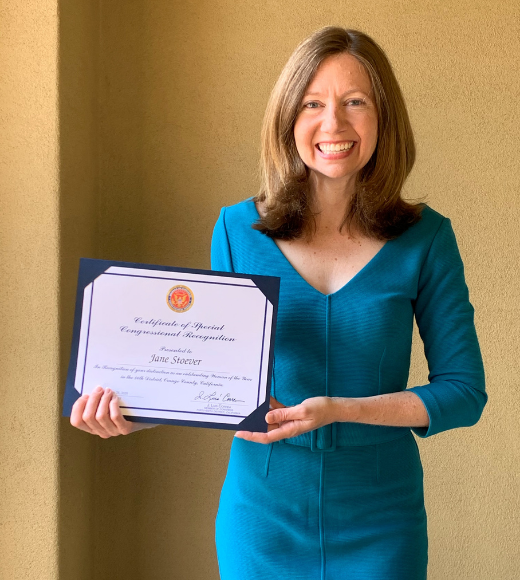
Clinical Professor of Law Jane Stoever serves at the University of California Irvine School of Law, where she directs both the UCI Law Domestic Violence Clinic and the UCI Initiative to End Family Violence. She also co-chairs the Orange County Domestic Violence Death Review Team, conducting comprehensive analyses of domestic violence fatalities to develop prevention strategies. Professor Stoever teaches Family Law and Legal Ethics while providing direct legal representation for abuse survivors in civil, criminal, immigration, and policy interventions. Georgetown University Law Center, LL.M., Advocacy, with honors Harvard Law School, J.D. University of Kansas, B.A., English, with highest distinction Professor Stoever's research focuses on the multiple oppressions domestic violence survivors face, with particular emphasis on firearm fatalities, reproductive coercion, and technology-enabled abuse. Her scholarship bridges law, public health, psychology, and survivors' lived experiences to develop more effective legal responses to intimate partner abuse. She has authored the book The Politicization of Safety and numerous influential law review articles that have shaped domestic violence policy at local, state, and national levels. Her recent publications demonstrate consistent focus on preventing domestic violence fatalities through legal interventions, particularly examining the intersection of firearms and domestic violence, reproductive coercion as a form of abuse, and technology's role in enabling abusive behaviors. These works reflect her commitment to translating research into practical policy solutions that address the complex realities survivors face. Congressional Woman of the Year Award (2020) UCI Inclusive Excellence Spirit Award Piqui's Law Honor from California Protective Parents Association Women For: Orange County's Suffrage Day Award Outstanding Orange County Resident for Courageous Advocacy in Women's Rights Everyday Hero Award from county Bar association Professor Stoever has advised both the Obama and Biden administrations on domestic violence policy and regularly testifies before legislative committees, including recent testimony before California's Assembly Judiciary Committee on Senate Bill 741. She organizes an annual cross-disciplinary domestic violence symposium that attracts over 400 participants from diverse professional backgrounds. Through the Domestic Violence Clinic, she supervises law students who provide direct representation to survivors while also conducting critical research, such as the decade-long analysis of Orange County domestic violence fatalities that revealed 72% involved firearms. As co-chair of the Orange County Domestic Violence Death Review Team, Professor Stoever leads an interdisciplinary collaboration examining systemic responses to domestic violence. Her work with the UCI Initiative to End Family Violence brings together legal professionals, healthcare providers, social workers, and community advocates to develop comprehensive prevention strategies that address domestic violence as both a legal and public health issue.
Elizabeth Bates is a Lecturer in Psychology at the University of Cumbria, where she has worked for 13 years. Her primary research focuses on male victims of domestic violence and abuse, including the impacts on their children and broader societal dynamics. She has co-edited three books in this area and served as Chair of the British Psychological Society’s Male Psychology Section to raise awareness of men’s psychological needs. Dr. Bates teaches research methods modules emphasizing innovative methodologies beyond traditional approaches. She actively collaborates with students on research projects, particularly those exploring underrepresented areas in psychology. Her work challenges gender stereotypes in domestic violence research, advocating for inclusive frameworks that consider male victimization. Her articles analyze victimization patterns, service gaps, and the psychological impacts of abuse on men. Key themes include post-separation coping, barriers to help-seeking, and the role of social stigma. She also critiques domestic violence intervention programs to improve evidence-based practices. Bates emphasizes student support through mentorship and real-world research involvement. Her contributions span academic research, policy advocacy, and community engagement, reflecting her commitment to bridging psychological theory with practical societal impact.
Patrick Brady is an Assistant Professor in the Department of Criminal Justice at the University of Colorado Colorado Springs, part of the College of Public Service. He holds a Ph.D. in Criminal Justice and Criminology from Sam Houston State University (2017). His research focuses on improving criminal justice agency practices through evidence-based approaches, particularly in domestic violence investigations, vicarious trauma mitigation among professionals, and stalking victim decision-making. Brady has field experience in violence prevention programming and training criminal justice personnel on intimate partner homicide prevention. Brady’s work addresses critical gaps in how agencies corroborate non-physical evidence in domestic violence cases and supports professionals exposed to traumatic material. His research areas include intimate partner stalking/strangulation dynamics, cyberstalking, and reducing burnout in victim-facing roles. He also examines victim engagement with legal systems and the societal impact of stalking. Brady’s publications span 2012-2025, analyzing topics like forensic interviewer burnout, stalking victim service utilization, and racial disparities in domestic violence reporting. His 2020 work on prosecutorial decision-making in stalking cases and 2019 study on forensic interviewers' family relationships highlight his focus on systemic and individual challenges in criminal justice work. Though no awards are listed, his extensive curriculum vitae indicates active scholarly contribution to criminology and victimology. Brady advises no listed students and his profile does not mention grants. He maintains an office at ACAD 321 and can be reached via pbrady@uccs.edu. Beyond academia, he is a musician passionate about cooking and dog-petting.
Dr Jasmine McGowan is a Lecturer in Criminology at Monash University, specializing in gendered violence, feminist theory, and critical sexuality studies. Her research focuses on intimate and family violence in LGBTQA+ communities, disability and violence, and perpetrator interventions. She is a member of the Victorian Government LGBTIQA+ Justice Working Group (2023–2025). Current roles: Lecturer, Criminology; Victorian Government Working Group member Research areas: Gendered violence, perpetrator interventions, disability and violence Affiliations: Monash University, ANROWS, Victorian Women's Trust Education/Background: While formal education details are not explicitly stated, her academic rank and prolific research output imply advanced qualifications in Criminology or Gender Studies. Research Interests: Jasmine’s work intersects with UN Sustainable Development Goals, particularly gender equality and reduced inequalities. Her recent projects include evaluations for the Department of Social Services, Family Safety Victoria, and the ARC-funded 'Securing Women’s Lives' initiative. Key themes include: Coercive control in LGBTQA+ communities Economic abuse among women with disability Perpetrator program efficacy and attrition Awards: 2020 Division of Critical Criminology and Social Justice Best Journal Article Award for collaborative work on femicide sentencing patterns. Grants/Projects: Over 17 projects since 2017, including: Australian Government-funded evaluations of domestic violence interventions Development of disability-inclusive economic abuse toolkits Labs/Teams: Collaborates extensively with Monash University researchers, including Professors Cowlishaw and Fitz-Gibbon, on family violence and perpetrator intervention projects.
Associate Professor Amber McKinley is a Clinical and Forensic Victimologist at Charles Sturt University's Australian Graduate School of Policing and Security. She lectures in courses including Theoretical, Applied and Forensic Victimology , Human Trafficking: A Global Perspective , and Professionalism and Resilience in Public Safety . As Higher Degree Research Coordinator , she bridges academia with practical policing and security applications. Bachelor of Liberal Studies (University of Western Sydney) Master of Criminal Justice (Monash University) PhD in Criminology (Bond University) Her research focuses on homicide trends , femicide patterns , human trafficking , and police-involved shootings , with projects tracing gender dynamics in serial homicide and vicarious trauma in military personnel . Her 2025 article Reframing harm explores pornography's role in intimate partner violence. Scientific awards include the Charles Sturt University Vice-Chancellor's Award for Research Excellence (2022) and a Certificate of Appreciation from the Australian Federal Police (2024) . She advises on UN Sustainable Development Goals for education and security, and her 25+ publications span victimology, serial homicide analysis, and transnational crime prevention.
Krystal Mize is an Assistant Professor in the Department of Psychology at Florida Gulf Coast University (FGCU) . She teaches courses in developmental psychology, brain science research, and evolutionary developmental theory, emphasizing critical thinking and oral communication. Dr. Mize is also a Honors College Fellow and collaborates with the Shady Rest Institute for Positive Aging . PhD in Experimental Psychology MA in Psychology BA in Experimental Psychology Her research integrates evolutionary and developmental perspectives to study the social brain across the lifespan. Key areas include emotions (notably jealousy) , parent-child interactions , and neurodegenerative conditions like PCA . She leads the Evolutionary Developmental Psychology (EDP) Lab , affectionately known as 'The Everything Lab,' which fosters interdisciplinary collaboration. Dr. Mize’s work on PCA focuses on raising awareness and creating patient-centered resources, including a virtual support group. She also explores infant jealousy , technoference , and intimate partner homicide , often collaborating with Dr. Todd Shackelford and Florida Atlantic University’s WAVES Lab. Her mentorship model trains over 20 undergraduates per semester in EEG technology and behavioral research methods. Scientific Awards Honors College Fellow at FGCU Dr. Mize actively involves students in funded research projects, guiding them to present at graduate-level conferences and co-author publications. Her lab emphasizes experiential learning and interdisciplinary approaches, aligning with FGCU’s mission of intellectual exploration.
Dr. Katherine M. Brown serves as a Professional Associate Professor of Criminal Justice in the School of Criminology, Criminal Justice, and Public Administration at Tarleton State University, teaching both graduate and undergraduate courses. She additionally holds a Faculty Affiliate position with Tarleton's Institute on Violence Against Women and Human Trafficking. Her educational credentials include: Bachelor of Arts in Government (minor in Sociology) from the University of Texas at Austin Master of Arts in Criminal Justice and Criminology from Sam Houston State University Doctor of Philosophy in Criminal Justice from Sam Houston State University Dr. Brown's research spans critical forensic and criminal justice domains including crimes against women/children, non-fatal strangulation in domestic violence, child abduction murder investigations, serial and sex-related homicides, technology-facilitated child exploitation, and forensic evidence analysis. Her work emphasizes practical solvability factors in complex murder investigations while bridging academic research with real-world forensic application. Her professional recognition includes: Fellow of the American Academy of Forensic Sciences (AAFS) AAFS General Section Paul W. Kehres Meritorious Service Award (2022) John R. Hunt Award (2023) Dr. Brown actively contributes to national forensic standards as a Forensic Science Foundation Trustee (2024-25 Secretary) and member of the AAFS Standards Board Crime Scene Investigation Consensus Body. She provides expert consultation to Child Abduction Response Teams (CARTs) nationwide, directly applying her research to critical missing children cases.
Laura Schwab Reese serves as Associate Professor in the Department of Public Health at Purdue University, with courtesy appointments at UCONN (Department of Public Health Sciences), University of Colorado School of Medicine (Department of Pediatrics), and Purdue University (Department of Health and Kinesiology). Her expertise centers on reducing violence through community partnerships, specializing in child maltreatment, intimate partner violence, mental health consequences, and community-based participatory research methodologies. Education: PhD, University of Iowa, 2015 MA, University of Iowa, 2010 BS, University of Iowa, 2008 Research Focus: Dr. Reese leverages mental health counseling and public health intervention expertise to develop violence prevention programs. Her work emphasizes qualitative analysis and community engagement to address structural determinants of violence. Current projects explore social media's role in child maltreatment disclosure, firearm suicide disparities, and digital health equity. She employs mixed-methods approaches to translate research into actionable public health interventions targeting vulnerable populations. Publication Trends: Recent publications (2023-2025) reveal three dominant themes: (1) Digital platforms (TikTok/social media) as disclosure channels for violence victims, (2) Disparities in violence outcomes by race, gender, and sexual orientation, and (3) Innovative methodologies including LLM risk taxonomies and community paramedicine. Her work consistently bridges academic research with community implementation, focusing on rural-urban divides and marginalized populations. Scientific Recognition: 50th Anniversary Kempe Lecturer, International Society for Prevention of Child Abuse (2022) Poster of Distinction, American Academy of Health Behavior (2022) Early Career Award, APHA Injury Control Section (2021) Article of the Year, Journal of Public Child Welfare (2020) Professional Leadership: As 2022 SAVIR President-Elect and former APHA Section Chair, Dr. Reese influences national violence prevention agendas. She serves on editorial boards for American Journal of Public Health , Child Abuse & Neglect , and Journal of Child and Family Studies . Her NIH-funded research demonstrates sustained impact through community partnerships focused on implementation science and health equity. Community Integration: Dr. Reese partners with Indiana communities to develop violence prevention programs, including training salon professionals to identify trafficking victims and designing rural vaccination equity initiatives. Her community-based participatory research model ensures stakeholder input throughout project development, implementation, and evaluation phases, creating sustainable interventions responsive to local needs.
Dr. Jennifer E Storey is a Senior Lecturer in Forensic Psychology at the University of Kent's School of Psychology. She completed her BA (Honours) in Psychology and Law at Carleton University (Canada), followed by an MA and PhD in Forensic Psychology from Simon Fraser University. As a Registered Forensic Practitioner Psychologist (HCPC: PYL36700), she serves as Progression Monitoring Lead for Postgraduate Research and maintains an active research program. Her research focuses on interpersonal violence dynamics, specializing in violence risk assessment/management, elder abuse, stalking, and intimate partner violence. She developed the Harm to Older Persons Evaluation (HOPE) risk assessment tool and conducts applied collaborations with criminal justice, healthcare, and social service agencies globally. Recent publications demonstrate strong emphases on elder abuse prevention, cyberstalking methodologies, and victim impact analysis. Honors include the Young Alumni Award (Carleton University) and Christopher Webster Young Scholar Award. She leads multiple grant-funded projects including a Home Office evaluation of Domestic Abuse Perpetrator Interventions (£750,000), an NIH/NIA study on dementia-related elder abuse prevention ($614,623), and a WHO mega-mapping initiative on elder abuse consequences. She supervises doctoral candidates investigating cyberstalking typologies, adolescent stalking, and therapeutic interventions for disadvantaged youth. Her training programs for professionals (police, social workers, nurses) emphasize violence risk management and safety planning protocols.
John Cochran is a Professor and Chair of the Department of Criminology at the University of South Florida, within the College of Behavioral and Community Sciences. He holds a Ph.D. in Sociology from the University of Florida (1987), with prior faculty positions at Wichita State University and the University of Oklahoma. His research focuses on micro- and macro-social theories of criminal behavior, capital punishment legitimacy, and quantitative methodologies. Cochran has authored over 150 publications and serves on multiple editorial boards. He received the ACJS Outstanding Paper Award in 2016 and actively contributes to policy debates on crime control and sentencing disparities. Education: B.A. in Sociology, University of Florida (1980) M.A. in Sociology, University of Florida (1982) Ph.D. in Sociology, University of Florida (1987) Research Interests: Micro-social theories of criminal behavior Macro-social theories of crime control Capital punishment legitimacy assessments Quantitative data analysis in criminology Recent work explores topics such as intimate partner violence, cyberbullying, and racial disparities in sentencing. His articles analyze theoretical frameworks like Situational Action Theory and General Strain Theory across contexts like sports, pandemics, and juvenile justice. Cochran’s contributions bridge sociological theory with policy implications, emphasizing empirical rigor and societal impact. Scientific Awards: ACJS Outstanding Paper Award (2016) Advising: While specific advisees are not listed, Cochran’s extensive publication record suggests active mentorship in criminology doctoral programs. Grants and lab affiliations are not detailed in the provided text.
Jane Wangmann is an Associate Professor at the Faculty of Law , University of Technology Sydney . Her work focuses on legal responses to domestic and family violence, socio-legal research methods, and feminist legal theory. She has been a non-government expert on the NSW Domestic Violence Death Review Team since 2014 and collaborates with organizations like Legal Aid NSW and ANROWS . Broad research areas include domestic violence, family law reform, and trauma-informed legal practices. Her 2024 research addresses coercive control legislation in NSW and evaluates court support programs for domestic violence survivors. Earlier work examined self-representation in family law cases and gender differences in domestic violence reporting. She has been recognized with awards such as the 2022 Non Traditional Research Output Award and the 2024 UTS First Peoples Community Partnerships Award . Jane supervises Masters and PhD students in domestic violence-related legal research and has contributed to course development, including Family Law and Foundations of Law . Current funded projects include partnerships with Legal Aid NSW to refine court support initiatives. 2025 Submission : Advised on child contact policies in ADVOS. 2024 : Evaluated hearing support pilots and critiqued coercive control laws. 2023 : Analyzed 'good' domestic violence lawyering standards.
Sara Skott serves as Associate Professor and Subject Representative in Criminology at Mid Sweden University's Department of Humanities and Social Sciences in Sundsvall, specializing in deadly violence, sexual homicide, and the intersection of violence with masculinities through critical theoretical frameworks. Education : PhD from The University of Edinburgh (2018) with dissertation "Changing Types of Homicide in Scotland and their Relationship to Changing Types of Wider Violence". Research Focus : Disaggregation of homicide subtypes and violence trends using empirical criminological methods Application of Gothic and Ghost Criminology to analyze cultural narratives, video games, and migration Youth intimate partner femicide and gendered violence dynamics in adolescent relationships Spectrality in political discourse and social exclusion phenomena Publication Evolution : Her 2019-2025 work transitions from Scottish homicide statistics to European comparative studies, increasingly incorporating hauntological analysis of cultural texts (e.g., video games, political campaigns) while maintaining empirical rigor in violence disaggregation. Research Leadership : Ongoing: "Breaking the cycle" crime prevention project targeting youth gang recruitment Completed: Studies on fatal youth couple violence, everyday violence among adolescents, and haunting effects of violent narratives Collaborative Networks : Active partnerships with Mid Sweden University colleagues (Nyhlén, Giritli Nygren) and international researchers across Scotland, Canada, and Europe.