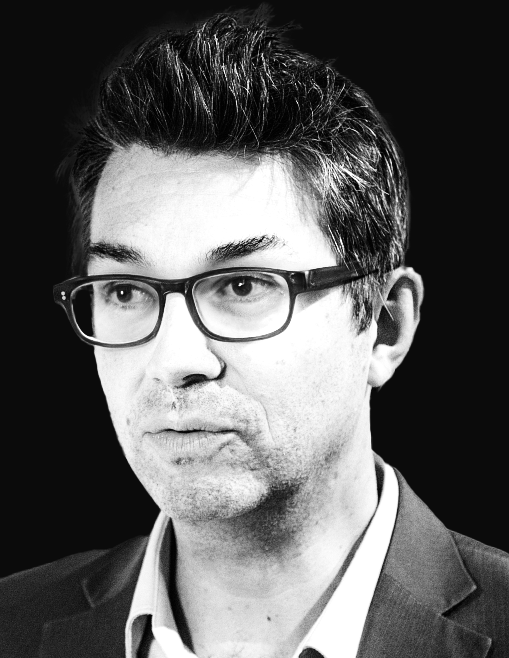
Stephane Cotin is a Research Director at Inria and leader of the MIMESIS team, specializing in real-time physics-based medical simulations. His work focuses on surgical training, planning, and image-guided therapy, with over 200 scientific articles and the development of the open-source SOFA framework. He co-founded InSimo, Twinical, and EVE, and previously held roles at Harvard Medical School and Mitsubishi Electric Research Lab. Cotin’s research bridges imaging, robotics, and medicine to improve healthcare outcomes, emphasizing patient-specific biophysical modeling and real-time computation. His awards include the Academy of Sciences Award (2018) and Dirk Bartz Medical Prize (2015). He has advised numerous PhD students and led projects like MediTwin and PREMYOM, advancing digital twin technologies for precision medicine.
Steffi Colyer is a Senior Lecturer in Biomechanics at the Department for Health, University of Bath. She is affiliated with the Centre for Health and Injury and Illness Prevention in Sport and the Bath Institute for the Augmented Human. Her research is supported by major grants from EPSRC and ESA, focusing on elite athletic performance, rehabilitation, and motion analysis technologies. Her research interests center on biomechanics of athletic performance, particularly in sports such as skeleton, badminton, and sprinting. She investigates the kinetic and kinematic determinants of elite performance, develops markerless motion capture systems for real-world analysis, and applies musculoskeletal modelling to understand internal loading and adaptation in normal and simulated gravity environments. Her work bridges sports science, engineering, and rehabilitation. The recent trend in her publications shows a strong focus on markerless motion analysis, pose estimation, musculoskeletal modelling, and the biomechanics of sprinting and racket sports. She leverages advanced computational methods, including deep learning and in silico simulations, to improve performance analysis and injury prevention. Her scientific awards include: ISBS New Investigator Award finalist (oral) (co-author), 2022 Departmental Staff Award for Innovation in Learning and Teaching, 2025 She has supervised multiple research students and projects, including PhD and postdoctoral work, and is actively involved in peer review for journals such as Journal of Sports Sciences , Scientific Reports , and Journal of Biomechanics . She leads the IAA project on markerless motion capture for skeleton push-start analysis and contributes to the CAMERA initiative, a major interdisciplinary research center focused on motion analysis and virtual reality applications. Her research is conducted within the Centre for the Analysis of Motion, Entertainment Research and Applications (CAMERA), where she collaborates with computer scientists, engineers, and sports scientists to develop and apply cutting-edge motion capture technologies in real-world settings.
Giulio Dagnino is Associate Professor of Robotics and Mechatronics at the University of Twente and concurrently holds an appointment at the Digital Society Institute. His research integrates medical robotics, real-time perception and haptics to create MR-compatible platforms for endovascular surgery, earning an h-index of 17 and 971+ citations. Education & Career: PhD (details not specified in source) leading to faculty appointment at University of Twente. Promoted to Associate Professor with cross-appointments in Robotics & Mechatronics and Digital Society Institute. Research Interests: Prof. Dagnino’s core interest is medical robotic systems that can operate safely inside an MRI scanner. His work spans haptic guidance, real-time computer vision, soft robotic actuation, synthetic data generation and surgical simulation. By combining ferrofluid actuation, electromagnetic tracking and deep-learning-based scene understanding, he aims to reduce ionizing radiation exposure, enhance navigation accuracy and shorten procedure times for minimally invasive endovascular interventions. Publications Trend: Across 44 outputs (2010-2025) the portfolio reveals a clear evolution from early vision-based microsurgery and fracture-robot systems (2010-2016) toward holistic endovascular platforms integrating MR guidance, haptics and autonomy. Recent 2024-25 papers cluster around (i) synthetic data & scene understanding for surgical AI, (ii) MR-safe robot design and tracking, and (iii) translational studies bringing CathBot and related platforms closer to clinical use. Scientific Awards: Best Design Award – Hamlyn Symposium 2019 (with team) Best Innovation Award – ICRA 2018 Best Paper Award – CURAC 2019 IEEE ICRA Best Paper Award in Medical Robotics – 2016 Grants & Projects: Although explicit grant numbers are not listed, the continuous outputs, patents, multi-institutional collaborations (UK, Germany, Estonia, Canada) and press releases imply sustained funding from EU, Dutch and UK research councils as well as industrial partnerships. Labs & Teams: He leads activities within the Robotics and Mechatronics group at University of Twente, collaborates closely with the Digital Society Institute, and maintains international partnerships visible in co-authored papers with Imperial College London, University of Leeds, and several European hospitals.
Kawal Rhode is a Professor in Biomedical Engineering and the Head of Education at the School of Biomedical Engineering & Imaging Sciences , King’s College London. His work bridges engineering, clinical practice, and education, with a focus on image-guided interventions, medical robotics, and 3D printing in healthcare. He leads the educational strategy for multiple taught programs, including the BEng/MEng in Biomedical Engineering and MSc programs in Healthcare Technologies and Clinical Sciences. His educational background includes a BSc in Basic Medical Sciences and Radiological Sciences from Guy's & St. Thomas' Hospitals Medical School (1992) and a PhD in arterial blood flow analysis from University College London (2006). He joined King’s in 2001 as a postdoctoral researcher and progressed through academic ranks to full Professor in 2016. Prof. Rhode’s research centers on image-guided interventions , medical robotics , and innovative pedagogy . His team develops intelligent systems for catheter-based procedures, robotic ultrasound, and simulation platforms using 3D printing. His work integrates AI, biomechanics, and translational engineering to improve clinical outcomes. His recent publications (2024–2025) reflect a strong trend in autonomous robotic systems , AI-driven image analysis , and simulation-based training , particularly in cardiac and interventional applications. These works span journals and conferences in medical imaging, robotics, and biomedical engineering, showcasing interdisciplinary innovation. Wellcome EPSRC Centre for Medical Engineering (Co-Investigator) Three-Dimensional Hybrid Guidance System for Cardiac Interventional Procedures (PI, EPSRC-funded) SIE CDT: Haemodynamics of complex aortic aneurysms (Co-I, Artivion Inc) He leads the Success for Black Engineers initiative, funded by the Royal Academy of Engineering, to improve diversity and inclusion in engineering education. This includes outreach, mentoring, industry engagement, and wellbeing support for Black students. He has supervised numerous students and collaborators, many of whom appear as co-authors on recent publications. His lab is part of a broader network within the School of Biomedical Engineering & Imaging Sciences, collaborating with clinicians at St Thomas’ Hospital and industry partners.
Philippe Cinquin is a Professor of Medical Informatics and Director of TIMC-IMAG (UMR5525), a CNRS-Université Joseph Fourier research unit. He leads the CAMI (Computer Assisted Medical Interventions) Labex and co-heads INSERM's CIC-IT 803 clinical investigation center. With a PhD in Applied Mathematics and Medical Doctor qualification, he pioneered surgical robotics and computer-aided interventions since 1984, benefiting over 100,000 patients through startup innovations. His recent work focuses on symbiotic implantable devices, energy scavenging for medical implants, and hydrogen therapy. He received the 2013 CNRS Innovation Award and 2014 Ambroise Paré Surgical Award. Research interests span biomimetic devices, medical robotics, and innovative therapies including transdermal hydrogen delivery. He has developed implantable systems like intestinal reactors and biosensors, with applications in diabetes treatment and pandemic response. His work integrates mathematics, signal processing, and nanotechnology to advance minimally invasive surgery and autonomous medical implants. Key contributions include virtual fluoroscopy systems for navigation, enzymatic biofuel cells, and reusable PPE sterilization methods during the pandemic. His interdisciplinary teams collaborate across engineering, medicine, and computer science to address clinical challenges through technological innovation. Education: PhD in Applied Mathematics; Medical Doctorate Grants & Startups: Founded multiple companies commercializing surgical navigation systems and diagnostic devices Labs: TIMC-IMAG, CAMI Labex, CIC-IT 803 clinical innovation center
Jacques Van Dam, MD, PhD, is a Professor of Medicine (Clinical Scholar) at the Keck School of Medicine of the University of Southern California. He specializes in advanced gastrointestinal endoscopy, focusing on pancreatic, esophageal, gastric, and colorectal cancers, as well as precancerous conditions like Barrett’s esophagus and pancreatic cystic neoplasms. His clinical expertise includes diagnostic and therapeutic gastrointestinal endoscopy, ERCP, and EUS. Dr. Van Dam holds academic titles from Georgetown University (MD, PhD), Harvard Medical School (residency/fellowship), and specialized training at the Cleveland Clinic. He has been recognized with major awards including the AMA Inspirational Physician Award (2014) and the ASGE Distinguished Service Award (2015). His research spans translational medicine, endoscopic innovation, and cancer diagnostics. His work emphasizes minimally invasive procedures, including EUS-guided therapies and optical biopsy techniques. Dr. Van Dam has contributed to over 150 peer-reviewed publications, focusing on endoscopic innovations, cancer detection, and device development. He serves as a past president of the American Society for Gastrointestinal Endoscopy (ASGE) and other professional societies.
Ramez N Abdalla, MD, PhD, is an Assistant Professor of Radiology specializing in Interventional Neuroradiology at Northwestern University's Feinberg School of Medicine. His clinical focus includes endovascular management of cerebrovascular diseases, spinal interventions, and acute stroke treatment. He completed his MD, MS, and PhD at Ain Shams University, followed by postgraduate training in Egypt and fellowships at Northwestern University in Interventional Neuroradiology. Dr. Abdalla’s research emphasizes advanced imaging techniques (e.g., 4D Flow MRI) for optimizing stroke care, hemodynamic analysis in intracranial atherosclerosis, and novel treatments for cerebral vasospasm. Education: MD: Ain Shams University, Egypt (2010) MS: Ain Shams University (2015) PhD: Ain Shams University (2023) Fellowships: Ain Shams University (2018–2022) and Northwestern University (2019–2022) Research Interests: Endovascular treatment of neurovascular diseases 4D Flow MRI for cerebrovascular hemodynamics Stroke intervention outcomes Imaging biomarkers for intracranial atherosclerosis Publications reflect his focus on neurovascular imaging and clinical trials comparing endovascular vs. surgical treatments. Notable awards include the 2019 LINNC Travel Grant and Egyptian Ministry research scholarships. He is an active member of societies like the American Society of Neuroradiology and Society of Neurointerventional Surgery. Grants and Collaborations: His work is supported by institutional and registry-based research (e.g., NVQI-QOD). He has contributed to multi-institutional studies on stroke thrombectomy outcomes and ARUBA-eligible AVM treatments. No external industry relationships were disclosed for 2024. Labs/Teams: Collaborates with neurovascular imaging and interventional research groups at Northwestern, focusing on translational applications of advanced MRI and AI-driven diagnostic tools.
Leendert-Jan W. Ligtenberg is a Researcher in the Robotics and Mechatronics department at the University of Twente , affiliated with the TechMed Centre . His work focuses on medical robotics, particularly magnetic actuation and wireless control systems for endovascular and gastrointestinal applications. Research Areas : Robotics, Mechatronics, Magnetic Actuation, Biomedical Engineering. Collaborations : Radboud University Medical Center (2024-2025). Scientific Activity Trends : Recent publications highlight advancements in untethered magnetic robots for clinical settings, including X-ray-guided control, dynamic modeling of capsules, and hybrid thrombus fragmentation techniques. Subfields include fluoroscopy integration , gastrointestinal navigation , and medical device simulation .
Dr. Yingliang Ma is an Associate Professor in Computing Sciences at the University of East Anglia, leading the Vision Computing Research Group. He holds a PhD in Computer Science from the University of Manchester and serves as President of the Cardiac-SIG in MICCAI. His research focuses on computer vision, medical image analysis, and procedure risk assessment, with grants from EPSRC, NIHR, and MRC. He is also a Visiting Academic at King's College London (2022–2026) and former Honorary Lecturer (2016–2018). Education: PhD in Computer Science, University of Manchester Research Interests: Dr. Ma develops novel algorithms in computer vision and computational geometry for medical applications such as image-guided surgery, cardiac interventions, and procedure risk assessment. His work emphasizes real-time systems and AI integration in healthcare. Grants & Projects: MRC Impact Fund (2024–2025): £44,669 for a 3D guidance system for cardiac procedures. EPSRC Grant (2023–2025): £279,504 for hybrid 3D cardiac intervention guidance. NIHR Grant (2015–2018): £400,719 for MRI-augmented pediatric cardiovascular interventions. EU ERASMUS+ (2020–2022): €237,940 for Virtual Reality in education. Labs & Teams: Head of Vision and Graphics Research Group. Active in collaborations across cardiology, computer science, and AI.
Dr. David B. Bayne is an Assistant Professor in the Department of Urology at the University of California, San Francisco (UCSF) School of Medicine . His work integrates clinical research , social determinants of health , and medical education to address kidney stone disease and surgical outcomes. He holds dual degrees: a MD from Harvard Medical School (2012) and an MPH from UC Berkeley (2017), with residencies and fellowships at UCSF ( Urology Residency 2018 , Endourology Fellowship 2020 ). Dr. Bayne's research focuses on kidney stone formation , social factors in surgical outcomes , and minimally invasive urology , supported by National Institutes of Health (NIH) funding . His publications span urology , public health , and medical education , with recent work on robotic surgery , artificial intelligence in stone treatment , and global health equity . He co-leads the UCSF Center for Health Equity in Surgery and Anesthesia and directs simulation education programs. He has conducted fieldwork in Haiti and Guyana , emphasizing low-resource surgical solutions , and is fluent in Spanish. His clinical practice at the Urinary Stone Center uses endoscopic , laparoscopic , and robotic techniques for kidney and bladder stones, alongside ureteral stricture management. Dr. Bayne's leadership roles include Director of Simulation Education and Co-Director of the UCSF Center for Health Equity in Surgery and Anesthesia .
İrfan Veysel DÜZEN is an Associate Professor at the Faculty of Medicine, Department of Internal Medical Sciences at Gaziantep University , Türkiye. He holds a Doctorate in Medical Biology and Genetics (2016-2020) and completed his Medical Specialization (2005-2010) and Medical License (1997-2003) at Ankara and Hacettepe Universities, respectively. Education: PhD, Medical Specialization, MD Membership: Turkish Society of Cardiology Research Certifications: Experimental Animal Practice, Study Skills Research Interests focus on cardiovascular diseases , particularly genetic/molecular mechanisms in heart failure, oxidative stress, and interventional outcomes. His work bridges clinical cardiology , echocardiography , and metabolic syndrome analysis. He has authored 4 books and 53 peer-reviewed articles (last updated 2025), with a strong emphasis on SCI/SCI-Expanded journals. His 15 most recent articles (2025-2021) explore topics such as: Hashimoto's Thyroiditis and cardiac strain Gastrointestinal bleeding in cardiovascular patients Novel biomarkers in heart failure (NRF2, glycogen synthase) Gene mutations in cardiomyopathy Radiation safety in interventional cardiology Thromboembolic risks in peripheral artery interventions Teaching and Leadership includes 8 lectures on cardiology topics (2018-2019) and participation in 15 international/national conferences, including the World Congress of Cardiology (2012) and 17th European Congress of Endocrinology (2015). He has advised on a 2022 medical specialization thesis and collaborated with 20+ researchers across Türkiye.
David P. Chason is a Professor of Radiology at UT Southwestern Medical Center and Chief of Neuroradiology at Parkland Health & Hospital System. He has been a faculty member since 1992, previously serving as an Assistant Professor at the University of Virginia Medical Center. Specializes in CT angiography, image-guided spine interventions, and trauma neuroradiology Active in radiology education and 3D printing applications for procedural training Senior Member of the American Society of Neuroradiology and Fellow of the American College of Radiology His research focuses on medical imaging advancements, with over 37 publications spanning neuroimaging, spinal diagnostics, and radiation safety. Key areas include: Biomechanical analysis of vascular interventions Fetal brain development through MRI Cerebral venous system imaging Radiation dose management Emergency department imaging workflows Neuroendovascular risk mitigation Scientific honors include: Fellow of the American College of Radiology (FACR) Senior Member of the American Society of Neuroradiology Dr. Chason serves on multiple UT Southwestern committees focusing on radiology education, research, and quality improvement, while maintaining clinical expertise in image-guided spine procedures and trauma diagnostics.
Michael Siah, M.D., is a Clinical Professor of Vascular Surgery at UT Southwestern Medical Center, where he has been a faculty member since 2019. He serves as Director of Limb Salvage, focusing on innovative techniques to preserve limbs through vascular interventions. Dr. Siah specializes in treating complex vascular conditions, including diabetic foot infections, peripheral arterial disease, and venous thrombosis. He leads multiple national/international clinical trials and has published extensively on radiation safety for healthcare workers, limb salvage strategies, and vascular surgical techniques. Education: MD from University of Hawaii’s John A. Burns School of Medicine; Vascular Surgery Residency at Georgetown University Hospital/Washington Hospital Center. Research Interests: Dr. Siah’s work centers on improving limb salvage outcomes through novel surgical methods like deep venous arterialization and mechanical thrombectomy. He also investigates radiation exposure mitigation for surgeons during fluoroscopically guided procedures. His research encompasses diabetic foot pathophysiology, venous ulcer healing, and the economic impact of vascular interventions. Key Contributions: Principal Investigator on 15+ clinical trials evaluating new devices (e.g., RevCore catheter, Shockwave Lithotripsy System). His studies have advanced understanding of operator radiation protection, with innovations like leaded surgical gloves and aprons. He frequently presents at vascular surgery conferences globally. Labs/Teams: Leads the Limb Salvage Program at UT Southwestern, collaborating with multidisciplinary teams to develop advanced vascular therapies. Active in professional societies including the Society for Vascular Surgery and American Limb Preservation Society.
Isabelle Bloch is a full Professor at Télécom Paris (Institut Polytechnique de Paris) and Emeritus Professor at the University of Bordeaux . She heads the Image, Modeling, Analysis, Geometry, Synthesis (IMAGES) research team within the Information Processing and Communication Laboratory (LTCI) in the Image, Data, Signal (IDS) Department . Education & Affiliations Professor – Télécom Paris, Institut Polytechnique de Paris (current) Professeure Émérite – University of Bordeaux (honorary) Research Interests Her work lies at the intersection of computer science, applied mathematics and medicine . Core themes include mathematical morphology , fuzzy and bipolar logics , 3-D image interpretation , discrete 3-D geometry & topology , information fusion , structural pattern recognition , spatial reasoning and medical imaging . Recent projects extend these concepts to explainable AI , argumentation theory , computational musicology and robotic surgery guidance . Scientific Awards Blondel Medal (2008) – awarded by the French Electrical & Electronics Engineering Society to outstanding young scientists. Grants & Collaborative Projects While specific grant numbers are not listed in the text, Prof. Bloch coordinates and participates in large-scale interdisciplinary projects funded by national (ANR) and European programs, spanning medical AI, pediatric oncology imaging, neuro-informatics and ethical AI. Labs & Teams She leads the IMAGES team (≈ 25 researchers) inside the LTCI – a joint research unit of Télécom Paris and CNRS. The group develops theory and open-source software in mathematical morphology, deep learning and symbolic AI, and collaborates closely with clinical partners at Necker–Enfants Malades Hospital, AP-HP and Gustave Roussy.
Eigil Samset is a Professor II in the Department of Informatics at the University of Oslo, affiliated with the Faculty of Mathematics and Natural Sciences. He is a key member of the Digital Signal Processing and Image Analysis (DSB) research group and contributes to the Strategic Research Initiative MEDIMA (Multimodal Medical Imaging and Image Analysis). His work is also associated with the INIUS (Intelligent Image-Guided Surgery) project, reflecting his strong focus on translational research in medical imaging. His research interests span artificial intelligence, deep learning, medical image analysis, echocardiography, and image-guided surgery . He specializes in developing advanced computational methods for cardiac ultrasound, including automated segmentation, motion tracking, and 3D/4D reconstruction. His work bridges computer science and clinical cardiology, aiming to improve diagnostic accuracy and procedural guidance. The recent publications show a consistent trend in applying deep learning to automate measurements in echocardiography, such as left ventricular strain, outflow tract diameter, and chamber segmentation. There is also a strong emphasis on biomechanical modeling, image fusion (e.g., ultrasound with fluoroscopy or CT), and real-time visualization for surgical applications. His work frequently appears in high-impact journals in medical imaging and biomedical engineering. He has advised or collaborated closely with numerous researchers and students, as evidenced by his frequent senior authorship on publications involving PhD candidates and postdocs. His research is supported by institutional affiliations and collaborative projects rather than individual grant mentions in the provided text. He is actively contributing to the field, with recent work in 2024, and maintains an academic email at the University of Oslo. There is no indication of retirement or emeritus status.