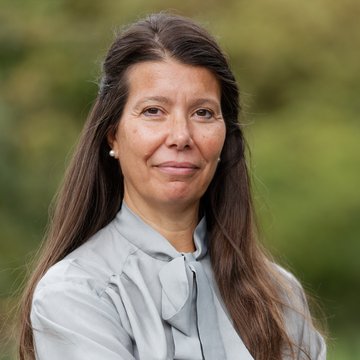
Prof. Dr. Paola Caselli serves as Director of the Center for Astrochemical Studies at the Max Planck Institute for Extraterrestrial Physics (MPE) in Garching, Germany, holding the academic rank of Professor within the institute's research structure. Her research focuses on astrochemistry and molecular astrophysics , specifically investigating chemical processes in the interstellar medium and star-forming regions. This work bridges observational astronomy, theoretical modeling, and laboratory astrophysics to understand molecular cloud evolution and prebiotic chemistry in space. Contact details include telephone numbers +49 89 30000-3400 and +49 89 30000-3399, with email listed as caselli@.... Her physical location is at Gießenbachstraße 1, 85748 Garching, Bayern.
Dr. Rebecca Smith is a Senior Lecturer in Psychology at the School of Human Sciences, University of Greenwich. Her academic career spans over 15 years, with a focus on social psychology. She specializes in teaching and research related to ostracism, rape myth acceptance, and homeless stigmatization, while also contributing to gender equality studies. Her work bridges theoretical and applied research in human behavior. PhD (Psychology), University of Dundee MA (Psychology), University of Dundee Research Interests: Dr. Smith’s work explores the psychological impacts of social exclusion, the cultural and cognitive underpinnings of rape myth acceptance, and societal biases toward marginalized populations like the homeless. She integrates these themes with broader social psychology frameworks. Article Trends: Her recent publications span social psychology (e.g., ostracism, homeless stigma) and interdisciplinary topics like IVF outcomes, galaxy dynamics, and West Nile virus surveillance. This reflects a diverse collaboration network across medical, astrophysical, and public health domains. Advising: Dr. Smith supervises PhD and EdD students in social psychology and gender equality, fostering research in human behavior and societal structures. She previously served as Deputy Head of Department (2015-16) and TMC Link Tutor (2009-13).
Timothy Cook is an Associate Professor in the Department of Physics & Applied Physics at the University of Massachusetts Lowell. He holds a PhD in Astrophysics from the University of Colorado (1991) and has extensive experience in developing space-borne and ground-based instrumentation. His research focuses on ultraviolet instrumentation, sounding rockets, and novel data analysis techniques, particularly for studying astrophysical dust, exoplanetary systems, and interstellar/intergalactic material. Key projects include the PICTURE and IMAGER sounding rockets, the SPINR payload for stellar dust studies, and the SCARI interferometer for interstellar medium analysis. He has led and collaborated on multiple NASA-funded missions and grants, including roles as PI and Co-PI on projects like the CLUE experiment and DWEL lidar system. His work integrates astrophysical observations with advanced optical engineering and remote sensing technologies. Education: PhD in Astrophysics, University of Colorado Boulder, 1991 BA in Physics, Johns Hopkins University, 1985 Research Interests: Dr. Cook specializes in designing and deploying instruments for space and terrestrial environments. His expertise spans sounding rocket payloads (e.g., PICTURE-B, LITES), ultraviolet spectroscopy, coronagraphy for exoplanet detection, and lidar systems for forest canopy analysis. He also investigates interstellar dust properties and circumgalactic material using novel tomographic and interferometric techniques. His work bridges astrophysical studies with practical engineering solutions for observational challenges. Grants & Collaborations: Principal Investigator for NASA-funded projects like the Interstellar Medium Absorption Gradient Experiment Rocket (2007) Co-PI for NSF grants developing the Dual-Wavelength Echidna Lidar (DWEL) for forest biomass studies (2009) Contributed to the TERRIERS satellite mission studying Earth’s ionosphere Labs & Teams: Collaborates with interdisciplinary teams at UMass Lowell, NASA, and institutions like Boston University, leveraging expertise in optical instrumentation and data analysis.
Professor Chris Hull is a renowned theoretical physicist at Imperial College London, holding the Chair in Theoretical Physics within the Department of Physics, Faculty of Natural Sciences. His research focuses on string theory, quantum gravity, and mathematical physics, with notable contributions to dualities, non-geometric backgrounds, and brane dynamics. He is an elected Fellow of the Royal Society (FRS). Key research areas include string compactifications, generalized geometry, and the interplay between gravity and gauge theories. His work frequently explores T-duality, non-geometric fluxes, and exotic branes, with applications to black hole physics and holography. Recent publications highlight advancements in homotopy transfer methods for effective field theories, magnetic field dynamics in star-forming regions, and the geometry of K3 surfaces. His contributions to heterotic/type II dualities and T-fold constructions have been pivotal in non-geometric string theory. Awards: Fellow of the Royal Society (FRS) Labs/Teams: Involved in the Physics of Universe and Theoretical Physics research groups at Imperial.
Vikram Ravi is an Assistant Professor of Astronomy at the California Institute of Technology (Caltech), affiliated with the Division of Physics, Mathematics and Astronomy. He leads the astronomy department's research on relativistic astrophysical phenomena and instrumental development. His academic journey includes a B.S. from the Australian National University (2009) and a Ph.D. from the University of Melbourne (2014), followed by postdoctoral roles at Caltech and Harvard-Smithsonian Center for Astrophysics. His research focuses on neutron stars, black holes, fast radio bursts (FRBs), and tidal disruption events (TDEs). He pioneered the DSA-2000 radio telescope project, aiming to revolutionize transient astronomy. Key contributions include gravitational wave predictions from supermassive black hole binaries and FRB-based studies of galaxy halos and dark matter. Ravi's honors include the Charlene Heisler Prize and Stefano Braccini Prize for his Ph.D. work on pulsar-timing constraints on gravitational waves. He actively mentors students and postdocs in instrumentation, computational astrophysics, and observational campaigns. His groups at Caltech and Owens Valley Radio Observatory develop cutting-edge tools like the Deep Synoptic Array (DSA) telescopes, enabling breakthroughs in FRB localization, TDE surveys, and cosmic baryon mapping. Future projects include the DSA-2000's fast-time-domain surveys and dark matter searches.
Erik Rosolowsky is a Professor of Physics and Associate Chair in the Faculty of Science at the University of Alberta. He holds a PhD from the University of California, Berkeley (2005), MA from UC Berkeley (2001), and BA from Swarthmore College (1998). His research focuses on understanding the recycling of stellar matter in galaxies, using radio and submillimeter telescopes alongside algorithmic methods. Key interests include star formation, interstellar medium dynamics, and molecular gas properties in nearby galaxies. He teaches graduate and undergraduate courses in astronomy and physics, emphasizing flipped classrooms and problem-solving skills. Notable courses include PHYS 144 (Newtonian Mechanics) and PHYS 574 (Data Analysis in Physics). Rosolowsky is a core member of the PHANGS collaboration, leveraging JWST and ALMA for high-resolution galaxy studies. He also leads efforts in data science for astrophysics, developing tools like CARTA and CIRADA. Recent work includes analyzing molecular gas in NGC 6822, modeling starburst galaxies, and processing JWST data. His research bridges observational techniques with computational methods to explore galaxy evolution and stellar lifecycle connections. Despite no listed awards, his contributions to astrophysical data pipelines and collaborative surveys highlight his academic impact.
Dr. Nikole Nielsen is an Adjunct Associate Professor at Swinburne University of Technology and an Assistant Professor at the University of Oklahoma. She holds dual appointments in the Centre for Astrophysics and Supercomputing (Swinburne) and the Homer L. Dodge Department of Physics and Astronomy (OU). Her research focuses on the circumgalactic medium (CGM) of galaxies, studying gas kinematics, ionization states, and metal content to understand galaxy evolution processes like accretion and outflows. She has held roles including ASTRO 3D Fellow and Postdoctoral Research Associate at Swinburne from 2015–2024. Education: PhD in Astronomy (New Mexico State University, 2015), M.S. in Astronomy (2013), B.S. in Astrophysics (Michigan State University, 2009). Awards include the Swinburne Director's Outstanding Achievement Award (2022) and multiple recognitions for research excellence. She supervises PhD students in areas like galactic outflows and CGM dynamics. Research highlights include mapping the transition between galactic disks and CGM using emission-line data (Nature Astronomy, 2024), resolving outflow properties in starburst galaxies (Monthly Notices of the Royal Astronomical Society, 2024), and studying gas kinematics in multiphase CGM (2024). Her work bridges observations with simulations, emphasizing resolved spatial data to understand galaxy evolution. Grants include an NSF East Asia-Pacific Summer Institute fellowship (2012) and ASTRO 3D funding. Teaching includes courses on extragalactic astronomy and cosmology at OU. Outreach efforts include coordinating public astronomy events and mentoring students. Current team includes postdocs and graduate students at OU.
Jens Hjorth is a Professor of Astrophysics at the University of Copenhagen's Niels Bohr Institute, where he leads research in the DARK center. With over 400 refereed publications, more than 35,000 citations, and an h-index of 96, he is a prominent figure in modern astrophysics. His work spans cosmology, dark matter research, and high-redshift galaxy studies, with approximately 33 papers published in Nature or Science journals. Professor Hjorth's primary research focuses on astrophysical transients, very high-redshift galaxies, cosmology, and the origin of universality in dark-matter halos. His work bridges theoretical modeling with observational data, particularly through his involvement with the Euclid space mission. His research often explores the intersection of astrophysics with art and science, demonstrating a commitment to interdisciplinary approaches. His recent publications reveal a strong emphasis on dark matter halo structure, galaxy evolution across cosmic time, and the development of sophisticated simulations for cosmological studies. His publication record shows consistent high-impact contributions, with recent work heavily focused on the Euclid mission's instrumentation and data analysis. These publications span theoretical cosmology, observational techniques, and the development of advanced simulation methods for understanding large-scale structure formation. The research demonstrates both depth in specialized areas like dark matter physics and breadth across related astrophysical disciplines. Villum Investigator: Time in Astrophysics Member of the boards of the Carlsberg Foundation Member of the boards of the Tuborg Foundation Approximately 33 scientific papers in Nature or Science journals Most cited lead-author paper: J. Hjorth et al. Nature 423, 847–850 (2003) with ~1300 citations As a Villum Investigator, Professor Hjorth leads significant research initiatives focused on time-domain astrophysics. He also serves as Co-lead of the UCPH Forward career development program, demonstrating his commitment to academic leadership and mentorship. His extensive publication record and high citation count reflect substantial research impact across multiple funding cycles and collaborative projects. Professor Hjorth is deeply involved with the DARK research center at the Niels Bohr Institute, which focuses on cosmology, dark matter, and dark energy research. His work with the Euclid mission places him at the forefront of international space-based cosmological surveys. The research teams he participates in combine observational astronomers, theoretical physicists, and computational scientists to tackle fundamental questions about the universe's structure and evolution.
David A. Williams is an Adjunct Professor of Physics at the University of California, Santa Cruz . He is a member of the VERITAS and CTA collaborations, focusing on high-energy gamma-ray astronomy. Additionally, he is an Affiliated Scientist with the Fermi -Large Area Telescope project. Ph.D. from Harvard University (1987) Office: Room 319, Natural Science 2 Email: daw@ucsc.edu Research Interests Williams investigates high-energy astrophysical phenomena using ground-based gamma-ray telescopes. Key research areas include: Understanding gamma-ray bursts and their emission mechanisms Analyzing active galactic nuclei (particularly blazars) and their relativistic jets Studying cosmic rays and their acceleration processes in astrophysical systems Developing advanced instrumentation for experiments like VERITAS and CTA Investigating absorption of gamma rays via cosmic microwave background interactions His recent publications highlight collaborative work on TeV gamma-ray detection, source analysis, and telescope design advancements. Collaborations VERITAS : Observational gamma-ray astronomy with 12m telescopes CTA : Chair of the CTA-US group for next-generation telescope development Fermi -LAT : Multi-wavelength studies combining satellite and ground-based data
Debbie R Schmidt serves as an Assistant Professor of Physics & Astronomy with a PhD in Astronomy and Astrophysics from the University of Arizona (2018) and a BA in Astrophysics from Franklin & Marshall College (2012). Education PhD in Astronomy and Astrophysics, University of Arizona, 2018 BA in Astrophysics, Franklin & Marshall College, 2012 Research Interests Dr. Schmidt specializes in molecular astrophysics within planetary nebulae, investigating chemical evolution, molecular inventories, and isotopic fractionation during stellar death. Her work bridges the asymptotic giant branch (AGB) phase and planetary nebulae through radio and millimeter-wave spectroscopy, focusing on molecules like HCN, HCO+, and CCH to unravel nucleosynthetic processes and pre-solar grain formation. Recent Publications Her 2020-2024 publications demonstrate systematic expansion of molecular detections across planetary nebulae (M4-17, Hu 1-1, M1-59, Na 2, M1-92), revealing organic molecular continua, extreme isotopic enrichments (13C, 15N, 17O), and unexpected complexity. Key contributions include ALMA imaging of molecular distributions and establishing chemical connections between evolutionary phases. Scientific Awards No scientific awards were documented in the provided text. Advising and Grants Student mentorship details and grant funding information are not specified in the available materials.
David J. Helfand is a Professor in the Department of Astronomy at Columbia University, serving as Chair (1992–present) and Co-Director of the Columbia Astrophysics Laboratory (1994–present). He has held visiting roles at Cambridge University and the Danish Space Research Institute. His research focuses on radio surveys (e.g., FIRST and MAGPIS), neutron stars, supernova remnants, and the cosmic X-ray background. He has pioneered large-scale radio surveys to study galactic and extragalactic structures, weak gravitational lensing, and high-redshift quasars. Helfand holds a Ph.D. in Astronomy from the University of Massachusetts (1977) and an A.B. in Physics from Amherst College (1973). He co-founded Quest University Canada in 2005 and became its President in 2008. Education: Ph.D. Astronomy, University of Massachusetts, 1977 M.S. Physics, University of Massachusetts, 1977 A.B. Physics (Independent Scholar), Amherst College, 1973 Research Interests: Helfand's work emphasizes radio surveys like FIRST (mapping 9200 square degrees of the sky) and MAGPIS (Galactic Plane imaging). He studies neutron stars' evolution, supernova remnants (e.g., Vela and 3C58), and contributions of starburst galaxies/AGN to the cosmic X-ray background. He employs Chandra/XMM-Newton observations to probe obscured quasars and high-redshift clusters. Grants & Collaborations: Leadership roles include founding Quest University Canada and directing Columbia's astronomy department. His surveys have identified thousands of radio sources, enabled optical identifications, and explored cosmological structures via radio source correlations and lensing. Labs/Teams: Helfand collaborates with the Columbia Astrophysics Laboratory and international teams using facilities like the VLA, Chandra, and XMM-Newton. Projects include the MSX mid-IR survey and searches for obscured quasars and gravitational lenses.
Elena D'Onghia is an Associate Professor in the Department of Astronomy at the University of Wisconsin-Madison. Her research focuses on unraveling the dynamical processes that shape the stellar structure of the Milky Way and nearby galaxies using analytical models and high-resolution numerical simulations. She leverages data from the GAIA satellite to study galactic evolution, emphasizing the importance of understanding our cosmic environment beyond the Solar System. University: University of Wisconsin-Madison Department: Astronomy Contact: edonghia@astro.wisc.edu | 4504 Sterling Hall Research Interests D'Onghia's work spans galactic dynamics, stellar structure formation, and interstellar medium processes. She investigates how gravitational interactions, stellar bars, and supernova-driven outflows influence galactic morphology. Her studies often integrate multi-wavelength observations with cosmological simulations to trace the evolution of galaxies like the Milky Way and Magellanic Cloud analogs. Recent Publications Her recent articles highlight galactic disk corrugations, starburst outflows in the LMC, and the role of classical bulges in shaping stellar bars. Collaborative projects include the Sloan Digital Sky Survey and ALMA-based studies of high-redshift galaxies. Scientific Awards 2018-2020 Vilas Associate Professor Research Fellow 2013-2017 Alfred P. Sloan Research Fellow 2013 Kavli Fellow Frontiers of Science 2009-2012 Keck Fellowship (Harvard) 2005-2006 Max-Planck Research Fellowship
Philip Lubin is a Full Professor in the Department of Physics at the University of California, Santa Barbara. His research spans experimental cosmology, directed energy applications, and planetary defense, with a focus on millimeter-wave studies of the early universe and photonic propulsion systems. He leads the Experimental Cosmology Group and has contributed to groundbreaking work on the Cosmic Microwave Background (CMB) via the Planck mission. Affiliations: University of California, Santa Barbara; NASA Starlight Program; Breakthrough Starshot Initiative Professor Lubin's research interests include: Planetary Defense: Terminal interdiction methods using kinetic penetrators Directed Energy Systems: Applications for relativistic spacecraft propulsion and deep space exploration CMB Studies: Polarization analysis and cosmological parameter determination His recent publications emphasize: Advanced planetary defense simulations Interstellar communication challenges CMB legacy data analysis Directed energy propulsion architectures Scientific Accolades: 2006 Gruber Prize in Cosmology (COBE team) 2018 Gruber Prize in Cosmology (Planck team) Professor Lubin actively mentors students in experimental physics and cosmology while leading the DeepSpace.ucsb.edu initiative for space exploration technologies.
Prof. Maria-Rosa Cioni is a joint professor at the University of Potsdam and the Leibniz Institute for Astrophysics Potsdam (AIP). As a leading observational astronomer, her research focuses on the formation and evolution of dwarf galaxies, particularly the Magellanic Clouds. She leads major surveys including the VISTA Magellanic Cloud Survey (VMC) and the 1001MC survey within the 4MOST consortium. Her academic journey includes a PhD from Leiden Observatory (2001), postdoctoral positions at ESO and the University of Edinburgh, and prestigious fellowships like the Humboldt and DAAD awards. She currently holds the position of Section Head at AIP and has secured significant funding through an ERC Consolidator Grant (2016). Education: BSc in Astronomy, University of Bologna (1996) PhD in Astronomy, Leiden Observatory (2001) Professional History: ESO Fellow (2001–2005) Lecturer, University of Edinburgh (2005–2007) Senior Lecturer/Reader, University of Hertfordshire (2007–2010) Humboldt Fellowship (2010), DAAD Visiting Professorship (2010–2016) Her research emphasizes stellar populations and the interplay between dwarf galaxies and the Milky Way's halo. Recent work uses machine learning for source classification and Gaia data for dynamical modeling. She collaborates widely on projects like Euclid and SDSS-V, advancing survey techniques and galactic archaeology. Awards: ERC Consolidator Grant (2016), Humboldt Fellowship (2010), DAAD Visiting Professorship Grants & Funding: ERC Consolidator Grant supporting her research group since 2016 Prof. Cioni's lab contributes to cutting-edge facilities like the VISTA telescope and the upcoming Euclid mission. She actively mentors students and leads international collaborations to unravel the cosmic history of dwarf galaxies and their role in galaxy evolution.
Jan Lub is an Associate Professor at Leiden Observatory within the Faculty of Science at Leiden University. He is actively involved in astronomical research focusing on the interstellar medium and galactic structures. His work contributes to understanding star formation processes and the dynamics of dwarf galaxies, particularly in the context of the Magellanic Clouds. His primary research interests include: Molecular Interstellar Medium Galaxy Centers Star Formation Dwarf Galaxies & Magellanic Clouds While specific publications are listed under his STRW page, no individual articles were detailed in the provided texts. However, the thematic focus of his research suggests consistent contributions to observational and theoretical astrophysics, especially in low-metallicity environments and galactic evolution. There are no listed scientific awards or honors in the available information. Dr. Lub advises students in astronomy and astrophysics, though no named advisees are provided in the current data. There is no mention of specific research grants or funding projects associated with him in the provided content. He is affiliated with the Leiden Observatory, a prominent research institute within the university dedicated to cutting-edge astronomical research, instrumentation development, and academic training in astrophysics.