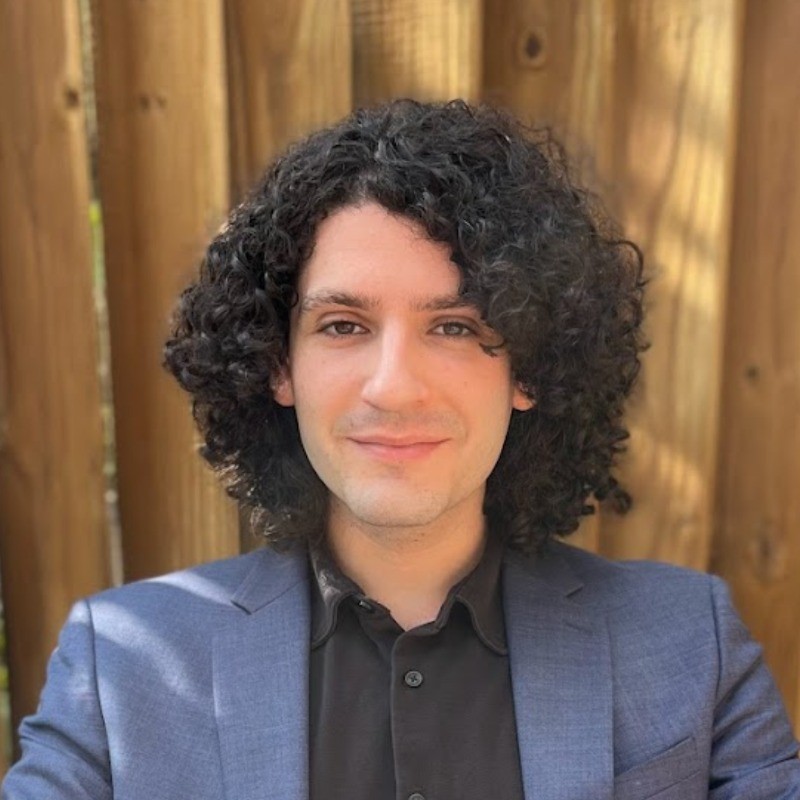
Ningyuan Cao is an Assistant Professor in the Department of Electrical Engineering at the University of Notre Dame, College of Engineering. He leads the Circuit and System Intelligence Research Lab , focusing on the intersection of advanced hardware design and real-time/low-power machine learning applications. Education : Ph.D., Electrical and Electronics Engineering, Georgia Institute of Technology (2020) M.S., Electrical Engineering, Columbia University (2015) B.S., Electrical and Electronics Engineering, Shanghai Jiao Tong University (2013) His research investigates custom analog/mixed-signal circuits , digital architecture , and micro-system design for machine learning acceleration, distributed intelligence, and data-driven IC design automation. Key application domains include Internet-of-Everything, tactile internet, and mixed reality systems. Recent publications highlight work on Bayesian neural networks , privacy-preserving bio-signal encoders , transformer-based surrogate models , and compute-in-memory architectures . Technical themes span neuromorphic computing, uncertainty quantification, and hardware security.
Alan Gerber serves as Acting Dean of the Faculty of Arts and Sciences Division of Social Science and Director of the Institution for Social and Policy Studies (ISPS) at Yale University. He holds the prestigious Sterling Professorship in Political Science with secondary appointments in Economics and Public Health, reflecting his interdisciplinary approach to governance and policy research. His academic home is the Department of Political Science within Yale's Faculty of Arts and Sciences. Gerber's research spans: Experimental analysis of voter turnout mechanisms Election integrity perceptions and threats Behavioral interventions in political mobilization Intersection of public health crises and electoral participation Political economy of policy feasibility His methodology emphasizes large-scale field experiments, often involving millions of voters across multiple states, to test theories of political behavior under real-world conditions. Analysis of his 2022-2025 publications reveals three dominant trends: (1) intensifying focus on electoral threats following the 2020 US election, particularly examining partisan disagreements about fraud and ballot security; (2) innovative experiments testing emotional and identity-based mobilization triggers, including anger and social identity priming; and (3) growing integration of public health perspectives, especially regarding pandemic-era voting behavior and vaccine uptake campaigns. His work consistently challenges assumptions about subtle psychological interventions in politics through rigorous replication studies. No scientific awards were specified in the source materials. Information regarding student advising, grant funding, or laboratory teams was not provided in the available text.
Ting He is a Professor in the Department of Computer Science and Engineering, specializing in interdisciplinary research at the intersection of network sciences, energy systems, and cybersecurity. Their work addresses critical challenges in network tomography, software-defined networking, and cyber-physical systems, with a strong emphasis on advancing edge computing and decentralized learning paradigms. NSF-funded research on Distributed Edge Intelligence (2024–2025) Collaborative projects on Overlay Networks and Adversarial Reconnaissance in SDN Recent publications analyze network topology inference, energy-efficient decentralized learning, and secure cloud file systems. Their research aligns with UN SDGs through contributions to sustainable energy systems and secure IT infrastructure. Key collaborations with Silvestri, La Porta, and Chaudhuri Active in Smart Grid resilience and cascading failure mitigation
Signy Lynch is an Assistant Professor in English and Drama at the University of Toronto Mississauga (UTM) and a graduate faculty member at the Centre for Drama, Theatre and Performance Studies. Her research focuses on contemporary intercultural/diasporic performance, Black theatre, participatory performance, audience research, and critical theatre criticism in Canada. Education : PhD and MA from York University, Hon. BA from Queen’s University Her work explores the intersections of digital media and intercultural performance, including immersive theatre practices and audience dynamics in pandemic-era performances. She co-edits Canadian Theatre Review and investigates epistemic violence in traditional criticism frameworks. In the 15 most recent publications , Lynch examines topics like racial dynamics in theatre criticism, intermedial performance technologies, audience complicity in Indigenous storytelling, and pandemic-era performance adaptations. Her articles appear in Theatre Research in Canada , Contemporary Theatre Review , and New Theatre Quarterly . Awards : Barbara Godard Prize (2021), Governor General’s Gold Medal (2022), CTCA Outstanding Critical Essay runner-up (2022) Lynch co-directs the Centre for Spectatorship and Audience Research and serves on Cahoots Theatre’s board. Her SSHRC-funded research addresses hiring equity in Canadian theatre academia and reimagines critical dramaturgy for digital futures.
Privatdozent Dr. Andreas Faust is a leading researcher at the European Institute for Molecular Imaging (EIMI) at the University of Münster, where he heads the Chemical Targeting Lab. His work focuses on developing innovative imaging agents for medical diagnostics, particularly in radiopharmaceutical chemistry and molecular imaging. He maintains strong affiliations with the Department of Nuclear Medicine at the University Hospital Münster and participates in the "Cells in Motion" excellence cluster, contributing to cutting-edge research at the intersection of chemistry, medicine, and imaging technology. Dr. Faust completed his chemistry studies at the University of Münster, earning his Diploma in 1999, followed by his doctoral degree (Dr. rer. nat.) in 2003 with research on artificial caffeine receptors. His academic journey continued with positions at the Department of Organic Chemistry and the Department of Nuclear Medicine before becoming head of the chemistry group at EIMI in 2011. Dr. Faust's research centers on organic and medicinal chemistry with specialization in radiopharmaceutical chemistry . His team develops novel tracers for diagnostic molecular imaging using positron emission tomography (PET), single-photon emission computed tomography (SPECT), optical imaging, and photoacoustic imaging. A significant portion of his work focuses on creating specific ligands for the alarmins S100A8/S100A9 and bacteria-specific tracers based on complex carbohydrates or siderophores. His research has important applications in inflammation imaging, infection diagnostics, and cancer theranostics, with emphasis on improving metabolic stability and target specificity of imaging agents. His publication record demonstrates consistent contributions to molecular imaging, with recent work emphasizing bacteria-specific PET tracers, inflammation imaging targeting S100 proteins, and novel optical imaging probes. The research shows a clear trajectory toward developing clinically applicable imaging agents with improved specificity and metabolic stability, particularly in the areas of infection diagnostics and inflammation monitoring. 2017: Best Poster Award at Symposium "Molecular Imaging Agents in Medicine," Groningen 2009: Young Investigator Award at Deutscher Röntgenkongress, Berlin 2005: Best Scientific Poster Award at 4th Annual Meeting of the Society of Molecular Imaging, Köln Dr. Faust leads multiple significant research projects, including as Coordinator of a project on immune cell distribution imaging (2019-2024) and as Principal Investigator for CRC-project A03 "Targeting of S100A8/A9 for imaging of inflammatory disorders" and research on vascular graft infections (both 2021-2024). His Chemical Targeting Lab comprises a multidisciplinary team working at the intersection of chemistry, microbiology, and medical imaging, securing substantial funding from the Innovative Medicines Initiative and DFG Collaborative Research Centre. The Chemical Targeting Lab maintains state-of-the-art facilities for chemical synthesis, radiochemistry, and biological testing. The lab collaborates extensively with microbiologists, clinicians, and imaging specialists to translate basic research into clinical applications. Current research directions include optimizing bacterial imaging probes for clinical diagnostics and developing new inflammation-specific tracers for early disease detection, with particular focus on S100A9-targeted imaging and siderophore-based bacterial detection systems.
Daniel W. Green is an Assistant Professor of Business Administration in the Finance Unit at Harvard Business School , Harvard University. He teaches Finance II to MBA students and pursues research at the intersection of corporate finance, capital markets, and financial intermediation. Education: PhD in Financial Economics – MIT Sloan School of Management BA in Economics & Mathematics – University of Rochester Research Interests: Professor Green’s scholarship centers on how the organization of financial markets shapes firm capital structure and broader economic activity. Current projects explore socially responsible capital allocation, bank exit policies in energy lending, transaction-tax externalities in real-estate markets, and retirement-income innovation. His work spans both theoretical modeling and empirical analysis, drawing on settings as diverse as high-yield debt markets and microfinance. Publications Profile: Across 16 refereed articles, working papers, and Harvard cases, Green’s recent output tackles pressing policy and market questions—from the fiscal impact of Los Angeles’ mansion tax to the real effects of bank divestment from coal. Collectively, these studies illuminate how financing frictions, regulatory policies, and investor preferences jointly determine capital flows, firm behavior, and household welfare. Teaching & Case Development: In addition to Finance II, Green has authored or co-authored multiple award-winning HBS cases covering divestment strategy (Harvard Endowment), retirement product design (RTX Lifetime Income), and competitive bidding (Anadarko Petroleum). Contact: Email: dgreen@hbs.edu Office: 235 Baker Library, Harvard Business School, Boston, MA 02163
Dr. Shiv Govind Singh is a Professor in the Department of Electrical Engineering at the Indian Institute of Technology Hyderabad (IITH). His research spans interdisciplinary areas at the intersection of Micro/Nanotechnology , Biomedical Devices , and Wireless Communications , with a focus on advanced electronics and sensing systems. Education: PhD (IIT Bombay, 2008), MTech (IIT Kanpur, 1999) Research Interests: Dr. Singh’s work emphasizes cutting-edge technologies such as 3D-ICs , Nano-Biosensors , RF MEMS , and Lab-on-Chip systems , alongside applications in Biomedical diagnostics , Energy Harvesting , and Semiconductor Device Modeling . Advising: He has supervised or is currently supervising 25+ PhD students across diverse topics in Microelectronics , Nanotechnology , and Healthcare Devices , including both current and graduated scholars.
Jason Smith is a Postdoctoral Scholar at Northwestern University , affiliated with the Interactive Audio Lab . He earned his PhD in Music Technology from the Georgia Institute of Technology . Research Focus Human-AI collaboration in creative domains Interactive music systems AI-driven accessibility solutions Creative autonomy and neural audio generation Recommender systems for music libraries Publication Trends His work spans 2019–2025, emphasizing AI applications in music education, accessibility (especially for blind/visually impaired users), and immersive environments like AI holodecks. Key methodologies include co-design, hybrid recommendation algorithms, and automated creativity assessment. Lab Affiliation He contributes to the Interactive Audio Lab, exploring intersections of sound, code, and AI.
Alessandro Rigolon is an Associate Professor and MCMP Program Coordinator in the Department of City and Metropolitan Planning at the University of Utah, where he has been on the faculty since 2019. A dual-PhD scholar (Design & Planning, University of Colorado Denver; Architecture, University of Bologna), he is internationally recognized for research on environmental justice, green-space equity, and the public-health consequences of urban greening. Education: Ph.D. in Design and Planning, University of Colorado Denver (2015) Ph.D. in Architecture, University of Bologna, Italy (2012) B.Arch. & M.Arch. in Architecture and Urban Design, University of Bologna, Italy (2007) Research Interests: Rigolon’s work sits at the intersection of environmental justice, urban planning, and public health. He investigates four interconnected themes: (1) policy drivers of inequity in green-space provision; (2) the mechanisms and resistance to green gentrification; (3) green infrastructure’s role in equitable climate adaptation; and (4) health impacts of urban nature on marginalized communities. His studies span multiple scales—from census microdata in Miami-Dade County to machine-learning analyses across 263 Chinese cities—deploying mixed-methods, spatial analytics, and community-engaged research. Publications & Impact: Across 89 peer-reviewed outputs, recent work (2024-2025) reveals complex pathways by which gentrification both precedes and follows greening, quantifies disparities in park access among racial/ethnic groups, and evaluates policies aimed at achieving green-space equity. Collectively, these studies highlight the need for fine-scale spatial data, intersectional analyses, and robust procedural justice when designing equitable greening interventions. Scientific Awards & Recognition: Stanford/Elsevier Top 2 % Scientist (2024) Clarivate Highly Cited Researcher (2024) APA-Utah High Achievement Award (2022) Urban Studies Editor’s Featured Articles (2021) University of Utah Celebrate U Researcher Honoree (2020) Arnold O. Beckman Award (2019) Grants & Advising: Rigolon currently leads or co-leads six funded projects totaling over one million dollars from the Center for Equitable Transit-Oriented Communities, Center for Climate Smart Transportation, Prevention Institute, and University of Illinois. These grants support interdisciplinary teams examining transit-oriented green gentrification, climate adaptation for active transportation, and equitable park policy implementation. Graduate students and post-docs are active collaborators on all projects. Teaching & Community Engagement: He teaches graduate courses including Design Ecologies , Plan Making , Professional Project Studio , and Research Design . Through studio courses, students partner with local governments (South Salt Lake City, Liberty Wells Community Council) to produce actionable plans advancing environmental justice.
Biyun Xie is an Assistant Professor in the Department of Electrical and Computer Engineering at the University of Kentucky's Stanley and Karen Pigman College of Engineering. Her research focuses on kinematically redundant robots, fault-tolerant robotics, and human-robot interaction, with applications in dangerous environments and collaborative systems. Education : Ph.D. in Electrical Engineering from Colorado State University (2019), Ph.D. in Mechanical Engineering from Beijing University of Technology (2015), and B.S. in Mechanical Engineering and Automation from Beijing University of Technology (2009). Research Interests : Kinematically Redundant Robots Fault Tolerant Robots Collaborative Robots Human-Robot Interaction Publications (2025–2023) highlight advancements in real-time fault-tolerant motion planning for redundant robots, neural network-based motor health monitoring, human-like motion algorithms, and collision-free trajectory optimization. These works intersect robotics, artificial intelligence, and mechanical/electrical engineering. Contact : Biyun.Xie@uky.edu | 859-562-2557
Danfeng Zhang is a faculty member at Duke University whose research sits at the intersection of programming languages and security. Active across the premier PL conferences since 2015, Zhang has served on more than two-dozen program committees and currently co-chairs the POPL Student Research Competition. Education & Affiliation: Home page: users.cs.duke.edu/~dz132 Affiliation: Duke University, United States Research Interests: Zhang’s work spans programming-language design, static and dynamic analysis, formal verification, and security. A recurring theme is developing language-based techniques that guarantee strong security and privacy properties—ranging from side-channel resistance and constant-time execution to differential-privacy proofs—while preserving performance and usability. His recent projects combine type systems, program logics, and automated reasoning to build practical verification tools for concurrent, speculative, and approximate software. Publication Trends: Across nine representative papers (2015-2024) Zhang has advanced static detection of cache side channels, automated proofs of differential privacy, and relaxed concurrency models. The trajectory shows deepening integration of security concerns into language infrastructure, with tool-building (CtChecker, SpecSafe, LightDP) that bridge formal guarantees and real-world systems. Service & Leadership: 2024 POPL Student Research Competition Co-Chair 2025 POPL Program Committee member Repeated reviewer/PC member: PLDI, SPLASH/OOPSLA, ISSTA, ECOOP, APLAS, PriSC, PASS Zhang regularly mentors student researchers through SRC sessions and workshop panels, fostering diversity and early-career participation in the programming-languages community.
Dr. Seung-gu Lee is a Principal Scientist and Director of the Synthetic Biology Institute at the Korea Research Institute of Bioscience and Biotechnology (KRIBB). He holds a Ph.D. in Biotechnology from KAIST and serves as the President of the Korean Society of Enzyme Engineering. His leadership extends to multiple national research initiatives focused on advancing synthetic biology infrastructure and applications. Dr. Lee is a leading expert in genetic circuits and enzyme engineering for synthetic biology. He pioneered the development of GESS (Genic Enzyme Screening System/Circuits) technology, which enables ultra-high-speed screening of trace enzyme activities at the single-cell level. His research focuses on applying intelligent genetic circuits to biosensors, metabolic control, and bioprocess development. He is actively integrating AI-based automated workflows with synthetic biology to revolutionize the speed and scale of biological research. His work spans multiple disciplines including enzyme engineering, genetic circuit design, metabolic engineering, and biofoundry development. Dr. Lee currently leads several major research initiatives including the Korea-North America Biofoundry Collaboration Global Joint Research Center, the development of core technologies for advanced synthetic biology, and the establishment of biofoundry infrastructure. His research team at KRIBB works at the intersection of synthetic biology, enzyme engineering, and AI-based automation to develop next-generation bio-manufacturing platforms. The lab has made significant contributions to genetic circuit design, biosensor development, and plastic biodegradation technologies.
Jon McCormack is a Professor jointly appointed in Monash University's Faculty of Art, Design & Architecture (MADA) and Faculty of Information Technology. He founded and directs SensiLab, a research facility focusing on computational creativity, human-machine interfaces, and generative systems. His work spans electronic media art, evolutionary music, and artificial life. McCormack holds a PhD in Computer Science from Monash University, along with degrees in Computer Science, Applied Mathematics, and Film/Television. Research interests include computational creativity, tangible interfaces, and cybernetic systems. Notable projects include 'Explainable Artificial Creativity' (ARC-funded) and 'Building 4.0 CRC,' addressing architectural innovation through AI. He has been recognized with awards for collaborative projects like the Blundstone Intelligent Footwear for Healthcare. McCormack's recent articles explore AI-driven art, generative systems, and interdisciplinary design. His work bridges artistic practice with technical innovation, emphasizing ethical and creative dimensions of human-AI collaboration. SensiLab serves as a hub for practice-based research in digital media and interactive systems. Education: PhD in Computer Science, Monash University (2004) Bachelor of Science (Honours), Computer Science/Applied Mathematics, Monash University (1987) Graduate Diploma in Film/TV, Swinburne University (1986) Bachelor of Science, Computer Science/Applied Mathematics, Monash University (1985) Key Projects: Lead investigator on 'Explainable Artificial Creativity' (2022–2026) Co-investigator in 'Building 4.0 CRC' (2020–2027), exploring AI-driven architectural design Awards: 2022 Designers Australia Award for Blundstone Footwear 2020 'On the Machine Condition' Prize McCormack's lab, SensiLab, fosters collaborations across disciplines, producing exhibitions, software, and theoretical frameworks for computational creativity. He actively supervises PhD students in practice-based research, emphasizing the intersection of art and technology.
Elizabeth Pollman is a Professor of Law and Co-Director of the Institute for Law & Economics at the University of Pennsylvania Carey Law School. She specializes in corporate law, governance, and entrepreneurship, with a focus on venture capital-backed startups and dual-class structures. Her work examines issues such as CEO turnover, ESG integration, and regulatory frameworks in corporate law. Her research has been published in top-tier journals including the Harvard Law Review, Columbia Law Review, and Duke Law Journal. She co-authored *Business Organizations: A Contemporary Approach* and co-edited *Research Handbook on Corporate Purpose and Personhood*. Pollman has received teaching awards, including the Harvey Levin Memorial Award (2022) and LLM Prize (2021 & 2024). Before joining Penn, she taught at Loyola Law School and held visiting roles at UC Berkeley and the University of Sydney. She practiced at Latham & Watkins and clerked for the Ninth Circuit Court of Appeals. She earned her BA and JD from Stanford University, both with distinction. Her current projects include analyzing governance dynamics in dual-class firms and exploring the historical and modern evolution of corporate purpose clauses. She co-directs the Institute for Law & Economics, which focuses on interdisciplinary research at the intersection of law and economic analysis.
Professor David Thomas holds the position of Professor in Computer Engineering at the University of Southampton's Electronics and Computer Science Department. His research focuses on the intersection of software and hardware, particularly leveraging FPGAs for novel digital architectures and event-driven computing. He has a notable academic trajectory, having previously served as a Lecturer and Senior Lecturer at Imperial College London before joining Southampton in 2021. Dr. Thomas is actively involved in supervising PhD students and contributes to interdisciplinary research projects funded by the EPSRC, such as the SONNETS initiative exploring scalable event-triggered systems. Education: BSc in Computer Science (Imperial College London), PhD in Digital Architectures (Imperial College London). Postdoctoral roles included Research Associate and Research Fellow at Imperial's Department of Computing. Research Interests: Event-driven computing, FPGA-based systems, high-level synthesis, and high-performance computing. His work emphasizes practical implementations of theoretical models, such as custom processors and application-specific accelerators. Current projects include optimizing random number generation for FPGAs and exploring meta-programming techniques for hardware design. Advising and Grants: Supervises multiple PhD students in areas like neuromorphic computing and algorithm optimization. Active in securing funding for distributed system architectures and FPGA-based solutions. Labs/Teams: Member of the Cyber Physical Systems research group. Collaborates with interdisciplinary teams on projects like POETS (Partially Ordered Event-Triggered Systems) for large-scale parallel computing.