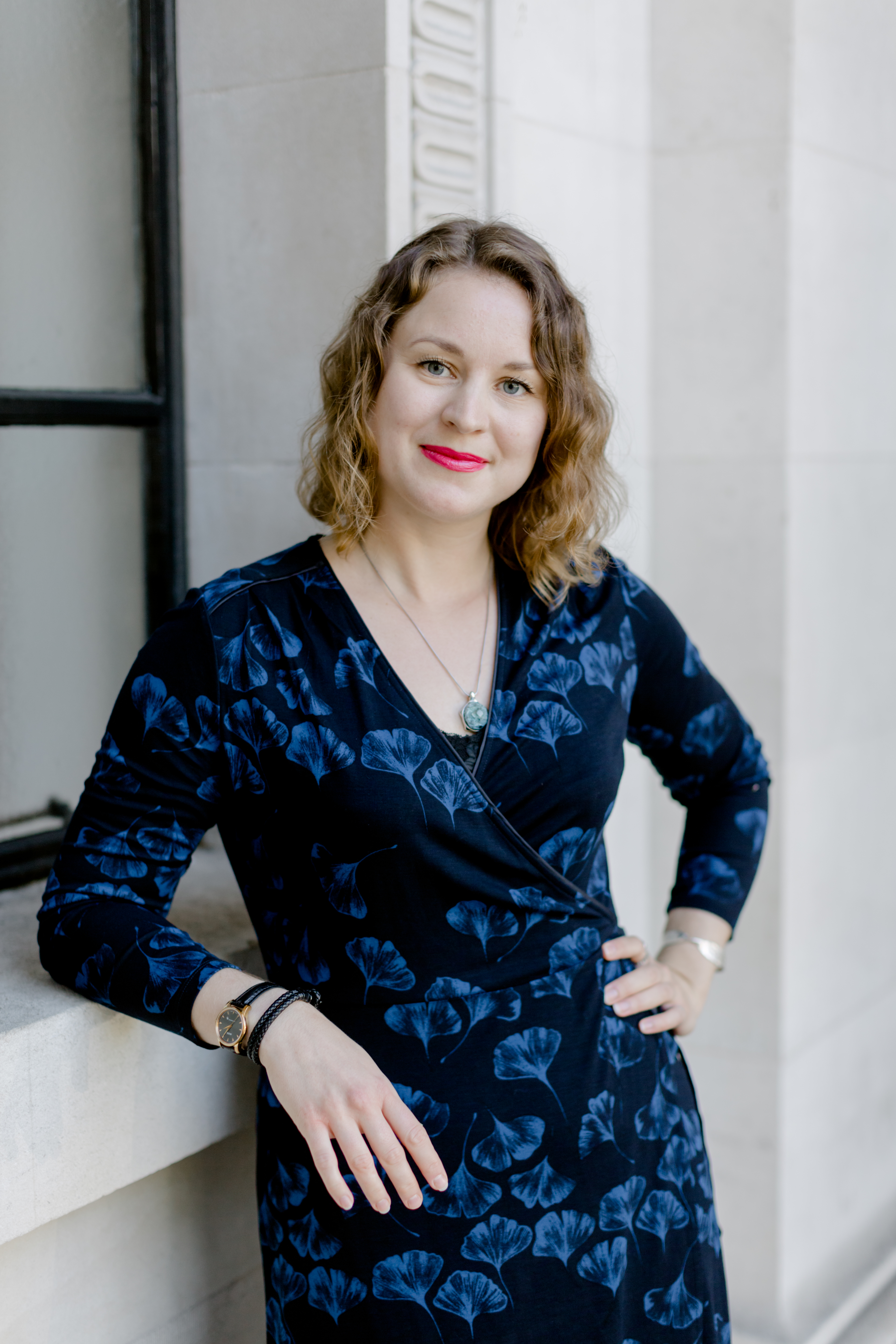
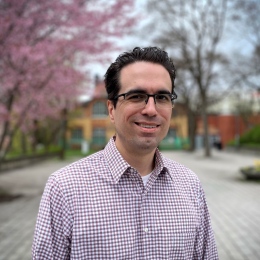
Emily Baird is a Professor at the Department of Zoology, Stockholm University , leading interdisciplinary research at the intersection of sensory ecology , neuroethology , and comparative morphology . Her work focuses on how insects like dung beetles and bumblebees process visual information to guide behavior in diverse environments. Key Collaborations : Dlife Project with University of Southern Denmark and University of Kiel (Human Frontiers Science Project) INVISMO Project with Lund University (Swedish Research Council) Research Themes : 3D micro-CT analysis of insect eyes Neural mechanisms for straight-line orientation Flight control in cluttered environments Mechanical principles of dung beetle ball rolling Techniques : Behavioral experiments, X-ray microtomography, computational modeling, ray-tracing simulations.
Maria Hedelin serves as a Senior Lecturer at Karolinska Institutet's Department of Medical Epidemiology and Biostatistics since 2023, specializing in nutrition-dietetics intersections with cancer epidemiology, particularly prostate cancer research through dietary interventions and biomarker analysis. She earned her Doctor of Philosophy (PhD) from Karolinska Institutet's Department of Medical Epidemiology and Biostatistics in 2006, establishing her academic foundation in epidemiological methods and nutritional sciences. Hedelin's research centers on nutritional oncology, investigating how phytoestrogens, dietary fiber, and fatty acids influence cancer development and progression. Her work bridges clinical practice and population health through randomized controlled trials like PRODICA and cohort studies examining dietary patterns in Swedish cancer populations. She develops innovative assessment tools including mobile applications for dietary monitoring, emphasizing methodological rigor in nutritional epidemiology. Analysis of her 15 most recent publications reveals consistent thematic focus on prostate cancer nutrition interventions, with evolving methodological sophistication from cohort studies (2008-2013) to contemporary randomized trials (2021-2025). Her research spans dietary assessment validation, genetic-diet interactions, radiotherapy side effect mitigation, and cross-cancer applications from prostate to breast and colorectal malignancies. No major scientific awards or prizes are documented in publicly available information regarding her career achievements. While specific student advising details remain unpublicized, her doctoral thesis supervision and extensive publication record suggest active mentorship roles. Departmental context indicates involvement in Karolinska's Medical Epidemiology and Biostatistics unit which recently secured 120 million SEK in Swedish research funding (2024), supporting collaborative projects in cancer epidemiology and nutritional interventions. As a core faculty member in one of Europe's leading medical research institutions, Hedelin contributes to Karolinska Institutet's mission through interdisciplinary collaborations spanning oncology, nutrition science, and biostatistics, with growing emphasis on personalized dietary approaches based on genetic profiling in cancer care.
Jenny Madestam is an Associate Professor of Political Science and Lecturer in Public Administration at Södertörn University's Academy of Public Administration, Department of Social Sciences. She has been affiliated with Södertörn University since spring 2015 after previously working at Stockholm University where she completed her doctoral studies. Academic Position: Associate Professor of Political Science Institutional Affiliation: Södertörn University, Academy of Public Administration Department: Department of Social Sciences Contact: jenny.madestam@sh.se Dr. Madestam defended her doctoral thesis in 2009 at Stockholm University on leadership ideals in the Social Democrats and the People's Party. Her educational background reflects a strong foundation in political science with a specialization in Swedish party politics and leadership structures. Madestam's research program spans several interconnected areas within political science and public administration. Her primary focus is on political leadership, examining leadership ideals, recruitment processes, and gender dynamics within Swedish political parties. She has expanded her research to include the intersection of politics and social media, analyzing how politicians construct leadership identities online. More recently, she has developed a significant research stream on police training and diversity attitudes, investigating how institutional training affects perspectives on diversity within law enforcement. The analysis of Madestam's publication record reveals consistent scholarly engagement with leadership dynamics across multiple institutional contexts. Her work demonstrates a methodological range from qualitative case studies of party leadership to quantitative analyses of social media strategies and diversity training outcomes. The predominant themes across her publications include leadership structures, institutional governance, and the evolving nature of political representation in contemporary Sweden. Madestam has secured competitive research funding for her projects, including a current study on police training and diversity attitudes funded by the Swedish Research Council. Previously, she conducted research on leadership recruitment in Swedish parties funded by the Anna Ahlström and Ellen Terserius Foundation, which resulted in her 2014 book How to be Elected? Her scholarly contributions extend to collaborative projects examining shared leadership structures in educational settings and the impact of institutional frameworks on leadership practices. Madestam actively participates in interdisciplinary research, as evidenced by her contribution to the 2020 edited volume Religion, Migration and Police Work , where she authored a chapter on working with prejudices in the police.
Anna Lukina is an Assistant Professor in the Department of Intelligent Systems at Delft University of Technology's Faculty of Electrical Engineering, Mathematics and Computer Science. She leads the Sequential Uncertainty Monitoring and Interpretability (SUMI) Lab, focusing on improving safety and interpretability of artificial intelligence through formal methods with applications in engineering, transportation, health, and finance. Her research spans the critical intersection of formal verification and machine learning, particularly in developing techniques for runtime monitoring of neural networks, safety verification of decision-tree policies, and creating verifiable reinforcement learning systems. She has established strong international collaborations with researchers across the US, Europe, Japan, and Australia. Lukina's recent publications (2021-2025) demonstrate consistent output in top AI venues including AAAI, NeurIPS, and IJCAI, with a clear trajectory toward increasingly sophisticated verification techniques for complex AI systems. Her work shows strong emphasis on practical applications while maintaining theoretical rigor, particularly in creating methods that provide formal guarantees for black-box AI systems. As part of her service commitment, she leads initiatives promoting junior computer scientists from underrepresented communities, reflecting her dedication to diversity in the field as highlighted in her DerStandard interview "Warum so wenige Frauen Den Code knacken wollen" and university magazine Delta. She currently supervises multiple PhD researchers including Sterre Lutz, Daniël Vos, Aaron Berger, and Johannes Koch, along with numerous successful MSc graduates who have completed theses on topics ranging from anomaly detection to genetic programming for explainable AI.
Dr. Sebastian Köhler is a postdoctoral Researcher at the Department of Physical Chemistry within Lund University's Faculty of Engineering . He is actively affiliated with both NanoLund: Centre for Nanoscience and the LTH Profile Area: Nanoscience and Semiconductor Technology , contributing to interdisciplinary research at the intersection of nanomaterials and biological systems. Physical Chemistry Researcher Postdoctoral Fellow NanoLund Centre Member LTH Profile Area Participant His research focuses on nanoparticle-biomolecule interactions , particularly peptide-coated TiO2 nanoparticles for antimicrobial applications. Current work explores structural control of bio-based polymers and surfactants, with emphasis on interfacial properties and membrane interactions. Collaborations span microbiology, pharmacology, and advanced materials characterization. Key research trends include photocatalytic degradation of bacterial components , conformational regulation of antimicrobial peptides , and bio-inspired nanoparticle design . Methodologies employ small-angle X-ray scattering , quartz crystal microbalance , and colloidal stability analysis to understand nanoscale biological interfaces.
Christopher Jouannet is an Associate Professor and Docent at Linköping University's Department of Management and Engineering (IEI), affiliated with the Fluid and Mechatronic Systems (FLUMES) group. His work focuses on aircraft design, sustainable aviation, and system-of-systems engineering. He holds a position in the Fluid and Mechatronic Systems department, contributing to interdisciplinary research at the intersection of aerospace and systems engineering. Research interests include sustainable aviation technologies, unmanned aerial systems, agent-based simulation frameworks, and ontology-driven system design. His recent work addresses economic viability of regional aircraft concepts, zero-emission transportation strategies in Scandinavia, and technology assessments for defense-related airborne platforms. Publications emphasize innovative approaches to aircraft actuation systems, multi-fidelity modeling integration, and systems-of-systems architectures. His contributions span both academic journals and conference proceedings, with a strong emphasis on applied research impacting aviation sustainability and defense capabilities. Labs/Teams: Active member of the FLUMES research group, collaborating on projects involving conceptual aircraft design, system integration, and advanced simulation methodologies.
Pernilla Ouis is a Professor of Social Work at Halmstad University , affiliated with the School of Health and Welfare . Her research is anchored in two core themes: value conflicts in multicultural societies , with a focus on honor-related violence and oppression , and sustainable social work , encompassing green social work , environmental justice , and eco-social interventions . Her work critically examines how migration, gender, and cultural norms intersect with social policy and welfare systems. She has extensively explored how honor norms affect young people, particularly in the context of migration and integration, and how professionals in welfare systems respond to complex cases involving sexual violence, reproductive rights, and cultural identity. She is the editor of multiple academic collections and has published widely in both Swedish and international forums. Her recent editorial work includes titles such as Hedersrelaterat våld och förtryck: Professionellas uppdrag och utmaningar (2024) and Perspektiv på sexualitet i socialt arbete (2023), which reflect her ongoing commitment to bridging theory and practice in social work. Research Themes: Honor-related violence and oppression Migration, sexuality, and integration Sustainable social work and eco-social interventions Environmental justice and green welfare policies Multiculturalism and social policy Recent Publications Trends: Her recent work increasingly integrates intersectional feminist analysis with environmental and social justice . There is a strong emphasis on policy critique , professional practice , and the lived experiences of marginalized groups , particularly migrants, women, and youth in Sweden. Contact: Email: pernilla.ouis@hh.se Phone: +46 72-977 36 31
Martin Garwicz is a Professor of Neurophysiology and Course Director at Lund University, serving as Centre Director of the Neuronano Research Center (NRC) and the Birgit Rausing Centre for Medical Humanities (BRCMH). His research focuses on cerebellar information processing, human evolution, and medical education. He has contributed to understanding developmental milestones like walking onset in mammals and the impact of carnivory on human evolution. His work intersects neuroscience, evolutionary biology, and healthcare education, emphasizing evidence-based practices. Key affiliations include the NRC and BRCMH, where he leads interdisciplinary projects on topics like existential resilience and healthscapes. Garwicz has organized major events like Neuroscience Day 2025 and contributed to initiatives promoting STEM education. His research spans over 65 publications, with recent work addressing medical student training in evidence-based medicine and cerebellar microcircuit dynamics. He coordinates projects such as 'Evolutionary Roots of Human Development' (2008–present) and 'ERiCi: Existential Resilience,' blending scientific and humanities perspectives. Garwicz’s activities include invited lectures on medical humanities and public talks on topics like digital immortality.
Henrik Johansson is a doctoral student at the Division of Electromagnetic Engineering and Fusion Science (EMF), School of Electrical Engineering and Computer Science (EECS), Royal Institute of Technology (KTH). He focuses on interactions between power system protection algorithms and control strategies of inverter-based resources in grids with high power electronics penetration. B.Sc. and M.Sc. in Electrical Engineering and Electric Power Engineering from KTH (2020, 2022) Development engineer at Scibreak (HVDC auxiliary power supplies) Teaching assistant in mathematics courses at KTH His research intersects power systems, renewable energy integration, and grid protection algorithms. Recent publications analyze impacts of grid-forming inverters on distance protection schemes and adaptive fault detection methods. Articles highlight trends in power electronics integration and protection system design for modern grids. Scientific recognition includes the Teaching Assistant of the Year award from KTH electrical engineering students. He collaborates with Professor Nathaniel Taylor and Professor Xiongfei Wang on advancing protection strategies for grids with high renewable energy penetration.
Jonas Sjoberg is a Professor of Mechatronics at Chalmers University of Technology and leader of the Mechatronics research group. His work spans over 30 years with 143 publications and leadership in 29 research projects. His current research focuses on autonomous vehicle systems, vehicle dynamics, and traffic safety applications. Dr. Sjoberg's research interests center on mechatronic systems for transportation applications. His work bridges theoretical control systems with practical automotive implementations, particularly in autonomous vehicle technology. His research group investigates vehicle dynamics, path planning, intersection management, and safety systems, with growing emphasis on micromobility applications including autonomous bicycles and pedestrian interaction. Recent work demonstrates strong focus on real-world applications of control theory to improve vehicle safety and performance. His publication record shows consistent output with 15+ papers annually, demonstrating sustained research activity. The work spans fundamental control theory (system identification, nonlinear control) to applied transportation problems (intersection management, road surface estimation, autonomous docking). Recent publications show increasing focus on micromobility applications, particularly autonomous bicycles, and integration of machine learning techniques with traditional control approaches. Dr. Sjoberg leads multiple significant research projects including MicroSIM (2026-2027), Mintox (2025-2026), and MicroITS, with funding from VINNOVA, EU, and industry partners. His projects address critical challenges in autonomous vehicle safety, micromobility integration, and traffic management. As leader of the Mechatronics research group, Dr. Sjoberg oversees research on vehicle control systems, autonomous driving technologies, and safety applications. His laboratory work focuses on practical implementation of theoretical control concepts, with recent emphasis on bicycle dynamics and micromobility safety systems.
Dr. Steven Miller serves as a Senior Lecturer and Docent at Stockholm University 's Department of Economic History and International Relations. His research investigates the intersection of international conflict and political behavior through statistical analysis and machine learning methodologies. His recent work focuses on constructing comprehensive datasets like the Militarized Interstate Events (MIE) dataset and Militarized Interstate Confrontation (MIC) dataset , both covering 1816-2014 with innovative fatality estimation and dyadic conflict modeling. He also developed the {peacesciencer} R package for peace science data creation. NSF-funded research featured in The New York Times and The Washington Post Specializes in conflict evolution, territorial threats, and authoritarian belief adoption Contributes to quantitative methodology in political science through open-source tools
Per Engström is a Professor at the Department of Economics, Uppsala University. His research focuses on public economics, behavioral economics, and tax compliance, with empirical studies spanning self-employment, policy interventions, and experimental methodologies. Academic affiliation: Uppsala University (Department of Economics) Email: Per.Engstrom@nek.uu.se Research interests include: Tax compliance and behavioral interventions Income underreporting among self-employed individuals Policy evaluation in welfare systems Behavioral economics applications to public finance Recent publications emphasize empirical analyses of tax evasion, experimental policy design, and behavioral economic theory. His work frequently intersects with labor economics and social policy. Contact details: Phone 018-471 76 34, Mobile 070-224 25 63, Visiting address: Ekonomikum, Kyrkogårdsgatan 10, 751 20 Uppsala.
Peter Bergström is an Associate Professor at the Department of Education, Umeå University, where he serves as Director of Studies. He holds the distinguished academic title of Distinguished University Teacher , recognizing his excellence in pedagogy. Bergström coordinates the NNILE research group and leads significant projects including Bringing research into practice: developing teachers’ transformative agency (2025-2027) and Towards a student-centered learning in innovative learning environments (2023-2026). His research explores transformative intersections of technology and pedagogy, with emphases on: Educational technology integration in one-to-one computing classrooms Power dynamics in teacher-student relationships Design of active learning spaces and innovative environments Sociomaterial perspectives on teaching practices Digital didactical designs for student-centered approaches Bergström's recent publications predominantly investigate pedagogical transformations in technology-enhanced classrooms, with recurring themes of teacher authority, spatial design impacts on learning, and the implementation challenges of digital tools in Swedish and Finnish educational contexts. His work employs mixed-methods approaches across 15+ empirical studies. Scientific Recognition: Distinguished University Teacher Award Research Leadership: Principal investigator for two multi-year projects on teacher agency and learning environments Coordinates the NNILE research group focusing on innovative pedagogies His work bridges academic research with practical applications in school design, teacher training programs, and national educational policy development.
Papa Sow is a Senior Researcher at the Nordic Africa Institute (Uppsala, Sweden) and collaborates with the Institut Fondamental d'Afrique Noire (IFAN) at the University Cheikh Anta Diop, Dakar, Senegal. His research focuses on migration dynamics, natural resource extraction, climate change, and conflicts in West Africa. He serves as a Lecturer in the WASCAL doctoral program on Climate Change and Education at the University of The Gambia. His work addresses armed group threats to protected areas, environmental policy, and transborder security challenges in Benin, Niger, Senegal, and the Sahel region. Key research interests include the intersection of climate change, resource scarcity, and conflict, particularly in contexts like the Pendjari National Park and the W National Park. He advocates for transnational cooperation to combat Jihadist threats to environmental conservation and regional stability. His recent publications analyze the geopolitical dimensions of resource conflicts and autocracy in Senegal. Papa Sow has held roles at institutions including the University of Bonn, the University of Warwick, and the Open University of Catalonia. His work emphasizes policy-relevant solutions for sustainable development, security, and community resilience in vulnerable regions.
Linda Lundström is a Professor at KTH Royal Institute of Technology, leading the Bio-Opto-Nano Physics (BON) division. Her research focuses on visual and physiological optics, including myopia control mechanisms, peripheral vision optimization, and optical instrumentation. She holds academic roles in the Department of Molecular Biosciences, contributing to interdisciplinary research at the intersection of physics, biology, and health sciences. Teaching responsibilities include courses such as Waves (SK1120), Photography for Media (SK1140), and supervision of degree projects in applied physics and technology education. Her work emphasizes practical applications of optics in healthcare, particularly in improving vision correction technologies. Research highlights include the Stockholm Myopia Study, investigating peripheral refraction dynamics in children, and developing novel methods for evaluating intraocular lens (IOL) designs and peripheral optical quality. She has pioneered instruments like the dual-angle open-field wavefront sensor for simultaneous central and peripheral eye measurements. Her contributions span over 100 peer-reviewed articles, emphasizing advancements in optical correction techniques, contrast sensitivity analysis, and the role of peripheral vision in clinical settings. Lundström’s work bridges fundamental optics research with practical medical applications, aiming to enhance vision quality and reduce myopia progression.