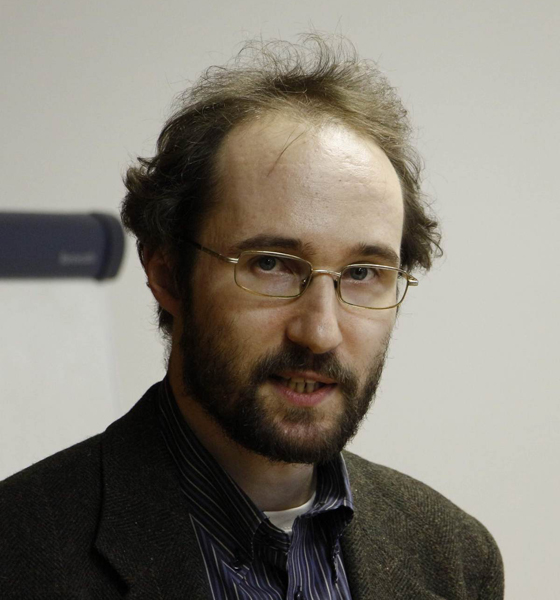
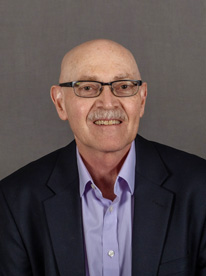
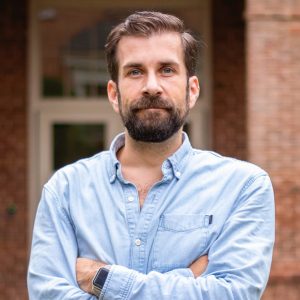
Satoshi Tomioka is a Professor in the Department of Linguistics and Cognitive Science at the University of Delaware, affiliated with the College of Arts & Sciences. He holds a B.A. from International Christian University (Tokyo) and a Ph.D. from the University of Massachusetts Amherst. His expertise spans semantics, pragmatics, syntax, and prosody, with a focus on Japanese and comparative East Asian linguistics. Education: B.A. in Liberal Arts (1987), International Christian University; Ph.D. in Linguistics (1997), University of Massachusetts Amherst. Research interests include ellipsis, anaphora, wh-interrogatives, distributivity, and contrastiveness. He investigates how prosody interacts with syntax and semantics in Japanese, exploring topics like focus marking, intervention effects, and scalar implicatures. Recent work examines associative plurals and pragmatic disambiguation in embedded questions. Publications analyze theoretical and empirical questions in linguistic interfaces, such as Bare quotatives as embedded speech acts (2024) and Focus without pitch boost (2022). His work bridges formal semantics and experimental approaches, addressing challenges in cross-linguistic typology and cognitive aspects of language processing.
James J. Duane is a Professor at Regent Law School , part of Regent University. He has held visiting roles as Distinguished Visiting Professor at William and Mary Law School and served as a faculty associate at Harvard University’s Berkman Center for Internet and Society. His expertise spans Evidence Law, Civil Procedure, Trial Practice, and Appellate Advocacy, with over 30 scholarly articles and co-authorship of Weissenberger’s Federal Evidence . He has been recognized with multiple teaching and scholarship awards, including the Regent Faculty Excellence Awards and the Distinguished Faculty Achievement Award from Virginia’s Higher Education Council. Duane holds a J.D. cum laude from Harvard Law School and an A.B. magna cum laude from Harvard College, where he was elected to Phi Beta Kappa. His research focuses on evidentiary rules, procedural law, and legal advocacy. He has lectured nationally on topics such as hearsay exceptions, jury instructions, and constitutional rights, and has testified before the U.S. Judicial Conference’s Advisory Committee on Evidence Rules. His public advocacy includes a widely viewed YouTube talk advising against police interrogations for innocent suspects. Duane is also a contributing editor to Black’s Law Dictionary and teaches at the National Trial Advocacy College and National Litigation Academy. Key professional milestones include serving as trial counsel in Schenck v. Pro-Choice Network (1997 Supreme Court case) and clerking for federal judges. He is admitted to practice in New York and Virginia, and maintains active roles in legal associations like the Virginia Bar Association. His awards reflect sustained excellence in teaching, scholarship, and contributions to legal education.
Prof. Dr. Gisela Zifonun is a retired University Professor of German Linguistics at the University of Mannheim and former Head of the Grammar Department at the Institut für Deutsche Sprache (IDS) until July 2011. She holds a doctorate (1971) and habilitation (1994) in German Linguistics. Her career includes roles as a scientific employee at the IDS (1973–1995), Head of the Grammar Department (1986–1995), and professorships at the Free University of Berlin (1995–1998) and the University of Mannheim (1998–2011). Her research focuses on grammar theory, German syntax/semantics/morphology, language typology, and comparative linguistics. Key projects include the Grammar of German in European Comparison (GDE-N) and the EuroGr@mm initiative. She has authored/co-authored over 130 works, including monographs and edited volumes on German linguistics. Notable publications include Das Deutsche als europäische Sprache (2021) and Grammatik des Deutschen im europäischen Vergleich (2017). Her work emphasizes cross-linguistic analysis and corpus-driven research. Research interests span syntax, morphology, and typological comparisons across German, Romance, and Slavic languages. Recent contributions address gender-inclusive language reform and corpus-based studies. She has supervised numerous academic projects and serves as a key figure in German linguistic infrastructure, including IDS initiatives. No explicit awards are listed, but her extensive bibliography reflects significant scholarly impact. Professional roles include managing the IDS’s Grammar Department and coordinating international collaborations. Her work bridges theoretical linguistics with applied research, contributing to both academic discourse and language policy discussions.
G. Edward White is the John B. Minor Professor of Law and Professor of History at the University of Virginia School of Law, where he has taught since 1972. Holding joint appointments in law and history, he is one of the nation’s leading scholars of American legal history, constitutional law, and torts. Education B.A., Amherst College, 1963 M.A., Yale University, 1964 Ph.D., Yale University, 1967 J.D., Harvard Law School, 1970 Research Interests White’s scholarship integrates doctrinal analysis with rich historical narrative, focusing on the evolution of American legal thought from the Founding to the present. His work interrogates how landmark Supreme Court decisions, tort doctrines, and constitutional principles have both reflected and shaped broader intellectual and cultural currents. He has produced foundational studies on the Marshall Court, the Warren Court, and the intellectual history of tort law. Recent projects explore the Suspension Clause and habeas corpus in wartime, the constitutionalization of tort liability under the First Amendment, and the historical development of dignitary torts. He frequently employs biographical approaches, examining the jurisprudential legacies of figures such as Oliver Wendell Holmes Jr., Earl Warren, and Learned Hand. Scholarly Output Over five decades, White has authored more than a dozen major monographs—including Law in American History (2012), Tort Law in America (1980, rev. 2003), and The American Judicial Tradition (1976, rev. 2007)—and scores of influential articles. His recent publications (2015–2019) evidence sustained attention to habeas corpus, the historical emergence of tort law, and the interplay between constitutional doctrine and intangible harm, demonstrating both continuity and innovation in his research agenda. Honors and Fellowships John Simon Guggenheim Memorial Fellowship (1984–85) National Endowment for the Humanities Senior Fellowship (1977–78, 1983–84) American Bar Association Gavel Award (1979, 1981, 1983) David and Mary Harrison Distinguished Professor of Law (1986) Advising & Institutional Service White has directed numerous doctoral dissertations and served on editorial boards for leading journals. His leadership roles include participation in the American Society for Legal History and the American Bar Foundation, fostering interdisciplinary dialogue between law and history. Laboratories & Research Groups While not laboratory-based, White’s intellectual home is the University of Virginia’s Program in Legal History, where he mentors graduate students and collaborates with colleagues in both the School of Law and the Corcoran Department of History.
Prof. dr. Norbert Corver is a Professor of Dutch Linguistics at Utrecht University , affiliated with the Department of Languages, Literature and Communication and the Institute for Language Sciences . He chairs the Dutch Linguistics division and leads the Mind your Manner Adverbials! (MiMA) project funded by an NWO Open Competition grant (2021-2025). He was a Visiting Professor at the University of Connecticut (2019) and serves as editor of Studies in Generative Grammar . Education: PhD in Linguistics (1990, Tilburg University) Research Interests: Syntax, generative grammar, language variation, syntactic interfaces, and affective language structures Key Projects: MiMA (syntax of adverbials), AThEME (multilingualism in Europe), Syntax of Idioms (NWO-FWO collaboration), DiDDD (Dutch noun phrase diversity) Scientific Recognition: Member of Academia Europaea Current Work focuses on the syntax of adverbials through comparative Germanic studies, while his broader research explores curse expressions, numerical expressions, and dialectal variation. He maintains active collaborations across Europe and contributes to digital resources like the Taalportaal (Dutch/Frisian grammar portal).
Donald A. Dripps serves as the Warren Distinguished Professor of Law at the University of San Diego School of Law, where he has been a faculty member since 2004. His academic career includes previous appointments as assistant professor at the University of Illinois College of Law, visiting professor at Duke University School of Law, visiting professor at Cornell University Law School, and James Annenberg Levee Professor of Criminal Procedure at the University of Minnesota Law School. He clerked for the Honorable Amalya Kearse of the Second Circuit Court of Appeals in New York City. Dripps earned his JD from the University of Michigan in 1983, where he served as editor-in-chief of the Michigan Law Review and was inducted into the Order of the Coif. He received his BA from Northwestern University in 1980. His research focuses on the theoretical foundations of constitutional criminal procedure, with particular emphasis on plea bargaining, the void for vagueness doctrine, and the historical evolution of privacy rights. Dripps frequently examines how historical legal contexts inform contemporary constitutional interpretation, especially regarding the Fourth Amendment in the digital age. His work bridges doctrinal analysis with practical criminal justice concerns, exploring systemic feedback loops in criminal justice reform and the philosophical basis of constitutional rights. Dripps's scholarship reveals consistent engagement with emerging challenges in constitutional interpretation, including undefined consent in sexual assault statutes, federalism issues in criminal jurisdiction, and the constitutional dimensions of police surveillance. His publications demonstrate a methodological approach that combines historical analysis with contemporary doctrinal challenges to develop more coherent frameworks for constitutional criminal procedure. Editor-in-chief of the Michigan Law Review Member of the Order of the Coif As a leading scholar in criminal procedure, Dripps has shaped academic and practical understanding through his influential casebooks and law review articles. His work on institutional reform injunctions represents a significant contribution to one of the most dramatic developments in the field in recent decades. His scholarship consistently addresses the relationship between procedural rules and substantive justice outcomes in the criminal justice system.
Ronald J. Allen is the John Henry Wigmore Professor of Law at Northwestern University in Chicago, Illinois. An internationally recognized expert in evidence, criminal procedure, and constitutional law, he has authored seven books and over 100 law review articles. His work has influenced legal reform in China and Tanzania, and he is frequently cited in national media and broadcast outlets for constitutional and criminal justice commentary. Professor Allen's educational background includes: BS magna cum laude from Marshall University JD magna cum laude from the University of Michigan His research focuses on evidence theory and juridical proof, with recent work examining relative plausibility models and the epistemological foundations of legal fact-finding. He has pioneered interdisciplinary approaches connecting law with cognitive science and philosophy, while maintaining strong practical applications in courtroom procedures and evidentiary standards. His scholarship bridges theoretical rigor with real-world legal reform. Analysis of his publication record reveals consistent thematic evolution from foundational constitutional criminal procedure texts toward sophisticated evidence theory and international evidence law reform. Recent works demonstrate increasing engagement with global legal systems, particularly through his Tanzanian evidence law reform project and decade-long collaboration with Chinese legal institutions. His scholarship maintains distinctive integration of philosophical epistemology with practical courtroom mechanics. His major honors include: Yangtze River Scholar designation by China's Ministry of Education (2007) - only the fourth American and first law professor ever honored University Distinguished Visiting Scholar at the University of Adelaide (1991) Professor Allen maintains active professional engagement through Of Counsel status at Eimer Stahl Klevor & Solberg law firm and high-level government consultations, including recent retention by the Tanzanian Government for evidence law reform. His international advisory work extends to Mexico, Spain, and Trinidad/Tobago governments, reflecting his global influence on legal procedure. He holds leadership positions including Chair of the Board of Advisors for Beijing's Evidence and Forensic Science Institute and inaugural Fellow at China University of Political Science and Law's Procedural Law Research Center. His institutional affiliations span the American Law Institute, Constitutional Rights Foundation-Chicago, and Marshall University's Yeager Society of Scholars, alongside cultural roles with the Joffrey Ballet.
Diane A. Desierto is Professor of Law and Global Affairs at the University of Notre Dame, jointly appointed in the Keough School of Global Affairs and Notre Dame Law School, where she also serves as LLM Faculty Director. She holds additional appointments as Professor of International Law and Human Rights at the Philippines Judicial Academy and is Faculty Fellow in the Klau Institute for Civil and Human Rights, Kellogg Institute for International Studies, Liu Institute for Asia and Asian Studies, Nanovic Institute for European Studies, and Pulte Institute for Global Development. She co-directs the Notre Dame Reparations Design and Compliance Lab and has previously taught on the tenure-track/tenured law faculties of the University of the Philippines, Peking University STL, and University of Hawaiʻi. Education JSD, Yale Law School LLM, Yale Law School JD (cum laude, class salutatorian), University of the Philippines BSc Economics (summa cum laude, class valedictorian), University of the Philippines Research Interests Desierto’s scholarship integrates international law with international economic law , human rights , and development . Her work interrogates how legal norms and institutions shape sovereignty, governance, and individual rights in areas ranging from ASEAN regional integration to maritime security and climate justice . Methodologically comparative, her projects span constitutional design , treaty interpretation , and transnational arbitration , always attentive to the Global South. Across more than 140 peer-reviewed publications and several influential books, she has advanced debates on necessity and national emergency clauses , ICESCR in trade and investment , ASEAN law and governance , and business & human rights . Recent work explores integral ecology in the Amazon, climate litigation in the Philippines, and decarbonization obligations under investment treaties. Scientific Awards & Fellowships Ambrose Gherini Prize in International Law (Yale Law) Who’s Who Legal – Future Leaders in Arbitration (repeatedly recognized) Stanford Center for Advanced Study in the Behavioral Sciences Fellowship Stanford Center for Human Rights and International Justice Fellowship Max Planck Institute for Comparative Public Law and International Law Fellowship (Heidelberg) Humboldt-Potsdam-Berlin Senior Fellowship East-West Center Fellowship (Honolulu) Grotius Fellowship, University of Michigan Law School NUS Asian Law Institute Fellowship Current Labs & Teams Co-Principal Investigator, Notre Dame Reparations Design and Compliance Lab Member, Institute of Transnational Arbitration Academic Council Member, UNCITRAL Academic Forum on Investor-State Dispute Settlement Reform Member, 2019 Hague Rules on Business and Human Rights Arbitration Drafting Team Co-Chair, Oxford Investment Claims Summer Academy
Prof. Dr. Anke Holler is a Professor of German Linguistics at the University of Göttingen , specializing in formal grammar, discourse analysis, and computational linguistics. Her career spans roles in academic administration, including Vice President for Appointments since 2021, and leadership in DFG and Leibniz Association committees. Education : University of Tübingen, University of Leipzig, and University of Massachusetts, Amherst Current Projects : GRK 2636 'Form-Meaning Mismatches', DFG 'Structuring Literature' (SPP 2207), VW Foundation 'Uncertain Attribution' Research Interests focus on the intersection of grammar theory, experimental linguistics, and computational modeling. She explores discourse structures, narrative perspective, and constraint-based parsing, with applications in digital humanities and text mining. Her recent work involves neural networks for speaker attribution and computational analysis of literary reflexivity. Collaborations include the Carl Friedrich Lehmann-Haupt Doctoral Program and the 'Textstrukturen' center. She serves as editor for the Zeitschrift für Sprachwissenschaft and coordinates interdisciplinary initiatives.
Peter Arkadiev is a Senior Researcher at the Department of Slavic Studies, Universität Potsdam (since December 2024). His academic career includes positions such as Professor at the Russian State University for the Humanities (2020–2022), Research Professor at Vilnius University’s Philological Faculty (2018–2022), and extensive research roles across institutions in Russia, Germany, Lithuania, and Switzerland. He holds a PhD from the Institute of Slavic Studies of the Russian Academy of Sciences (2006) and a habilitation from the same institute (2019). His research focuses on linguistic typology, case systems, Baltic and Slavic languages, morphology, and areal linguistics. Notable contributions include studies on prefixal perfectivisation and typological analysis of grammatical relations. Education: 1999–2004: Specialist in theoretical/applied linguistics (summa cum laude), Russian State University for the Humanities 2004–2006: PhD student at Institute of Slavic Studies, Russian Academy of Sciences 2019: Habilitation on areal typology of prefixal perfectivisation Arkadiev’s work emphasizes cross-linguistic comparisons and historical perspectives. His recent projects explore morphological typology and syntax-morphology interfaces in Caucasian and Baltic languages. He has received the prestigious title of Professor of the Russian Academy of Sciences (2022). Awards: Professor of the Russian Academy of Sciences (2022) Grants/Funding: Marie Curie Senior Fellowship (Freiburg Institute for Advanced Studies, 2023–2024) ANR-DFG and DFG-funded research (Germany) EU Social Fund grants (Lithuania) Active in academic communities, he participates in the Association of Linguistic Typology, Societas Linguistica Europaea, and Academia Salensis.
Jens Michaelis is a Professor at the Faculty of Linguistics and Literary Studies, Bielefeld University, specializing in Computational Linguistics, Text Technology, and Linguistic Creativity. He serves as Deputy Head of the Department of Linguistics, Clinical Linguistics, Text Technology and Computational Linguistics, and provides academic advising for Computational Linguistics programs. His office is located at UHG U5-231, with contact details including telephone +49 521 106-6915 and email jens.michaelis@uni-bielefeld.de . Maintaining active research roles, he leads project B01 'Coercion as a creative mechanism in compositional interpretation' within the SFB 1646: Linguistic Creativity in Communication. His teaching responsibilities span modules like 23-CL-BaCL2.1 Selected methodological aspects 23-CL-BaCL5 Advanced Module 23-CL-BaCL6 Project Module 23-LIN-Ma3.1 Basics of Computational Linguistics 23-MeWi-HM3a_a Mathematical-linguistic language modeling across both undergraduate and graduate programs. His scholarly work focuses on formal grammar properties, syntactic mechanisms, and computational modeling of language. As an ordinary member of the Faculty Conference and Habilitation Committee, he contributes to academic governance while maintaining an extensive publication record in mathematical linguistics, minimalist grammars, and formal language theory.
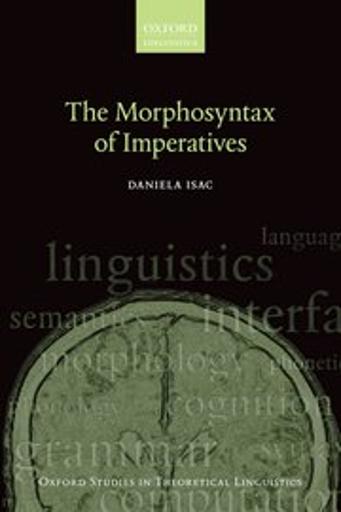
Dr. Dana Isac is an Associate Professor in the Department of Classics, Modern Languages and Linguistics at Concordia University. Her research focuses on the syntactic and semantic properties of clause types (declaratives, interrogatives, imperatives, and exclamatives), with a strong emphasis on the syntax-semantics and syntax-phonology interfaces. She co-authored the influential monograph I-language: An Introduction to Linguistics as Cognitive Science (Oxford University Press, 2008) and is currently working on a new book, The Morphosyntactic Ingredients of Force . Education: PhD in Linguistics, University of Bucharest (2000) BA in English and French, University of Bucharest (1998) Research Interests: Comparative syntax, syntax-semantics interface, syntax-phonology interface, and cognitive science. Her work bridges formal linguistics with interdisciplinary approaches, particularly in cognitive science.
Scott Howe is a Professor at Chapman University , holding appointments at the Fowler School of Law and Crean College of Health and Behavioral Sciences . He has been a faculty member since 1996, teaching Criminal Law , Criminal Procedure/Police Practice , and Evidence . Voted Professor of the Year multiple times, Professor Howe is a leading expert in Capital Punishment Law , Death Penalty , and Constitutional Criminal Procedure . Education Bachelor of Arts in Economics, University of Missouri (Phi Beta Kappa) Juris Doctor, University of Michigan (Articles Editor, Michigan Law Review) His scholarly work focuses on racial justice in sentencing , constitutional challenges to capital punishment , and legal ethics in public defending . Articles appear in top journals like the Washington Law Review and Northwestern University Law Review . He co-authored influential books including Understanding Capital Punishment Law and California Criminal Law: Cases and Problems . Notable Contributions Extensive research on historical and systemic racism in capital sentencing (e.g., Atoning for Dred Scott and Plessy ). Legal advocacy for death-row inmates , including representing Kerry Max Cook. Critique of plea bargaining and excessive bail in the justice system. His career spans criminal defense, academia, and policy reform, with roles as Associate Dean for Academic Affairs and Interim Dean at Chapman University.
Bryan Koronkiewicz serves as Associate Professor of Spanish Linguistics within the Department of Modern Languages & Classics at the University of Alabama. His academic profile bridges theoretical linguistics and practical language education with specialized expertise in bilingual speech phenomena. His educational trajectory includes: PhD in Hispanic Studies (Linguistics), University of Illinois at Chicago (2014) MA in Hispanic Studies (Linguistics), University of Illinois at Chicago (2010) BA in Spanish / Communication Arts, University of Wisconsin-Madison Dr. Koronkiewicz's research centers on Spanish-English code-switching through experimental and quantitative lenses, examining syntactic constraints in heritage speakers' language production. His work interrogates phenomena like preposition stranding, adverb placement, and inalienable possession while addressing methodological challenges in bilingualism research. This interdisciplinary approach connects theoretical syntax with second language acquisition and heritage language pedagogy, emphasizing empirical validation of linguistic constraints. Analysis of his 13 publications (2013-2023) reveals consistent focus on experimental code-switching research using acceptability judgments and corpus methods. Key trends include systematic investigation of syntactic boundaries in bilingual speech, methodological innovations in data collection, and expansion into language pedagogy through studies of social media integration and writing assessment. His work demonstrates strong alignment with contemporary debates in bilingual syntax while maintaining practical relevance for heritage language education. No scientific awards or fellowships were documented in the source material. Dr. Koronkiewicz teaches across the curriculum from first-year language courses to graduate seminars in bilingualism, syntax, and second language teaching methods. While departmental highlights reference French PhD students (Awodirepo, Lambon, Dafong), no specific advisees in Spanish linguistics are identified. The text contains no mention of grant funding or research team leadership. No dedicated laboratories or research collectives are associated with his profile in the available documentation.
Veneeta Dayal is the Dorothy R. Diebold Professor of Linguistics at Yale University, specializing in formal semantics and its interfaces with syntax and pragmatics. Her office is located in Dow Hall on Yale's campus. Her research program investigates cross-linguistic patterns in question formation, bare nominals, free choice items, and Hindi-Urdu syntax through both theoretical analysis and empirical fieldwork. Current projects examine the relationship between morphosyntax and interpretation across multiple languages. She has supervised numerous doctoral students including Comfort Ahenkorah (Akan number systems), Ushasi Banerjee (bare nouns in NE Indian languages), and Yagmur Sag (number marking).