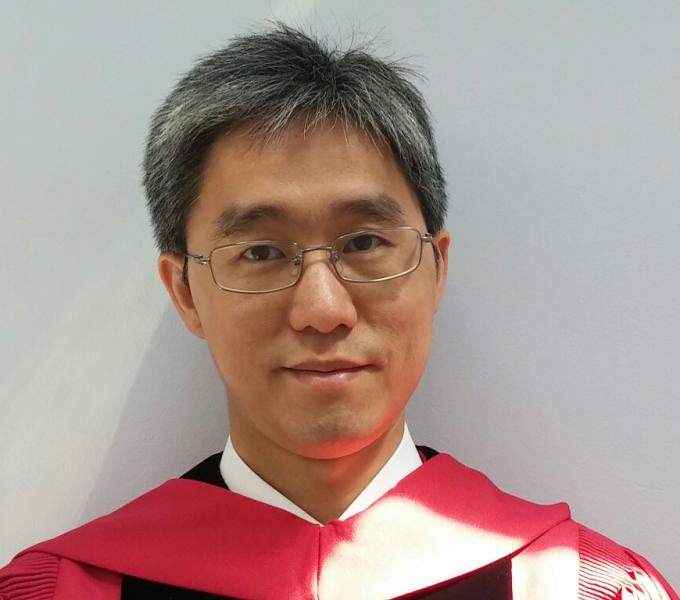
Dr. Siqi Ma is a Senior Lecturer at the UNSW Institute for Cyber Security (IFCYBER) within the School of Systems & Computing at the University of New South Wales (UNSW). He previously served as a Lecturer at the University of Queensland's School of Information Technology and Electrical Engineering (ITEE). He holds a Ph.D. in Information Systems from Singapore Management University (2018) and was a Postdoctoral Research Fellow at Data61, CSIRO. He also visited Carnegie Mellon University (CMU) in 2015. Current Role: Senior Lecturer, UNSW Institute for Cyber Security Former Role: Lecturer, University of Queensland Education: Ph.D. (Singapore Management University), Postdoc (Data61, CSIRO) His research spans automated vulnerability detection, mobile security, IoT security, network authentication, and graph-based adversarial robustness. Recent work focuses on drone configuration bugs, Android malware analysis via GNNs, federated learning privacy, and credential leakage in open-source projects. Key trends in his 2024-2025 publications include automated security analysis for embedded systems, deepfake detection in multimedia, and privacy-preserving mechanisms for distributed networks. He collaborates with institutions like Purdue University, Singapore Management University, and CSIRO Data61.
Maria Antoniak is an Assistant Professor in Computer Science at the University of Colorado Boulder, with affiliations to the Department of Information Science. Her research bridges natural language processing and cultural analytics, focusing on computational methods to analyze language-culture intersections in online communities and healthcare settings. Her recent work explores research cultures and LLM adaptations (ACL 2025), ethical human-LLM interactions (COLM 2024), and story detection in digital spaces (ACL 2024). Publications span maternal healthcare NLP (FAccT 2024), bias measurement (ACL 2021), and narrative power dynamics (CSCW 2019). She has served on editorial boards for the Journal of Cultural Analytics and Computational Humanities Research (CHR) Journal, and as Senior Area Chair for ACL 2025. Her outreach includes founding AI for Humanists workshops and developing cultural analytics tools like Little Mallet Wrapper and Riveter. Antoniak completed her PhD in Information Science at Cornell University, advised by David Mimno, and holds an MS in Computational Linguistics from the University of Washington. She is actively recruiting students for Fall 2026 and has taught NLP-related courses at multiple institutions globally.
Zelmina Lubovac is a Senior Lecturer in BioInformatics at the School of Bioscience, University of Skövde. She serves as both a Course Coordinator for multiple undergraduate and graduate courses in bioinformatics and a Programme Coordinator for Master's level programs. Her academic work focuses on the intersection of computational methods and biological applications, particularly in disease analysis and biomarker discovery. Dr. Lubovac's research spans several key areas in bioinformatics and systems biology: Disease module identification in complex biological networks Multi-omics integration (genomics, proteomics, metabolomics) for biomarker discovery Machine learning applications in RNA-seq and other high-throughput biological data Development of bioinformatics software tools for network analysis miRNA analysis in cancer and neurological disorders Her recent publications (2022-2024) demonstrate a strong focus on applying computational approaches to understand disease mechanisms, particularly in pancreatic cancer and multiple sclerosis. She has developed several widely-used bioinformatics tools including MODalyseR, MODifieR, and TFTenricher that facilitate disease module analysis and gene network interpretation. Her work often involves collaborative research with clinical teams to translate computational findings into potential diagnostic applications. Dr. Lubovac has been involved in significant research projects including: BIO-AID (Biomedical AI-driven data analytics): Oct 2020 - Sep 2024 Systems Biology DMDPipe: Mar 2018 - Feb 2021 She actively contributes to both undergraduate and graduate education at the University of Skövde, coordinating multiple courses and programs in bioinformatics and bioscience, with a clear emphasis on preparing students for careers at the intersection of biology and computational science.
Avinash Kori is a Ph.D. researcher at Imperial College London affiliated with the Safe and Trusted AI Centre for Doctoral Training (CDT). Supervised by Prof. Francesca Toni and Prof. Ben Glocker , his research focuses on Explainable AI (XAI) , causality , and deep learning with applications in medical image analysis and optimization algorithms . His work includes publications on arXiv and conferences like MICCAI , covering topics such as robust segmentation , concept-based explanations , and symbolic reasoning in hyperbolic space . He has also explored stochastic optimization , support vector machines (SVM) , and gradient descent variants , providing theoretical and practical implementations. Recent trends in his publications highlight advancements in robust CNN models , causal logic frameworks , and hyperbolic geometry for hierarchical learning . His research is driven by the need to make AI systems more transparent and reliable for critical domains like healthcare. Scientific Awards: AAAIw Overall Best Paper Award (Feb 2021) for CNN interpretability research. He actively contributes to open-source implementations via platforms like GitHub and shares insights through blogs and paper reviews . His academic journey includes an undergraduate degree in Biomedical Engineering Design with a minor in Machine Learning from Indian Institute of Technology, Madras , followed by research internships at Siemens and Stanford University .
Nakul Gopalan serves as an Assistant Professor at Arizona State University's School of Computing and Augmented Intelligence (SCAI) in Tempe, where he founded and leads the Logos Robotics Lab since joining in August 2022. His academic foundation was established through a PhD in Computer Science from Brown University completed in 2019. Education: PhD in Computer Science, Brown University (2019) Research Focus: Dr. Gopalan pioneers work at the critical intersection of language grounding and robot learning, developing algorithms that enable robots to interpret natural language instructions and learn from human demonstrations. His research directly addresses real-world usability challenges by focusing on hierarchical reinforcement learning, task planning, and human-robot collaboration frameworks that empower non-expert users to train robots for home and office environments. Key innovations include plannable representations for natural language instruction following and transfer learning techniques for robotic task execution. Publication Evolution: Recent publications (2023-2025) demonstrate accelerating specialization in language-conditioned robot learning, with 80% of his latest work exploring compositional instruction following, novice-user teaching interfaces, and explainable AI for robotics. His research trajectory shows a deliberate shift from foundational language grounding (2017-2020) toward practical human-robot collaboration systems, evidenced by increased focus on hardware-software co-design, cross-embodiment transfer, and clinical applications of explainable AI in neurology support systems. Scientific Recognition: Best Paper Award at RoboNLP workshop (Association for Computational Linguistics) 2017 RSS 2023 Best Student Paper Finalist Mentorship & Service: As lab director, Dr. Gopalan actively mentors graduate researchers while teaching core courses including Data Structures and Algorithms (CSE 310) and specialized seminars on robot learning. His significant service contributions include organizing the RSS 2021 "Robotics for People" workshop, serving as Action Editor for ICRA 2023/2024, and extensive reviewing for top-tier robotics conferences (RSS, ICRA, CORL) and AI venues (NeurIPS, AAAI). Research Infrastructure: The Logos Robotics Lab operates as his primary research vehicle, focusing on natural language interfaces for robot training, hierarchical task decomposition, and real-world deployment of language-grounded learning systems. Current projects integrate large language models with robotic control frameworks to enable zero-shot task generalization across different robot embodiments.
Marco Cuturi is a Research Scientist at Apple ML Research in Paris and Professor of Statistics at CREST-ENSAE, Institut Polytechnique de Paris. His work bridges machine learning , optimal transport , and optimization , with applications in time-series analysis , kernels , and multiresolution methods . He has held academic roles at Kyoto University and Princeton University, and previously worked in the financial industry. Research Interests: Optimal transport theory and computational methods Kernel design for structured data and histograms Time-series alignment and soft-DTW Entropic regularization in optimization Applications to computer vision and genomics Teaching: Cuturi has taught courses on linear optimization at Princeton, geometric methods in machine learning at Kyoto, and scientific English. He has also organized machine learning summer schools in Kyoto, Les Houches, and other international venues. Recent Trends: His 2024-2025 publications focus on entropic optimal transport solvers, disentangled representation learning via Gromov-Monge gaps, and applications to text-to-image diffusion models. Collaborative work with institutions like Google Research, MIT, and University of Tokyo highlights his interdisciplinary impact.
Gianni Franchi is an assistant professor at ENSTA Paris , affiliated with the Computer Science and Systems Engineering Unit (U2IS) . His work focuses on theoretical deep learning , with a strong emphasis on uncertainty quantification, robustness, and explainability in machine learning models. Current affiliation: ENSTA Paris (U2IS) Academic rank: Assistant Professor Key collaborators: David Filliat, Emanuel Aldea, Andrei Bursuc, Antoine Manzanera His research spans uncertainty quantification , explainable AI , and reliable machine learning . He investigates methods like Bayesian neural networks, ensemble approaches, and deterministic uncertainty models. His work also addresses domain adaptation , self-supervised learning , and autonomous systems , particularly in trajectory forecasting and semantic segmentation for autonomous driving. Recent publications analyze probabilistic modeling for robustness, symmetry-aware Bayesian methods , and multi-modal datasets like InfraParis. He develops frameworks like Torch-Uncertainty and benchmarks such as MUAD for uncertainty types in autonomous driving. Key themes: Uncertainty Quantification Deep Learning Theory Autonomous Systems Explainable AI Dataset Creation Bayesian Methods
Olga G. Troyanskaya is a Professor of Computer Science and the Lewis-Sigler Institute for Integrative Genomics at Princeton University. She serves as Deputy Director for Genomics at the Simons Center for Data Analysis, Simons Foundation, NYC. Her research focuses on computational biology, integrating diverse high-throughput genomic datasets to model molecular pathways in health and disease. Professor of Computer Science and Lewis-Sigler Institute for Integrative Genomics Deputy Director for Genomics, Simons Center for Data Analysis Research Interests: Troyanskaya’s work addresses challenges in bioinformatics, including algorithm development for gene expression analysis, regulatory network modeling, and disease mechanism interpretation. She combines computational methods with experimental validation using S. cerevisiae as a model organism. Scientific Trends: Recent publications emphasize single-cell multiomics, deep learning for transcriptional regulation, cancer immunotherapy design, and epigenomic analysis of immune responses. Key themes include computational modeling of genetic networks, disease-specific pathway analysis, and high-resolution omics frameworks. Collaborative roles in autism, Alzheimer’s, kidney disease, and cancer research Developed tools like HumanBase for data-driven predictions
Dr. George C Tseng serves as Professor and Vice Chair for Research in the Department of Biostatistics at the University of Pittsburgh School of Public Health, with secondary appointments in Human Genetics and Computational and Systems Biology. His educational background includes a BS (1997) and MS (1999) in Mathematics from National Taiwan University and an ScD (2003) in Biostatistics from Harvard School of Public Health. Dr. Tseng's research focuses on developing statistical methodologies for genomic and bioinformatic applications to advance precision medicine. His work spans multiple high-impact areas including multi-omics data integration, machine learning for high-dimensional data, cluster analysis for disease subtyping, and statistical methods for experimental design in omics studies. His approach emphasizes close collaboration with biological and clinical researchers to ensure methodological relevance to real-world problems. His publication record demonstrates consistent contributions to top statistical and bioinformatics journals, with recent work focusing on congruence analysis between animal models and humans, outcome-guided clustering methods, and high-dimensional causal mediation analysis. Elected Fellow, American Statistical Association (2017) Statistician of the Year, ASA Pittsburgh Chapter (2017) Provost's Award for Excellence in PhD Mentoring, University of Pittsburgh (2019) Clinical Research Scholar (K12) Award, NIH (2007-2009) Elected Member, International Statistical Institute (2012) Dr. Tseng has successfully mentored over 25 PhD students who have secured positions in academia, industry, and government agencies. His laboratory has maintained continuous NIH funding as principal investigator since 2012, including current grants R01CA285337 (2025-2030) and R01LM014142 (2023-2026). The Tseng Lab operates as a collaborative research environment focused on translating statistical innovations into practical solutions for biological and medical challenges, with strong connections to multiple research centers and clinical departments at the University of Pittsburgh.
Huy T Tran is an Assistant Professor in the Department of Aerospace Engineering at the University of Illinois at Urbana-Champaign's College of Engineering, with additional appointments at the Applied Research Institute. His research focuses on the intersection of robotics, artificial intelligence, and multi-agent systems, with applications spanning autonomous navigation, critical infrastructure resilience, and intelligent transportation. Dr. Tran earned his Ph.D. in Aerospace Engineering from Georgia Institute of Technology in 2015, following advanced degrees from Georgia Tech and University of Wisconsin-Madison. His academic journey includes research assistant professor positions before achieving his current assistant professor role in 2021. He previously worked as a Senior Multi-Disciplinary Systems Engineer at The MITRE Corporation and served as a Visiting Scholar at the Air Force Institute of Technology. His research interests encompass Autonomy, Reinforcement Learning, Artificial Intelligence, Machine Learning, Robotics, Multiagent Systems, Intelligent Transportation Systems, and Critical Infrastructure Resilience. As director of the Lab for Intelligent Robots and Agents (LIRA), he leads cutting-edge research in autonomous systems that interact with humans and other robots. His work has evolved from foundational resilience modeling in aerospace systems toward increasingly sophisticated AI applications in multi-robot coordination and explainable decision-making. Dr. Tran's publication record demonstrates a clear trajectory toward explainable AI and human-AI collaboration, with recent work focusing on generating explanations for reinforcement learning policies, coordination in ad hoc teams, and neuro-symbolic approaches to robot policy interpretation. His research bridges theoretical advances with practical applications in air traffic control, field robotics, and critical infrastructure management. Best Paper Award: Theoretical (2016 Complex Adaptive Systems Conference) Selected for oral presentation at IROS 2023 Workshop 27% full paper acceptance rate at AAMAS 2022 44% acceptance rate at ICRA 2020 As an educator, Dr. Tran teaches core aerospace courses including Computational Systems Engineering, Aerospace Numerical Methods, and Reinforcement Learning. He has secured significant research funding from NASA's Transformational Tools and Technologies program, ARL A2I2 program, ONR Science of AI program, and DARPA. His current projects span ad hoc teaming in multi-robot systems, collective autonomous air mobility, hierarchical reinforcement learning, and interpretable AI agents.
Maarten Sap is an Assistant Professor at Carnegie Mellon University's Language Technologies Institute with a courtesy appointment in the Human-Computer Interaction Institute. He also holds a part-time research scientist position at the Allen Institute for AI (AI2) as an AI safety lead. Current affiliations: CMU (2022–present), AI2 (2022–present) Prior: Postdoctoral Researcher at AI2 (2021–2022), Research Intern at AI2 (2018–2019) and Microsoft (2019) His research focuses on enhancing AI systems with social intelligence and addressing social biases in language technology. Key themes include: Ethical AI and Human-Centric Design Narrative Dynamics and Social Context Analysis AI Agents and Social Intelligence Toxic Language Detection and Cultural Bias Mitigation Recent publications examine: AI safety frameworks like HAICOSYSTEM Clinical reasoning alignment (ALFA) Multilingual moderation (PolyGuard) Cultural sensitivity in non-verbal AI (Mind the Gesture) Personality shaping in LLMs (BIG5-CHAT) Scientific Recognition: 2025 Okawa Research Grant Best Paper Runner Up - NAACL 2025 Outstanding Paper - EMNLP 2023 Best Paper - FAccT 2023 Best Paper - WeCNLP 2020 He advises a diverse group of PhD students across CMU and MIT, and has served on multiple program committees including ACL, EMNLP, and FAccT. His work appears in top venues like Nature Machine Intelligence, PNAS, and ACL.
Natalia Díaz Rodríguez is an Assistant Professor of Artificial Intelligence at ENSTA ParisTech, where she works in the Computer Science and Systems Engineering department within the Autonomous Systems and Robotics Lab (U2IS). She is also affiliated with the INRIA Flowers team, focusing on developmental robotics. Her research spans deep learning, reinforcement learning, continual learning, and symbolic AI, with applications in explainable AI, computer vision, and robotics for social good. Her academic background includes a double PhD in Artificial Intelligence from Abo Akademi University and the University of Granada, alongside MSc degrees in Soft Computing and Computer Engineering from the University of Granada. She contributes to interdisciplinary AI, particularly in robotics, ethics, and healthcare applications, and co-organizes workshops on continual learning. Double PhD in Artificial Intelligence (2015), Abo Akademi University and University of Granada Doctoral diploma on Innovation and Entrepreneurship (2017), EIT Digital MSc in Soft Computing and Intelligent Systems (2012), University of Granada MSc in Computer Engineering (2010), University of Granada Her recent publications focus on trustworthy AI, including bias identification, counterfactual explanations, and continual learning strategies, reflecting her commitment to ethical and robust AI systems. She also explores AI applications in structural engineering, climate visualization, and financial risk assessment, emphasizing practical deployment and interpretability.
Isabelle Augenstein is a Professor at the University of Copenhagen's Department of Computer Science, where she leads the Copenhagen Natural Language Understanding (CopeNLU) research group and the Natural Language Processing section. She became Denmark's youngest female full professor in 2022 and co-leads the Danish Pioneer Centre for Artificial Intelligence's Speech and Language collaboratory. ERC Starting Grant recipient DFF Sapere Aude Research Leader fellow Karen Spärck Jones Award winner Hartmann Diploma Prize recipient Her research focuses on fair and accountable NLP systems, with specific emphasis on explainability, factuality, bias detection, and social NLP. She investigates cultural biases in language models, develops frameworks for explainable fact checking, and explores uncertainty estimation in NLP systems. Recent publications demonstrate expertise in: Mechanistic analysis of cultural bias representations Context utilization techniques for LLMs Explainability metrics and attribution methods Cross-domain label adaptation Retrieval-augmented generation Fact checking uncertainty quantification Major scientific contributions include: Numerous EMNLP and ACL publications Foundational work on stance detection Development of fact checking benchmarks Multilingual model analysis AI ethics frameworks She supervises a team of researchers working on explainable AI and fact checking systems, with current projects including the ExplainYourself ERC-funded initiative on explainable fact checking. Her group recently presented multiple papers at EMNLP 2025 on topics spanning explainable AI and social NLP.
Anna Theakston is a Professor of Developmental Psychology at the University of Manchester where she holds the position of Head of Division for the Division of Psychology Communication and Human Neuroscience. She is also Co-director of the ESRC International Centre for Language and Communicative Development (LuCiD), a major research initiative focused on language development in children. Dr. Theakston completed her undergraduate degree in Psychology at the University of Nottingham and earned her PhD through research at the University of Manchester on early language development in children aged 2-3 years. She subsequently coordinated the Manchester-based Max Planck Child Study Centre before being appointed to her current professorship. Her research focuses on children's early language and communicative development during preschool and early school years, situated within a usage-based framework that emphasizes child-environment interactions and caregiver input. Her work spans multiple areas including early gestural communication, caregiver-child interactions, grammatical construction acquisition, grammatical error origins, inflectional morphology, and syntax-semantics-pragmatics interfaces in complex language development. She frequently conducts crosslinguistic comparisons and employs diverse methodologies from corpus analysis to behavioral experiments, often collaborating with computational modelers. Analysis of her recent publications reveals strong emphasis on children's comprehension and production of complex sentence structures, particularly adverbial and complement clauses, with investigations into how information structure, iconicity, and pragmatic factors influence language development. Her work increasingly examines applications in real-world contexts including schools, nurseries, and cultural institutions, with growing attention to supporting deaf children's communication development and multilingual education. Co-Director, ESRC International Centre for Language and Communicative Development (LuCiD) Active researcher with 111 research outputs including articles, datasets, and book chapters Recipient of research funding from ESRC and Max Planck Institute Professor Theakston supervises numerous PhD students investigating various aspects of language development, with recent projects examining tag questions, cultural institutions' role in language learning for minority populations, science interventions for deaf children, and Modern Foreign Language teaching in multilingual classrooms. Her research has practical impact through tools like the Teacher Toolkit for Teaching Primary MFL in Multilingual Key Stage 2 Classrooms and initiatives supporting deaf children's social communication skills. She maintains active collaborations with researchers across multiple disciplines and institutions, as evidenced by her extensive co-authorship network. Her work contributes to UN Sustainable Development Goals related to quality education and reduced inequalities.
Zenun Kastrati is an Associate Professor at the Department of Informatics, Linnaeus University. His research focuses on Artificial Intelligence, Natural Language Processing, Machine Learning, Semantic Web, Sentiment Analysis, and Learning Technologies. He contributes to the Data-driven Business Innovation (DBI) and Interaction Design Research Groups, leading projects like Forest 4.0, RAPID, and IGNITE. His recent work involves Explainable AI, medical imaging, and multilingual NLP. Ph.D. in Computer Science (NTNU, 2018) Master's in Computer Science (EU TEMPUS Programme) Previous Lecturer/Researcher at University of Prishtina His research spans AI applications in medical diagnostics , NLP , sentiment analysis , and semantic technologies . Key projects include Forest 4.0 (environment monitoring) and RAPID (online education in Pakistan). Publications highlight his expertise in deep learning , transformer models , and context-aware systems . Recent publications demonstrate trends in Explainable AI (XAI) for healthcare, medical imaging techniques, and multilingual NLP frameworks. Other work explores social media analytics , student feedback analysis , and pedagogical document classification . Zenun's teaching includes Fundamentals of Programming , Object-Oriented Programming , Web Applications , Data Analytics , and Adaptive Web courses at BSc and MSc levels.