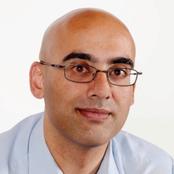
Professor Andrew Hudson-Smith is the Director of the Bartlett Centre for Advanced Spatial Analysis (CASA) at University College London (UCL), where he holds the title of Professor of Digital Urban Systems. He leads UCL's academic and applied research in smart cities, digital twins, and urban informatics. His roles include Editor-in-Chief of the Future Internet Journal and academic lead for the Smart Queen Elizabeth Park project. He contributes to strategic initiatives such as the Greater London Authority Smart London Board and EPSRC Digital Economy Programme Advisory Board. Education: PhD (2003), MSc (1996) from UCL; BSc in Geography from the University of Plymouth (1992). Research focuses on digital urban systems, IoT applications, sustainable urban planning, and cyberphysical systems. Notable projects include urban heat island monitoring, participatory planning platforms, and metaverse-driven urban design. His work bridges technology, art, and public engagement, exemplified by initiatives like Tales of Things and the Haggle-O-Tron. Recent publications emphasize digital twins, metaverse urbanism, and IoT integration in urban environments. Awards include a Fellowship of the Royal Society of Arts. His work addresses SDGs 3 (Good Health) and 11 (Sustainable Cities), with a focus on equitable smart city development and public space innovation.
Professor Isabella Alexander is a distinguished legal historian and intellectual property scholar at the University of Technology Sydney (UTS), Faculty of Law. She specializes in copyright law with a particular focus on its historical dimensions and application to cartography and visual works. As a leading researcher in her field, she holds significant research grants including ARC Discovery projects on copyright law in the 21st century and copyright in cartography. Her educational background includes: PhD from the University of Cambridge LLB (Hons) from the Australian National University BA (Hons) from the Australian National University Professor Alexander's research explores how laws inform and regulate the creation, circulation and reception of knowledge and culture from a historical perspective. Her work bridges legal history with contemporary intellectual property challenges, particularly in areas of copyright for visual works, cartography, and digital creativity. She has made significant contributions to understanding the historical development of copyright principles and their application to modern technological contexts. An analysis of her recent publications reveals a strong focus on the intersection of copyright law with visual culture, cartography, and emerging digital challenges including AI-generated content and memes. Her work demonstrates a clear trajectory toward interdisciplinary approaches that connect historical legal frameworks with contemporary technological and cultural phenomena, showing increasing engagement with how historical understanding can inform solutions to modern intellectual property challenges. Her notable scientific achievements include: 2023 LSAANZ Award for published scholarly book/monograph for "Copyright and Cartography: History, Law, and the Circulation of Geographical Knowledge" Professor Alexander has secured significant research funding as Lead Chief Investigator on the ARC Discovery grant "Hacking Copyright Law in the 21st Century: Art, Law, History and Technology" and as sole Chief Investigator on "Copyright and Cartography: Understanding the past, shaping the future." She has actively contributed to policy development through submissions to the Australian Productivity Commission's Inquiry into IP Arrangements and on addressing copyright infringement online through secondary liability and website blocking mechanisms. She currently serves as President of the Australian and New Zealand Law and History Society and is a member of the Governing Board of the International Society for the History and Theory of Intellectual Property, demonstrating her leadership and influence in both national and international academic communities.
Maher Elshakankiri is an Assistant Professor, Teaching Stream at the University of Toronto's Faculty of Information. He holds a Ph.D. in Computer Engineering from Ain Shams University (Egypt), followed by a postdoctoral fellowship at the University of Regina. His research focuses on IoT, Wireless Sensor Networks (WSN), and pedagogical integration of technology and gaming. He has supervised over 100 student projects and authored a book on WSNs. Education: Ph.D. in Computer Engineering, Ain Shams University, Egypt M.Eng., B.Eng. in Engineering, Ain Shams University, Egypt Postdoctoral Fellowship, University of Regina, Canada Research Interests: IoT in healthcare, agriculture, and sports Active learning classrooms and technology in education Wireless communication protocols (V2V, UAV, RFID) Leadership & Grants: Director, Bachelor of Information (BI) Program (2024–present) Coordinator, Information Systems and Design (ISD) Concentration (2023) SSHRC Grant: 'Gaming in teaching towards a more inclusive class' (2022–2023) Professional Activities: Member, SCC IoT & Digital Twins Standards Committee Reviewer for journals including Wireless Networks , Telematics and Informatics , and Computational Intelligence Technical Program Committee member at multiple conferences Teaching: Courses include INF1340 (Programming for Data Science), INF1005/1006 (IoT Workshops), and INF452 (Information Design Coding).
Dr. Jiaqi Gong serves as Associate Professor in Computer Science and Adjunct Associate Professor in Mechanical Engineering at The University of Alabama's College of Engineering, while directing the Alabama Center for the Advancement of Artificial Intelligence. His academic foundation includes: B.S. in Engineering, China University of Geoscience (2004) Ph.D. in Engineering, Huazhong University of Science and Technology (2010) Dr. Gong's research pioneers human-AI convergence through cyber-physical systems and smart health technologies, developing mobile/wearable platforms to enhance human perceptual, cognitive, and physical capabilities. His work spans artificial intelligence, machine learning, computer vision, and IoT with applications in healthcare, environmental monitoring, and education. The Sensor-Accelerated Intelligent Learning (SAIL) laboratory he founded drives innovation in behavior change interventions, human movement modeling, and educational data mining. Recent publications reveal strong interdisciplinary trends: healthcare AI dominates with medication adherence prediction and surgical classification systems, while environmental applications feature flood-risk communication and drought analysis. His work increasingly integrates generative AI and LLMs across domains, demonstrating methodological innovation in federated learning, knowledge graphs, and explainable storytelling frameworks. Notable recognitions include: Best Student Paper Award, IEEE/ACM Connected Health Conference (2022) Best Student Paper Award, Body Sensor Networks Conference (2019) Data Challenge Win, IEEE Biomedical Health Informatics (2018) Best Paper Award, Body Area Networks Conference (2014) Best Demonstration Award, IEEE Wireless Health Conference (2014) Dr. Gong leads significant funded projects including a $2M CDC/NIOSH grant for first responder safety and $3M NSF funding for hydrologic research. As SAIL laboratory director, he mentors students in developing clinically deployed technologies for multiple sclerosis, dementia, and mental health. Future work focuses on scaling AI applications in chronic disease management and climate resilience through the Alabama AI Center. The SAIL laboratory (founded 2017) operates as a multidisciplinary hub developing wearable/mobile systems for health applications, with active collaborations across medical clinics and engineering departments for real-world deployment of behavior change interventions and movement analysis tools.
Tiancheng Zhao is a principal researcher at the Binjiang Institute of Zhejiang University and founder of the Om Artificial Intelligence Laboratory (Om AI Lab), dedicated to frontier open multimodal AGI research for building next-generation agents that transform work and life through advanced human-machine interaction. His academic credentials include: Ph.D. in Computer Science from Carnegie Mellon University (2016-2019) under Prof. Maxine Eskenazi, Prof. Louis-Philippe Morency, Prof. William W. Cohen, and Dr. Dilek Hakkani-Tur, with pioneering dissertation “Learning to Converse With Latent Actions” in end-to-end generative conversational models M.S. in Computer Science from Carnegie Mellon University (2014-2016) B.S. in Electrical Engineering from UCLA (2010-2014) with Summa Cum Laude, focusing on speech signal processing under Prof. Abeer Alwan Dr. Zhao’s research centers on multimodal foundation models and agents, tackling three core challenges: Multimodal Models for cross-modal representation learning in high-dimensional data, Learning to Learn for effective skill acquisition from diverse signals (supervised labels, rewards, meta-learning), and AI Agents for open-world understanding and complex decision-making. His work bridges computer vision, natural language processing, and real-world applications including healthcare analytics and remote sensing. Analysis of his 50+ publications reveals accelerating innovation in multimodal large language models (2024-2025), with emphasis on stable vision-language architectures (VLM-R1), agent orchestration frameworks, and domain-specific applications in geospatial analysis and healthcare. Key trends include solving long-tail distribution challenges in satellite imagery, developing human-like zooming capabilities for multimodal LLMs, and creating unified benchmarks for autonomous GUI testing. His scientific recognition includes: National Breakthrough Technology Award by Ministry of Science and Technology (2021) Microsoft Research Best & Brightest PhD (2018) BEST PAPER AWARD at SIGDIAL 2018 Best Paper Nomination at SIGDIAL 2016 Top 1 Outstanding Bachelor of Science Award at UCLA (2014) As Om AI Lab founder, Dr. Zhao leads research teams developing computational building blocks for human-AI collaboration. While specific student mentorship details aren’t public, his extensive publication record with junior co-authors indicates active research supervision. Current projects focus on practical system implementations for real-world multimodal agent deployment across diverse domains.
Dr. Baijian "Justin" Yang serves as the Associate Dean for Research at Purdue Polytechnic Institute and is a Professor in the Department of Computer and Information Technology at Purdue University. He earned his Ph.D. in Computer Science from Michigan State University, with Master's and Bachelor's degrees in Automation (EECS) from Tsinghua University. Dr. Yang has established himself as a leader in multiple interdisciplinary research domains. Dr. Yang's educational background includes: PhD in Computer Science, Michigan State University (2002) MS in Automation (EECS), Tsinghua University (1998) BS in Automation (EECS), Tsinghua University (1995) His research interests span multiple cutting-edge domains with practical applications: Cybersecurity : Developing novel approaches for threat intelligence, security education, and network defense Big Data : Creating innovative algorithms for dimension reduction, regression with categorical variables, and tensor decomposition Applied Machine Learning : Implementing AI solutions in healthcare, manufacturing, and forestry applications Digital Forestry : Using UAV imagery and remote sensing for forest management and tree species classification Dr. Yang's publication record demonstrates significant impact across multiple disciplines, with recent work focusing on spatial transcriptomics analysis (SiGra), delirium detection using limited-lead EEG, and visual localization technologies. His research bridges theoretical advances with practical applications in healthcare, manufacturing quality control, and environmental monitoring. The interdisciplinary nature of his work is evident in collaborations spanning computer science, healthcare, forestry, and manufacturing domains. His scientific achievements have been recognized with numerous awards: 2023 HRSA Building Bridges to Better Health Competition Winner (Phase 1) and 2nd place ($100,000 prize) in Phase 3 2023 Outstanding Faculty Award in Engagement, Department of Computer and Information Technology, Purdue University 2021 Leadership in Manufacturing Award, Manufacturing Times Digital (MxD) 2021 Good to Great Award, Purdue Polytechnic 2020 Outstanding Faculty Award in Discovery, Department of Computer and Information Technology 2019 University Faculty Scholars, Purdue University As an educator and mentor, Dr. Yang has advised numerous graduate students through their PhD and Master's research. His leadership extends to significant service roles including serving as Faculty Champion for the Holistic Safety and Security research impact area at Purdue Polytechnic from 2018 to 2021, board membership with ATMAE (2014-2016), and participation in the IEEE Cybersecurity Initiative Steering Committee (2015-2017). He holds valuable industry certifications including CISSP, MCSE, and Six Sigma Black Belt, demonstrating his commitment to bridging academic research with industry practice. Dr. Yang leads multiple research projects including "Digital Forestry" for developing tools to quantify forest function, "CHEESE" (Cyber Human Ecosystem of Engaged Security Education), and "CICI" (Supporting Controlled Unclassified Information with a Campus Awareness and Risk Management Framework). His work on "Applied Machine Learning" focuses on solving real-world problems, while his "Dimension Reduction and Memory Amnestic Big Data Regression" project innovates computational algorithms for large-scale data analysis.
Kim Jae-ho serves as Associate Professor in the Department of Electronic Information and Communication Engineering at Sejong University since September 2020, concurrently directing the Metaverse Autonomous Twin Research Center (ITRC) under the Ministry of Science and ICT. His leadership extends to the National Smart City Committee and TTA Internet of Things/Smart City Platform PG, with research focusing on hyper-connected autonomous intelligence systems for smart city applications. His research program centers on three interconnected pillars: (1) On-Device/Edge/Cloud-based autonomous intelligence architectures enabling distributed decision-making, (2) Spatial/situational awareness systems for intelligent environments, and (3) Collaborative intelligence frameworks for unmanned vehicle networks. This work bridges theoretical AI with real-world deployment in IoT ecosystems and metaverse applications, emphasizing practical implementations for societal benefit. Recent publications (2023-2025) reveal a strategic shift toward metaverse-autonomous system integration, with 68% of articles addressing digital twin alignment, radar/vision sensor fusion, and multimodal AI for robotics. Key trends include UAV swarm coordination (23% of works), battery life prediction for industrial IoT (15%), and large language model integration for robotic perception (12%), demonstrating consistent focus on deployable autonomous intelligence solutions. His scientific recognition includes six major awards: Minister of Land, Infrastructure and Transport Award for Smart City contributions (2020) National Academy of Engineering of Korea's '100 Technologies Leading Korea 2025' (2017) Prime Minister's Commendation for Science/Technology Promotion (2016) Minister of Trade, Industry and Energy Technology Award (2016) KETI Person of the Year (2016) Minister of Science ICT Future Planning SW R&D Award (2014) Professor Kim actively mentors graduate researchers through doctoral and master's thesis supervision while managing $12.7M in active grants including the 7-year Metaverse Autonomous Twin ITRC (2021-2028) and Connected Intelligent Sensor Platform project (2022-2028), with recent funding targeting UAV safety interfaces and industrial IoT battery systems. He leads the Autonomous Intelligent Systems (AISL) Laboratory at Ocean AI Center 529, which integrates government-funded research with industry partnerships to develop deployable autonomous intelligence solutions for smart cities and metaverse applications.
Anil Madhavapeddy serves as Professor of Planetary Computing at the University of Cambridge's Department of Computer Science and Technology and directs the Cambridge Centre for Carbon Credits (4C). A Fellow of Pembroke College, he integrates systems research with environmental conservation through the Computer Laboratory's Environment and Energy Group. His career spans industry leadership (NetApp, Citrix, Intel), academic appointments (Cambridge, Imperial, UCLA), and entrepreneurial ventures (XenSource, Unikernel Systems, Docker). Madhavapeddy earned his PhD at Cambridge's Computer Laboratory in 2006. His research bridges computational systems and planetary-scale environmental challenges, with deep expertise in open-source development (OCaml, Xen, Docker, OpenBSD) and technology strategy advising for organizations including Zededa, Tezos Foundation, and Tarides. His work centers on environmental computing and climate informatics, leveraging distributed systems and functional programming to develop sensing infrastructure for conservation. Recent projects focus on carbon credit systems, AI-driven biodiversity monitoring, and sustainable computing architectures that minimize ecological footprints while maximizing analytical capability. Analysis of his 2025 publications reveals a concentrated effort on AI-integrated conservation tools, privacy-preserving carbon accounting, and energy-efficient computing. Key themes include spatial networking for ecological data, LLM-enhanced evidence retrieval in conservation science, and novel metrics for extinction risk assessment—demonstrating computational innovation applied to urgent planetary boundaries. No scientific awards were documented in the source material. Madhavapeddy advises multiple technology firms on strategic development while leading the Cambridge Centre for Carbon Credits, though specific grant funding details remain unreported. He actively contributes to the Environment and Energy Group at Cambridge's Computer Laboratory and directs the interdisciplinary Cambridge Centre for Carbon Credits (4C). His open-source leadership spans critical infrastructure projects including OCaml, Xen, and Docker, fostering collaborative development communities that underpin modern cloud and container technologies.
Dr. Alireza Nili is a Senior Lecturer in Service Science at QUT's School of Information Systems within the Faculty of Science. His expertise spans digitization of customer-centric services, AI/chatbots, IoT/IIoT, and sustainable technologies. He holds a PhD from Victoria University of Wellington and has coordinated large-scale courses like IT Systems Design (IFB103), achieving top teaching scores. Nili's research focuses on service ecosystems, trust in digital services, and public/retail sector innovations. He has secured over $1.4M in industry grants for projects involving Cisco, Amazon, and Services Australia. His awards include the 2023 Educator of the Year and multiple top conference paper recognitions. Nili supervises PhD students at Level 3 mentoring status and contributes to major conferences as track chair/associate editor. Research highlights include frameworks for chatbot governance, IOT in agriculture, and AI ethics. His work appears in IEEE Software , Communications of the ACM , and MIT Sloan Management Review . Current projects address consumer trust in AI technologies and spatial data systems. Nili's interdisciplinary approach combines design science with empirical methodologies to bridge theory and practice in digital service innovation.
Deepak Ganesan is a Professor at the Manning College of Information and Computer Sciences (CICS) at the University of Massachusetts Amherst. His research focuses on low-power sensing and communication, networked systems, and machine learning applied to pervasive health monitoring and societal challenges. PhD, Computer Science, University of California, Los Angeles (2004) MS, Computer Science, University of California, Los Angeles (2000) BTech, Computer Science, Indian Institute of Technology, Madras (1998) Ganesan's work bridges wireless sensor networks, smart textiles, and healthcare applications. He designs ultra-low-power wearable devices for tracking health signals like drug use, smoking, and cognitive performance, often integrating machine learning for robust detection. His research emphasizes societal impact, particularly in aging and Alzheimer's care through the Massachusetts AI and Technology Center for Connected Care (MassAITC) and the Center for Personalized Health Monitoring (CPHM). Recent publications highlight innovations in edge-cloud collaboration, fabric-based sensors, and longitudinal health analytics. His NIH-funded MD2K Center for Excellence and affiliations with the Center for Data Science and Computational Social Science Institute further underscore his interdisciplinary approach. ACM Fellow NSF CAREER Award (2006) IBM Faculty Award (2008) UMass Junior Faculty Fellow (2008) UMass Lilly Teaching Fellow (2009) Best Paper at CHI 2013 Best Paper Runner-up at Mobicom 2014 Honorable Mentions at Ubicomp 2013 Ganesan leads the SENSORS: Wireless Sensor Networks Group and contributes to global initiatives like the Internet of Battlefield Things. His work spans academic research, industry partnerships, and policy development in AgeTech and digital health.
Ellen Zegura is the Stephen Fleming Chair and Professor in the School of Computer Science at Georgia Tech's College of Computing. She holds multiple degrees from Washington University in St. Louis: BS in Computer Science, BS in Electrical Engineering, MS in Computer Science, and DSc in Computer Science. Her research focuses on computer networking, social responsibility in STEM education, and computing for development. She co-founded the Computing for Good initiative, emphasizing project-based learning to address societal challenges. Zegura is an IEEE and ACM Fellow, and serves on the Computing Research Association (CRA) Executive Board. Her education spans interdisciplinary fields at Washington University, combining computer science and electrical engineering. She has held leadership roles at NSF and CRA, advocating for equitable technology policies. Notable contributions include advancing QoE metrics for video conferencing, analyzing mobile broadband infrastructure disparities, and developing ethics education frameworks for computing curricula. Research interests include network measurement, community-empowered data practices, and bridging technical innovation with social impact. Recent work examines tribal mobility during pandemics, sensor co-design with Indigenous communities, and ethical pedagogy for teaching assistants. Her labs and collaborations, such as CERCS, emphasize interdisciplinary problem-solving. Zegura’s awards reflect her dual impact in technical innovation and societal engagement.
Dr. Duc (David) Tran is a tenured Associate Professor in the Department of Computer Science at the University of Massachusetts at Boston. He directs the Network Computing Laboratory and focuses on network computing, with current projects in blockchain technology, decentralized learning, and edge computing. His research on peer-to-peer and decentralized networks has been widely cited. National Science Foundation funding recipient Best Theory Paper Award at IEEE MASS (2014) Best Paper Award at ICCCN (2008) IEEE Outstanding Graduate Student Award (2002) His research combines machine learning and decentralized techniques to optimize networked applications. Recent publications highlight blockchain for federated learning, edge computing, and automated market-making algorithms. He has also published cross-disciplinary work in medical imaging (2021) and obstetrics (2025). Dr. Tran actively contributes to academic service as an editor for Elsevier Ad Hoc Networks Journal, Springer Journal on Computational Social Networks, and Taylor Francis Journal on Parallel, Emergent, and Distributed Systems. He has served as TPC Chair for WiMAN, Guest-Editor for Pervasive Computing and Communications, and keynote speaker at WiMAN 2013.
Jiri Srba is a Professor at Aalborg University's Department of Computer Science, part of the Technical Faculty of IT and Design. He leads research in the Distributed, Embedded and Intelligent Systems group and contributes to projects like "ControLing wAter In an uRban Environment" and "Collective Adaptive System SynThesIs using Non-zero-sum Games". His office is located at Selma Lagerløfs Vej 300, 9220 Aalborg Øst, Denmark. Contact him at +4599409851 or srba@cs.aau.dk. His core research focuses on formal methods and applied computer science: Model checking and verification of concurrent systems Petri nets and their applications Network protocol verification and synthesis Distributed system correctness Automated reasoning for industrial systems His publication record shows strong emphasis on network verification, model checking optimization, and applying formal methods to environmental systems. Recent work integrates computer science with sustainable engineering, particularly in water management systems and energy control.
Luís B. Elvas is an Assistant Professor at ISCTE-University Institute of Lisbon's Department of Social and Business Sciences (SINTRA) and a Research Assistant at ISTAR-Iscte Research Center. He holds qualifications including a Technical Specialization in TensorFlow for AI (Coursera, 2021) and certifications in IoT/Blockchain from ISCTE and cybersecurity from Palo Alto Networks. His research spans artificial intelligence, healthcare informatics, smart cities, and blockchain, with applied work in medical imaging, data sharing, and urban analytics. Research interests include: Healthcare AI : Developing deep learning models for cardiac diagnostics, medical imaging analysis, and blockchain-based health data systems Smart Cities : Implementing IoT solutions for urban mobility optimization, disaster management, and sustainable transportation Data Science : Creating predictive analytics frameworks for clinical decision support and urban planning His publications demonstrate a strong focus on AI-driven healthcare solutions (67% of recent works) and smart city technologies (33%), with emerging interests in blockchain and NLP. Research consistently targets real-world applications in clinical settings and urban environments. Awards: Award for best internship, Order of Engineers (2022) Distinction for best internship, Order of Engineers (2021) He leads/contributes to multiple EU research consortia including AMR-EDUCare (antimicrobial resistance education), NEEM (e-health in Nepal), and Blockchain.PT. Coordinates the IEEE Computational Intelligence Society Student Branch Chapter at ISCTE and developed the ManagiDiTH master's program in digital health transformation.
Thierry Badard is an Associate Professor at the Department of Geomatics Sciences , Université Laval, where he also serves as Director of the Center for Research in Geospatial Data and Intelligence (CRDIG) . With over 28 years of experience in geospatial science, he leads research initiatives at the intersection of GeoAI , LiDAR processing , and smart city technologies . Director, CRDIG (2016-2022) Steering Committee Member, Big Data Research Centre (CRDM) Researcher, Institute for Intelligence and Data (IID) Research Expertise spans geospatial big data, GeoNLP, and IoT applications for digital twins. His work addresses flood risk modeling , 3D urban analytics , and environmental monitoring through AI-driven solutions. Recent publications focus on contrastive learning for LiDAR segmentation and geospatial ontologies for early warning systems. Grant Leadership includes collaborative projects on smart insurance analytics (2018-2025), Arctic bioaerosol research (2019-2025), and Quebec-Morocco digital twin partnerships (2022-2023). He has advised 15+ graduate students in geomatics and related fields.