Bertan Badur is a Professor at Boğaziçi University, where he teaches courses such as MIS 132 - Object Oriented Programming , MIS 331 - Data Mining , and CSE 551 - Computational Methods . His research focuses on Data Mining, Agent-Based Modeling, and Machine Learning. Undergraduate: Boğaziçi University, Chemical Engineering M.A.: Boğaziçi University, Economics Ph.D.: Boğaziçi University, Economics His work spans interdisciplinary applications, including predictive analytics in e-commerce , game theory for market share dynamics , and agent-based simulations for migration and social behavior . He has contributed to fields like IT risk modeling , social media analysis for education , and IoT research trends . Recent publications highlight trends in deep learning for customer lifetime value prediction , Nash equilibrium in economic competition , and spatiotemporal crime risk modeling . His academic career bridges computational methods with socio-economic challenges.
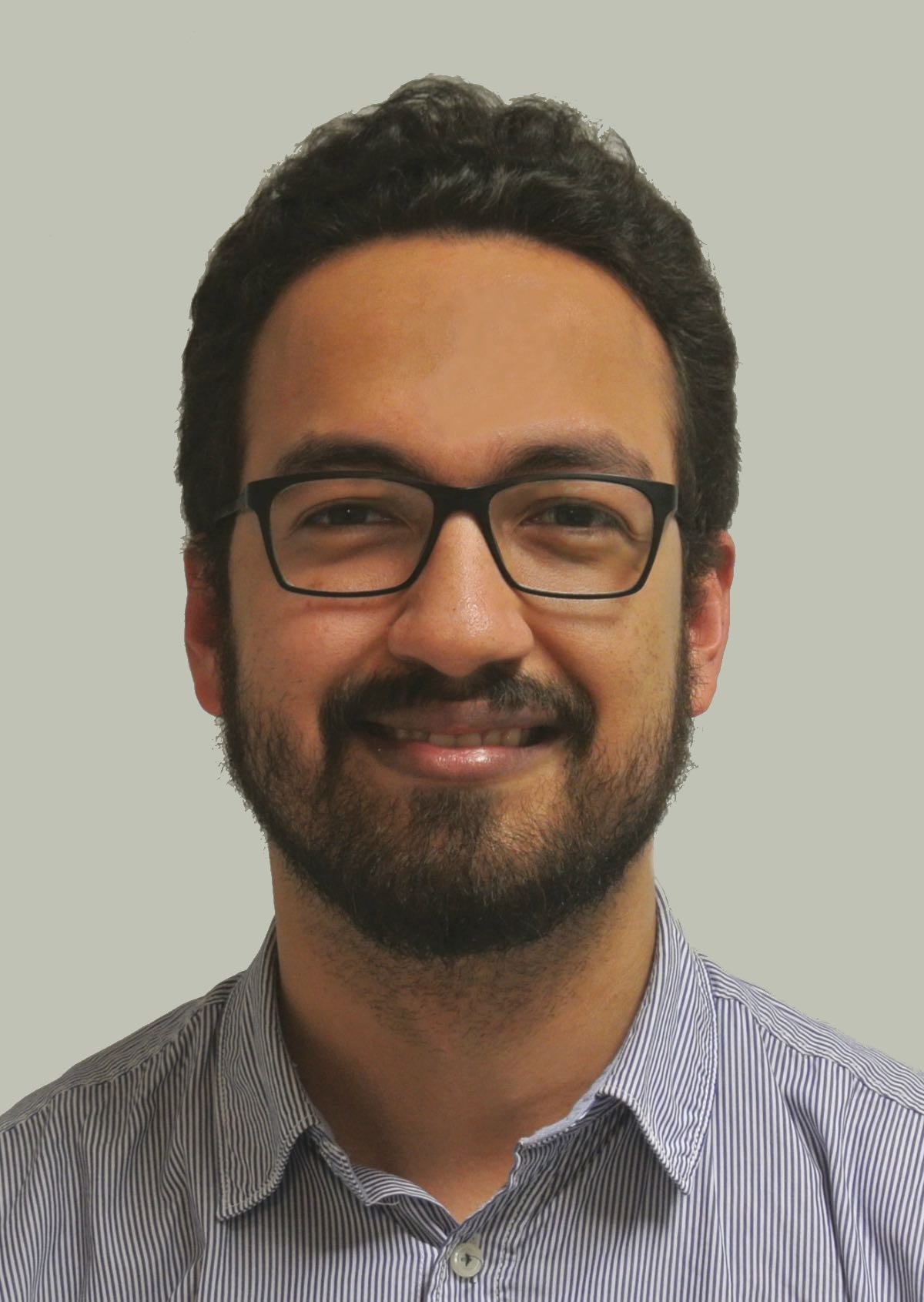
Andrea Vinci is a Researcher at the Italian National Research Council (CNR) under the Institute for High-Performance Computing and Networking (ICAR-CNR) . His work bridges Machine Learning , Internet of Things (IoT) , and Smart City technologies, focusing on scalable solutions for urban data analysis, energy optimization, and cognitive building systems. Research Interests include: Developing multi-density clustering algorithms for urban hotspot detection Designing platform-agnostic IoT applications across edge-cloud architectures Applying quantum computing to energy management and cloud resource allocation Creating deep reinforcement learning models for human-driven smart environments Leveraging LSTM networks and federated learning for occupancy prediction Exploring blockchain-empowered swarm robotics for distributed control Key Scientific Contributions : Best Paper Award at ACM Computing Frontiers 2023 for spatio-temporal crime prediction Pioneering the COGITO platform for cognitive building automation Advancing 32 Gb/s passive optical networks for high-loss environments
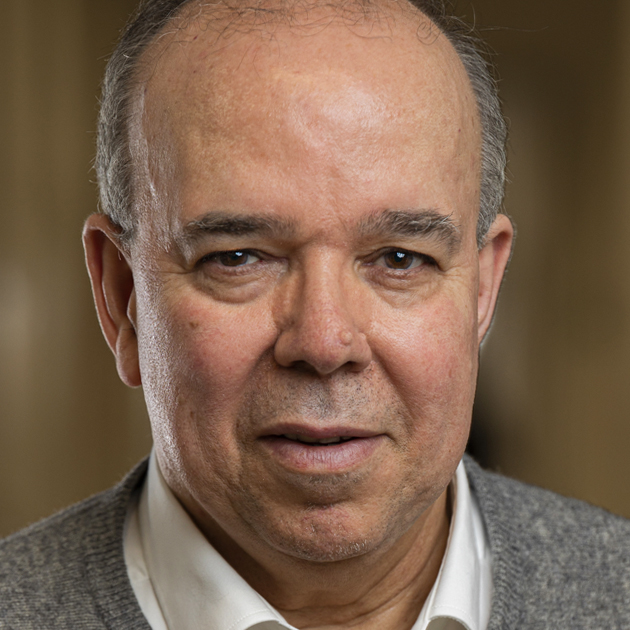
Jianqing Liu is an Associate Professor in the Department of Computer Science at North Carolina State University, with a courtesy appointment in the Department of Electrical & Computer Engineering. His research addresses communication, networking, security, and data privacy challenges in next-generation systems like 5G, IoT, and the quantum internet. Ph.D. in Computer Engineering, University of Florida (2018) B.S. in Electronic Science and Technology, University of Electronic Science and Technology of China (2013) His lab combines theoretical approaches (optimization, control, statistical modeling) with experimental methods (reverse engineering, system implementation) to advance secure communication systems. Research spans differential privacy , quantum networking , and IoT security , with a focus on hardware-software co-design and low-power solutions. Recent publications highlight trends in quantum internet protocols, privacy-preserving memory design, and IoT security optimization. Many articles explore theoretical foundations and practical implementations for emerging technologies like the quantum internet and blockchain. NSF CAREER Award (2021) COE Outstanding Research Award (2022) Best Paper Awards (IEEE HotICN, IEEE MMWCST) Liu has advised Master’s students like Raj, who successfully defended his thesis, and secured over $1.4 million in grants from the NSF. His work includes projects on quantum network virtualization, wireless device error management, and differential privacy via memory design.
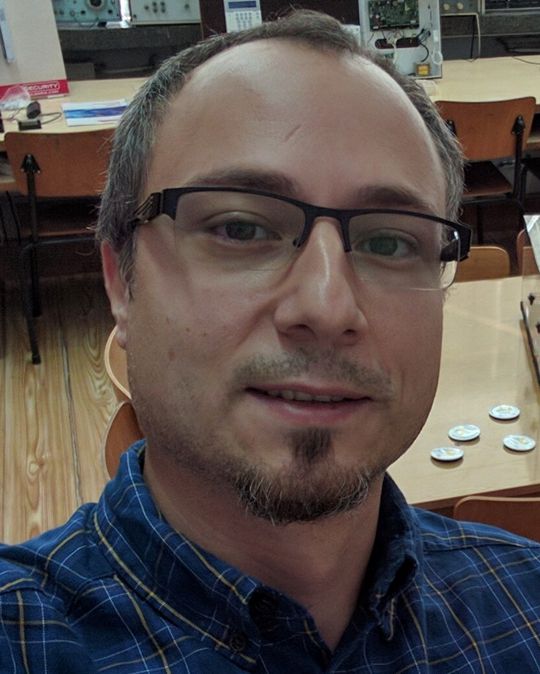
Carolyn L Beck is a Professor in the Department of Industrial and Enterprise Systems Engineering at the University of Illinois at Urbana-Champaign . She holds affiliations with multiple departments, including Electrical and Computer Engineering (since 2014) and Mechanical Science and Engineering (since 1999). Beck is also a Research Professor at the Coordinated Science Laboratory (since 2019) and has served as Associate Head for Undergraduate Programs since 2020. Education : Ph.D. in Electrical Engineering from California Institute of Technology M.S. in Electrical & Computer Engineering from Carnegie Mellon University B.S. in Electrical & Computer Engineering with a Physics minor from California State Polytechnic University Research Interests focus on control and optimization , epidemic processes over networks , network inference , and dynamic network data clustering . Her work spans mathematical systems theory to real-world applications in bioengineering and smart grid optimization . Article Trends show a progression from system identification and network inference to complex epidemic modeling over time-varying networks and grid optimization. Recent works emphasize finite-sample analysis , distributed subgradient methods , and multi-layer contagion dynamics , reflecting her expertise in control theory and network science . Scientific Awards : IEEE Fellow (2023) Arthur Davis Faculty Scholar Award (2016) ONR Young Investigator Award (2001-2004) NSF CAREER Award (1998-2003) ORAU Junior Faculty Award (1997) Alcoa Foundation Award (1997) Advising and Grants include mentoring former PhD students like Puneet Sharma (AIMBE Fellow) and Philip Pare' (Purdue ECE) . Her research has been funded by the NSF , ONR , and IEEE , with a $500,000 grant for wind turbine efficiency. Labs and Teams : Beck is affiliated with the Coordinated Science Laboratory and collaborates with interdisciplinary teams in bioengineering , network control , and grid optimization . She also contributes to IEEE as a Guest Editor and Associate Editor .
Charbel ABDEL NOUR is a Research Teacher in the Department of Mathematical and Electrical Engineering (MEE) at IMT Atlantique, a leading French engineering school. His work focuses on the intersection of wireless communications, signal processing, and error correction coding. Based in Brest, France, he actively contributes to research in next-generation communication systems. Dr. ABDEL NOUR's research interests span wireless communications, 5G/6G technologies, Internet of Things applications, error correction coding, and massive MIMO systems. His work addresses critical challenges in modern communication systems including high-throughput requirements, low-latency constraints, and efficient spectrum utilization. His research demonstrates strong theoretical foundations with practical implementation considerations, often bridging the gap between algorithm design and hardware implementation. His recent publications (2023-2025) reveal a consistent focus on improving communication system performance through innovative coding techniques, particularly in turbo decoding architectures, FBMC systems, and spectrum access methods for IoT applications. His work shows progression from theoretical analysis to practical implementation, with several publications addressing both algorithmic improvements and hardware considerations. Multiple publications on turbo decoding architectures with performance improvements Research on FBMC/OQAM systems as alternatives to OFDM for 5G/6G Work on spectrum access techniques for massive IoT connectivity Studies on minimum distance estimation for error-correcting codes Application of machine learning techniques to communication problems Dr. ABDEL NOUR collaborates extensively with researchers across multiple institutions, including CNRS, INSA Rennes, and other French research organizations. His work often receives funding from significant national initiatives like the Beyond5G project and France Relance economic recovery plan. His research has practical applications in next-generation wireless systems, with potential impact on future communication standards.
Dr. Diego Casado Mansilla is a Researcher at the MORElab group within the Department of Computing, Electronics and Communication Technologies at the College of Engineering, University of Deusto. His work bridges Sustainable Human-Computer Interaction (HCI), Persuasive Technologies, and Internet of Things (IoT) systems to drive behavior change in energy consumption, urban sustainability, and STEM education accessibility. Education: PhD in Persuasive Technologies for Sustainability and Behavior Change (2016), University of Deusto His research spans two decades, focusing on Sustainable Design , Physical Interaction with Everyday Objects , and Human-Centric IoT Systems . He has led projects like Suggestive Autonomy (2016) and co-led GreenSoul (2017, 2019), which employ IoT for energy awareness in public buildings. Current projects include AmIAire (air quality monitoring) and Urban Adaptation and Alert Solutions (climate resilience, 2024-2028). Key trends in his 20+ publications (2012-2025) include: Energy efficiency in tertiary buildings and smart cities IoT protocols (CoAP, IEC 61850) for industrial and urban systems Behavioral economics and nudging for sustainable decisions Rural STEM education via remote experiments Privacy-preserving smart workplace systems Climate change perception studies across generations His supervised theses and projects address User Diversity , Edge Computing , and Industry 4.0 Adoption . He collaborates with European institutions on grants from the Ministry of Science and Innovation and European Commission , contributing to citizen science initiatives like SOCIO-BEE and educational tools such as EngageMate and Computario .
Gabriel Mujica is an Assistant Professor at the Technical University of Madrid (UPM), where he is affiliated with the Centre of Industrial Electronics. His research focuses on Networked Embedded Systems and the Internet of Things (IoT), with particular expertise in Wireless Sensor Networks (WSN) and urban mesh networking for smart city applications. His educational background includes: BE in Electrical and Electronics Engineering, Federal University of Paraíba (UFC/FRP), 2008 MSc in Industrial Electronics Engineering, Technical University of Madrid, 2012 PhD in Industrial Electronics Engineering, Technical University of Madrid, 2017 Dr. Mujica's research interests center on multi-hop distributed networks, hardware-software co-design for intelligent platforms, and communication protocols for embedded sensing systems. He has extensive experience in the development and optimization of Wireless Sensor Networks, integration of heterogeneous hardware and software, and performance evaluation of sensor platforms. His current work targets urban mesh networking for smart applications, with a focus on sustainable cities and leveraging collaborations from his doctoral research at Trinity College Dublin. His publications reveal a strong emphasis on practical implementations of Wireless Sensor Networks and IoT. Key themes include deployment strategies, performance evaluation, and tool development for WSN commissioning and maintenance. His work often bridges hardware and software, addressing challenges in energy efficiency, dynamic reprogramming, and multi-experimental capabilities in distributed embedded systems. No scientific awards were mentioned in the provided text. Dr. Mujica has co-supervised undergraduate projects and internships for international students, and has contributed to several national and European research projects. He has also organized research tutorials and seminars at UPM and served as a reviewer for international conferences and journals including IEEE and Springer. His doctoral research stay at Trinity College Dublin strengthened collaborations in distributed systems for smart and sustainable cities. He is an active member of the Centre of Industrial Electronics at UPM, where his team has developed integrated toolsets for WSN application planning, development, and maintenance, notably within the ARTEMIS-JU project. His lab focuses on implementing embedded platforms for urban mesh networking and smart application scenarios.
Gopika Premsankar is an Assistant Professor at Aalto University in the Department of Information and Communications Engineering . Her research focuses on Edge Computing , Internet of Things (IoT) , 5G Networks , and Wireless Communication . Her recent work includes applications of Reinforcement Learning for energy efficiency in 5G base stations, Network Optimization in LoRa networks, and Real-time Depth Inpainting for mobile augmented reality. She has published extensively in top-tier journals like IEEE Transactions on Mobile Computing and IEEE Communications Surveys and Tutorials . Scientific Awards : Best Student Paper Award
Ahmed Serhrouchni is a Professor at Télécom Paris, affiliated with the Computer Science and Networks (Infres) department. He leads the Specialized Masters® in Design, Network Architecture and Cybersecurity and Cybersecurity and Cyberdefense. His research focuses on cybersecurity, cryptography, blockchain, and IoT security. Research interests include: Secure blockchain applications in healthcare and vehicular networks Lightweight cryptographic protocols for IoT and C-ITS Machine learning for security threats detection (e.g., DNS flooding, Sybil attacks) Anti-jamming mechanisms in vehicular communication PUF schemes resistant to ML attacks Recent publications highlight advancements in blockchain scalability, TLS protocol security, and vehicular network defenses. His work emphasizes practical implementations for 5G, IoV, and secure authentication in distributed systems. He is associated with the Cybersecurity and Cryptography (C²) team and the Information Processing and Communication Laboratory (LTCI).
Professor Vasilios Tsaousidis is affiliated with the Department of Electrical and Computer Engineering at Democritus University of Thrace since 2003. He was elected Professor in 2007 and has held visiting positions at MIT (2009) and Technical University of Berlin (2005). His work is conducted within the Programming and Information Processing Laboratory and focuses on DTN , Information-Centric Networking , and Space Internetworking . Education : Applied Mathematics (Aristotle University, Greece), Computer Science PhD (Humboldt University, Berlin) Postdoctoral Experience : Rutgers University, SUNY Stony Brook, Northeastern University His research spans transport/network layers with emphasis on energy-efficient and delay-tolerant protocols. Key areas include congestion control , QoS mechanisms , and reliable data dissemination in challenged environments. His publications from 2023-2025 focus on Kubernetes networking , edge cloud , and blockchain-integrated trust systems , demonstrating adaptability to emerging paradigms like IoT and space networking . Current projects like UMOBILE and SENSKIN explore mobile-centric architectures and structural health monitoring systems. Earlier work with SPICE (2010-2014) pioneered space internetworking protocols for Mars data transmission and space weather applications .
Krassen Kirov Angelov is a full professor at the Department of Communication Equipment and Technologies within the Faculty of Electrical Engineering and Electronics at Technical University - Gabrovo . He has led and participated in 15 research projects, focusing on wireless communication platforms, IoT systems, and optical network optimization. Head, Department of Communication Equipment and Technologies Project Manager for 5G/IoT research (2022) Co-author of 3 textbooks on communication circuits Research Interests include: 5G network design and optimization IoT communication protocols Optical network modeling Secure data transmission Satellite broadcasting systems Smart infrastructure development His recent publications (2021-2025) demonstrate expertise in: Chaotic encryption techniques Neural network applications LoRaWAN coverage planning DVB-S2 signal transmission Passive optical network modeling Radio frequency optimization PhD Students : Plamen Tashev (Radio Channel Monitoring) Mikhail Angelakis (Wireless Resource Management) Victor Krustev (Security Identification) Ivan Zlatev (Network Resource Allocation) Evelina Vaseva (Beekeeping Monitoring)
Ijaz Ahmad is a Doctoral Researcher at the University of Oulu 's Faculty of Information Technology and Electrical Engineering , affiliated with the Centre for Wireless Communications (Networks & Systems) unit. He holds qualifications including a BCS (Hons), MS in Information Security, and certifications as a Certified Ethical Hacker (C|EH) and Senior Fellow of the Higher Education Academy (SFHEA) . Education: BCS (Hons), MS Information Security Certified Ethical Hacker (C|EH) Senior Fellow of the Higher Education Academy (SFHEA) Research interests focus on cybersecurity in emerging technologies, including 6G networks , AI/ML , Internet of Things , and Edge-Cloud Continuum . His recent work explores AI-driven adaptive security , decentralized architectures , and energy-efficient protocols for healthcare applications. Scientific awards : Certified Ethical Hacker (C|EH) Senior Fellow of the Higher Education Academy (SFHEA) Projects : Involved in TOMOHEAD , Eware-6G , and Hola 5G , focusing on next-generation network security and healthcare applications.
Nagham Saeed serves as Associate Professor in Electrical and Electronic Engineering at the School of Computing and Engineering, University of West London, a position she has held since April 2023. Previously, she was Senior Lecturer in Electrical Engineering at the same institution from November 2017 to April 2023, following roles as Electronic Lecturer at Uxbridge College (2012-2017) and Electronic/Control Lecturer at Brunel University (2007-2012). Her academic credentials include: Ph.D. in Optimization in Wireless Networks and Communications (Brunel University, 2007-2011) M.Sc. in Mechatronics (University of Technology, Baghdad, 1997-1999) B.Eng. in Computer and Control (University of Technology, Baghdad, 1988-1992) DTLLS Diploma in Teaching (University of Westminster, 2012-2014) BAPP in Learning and Teaching (Brunel University, 2009-2010) Assessing Competence Certification (Uxbridge College, 2014) Dr. Saeed's research spans wireless communications, IoT, electric vehicles, and AI-driven energy optimization. Her work focuses on Bluetooth Low Energy applications for healthcare monitoring, battery management systems for EVs, sustainable ICT practices, and GIS-based land use analysis. She pioneers solutions for energy-efficient radio access networks and develops AI models for vehicle classification and low-resource language processing. Analysis of her 2022-2025 publications reveals three dominant trends: (1) AI integration for sustainable energy systems in telecommunications and transportation, (2) blockchain-secured vehicular networks for 6G infrastructure, and (3) cross-disciplinary applications of IoT in healthcare and environmental monitoring. Her research consistently bridges electrical engineering with computer science to solve real-world sustainability challenges. Professional recognition includes: MDPI Reviewer Acknowledgements (2020) for Algorithms, Applied Sciences, and Information journals While her 2022 educational research on feedforward teaching approaches demonstrates pedagogical engagement, no student supervision or grant management details are documented. Current institutional affiliations show no dedicated laboratory facilities or research teams specified in available records.
Thomas Peter Plagemann is a Professor in the Department of Informatics at the University of Oslo , specializing in Data and Knowledge Systems . His research focuses on data stream processing , sensors and AI for health , Internet of Things , and mobile network applications . Current projects: Parrot (Privacy Engineering for IoT), Respire (Explainable ML for Sleep Disorders), and TRAMP (Real-Time Application Mobility) Editorial leadership: ACM Transactions on Multimedia Computing and past roles at Computer Communications and Multimedia Systems Recent publications analyze operator migration in stream processing , explainable AI for pediatric sleep apnea , and privacy-preserving healthcare systems . His work combines distributed computing , sensor networks , and machine learning applications in medical and mobile environments.
Dr. Mohammed Abuibaid is an Adjunct Research Professor at Carleton University's School of Information Technology and a Radio Virtual Distributed Unit (vDU) System Designer at Ericsson Canada. As a Senior IEEE Member, he contributes significantly to standards development through IEEE 802 Plenary Sessions and ITU-T Study Group 15 initiatives. His expertise lies in wireless communications with a focus on industrial applications, where he bridges academic research and industry implementation. Dr. Abuibaid earned his Ph.D. from Carleton University, Canada, where he has continued his academic contributions. His educational background has positioned him as a leading expert in next-generation wireless communication systems. Dr. Abuibaid specializes in Hyper-Reliable and Low-Latency Communications (HRLLC) for industrial automation, with research spanning 5G networks and beyond, Time-Sensitive Networking (TSN), Deterministic Networking (DetNet), Massive MIMO systems, and Edge Computing. His innovative approach integrates machine learning techniques to optimize network performance, particularly in balancing reliability with bandwidth utilization in industrial settings. His work addresses critical requirements for Industry 5.0, focusing on resilient networks that can support advanced manufacturing and automation systems. His publication record demonstrates a consistent focus on integrating wireless communication standards with industrial networking requirements. Dr. Abuibaid's research trajectory shows increasing sophistication in addressing the reliability-bandwidth tradeoff through machine learning frameworks and novel system designs that optimize resource utilization while maintaining critical performance metrics for industrial applications. Dr. Abuibaid has received notable recognition for his contributions: Best Industry Paper Award at the 2024 IEEE 10th World Forum on Internet of Things Senior Member of IEEE (since April 2024) As an academic mentor, Dr. Abuibaid supervises student research at Carleton University, focusing on next-generation wireless communication systems. His industry-academic partnership with Ericsson has resulted in significant research funding, including support from the Ericsson-Carleton Partnership Fund and MITACS Canada for the 5G-TSN for Industry 4.0 project. These collaborations have produced innovative solutions that address real-world challenges in industrial networking. Dr. Abuibaid has contributed to establishing the 6G Non-Terrestrial Networks Research Center, collaborating with global technology leaders like Keysight Technologies. His work spans both terrestrial and satellite communication systems, reflecting his comprehensive approach to next-generation network design. He actively participates in standards development through IEEE and ITU-T, ensuring his research has practical impact on emerging communication technologies.