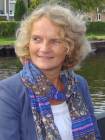
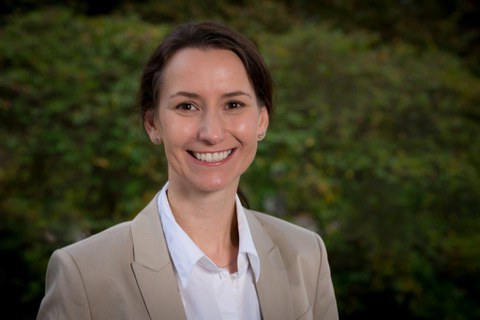
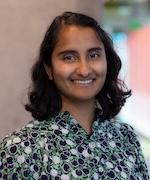
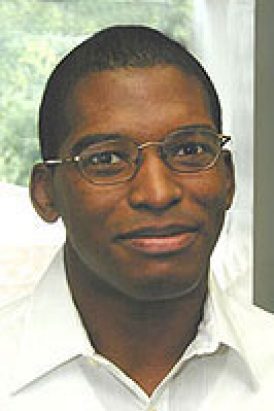
Poul Henning Jensen is a full Professor at Aarhus University , affiliated with both the Department of Biomedicine (Skou-building) and the Department of Molecular Biology and Genetics (Neurobiology section). Research Interests : Neurobiology of synucleinopathies Molecular mechanisms in Parkinson's disease Protein aggregation and propagation Calcium signaling in neurodegeneration Neuroinflammatory responses Scientific Activities : His work focuses on α-synuclein biology, covering structural analysis, aggregation pathways, and their pathological consequences. Recent studies include novel detection methods for early α-synuclein pathology mechanisms of neurotoxicity sex-specific neuroprotective factors and protein interaction networks in disease models . Scientific Awards : Recipient of at least one significant research prize Collaborations : Works with international teams on clinical trials targeting α-synuclein and coordinates multiple studies on neurodegenerative disease mechanisms.
Dr. Sameer Zuberi is an Honorary Professor in Paediatric Neurology at the University of Glasgow's School of Health & Wellbeing. He specializes in epilepsy genetics, particularly in Dravet syndrome and SCN1A-related disorders. His research focuses on gene-disease associations, treatment outcomes, and improving the quality of life for patients and families affected by rare neurological conditions. Dr. Zuberi has contributed to international epilepsy classification efforts, including the ILAE Task Force on Nosology and Definitions. He leads projects on epilepsy precision medicine, genetic epilepsy phenotyping, and the social impact of neurodevelopmental disorders. His work includes studies on caregiver burden in Dravet syndrome, the burden of illness in Lennox-Gastaut syndrome, and the efficacy of treatments such as fenfluramine. He has also pioneered research on genomic modifiers in 'monogenic' conditions like Dravet syndrome, highlighting the complexity of genetic influences. Dr. Zuberi collaborates with multidisciplinary teams to advance understanding of neurodevelopmental outcomes, psychosocial impacts, and translational therapies. His current research grants include initiatives on cloud-based AI for neurological condition diagnosis, epilepsy precision care, and transcriptomics in SMC1A mutations.
Dr. Marina Schoemaker is a Senior Lecturer at the University Medical Center Groningen (UMCG), affiliated with the Faculty of Medical Sciences and the Department of Human Movement Sciences. She holds a PhD in clinical psychology from the University of Groningen (1992) and has conducted research in the UK under an ESF grant. Her expertise focuses on Developmental Coordination Disorder (DCD), motor control, and pediatric rehabilitation. She has organized international DCD conferences and chairs the Dutch steering committee for DCD clinical guidelines. Education includes a Master's in clinical psychology and a PhD on physical therapy interventions for children with DCD. Research interests span assessment tools, intervention efficacy, motor performance variability, and cross-cultural DCD screening. She supervises PhD students on topics like motor control theories and DCD risk factors. Her work contributes to UN SDG 3 (Good Health) through improving DCD diagnosis and intervention. Key projects include the Little DCD-Q screening tool validation and motor variability studies in children with DCD. Teaching includes courses on motor development and rehabilitation theories for medical students. Professional activities include roles on international DCD research groups and organizing consensus meetings. Media engagements address child motor development topics like swimming and play-based interventions.
Prof. Dr. Katja Beesdo-Baum is a Full Professor of Behavioral Epidemiology at the Institute of Clinical Psychology and Psychotherapy, Faculty of Science, Technical University of Dresden. Her research focuses on the epidemiology and clinical aspects of mental disorders, integrating neurobiological, developmental, and environmental factors through large-scale observational and experimental studies. She holds editorial roles at journals like Child Psychiatry & Human Development and contributes to global initiatives such as the WHO’s ICD-11 clinical practice network. Her work spans anxiety disorders, depression, and prevention strategies in youth, with a strong emphasis on translational research and healthcare system integration. Education includes a Diploma in Psychology (2000) and a Dr. rer. nat. (2006), both from TU Dresden, followed by Habilitation in 2010. Professional experience includes postdoctoral training at the National Institute of Mental Health (USA) and leadership roles in clinical and research groups. Awards include the ECNP Fellowship and Dr.-Walter-Seipp Dissertation Award. Her research explores mechanisms linking stress, neuroendocrine systems, and mental disorders, with recent studies focusing on brain structure alterations in anxiety disorders (ENIGMA collaborations) and the efficacy of prevention programs. She investigates digital health tools, stigma reduction, and sociodemographic barriers to mental healthcare access in adolescents and young adults. Key Research Themes: Behavioral epidemiology, developmental psychopathology, neuroimaging, prevention science. Recent Trends: Machine learning in brain-based classification of anxiety disorders, longitudinal studies on stress biomarkers (e.g., cortisol, androgens), and implementation science for pediatric mental health services. Awards highlight her contributions to clinical guidelines (DSM-5 Task Force) and global mental health policy. Her grants and collaborations span European and international funding bodies, emphasizing interdisciplinary approaches to mental health challenges. Labs/Teams: Active in the ENIGMA Anxiety Working Group, BeMIND study (behavioral-mind health cohort), and Dresden-based clinical research networks.
Dr. Wael Al-Delaimy is a Professor at the Herbert Wertheim School of Public Health & Human Longevity Science at the University of California San Diego (UCSD). He holds leadership roles in multiple NIH-funded programs addressing climate change and global health equity. His research focuses on non-communicable diseases, environmental health, refugee mental health, and tobacco control, with a strong emphasis on vulnerable populations. Al-Delaimy has pioneered initiatives such as the GeoHealth Hub on Climate Change in the Middle East and North Africa, and the Global Center on Climate Change and Health-Energy-Food-Health Systems. Education: MD from Baghdad University (Iraq, 1991), PhD in Epidemiology from the University of Otago (New Zealand, 2000). Postdoctoral training at Harvard School of Public Health (2000–2004). Joined UCSD faculty in 2004, advancing to Full Professor. Research Interests: Climate change impacts on health, mental health resilience in refugees, tobacco control policies, and ethical research practices in global health. He leads programs addressing environmental justice, such as the California American Indian Tobacco Initiative Evaluation and the HRSA-funded Community Health Workers Program. Grants & Awards: Principal Investigator on NIH Fogarty grants (P20TW012709, U2RTW012228), and recipient of the 2024 UCSD Integrity Award. His work spans over 200 publications, focusing on climate change epidemiology, refugee health, and tobacco harm reduction. Labs & Teams: Director of the Al-Delaimy Research Group at UCSD, collaborating with 11 international universities. Active in the Global Mental Health Initiative and Research Ethics Training Program in Jordan.
Taylor Adams is a Researcher at the Yale School of Medicine's Internal Medicine Department, affiliated with the Kaminski Lab. Their work focuses on pulmonary fibrosis mechanisms, lung aging, and single-cell profiling, with a particular emphasis on epigenetic and immunological pathways. Adams collaborates closely with senior investigators like Naftali Kaminski, contributing to studies on fibrogenesis, drug development, and cellular dynamics in lung diseases. Research interests include understanding how epigenetic changes, microRNA regulation, and immune-cell interactions drive fibrotic processes. Recent work explores novel biomarkers for disease progression and non-invasive diagnostic methods. Adams' publications highlight advancements in spatial transcriptomics, somatic mutation analysis in aging lungs, and the role of GPR87 and CD103+ dendritic cells in fibrosis. Key contributions include identifying aberrant basaloid cells in IPF and developing computational tools like SDePER for deconvolving spatial transcriptomic data. Their lab's interdisciplinary approach integrates genomics, bioinformatics, and experimental models to translate findings into therapeutic strategies.
Dr. Jessica Zanuttini is a Lecturer in Special and Inclusive Education at the University of Sydney's Sydney School of Education and Social Work. She holds a PhD in Education and is a Fellow of the Higher Education Academy (FHEA). Her research focuses on the educational experiences of children and young people with disabilities, particularly those with autism, emphasizing qualitative and quantitative methods to explore social, political, and cultural influences on learning outcomes. She co-designs interventions that amplify student and caregiver voices while balancing community needs with academic rigor. Education: PhD in Education Bachelor of Education (Honours) Research Interests: Student voice and perspectives Single-subject experimental design Developmental disorders (autism, disabilities) Social communication and friendship development School-based interventions Early childhood intervention policies Awards: 2019 Australian Association of Special Education Research Award 2019 Council for Exceptional Children Doctoral Scholar Nominated for 2024 Vice Chancellor’s Excellence Awards (Inclusion Champion) Grants and Collaborations: Lead researcher on multiple grants including STaR Commissioned Research and FASS Open Access Funds Recipient of University of Sydney Nano Institute membership Collaborations on early childhood intervention policies and post-school transition programs Labs/Teams: Engaged with interdisciplinary teams in disability policy, inclusive education design, and participatory research methodologies.
Naveena Karusala is an Assistant Professor in the School of Interactive Computing at Georgia Tech. Her research focuses on centering care work in AI design to create sustainable futures in healthcare and social services. She holds a PhD from the University of Washington and a BS from Georgia Tech. She currently serves as Vice President for Communications on the ACM SIGCHI Executive Committee, fostering global HCI community engagement. Her work integrates critical theory to address issues of class, caste, gender, and race, prioritizing marginalized communities' knowledge in participatory design processes. Education: PhD in Computer Science, University of Washington Bachelor's in Computer Science, Georgia Tech Research Interests: Her interdisciplinary research explores human-centered AI, healthcare equity, and social justice. Key areas include contestable AI systems, participatory design with marginalized communities, and decolonizing technology practices. She emphasizes ethical AI frameworks that recognize care labor and structural inequities. Awards & Recognition: Her work has been recognized at ACM CHI and ACM CSCW for contributions to HCI and social good initiatives. Advising & Grants: She mentors students through Georgia Tech's PhD programs in Human-Centered Computing and Computer Science. She prioritizes applicants with experience in HCI, public health, and community-engaged research. Current Georgia Tech students can engage through research credits or funded projects. Labs & Teams: Collaborates with global community organizations and the Harvard Center for Research on Computation and Society (as a former postdoc). Her work emphasizes solidarity-driven research across borders and intersections of identity.
Dr. Gunjan Y. Parikh serves as an Associate Professor in the Department of Neurology at the University of Maryland School of Medicine, where she also functions as the Medical Director of the UMMC Neuro Critical Care Unit. Her clinical practice focuses on the intersection of neurology and critical care medicine, with particular expertise in managing patients with acute neurological emergencies including traumatic brain injury, intracerebral hemorrhage, and subarachnoid hemorrhage. Dr. Parikh completed her undergraduate education with a BA in Biochemistry from The University of Texas at Austin, followed by her MD from Texas A&M College of Medicine. Her clinical training includes an Internal Medicine internship at St. Vincent's Hospital - Manhattan, Neurology residency at Barrow Neurological Institute at Saint Joseph's Hospital and Medical Center (where she also served as Chief Resident), and specialized fellowship training in Neurocritical Care/Vascular Neurology at Columbia University Medical Center/Weill Cornell Medical Center. She further enhanced her research skills through an NINDS Research Fellowship in Neuroimaging at the National Institutes of Health. Her research program centers on identifying biomarkers during the resuscitation phase of patients with acute brain injuries that determine lesion repair, restoration of function, and recovery of consciousness. This work has led to significant contributions in characterizing the MRI signature of primary microvascular injury after head trauma and other acute brain injuries through both in vivo and ex vivo investigations. Her lab integrates multimodality monitoring with advanced neuroimaging techniques to translate findings to clinical care and develop outcome measures for clinical trials targeting currently untreatable aspects of brain injury such as demyelination and neurodegeneration. Analysis of Dr. Parikh's recent publications reveals a strong focus on translational neuroscience with emphasis on neuroimaging techniques, biomarker discovery, and clinical applications for acute brain injury management. Her work spans from basic science investigations of microvascular injury to clinical studies on patient outcomes, with particular attention to traumatic brain injury, intracerebral hemorrhage, and subarachnoid hemorrhage. Recent publications demonstrate increasing integration of data science approaches for predicting neurological deterioration and developing automated clinical assessment tools. Fellow of the Neurocritical Care Society (2024) Member, American Academy of Neurology Member, Neurocritical Care Society Member, National Neurotrauma Society Dr. Parikh serves as Site Co-PI for the DISCOVERY study (Determinants of Incident Stroke Cognitive Outcomes and Vascular Effects on Recovery) under NINDS/NIA U19 NS115388, and as SubK site-PI for the REACH-ICH study (Race/Ethnicity, Hypertension and Prevention of VCID and Stroke after Intracerebral Hemorrhage) under NINDS/NIH 5R01NS093870-08. Her research has been featured in multiple media outlets including MD Edge Psychiatry, News Medical, and SciTech Daily, highlighting her contributions to understanding vascular injury in traumatic brain injury. As Medical Director of the UMMC Neuro Critical Care Unit, Dr. Parikh leads a multidisciplinary team focused on providing high-reliability, quality care with emphasis on patient experience. Her research group actively investigates cerebral hemodynamics, neuroimaging biomarkers, and clinical decision support tools for patients with acute neurological conditions, with particular attention to improving triage and interhospital transfer of neuroscience patients.
Dr. Sarah J. Hon is a Clinical Professor in the Department of Neurology at the University of Kansas Medical Center and serves as Vice President of the Neuroscience Service Line at The University of Kansas Health System. She joined the faculty in 2022 after practicing neurology in Kansas City's Northland region. Board-certified in neurology and epilepsy, she previously chaired the Department of Medicine at North Kansas City Hospital and served on its Executive Committee. Education & Training: BA in Biology (with honors), William Jewell College DO (summa cum laude), Kansas City University of Medicine and Biosciences Internal Medicine Internship, Truman Medical Center/Saint Luke's Hospital Neurology Residency, University of Kansas Medical Center Executive MBA, Rockhurst University (2022) Research Focus: Her clinical expertise spans general neurology with specialized interests in epilepsy management, headache disorders, and neurological service line administration. Her work bridges clinical practice with healthcare leadership. Professional Leadership: Diplomate: American Board of Psychiatry & Neurology (Neurology/Epilepsy) Diplomate: United Council for Neurologic Specialties (Headache Medicine) Board Member: Kansas City Medical Society Vice President: Kansas City Clinical Neuroscience Society Member: American Academy of Neurology, American Medical Association
Leopoldo Pando Zayas is a Professor of Physics at the University of Michigan, specializing in Theoretical Elementary Particle Physics within the High Energy Theory group. His work is affiliated with the Michigan Center for Theoretical Physics (MCTP), where he conducts cutting-edge research at the intersection of quantum gravity, string theory, and black hole physics. Professor Pando Zayas' research focuses on quantum aspects of black holes, particularly examining how quantum corrections affect black hole entropy beyond the classical Bekenstein-Hawking formula. His work demonstrates how logarithmic corrections to black hole entropy can be matched to microscopic descriptions using the AdS/CFT correspondence. Additional research interests include quantum mechanical descriptions of gravity, quantum chaos, irreversibility theorems in renormalization group (RG) flows, gravitational collapse in Anti-de Sitter (AdS) space, Wilson loops in gauge theories, and implementing disorder within the AdS/CFT framework. His recent publications reveal a strong focus on precision calculations in holography, with particular attention to black hole thermodynamics across various dimensions, quantum corrections to Hawking radiation, and the application of quantum information concepts like complexity to gravitational systems. His work often bridges high-energy theory with mathematical physics, exploring connections between gauge theories and gravitational phenomena. Scientific Awards: UROP's Outstanding Research Mentor Award recognizing exceptional guidance of undergraduate researchers Honorable Mention in the Gravity Research Foundation Essay Competition (2014) for work connecting quantum chaos to the black hole information paradox Honorable Mention in the Gravity Research Foundation Essay Competition (2012) addressing AdS stability and gravitational collapse Professor Pando Zayas has actively mentored undergraduate research projects and advised diploma students at ICTP in Italy, demonstrating commitment to training the next generation of theoretical physicists. His teaching portfolio includes advanced courses in quantum mechanics, general relativity, string theory, and statistical physics. He has organized theoretical physics seminars and participated in numerous international collaborations with institutions including IAS Princeton, KITP Santa Barbara, and ICTP Italy.
Xiaolin Zhu, MD, PhD is an Adjunct Lecturer in the School of Medicine at the University of California, San Francisco (UCSF), specializing in the Genitourinary Medical Oncology Program. His clinical focus is on prostate, bladder, and kidney cancers, while his research explores cancer evolution mechanisms through patient biospecimen analysis. He holds roles as Principal Investigator on grants from the Department of Defense, Prostate Cancer Foundation, and Conquer Cancer Foundation. Education: Bachelor of Medicine (MD equivalent) in Clinical Medicine, Shanghai Jiao Tong University School of Medicine (2011) PhD in Genetics and Genomics, Duke University (2017) Internal Medicine Residency, UT Southwestern Medical Center (2020) Hematology/Oncology Fellowship, UCSF (2024) Research Interests: Focuses on precision oncology, genomic profiling of treatment resistance, and translational research in prostate and urothelial cancers. Key areas include epigenetic evolution in cancer progression, biomarker discovery, and developing novel therapeutic strategies. Awards: ASCO Young Investigator Award (2022-2023) PCF Young Investigator Award (2022-2025) Department of Defense Physician Research Award (2024-2028) Grants: Investigating SSTR1 as a novel biomarker for advanced prostate cancer (DOD, 2024-2028) Resistance mechanisms to androgen receptor inhibitors (PCF, 2022-2025) Genomic profiling of metastatic castration-resistant prostate cancer (ASCO, 2022-2023) Labs/Teams: Active in UCSF's Genitourinary Oncology research teams and collaborates with the West Coast Prostate Cancer Dream Team.
Prof. Barbara Wohlmuth is a full professor in Numerical Mathematics at the Technical University of Munich (TUM), affiliated with the TUM School of Computation, Information and Technology. She leads the International Graduate School of Science and Engineering at TUM and has held professorships at Stuttgart, Darmstadt, and Berlin universities. Her research focuses on numerical simulation of partial differential equations, multiscale solvers, and coupled multi-field problems with applications in engineering. Education: Studied mathematics at TUM and Université Joseph Fourier in Grenoble, received her doctorate from TUM in 1995, and completed habilitation in Augsburg. Visiting professorships in USA, France, and Hong Kong. Research interests include discretization techniques, predictive modeling, and interdisciplinary collaboration with engineering disciplines. Notable achievements: 2012 Gottfried Wilhelm Leibniz Prize (Germany’s highest academic honor in sciences), 2005 Sacchi-Landriani Prize. Publications emphasize advanced numerical methods in fluid dynamics, geophysics, and biomedical engineering. Active in editorial roles for international journals and scientific committees across Europe and USA. Elected member of Bavarian and European Academies of Sciences. Key contributions include: Development of robust numerical algorithms for exascale simulations Pioneering work in coupled multi-physics modeling Innovative methods for computational contact mechanics Leadership in graduate education initiatives
Mehmet YAVUZ is an Associate Professor at Trakya University's Faculty of Education, Department of Special Education Teacher Training. He has held academic positions since 2011, progressing from Lecturer to Assistant Professor (2018), and Associate Professor (2022). His professional experience includes teaching roles since 2000, primarily focused on special education. He obtained his doctoral degree in 2016 with research on video modeling methods for teaching children with autism spectrum disorder. YAVUZ's work emphasizes inclusive education, teacher well-being, and innovative teaching strategies for neurodiverse populations. Education: Bachelor's Degree in Special Education (2000) Master's Degree in Special Education (2008) Doctoral Degree in Special Education (2016) Research Interests: YAVUZ specializes in special education methodologies, particularly focusing on autism spectrum disorders. His work explores: Technology integration (VR/AR) in teaching sensory and life skills Teacher burnout and professional commitment Sibling relationships in neurodiverse families Inclusive classroom practices Educational assessment for children with learning difficulties Publications Trends: His recent work (2020–2025) emphasizes: Educational technology applications for disability support Teacher well-being and institutional challenges Metodological innovations in special needs pedagogy Advising & Grants: While no specific grants are listed, his extensive publication record indicates sustained research engagement. He has collaborated with co-authors like PINAR SAFAK and DENIZ SERDAL on key studies. Labs/Teams: No dedicated lab is mentioned, but his research often involves partnerships with Trakya University's Special Education faculty and international collaborators from institutions like Kliment Ohridski University (North Macedonia).
Roberto Cavallaro is a Full Professor of Psychiatry at the Faculty of Medicine and Surgery of Vita-Salute San Raffaele University. He serves as President of the Degree Course in Medicine and Surgery and leads the General Psychiatry Rehabilitation Unit and Disease Unit for Psychotic Disorders at IRCCS Ospedale San Raffaele. With a career spanning over three decades, he specializes in clinical psychopharmacology, neuropsychology, and neurocognitive rehabilitation, particularly in schizophrenia and psychotic disorders. Education: Graduated in Medicine (1987) and specialized in Psychiatry (1991) from the University of Milan. Research Interests: Focuses on schizophrenia pathophysiology, clinical psychopharmacology, neuropsychological rehabilitation, and the genetic modulation of cognitive performance. His work integrates neurobiological, pharmacological, and psychological approaches to address cognitive deficits in psychiatric disorders. Publications & Conferences: Authored/co-authored over 100 peer-reviewed articles and organized international conferences like the 'Cognition in Schizophrenia Satellite Meeting' since 2008. Recent research explores psychedelic drug effects, neuroinflammation in schizophrenia, and integrated translational studies combining genomic and microbiome data. Awards: Fellow of the European College of Neuropsychopharmacology (ECNP). Leadership Roles: Director of the Master's Degree in Clinical Psychopharmacology, member of the Schizophrenia Research: Cognition editorial board, and reviewer for DSM-V. Teaching: Leads courses in Psychiatry, Clinical Psychology, and Psychopharmacology across undergraduate and graduate programs at Vita-Salute University. Labs/Teams: Oversees clinical and research activities in the General Psychiatry Rehabilitation Unit and collaborates with multidisciplinary teams in neurocognitive rehabilitation and pharmacotherapy.