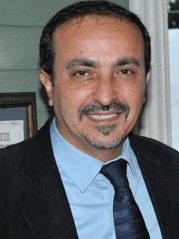
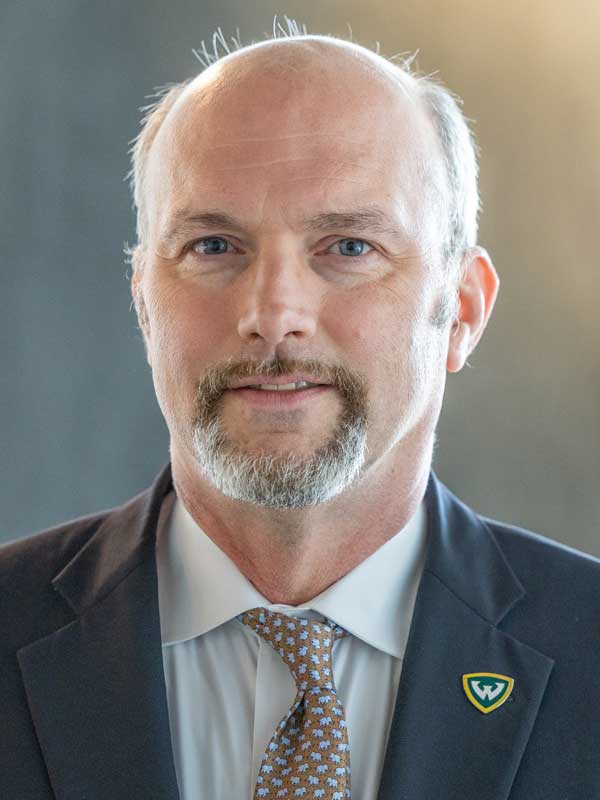
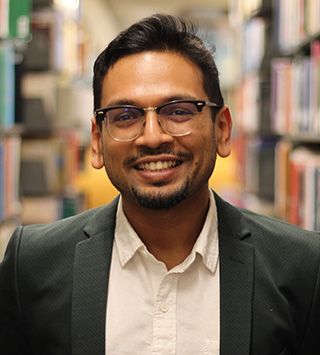
Dr. Umit Koylu is a Professor in the Department of Mechanical and Aerospace Engineering at Missouri University of Science and Technology. He also serves as a Present Research Investigator at the Center for Research in Energy and Environment (CREE). His academic career spans over two decades, including prior roles as Associate Professor and Assistant Professor at Missouri S&T and Florida International University. Ph.D. in Aerospace Engineering, University of Michigan – Ann Arbor (1992) M.S. in Aerospace Engineering, University of Michigan – Ann Arbor (1989) B.S. in Aeronautical Engineering, Istanbul Technical University (1986) Dr. Koylu's research focuses on combustion processes , hydrogen technologies , and fuel cell modeling . His work addresses both conventional and alternative energy systems, with key contributions to soot characterization, clean coal technologies, and laser diagnostics for combustion diagnostics. Recent studies emphasize internal combustion engines fueled by hydrogen/diesel mixtures and PEM fuel cells with bio-inspired designs. His publications highlight trends in combustion diagnostics, soot morphology, hydrogen-fueled engines, and fuel cell optimization. Notable collaborations include work on electric vehicle acceleration strategies and NOx emission reduction techniques. Scientific awards include the National Science Foundation CAREER Award (1999) and multiple teaching honors from Missouri S&T and Pi Tau Sigma. Dr. Koylu is actively involved in professional societies such as the American Society of Mechanical Engineers (ASME) and the Combustion Institute.
Marcis Jansons is an Associate Professor of Mechanical Engineering and Director of the Early Engineering Programs at Wayne State University's College of Engineering. He holds a Ph.D. from Rutgers University (2005) and has professional engineering licensure (P.E.). His expertise spans engine technology, combustion diagnostics, and propulsion systems. Education: Ph.D. in Mechanical Engineering, Rutgers University, 2005 M.S. in Mechanical Engineering, New Jersey Institute of Technology, 1992 B.S. in Mechanical Engineering, Rutgers University, 1990 Research Interests: Focuses on combustion processes, fluid mechanics, and emissions formation. Utilizes optical diagnostics (e.g., infrared imaging) for engine analysis. Engages in propulsion system design and optimization. Professional Affiliations: Member of the Society of Automotive Engineers (SAE), Board of Associates of ASME, and ASME's Internal Combustion Engine Division (ICED).
Mithun Goutham is an Assistant Teaching Professor in the Department of Mechanical, Materials, and Aerospace Engineering at Illinois Institute of Technology. He holds a Ph.D. in Mechanical Engineering (expected 2025) from The Ohio State University, where he also earned an M.S. (2020) and previously obtained an M.Tech. in Design Engineering (2018) from Birla Institute of Technology & Science. His expertise spans Combinatorial Optimization, Cyber-Physical Systems, Operational Resilience, and Internal Combustion Engines. Dr. Goutham has received notable awards including the Best Student Research Award (2024) and the ENGIE-Axium Scholarship (2024). He focuses on optimizing fleet management, energy systems, and autonomous robotics. His research integrates machine learning, control systems, and operations research to address challenges in smart homes, manufacturing logistics, and renewable energy integration. His work on fleet composition and energy management has led to patents at The Ohio State University (2024) and a prior patent in vehicle exhaust design (2017). His articles explore topics like Monte Carlo-based fleet allocation, resilient intra-factory logistics, and user activity prediction in smart environments.
Çağlar Karatuğ is an Assistant Professor at the Department of Marine Engineering, Istanbul Technical University. His research focuses on predictive maintenance strategies for marine machinery systems, energy efficiency in shipping, and smart ship technologies. He explores renewable energy integration, emission reduction techniques, and future skills required for automated maritime operations. He leads the project 'Digitalization in Maritime and Required New Skills for Efficient Operations' (2024-2025). Education : Not explicitly stated in the provided texts. Key research interests include condition-based maintenance, hybrid power systems for vessels, artificial intelligence applications in navigation, and regulatory compliance for carbon intensity reduction. His work combines fault tree analysis, Bayesian networks, and fuzzy logic for risk assessment and reliability modeling. Recent contributions address scrubber technology risks, cost-benefit analysis of emission reduction, and solar-wind-battery systems onboard ships. He has published extensively on maritime sustainability, with over 26 peer-reviewed articles since 2020. Current projects emphasize digital transformation in maritime operations and skills development for autonomous ships. He collaborates on reliability assessment of marine engines and optimization strategies for vessel efficiency.
Ph.D., D.Sc., Eng. Jacek Kropiwnicki is a full Professor at Gdańsk University of Technology's Faculty of Mechanical Engineering, serving as Vice-Dean for Development since 2023. He leads the Department of Ecoengineering and Combustion Engines and previously held roles including Head of the University Commission for Educational Quality Assurance (2016-2023) and Vice-Dean for Education (2012-2016). Education: M.Sc. (1995), PhD (2001), Habilitation (2012) from Gdańsk University of Technology Research focuses on Stirling engine prototypes, energy systems powered by renewable/waste energy, combustion engine emissions, and hybrid/electric vehicle drivetrains. Maintains international collaborations with Hochschule Bremen and National Technical University of Athens. Recipient of multiple institutional awards including 5 didactic achievement awards and 2 scientific excellence recognitions from Gdańsk Tech Rector's Office. Institutional roles: Polish Accreditation Committee expert (since 2016), member of Polish Scientific Society of Combustion Engines
Assoc. Prof. Dr. Raşit ESEN is a faculty member at Karabük University's Safranbolu Fethi Toker Faculty of Fine Arts and Design, specializing in Industrial Design. He holds a doctoral degree from Karabük University (2013) and has been active in academia since 2007, progressing from Research Assistant to Associate Professor. His research focuses on wood processing, furniture design, and wood-based composites. He has published over 60 articles, including SCI-indexed works on thermal properties and combustion resistance of wood materials. ESEN coordinates Erasmus, Mevlana, and Farabi programs and has supervised four PhD/master's students. He has received multiple awards from TÜBİTAK for international publications. Education : BSc in Furniture Design (Dumlupınar University, 2006), MSc/PhD in Furniture and Decoration Education (Karabük University, 2009/2013), additional BSc in Advertising (Atatürk University, 2021). Research Interests : Exploring advanced wood composites, fire-retardant treatments, and ergonomic furniture design. His work bridges material science with industrial design applications, focusing on sustainability and mechanical properties. Awards : Three TÜBİTAK awards (2010-2011) for international publications. Active in 5+ research projects, including strategic partnerships like STRATAGAME for soft skills via gamification. Academic Leadership : Served as Department Head since 2015, Senate Member, and Quality Board Member. Teaches courses on industrial design, ergonomics, and visualization techniques.
Zlate Dimkovski is a Lecturer at the Academy of Entrepreneurship, Innovation and Sustainability at Halmstad University. His research focuses on tribology, surface engineering, and manufacturing processes, particularly in automotive applications. Key areas include cylinder liner surfaces, honing textures, additive manufacturing, and friction reduction in mechanical systems. He has contributed extensively to the optimization of manufacturing processes and the characterization of surface topographies, with a focus on predictive modeling and quality control. His work integrates experimental analysis and computational methods to improve surface functionality and durability in industrial components. Dimkovski has authored over 30 publications since 2009, including peer-reviewed articles and conference papers on topics such as tribological testing, surface wear analysis, and the application of additive manufacturing in functional surface design. His research emphasizes practical solutions for reducing energy consumption and improving mechanical efficiency in automotive and industrial systems.
Dr. Alfonso Chinnici is a Senior Lecturer in Mechanical Engineering at the University of Adelaide, affiliated with the School of Electrical and Mechanical Engineering under the Faculty of Sciences, Engineering and Technology. He specializes in Sustainability, Net-Zero Technologies, and Energy Innovation, with a focus on hydrogen production, decarbonization of heavy industries, and solar thermal energy systems. Dr. Chinnici has secured over $10 million in R&D funding and holds 4 patents. He leads research in the Australian Heavy Industry Low-Carbon Transition CRC and advises international bodies like the International Energy Agency and South Australian Government on green fuels and critical mineral supply chains. His research integrates advanced engineering principles with clean energy solutions, addressing challenges in clean tech analysis, decarbonization pathways, and techno-economic evaluations. Key areas include combustion science, multi-phase flows, and circular economy practices. Dr. Chinnici has published over 100 articles in top journals, with recent work focusing on hydrogen-blended combustion systems, concentrated solar thermal processes, and CO2 mineralization technologies. He actively collaborates with industry partners to bridge research innovation with practical industrial applications.
Shahram Karami is a Research Fellow at the Lab for Turbulence Research in Aerospace & Combustion (LTRAC) , Department of Mechanical & Aerospace Engineering, Monash University. His research focuses on high-fidelity simulations (DNS/LES) of turbulent/reacting flows, aeroacoustics, and hydrodynamic instabilities in supersonic impinging jets. He joined Monash in June 2016 under Prof. Julio Soria's supervision. Previously, he completed his PhD (2012-2015) at the University of Melbourne's Combustion Research Group, where he conducted groundbreaking DNS of lifted flames under Prof. Evatt Hawkes and Dr. Mohsen Talei. His PhD work produced influential studies on flame stabilization and edge-flame structures in Combustion and Flame (2016) and JFM (2014). Research Interests: Fluid flow instabilities, turbulent flows, combustion physics, heat transfer, and aeroacoustics. His work contributes to UN Sustainable Development Goals related to clean energy and climate action. Peer Review Activities: Since 2014, he has reviewed for leading journals including International Journal of Heat and Mass Transfer , Combustion and Flame , Physics of Fluids , Aerospace Science and Technology , and Proceedings of the Combustion Institute . Labs/Teams: Active member of LTRAC, collaborating internationally on fluid dynamics and supersonic jet instabilities. His research has been cited over 200+ times, with key contributions to understanding jet noise mechanisms and combustion dynamics.
Dr. Bai-qian Dai is an Adjunct Associate Professor in Chemical & Biological Engineering at Monash University's Suzhou Research Institute. His research focuses on clean coal technology, ash slagging mechanisms, energy process design, and fly ash utilization. He holds a PhD from Wuhan University of Technology (2006) and has conducted postdoctoral studies on fly ash vitrification. His work contributes to UN Sustainable Development Goals related to affordable clean energy and climate action. He leads projects on carbon waste valorization and catalyst development, including roles in the ARC Research Hub for Value-Added Processing of Underutilised Carbon Waste. Notable awards include the Suzhou Industrial Park Young International Discipline Leaders (2021) and the Suzhou Industry Park Excellent Teaching Award (2022). His publications span over 60 peer-reviewed articles, emphasizing sustainable energy solutions, computational modeling, and catalytic innovation. Education: Bachelor of Engineering, Wuhan University of Technology (2006) Master of Engineering, University of Shanghai for Science and Technology (2009) PhD in Clean Coal Technology (2013) Research interests include: Clean energy systems High-temperature catalysis CFD modeling for industrial processes Waste-to-value technologies Recent projects involve: Development of Pt-based electrocatalysts CO₂ capture in FCC units Smart cokemaking via AI-driven modeling Awards: National honour (2015) Suzhou Young Leader award (2021) Teaching Excellence (2022) Collaborations span institutions like Southeast University (China), QUT, and industry partners such as Enzide Technologies and Carbon Technologies Australia.
Dr. Nader Karimi is a Reader in Mechanical Engineering at the School of Engineering and Materials Science, Queen Mary University of London, where he conducts cutting-edge research in sustainable energy systems. He is affiliated with the Centre for Sustainable Engineering and contributes significantly to advancements in combustion, heat transfer, and energy conversion technologies. His research interests span a broad range of topics in thermal and energy engineering, including sustainable hydrogen energy, nanofluids, phase change materials, lithium-ion battery thermal management, solar energy systems, entropy and exergy analysis, and computational fluid dynamics. He integrates machine learning techniques with physical modeling to optimize energy systems and improve sustainability. The recent publications highlight a strong focus on hydrogen combustion, sustainable fuel design, solar thermal conversion, battery cooling, and waste heat recovery. His work often combines experimental, numerical, and data-driven approaches to address critical challenges in low-carbon energy technologies, with applications in transportation, power generation, and renewable energy integration. Dr. Karimi actively collaborates with researchers globally and supervises numerous research projects in the field of sustainable engineering. His work is supported by extensive computational modeling and contributes to the development of cleaner and more efficient energy systems.
Dr. Cristian Birzer is a Senior Lecturer at the University of Adelaide's School of Electrical and Mechanical Engineering, focusing on Sustainable Energy and Humanitarian Engineering. He leads the Humanitarian and Development Solutions Initiative (HDSI), which develops affordable technologies for resource-constrained regions. His research areas include clean cookstove design, biochar applications in waste management, and renewable energy systems. Dr. Birzer’s work emphasizes open-source solutions and local implementation, aiming to reduce preventable deaths and improve quality of life globally. He has deployed in disaster zones like East Timor, the Solomon Islands, and post-earthquake Nepal. His expertise spans mechanical engineering, combustion science, and humanitarian technology dissemination. Recent research highlights include optimizing in-stream water wheel performance (2024), biochar-enhanced anaerobic digestion (2023), and humanitarian engineering education frameworks (2022). He received the Tall Poppy Award in 2014 for outstanding scientific achievement and communication. His teaching integrates complex global challenges, such as sustainable energy access and disaster resilience. Professional activities include advising NGOs and military humanitarian missions, reflecting his dual focus on technical innovation and practical impact. Lab affiliations include the Humanitarian & Development Solutions Initiative (HDSI), where interdisciplinary teams address energy poverty, water sanitation, and post-crisis infrastructure needs.
Suo Yang is the Richard & Barbara Nelson Assistant Professor in the Department of Mechanical Engineering at the University of Minnesota, College of Science and Engineering. He is an active researcher in combustion, plasma-assisted technologies, and high-speed reacting flows, with a strong focus on sustainable and high-performance propulsion systems. He is currently accepting PhD students and leads multiple externally funded research projects. Education: PhD in Aerospace Engineering, Georgia Institute of Technology, 2017 MS in Computational Science & Engineering, Georgia Institute of Technology, 2015 BS in Mathematics & Applied Mathematics, Zhejiang University, 2011 His research interests lie at the intersection of combustion science , plasma physics , and computational fluid dynamics . He investigates plasma-assisted ammonia combustion , transcritical fuel injection , detonation dynamics , and multi-fuel engine systems , contributing to sustainable energy and hypersonic technologies. His work aligns with UN Sustainable Development Goals related to clean energy and climate action. The analysis of his recent publications reveals a strong trend toward ammonia-based fuels , non-equilibrium plasma applications , and high-fidelity modeling of complex reacting flows. His work integrates advanced numerical methods with experimental validation, focusing on ignition enhancement, flame stabilization, and emission reduction in next-generation propulsion systems. Scientific Awards and Recognition: No specific awards or fellowships are listed in the provided text. Research Advising and Grants: Dr. Yang is actively mentoring PhD students and leading significant research initiatives. He serves as Principal Investigator (PI) on multiple grants from the U.S. Department of Defense (Air Force, Navy), the National Science Foundation, and industry partners. His funded projects include research on micro-jetting in detonations , plasma-assisted ammonia combustion , transcritical phase change , and multi-fuel engine control for unmanned systems . These projects reflect his leadership in advancing fundamental and applied combustion science. Laboratories and Research Teams: While specific lab names are not mentioned, Dr. Yang leads a research group focused on computational and experimental combustion at the University of Minnesota. His collaborations span institutions and include work with Spectral Energies, LLC, and researchers across mechanical and aerospace engineering disciplines. His team employs high-performance computing and advanced diagnostics to study complex flow and combustion phenomena.
Ioannis V. Gentekakis is a Full Professor at the School of Environmental Engineering, Technical University of Crete, where he also serves as Director of the PCCP Laboratory. He holds a prominent academic position with extensive research leadership and teaching responsibilities in catalysis, electrochemistry, and environmental engineering. Technical University of Crete, School of Environmental Engineering – Full Professor (since 2001) University of Patras, Department of Chemical Engineering – Lecturer (1988–present, joint appointment) Managing Director, PCCP Laboratory – Technical University of Crete (2001–2020) Member, University Council – Technical University of Crete (2013–2017) His research spans heterogeneous catalysis, environmental catalysis, nanomaterials, CO₂ recycling, hydrogen and biogas valorization, and electrochemical promotion (NEMCA). He investigates catalyst design, stability, and reactor engineering for sustainable energy and pollution control. His work integrates experimental and computational approaches to develop advanced catalytic systems for clean fuel production and emissions abatement. The trend in his recent publications shows a strong focus on CO₂ conversion technologies (methanation, dry reforming), supported noble metal catalysts (Rh, Ir, Ru), perovskite materials, and nanostructured supports. His work emphasizes catalyst stability, selectivity, and resistance to sintering and carbon deposition, aligning with industrial and environmental sustainability goals. His scientific awards and editorial roles highlight his leadership in the catalysis community: Section Editor-in-Chief, Nanomaterials (IF: 5.076) Specialty Chief-Editor, Frontiers in Environmental Chemistry: Catalytic Remediation Editorial Board Member of 8 international journals Guest Editor for multiple special issues in Catalysts and Nanomaterials President/Organizer of the 16th Panhellenic Symposium on Catalysis Plenary Lecturer and Honored Member at the 6th International Conference on Environmental Chemistry and Engineering (2017) Invited Editor, Springer-Nature Book on Electrochemistry and Catalysis Prof. Gentekakis has supervised multiple doctoral candidates and leads several major research projects, including: Eco-Bio-H₂-FCs (2020–2023): Pilot-scale H₂ and power production from biogas (€1M budget) CatEfDeNOX (2019–2022): Development of catalysts for automotive De-NOX (Greek-Chinese collaboration) ECO-ETHYLENE (2018–2021): Innovative biogas and CO₂ utilization to ethylene (€1M budget) Postdoctoral Research Fellowship on CO₂ management via conversion to upgraded chemicals He is actively involved in laboratory research through the PCCP Lab and collaborates with an international network of researchers. His team focuses on developing innovative catalytic processes for energy and environmental sustainability.
Prof. Wojciech Henryk Gac is a distinguished Professor at the Department of Chemical Technology, Faculty of Chemistry, Maria Curie-Skłodowska University in Lublin, Poland. With over 25 years of academic experience, he has established himself as a leading researcher in catalysis and materials science. His work focuses on developing catalysts for hydrogen production, CO 2 conversion, and environmental applications. Prof. Gac has led numerous international research projects and supervised many doctoral and master's theses throughout his career. Prof. Gac's academic journey began at the Chemical Technical School in Lublin (1982-1987). He then pursued higher education at Maria Curie-Skłodowska University: 1987-1992: Master's degree in Chemistry with thesis "Synthesis and study of properties of unsaturated fire-retardant polyester resins" 1992-1996: Doctoral studies in Chemistry with dissertation "Study of the influence of surface heterogeneity on multilayer adsorption and capillary condensation in network systems by Monte Carlo method" 2009-2010: Postgraduate studies in Project Management at Leon Koźmiński Academy in Warsaw Prof. Gac specializes in heterogeneous catalysis, particularly in developing catalysts for hydrogen production and CO 2 conversion. His research focuses on understanding the relationship between structural, surface, redox, and acid-base properties of supported catalysts and their catalytic performance. He employs temperature-programmed methods (TPR, TPD, TPO) and in-situ FTIR spectroscopy to study catalysts for CO 2 hydrogenation, methanol and ethanol transformations, hydrocarbon conversion to hydrogen, and CO/organic compound oxidation. His work bridges fundamental surface science with practical applications in sustainable energy and environmental protection. Prof. Gac's recent publications (2020-2024) demonstrate a strong focus on CO 2 methanation using nickel-based catalysts with various promoters (Ce, W, Nd) and supports (alumina, ceria, zeolites). His research also explores steam reforming of methanol and ethanol for hydrogen production, CO oxidation, and phenol adsorption. The articles reveal a consistent pattern of investigating structure-activity relationships in heterogeneous catalysis, with emphasis on catalyst design, characterization, and performance optimization for sustainable energy applications and environmental remediation. Throughout his distinguished career, Prof. Gac has received several prestigious awards: Individual Award of the Rector of UMCS, 3rd degree (2010) Individual Award of the Rector of UMCS, 2nd degree for particularly important and creative achievements (2004/2005) Dean's Award of the Faculty of Chemistry UMCS for distinction in master's thesis (1991/1992) Prof. Gac has extensive experience supervising doctoral, master's, and bachelor's theses in the fields of catalysis and materials science. He has successfully led numerous research projects, including: International Projects: ERA-NET Bioenergy ICOCAD (2016-2019), Fuel Cell and Hydrogen Joint Undertaking projects (2013-2014, 2009-2013), POLONIUM program (2012-2014), FP7 projects (2009-2012, 2008-2011) National Projects: Eco-friendly methane utilization technology (2009-2013), Highly selective ethanol conversion catalyst (2008-2011), New catalytic materials for environmentally friendly chemical processes (2005-2008) UMCS Projects: Synthesis and study of physicochemical, catalytic and magnetic properties of high-surface oxide materials (2009), Kinetic analysis of isotopically labeled methane disturbances (2007) Prof. Gac leads research activities at the Department of Chemical Technology, utilizing advanced analytical equipment including: Integrated FT-IR spectroscopy system with Step-Scan, DRIFTS, ATR, PM-VCD, PM-IRRAS, PAS, Raman spectroscopy, and mass spectrometry for in-situ and operando studies Automated catalyst activity testing systems with microreactors connected to gas chromatographs or mass spectrometers Temperature-programmed techniques (TPD, TPR, TPO) using Micromeritics AutoChem II 2920 and AMI-1 Altamira analyzers Catalyst and nanomaterial synthesis facilities including automated reaction systems, high-pressure reactors, and thermal treatment equipment He collaborates extensively with the Analytical Laboratory of the Faculty of Chemistry at UMCS, particularly in electron microscopy and XPS spectroscopy.