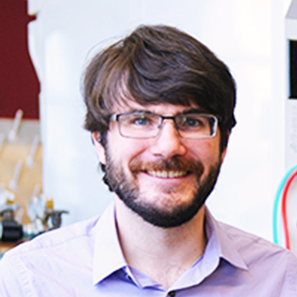
Jeffrey C. Suhling is the Quina Distinguished Professor and Department Chair of Mechanical Engineering at Auburn University . His research focuses on the mechanical and thermal behavior of lead-free solder alloys , particularly in automotive electronics and high strain rate applications . He has extensively studied the reliability of hybrid SAC-LTS solder joints under thermal cycling, vibration, and shock. Scientific awards : Quina Distinguished Professor His work integrates finite element modeling , microstructural analysis , and machine learning to predict solder joint failure and optimize material performance. Key areas include creep behavior , damage accumulation , and interfacial reliability in extreme environments.
Jun Chen is a Senior Professor at the University of Wollongong, affiliated with the Intelligent Polymer Research Institute within the Australian Institute for Innovative Materials. He holds a PhD from the University of Wollongong (2003). His research focuses on nanomaterials, electrocatalysis, energy storage, and fuel cell technologies. Key interests include carbon nanotube architectures, sustainable energy materials, and bionic device development. He has received notable awards such as the Clarivate Highly Cited Researcher (2020, 2018) and the Royal Society of Chemistry Fellowship (2021). Research activities emphasize design of novel electrocatalysts for hydrogen storage, CO₂ reduction, and water splitting. His group explores 3D-printed biocompatible materials and wearable energy systems. He leads projects on nanomaterial synthesis and electrochemical systems, supported by ARC grants. Supervision covers topics like electrochemical stimulation systems and energy storage interfaces. Professional service includes roles in academic leadership and editorial boards. Key contributions include patents on carbon nanotube architectures and over 360 publications. His work bridges nanotechnology with sustainable energy and biomedical applications, aiming to advance eco-friendly energy conversion and regenerative medicine.
Powder Metallurgy (MH2100) and has expertise in computational materials science. His research emphasizes predictive modeling of material behavior, including precipitation kinetics, sintering processes, and coating interactions. Notable areas include phase field modeling of discontinuous precipitation, spinodal decomposition in Fe-Cr alloys, and high-entropy alloy design. His studies bridge experimental data with computational tools like the YAPFI phase-field framework. Key themes in his publications span cemented carbides, Co-based entropic alloys, and tool wear mechanisms. He combines CALPHAD thermodynamic modeling with first-principles calculations to address challenges in materials processing and corrosion resistance. His work often addresses industrial applications, such as optimizing machining tools and additive-manufactured superalloys.
Dr. Laurent Piccolo is a permanent senior researcher (DR CNRS) at the Institute on Catalysis and Environment of Lyon (IRCELYON) , France, since 2022. He specializes in surface science and heterogeneous catalysis , with a focus on CO2 valorization , single-atom catalysis , and hydrogenation reactions . His work bridges fundamental studies of metal-support interactions and applied catalyst design for energy transition. Habilitation à diriger des recherches (University of Lyon, 2007) PhD in Materials Science (Aix-Marseille University, 1999) Master in Materials Science/Surfaces and Interfaces (Aix-Marseille University, 1996) Research Interests: His work investigates metal ultradispersion and single-atom catalysis for reactions like CO2 hydrogenation and CO oxidation. He explores how ceria , MXenes , and intermetallic compounds influence catalytic activity and stability, particularly under hydrogenation and oxidative environments . Scientific Contributions: He leads the ANR ISAC project (2022-2025) on single-atom catalysts and co-leads ANR DuCaCO2 (2021-2025) for CO2 capture and conversion . His 100+ peer-reviewed articles (4300+ citations, H-index 40) cover nanoparticle synthesis , operando characterization , and catalyst degradation mechanisms . Expertise: He employs ultrahigh vacuum techniques , surface analysis (XPS, STM, FTIR), and bulk characterization (XRD, TEM, XAS) to study catalysts. His skills include GCxGC-MS for product analysis and DFT modeling of reaction pathways. Awards & Recognition: ANR project leadership 4300+ citations 3 book chapters 260+ conference communications
Professor Gao Min Gao is a distinguished academic at Cardiff University's School of Engineering, holding the position of Professor of Energy Materials and Head of the Thermoelectric Laboratory. With over 25 years of experience in thermoelectric research, he has established himself as a leading expert in energy conversion technologies. His career at Cardiff University spans from Research Assistant/Associate (1993-1999) to his current professorship (2016-Present), with progressive academic promotions reflecting his significant contributions to the field. BSc in Semiconductor Physics from Xidian University, China PhD in Thermoelectrics under Professor D M Rowe at Cardiff University, UK Professor Gao's research focuses on fundamental understanding of thermoelectric processes for energy harvesting applications, with key areas including thermoelectric materials and devices, solution processed solar cells (Perovskite, OPV), concentrated photovoltaic/thermoelectric systems, and magnetocaloric materials. His work has significantly advanced the field, particularly through his early contributions to Peltier module applications for waste heat recovery and the development of improved TE module theory. His current research emphasizes novel characterization techniques for thermoelectric processes and innovative concepts for full-spectrum solar energy harvesting based on hybrid PV-TE systems. His extensive publication record demonstrates consistent high-impact research output across thermoelectrics and solar energy conversion. The articles show a clear progression from fundamental thermoelectric theory to practical applications and hybrid systems, with recent work focusing on spectral splitting, advanced concentrator designs, and novel material systems like Fe11Ti3Al6 alloys. His research bridges fundamental physics with practical engineering applications, particularly in waste heat recovery and solar energy harvesting. Board Member of European Thermoelectric Society (2013-2019) Member of EPSRC Review College (2016-Present) Theme coordinator (Device Physics), UK Thermoelectric Network (2016-Present) Independent expert for EC H2020 Programme (2014-2016) Professor Gao has supervised numerous PhD students, with current projects spanning laser micro-spectroscopy, next-generation photovoltaics, graphene/ceramic composites, and full-spectrum solar energy harvesting. His externally funded research includes significant projects such as the EU-RFCS-funded 'Development of innovative TEG systems optimized for energy harvesting from EAF off-gas cooling water' (2020-2024) and the EPSRC SUPERGEN project on 'Environmental impact of perovskite solar cell' (2019). His Thermoelectric Laboratory at Cardiff University serves as a hub for cutting-edge research in energy materials and conversion technologies.
Ki Buem Kim is a Professor in the Department of Nanotechnology and Advanced Materials Engineering at Sejong University. He holds a Ph.D. from the University of Oxford (2004), an M.S. from Yonsei University (2000), and a B.S. from Hongik University (1998). Since 2006, he has contributed to 284 research outputs with an h-index of 48, focusing on metallic materials and their applications. Education: Ph.D., University of Oxford (2004) M.S., Yonsei University (2000) B.S., Hongik University (1998) His research spans metallic structural materials, with emphasis on eutectic alloys, self-healing metallic materials, and metallic glasses. Recent work includes Zn-doped CoFe2O4 nanoparticles for water splitting, chromaticity analysis of (Cu-Ge)100-xAlx alloys, and corrosion resistance studies of FeBC glasses. He has developed patented technologies in Korea for color metal fabrication and water-splitting photoelectrodes. Key article trends include: Electrochemistry for sustainable energy (e.g., water splitting) Microstructural engineering of High Entropy Alloys Nanostructured metal oxides and multielement alloys Mechanical/optical property optimization Collaborations: Active in international collaborations, particularly in electrochemistry, nanomaterials, and alloy design. His work aligns with UN Sustainable Development Goals (SDGs) in clean energy and sustainable materials.
Wolfgang Windl is a Professor in the Department of Materials Science and Engineering at The Ohio State University with a joint appointment in Physics. He co-founded Goniotech LLC and previously worked at Motorola as a Principal Staff Scientist. He holds a doctoral degree in physics from the University of Regensburg and completed postdoctoral research at Los Alamos National Laboratory and Arizona State University. His research specializes in computational materials science, focusing on: Atomistic simulations and density-functional theory Machine learning applications in materials design Semiconductor transport and layered materials (e.g., Dirac semimetals) Atom probe tomography and characterization techniques Analysis of his 15 most recent publications (2023-2025) reveals dominant themes: advanced simulations of field evaporation, topological quantum materials (PtTe 2 , PdTe 2 ), and computational frameworks for materials characterization. His work frequently integrates spectroscopy, tomography, and Bayesian methods to study alloys, 2D materials, and additive manufacturing defects. Awards and Honors Fraunhofer-Bessel Research Award (2006) Four Lumley Research Awards Boyer Award for Teaching Excellence (2015) Faculty Diversity Excellence Award (2020) Two Mars Fontana Best Teacher Awards (2006, 2015) ASEE Best Paper & Diversity Awards (2019) He advises 11+ graduate students (7 alumni, 5 current) and leads the Windl Group research team focused on computational materials modeling. His group develops simulation tools for atomic-scale characterization and collaborates with national laboratories.
Jenn-Ming Yang is a Distinguished Professor in the Department of Materials Science and Engineering at the University of California, Los Angeles (UCLA), holding the Collins Aerospace Term Chair for Excellence. His work focuses on advanced composite materials for aerospace and transportation applications, with significant contributions to high-temperature material systems. Professor Yang's research centers on fundamental problems in processing, microstructure development, and mechanical behavior of high-temperature composites. His investigations target critical applications in aerospace structural systems and ground transportation, with emphasis on material durability, failure mechanisms, and performance under extreme conditions. This work bridges materials science, mechanical engineering, and aerospace engineering through experimental and analytical approaches. His recent publications (2007-2008) reveal a concentrated focus on composite material systems, including titanium-based laminates, carbon nanotube reinforcements, ultra-incompressible transition metal diborides, and ceramic composites. Key research themes involve mechanical property characterization, failure analysis, and microstructure-property relationships, with direct applications to aircraft structures, propulsion systems, and energy storage technologies. Professor Yang's scientific achievements have been recognized through numerous prestigious awards: Scholars Award from National Engineering Research Center for Composite Manufacturing Science & Engineering (1987) Faculty Career Development Award (1989) Presidential Young Investigator Award from the National Science Foundation (1990-1995) Alcoa Foundation Award (1992) Ford Foundation Award (1993) Best Paper Award from the Japan Society of Mechanical Engineers (2007) His research program addresses critical challenges in advanced material systems for next-generation aerospace and transportation applications, with ongoing investigations into novel composite architectures and high-temperature material solutions.
Klaus Richter is an Associate Professor at the Faculty of Chemistry, University of Vienna, affiliated with the Department of Functional Materials and Catalysis. His research spans materials science, catalysis, and thermodynamics. Academic Rank: Associate Professor (ao. Univ.-Prof.) Research Focus: Phase diagrams, intermetallic compounds, vapour-solid synthesis, and catalytic applications for hydrogen production Projects: Notable work on Al-Cu-X (X=Si, Zn) phase diagrams and intermetallic nanoparticle synthesis Richter’s publications emphasize sustainable energy solutions through intermetallic catalysts, with recent studies on Ni-Te and Pt-Zn nanoparticles for green hydrogen production. His work integrates computational modeling (CALPHAD) with experimental phase analysis. Key scientific awards include the APDIC Best Paper Award (2014) and JPED Editors Choice Award (2018). He actively contributes to conferences and collaborative research in intermetallic systems.
Benjamin Klusemann is Professor of Materials Mechanics at the Institute for Production Engineering and Systems, Leuphana University of Lüneburg. He holds leadership positions including Chairman of the School of Management and Technology (2024), Chairman of the Masterprogramme, and Chairman of the Graduate School (since 2017), demonstrating his significant academic standing and administrative responsibilities within the university. His research spans multiple engineering disciplines with a strong focus on mechanics, process simulation, and material modeling. Professor Klusemann specializes in continuum mechanics and the finite element method, applying computational approaches to solve complex problems in materials science and manufacturing engineering. His work bridges theoretical modeling with practical applications in advanced manufacturing processes, particularly in friction-based joining techniques and material behavior analysis. Professor Klusemann's extensive publication record (224 publications) reveals a consistent research trajectory focused on advanced manufacturing techniques, particularly friction-based joining processes, material modeling, and simulation. His recent work emphasizes laser shock peening applications, intermetallic compound evolution in solid-state joining, and the mechanical behavior of nanocrystalline materials. His research demonstrates a strong interdisciplinary approach combining materials science, mechanical engineering, and computational modeling to address industrial challenges in lightweight materials processing. His notable scientific achievements include: Professor O.C.Zienkiewicz Award NUMIFORM 2023 Auszeichnung für herausragende Leistungen in der Forschung (Recognition for outstanding research achievements) ESAFORM Scientific Prize Professor Klusemann actively contributes to academic governance and the international research community. He has organized and participated in numerous conferences including ESAFORM, GAMM meetings, and specialized workshops on computational mechanics. His leadership extends to research projects focused on aluminum processing, material flow analysis, and data-driven design of recycled materials, demonstrating his commitment to both fundamental research and practical applications in manufacturing technology.
Jianxiong Li serves as an Assistant Professor in the Department of Mechanical Engineering at Texas A&M University's College of Engineering, where he leads research in advanced manufacturing and materials mechanics. His work bridges fundamental materials science with practical engineering applications in aerospace, biomedical devices, and energy systems. Educational Background: Ph.D. in Welding Engineering, Ohio State University (2022) M.Eng. in Materials Processing Engineering, Tianjin University (2017) B.E. in Materials Shaping and Controlling Engineering, Tianjin University (2014) Research Focus: Dr. Li's investigations span Cold Spray Additive Manufacturing , Extreme Mechanics , and Dynamic Mechanical Testing of nanocrystalline alloys and metal matrix composites. His lab develops novel solid-state joining techniques like impact welding for dissimilar materials, with emphasis on microstructural evolution under high strain rates (up to $10^9$ s$^{-1}$) and interfacial phenomena in biomedical-grade joints. Current projects explore chemical strengthening of glass powders, refractory high-entropy alloy coatings, and synchrotron-based load transfer analysis in composites. Publication Trends: Analysis of his 15 most recent publications (2020-2025) reveals three dominant themes: (1) Biomedical applications of microwelded NiTi-stainless steel joints with interfacial liquid control, (2) Fundamental studies of dislocation dynamics in nanocrystalline alloys at extreme strain rates, and (3) Process development for vaporizing foil actuator and laser-augmented impact welding of challenging material combinations. His work increasingly integrates advanced imaging techniques with mechanical testing. Scientific Recognition: Ohio State University Presidential Fellowship (2021) Research Infrastructure: Dr. Li directs the IM3D Lab (Imaging and Mechanics for Multi-scale Manufacturing), which specializes in high-speed imaging, synchrotron characterization, and mechanical testing of materials under extreme conditions. His group collaborates with national laboratories on vaporizing foil actuator technology and develops manufacturing solutions for next-generation biomedical devices and structural components.
Raymundo Arróyave serves as Professor and Associate Department Head for Research in the Department of Materials Science & Engineering at Texas A&M University, holding the Chevron Professor II distinction and multiple university fellowships including Presidential Impact Fellow and Chancellor EDGES Fellow. He maintains affiliated faculty appointments in Industrial & Systems Engineering and Mechanical Engineering. Educational Background: Ph.D. in Materials Science from Massachusetts Institute of Technology M.S. in Materials Science and Engineering from Massachusetts Institute of Technology B.S. in Mechanical and Electrical Engineering from Instituto Tecnológico y de Estudios Superiores de Monterrey Research Focus: Dr. Arróyave's computational materials science research integrates atomic-scale simulations with thermodynamic and kinetic modeling to predict material behavior. His work spans phase field methods for microstructure evolution, materials informatics, ICME frameworks, and physics-based design of functional materials including lead-free alloys, high-temperature ceramics, shape memory systems, and nuclear materials. Key phenomena investigated include interfacial thermodynamics, phase transformation kinetics, and thin-film stability. Publication Trends: Analysis of his 2012-2014 publications reveals concentrated expertise in computational modeling of soldering metallurgy (particularly Pb-free systems) and shape memory alloys. His work bridges CALPHAD thermodynamic databases with phase field kinetics to predict intermetallic compound evolution in electronic joints and microstructural characteristics in Ni-Ti-Hf/Zr systems, demonstrating strong alignment with industrial applications in electronics and aerospace. Scientific Recognition: FMD Journal of Electronic Materials Best Paper Award (2014) TMS EMPMD Distinguished Service Award (2014) Mexico National System of Researchers Level II Membership (2013-2018) Texas A&M Engineering Experiment Station Young Faculty Fellow (2012) NSF CAREER Award (2010) TMS Young Leader Internship (2006) American Welding Society Graduate Fellowship (2002-2003) Research Leadership: As Associate Department Head for Research, Dr. Arróyave directs departmental research strategy while maintaining active NSF-funded projects including his CAREER award on computational thermodynamics. His collaborations span the Materials Science & Engineering department and affiliated engineering disciplines, with emphasis on translating computational models to industrial applications in electronics manufacturing and high-temperature materials. Research Ecosystem: His work operates within Texas A&M's computational materials infrastructure, leveraging university-wide resources for high-performance computing and materials characterization. Current projects focus on integrating machine learning with physics-based models for accelerated materials discovery, particularly in soldering reliability and shape memory alloy design.
Jared M. Allred is an Associate Professor at the University of Alabama in the Department of Chemistry and Biochemistry , affiliated with the College of Arts and Sciences. His research focuses on solid state chemistry, inorganic materials, and magnetic systems, utilizing advanced x-ray and neutron diffraction techniques to explore structure-property relationships. Education: BS from Case Western Reserve University (2007), PhD from Princeton University (2012), Postdoctoral work at Argonne National Laboratory (2012-2015). Research Interests: The Allred group investigates inorganic materials with functional properties, particularly magnetic and multiferroic systems. They emphasize atomic-scale characterization to guide synthesis of materials with tailored electronic, magnetic, and structural behaviors. Recent work includes studies on 1D superconductors, layered chalcogenides, and transition metal oxides. Scientific Contributions: His publications span high-impact journals like Nature Physics and Physical Review Letters , addressing topics in superconductivity, magnetic ordering, and structural transitions. Emerging themes include materials engineering across localized-delocalized electron boundaries and geometric frustration effects. Students: Advisees include PhD graduates Matt Davenport and Tyra Douglas , and current student Nolan Stager . News Highlights: • June 2022: Shared educational resources on scientific image formats. • Jan 2022: Published work on geometric frustration in Journal of Physical Chemistry C . • July 2021: Physical Review Letters publication on fragile 3D ordering in V1-xMoxO2 under extreme conditions.
Ragnvald Mathiesen serves as Professor in the Department of Physics at the Norwegian University of Science and Technology (NTNU), Trondheim. His research leverages advanced synchrotron-based X-ray and neutron imaging techniques to investigate dynamic solidification processes in metallic alloys and geomaterials, with significant contributions to understanding microstructure evolution under varied conditions including microgravity. His primary research interests focus on solidification physics , in-situ X-ray radiography/tomography , and microstructure characterization of metallic systems. Key specialties include dendrite growth kinetics, phase transformation dynamics, grain refinement mechanisms in aluminum alloys, and the application of 4D imaging to capture transient phenomena in materials processing. His work bridges fundamental physics with industrial metallurgy applications, particularly in aluminum and magnesium alloy systems. Analysis of his 15 most recent publications (2019-2025) reveals a consistent emphasis on time-resolved imaging methodologies applied to solidification phenomena. His research demonstrates increasing sophistication in multi-modal imaging (X-ray/neutron), with growing applications in geomaterials and electro-active systems. The publications show strong international collaboration patterns, particularly with European synchrotron facilities like ESRF, and address both fundamental questions in solidification physics and practical challenges in materials processing. Professor Mathiesen actively contributes to the development of advanced X-ray microscopy techniques, as evidenced by his 2017 doctoral dissertation on high-energy X-ray transmission microscopy and recent publications on dark-field imaging and diamond lens optimization. His laboratory work utilizes NTNU's materials characterization infrastructure alongside major international facilities including the European Synchrotron Radiation Facility.
Christopher Gourlay is a Professor of Physical Metallurgy at Imperial College London's Department of Materials, part of the Faculty of Engineering. He has been affiliated with the Engineering Alloys research theme since 2008, specializing in microstructure development during phase transformations in alloys and solders. His research focuses on lightweight magnesium and aluminum alloys, electronic solder joint reliability, and solidification processes. He holds a MEng in Metallurgy from the University of Oxford (2002) and a PhD from the University of Queensland (2007), where his work centered on semi-solid deformation of Al and Mg alloys. He was awarded a RAEng/EPSRC Research Fellowship in 2008. Research interests include solidification microstructure control, intermetallic compound effects in solders, and alloy recyclability. Key projects involve thermal fatigue resistance of solder joints, grain refinement in magnesium alloys, and in-situ imaging of microstructural dynamics. He is a Fellow of the Institute of Materials (FIMMM) and the Institute of Cast Metals Engineers (FICME), and currently chairs the Electronic Packaging and Interconnection Materials Committee at TMS (USA, 2023–2027). His group employs advanced characterization techniques like synchrotron radiography and FIB-based nanoscale engineering, addressing challenges in electronic materials and sustainable manufacturing processes.