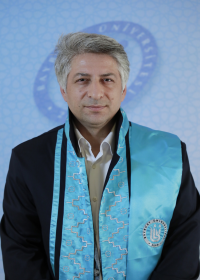
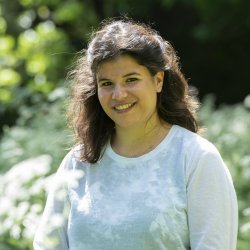
Jiří Muryc is a researcher at the Department of Slavonic Studies, Faculty of Arts, University of Ostrava. He specializes in Polish-Czech language contact, bilingualism, and sociolinguistic dynamics of the Czech-Polish borderlands. His work spans translation studies, orthographic interference, and linguistic landscapes. Position: Head of Department International Affiliation: Collaborated with Vytautas Magnus University, University of Wrocław, and other institutions His research focuses on multilingual environments, Polish language visibility in Czech public spaces, and cross-border language policy. He explores code-switching, hybrid lects, and ethnolinguistic identity in bilingual communities. Muryc's publications analyze Polish-Czech legal terminology, phraseological dictionaries, and translation challenges between typologically close languages. He emphasizes practical applications in interpreter training and digital language platforms like Polski.info . He supervises theses on topics ranging from Polish literature in Czech translations to Czech-Polish business phraseology and UNESCO heritage linguistics. His projects include Erasmus+ initiatives for Polish language e-learning and sociolinguistic studies of Zaolzie.
John Slater is a Professor in the Department of Languages, Literatures and Cultures at Colorado State University, specializing in Early Modern Hispanic Literatures, History of Science, and History of Medicine. His research focuses on knowledge production in 17th-century Spain, particularly how literature disseminated ideas about health and healing. He examines print genres like sermons and drama as vehicles for scientific and medical discourse, highlighting conflicts between religious and medical practices. Slater joined CSU in 2020 after roles at UC Davis, University of Colorado, and Indiana University. He holds a PhD from Brandeis University and a BA from Earlham College. His research explores Jesuit and Franciscan healing practices, their impact on medical reforms, and intersections between literature and science. Awards include the 2023 Interdisciplinary Scholarship Award and 2025 Excellence in Teaching Award (CLA). Key publications analyze alchemy in sermons, venereal disease in Baroque Spain, and transatlantic medicinal plant trade. His edited works include studies on Cervantes and medical drama. Slater’s pedagogical contributions include annotated editions of works by Lope de Vega, Juana Inés de la Cruz, and María de Zayas. He has been honored for innovative mentorship models and career advising. His interdisciplinary approach bridges literary analysis with historical, scientific, and cultural studies, emphasizing early modern Spain’s intellectual networks and global exchanges.
Sonia Colina is a Regents Professor and holds a dual affiliation with the Department of Speech, Language and Hearing Sciences (College of Science) and the Second Language Acquisition and Teaching (SLAT) program at the University of Arizona. She is a leading scholar in Spanish phonology (Optimality Theory, syllable structure) and Translation Studies, particularly focusing on translation pedagogy and healthcare translation. Her research bridges linguistic theory and practical applications, such as improving healthcare access for limited-English-proficient populations through translation mediation and community health initiatives. Dr. Colina has authored influential works like *Fundamentals of Translation* (2015) and *Syllable Structure in Spanish* (2009), and co-edited volumes such as *The Handbook of Spanish Phonology*. She has directed NIH-funded projects, including the Oyendo Bien initiative using community health workers to address hearing loss among border populations and a collaboration on Spanish/English text simplification with the Department of Management Information Systems. Her research interests span translation quality assessment, bilingual phonological acquisition, and the role of surface/semantic features in medical text simplification. As Director of the National Center for Interpretation, she advances interpreter training and standards in healthcare and legal settings. She is a past president of the American Translation and Interpreting Studies Association (ATISA), contributing to the professionalization of translation studies. In grants and collaborations, Colina emphasizes interdisciplinary partnerships, such as integrating linguistics with audiology and public health. Her work highlights translational research that enhances language accessibility and equity in healthcare systems.
Georgina Heydon is a Professor of Criminology and Justice Studies and a forensic linguist at RMIT University's School of Global, Urban and Social Studies (GUSS). She specializes in investigative interviewing practices, forensic linguistics, and legal-societal issues in policing. Her research focuses on improving questioning methods for vulnerable populations, cross-cultural communication in justice systems, and the impact of criminal records on employment. Key roles include co-convenor of the Gendered Violence and Abuse Research Alliance (GEVARA) and former President of the International Association of Forensic Linguists (IAFL). She has led major grants examining sexual assault reporting mechanisms and Aboriginal employment barriers linked to criminal records. Heydon designs interviewing training programs for police globally and advises multinational corporations on organizational communication. Her research spans legal discourse analysis, interpreter-mediated investigations, and the intersection of language and justice. Media appearances include ABC and SBS TV, where she discusses police interviewing and forensic linguistics. Grants and collaborations include projects with the Australian Research Council, Legal Services Board, and Woor Dungin Aboriginal organization. Teaching interests involve critical discourse analysis of legal communication and criminological methodologies.
Archana Venkatesan is a Professor of Religious Studies and Comparative Literature at the University of California, Davis. She holds a Ph.D. from the University of California, Berkeley (2004), along with earlier degrees from Berkeley and De-Anza College. Her research focuses on Tamil Vaishnava poetry, South Indian performance traditions, and women’s roles in Hindu goddess worship. Venkatesan has authored influential works like In Andal’s Garden (2015) and A Hundred Measures of Time (2014), exploring devotional art, temple rituals, and mystical poetry. Her current projects include collaborative work on the Nava Tirupati temples network and translations of classical Tamil texts like the Tiruvaymoli and Kampa-Ramayanam. Academically, she teaches courses on Hinduism, religious performance, and South Asian literature. Venkatesan has received prestigious awards including a Guggenheim Fellowship (2018), National Endowment for the Humanities grants, and the Shivdasani Fellowship. She directs the Religions of India Initiative, fostering interdisciplinary study of Indian religious traditions. Her scholarship bridges literary translation, ethnographic fieldwork, and theological analysis, with a focus on marginalized voices in devotional traditions. Recent publications (2018) explore sound’s role in Vaishnava devotion and alternate histories of Carnatic music, reflecting her interdisciplinary approach to South Asian religious cultures.
Professor Raquel de Pedro Ricoy holds the Chair of Translation and Interpreting at the University of Stirling. Her academic career spans over two decades, with notable roles as a Visiting Professor at the University of Bologna (2009), Universidad de La Habana (2007), and Pontificia Universidad Católica del Perú (2016). She has served as an External Examiner for translation programs at institutions like the University of Leeds, Newcastle University, and University College London. Her research focuses on the social and cultural dimensions of translation , particularly in public-service settings involving minoritised communities and the translation of multimodal texts. Key projects include the AHRC-funded Translating Cultures (2014-2016) and Improving Women's Lives Through Female Social Interpreters in Rural Peru (2018-2019), which explore the role of indigenous interpreters in upholding human rights in Peru’s Andean regions. She also contributes to the MELINCO project on interlingual mediation in development cooperation. Her work highlights intercultural justice, language rights, and the sociological underpinnings of mediation . Trends in her publications (44+ outputs) emphasize indigenous language policy, prior consultation processes for extractive industries, and the intersection of translation with postcolonial theory. Awards include the Translating the Revolution project by the Carnegie Trust (2007). She actively supervises doctoral research in translation sociology and has collaborated with institutions such as the Peruvian Ministry of Culture, Red Cross, and Doctors Without Borders. Her expertise informs global initiatives on community interpreting, including advisory roles in drafting Peru’s Indigenous Languages Act regulations and training frameworks.
Christina Maria Kreinecker is a Professor at the Faculty of Theology and Religious Studies, KU Leuven, where she heads the Research Centre for Multilingual Manuscripts (LEMMA) and serves on the Faculty Council. She is an active member of LECTIO – KU Leuven Institute for the Study of Text Transmission and LILI – KU Leuven Interdisciplinary Language Institute. Her research integrates New Testament Textual Criticism with papyrological analysis of documentary evidence to reconstruct ancient everyday life and Greco-Roman cultural contexts. She specializes in multilingual manuscript traditions, examining how linguistic diversity shaped biblical transmission across antiquity. Her methodology bridges textual scholarship with socio-historical analysis of early Christian communities. Recent publications reveal consistent focus on 1 Corinthians' textual history across multilingual contexts, particularly in patristic writings. Her work demonstrates how Vulgate, Coptic, and Old Latin witnesses preserve evidence of interlingual interactions, with significant contributions to understanding language contact in early Christian textual practices. Kreinecker leads eight major research projects including the 1Cor-Tekst initiative (2022-2027) tracing 1 Corinthians' transmission across the first millennium and the NTTMMC center (2019-2029) dedicated to multilingual New Testament contexts. Her grants examine textual phenomena in Origen, Cappadocian Fathers, and Augustine while exploring papyrological metaphors in Romans 6-8. As director of LEMMA, she coordinates investigations into bilingual manuscripts to detect interlingual interactions within New Testament traditions. Her leadership in LECTIO and LILI fosters interdisciplinary collaboration between textual scholars, linguists, and papyrologists studying transmission mechanisms across historical periods.
Dr. Johanna Domokos is an Associate Professor at the Department of Theatre Studies, Faculty of Humanities and Social Sciences, Károli Gáspár University of the Reformed Church in Hungary. With a distinguished academic career spanning several institutions including University of Bielefeld and UCLA, she has established herself as a leading scholar in multilingualism, Sámi literature, and Finno-Ugric studies. Her educational background includes a PhD in Comparative Literary Studies (1999) from József Attila University with a dissertation on Translation-semiotic analysis of Lapp poetry , multiple MA degrees in Finno-Ugric Studies, Hungarian Language and Literature, and English Language and Literature (1994, 2000), and the prestigious Dr. Habil degree from Eötvös Loránd University (2011). Domokos's research focuses on multilingualism in the arts , particularly examining literature, theatre, and visual arts in Northern and Central Europe, with special emphasis on Finland, Estonia, Sámi/Lapland, and the Carpathian Basin. Her work explores artistic rituality, mystical poetry, and interlingual and intersemiotic translation. She has led numerous research projects including the 'International Mediation of Sámi Literature' (2016-2019) and 'Rituality, Theater, Literature' (2018-2020). Her recent scholarly output reveals a strong trend toward Anthropocene studies and code-switching research , with publications examining multilingual creativity, Sámi literature, and the intersection of theatre with ecological concerns. Her work demonstrates growing interdisciplinary connections between literary studies, environmental humanities, and performance theory. Scientific Awards: Faludy-Díj (1992) Karriert Támogató Díj and Kutatói Díj from UCLA (2005, 2007) Kulturális Szervezői Kitüntetés from Los Angeles Hungarian Embassy (2008) Inger Sjöberg Prize from Scandinavian Society, USA (2022) Dr. Habil degree from Eötvös Loránd University (2011) Domokos has supervised doctoral students including Molnár Attila (on multimedia in contemporary art), Miklós Krisztina (on multilingualism and corporeality in Tompa Andrea and Sofi Oksanen's novels), and Bilibok Apollónia (on streamed theatre performances during the pandemic). She has served on numerous doctoral committees, most recently examining Balázs Renáta's work on contemporary Hungarian and Finnish national literary history constructions (2025). Her research has been supported by prestigious Humboldt Scholarships at Bielefeld University (2010-2011, 2018). She leads the Translation Workshop at Károli Gáspár University and has been instrumental in establishing the university's translation laboratory. Her international research group 'Kódváltás a kortárs művészetben' (Code-Switching in Contemporary Art) continues to produce significant scholarly work bridging linguistic and artistic disciplines.
Juan Antonio Albaladejo Martínez is a Full Professor at the University of Alicante's Department of Translation and Interpretation, within the Faculty of Philosophy and Letters. He holds a PhD in Translation and Interpreting (Summa Cum Laude, 2009) and has directed numerous doctoral theses. His academic roles include Subdirector of the Department (2010–2013) and Secretary of the Department (2007–2009). Education: PhD in Translation (2009), Master's in Translation (2006), and Bachelor's in German Philology (2002, Extraordinary Award). Research focuses on translation history, cultural transfer, and literary translation challenges. Notable projects include studies on Austrian theater reception in Spain and the translation of culturemas. He has published extensively, including books like El monasterio de Sendomir (2022) and contributed to interdisciplinary conferences on translation science. Awards: Summa Cum Laude PhD, 2002 Extraordinary Award. Teaching includes courses on translation for international organizations, text editing, and theoretical history of translation. He has advised 29 master’s and degree theses in recent years. Current projects include Historia de la Traducción en Iberoamérica (HISTRAD) .
Amit Levy is a Spinoza Postdoctoral Fellow at the Department for Israel Studies, School of Regional and Historical Studies, University of Haifa. He previously held affiliations at the Hebrew University of Jerusalem and the Franz Rosenzweig Minerva Research Center. His research focuses on transnational encounters, migration of knowledge and professions, and their impacts on cross-cultural interactions in 20th-century colonial settings, with a particular interest in German-Jewish visual history. PhD in History (2021), Hebrew University of Jerusalem MA in History (2016), Hebrew University of Jerusalem Levy's research explores the history of knowledge production in Mandatory Palestine, emphasizing how Jewish, Arab, and British scholars interacted in shared institutions like museums and scholarly societies. His work analyzes the transformation of German Orientalist scholarship into Israeli Mizrahanut (Oriental Studies) and its role in mediating political, ethnic, and religious divides. Key themes include colonial vocabularies, intercultural communication, and the ambivalence of knowledge in conflict zones. His recent publications and book chapters highlight trends in historiography , visual history , and archival studies , with a focus on German-Jewish scholars, Zionist Arabists, and Sephardi/Mizrahi communities. His 2024 book A New Orient (Brandeis University Press) won the Jordan Schnitzer First Book Publication Award. Scientific Awards : M. Ish-Shalom Award for First Book in History of the Land of Israel (2025) Am Ve’Olam Honorable Mention (2025) Zalman Shazar Honorable Mention (2024) Jordan Schnitzer First Book Award (2024) Naomi and Bernard Frieden Best Dissertation (2023) Levy's grants include the Israel Science Foundation Book Translation Grant (2023) and fellowships from the Leo Baeck Institute, World Union of Jewish Studies, and Arieh Lubin Foundation. He serves as Managing Editor for Naharaim: Journal for German-Jewish Literature and Cultural History .
Gregary J. Liu Racz is an Associate Professor in the Department of Foreign Language and Literature at Long Island University’s Brooklyn Campus, affiliated with the College of Liberal Arts and Sciences. His academic background includes a B.A. from Rutgers University and both M.A. and Ph.D. degrees from Princeton University. Racz specializes in literary translation, particularly of poetic works across Spanish and English, with a focus on preserving meter, rhyme, and cultural nuances. His research emphasizes analogical translation methodologies challenging dominant practices, as seen in his upcoming monograph Approaches to Translating Poetry . He actively contributes to the field through professional roles: Vice President of the American Literary Translators Association (ALTA) and Book Review Editor for Translation Review . Concurrently, he teaches Spanish translation at Rutgers University’s Summer Certification Program. Racz’s awards include the Crossing Boundaries Award for translation and the Sidney Sulkin Award for Prose. His publications span edited volumes on Borges and Salom, translated works like Calderón’s Life Is a Dream , and scholarly articles analyzing translation strategies in Neruda, Whitman, and Galdós. His work bridges literary theory, comparative literature, and practical translation challenges.
Musa KAYA is an Associate Professor at the Department of Turkish Education within the Faculty of Education at Bayburt University. His academic work focuses on Turkish language teaching, foreign language acquisition, and multicultural education. He actively contributes to curriculum development and analysis, particularly in alignment with European language standards. Research Interests : Turkish as a foreign language, language transfer phenomena, text simplification, cultural integration, value education, and reading comprehension. Article Trends : Recent publications examine Tunisian students' attitudes toward learning Turkish, comparative analyses of language programs, text complexity in Turkish instruction, and integration of cultural values through literature. Contact : Email - musakaya@bayburt.edu.tr | Phone - (458) 333-2033
Gizem Arslan is an Assistant Professor in the College of Humanities & Arts at Worcester Polytechnic Institute (WPI). Her interdisciplinary work bridges literary studies, linguistics, and cultural theory, with a focus on transnational connections between German, French, and Turkish post-war literatures. Education: BA in English and German (Franklin and Marshall College, 2003), MA and PhD in German Studies (Cornell University, 2009, 2013) Her research explores: Literary responses to ethno-nationalist ideologies through experimental writing systems Cross-linguistic influences in works of Paul Celan and Uljana Wolf Intercultural pedagogy in language education Mathematical approaches to literary structure Translation dynamics in multilingual contexts Arslan actively integrates DEI principles into language curriculum design and investigates language play as resistance. Notable projects examine: Spanish-German poet José F. A. Oliver's engagement with Paul Celan's work OuLiPo's interlingual dictionary games and their impact on Uljana Wolf's bilingual poetry A book manuscript analyzing writing systems as anti-nationalist tools
Katerina Perdikaki is an Associate Teaching Fellow at the University of Surrey's Centre for Translation Studies, part of the School of English and Languages within the Faculty of Arts, Business and Social Sciences. She holds a PhD in Translation Studies (2016), an MA in Audiovisual Translation (2013), and a BA in English Language and Literature (2012). Her research focuses on audiovisual translation, semiotics, film adaptation, and the interplay between cultural transformation and creative translation. Notable works include studies on subtitling sensitive content, the emotional impact on subtitlers, and case analyses of film adaptations like Baz Luhrmann’s The Great Gatsby and Silver Linings Playbook . She teaches advanced modules in audiovisual translation and professional translation practice. Her empirical research bridges theoretical frameworks with practical challenges in translation, emphasizing interdisciplinary methodologies. Education: PhD: 'Adaptation as Translation: Examining Film Adaptation as a Recontextualised Act of Communication' (University of Surrey, 2016) MA: Audiovisual Translation (University of Surrey, 2013) BA: English Language and Literature (National and Kapodistrian University of Athens, 2012) Research Interests: Audiovisual translation, intersemiotic translation models, film adaptation as cultural transformation, translation of humor, and the emotional dimensions of translation work. Future research includes exploring subtitlers’ psychological experiences with sensitive material. Teaching: Leads MA modules on Audiovisual Translation and Professional Translation Practice (Greek), and has taught undergraduate courses on translation and interpreting skills. Awards & Grants: None explicitly listed, but her extensive publication record reflects sustained academic engagement. Labs/Teams: Active in the Centre for Translation Studies, contributing to interdisciplinary research on translation in the creative industries.
Dr. Matteo Anastasio is a Researcher at the Department of Romance Studies at the European University of Flensburg (EUF). His roles include Research Assistant for Spanish literature and cultural studies since 2017, and Italian language teacher at the EUF Language Centre since 2017. He has been involved in the DFG-funded research project on 'Book Fairs as Spaces of Cultural and Economic Negotiation' (2017–2020). His doctoral project focuses on literature’s representation of languages, nations, and 'imagined communities' in international book fairs. Education includes a PhD in progress at EUF, M.A. in Applied Romance Literary Studies from Universität Potsdam (2011), and M.A. in Theoretical Philosophy of Art and Communication from Ca’ Foscari University Venice (2007). He has held editorial roles at several publishing houses and received multiple academic stipends, including Erasmus grants and Istituto Comunika fellowships. Research interests center on book fairs as cultural-economic negotiation spaces, literary exhibitions, and the interplay between national and world literature. He has organized international conferences like 'Expositions. Transitzonen zwischen Literatur und Museum' in 2019. His publications include edited volumes on book fairs and museum-literature intersections, as well as translations of philosophical and literary works. Teaching spans advanced seminars on Hispanic literature and Italian language courses. Recent articles analyze Germany’s literary presence in Mexico (2020), Portugal’s book fair exhibitions (2019), and Mexico’s cultural representation at Frankfurt Book Fair (1992). Awards include the EUF Language Teaching Certificate and scholarships from ESU Venezia. Grants include DFG project funding and stipends for editorial training. His work bridges literary analysis with cultural policy, emphasizing transnational exhibition strategies and the role of book fairs in shaping cultural narratives.