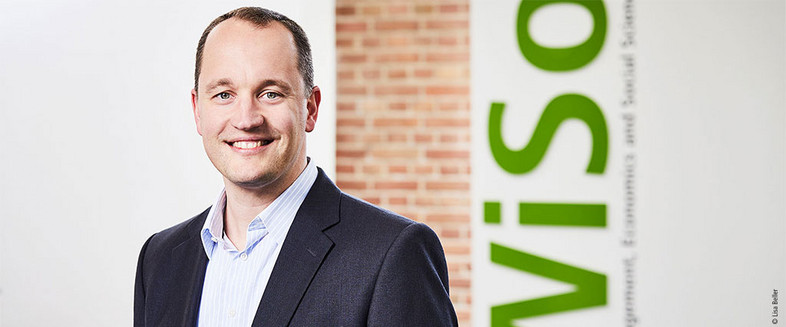
Fabian J. Sting is a Full Professor and Director of the Department of Supply Chain Management - Strategy and Innovation at the University of Cologne since 2016. He also holds a tenured Associate Professorship in Operations Management at the Rotterdam School of Management, Erasmus University since 2014. His academic journey includes a Ph.D. in Productions Management (summa cum laude) from WHU-Otto Beisheim School of Management in 2008 and postdoctoral work at INSEAD in 2008–2010. University of Cologne : Chair of Supply Chain Strategy and Innovation (2016–present) Rotterdam School of Management : Associate Professor (2014–present), Assistant Professor (2010–2014) Education : Ph.D. (2005–2008), M.Sc. in Applied Mathematics (2005–2007), Diploma in Management Science (2002–2005) Sting’s research bridges operations management, innovation strategy, and supply chain dynamics. Key areas include: Supply chain coordination under uncertainty Employee-driven process innovation and cognitive biases Strategic capacity planning and risk hedging Industry 4.0 implementation challenges Interdisciplinary integration of behavioral and technical elements in operations Recent publications focus on dual sourcing strategies, fairness in operational decisions, and employee mobility’s impact on innovation. He contributes to high-impact journals like Management Science and Production and Operations Management . Sting participates in institutional research initiatives such as: ECONtribute: Markets & Public Policy – a Cluster of Excellence addressing digital transformation, inequality, and market failures through interdisciplinary economics, political science, and law Excellent Research Support Programme (ERSP) – supporting collaborative projects like HPDnet (improving pediatric kidney disease care via health networks)
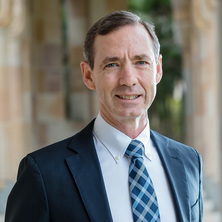
Professor Shaun Bond is the Frank Finn Professor of Finance at the UQ Business School, University of Queensland. He has held prior positions as the West Shell Professor of Real Estate at the University of Cincinnati (Director of the UC Real Estate Center) and as a lecturer at the University of Cambridge’s Department of Land Economy. He has also served as a visiting professor at Pennsylvania State University and George Washington University. Education: PhD and MPhil in Economics from the University of Cambridge; Bachelor of Economics (First Class Honours) from the University of Queensland. Research Interests: Real estate finance, financial economics, investment and risk management, and financial econometrics. Publications: Over 33 works including 28 journal articles, 2 book chapters, and 2 conference publications, focusing on real estate markets, financial forecasting, and ESG integration. Funding: Current Macoun Research Scholar Program (2021–2025); recent grants from Queensland Government and QIC Limited for short-term rental regulation and investment management research. Supervision: Available for PhD supervision in real estate asset pricing and financial market sentiment.
Frank Cowell is a Professor of Economics at the London School of Economics (LSE), where he serves as a CASE (Centre for Analysis of Social Exclusion) and STICERD (Suntory and Toyota International Centres for Economics and Related Disciplines) Associate. His academic work spans several decades with publications dating from the early 1990s through to 2018, demonstrating sustained scholarly contribution to the field of economics. Professor Cowell's research primarily focuses on inequality and poverty measurement, income and wealth distribution, taxation, and social mobility. His work combines theoretical economic analysis with empirical applications across different countries and contexts. His research interests include methodological approaches to measuring inequality, particularly addressing challenges related to top incomes and wealth concentration, as well as examining the relationship between social identity and redistributive preferences. His publication record reveals consistent engagement with methodological issues in inequality measurement, with numerous papers addressing statistical robustness, decomposition techniques, and comparisons of income and wealth distributions across countries. His more recent work has increasingly focused on wealth distribution, inheritance, and intergenerational mobility, reflecting evolving scholarly interest in these areas. He has collaborated extensively with researchers across Europe, particularly on cross-national comparative studies using datasets like the Luxembourg Wealth Study. Professor Cowell has made significant contributions to the theoretical foundations of inequality measurement, developing alternative approaches that address limitations in conventional indices. His work on median-normalized inequality measures represents an important methodological innovation aimed at better capturing changes at the top of the income distribution. Throughout his career, Cowell has examined the relationship between economic theory and empirical measurement, often bridging gaps between abstract welfare economics and practical policy applications. His research has implications for tax policy design, social welfare programs, and understanding the dynamics of economic inequality across different populations and time periods. As a CASE and STICERD Associate, Professor Cowell contributes to LSE's research environment focused on social exclusion, inequality, and public policy analysis. His work has been published in numerous discussion papers, journal articles, and book chapters, establishing him as a significant contributor to the field of distributional economics.
Frances Woolley is a full-time Professor in the Department of Economics at Carleton University , with a cross-appointment to the School of Public Policy and Administration . Her research focuses on public finance , labour economics , and feminist economics , with expertise in family economics , gender inequality , and tax policy . Her work bridges theoretical economic models with real-world policy analysis, particularly in intra-household resource distribution and taxation fairness. Recent publications highlight her engagement with emerging issues such as cryptoasset taxation , long-term care financing , and cross-border carbon pricing . Her research consistently emphasizes gender dimensions in economic outcomes and policy impacts. Woolley has received notable awards including the Purvis Prize and Vanderkamp Award , and delivered the Canadian Economics Association Presidential Address in 2018. She actively contributes to public discourse through popular writing and media engagements, addressing topics like labor market dynamics, tax equity, and social policy.
Nina Bandelj serves as a Professor in the Department of Sociology at the University of California, Irvine, where she is an active affiliate of the Center for Organizational Research (COR). Her research bridges economic sociology and family studies, examining how money, debt, and market logics permeate intimate social relations. She frequently participates in COR initiatives like the Academic Speed-Dating events held in Social Sciences Plaza B, fostering interdisciplinary collaboration among scholars. Bandelj's research centers on three interconnected domains: (1) the economization of family life , analyzing how parenting transforms into human capital investment through debt-financed childcare and education; (2) cross-national inequality , investigating ethnic marginalization in Eastern Europe and gender pay gaps within workplaces; and (3) money's social meaning , exploring emotional economies of modern parenting and the valuation of 'priceless' social domains. Her work consistently challenges the 'hostile worlds' thesis by demonstrating how economic and intimate spheres co-constitute each other. Recent publications reveal intensifying focus on debt-driven middle-class parenting (e.g., mortgage debt tied to childrearing) and commodified childhood (e.g., pricing early education), while maintaining strong comparative analysis of postsocialist economies. This trajectory reflects broader shifts in economic sociology toward studying financialization's penetration into familial spheres. Bandelj actively cultivates scholarly communities through COR events and writing initiatives like 'U See I Write,' emphasizing collaborative knowledge production. Her work demonstrates how micro-level family economies scaffold macro-level policy failures, particularly regarding America's family-hostile welfare state.
Professor Massimiliano Tani Bertuol is a distinguished academic specializing in economics at UNSW Canberra's School of Business, where he has served as Professor since 2015. His professional affiliations extend beyond UNSW as he is an Associate Investigator/Member at CEPAR; Ageing Futures; uDASH; AI Institute; and Cyber security (IFCYBER). Additionally, he maintains international connections as a Research Fellow at the Institute for the Future of Labor (IZA) in Germany since 2005, an Associate Member at Macquarie University's Centre for Workforce Futures since 2018, and a Research Fellow at the Global Labor Organization (GLO) in Maastricht since 2016. His educational background reflects a strong foundation in economics and business, having earned a PhD in Economics from the Australian National University (2003), a Master of Science in Economics from the London School of Economics (1992), and a Bachelor's degree in Business/Economics from Bocconi University in Milan, Italy (1989). His academic journey has positioned him as a leading researcher in human capital economics with international recognition. Professor Tani Bertuol's research centers on human capital development and its economic implications. His work examines how human capital can be fostered, efficiently transferred internationally through migration, and how it affects productivity, innovation, and economic growth at both firm and national levels. His research spans multiple regions including Australia, Europe, the US, Africa, and China, with particular focus on migration economics, labor market outcomes, and the economic impacts of education and skills. His current research agenda includes non-pecuniary incentives, behavioral/financial decisions in China, occupational licensing, language skills and economic assimilation, AI-human interactions in health contexts, and labor mobility and productivity. Analysis of his recent publications reveals significant interdisciplinary trends bridging economics with public health, environmental science, and technology. His work connects migration dynamics with economic outcomes, examines household financial behaviors through gender lenses, and investigates the complex relationships between environmental factors like air pollution and economic activities including education investment and entrepreneurship. More recent work explores AI applications in health and the economic implications of pandemic responses, demonstrating his ability to address contemporary challenges through rigorous economic analysis. 2023: UNSW ARC Postgraduate Council (Arc PGC) award for excellence in research supervision 2011: Vice-Chancellor Award for Teaching Excellence 2011: Faculty Award for Teaching Excellence for teaching economics Professor Tani Bertuol has successfully supervised 4 PhD students to completion, with 1 submitted dissertation and 5 currently under supervision. His active research program is supported by significant grant funding including an ARC Linkage Project (2023-27) on regional Australia's skills shortages and high-skill refugees' employment ($354,811), an ARC Discovery Project (2019-23) on migrant aging and wellbeing ($478,000), and a NUW Alliance grant (2021-23) on hearing screening and academic outcomes ($73,367). He serves as Associate Editor for Social Indicators Research and Higher Education Research & Development, contributing to scholarly discourse in his fields of expertise. His teaching portfolio includes courses in data analytics, finance, and professional executive education focused on cost-benefit analysis and data communication. He teaches ZBUS2333 Data Analytics and Visualisation, ZBUS8105 Finance and Investment Appraisal, and ZBUS8149 Introduction to Finance, demonstrating his commitment to developing the next generation of economics professionals with both theoretical knowledge and practical skills.
Dr. Yue Qian is a Professor of Sociology at the University of British Columbia (Faculty of Arts) , focusing on gender, family, work, and inequality in global contexts. Her research spans assortative mating, occupational segregation, and migration dynamics , with significant work on the social and mental health impacts of the COVID-19 pandemic . She has published over 60 articles in top-tier journals like Nature Human Behaviour and PNAS . PhD, The Ohio State University (2016) MA, The Ohio State University (2012) BA, Renmin University of China (2010) Her research examines how gender intersects with family, work, and population processes to shape well-being and societal inequality. Key areas include patterns of assortative mating, family/work gender inequality, and health dynamics. Recent work investigates digitalization of family life and gendered pandemic impacts . Articles show trends in cross-national family sociology , digital dating , and mental health during crises . UBC Killam Research Prize (2023) Public Engagement Award (2023) Canadian Sociological Association’s Early Investigator Award (2022) Alexis Walker Award (2019) Dean of Arts Faculty Research Award (2019) Dr. Qian mentors graduate students in knowledge production , co-authoring with them on topics like digital dating and gender adaptation in China . She actively engages with public sociology through her WeChat blog "Ms-Muses" (60,000+ subscribers) and TED-style talks viewed 3M+ times. Her work influences UN, World Bank, and WHO policy discussions.
Hans-Peter Kohler is the Frederick J. Warren Professor of Demography and Professor of Sociology at the University of Pennsylvania. He co-directs the Population Aging Research Center (PARC) and chairs Penn’s Ph.D. Program in Demography. Ph.D. in Economics, University of California, Berkeley (1997) PI of multiple NIH and NSF grants (e.g., R01 HD044228, R21 AG053763, SES 172 9185) His research integrates demography, economics, sociology, and biology to study aging, health disparities, HIV/AIDS, and fertility in low- and high-income countries. Key projects include the Malawi Longitudinal Study of Families and Health (MLSFH) and Global Family Change (GFC) Project , which explore life-course health determinants, intergenerational support, and family structure transformations. Recent collaborative publications analyze cognitive aging in SSA (Journal of Alzheimer’s Disease 2023), mortality risk perception (PNAS 2024), and intergenerational transfers (Population and Development Review 2019). He has mentored students into faculty roles at institutions like NYU, University of Wisconsin, and University of Glasgow. His honors include the Clifford C. Clogg Award (PAA) and Otis Dudley Duncan Award (ASA), alongside leadership roles in the Society of Biodemography and Social Biology .
Jeremy Grant Moulton is an Associate Professor of Public Policy and Director of Graduate Studies at the University of North Carolina at Chapel Hill. He holds a Ph.D. in Economics from the University of California, Davis. His research focuses on public and labor economics, utilizing natural experiments to analyze labor market dynamics, retirement decisions, and wealth transmission. He teaches graduate courses in microeconomic theory, econometrics, and undergraduate courses in statistics and public finance. Education: Ph.D. in Economics, University of California, Davis (2011) M.A. in Economics, University of California, Davis (2007) B.A. in Economics, University of California, Davis (2005) Research Interests: Dr. Moulton investigates policy impacts on labor markets, including the Earned Income Tax Credit (EITC), marriage dynamics influenced by education shocks (e.g., WWII GI Bill), and intergenerational wealth transfers. His work also addresses self-employment determinants, late-life income shocks, and housing market responses to environmental information. Awards: 2024 Real Estate Cycles Award 2024 Innovative Thinking Award 2019 Practitioner Research Award (CCIM) 2016 Excellence in Research on Military and Veteran Families Award Advising & Grants: Supervised over 20 graduate students across Public Policy and related fields. Secured grants including the Junior Faculty Development Award ($7,500) and interdisciplinary initiatives ($9,000). Service: Serves on editorial boards for journals like Journal of Policy Analysis and Management and Health Economics . Leadership roles include steering committees for the Carolina Applied Microeconomics Conference and CREED.
Giovanni Francesco Basini is Full Professor of Private Law (IUS/01) at the University of Parma, where he has taught since 2005 and currently serves as Director of the Department of Law, Political and International Studies for the 2024–2027 term. He is also a member of the editorial board of the journal Responsabilità civile e previdenza . Education & Academic Career Born in Reggio Emilia, 25 May 1965. Appointed Full Professor of Private Law at the University of Parma in autumn 2005. Previously taught Institutions of Private Law at the Faculty of Law of Parma. Regular visiting lecturer at Bocconi University (Milan) from 2001/2002 to 2017/2018 (Private Law). Lecturer in “Successioni per causa di morte” at the School of Specialization for the Legal Professions, Universities of Pavia & Bocconi, 2017/2018–2022/2023. Research Focus Basini’s scholarship concentrates on four interlocking domains: Succession due to death and generational transfer of family wealth – analysing intestate and testamentary succession, forced heirship, and reform proposals. Family law – custody, filiation, recognition of children (including so-called “incestuous” children), grandparents’ visitation rights, and the assignment of the family home. Obligations and contracts – limitation clauses, contract invalidity, and the intersection of private law with artistic and cultural heritage. Art and cultural-heritage law – legal regulation of cultural assets within private-law frameworks. Publication Trends Across more than 180 works, Basini has produced extensive monographic contributions, journal articles, and commentaries. Late-career outputs (2020–2024) evidence a sustained focus on succession reform, the legal status of vulnerable persons, and the interplay between family relationships and property transmission. Earlier works (2006–2015) chart evolving Italian jurisprudence on spousal and filiation rights, often highlighting constitutional tensions and de iure condendo perspectives. Editorial & Institutional Service Member, Editorial Board, Responsabilità civile e previdenza . Director, Department of Law, Political and International Studies, University of Parma (2024–2027). Frequent keynote speaker and trainer for continuing legal-education programs aimed at practitioners. Teaching & Advising At the five-year single-cycle Master’s Degree in Law at Parma, Basini currently teaches: Civil Law I – Successions and Donations (2nd year) Family Law (2nd year) Institutions of Private Law (1st year) He maintains weekly office hours and accepts appointments ad hoc via e-mail, underscoring a strong commitment to student mentoring.
Prof. Antoine Bommier is a Full Professor at ETH Zurich's Department of Management, Technology, and Economics, serving as Deputy Head of the department. He holds a Chair in Integrative Risk Management and Economics and is a member of the ETH Risk Center's Steering Committee. His academic journey includes a PhD in Mathematics from École Polytechnique (1993) and a Habilitation à Diriger des Recherches in Economics from the University of Toulouse (2005). Prior roles include positions at CNRS (France), University Paris-Nanterre, and Berkeley. His research focuses on risk management, intergenerational equity, uncertainty modeling, and public policy. Key areas include climate change mitigation, annuity markets, and the valuation of catastrophic risks. Bommier has been recognized with the Robert C. Witt Award (2013) and a best-paper award from the Journal of Risk and Insurance (2012). Recent work explores ambiguity aversion's impact on savings and insurance, dynamic preferences in risky environments, and equity considerations in exhaustible resource management. He also investigates mortality-linked retirement policies and the societal value of risk reduction. Editorial Roles: Associate Editor of Decisions in Economics and Finance Professional Activities: Visiting appointments at Paris School of Economics and University Paris-Nanterre Key Themes: Climate policy, actuarial fairness, recursive utility, and sustainable development
Dr. Gábor Koloh is a contemporary Assistant Professor and Research Fellow at the Eötvös Loránd University (Department of Economic and Social History) and the HUN–REN RCH Institute of History . His scholarly work focuses on demographic history , social history , and rural economic structures , with particular emphasis on fertility transitions , household organization , and modernization processes in 19th-20th century Hungary. Education : Law (ELTE), Aesthetics (BA), MA and PhD in Economic and Social History (supervised by György Kövér) Research Themes : Demographic change in interwar Hungary Ethnic agricultural practices in Baranya Temporal/spatial patterns in peasant communities Social mobility of Protestant clergy Methodology : Micro-historical analysis, family reconstitution, manuscript source interpretation Current Projects : Interdisciplinary studies on pronatalist discourse, cooperative territorial development, and aristocratic demographic patterns
Rebecca M Ryan is a Professor in the Department of Psychology at Georgetown University, holding a primary appointment in the College. Her research bridges developmental psychology and public policy, focusing on the impact of socioeconomic disadvantage on children’s environments and well-being. She co-developed interventions like Connect to Baby and evaluates programs such as the Power Packs food assistance initiative. Her work emphasizes parent-child interactions and economic disparities affecting family dynamics. Educations: Columbia University – Ph.D. in Developmental Psychology (2006) Harvard University – M.Ed. (Year unspecified) Princeton University – B.A. (Year unspecified) Research Interests: Socioeconomic disadvantage and child development Parenting practices in at-risk contexts Food insecurity and public policy Intergenerational inequality Her lab, the Context, Development & Social Policy Lab, aims to identify strategies supporting equitable child development through research, practice, and policy. Grants & Funding: Continuously supported by NIH, NSF, Russell Sage Foundation, and W.T. Grant Foundation. Recent work explores interventions addressing poverty, education, and family well-being. Labs & Teams: Leads the Context, Development & Social Policy Lab, focused on equity-driven research to improve outcomes for marginalized youth. Current projects include mixed-methods evaluations of food assistance programs and parenting interventions.
Eric French is a Professor at the University of Cambridge, specializing in economics of household behavior over the lifecycle, intergenerational transfers, pensions policy, and health economics. His work examines how public and private pensions influence savings and labor supply, alongside the impacts of health and health insurance on medical spending and economic security in aging populations. His research spans applied econometrics, with recent publications focusing on dementia burden projections in China, gender conformity effects on later-life outcomes, and end-of-life medical expenditure dynamics. Articles highlight cross-national comparisons (US vs UK), policy evaluations, and longitudinal analyses of aging populations. While no formal awards or advisees are listed in the provided data, his work engages deeply with retirement incentives, wealth distribution, and health policy frameworks. Affiliation with institutions like the University of Michigan Retirement and Disability Research Center is evident through collaborative publications.
Lei Zhang is an Assistant Professor in the Department of Sociology at the University of Colorado - Colorado Springs, part of the College of Letters, Arts & Sciences. He specializes in quantitative methodology and social network analysis, with expertise in statistical modeling, causal analysis, and data mining. Position: Assistant Professor, Department of Sociology Institution: University of Colorado - Colorado Springs School: College of Letters, Arts & Sciences Contact: (719) 255-4125 | lzhang4@uccs.edu | ACAD 428 Dr. Zhang's research interests span multiple areas including social network analysis, personal and organizational social capital, social inequality and mobility, labor market dynamics in emerging economies, entrepreneurship, mental health, and Chinese and East Asian societies. He is proficient in multiple statistical software packages including Stata, SPSS, SAS, R, Mplus, LISREL, EQS, and UCINET. His recent research focuses on two main areas: the causal effects of guanxi-based corporate social capital on business performance in China, and intergenerational social mobility in the United States. Dr. Zhang's educational background includes a Ph.D. in Sociology from the University of Minnesota (2016), an M.Phil. in Social Science from Hong Kong University of Science & Technology (2007), and both M.A. and dual B.A./B.S. degrees from Peking University in China (2005 and 2002 respectively). His scholarly publications demonstrate expertise across sociology, Chinese studies, social network analysis, and sports sociology. His work spans topics from Chinese social capital and guanxi networks to Olympic sports performance analysis and mental health during the pandemic. Dr. Zhang teaches both graduate and undergraduate courses in statistics and research methods, and shares his methodological expertise through online teaching resources including YouTube videos on SPSS and Stata for social statistics.