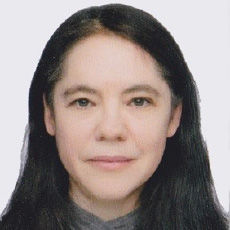
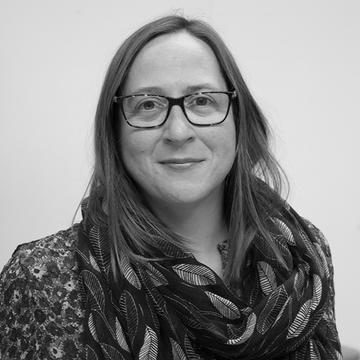
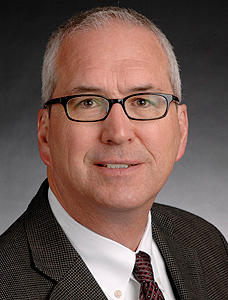
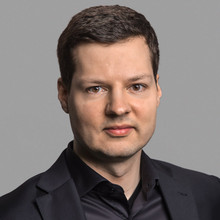
Anna Storm is Professor of Technology and Social Change at Linköping University's Department of Thematic Studies since 2019. Her research examines industrial afterlives through cultural, environmental, and social lenses, focusing on nuclear heritage, infrastructure transformation, and long-term memory processes. PhD in History of Technology from KTH Royal Institute of Technology Associate Professor (Docent) in Human Geography from Stockholm University Research Interests: Post-industrial landscape transformation Nuclear cultural heritage and memory Socio-technical infrastructure analysis Environmental governance and ethics Deep time communication strategies Scientific Contributions span nuclear waste communication frameworks, critical heritage analyses, and interdisciplinary studies of energy landscapes from 2018-2025.
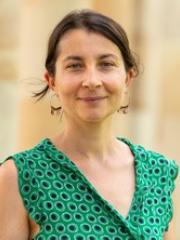
Dr. Katia Attuyer is an Assistant Professor in Urban Planning and Environmental Management at the University of Birmingham’s School of Geography, Earth and Environmental Sciences. She holds a PhD from Trinity College Dublin and MA from University College Dublin, alongside a Licence in Geography from Université Lyon 2. Her research focuses on urban geography with dual emphases: community engagement in urban redevelopment, neoliberal urban policies, and financialisation; and well-being in later life linked to urban environments. She leads modules on urban geography, policy design, and dissertation labs. Education: PhD in Urban Geography, Trinity College Dublin, Ireland (20XX) MA in Geography, University College Dublin, Ireland Licence (eq. BA) in Geography, Université Lyon 2, France Research Interests: Urban development policies and neoliberalism Financialisation of property markets Community engagement strategies Urban well-being and later-life mobility Social and physical environment impacts on aging populations As GEES EDI Lead, she promotes equity initiatives. Her work bridges urban planning theory with practice, emphasizing participatory approaches and interdisciplinary collaboration. Recent publications explore post-political urban governance, large-scale development dynamics, and care mobilities in aging societies.
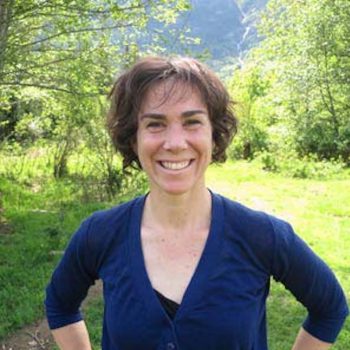
Aude Bernard is an Associate Professor at the University of Queensland's School of the Environment and researcher at the Queensland Centre for Population Research. A demographer and population geographer, she investigates internal migration processes and their societal implications using advanced measurement techniques that enable international comparative studies. Her research program develops theoretical frameworks including migration capital and intergenerational transmission of migration behavior. Current projects examine: internal migration forecasting, climate migration impacts, childhood migration consequences, and immigrant retention in regional Australia. She leads several Australian Research Council Discovery and Linkage projects involving federal and state government partners. Professor Bernard serves as co-editor of the Journal of Population Research, co-chairs the IUSSP Scientific Panel on Lifetime Migration, and advises the Commonwealth Treasury's Centre for Population. Her publications employ diverse methodologies including sequence analysis, cohort approaches, and administrative data evaluation to understand migration patterns globally. She mentors PhD students and postdoctoral fellows while maintaining collaborations with international organizations. Bernard holds a Master's from Trinity College Dublin and PhD from University of Queensland.
Paul W. Sternberg is the Bren Professor of Biology and William K. Bowes Jr. Leadership Chair at the California Institute of Technology's Division of Biology and Biological Engineering. He holds a B.A. from Hampshire College (1978) and a Ph.D. from MIT (1984). His research focuses on systems biology of C. elegans development, neural circuits underlying sex and sleep, and functional genomics of nematodes. Sternberg pioneered tools like Textpresso for text mining in biological literature and co-leads WormBase, a central database for nematode research. His work includes sequencing genomes of parasitic nematodes and studying behavior, such as CO 2 response and host-finding mechanisms. Awards include HHMI Investigator (1992–2017) and the Thomas Hunt Morgan Medal (2023). Research interests span systems biology, evolutionary biology, and microbiology. Key projects involve understanding developmental decisions (e.g., dauer larva formation), neural circuitry, and applying genomics to combat parasitic nematodes. Collaborations include the Alliance of Genome Resources and Gene Ontology Consortium. Sternberg’s lab also studies cell migration and signaling pathways in development, leveraging CRISPR and optogenetics. Education: B.A., Hampshire College; Ph.D., MIT Awards: HHMI Investigator (1992–2017), Thomas Hunt Morgan Medal (2023) Labs/Teams: Sternberg Lab, WormBase, Alliance of Genome Resources
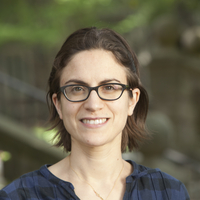
Sylvia Villeneuve is an Associate Professor in the Department of Psychiatry at McGill University and holds the Canada Research Chair in Early Detection of Alzheimer’s Disease (Tier 2). She leads the Multimodal imaging of the aging brain lab at the Douglas Research Centre, affiliated with the Aging, Cognition, and Alzheimer’s Disease theme-based group. Her research focuses on using MRI and PET neuroimaging to identify cerebral markers for early Alzheimer’s disease detection, study disease mechanisms, and assess risk/protective factors like vascular health and nutrition. Education: PhD from Université de Montréal (2011), followed by postdoctoral fellowships at UC Berkeley (2011–2014) and Northwestern University (2014–2015). She joined McGill in 2015 and is a member of the Ordre des Psychologues du Québec. Research Interests : Alzheimer’s early detection, multimodal neuroimaging (MRI/PET), biomarker development, vascular-cognitive interactions, and preclinical disease progression. Her lab integrates structural/functional imaging, amyloid/tau PET, neuropsychological testing, and vascular assessments to track disease trajectories. Key Achievements : Over 40 peer-reviewed publications, including high-impact studies in Brain and JAMA Neurology . Recognized with awards such as the Human Amyloid Imaging Young Investigator Award (2014) and CIHR Brain Star Award (2012). Leads the PREVENT-AD Cohort and recent grants include Weston funding for sleep-Alzheimer’s links (2024). Team : Supervises graduate students Alexa Pichet Binette and Jacob Vogel. Collaborates on initiatives like the Stop-AD Centre (FRQ-funded) and SCARF2 biomarker studies.
Yvonne Melia is an accomplished academic and clinician in clinical psychology, currently serving as Interim Course Lead and Programme Director for the Professional Doctorate in Clinical Psychology at the University of Staffordshire. Since joining in 2016, she has held roles including Senior Lecturer, Principal Lecturer, and Academic Director, demonstrating leadership in shaping clinical psychology training. Her expertise centers on children in care and adopted children, specializing in attachment difficulties, developmental trauma, and interventions like Dyadic Developmental Psychotherapy (DDP). Education includes a Doctorate in Clinical Psychology from the University of Sheffield and postgraduate qualifications in psychoanalytic studies, research methods, and clinical neuroscience. She contributes to professional bodies such as the Group of Trainers in Clinical Psychology (GTiCP) and serves as an external examiner for doctoral programs at the University of Sheffield and Southampton. Research interests span child mental health in social care, adolescent self-harm, and qualitative methodologies like Interpretative Phenomenological Analysis (IPA). She has published extensively on topics including barriers to mental health support for care leavers, long-COVID neuropsychological triage, and family dynamics in foster care. Her work emphasizes compassionate, evidence-based practices to improve outcomes for vulnerable populations. In addition to teaching and program leadership, Melia has contributed to clinical supervision, service evaluations, and accreditation processes. Her interdisciplinary approach integrates clinical, academic, and policy perspectives to address systemic challenges in mental health provision.
Rachelle Beveridge is a Postdoctoral Research Fellow at the Institute for Resources, Environment and Sustainability (IRES), affiliated with the Faculty of Science at the University of British Columbia. Her work bridges community resilience, food security, marine management, and health equity through interdisciplinary, community-engaged research with coastal First Nations. Education : PhD research conducted with the Nuxalk Nation’s Stewardship Office on eulachon well-being values and management in Bella Coola, BC. Rachelle specializes in decolonizing research processes and addressing Indigenous priorities in environmental governance. Her research themes include: Community-driven conservation science Indigenous marine resource management Climate change adaptation in food systems Equity in common-pool resource governance Restorative food practices Policy reform for coastal communities Her publications highlight a focus on reflexivity in conservation science, bottom-up ocean governance, and integrating Indigenous knowledge with ecological studies. She contributes to climate change adaptation frameworks for BC agriculture and regional food security assessments. Key collaborative projects include the Nuxalk Sputc (Eulachon) Project , which strengthens Indigenous management authority, and climate change resilience strategies for British Columbia’s agricultural sector.
Kata Gellen is an Associate Professor of German Studies and Director of the Center for Jewish Studies at Duke University, affiliated with Trinity College of Arts & Sciences. She holds a Ph.D. from Princeton University (2010). Her research focuses on German literary modernism, German-Jewish studies, postwar Austrian literature and cinema, film studies, sound studies, and trauma theory. She authored Kafka and Noise: The Discovery of Cinematic Sound in Literary Modernism (2019) and has published extensively on figures like Kafka, Musil, Rilke, and Canetti. Her teaching spans interdisciplinary courses such as Mapping Jewish Modernism and Germany Confronts Nazism and the Holocaust , reflecting her expertise in cultural memory and modernist aesthetics. She has been featured in news articles like An Exhibit Charts the Landscape of Jewish Modernism (2024) and German Studies Department Offers Vibrant Learning Experience (2023). Her academic leadership includes directing the Center for Jewish Studies since 2025, alongside her role in German Studies since 2020. Gellen’s work interrogates intersections of sound, space, and trauma in modernist texts and films. Recent publications analyze Kafka’s exploration of motion, Kolmar’s portrayal of maternal trauma, and Rilke’s ethical imagination. She collaborates with institutions like Cambridge University Press and Brandeis University, maintaining active external scholarly relationships.
Lindsay Richards is a Departmental Lecturer in Sociology at the University of Oxford's Nuffield College. She holds a PhD from the University of Manchester (2015) and previously served as a postdoctoral Research Fellow at Nuffield College's Centre for Social Investigation (2014–2018). Her research focuses on socioeconomic status and its impact on health, wellbeing, migration intentions, and political attitudes, with a particular emphasis on longitudinal data analysis and methodological rigor. Key projects include studies on post-war social progress in Britain, Brexit-related identity dynamics, and the role of early-life resources in shaping life outcomes. Her teaching includes convening the core module Sociological Analysis for Oxford's MSc/MPhil Sociology program, covering rational action theory, social networks, and diffusion processes. She also teaches quantitative methods to undergraduate students in Human Sciences, Psychology, and Biomedical Sciences. Her work spans academic journals (e.g., British Journal of Sociology , Social Science and Medicine ) and public-facing reports, including analyses for The Conversation and LSE Politics. Lindsay's research integrates epidemiological and sociological frameworks, examining biomarkers like allostatic load and frailty alongside attitudinal data. Her recent work explores generational divides in Hong Kong, the fluidity of national identities post-Brexit, and the psychological mechanisms linking socioeconomic status to health outcomes. She has led collaborative projects on immigration attitudes across Europe and the societal impacts of intergenerational mobility. Her methodological expertise includes fixed-effects analysis, longitudinal cohort studies, and the application of survey data to study complex social processes. Current research interests include the intersection of nostalgia, political identity, and societal cohesion in Britain, as well as the migration intentions of marginalized populations.
Donna Nagata is a Professor of Psychology at the University of Michigan. She holds a Ph.D. in Psychology from the University of Illinois. Her research focuses on Asian American mental health, particularly the psychosocial consequences of historical trauma such as the World War II Japanese American incarceration, intergenerational family relations, and cultural influences on emotional well-being. Her work bridges qualitative and quantitative methods, emphasizing culturally sensitive approaches to understanding minority communities. Notable contributions include Legacy of Injustice: Exploring the Cross-Generational Impact of the Japanese American Internment (1993) and co-editing Qualitative Strategies for Ethnocultural Research (2012). Her research has been highlighted in institutional news, including a talk on the intergenerational impacts of the WWII incarceration, streamed online. She has been involved in prominent academic events such as the APA 2017 Annual Convention. Her interdisciplinary approach addresses systemic inequities and promotes mental health equity for marginalized groups.
Dr. Rosanne Kennedy is an Associate Professor at The Australian National University (ANU), affiliated with the School of Literature, Languages & Linguistics and the Department of Literary Studies and Gender Sexuality & Culture. She holds a PhD from Duke University and has held prestigious fellowships globally, including at Cambridge University and Konstanz University. Her research focuses on trauma, memory, and witnessing in transnational contexts, particularly examining the intersections of Holocaust studies, Stolen Generations, feminist theory, and cultural theory. Her academic career includes awards such as the ANU Vice Chancellor’s Award for Excellence in Supervision (2016) and the CASS Award (2015). She has supervised numerous research students and contributed to projects like the 'Decolonising Methods in Memory Studies' and 'Memory Activism in Australia and the Asia-Pacific'. Dr. Kennedy’s research explores themes such as multidirectional memory, decolonial practices, and the role of art and activism in shaping collective memory. Her work bridges literary analysis with legal, gender, and environmental studies, addressing issues like #MeToo, refugee testimony, and the ethics of historical representation. Her articles and book chapters reflect a commitment to interdisciplinary approaches, analyzing works ranging from historical novels to contemporary legal dramas. Key projects include examining the Comfort Women statue in Sydney and the global implications of Guantánamo Diary. She also leads initiatives like the 'InterGEN Dialogues' to foster intergenerational memory exchange. Dr. Kennedy’s grants and collaborations highlight her role in advancing critical memory studies, with projects addressing climate change, Indigenous rights, and transnational solidarity. Her work underscores the urgency of confronting historical injustices through scholarly and artistic engagement.
Robert Stewart is a Professor of Communication Studies at Texas Tech University's College of Media & Communication. He has served as Interim Dean of the College and Senior Vice Provost of the University, demonstrating leadership in academic administration. Previously, he held roles as Associate Dean in the College of Arts & Sciences and Chair of the Department of Communication Studies. A member of the Texas Tech Teaching Academy, his expertise spans interpersonal communication, instructional communication, communication and religion, and public speaking. His research emphasizes classroom dynamics, communication apprehension, and the interplay of religion in communication contexts. Stewart's career reflects a commitment to pedagogical excellence and institutional leadership. His scholarly work explores topics such as argumentativeness, leadership styles, and the efficacy of teaching strategies. He has contributed to understanding how communication processes influence learning outcomes, group dynamics, and professional presentations. His publications, including studies on communication apprehension in educational settings and religious discourse, highlight his interdisciplinary approach. While no scientific awards are explicitly mentioned, his academic roles and research output underscore his contributions to the field. Stewart's advising and grant activities are not detailed in the provided text, but his leadership roles suggest involvement in institutional initiatives.
Dr. Michael Rose is an Administrative (interim) Professor of Governance and Sustainability at Leuphana University Lüneburg's School of Sustainability. He holds a diploma in Political Science from the University of Bamberg (2012) and a doctorate from the University of Düsseldorf (2016). His research focuses on sustainability governance, intergenerational justice, proxy representation of future generations, and real-world laboratories for sustainable development. He serves as associate editor of the Journal of Environmental Policy & Planning and leads the Earth System Governance Taskforce on Knowledge Cumulation . Michael’s career includes roles as a post-doctoral research associate at Leuphana (2018–present), Scientific Coordinator at the Center for Transformation Research and Sustainability (University of Wuppertal, 2016–2018), and lecturer at the University of Düsseldorf. His work bridges theory and practice through projects like the Well-Being Transformation Wuppertal urban laboratory and the Present Democracy for Future Generations initiative. Research interests emphasize institutional frameworks for sustainability, democratic representation of future generations, and transdisciplinary knowledge integration. Teaching focuses on public law, environmental policy, and sustainability governance. Collaborations include the Protestant Institute for Interdisciplinary Research (FEST) and NOVA University Lisbon.
Donny J Donnique is a Tenured Associate Professor in the Department of Sociology at California State University, East Bay (CSUEB). Known as Dr. Donny, they hold a Ph.D. and specialize in Social/Emotional Learning, Critical Pedagogy, and intersectional analyses of race, class, gender, and sexuality. Their work integrates environmental justice, childhood sociology, and age inequality. Professional contributions include authoring The Book of You and teaching courses like Emotions for Dummies . Research focuses on community-based educational programs such as Our School at Blair Grocery (OSBG), exploring how critical environmental education fosters activism. They also maintain a Google Scholar profile with publications addressing founder’s syndrome in education, environmental justice narratives, and musical performance analysis. Donny identifies as a queer, gender nonconforming, Two-Spirit individual and actively promotes inclusive pedagogical practices. Beyond academia, they are a classical pianist and composer, and enjoy boogie boarding. They advocate for mindfulness practices in education, hosting events like meditations led by Byron Katie for students. Office: MI 4027 | Office Hours: Mondays 2–5 PM via Google Chat | Email: donny.donnique@csueastbay.edu
Benjamin Waddell is a Professor of Sociology & Human Services at Fort Lewis College, specializing in international migration, poverty and inequality, crime, race and ethnicity, and research methods. His work bridges sociological theory with regional case studies, particularly focusing on Latin America and the U.S.-Mexico borderlands. Education: Ph.D., Sociology, University of New Mexico (2013) M.A., Latin American Studies, University of New Mexico (2009) B.A., International Relations, University of Colorado (2005) Dr. Waddell’s research examines how migration patterns influence economic development, political systems, and crime dynamics in Latin America and the U.S. His recent publications explore multidisciplinary aspects of the San Luis Valley, including geology, ecology, and cultural history. Scientific Awards: UNM Dissertation of the Year (2016) Fulbright Scholar (2010) Southern Colorado Film Festival Best of Colorado Award (2015) ASU Presidential Teacher Award (2014-2015) He has secured significant grants for ethnographic research, including a $65,000 BLM grant (2016) and multiple study abroad awards for programs in Nicaragua and Mexico. Dr. Waddell actively engages with community initiatives like the Center for Restorative Programs and immigration advocacy.