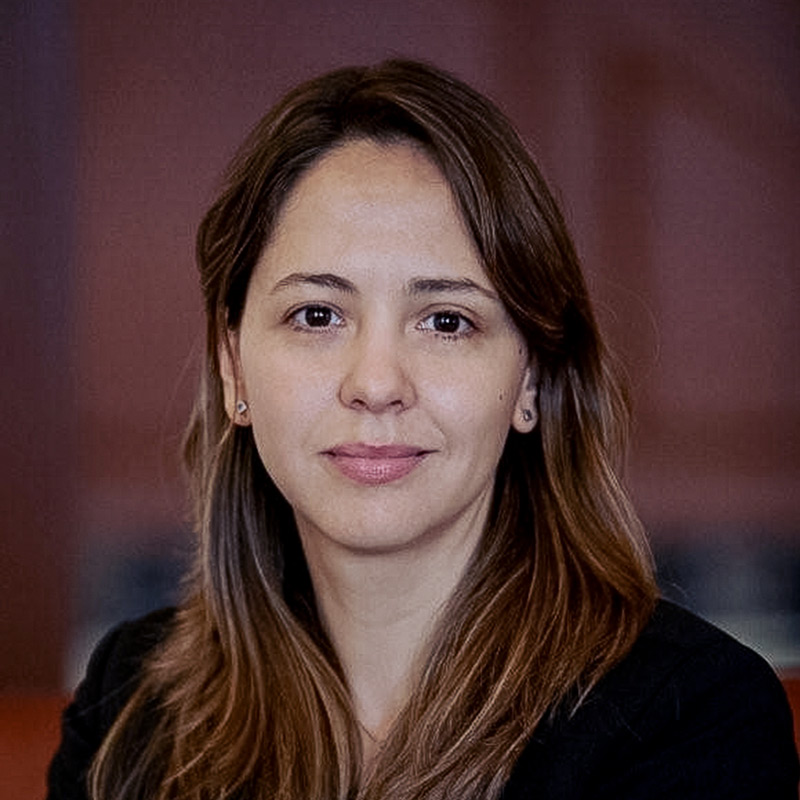
Gaëlle Simard-Duplain is an Assistant Professor in the Department of Economics at Carleton University, affiliated with the Faculty of Public and Global Affairs. Her research focuses on health and labour market outcomes, emphasizing how policy and family dynamics influence economic vulnerability and inequality. She holds a PhD from the Vancouver School of Economics (University of British Columbia), along with prior degrees from Concordia University. Her expertise includes intergenerational transmission of outcomes, economic vulnerability, and the use of administrative and survey data linkages. Key research themes involve mitigating inequalities through family and policy interactions, with a focus on Canada's socio-economic landscape. Recent publications explore topics like childhood disadvantage's long-term economic costs, gender earnings gaps influenced by marital status, and the impact of informal care on employment. Her work integrates empirical analysis with policy relevance, addressing modern challenges in health, labor markets, and family structures. Languages spoken: English, French, Spanish.
Joseph D. Wolfe is an Associate Professor in the Department of Sociology at the University of Alabama at Birmingham (UAB), part of the College of Arts and Sciences. His research focuses on medical sociology, health disparities, social stratification, and the life course. He holds a BA in Sociology from Millsaps College, an MS in Applied Statistics from Indiana University, and a PhD in Sociology from Indiana University Bloomington. Dr. Wolfe’s work examines how social contexts and aging interact to influence health and behavior, with particular attention to historical shifts in health disparities and the role of education, wealth, and socioeconomic status. He combines quantitative methods with sociological theory to analyze issues like midlife health cognition, financial stressors, and the long-term impacts of reproductive and economic decisions. Teaching and research are deeply intertwined in his career. He has taught courses ranging from sociological theory to categorical data analysis, emphasizing contemporary relevance and evidence-based insights. His approach prioritizes student engagement and critical thinking, aiming to equip learners with tools to understand societal influences on health and inequality. Dr. Wolfe’s research has explored topics such as childbearing histories, midlife obesity correlates, and the effects of wealth loss on health outcomes. He has contributed to methodological advancements in medical sociology while advocating for interdisciplinary approaches to address health disparities. His work reflects a commitment to bridging social science and healthcare fields to improve population health outcomes.
Jennifer M.I. Loh is a Professor in Management and Human Resources at the University of Canberra's Canberra Business School. She is a fully registered psychologist with the Australian Health Practitioner Regulation Agency and holds memberships with the Australian Psychological Society (APS), American Psychological Association (APA), Academy of Management (AOM), Australia Human Resource Institute (AHRI), and the College of Organisational Psychologists. Her educational background includes a PhD in Organisational Psychology from the University of Queensland (awarded December 14, 2006) and an Honours Bachelor of Science degree from the University of Toronto (awarded November 30, 1998). Professor Loh's research focuses on Organisational/Industrial Psychology, Organisational Management, and Human Resource issues. She investigates counter-productive workplace behaviors including workplace bullying and cyber-bullying, toxic workplace culture, resilience and capacity building, cross-cultural management and communication, and gender equity. Her work particularly examines the underlying mechanisms responsible for wellbeing and organizational outcomes among vulnerable groups and the impact of technology usage on work performance, teamwork, and wellbeing. Through her research, she has developed expertise in both quantitative and qualitative methodologies, often employing cross-cultural comparisons between Australia, Singapore, and other international contexts. Her recent publications (2017-2025) demonstrate a strong focus on workplace incivility, bullying (including cyber-bullying), gender equity across different cultural contexts, and the impact of social media in workplace settings. She has published extensively in high-impact journals such as Computers in Human Behavior (Q1), Social Media and Society, and Gender in Management, with notable publications examining generational perspectives on workplace behavior, context collapse in social media, and women's career progression across cultural contexts. TEQSA Expert panel member Assistant Chief Editor for Frontier Organisational Psychology Active member of ANZAM, AHRI, AOM, and APS Professor Loh has successfully supervised numerous PhD/DBA students including Hae Jin Jang (University of Canberra, DBA on Kkondae bullying), Xinmei Wu (University of Canberra, DBA on service innovation through big data analytics), and Robin Ladwig (University of Canberra, PhD on trans and gender diverse individuals' work experiences). She has also supervised over a dozen Honours students at Edith Cowan University on topics related to workplace cyberbullying, incivility, and cross-cultural management. Her supervision interests align with her research expertise in Human Resource, Counter Productive Workplace Behaviours, Organisational Management, Positive Psychology, and Advanced Technology. Professor Loh is actively engaged in current research projects examining Human Resource practices, Leadership, Workplace incivility, bullying, Workplace cyberbullying, Social media context collapse, Impact of technological usage, Gender equity, and wellbeing in organizational contexts. She frequently delivers invited presentations on fostering inclusive workplace cultures and improving workplace dynamics, including recent engagements with Pathway to Politics for Women and U3A (University of the Third Age).
Jaime Jacobsen is an Assistant Professor of Journalism & Media Communication at Colorado State University and Director of the Center for Science Communication. She holds an M.F.A. in Science and Natural History Filmmaking from Montana State University, where she is pursuing a doctorate in American Studies. Her work focuses on socially impactful filmmaking addressing climate change, migration, and scientific innovation. Education: M.F.A., Montana State University (Science & Natural History Filmmaking) Doctoral Studies: American Studies, Montana State University Her research interests include participatory media production, science communication through film, and documenting marginalized communities. Recent projects include The Last Artifact (2020), which explores metrology's global redefinition of measurement standards, and Beyond the Soil (2023), examining climate resilience in agriculture. Her films have received major accolades including an Emmy Award and multiple festival wins. Current initiatives include the Hold Our Ground series (2023/2024) and an interactive documentary on Venezuelan migration experiences. Grants: $500,000 grant for The Last Artifact production Fieldwork: Documentaries in Australia, Tanzania, Kenya, Brazil, Lebanon, and across North America Jaime leads the Center for Science Communication, fostering interdisciplinary storytelling collaborations between scientists and filmmakers. She has taught at Notre Dame University-Louaize in Lebanon and contributed to National Geographic expeditions.
Hemant Sashittal is a Professor of Marketing in the Department of Management at St. John Fisher College's School of Business. He joined the institution in 1991 as an assistant professor and has since served as department chair for ten years. His academic career spans over three decades with continuous scholarly contributions. Dr. Sashittal earned his educational credentials from prestigious institutions: Ph.D. in Business Administration (Marketing) from Syracuse University, MBA from Syracuse University, MMS from Bombay University, and B.Com. from Bombay University. His research focuses on contemporary marketing challenges in digital environments, particularly examining how brands interact with consumers on social media platforms like Snapchat, Instagram, Twitter, and Facebook. He has developed specialized expertise in understanding brand anthropomorphism ('brand entification'), consumer-brand relationships during crises like the pandemic, and the influence of social media influencers. His pedagogical research investigates classroom teamwork dynamics, social loafing behaviors, and intergenerational workplace conflicts. Analysis of his recent publications reveals a consistent research trajectory examining digital branding phenomena across multiple social media platforms, with particular attention to generational differences in brand interactions. His work bridges academic theory with practical marketing applications, as evidenced by Harvard Business Review case studies and publications in top marketing journals. Dr. Sashittal actively mentors students in research, as demonstrated by his collaboration with Mike DeMar on Snapchat branding research that resulted in a Business Horizons publication and a Harvard Business School case study. His teaching portfolio includes Marketing Principles, Marketing Research, and Marketing Strategy courses at the undergraduate level.
Dr Sabina Savadova is a Teaching Fellow in Childhood Studies at the University of Edinburgh. Her work focuses on digital media practices in young children's lives, particularly in Azerbaijan and refugee family contexts, with expertise in participatory research methods like living journals. Thesis: 'Living journals: Young children, their digital practices and families in Azerbaijan' (2022) Supervisors: Professor Lydia Plowman and Dr Holly Linklater Research interests include digital media in early childhood , parental mediation strategies , and cultural influences on child development . She has pioneered the living journal method for studying family digital practices, with a focus on remote research adaptations and ethical considerations. Her publications analyze digital safety, literacy development, and refugee family integration through technology. While no scientific awards are highlighted in the provided text, her methodological contributions to participatory design and digital ethnography demonstrate significant impact in childhood studies. She contributes to educational frameworks through collaborative studio pedagogy and fieldwork guidance for University of Edinburgh researchers. Her work bridges cultural contexts across Azerbaijan, the UK, and New Zealand in digital media studies.
Dhaval Vyas is a Senior Lecturer in Computer Science at the School of Electrical Engineering and Computer Science, University of Queensland, Australia. He leads the Compassion Lab research group and is a former ARC DECRA Fellow (2018-2022). His educational background includes a PhD in Human-Computer Interaction from University of Twente (Netherlands), a Master's degree in Computer Science from Lancaster University (UK), and an undergraduate degree in Computer Science from Gujarat University (India). Dr. Vyas's research focuses on designing technology solutions for underserved communities. His work spans Human-Computer Interaction (HCI) and Computer-Supported Cooperative Work (CSCW), with specific emphasis on supporting health and wellbeing in low socioeconomic status communities, refugees and asylum seekers, women in crisis situations, rural communities in developing countries, and older adults. He has developed innovative approaches to democratizing making practices through e-waste recycling and has created applications for men's sheds to coordinate activities. His recent publications demonstrate a consistent focus on refugee integration, making practices in underserved communities, health technology for older adults, and sustainable design. His work often combines ethnographic approaches with participatory design methods to develop technology solutions that genuinely address community needs. Scientific Awards: ARC DECRA Fellow (2018-2022) Dr. Vyas actively supervises PhD and Master's students, with current projects focusing on designing technologies for humanitarian entrants, refugee entrepreneurial pathways, smart homes for people with disabilities, and inclusive AI design for developing countries. His research has generated significant media interest, particularly around e-waste recycling initiatives and smart home technologies for assisted living. The Compassion Lab, which he leads, maintains a strong user-centric focus, studying issues at the grassroots level and involving community members directly in the design and development of technological solutions.
Prof. Rafaele Huntjens is a Professor of Experimental Clinical Psychology at the University of Groningen, affiliated with the Department of Clinical Psychology and Experimental Psychopathology within the Faculty of Behavioural and Social Sciences. She holds leadership roles, including Director of the Graduate School of Behavioural and Social Sciences and Senior Member of the Dutch-Flemish Research School for Experimental Psychopathology (EPP). Her research focuses on cognitive-behavioural processes in trauma-related disorders such as dissociative disorders and PTSD, emphasizing memory functioning, dissociation mechanisms, and treatment outcomes. Education: Huntjens earned her PhD from Utrecht University in 2003 with a thesis on interidentity memory in dissociative identity disorder. Her academic career spans roles from Assistant Professor (2006) to Associate Professor (2016) before becoming a full Professor in 2020. She has held teaching roles across bachelor’s and master’s courses, including 'Mental Health: A Multidimensional Perspective' and 'Experimental Psychopathology.' Research Interests: Her work explores trauma’s impact on memory and identity, particularly in dissociative identity disorder (DID), PTSD, and schizophrenia spectrum disorders. She investigates interventions like schema therapy for DID and trauma-focused treatments for PTSD, emphasizing cost-effectiveness and patient outcomes. Key themes include dissociative amnesia, false memory risks, and intergenerational trauma effects. Awards: Huntjens is a Fellow of the International Society for the Study of Trauma and Dissociation (ISSTD) since 2016. Advising & Grants: She supervises numerous PhD students researching topics like schema therapy for DID, trauma treatment protocols, and dissociation in psychosis. Her grants include projects on cost-effectiveness of PTSD interventions and phase-based therapies for childhood trauma survivors. She collaborates with institutions like Arq Centrum '45 and Amsterdam UMC. Labs & Teams: Huntjens leads projects at the Clinical Psychology and Experimental Psychopathology lab, focusing on experimental and clinical studies of trauma-related disorders. She contributes to national guidelines for dissociative and trauma-related disorders and serves on editorial boards for journals like the Journal of Behavioral Therapy and Experimental Psychiatry .
Professor Torkild Hovde Lyngstad is affiliated with the University of Oslo's Department of Sociology and Human Geography, part of the Faculty of Social Sciences. He holds a PhD in Demography (2007) and a cand.polit. in Sociology (2002) from the University of Oslo. His academic interests span family sociology, demography, criminology, and quantitative methods, with a focus on genetic and environmental interactions in social stratification. Research Interests: His work explores topics such as partnership dissolution genetics, socioeconomic status determinants, educational inequality, and the role of family networks in criminal behavior. He employs advanced quantitative methods and register-based data to analyze population-scale phenomena. Publications: Recent work includes studies on genetic influences on educational outcomes, the weakening correlation between cognitive ability and education over birth cohorts, and the effects of income inequality on mortality. His research often integrates Scandinavian welfare-state contexts with global comparative frameworks. Labs/Teams: He is part of research groups like 'Neighborhood Genetics' and contributes to projects such as EQOP and the CHARM initiative. His teaching focuses on family sociology, criminology, and statistical methods.
Elisabeth Gee is a Professor at Arizona State University's Mary Lou Fulton Teachers College, specializing in the intersection of digital gaming, literacies, and STEM education. She has held leadership roles such as Associate Dean (2021–2025) and Co-Division Director (2020–2021). Her research focuses on how gaming and digital media can foster learning, particularly for underserved groups like girls and minority students. Gee's work has been supported by major foundations including the NSF, MacArthur, and NIH. Education: Ed.D. (Adult Education, Rutgers, 1987), M.Ed. (Adult Education, Rutgers, 1983), B.A. (English, Summa Cum Laude, Fairleigh Dickinson, 1981) Her research investigates family media ecologies, game design for STEM engagement, and gender dynamics in digital learning. Key projects include NSF-funded initiatives like 'Play in the Making,' which uses game design to address real-world problems in Maker spaces. She co-authored influential books such as Families at Play and Children and Families in the Digital Age . Gee is a 2011 White House Champion of Change, recognized for leveraging games to engage girls in computing. Her recent work explores mentoring roles in design thinking and the role of story in educational games.
Judith K Morgan, PhD, is an Associate Professor of Psychiatry and Psychology at the University of Pittsburgh, affiliated with the Dietrich School of Arts & Sciences and Department of Psychology. She directs the CARE Laboratory and holds adjunct appointments at Deakin University. Her research focuses on children at familial risk for depression, integrating developmental psychology and affective neuroscience methodologies. Key interests include behavior inhibition, neural reward processing in early childhood, and maternal-child affective synchrony. Her work employs functional MRI to examine how early experiences shape brain development and contribute to psychopathology. Morgan's publications frequently explore themes of intergenerational depression transmission, maternal socialization of emotion, and neurodevelopmental trajectories in high-risk populations. Her studies consistently bridge clinical observations with neurobiological mechanisms. Honors include the NARSAD Young Investigator Award and Klingenstein Third Generation Foundation Fellowship. She currently leads NIH-funded projects investigating mother-infant biobehavioral synchrony and postpartum depression interventions.
Dr Aelwyn Williams is a Research Officer in the Department of Public Health at the School of Health and Social Care, Swansea University, and works part-time at the Awen Institute. He has been affiliated with the Centre for Innovative Ageing since 2012 and contributes to interdisciplinary research on aging, dementia, and public health. University: Swansea University School: School of Health and Social Care Department: Department of Public Health Position: Research Officer (part-time) His research focuses on aging and dementia-friendly communities through qualitative and ethnographic methods, integrating human and geographical perspectives. He employs creative methodologies such as cut-ups and collage, and engages with social theories including post-structuralism and non-representational theory. His work emphasizes health literacy and community-based interventions. The recent publications highlight a strong trend in intergenerational and climate-related research using innovative tools like comics, alongside critical explorations of dementia-friendly communities. His work bridges public health, geography, and the arts, reflecting a transdisciplinary approach to societal challenges. Dr Williams has no listed scientific awards in the provided text. He advises no formal students listed and has not received mention of grants. However, his collaborative projects suggest active engagement in funded interdisciplinary initiatives. His research outputs include journal articles, book chapters, conference contributions, and creative research products. He is involved with the Centre for Innovative Ageing and the Awen Institute, both of which support research on aging, wellbeing, and community resilience. These centers foster interdisciplinary collaboration and public engagement in health and social care research.
Dr. Matt Barnes is a Senior Lecturer in the Department of Sociology and Criminology at City, University of London, where he also serves as Director of the City Q-Step Centre, promoting quantitative methods in social science education. He holds a PhD in Social and Policy Sciences from the University of Bath, an MSc in Social Statistics from the University of Southampton, and a BSc in Mathematics with Sociology from Plymouth University. PhD in Social and Policy Sciences, University of Bath, UK MSc in Social Statistics, University of Southampton, UK BSc (Hons) Mathematics with Sociology, Plymouth University, UK His research focuses on poverty, disadvantage, and social exclusion in the UK, with a strong emphasis on the secondary analysis of large-scale social surveys such as Understanding Society, the Family Resources Survey, and the Labour Force Survey. He specializes in quantitative methodologies, longitudinal data analysis, and statistical modeling of social inequality. Dr. Barnes’s recent publications reveal a consistent focus on multidimensional poverty, child and older adult well-being, housing quality, and the dynamics of worklessness. His work often examines how socioeconomic disadvantage interacts with health, education, and housing, using complex datasets to inform social policy. A key theme across his research is the critique of policy-based evidence, particularly in programs like the Troubled Families initiative, where he highlights methodological flaws in linking disadvantage with antisocial behavior. Short- and long-term determinants of social detachment in later life The duration of bad housing and children's well-being Poverty typologies in Scotland Child poverty transitions Work-life balance and atypical employment Understanding landlords and the private rental sector Dr. Barnes has received research funding from the British Academy, Independent Age, Department for Education, and the Scottish Government. His awards and recognition stem primarily from competitive grants and policy impact rather than formal prizes. He supervises PhD students including Nhlanhla Ndebele and Merili Pullerits, focusing on quantitative analysis of social inequality. His prior professional experience includes roles as Research Director at NatCen Social Research, part-time analyst at the Cabinet Office’s Social Exclusion Task Force, and Research Officer at the University of Bath. He is an active contributor to public discourse, with media appearances, blog posts, and keynote lectures on poverty measurement and social exclusion.
Andrea Mari Lluch is an Associate Professor at the Faculty of Management, University of the Andes, Colombia, and a researcher at the National Scientific and Technical Research Council of Argentina (CONICET). She is also a Full Professor at the National University of La Pampa, Argentina (currently on leave), and affiliated with Harvard University as a non-resident researcher at the David Rockefeller Center and associate of the Creating Emerging Markets Project at Harvard Business School. PhD in History, National University of the Center of the Province of Buenos Aires (2004) Bachelor of History, National University of La Pampa (1996) Her research focuses on the business and economic history of Latin America, especially Argentina, with emphasis on family businesses, multinational corporations, management education, and corporate networks in the 20th century. She explores the evolution of capitalism, entrepreneurial strategies, and the role of women and diasporas in business development. Her recent publications analyze climate change adaptation in the wine industry, trademark registration as a property rights strategy, and the transnational influences on management training in Argentina. Her recent scholarly output reveals a strong thematic focus on the historical development of Latin American capitalism, the interplay between foreign and domestic business actors, and the institutionalization of management knowledge. She frequently collaborates with international scholars and contributes to major edited volumes and high-impact journals in business history. Mérito al Valor Científico, Honorable Senate of Argentina (2018) Corresponding Member, Argentine National Historical Academy (2022) Lluch has advised doctoral students and leads the History and Entrepreneurship Research Group (GHE) at the University of the Andes. She has received research grants from Fulbright, CONICET, the National Agency for Scientific and Technological Promotion (Argentina), the Latin American Studies Association, and Harvard Business School. She co-founded the Business History Research Network and co-created the Foreign Companies in Argentina Database (FCAD). Her academic leadership includes former presidencies of the Argentine Association of Economic History (2017–2021) and the Business History Conference, USA (2021–2022).
Dr. Wei Jiang is a Lecturer in Economics at the School of Economics, University of Kent, where she has been a faculty member since July 2013. Her research is associated with the Macroeconomics, Growth and History Centre, and she actively contributes to academic administration as the Discussion Paper Editor for macro papers and the joint PhD Job Market Placement Officer. Education: MSc in Economics, Scottish Graduate Programme in Economics (SGPE), University of Edinburgh, 2008 PhD in Economics, University of Glasgow, 2013 Wei Jiang's research focuses on macroeconomic theory and policy, with emphasis on dynamic stochastic general equilibrium (DSGE) models, business cycle analysis, fiscal and monetary policy interactions, and optimal taxation. She employs advanced computational and mathematical techniques to analyze heterogeneous agent models, union bargaining, and search-and-matching frictions in labor markets. Her recent work explores intergenerational mobility and the Great Gatsby Curve. The most recent publications reflect a strong trajectory in macroeconomic modeling with applications to climate change, tax reform, and labor market dynamics. Her work integrates theoretical rigor with policy-relevant insights, particularly in the context of market distortions and welfare implications. Scientific Awards and Honors: No awards explicitly mentioned in the text. Dr. Jiang is actively involved in PhD supervision, currently guiding students Benjamin Caswell, Anup Mulay, and Jungu Yang. She welcomes new PhD candidates interested in business cycle accounting, optimal fiscal policy, tax reforms, and labor market frictions. She has also contributed to research grants and collaborative projects, as evidenced by co-authored publications with scholars such as K. Angelopoulos, J. Malley, and M. A. Leon-Ledesma. Her administrative roles underscore her engagement in academic leadership and student development. She is affiliated with the Macroeconomics, Growth and History Centre at Kent, which supports interdisciplinary research on long-term economic trends and policy. Her work continues to influence both theoretical and applied macroeconomics, particularly in the design of efficient fiscal instruments under real-world market imperfections.