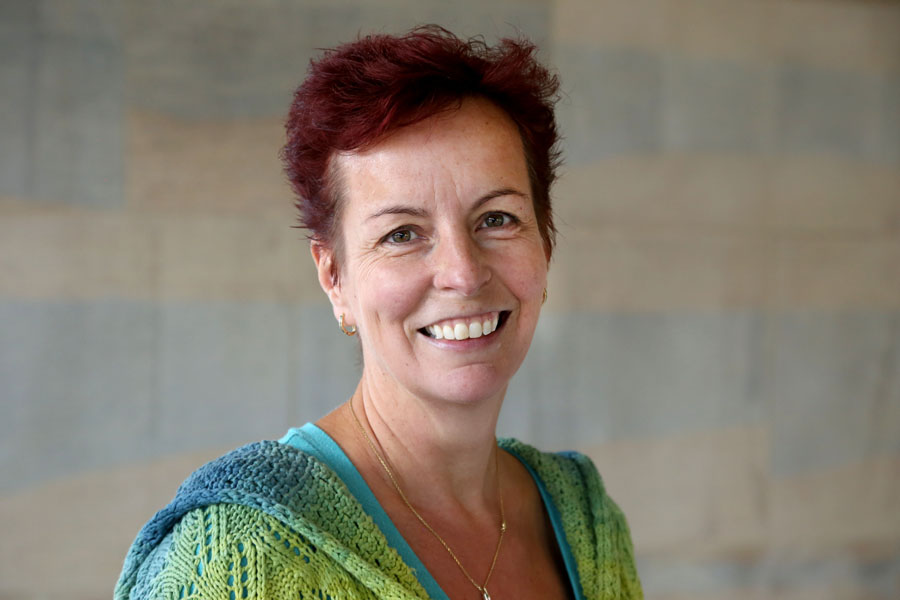
Monika Schmid is a current Professor of Linguistics and Head of Department at the University of York , previously holding professorial roles at the University of Essex (2013-2021) and the University of Groningen (2010-2015). Her research focuses on Language Attrition , Bilingualism , and Neurolinguistics , with recent work examining cognitive impacts of bilingualism and age-related factors in language stability. PhD in English Linguistics, University of Duesseldorf (2000) Key funded projects: AHRC (2020), Royal Society (2017), ESRC grants (2014-2015) Her publications and grants highlight interdisciplinary approaches to language attrition, integrating ERP studies, eye-tracking, and quantitative methods. She has supervised over a dozen PhD students in language development, including Julia Heimann and Concepcion Soto Garcia Melendez. Elected to the Young Academy of the Netherlands (2005) Recipient of NWO Veni (2004) and Vici (2010) awards
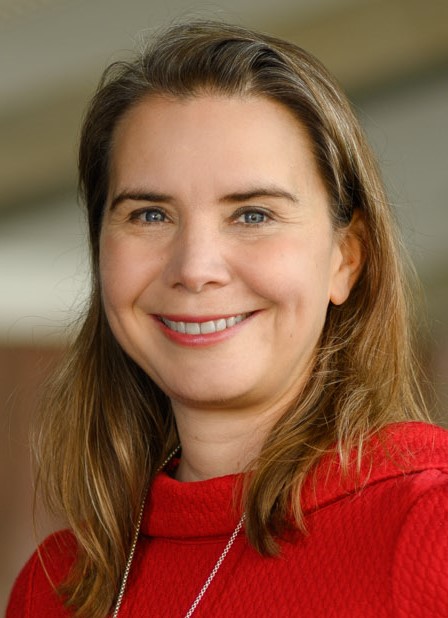
Katharina Kleinen-von Königslöw is a Full Professor of Journalism and Communication Studies at the University of Hamburg , focusing on digital communication and sustainability. Since 2018, she serves as Vice Dean for Teaching and Studies at the Faculty of Economics and Social Sciences and leads the Erasmus Mundus Master's program Journalism, Media and Globalisation . Her research spans digital public spheres , transnational communication , and sustainability framing in social media, with a methodological emphasis on quantitative and qualitative empirical methods . Recent publications analyze: Platform governance (Google/YouTube’s role in conspiracy theories) Climate futures framing across countries Right-wing populists’ linking practices Automated content analysis via machine learning She has secured major grants from institutions like Landesforschungsförderung Hamburg and Swiss National Science Foundation , co-leading interdisciplinary projects on security and sustainability. Her work has been cited over 1,600 times on Google Scholar. Her team includes researchers like Dr. Gerret von Nordheim and Dr. Laura Liebig, with collaborations across Europe and North America.
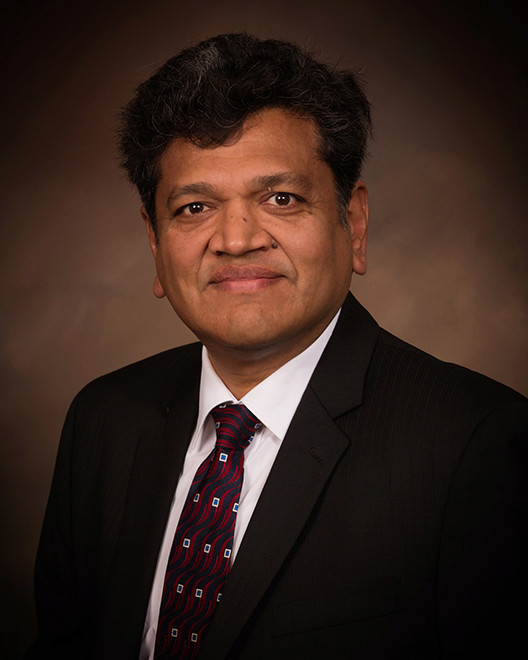
Sneha Kumar Kasera is an Associate Dean for Academic Affairs and Professor at the John and Marcia Price College of Engineering, affiliated with the Kahlert School of Computing. She leads the ANSR Lab, founded in 2003, focusing on advanced networked systems research. Her work spans networks and systems, including mobile/pervasive systems, wireless security, IoT, crowdsourcing, and spectrum management. She has held leadership roles in conferences like IEEE WoWMoM, ACM WiSec, and ACM MobiCom. Kasera’s research emphasizes practical applications of networking and security, with contributions to spectrum sharing, dynamic zone protocols, and privacy-preserving technologies. Her professional activities include program co-chair roles for major conferences and editorial positions for IEEE Transactions. She advises numerous PhD and MS students, many of whom hold prominent roles in academia and industry. Kasera’s lab develops open platforms like POWDER for experimental wireless research, addressing real-world challenges in network design and security. Key research themes include spectrum monitoring, deep reinforcement learning for network optimization, and privacy-aware systems. Her publications highlight advancements in 5G/6G networks, wireless localization, and IoT ecosystems. Her work bridges theoretical contributions with scalable, deployable solutions for modern communication challenges.
Amir Masoud Molaei is a Research Fellow at the School of Electronics, Electrical Engineering and Computer Science, Queen's University Belfast. His research focuses on advanced radar imaging techniques, antenna engineering, and signal processing, with particular emphasis on near-field localization, MIMO systems, and computational imaging using metasurface antennas. He has collaborated extensively on projects involving millimeter-wave systems, sparse array configurations, and security applications. His work integrates theoretical models like Kirchhoff migration with experimental validation, emphasizing hardware-efficient designs and algorithmic improvements. Key themes include overcoming challenges in mutual coupling effects, optimizing dynamic antenna configurations, and enhancing 3D imaging resolution. He has explored applications ranging from medical imaging to security systems, with a strong focus on real-time processing and experimental validation. Notable contributions include pioneering studies on reconfigurable metasurface antennas for radar and computational imaging, as well as algorithmic advancements in direction-of-arrival estimation and mixed-field source localization. His research bridges electromagnetic theory, signal processing, and practical hardware implementations, often addressing trade-offs between computational efficiency and accuracy. Molaei has published over 40 papers since 2021, with a focus on IEEE journals and conferences. His work frequently addresses challenges in signal reconstruction, sparse sampling techniques, and the integration of machine learning with traditional signal processing methodologies.
Dr. Abolfazl Zaraki is a Senior Lecturer in AI and Robotics at the University of Hertfordshire's Department of Computer Science, part of the School of Physics, Engineering & Computer Science. He leads the Robotics Research Group and previously held roles at Cardiff University's School of Engineering and the IROHMS Research Centre. His academic journey includes a Master's in Mechatronics from University Technology Malaysia (2010) and a PhD in Automatic Robotic and Bioengineering from the University of Pisa (2014). He has held Research Fellow positions in Italy and the UK until 2019. Dr. Zaraki's research focuses on AI-driven autonomous systems, social robotics, and assistive technologies. Key projects include the EASEL, BabyRobot, and JAMES EU initiatives, alongside the Innovate UK-funded InSight project. His work emphasizes Human-Robot Interaction (HRI), trusted autonomy, and applications in healthcare and industrial contexts. Notable contributions include the development of the Kaspar humanoid robot for autism therapy and advancements in reinforcement learning for robotic control. His recent publications (2021–2025) explore agentic AI, memory-driven systems, and personalized LLMs for HRI, alongside technical advancements in robotic control, communication systems, and bio-inspired robotics. His research bridges theoretical AI innovation with practical applications in healthcare, education, and industrial automation. Zaraki has collaborated internationally across institutions and industry partners, contributing to 35+ research outputs. His work aligns with global trends in ethical AI, explainable systems, and human-centric robotics design.
Cyrille GRANGET is a Professor in the Department of Language Sciences at Toulouse Jean Jaurès University (UT2J), where he also serves as Director of the NeuroPsychoLinguistics Laboratory (LNPL, UR4156). He is actively involved in academic governance, holding elected positions in the Departmental Council of Language Sciences, the CLESCO Doctoral School Council, and the Qualified Scientific College (CSQ). He is also the Educational Coordinator for International Relations and outgoing mobility in Language Sciences. His research lies at the intersection of linguistics, cognition, and education, with a strong focus on second and third language acquisition. Key interests include: Linguistic and cognitive representation of events in L2 Inflectional verbal morphology in L2 French Effects of orthography and metrical structure on pronunciation Role of context, prior languages, and literacy in language learning Sociolinguistic variation and critical appropriation of dominant varieties Language acquisition among migrant populations His recent publications reflect a multidisciplinary approach combining psycholinguistic experiments (eye-tracking), computational modeling, and sociolinguistic fieldwork. He frequently collaborates across languages including French, German, Japanese, Spanish, Arabic, and Portuguese, often in educational or migratory contexts. His work is published in journals such as Languages , Education Sciences , and Revue Romane , and presented at major conferences like EuroSLA and CMLF. Scientific contributions and service include: Member of the editorial board of Langage, Interaction, Acquisition (LIA) Member of the office of the Thematic Network Recherche en Acquisition des Langues Secondes (RéAL2) Participant in the Toulouse Political Ecology Workshop (Atecopol) Supervision of multiple research projects and students in linguistics and language education He is deeply committed to inclusive language education, particularly for newly arrived migrant adolescents, and integrates theoretical linguistics with practical pedagogical applications. His leadership in LNPL and involvement in national research networks underscore his significant role in advancing psycholinguistic and sociolinguistic research in France.
Pardhasaradhi Bethi is a Research Fellow at the Department of Information and Communication Technology , University of Agder , specializing in lightweight deep learning models for edge computing and radar signal processing. Focus areas include object classification, sound recognition, and drone surveillance Collaborates with colleagues like Linga Reddy Cenkeramaddi and Srihari Pathipati Research Interests encompass edge AI , radar-communication convergence , and real-time IoT integration . His work emphasizes optimizing neural networks for low-power devices and improving tracking frameworks. Publication Trends show a strong focus on automotive radar , drone detection , and human activity analysis using deep learning techniques.
Grégory Batt is a Researcher and Head of the InBio joint research group at the Institut Pasteur and Inria Paris. The lab operates at the intersection of wet and dry biology, focusing on systems and synthetic biology with an emphasis on automation, modeling, and real-time control of cellular processes. The team is affiliated with both institutions and hosts a multidisciplinary group of researchers, engineers, and students. The research interests of Grégory Batt span systems biology, synthetic biology, quantitative modeling, lab automation, bioproduction, and single-cell analysis . His work integrates computational and experimental approaches to develop frameworks for understanding and controlling cellular behavior. Key methodologies include the use of synthetic biology, microfluidics, optogenetics, and robotics. The lab has developed innovative software tools such as ReacSight and MicroMator to enable automated and reactive experimentation. Recent publications highlight trends in real-time control of bioproduction, optimization of protein secretion, parameter inference in stochastic models, and ecological frameworks for antibiotic resistance . These works demonstrate a strong focus on integrating modeling with high-throughput experimentation to solve problems in biotechnology and medicine. Scientific contributions include: Development of ReacSight for bioreactor automation and reactive control Creation of MicroMator for reactive microscopy Application of ecological concepts to bacterial antibiotic responses Modeling stochastic kinetics coupled with auxiliary processes Batt advises several PhD students and postdoctoral researchers, including Henri Galez, Alicia Da Silva, Cecilia Capela, and Viktoriia Gross. His lab has received support from ANR, Inria, and other funding bodies. The InBio team operates a state-of-the-art laboratory equipped with bioreactors, liquid handling robots, flow cytometers, automated microscopes, and high-performance computing resources, enabling advanced research at both population and single-cell levels. The lab, located at the Yersin and Lwoff buildings of the Institut Pasteur in Paris, fosters a collaborative environment integrating molecular biology, microbiology, and computational modeling to advance quantitative understanding of cellular systems.
Dr. Enrique Blair is an Associate Professor in the Department of Electrical and Computer Engineering at Baylor University, where he has served since 2015, advancing to his current rank in 2021. His academic journey includes prior roles as a Military Instructor at the U.S. Naval Academy and service in the U.S. Navy submarine force. He is actively engaged in research, teaching, and mentoring within the College of Engineering. His research focuses on the theoretical and computational aspects of quantum engineering, particularly in quantum-dot cellular automata (QCA), open quantum systems, and quantum information sciences. He explores molecular computing paradigms, quantum decoherence, and the quantum mechanical basis of olfaction, aiming to develop ultra-dense, low-power nanoelectronic devices and novel quantum technologies. His interdisciplinary work bridges electrical engineering, physics, chemistry, and materials science. The recent articles highlight a strong trend in molecular QCA design, quantum simulation for NISQ devices, and the application of ab initio methods to understand counterion effects and molecular stability. His research increasingly integrates machine learning for material discovery and emphasizes robustness in quantum circuits against environmental noise and external fields. The publications reflect a consistent focus on foundational quantum phenomena with practical applications in computing, sensing, and security. Research Grant, Office of Naval Research, Code 312 Nanoscale Computing Devices and Systems (May 2020 - May 2023) Summer Sabbatical, Baylor University (Summer 2019) Senior Member, IEEE (2019) Outstanding Faculty Award (untenured, tenure-track faculty), Baylor University (2018) Proposal Development Award, Office of the Vice Provost for Research, Baylor University (2017) Rising Star Program, Baylor University (2017-2018) Undergraduate Research and Scholarly Achievement Award, Office of the Vice Provost for Research, Baylor University (2017-2018) Rising Star Program, Baylor University (2016-2017) Graduate Research Fellowship Program, National Science Foundation (2010-2015) National Defense Science and Engineering Graduate Fellowship, American Society for Engineering Education (2010-2013) Dr. Blair has advised multiple Ph.D. and Master’s students, including Colin Burdine, Nischal Gautam, and Nishat Liza, and has mentored numerous undergraduate researchers. His research is supported by competitive grants, particularly from the Office of Naval Research, reflecting the strategic importance of his work in nanoscale computing. He integrates teaching and research, offering courses such as Quantum Mechanics for Engineers and Introduction to Quantum Computing, and promotes scholarly productivity through tools like Emacs Org Mode and LyX. He leads an active research team focused on molecular QCA and quantum information, with current members including Ph.D. students and undergraduates. The team conducts simulations, theoretical modeling, and design of quantum devices, contributing to advancements in nanoelectronics and quantum computing. Collaborations with experts in chemistry, physics, and computer science further extend the impact of the research.
Nikolas Kauer is a Senior Lecturer at the Department of Physics, Royal Holloway, University of London. His research focuses on theoretical particle physics, particularly computations and simulations for high-energy scattering processes, Large Hadron Collider (LHC) phenomenology, and searches for physics beyond the Standard Model. He has contributed extensively to studies involving Higgs boson interactions, off-shell effects, and jet veto techniques in BSM scenarios. Key affiliations: Theoretical Particle Physics Centre for Particle Physics and Astronomy. Active collaborations: STFC-funded projects with institutions like Sussex and UCL (2017–2020), CERN. Research Highlights: Advanced simulations for LHC data analysis, Higgs interference effects, and effective field theories. His work bridges theoretical models with experimental validation at colliders. Teaching Contributions: Offers courses in Advanced Classical Physics (PH3130), Further Mathematical Methods (PH3150), and C++ programming (PH3170) at Royal Holloway. Also lectures on Hadron Collider Physics at the NExT Graduate School. Grants & Projects: Principal Investigator (PI) for multiple STFC-funded projects, including the South-Eastern Particle Theory Alliance (2017–2021) and Theoretical Particle Physics Consortium (2014–2017). Collaborated on equipment grants and PhD training initiatives. Professional Activities: Regular invited speaker at international conferences and workshops, including CERN’s LHC Higgs Cross Section Working Group (2019), and contributor to major reports like the Handbook of LHC Higgs Cross Sections .
Maryam Shokri is a University Researcher in the Department of Electrical Energy Systems at Eindhoven University of Technology (TU/e). Her work focuses on modeling and analysis of electromagnetic interference and power losses in motor-drive systems. Research Interests: Common-Mode Currents in Power Electronics Multiconductor Transmission Line Theory Drive System Engineering Electromagnetic Compatibility (EMC) Electric Motor Design Renewable Energy Systems Her recent research outputs (2022) include conference contributions on modeling common-mode currents in motor-drive systems using advanced transmission line approaches, with applications in reducing electromagnetic interference and improving power efficiency.
Óscar Oballe-Peinado is a professor at the Department of Electronics, School of Engineering, University of Málaga. His work focuses on tactile sensors, FPGA-based embedded systems, and robotics, particularly addressing crosstalk elimination, sensor calibration, and smart preprocessing techniques. He contributes to both academic research and educational innovations, including remote digital electronics laboratories. PhD in Electronics (University of Málaga, 2016) Active researcher in tactile sensor technology and FPGA implementations Supervisor of Raúl Lora Rivera's research on texture detection and compliance recognition His research explores advanced methods for tactile sensor optimization, including hysteresis correction, quantization error reduction, and compliance recognition algorithms. Recent publications (2023-2024) focus on smart tactile preprocessing and embedded FPGA implementations for robotics. The 2023-2024 articles emphasize his contributions to tactile sensor applications in robotic manipulation, texture detection, and compliance recognition using FPGA-based embedded systems. These works align with trends in smart sensor interfaces and real-time processing for robotics. Collaborated on improving remote digital electronics laboratories using Raspberry Pi 4 (2022) Developed FPGA-based tactile sensor suite electronics (2017)
Padakandla Arun is a Professor in the Communication Systems department at EURECOM. His research focuses on quantum information theory, network communication, and coding theory, with recent work on multi-terminal quantum channels and machine learning applications in quantum measurement systems. Affiliation: EURECOM - Communication Systems Academic Rank: Professor Research Interests Prof. Padakandla investigates quantum communication protocols, classical-quantum hybrid systems, and structured code design for multi-user channels. His work bridges information theory with quantum mechanics, emphasizing achievable rate regions and measurement simulation techniques. Scientific Contributions Key trends in his publications include: Quantum MAC and interference channel analysis PAC learning frameworks for POVM hypothesis classes Algebraic structures in network information theory Contact Email: Arun.Padakandla@eurecom.fr
Lionel Pichon is a leading researcher at the Laboratory of Electrical and Electronic Engineering of the University of Paris. His primary affiliations include the Department of Electrical and Electronic Engineering of Paris, where he specializes in advanced electromagnetic research. His work focuses on Electromagnetics , Electromagnetic Compatibility (EMC) , and Wireless Power Transfer , with particular emphasis on composite materials, biomedical applications, and automotive systems. Expertise in numerical methods (FDTD, FIT, DGTD) for electromagnetic simulations Pioneer in shielding effectiveness analysis for composite materials Developer of AI-driven approaches for dielectric property characterization Over 70 publications since 2017 highlight his contributions to fields like inductive power transfer systems, medical device EMC, and GPR imaging techniques. Collaborates extensively with institutions globally, including research on antenna design for implantable medical devices and electromagnetic compatibility in healthcare facilities. Current research trends emphasize machine learning integration with traditional electromagnetic analysis to optimize system performance and safety standards.
Victoria Shao is a Teaching Associate Professor in the Department of Electrical and Computer Engineering at the University of Illinois Urbana-Champaign (UIUC). She specializes in electromagnetic compatibility (EMC), computational electromagnetics (CEM), and high-power microwave technology. Her work focuses on advancing numerical methods for transient electromagnetic analysis, stochastic modeling in complex enclosures, and the design of integrated electronic systems. Affiliations: Holonyak Micro and Nanotechnology Laboratory at UIUC Education: B.S. in Electrical Engineering (USTC, 2003), Ph.D. in Electromagnetics (Chinese Academy of Sciences, 2008) Prior positions: Researcher at ElectroScience Laboratory, Ohio State University (2009–2014) Research Interests: Dr. Shao’s work bridges computational methods with practical engineering challenges, emphasizing: Stochastic Green’s function approaches for statistical wave physics Multi-physics analysis of electronic systems Development of scalable algorithms for high-performance computing Nanotechnology integration for 3D RF components Her research has led to innovations in: Self-rolled-up membrane (S-RuM) nanotechnology for compact inductors Supercomputing-driven radio wave propagation models for urban environments Parallel-in-space-and-time electromagnetic simulation methods Awards: She has received multiple recognitions, including Best EMC Paper finalist awards (2022, 2023) and a Best Paper Award in IEEE Transactions (2017). Teaching and Contributions: Dr. Shao teaches core ECE courses such as ECE 110, ECE 210, and specialized EMC courses (ECE 498 YS3/YVS). She pioneers educational strategies using visualization tools and asynchronous learning to enhance STEM accessibility.