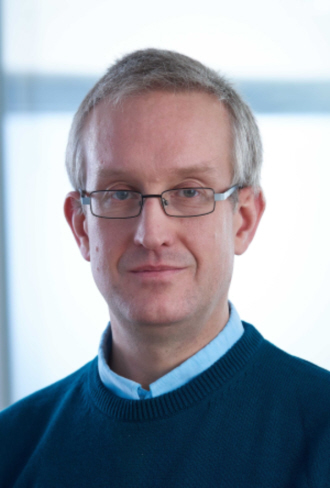
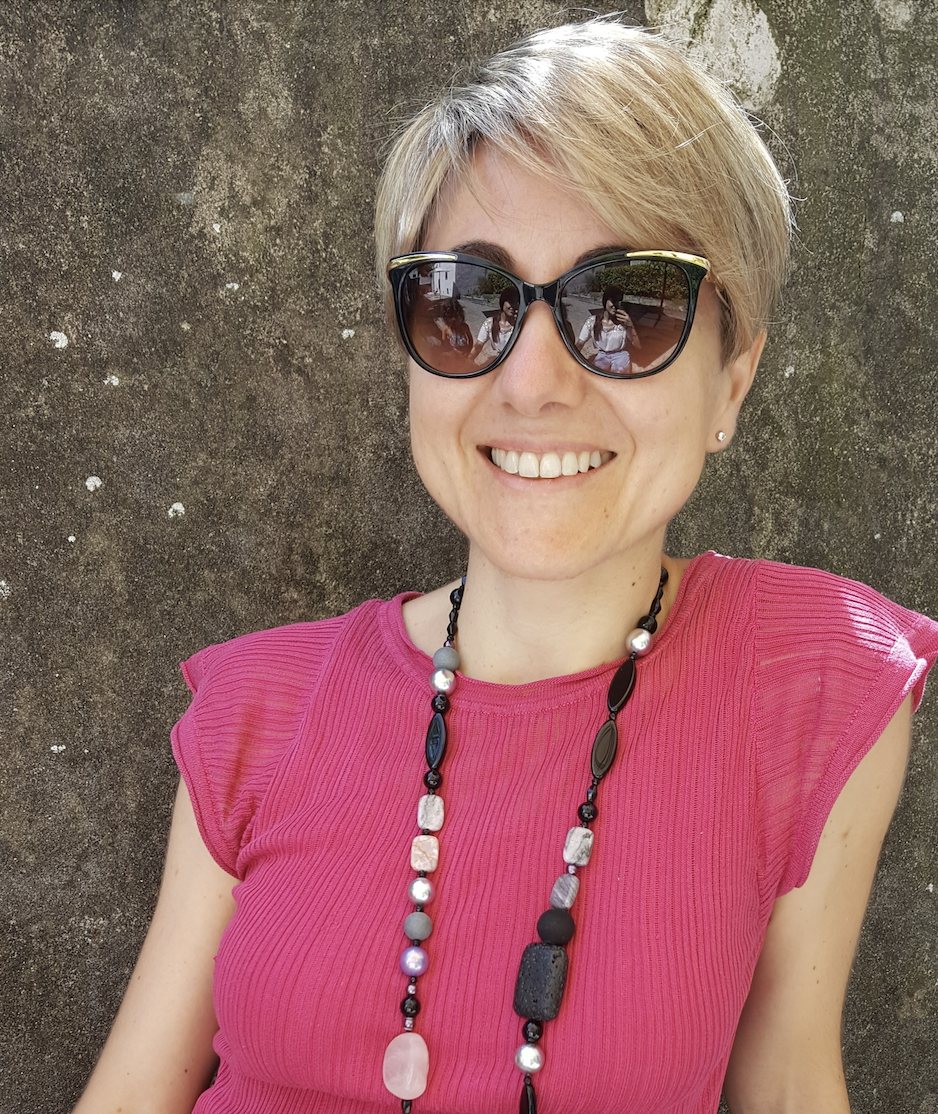
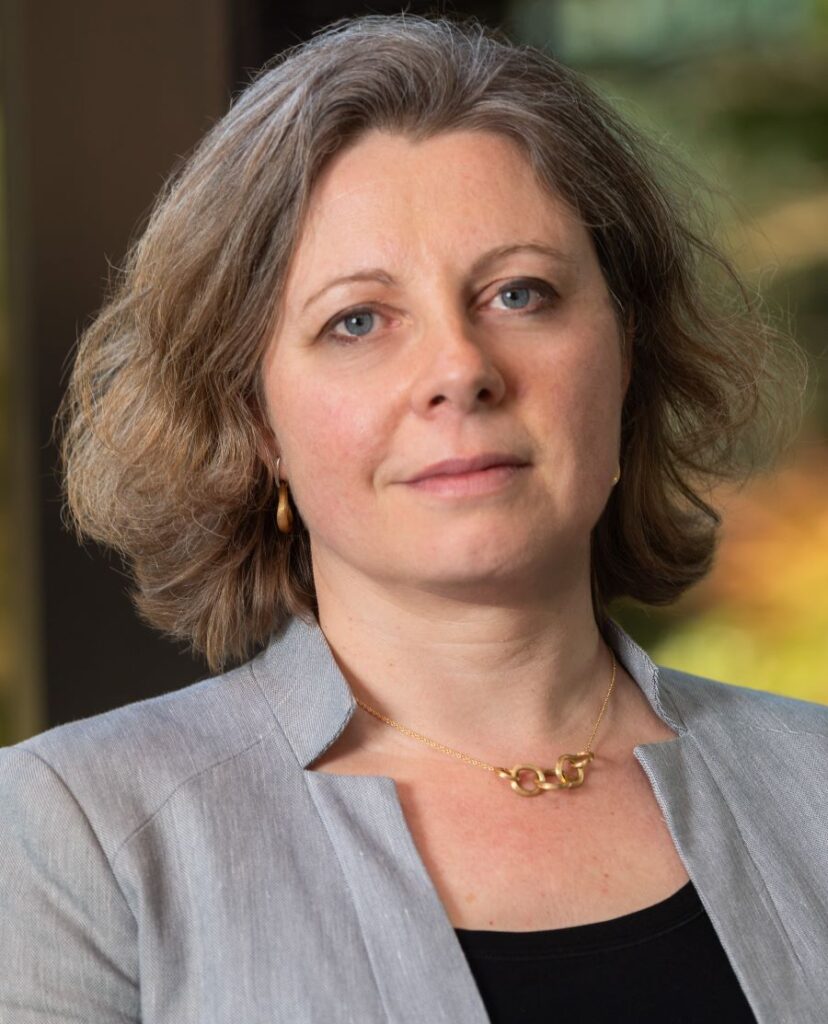
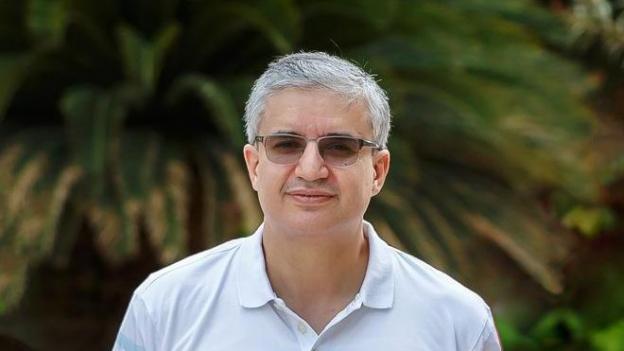
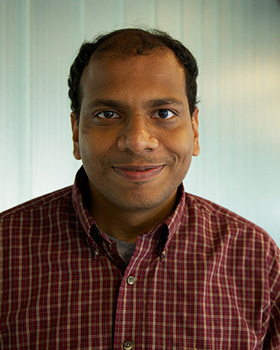
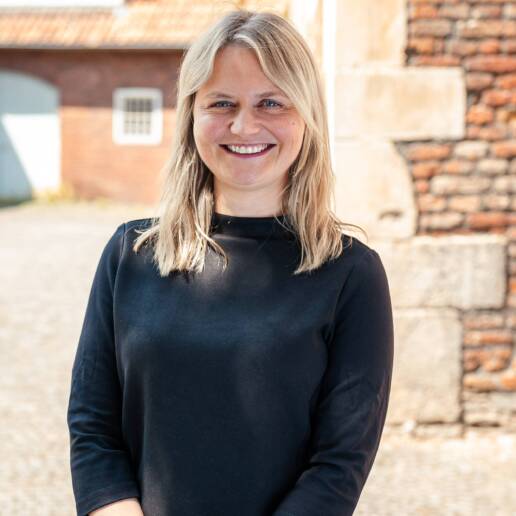
Professor Oliver Johnson is a faculty member at the School of Mathematics, University of Bristol, UK, where he serves as Head of School and holds the Professor of Information Theory position. His research bridges information theory, probability, and statistics, focusing on entropy convergence, group testing, and fundamental limits in data analysis. Current PhD students: Kieran Morris, Conor Crilly Ex-PhD students: Matt Aldridge, Leonardo Baldassini, Dan Cowley, Vaia Kalokidou, Tom Kealy, Jennifer Chakravarty, Zichen Gui, Chrys Paschou Ex-postdoc: Erwan Hillion His work includes ORCiD profile and collaborations across information theory, cybersecurity, and ecological modeling.
Dr. Elisa Pellegrino is a senior Post-Doc in Phonetics at the Department of Computational Linguistics , affiliated with Zeppelin University and the Digital Society Initiative of the University of Zurich . Her research focuses on voice individualization, vocal accommodation, and the role of speaker-specific information in speech temporal variability. Role: Senior Post-Doc in Phonetics University: Zeppelin University School: Faculty of Arts and Social Sciences Department: Department of Computational Linguistics Email: elisa.pellegrino@uzh.ch Research Interests: Prosody and speech rhythm in native and second language acquisition Vocal accommodation in cross-dialectal interactions Speaker individuality and forensic phonetics Age-related speech temporal variability Speech disorders and Parkinson’s disease Applications of speech technology in linguistics and education
Sophie Leroy is a Professor of Management and Dean of the School of Business at the University of Washington Bothell . She is an internationally recognized scholar whose work focuses on attention, interruptions, and leadership. She has held editorial roles at top journals and has received multiple awards for both research and teaching excellence. Education: Ph.D. in Organizational Behavior – Stern School of Business, New York University (2007) Master in Management (MBA equivalent) – HEC School of Management, Paris (1998) MBA Exchange Scholar – Columbia Business School (1997) B.A. – HEC School of Management, Paris (1996) Research Interests: Dr. Leroy’s research centers on self-regulation , particularly how individuals manage attention, time, and ethical decision-making in the face of interruptions. She coined the term "Attention Residue" , which describes the cognitive interference that occurs when attention lingers on a prior task after switching to a new one. Her work explores how this affects performance and how interventions like "ready-to-resume" plans can mitigate its effects. She also studies mindfulness , leadership , and synchrony preferences in team settings. Teaching: Dr. Leroy teaches courses in Leadership , Managing High Performance Teams , Global Management , and Ethical Decision Making across MBA and undergraduate programs. Since 2014, she has received eight teaching awards , including six MBA Faculty of the Year Awards and the Executive Education Distinguished Professor of the Year Award. Scientific Awards & Honors: 2024 University-wide Distinguished Research, Scholarship, and Creative Activities Award 2024 MBA Faculty of the Year Teaching Award 2022 Distinguished Professor of the Year Award, Executive Education 2021 Finalist for Best Paper of the Year – Academy of Management Annals 2009 Best Paper Award, Academy of Management MOC Division Advising & Grants: She has served as Dissertation Chair for John-Gabriel Licht and as a committee member for multiple Ph.D. students. She has also received competitive research grants including the SRCP Seed Grant and Dean’s Small Research Grant (five times). Media & Outreach: Dr. Leroy’s work has been featured in Harvard Business Review , The Economist , TIME Magazine , NBC News , and more. She has also appeared in podcasts and interviews on platforms like The David Pakman Show , Quartz , and King 5 Seattle .
Mohamed-Slim Alouini is a Professor of Electrical Engineering and Associate Dean of the Computer, Electrical and Mathematical Science and Engineering (CEMSE) Division at King Abdullah University of Science and Technology (KAUST) in Saudi Arabia. He also serves as the Associate Vice President for Research and holds the UNESCO Chair in Education to Connect the Unconnected. With over 500 journal publications and more than 46,000 citations, he is a world-renowned expert in wireless communications who was elected IEEE Fellow in 2009 at the age of 39. Education: PhD in Electrical Engineering, California Institute of Technology (Caltech), 1998 MS in Electrical Engineering, Georgia Institute of Technology (Georgia Tech), 1995 Diplôme d'Etudes Approfondies (DEA) in Electronics, Université Pierre & Marie Curie (Sorbonne University), 1993 Diplôme d'Ingénieur, École Nationale Supérieure des Télécommunications (Télécom Paris Tech), 1993 Habilitation, Université Pierre & Marie Curie (Sorbonne University), 2003 Dr. Alouini is a world-renowned expert in wireless communication and networking with research interests spanning diversity combining techniques, MIMO systems, multi-hop/cooperative communications, optical wireless systems, cognitive radio, UAV communications, and advanced modulation schemes. His current focus addresses the technical challenges of uneven information and communication technology distribution, particularly targeting rural, low-income, disaster-prone, and hard-to-reach areas through integrated ground-airborne-space networks. His work bridges theoretical foundations with practical implementations to solve real-world connectivity problems. His recent publications (2020-2024) demonstrate a clear research trajectory toward integrated communication networks combining terrestrial, aerial, and space components. There's growing emphasis on UAV communications, satellite systems, optical wireless technologies, and rural connectivity solutions, with increasing integration of machine learning techniques for network optimization. His work shows consistent focus on addressing the digital divide, with several publications specifically targeting 6G challenges for connecting underserved populations and recycling existing infrastructure for enhanced rural connectivity. Scientific Awards: Member of the European Academy of Sciences and Arts (2019) Fellow of the African Academy of Sciences (2018) IEEE Fellow (2009) Abdul Hameed Shoman Award for Arab Researchers (2016) OIC Science & Technology Achievement Award (2017) Multiple recognitions as Highly Cited Researcher NSF CAREER Award (1999) Dr. Alouini has mentored numerous successful students and post-doctoral fellows who have secured positions at top institutions worldwide including Harvard, Caltech, Imperial College, and faculty positions at Korea University, Hanyang University, and universities across the Middle East. His December 2018 PhD graduate Qurrat-Ul-Ain Nadeem received the prestigious Marconi Society Paul Baran Young Scholars award, while post-doctoral fellows have won IEEE ComSoc Young Professionals Best Innovation Award and attended the Lindau Nobel Meeting. His Communication Theory Lab at KAUST drives significant research in wireless communications with funding supporting extensive publication output and innovative projects. Dr. Alouini leads the Communication Theory Lab at KAUST and holds the UNESCO Chair in Education to Connect the Unconnected, focusing specifically on technical solutions for connecting underserved communities. His lab works on integrated ground-airborne-space networks to bridge the digital divide, with particular emphasis on rural, low-income, and hard-to-reach areas. The team develops practical solutions using UAVs, satellite communications, and recycled infrastructure to provide cost-effective connectivity where traditional approaches fail.
Professor Evangelos Boulougouris is Head of the Department of Naval Architecture, Ocean and Marine Engineering at the University of Strathclyde, where he also serves as Chair of the Maritime Safety Research Centre. He is a chartered professional engineer with over 28 years of internationally recognized research in maritime safety, design for safety, and holistic ship design. His work spans damage stability, autonomous vessels, alternative fuels, and ship survivability, with strong impact on international regulations through roles in IMO, ITTC, SNAME, and RINA. Research Interests: His primary research focuses on safety of marine operations, including damage and intact stability in waves, collision avoidance, ship evacuation, crashworthiness, and the integration of alternative fuels like ammonia and hydrogen. He leads cutting-edge work in multi-objective ship design optimization, risk modeling, and decarbonization strategies for advanced marine vehicles. The recent 15 publications highlight a strong trend toward digitalization and sustainability in shipping, combining machine learning for propeller optimization, CFD simulations for catamaran performance, real-time decision support in emergencies, and hybrid propulsion systems for zero-emission vessels. His work increasingly emphasizes climate resilience, port risk under extreme weather, and energy management in CTVs, aligning with global SDGs. Scientific Awards: 2020 Denny Medal SNAME ABS Captain Joseph H. Linnard Prize (2023) Safety 2020 Best Paper Award (2022) Honorable Mention for Vice Admiral E. L. Cochrane Award (2022) EU CHAMPIONS of Transport Research (HOLISHIP, TRA 2014) Greek Technical Innovation Award, Lloyd’s List (2009) 1st Prize, International SAFER SHIP Competition (1999) Advising and Grants: He actively supervises PhD students and has led numerous EU and UK-funded projects such as SEASTARS, SAFARI, EcoShipYard, and Digital Shipwright. As Principal Investigator and Co-I, he secures substantial research funding, coordinates knowledge exchange (KE) initiatives, and leads training programs across Europe. Labs and Teams: He leads the Maritime Safety Research Centre at Strathclyde, fostering interdisciplinary collaboration on ship safety, stability, and sustainable design. His team works closely with industry partners RCG and DNV, and engages in international networks through STAB, ITTC, and IMO committees.
Robert W. Heath Jr. is a Professor in the Department of Electrical and Computer Engineering at The University of Texas at Austin, holding the Cullen Trust for Higher Education Professorship in Engineering #6. He leads the Wireless Networking and Communications Group and the Wireless Systems Innovations Lab . Additionally, he serves as President and CEO of MIMO Wireless Inc. and VP of Innovation at Kuma Signals LLC. Education: B.S. and M.S. in Electrical Engineering from the University of Virginia (1996–1997) Ph.D. in Electrical Engineering from Stanford University (2002) Research Interests: Focuses on advanced wireless communication and signal processing, including millimeter-wave systems, 5G technologies, 3D beamforming, MIMO architectures, limited feedback techniques, multiuser/multicell MIMO, interference alignment, adaptive video transmission, manifold signal processing, and 60GHz communication. His work bridges theoretical foundations and practical implementations in next-generation wireless networks. Affiliations & Labs: Directs two prominent research groups at UT Austin and actively collaborates with industry through his roles in MIMO Wireless Inc. and Kuma Signals LLC.
Ashish Khisti is an Associate Professor at the University of Toronto's Department of Electrical and Computer Engineering (ECE), where he directs the Signals, Multimedia and Algorithms Laboratory (SMA Lab). He holds the Canada Research Chair (Tier II) and maintains affiliations with the Vector Institute for Artificial Intelligence. His research bridges communication systems, information-theoretic security, and machine learning, with a focus on real-time streaming and privacy-preserving algorithms. Research Trends: Recent publications emphasize streaming codes for latency-sensitive networks , machine learning-driven compression , and privacy mechanisms in federated learning . Scientific Recognition: Canada Research Chair (Tier II), 2012 and 2017 renewal Cisco Research Center Award, 2017 Ontario Early Researcher Award, 2012 Best Paper at NeurIPS 2021 Deep Generative Models Workshop Academic Contributions: Supervised PhD students Ahmed Badr, Farrokh Etezadi, and Si-Hyeon Lee. Served as Associate Editor for IEEE Transactions on Communications (2012-2015) and IEEE Transactions on Information Theory (2015-2018). Labs & Collaborations: Leads the Signals, Multimedia and Algorithms Laboratory, collaborating with institutions like KAUST, Texas A&M University (Qatar), and the Vector Institute. Organized workshops at BIRS and IEEE conferences.
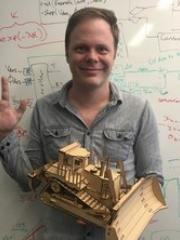
Dr. Tyson Phillips serves as Senior Lecturer and Director of Teaching and Learning at The University of Queensland's School of Mechanical and Mining Engineering within the Faculty of Engineering, Architecture and Information Technology. He is an active Affiliate of the Future Autonomous Systems and Technologies research group, focusing on translating robotics innovations into practical mining applications. His academic leadership includes curriculum development for engineering programs and direct industry engagement with major mining equipment manufacturers. He earned his Doctor of Philosophy (PhD) from The University of Queensland in 2016, with thesis research centered on LiDAR-based perception systems for autonomous excavators. His doctoral work established foundational methods for object pose verification in mining contexts. Phillips' research specializes in robotics perception for extreme mining environments, developing LiDAR-centric solutions for autonomous equipment operation amid dust, fog, and unstructured terrain. Key contributions include evidential reasoning frameworks for uncertainty management, real-time pose estimation algorithms, and sensor fusion techniques for excavators and bulldozers. His work bridges theoretical computer vision with industrial deployment, targeting operational safety and efficiency in mineral extraction. Publication analysis reveals consistent focus on mining robotics since 2012, with recent works (2021-2024) emphasizing minimal-sensor configurations, probabilistic terrain mapping, and vibration-assisted gripper technology. His 14 scholarly outputs demonstrate evolution from sensor evaluation (2012-2015) toward integrated autonomy systems (2018-2024), predominantly in Journal of Field Robotics and Sensors . He actively supervises graduate researchers as Principal Advisor for a PhD on multimodal perception mapping and Associate Advisor for two PhD projects involving spreader systems and physics-informed neural networks. Completed supervision includes a 2024 PhD on bulldozer terrain mapping and a 2021 Master's on shovel/hopper interaction strategies. Research funding spans 14 projects from 2012-2026, including current Australian Coal Association Research Program support (2025-2026) and major Caterpillar Inc. collaborations for ERS self-protection and articulated truck automation. Phillips operates within The University of Queensland's Future Autonomous Systems and Technologies group, which develops field-deployable autonomy solutions for mining partners. This team conducts real-world testing of perception systems using Caterpillar and FMG operational sites as validation environments.
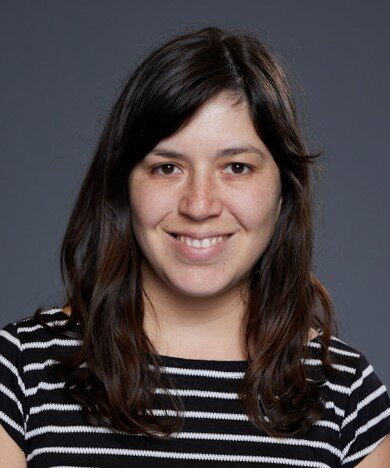
Pamela P Martinez serves as an Assistant Professor at the University of Illinois Urbana-Champaign within the College of Liberal Arts & Sciences, holding concurrent appointments in Microbiology, Statistics, and the Center for Latin American and Caribbean Studies. Her research program integrates computational modeling with epidemiological data to address critical questions in infectious disease dynamics. Her primary research focuses on the interplay between ecological and evolutionary processes in pathogens, specifically investigating how climatic and demographic factors shape spatial-temporal disease patterns and how pathogen diversity influences public health interventions. She employs mathematical and computational approaches applied to longitudinal time-series data, with particular emphasis on SARS-CoV-2, dengue, malaria, and rotavirus. Her work bridges theoretical epidemiology with practical public health applications, often incorporating climate science and socioeconomic variables. Analysis of her 15 most recent publications (2021-2025) reveals consistent themes across computational biology, climate-infectious disease interactions, and pandemic response. Key trends include the development of novel modeling frameworks for pathogen evolution (e.g., ortholog refinement algorithms), quantification of climate drivers on tropical diseases, and rigorous assessment of intervention strategies during the COVID-19 pandemic. Her research demonstrates increasing integration of high-resolution mobility data, immune history analysis, and equity considerations in infectious disease modeling. No scientific awards are documented in the available information. Details regarding student mentorship, grant funding, laboratory infrastructure, or collaborative research teams are not provided in the source materials.
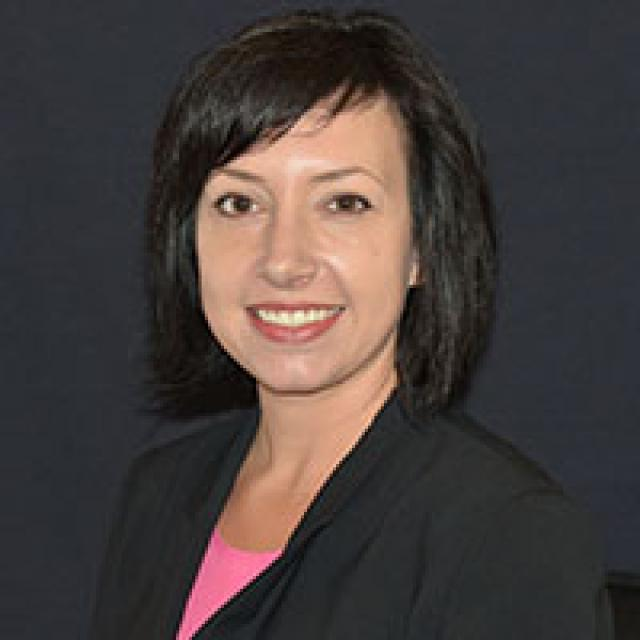
Dr. Christina Saenger serves as Associate Dean of the Williamson College of Business Administration at Youngstown State University (YSU), where she also holds an Associate Professorship in Marketing. She earned a PhD in Marketing from Kent State University (2012), an MBA in Strategic Marketing from the University of Akron (2005), and a BA in Business & Organizational Communication from the same institution (2003). Her professional background includes client account management in marketing and advertising firms prior to academia. Her research focuses on consumer behavior in social contexts, particularly how individuals use brands for identity expression and cognitive processing of product information. Key topics include word-of-mouth mechanisms, brand-gratitude dynamics, and the psychological impact of social exclusion on consumer behavior. Her work appears in top-tier journals like the European Journal of Marketing , Journal of Advertising , and Psychology & Marketing . Dr. Saenger has received numerous accolades, including YSU's Distinguished Professorship designations for research (2022), teaching (2021), and service (2017), as well as the Research Professorship Award (2017). She actively contributes to academic governance through editorial roles at the Journal of Advertising Research and Journal of Consumer Marketing . Her teaching spans marketing strategy, social media, consumer behavior, and interactive marketing. Professional Service: Editorial Review Board Member for Journal of Advertising Research , Ad Hoc Reviewer for Journal of Business Research , and Conference Paper Reviewer for the Association for Consumer Research. Recent Research Trends: Emerging focus on AI's impact on consumer trust (2024 study) alongside continued exploration of word-of-mouth as a compensatory behavior for self-threat and social exclusion.
Dr. Mohammed Elamassie is an Assistant Professor at Özyeğin University's Graduate School of Science and Engineering, Department of Electrical and Electronics Engineering. He co-directs the Centre of Excellence in Optical Wireless Communication Technologies (OKATEM) and holds senior memberships in IEEE and Optica. PhD in Electrical and Electronics Engineering (Özyeğin University, 2020) MSc in Electrical and Electronics Engineering (Islamic University of Gaza, 2011) BSc in Electrical and Electronics Engineering (Islamic University of Gaza, 2006) Dr. Elamassie's research focuses on optical wireless communication systems, with specific expertise in underwater visible light communication (UVLC), vehicular visible light communication (V2V), airborne free space optical (FSO) networks, and turbulence mitigation techniques. His work addresses atmospheric channel modeling, diversity techniques, and MIMO communication challenges across multiple mediums. Analysis of his 15 most recent publications reveals critical trends in UVLC turbulence modeling, FSO UAV optimization, RIS-aided systems, and vehicular communication reliability. These works demonstrate his leadership in developing practical solutions for channel degradation and mobility-induced challenges. Best Paper Award, IEEE Black Sea Conference (2019) IEEE Turkey PhD Thesis Award (2020) Senior Member, IEEE Senior Member, Optica Optica Traveling Lecturer/Speaker Dr. Elamassie serves as Review Editor for Frontiers in Communications and Networks, covering 'Non-Conventional Communications' and 'Wireless Communications' sections. He contributes to OKATEM's research on optical wireless technologies, focusing on practical implementations across underwater, vehicular, and airborne domains.
Prof. Vladimir Krasnov is a leading researcher in Experimental Condensed Matter Physics at Stockholm University , focusing on mesoscopic superconductivity, Josephson junctions, and nanoscale quantum phenomena. He heads the Experimental Condensed Matter Physics Group since 2005. Department: Department of Physics Lab: EKMF Lab (SU-KTH collaboration) Key Methodologies: Pulsed laser deposition, FIB nanofabrication, cryogenic measurements (0.25-300 K), THz spectroscopy Research Themes: His work bridges fundamental superconductivity studies (high-Tc cuprates, iron-pnictides) with applied quantum electronics. Notable contributions include Developing vortex-based cryogenic memory Controllable spin-triplet supercurrents in magnetic junctions THz emission from intrinsic Josephson stacks Quantum phase transitions via electrical doping Magnetic field effects on mesoscopic systems Scientific Trends: Analysis of 15 recent publications reveals strong emphasis on Josephson vortex dynamics, superconducting/ferromagnetic hybrid systems, THz applications, and non-equilibrium phenomena in quantum circuits. Facilities: Utilizes Nano-Fab clean-room for sample engineering and Low-T lab for high-field (17T), cryogenic experiments.
Albert Erives is an Associate Professor in the Department of Biology at the University of Iowa , specializing in regulatory genomics, evolutionary genomics, and the evolution of metazoans. His research focuses on decoding gene regulatory logic in DNA sequences, particularly during animal embryogenesis, using comparative genomics to identify regulatory modules driving phylogenetic transitions. PhD from University of California, Berkeley His work spans eukaryotic gene regulation, integrating biochemistry, molecular genetics, and computational biology to uncover principles of organismal evolution. Recent studies include viral nucleosome structure, Notch signaling pathway evolution, and enhancer organization in model organisms like Drosophila and Ciona . Notable scientific awards include the NSF CAREER Award (2012, 2010) . He actively seeks graduate students and postdoctoral researchers for his laboratory, which utilizes core facilities such as the Carver Center for Genomics.
Prof. Dr. Julia Backmann is a Full Professor and Chair of Transformation of the World of Work at the University of Münster, where she also serves as Co-Director of the Research Center for Business Transformation in Times of Radical Change. Previously, she held positions as Assistant Professor at University College Dublin (2019–2022) and Ludwig Maximilian University of Munich (2014–2018). Her academic journey includes a habilitation (2021) on 'Leadership and Collaboration in Challenging Contexts' and a PhD summa cum laude (2014) from WHU – Otto Beisheim School of Management. Prior to academia, she worked as a consultant at Accenture. Her research focuses on collaboration, leadership resilience, organizational transformation, and the impact of emerging technologies like AI and virtual reality on work structures. Current projects include exploring the four-day workweek in Germany and adaptive strategies for companies in disruptive environments. Her work has been published in top journals such as the Academy of Management Journal and Organization Science . Teaching-wise, she designs MBA programs in Management & Innovation, Sports Management, and Nonprofit Governance, emphasizing interactive learning and critical thinking. Awards include Best Paper Awards, the 2021 Teaching Award, and recognition on UCD’s Dean’s List. Her research trends highlight themes like team boundary management, stress resilience in leadership, and the dynamics of technology adoption in healthcare. She investigates how organizational changes interact to create systemic challenges, and how cultural gaps affect multinational team performance. Awards include multiple Best Paper Awards, the 2021 Teaching Award, and inclusion in the Dean’s List at University College Dublin. Her work bridges academic theory with practical business transformation, addressing modern workplace challenges through interdisciplinary methods.
Professor Maria Wimber is a faculty member in the School of Psychology & Neuroscience at the University of Glasgow. Her research focuses on understanding how the human brain reconstructs memories, with a particular emphasis on neural oscillations (e.g., theta rhythms) and the adaptive nature of memory. She employs techniques such as EEG, MEG, fMRI, and direct hippocampal recordings from epilepsy patients to study memory dynamics, interference, and reconsolidation. Key achievements include receiving an ERC Starting Grant and a British Academy Fellowship. Her work is funded by grants from the ESRC, BBSRC, and Stiftelsen Olle Enkvist. She supervises postgraduate students like Stratos Koukouvinis and Christopher Postzich, and collaborates with researchers on projects involving neuroimaging tools like the Brain Time Toolbox. Her research highlights how memory retrieval can both stabilize and disrupt competing memories, with findings published in journals like Nature Neuroscience and Current Biology. She explores mechanisms like theta phase separation, cortical pattern suppression, and the hippocampus's role as a 'switchboard' between perception and memory. Recent studies include reconstructing visual memory trajectories and investigating how theta oscillations coordinate memory reactivation. Her lab's work bridges cognitive psychology and neuroscience, with implications for understanding memory disorders and cognitive aging.