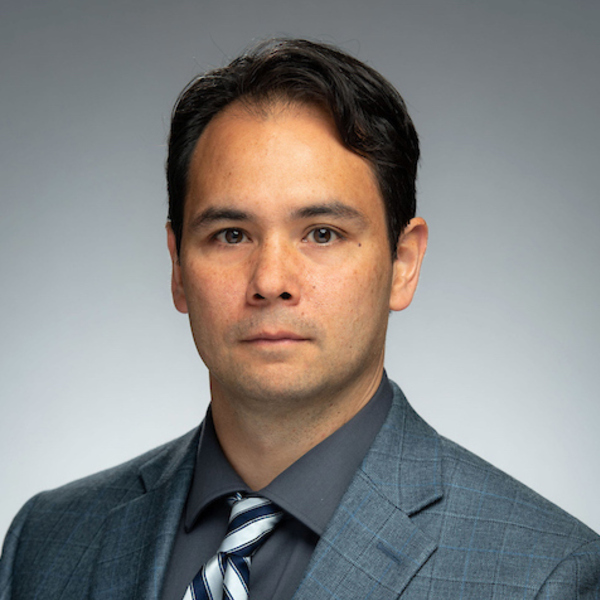
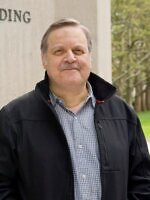
Kevin De France is an Assistant Professor in the Department of Chemical Engineering at Queen's University, affiliated with Smith Engineering. His research focuses on designing sustainable bio-based materials using nanomaterials like cellulose nanocrystals and protein amyloid fibers. These materials are applied in biomedical, food packaging, and environmental sectors to replace petroleum-based products. He holds a BASc in Chemical and Bioengineering (2014) and a PhD in Chemical Engineering (2019) from McMaster University, followed by a postdoctoral fellowship in Materials Science at Empa, Switzerland. His work spans interdisciplinary areas of materials chemistry, engineering, and biotechnology. Research interests include macromolecular chemistry, biomedical materials, colloid science, protein engineering, functional materials, and environmental biotechnology. Recent publications highlight innovations in nanocellulose aerogels, amyloid-based bioinks, and antimicrobial materials for food packaging. His lab emphasizes structure-function relationships to tailor material performance, with current trends focusing on biohybrid systems, sustainable packaging solutions, and functionalized nanocomposites for medical applications. No scientific awards are explicitly mentioned in the provided texts.
Jacob Monroe is an Assistant Professor at the University of Arkansas in the Ralph E. Martin Department of Chemical Engineering. He earned his B.S. from the University of Virginia (2014) and Ph.D. from the University of California, Santa Barbara (2019), followed by an NRC Postdoctoral Fellowship at NIST. His research integrates machine learning with statistical mechanics to enable predictive molecular simulations of biomaterials. Education: B.S. (2014) and Ph.D. (2019) in Chemical Engineering Research Interests focus on: VAE-based multiscale simulation techniques Advanced solvation free energy calculations Computational design of membrane and chromatographic interfaces Protein self-assembly and water-mediated interactions Publication Trends demonstrate expertise in merging machine learning with molecular simulation to address thermodynamic challenges in biomaterial systems. His work spans applications in renewable energy , pharmaceutical formulation , and eco-friendly electronics . Scientific Awards : DOE Early Career Award (2023) NRC Postdoctoral Fellowship (2019) NSF Graduate Research Fellowship (2015) AICHE COMSEF Graduate Student Award (2017) Laboratory : Leads the Monroe Molecular Simulation Group, which specializes in developing machine learning methods grounded in statistical mechanics for biomolecular modeling. Recent projects include salt aggregation analysis in water-purification membranes and protein-interface binding energy predictions.
David Go is the Vice President and Associate Provost for Academic Strategy at the University of Notre Dame, where he also holds the Viola D. Hank Professorship in Aerospace and Mechanical Engineering. He oversees implementation of the University Strategic Framework and manages faculty appointment processes, with administrative oversight of institutes including the Lucy Institute for Data and Society and the Fitzgerald Institute for Real Estate. His research focuses on plasma science, heat transfer, fluid dynamics, and chemical analysis, with significant contributions to plasma-electrochemistry and sustainable chemical synthesis. Education: B.S. (2001) and M.S. (2004) from University of Notre Dame, Ph.D. (2008) from Purdue University His work explores plasma-liquid interfaces, solvated electron dynamics, and plasma-assisted catalysis, particularly for light hydrocarbon conversion. Recent publications highlight advancements in non-aqueous plasma electrolysis, machine learning-enhanced plasma sintering, and interfacial transport phenomena. Awards include the Air Force Young Investigator Award, NSF CAREER award, and multiple honors for teaching and innovation. Current research trends integrate plasma physics with chemical engineering and materials science, focusing on sustainable energy solutions and microscale manufacturing. Scientific recognitions include: Fellow of the American Society of Mechanical Engineers Senior Member of IEEE IEEE Early Achievement Award First-Source Bank Commercialization Award Go has supervised graduate studies and received patents for technologies in plasma-assisted synthesis and microfluidic diagnostics. His leadership roles involve committees addressing academic governance, risk management, and foreign influence in research.
Jaewon Lee is an Assistant Professor in the Department of Mechanical and Aerospace Engineering at the University of Missouri. He holds a PhD in Chemical Engineering from Purdue University and BS/MS degrees in Chemical Engineering from Yonsei University. His research focuses on understanding self-assembly mechanisms and crystal growth dynamics, with applications in photonics, energy storage, and biomedical technologies. Education: PhD in Chemical Engineering, Purdue University MS in Chemical Engineering, Yonsei University BS in Chemical Engineering, Yonsei University Research Interests: Jaewon Lee’s work explores the interplay between colloidal forces, nanoparticle dynamics, and material properties. His studies bridge fundamental nanotechnology with practical applications, including thermoelectric materials, energy storage systems, and biocompatible nanoparticles for diagnostics. Key areas include defect engineering in nanocrystals, phase-change material encapsulation, and real-time characterization of self-assembly processes. Awards: Excellent Academic Record, Yonsei University Outstanding Graduate Student in Cancer Research, SIRG Outstanding Postdoctoral Performance, Pacific Northwest National Lab Grants & Collaborations: Lee secured a $1.1M grant ($800K NSF + $300K university) to develop real-time microscale reaction visualization tools. He also collaborates with Samsung Advanced Institute of Technology and the Korea Institute of Chemical Engineers. Labs & Teams: His lab integrates advanced microscopy, computational modeling, and materials synthesis to address challenges in nanotechnology and energy systems. Research is conducted at the interface of chemical engineering and mechanical engineering disciplines.
Dr. Irina Paci is a Professor of Chemistry at the University of Victoria, specializing in theoretical and computational chemistry. Her research focuses on understanding molecular self-assembly processes, particularly at solid surfaces, and developing multi-scale computational methods to model materials' dynamic behavior under external fields. She holds a PhD from Queen's University and completed postdoctoral research at Queen's and Northwestern University. Her work integrates Monte Carlo simulations, density functional theory (DFT), and quantum chemistry to study surface adsorption mechanisms, catalytic reactions, and nanocomposite dielectric properties. Key areas include cysteine adsorption on gold surfaces, palladium-catalyzed cross-coupling reactions, and the impact of solvent effects on reaction pathways. Recent studies explore aluminum oxide degradation in perovskite solar cells and quantitative reactivity models for nucleophilic aromatic substitution. Teaching interests span physical chemistry, quantum mechanics, and computational methods. Dr. Paci leads the Paci Research Group, which includes graduate students like Archita Adluri and Natalie Stubb, focusing on advancing computational methodologies for energy materials and surface science. Her lab's work bridges fundamental theory with applications in nanotechnology and sustainable energy systems.
Prof. Markus Valtiner is a Professor at TU Wien's Department of Applied Interface Physics, focusing on interfacial processes, corrosion science, and electrochemistry. His research combines experimental and theoretical approaches to study solid-liquid interfaces, surface chemistry, and material degradation mechanisms. He leads a team investigating high entropy alloys, passive film structures, and biomimetic membrane systems. Education: Dipl.-Ing. (Diplom-Ingenieur) in Engineering, Dr.techn. (Doctor of Engineering) from TU Wien. Research Interests: Corrosion mechanisms, electrochemical analysis, surface modification, and thin film characterization. His work spans applications in automotive materials, protective coatings, and biomedical systems. Recent Trends: Articles emphasize real-time visualization of ion dynamics, advanced surface analysis via LEIS and AFM, and sustainable material treatments. Studies on hydration layers and superlubrication highlight innovative solutions for friction reduction in confined spaces. Awards: None explicitly mentioned. Advising & Grants: Advised 19 thesis students (2018–2023) on topics like electrochemical functionalization, corrosion protection, and nanophotonic materials. Grant activities focus on interdisciplinary collaborations between physics, chemistry, and engineering. Labs & Teams: Leads the Network Lab at TU Wien, specializing in interfacial physics and advanced materials characterization using cutting-edge microscopy and spectroscopy techniques.
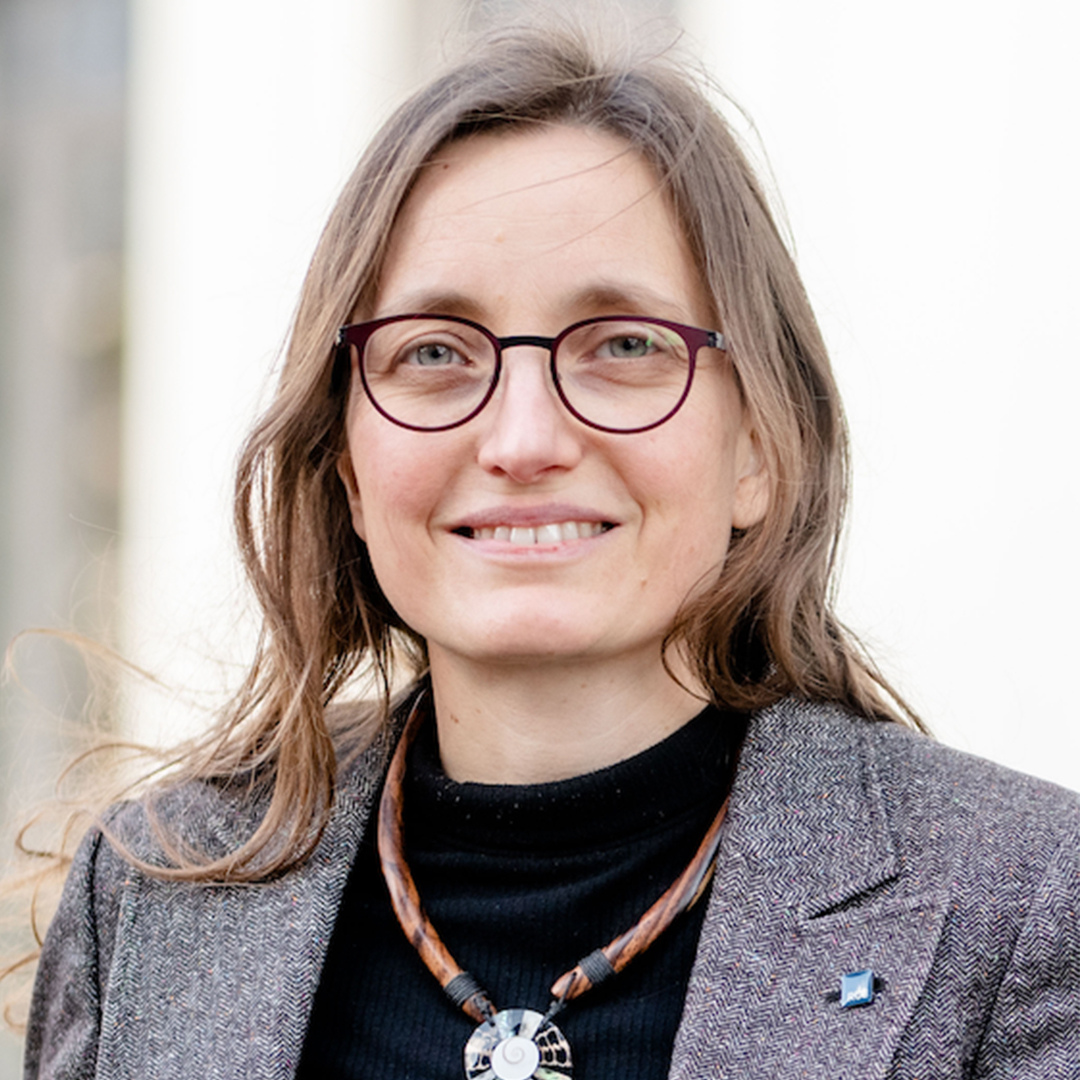
Prof. Dr. Marialore Sulpizi is a Professor of Theoretical Physics of Electrified Liquid-Solid Interfaces at Ruhr-University Bochum, Germany, and a core member of the RESOLV Cluster of Excellence. Previously, she served as Junior Professor (2010–2017) and Adjunct Professor (2017–2021) at Johannes Gutenberg University Mainz. Her research focuses on molecular-scale understanding of electrified solid-liquid interfaces using ab initio and atomistic simulations, addressing phenomena like charge/mass transport in energy conversion and biomembrane systems. She holds a Laurea (M.Sc.) in Theoretical Physics from Università di Roma La Sapienza (1997) and a PhD in Condensed Matter Theory from SISSA (2001), followed by postdoctoral work at EPFL/ETHZ (Switzerland) and the University of Cambridge (UK). Research interests span interfacial electrochemistry, nanomaterials, and environmental interfaces. She explores how interfacial structure influences reactivity in systems like platinum electrodes, gold nanoparticles, and silicate surfaces. Key contributions include modeling electrolyte double layers, nanoparticle growth mechanisms, and surface acidity effects. Publications (2021–2025) highlight advancements in interfacial dynamics, ionic liquid confinement, and biomolecular solvation. Her work bridges fundamental physics with applied challenges in energy storage and biointerfaces. Collaborations with experimental groups enable validation of simulation predictions. Current projects investigate non-equilibrium interface behavior and solvent roles in chemical reactions.
Tamara Rinkovec is a Senior Lecturer at the Ruđer Bošković Institute, affiliated with the Division of Organic Chemistry and Biochemistry. Her research focuses on supramolecular chemistry, molecular self-assembly, thermodynamic studies of complexation, and surface-induced phenomena. She leads projects at the Laboratory for the Computational Design and Synthesis of Functional Materials, exploring interfaces between organic and inorganic systems. Research Interests : Dr. Rinkovec's work spans calixarene-based host-guest chemistry, peptide-anion interactions, and the design of nanoconfined molecular systems. She investigates cooperative effects in self-assembly processes and chiral induction at solid-liquid interfaces. Her recent studies address laser-controlled intercalation dynamics and supramolecular architectures in confined spaces. Key Themes : Articles from 2023–2025 highlight advanced topics like reversible solvent intercalation in graphite, bisurea-functionalized molecular switches, and temperature-dependent network formation. Earlier work (2018–2020) established foundational studies on homocyclopeptide anion binding and chloride-assisted macrocyclization. Labs & Teams : Her lab integrates computational design with experimental synthesis to create functional materials. Ongoing projects include developing surface-responsive systems and studying energy transfer in confined environments.
Orlando Rojas Gaona serves as a Visiting Professor in the Department of Bioproducts and Biosystems at Aalto University, where he leads the Bio-based Colloids and Materials (BiCMat) research group. His work spans multiple disciplines focusing on sustainable materials science with significant contributions to the field of biobased materials. Dr. Rojas' research interests center on biobased materials at various size scales, particularly those displaying large interfacial areas such as micro/nano fibers, fiber networks, particles, and colloidal systems. His work encompasses nano/microfibrillar cellulose, cellulose nanocrystals, lignin particles, fat colloids, chitin, alginates, proteins, and biopolymer assemblies. His laboratory investigates thin films, cellulose derivatives, enzymes, and bio-based dispersions including emulsions, foams, gels, and aerogels. He employs advanced techniques such as piezoelectric and surface plasmon sensing, XPS, AFM, imaging, and light scattering to study adsorption behaviors of surfactants and biopolymers at various interfaces. His recent publications demonstrate a strong trajectory toward sustainable materials innovation with applications spanning biomedical engineering, energy efficiency, water harvesting, and waste valorization. The research shows increasing interdisciplinary collaboration and practical applications addressing global sustainability challenges. Best Paper Award 2015 Bioresource Technology, Netherlands Divisional Service Award, American Chemical Society (2009) Fellow of the American Chemical Society (July 2013) Foreign Member of the Finnish Academy of Science and Letters (2017) Imerys FiberLean Prize IMERYS, USA (2015) Dr. Rojas has supervised 23 theses and has been principal investigator for 11 significant research projects including EU Horizon Europe MC SAFEPCM, ERC BioELCell, and multiple Academy of Finland FlagShip CERES projects. His research portfolio includes over 700 publications and artistic outputs with substantial funding support from EU programs, ERC grants, and national research councils. His work directly contributes to multiple UN Sustainable Development Goals, particularly those related to sustainable materials and environmental protection. As leader of the BiCMat research group, Dr. Rojas oversees a multidisciplinary team conducting cutting-edge research on biobased materials. The group maintains strong international collaborations and has developed expertise in surface characterization, nanomaterial synthesis, and sustainable material design. Their work bridges fundamental science with practical applications in areas ranging from biomedical devices to sustainable packaging and energy solutions.
Jeffrey M. Farner is an Assistant Professor in the Department of Civil & Environmental Engineering at the Florida A&M University-Florida State University College of Engineering. His research focuses on environmental nanotechnology, microplastics/nanoplastics, water treatment, and photochemistry. He holds a Ph.D. in Civil and Environmental Engineering from Duke University (2016) and a B.S. in Chemistry from Purdue University (2004). His work addresses critical challenges in water quality, including nanoplastic behavior in aquatic systems, photocatalytic processes, and sustainable materials for contaminant removal. Farner has contributed to advancements in microplastic detection methods, aggregation kinetics, and the environmental fate of nanomaterials. His research integrates laboratory experiments, field studies, and modeling to inform sustainable engineering solutions. Recent studies explore the impact of nanoplastics on antibiotic resistance genes, UV/thermal degradation of microplastics, and the use of fibrous materials for advanced water treatment. Farner collaborates on initiatives like the Environmental Nanoresearch Centers and has published extensively in high-impact journals, focusing on interdisciplinary approaches to environmental challenges.
Xu Renkou serves as Director of the Soil Chemistry and Environmental Protection Laboratory at the Nanjing Institute of Soil Science, Chinese Academy of Sciences, and Head of the Soil Interface Processes and Effects Team at the State Key Laboratory of Soil and Sustainable Agriculture. He holds doctoral supervisor status and serves as Deputy Director of the Soil Chemistry Committee of the Chinese Society of Soil Science while acting as Scientific Advisor to the International Foundation for Science (IFS). His research focuses on surface electrochemical properties of variable-charge soils, soil acidification mechanisms, aluminum chemistry, and heavy metal behavior at soil/water interfaces. Current investigations examine interactions between charged surfaces in soil (colloids, organic matter, microorganisms, plant roots), clay mineral evolution during soil formation, acidification control methods, and biochar applications for soil improvement. His group actively pursues six major projects including National Natural Science Foundation key projects on root-soil interactions and red soil acidification control. Xu's publication record includes over 200 Chinese and English papers with more than 80 SCI-indexed articles in top journals like Soil Biology & Biochemistry and Geochimica et Cosmochimica Acta. His research demonstrates consistent innovation in understanding adsorption mechanisms of organic acids on variable-charge soils, aluminum-organic acid interactions, particle surface diffusion layer effects on acidification, and heavy metal remediation technologies. His work bridges fundamental surface chemistry with practical soil restoration applications. Scientific recognition includes the 2010 Zhu Liyuehua Outstanding Teacher Award from the Chinese Academy of Sciences. His group has mentored numerous award-winning students including multiple recipients of Chinese Academy of Sciences President Scholarships and Jiangsu Province Outstanding Master's Thesis Awards. Key projects include National Natural Science Foundation key projects on root-soil interactions 973 Project on red soil acidification control principles Academy Knowledge Innovation Project on tropical soil electrochemistry Multiple NSFC general projects on nanoparticle interactions and paddy soil evolution The research team maintains strong international collaborations with scientists in Canada, Australia, Russia, United States, and India, conducting joint research on surface chemistry and soil acidification. Their laboratory develops patented soil remediation technologies including acidic soil green improvers and biochar-based solutions.
Marco Molinari is an Associate Professor (Reader) at the University of Huddersfield, affiliated with the School of Applied Sciences and the Department of Physical and Life Sciences. He is a member of the Centre for Functional Materials and associate member of the Pharmaceutics and Drug Delivery Centre and Structural, Molecular and Dynamic Modelling Centre. His research focuses on computational chemistry and materials science, particularly energy and environmental materials, surface science, and nanomaterials. Education: BSc from the University of Pavia (Italy, 2006), PhD in computational chemistry (2009) through a collaboration between the University of Pavia and Bath (UK). Postdoctoral research at the University of Bath, funded by the EPSRC, focused on surface science and materials chemistry. Research interests include computational modeling of mineral and oxide materials, surface adsorption and reactivity, nanoparticle morphology, and catalytic properties. His work contributes to UN Sustainable Development Goals related to clean energy and environmental protection. He leads projects such as 'Computational Design and Engineering of Metal Oxide Nanozymes' (2018–2019) and 'NanoCeO2: Design of CeO2 Nanostructures with Enhanced Catalytic Properties' (2017–2017). Publications span over 100 peer-reviewed articles, with recent studies on cerium oxide nanoparticles, surface engineering, and computational methods like density functional theory. He actively participates in conferences and serves on committees like the EPSRC-funded Materials Chemistry Consortium and the RSC local section. Molinari supervises PhD students and collaborates on datasets and software tools like SurfinPy for phase diagram generation. His research bridges computational modeling, experimental validation, and real-world applications in energy storage, environmental remediation, and biomedical materials.
Professor Daniel Blankschtein is the Herman P. Meissner (1929) Professor in the Department of Chemical Engineering at MIT. His research focuses on colloid and interface science, with applications in energy, nanotechnology, and biomedical engineering. He has pioneered studies on surfactant systems, 2D nanomaterials (e.g., graphene, carbon nanotubes), and interfacial phenomena involving electronic polarization effects. Blankschtein has authored over 230 publications and 15 patents, and his textbook Lectures in Classical Thermodynamics with an Introduction to Statistical Mechanics (2021) synthesizes decades of teaching expertise. Education: PhD (1983), MSc (1979), BSc (1977) in Chemical Engineering from Tel-Aviv University. His awards include the Capers and Marion McDonald Award (2015) and multiple MIT Outstanding Faculty Awards. He leads the DB Group, which develops theoretical and experimental frameworks for nanomaterials and surfactant systems, with applications in water desalination, drug delivery, and energy storage. Research highlights include molecular simulations of water slip flow in carbon nanotubes, ion adsorption at solid-water interfaces, and surfactant-mediated stabilization of nanomaterials. His work bridges fundamental thermodynamics with practical engineering solutions, emphasizing pedagogy and mentorship. Recent projects explore polarization-driven interfacial effects and nanoconfined fluid behavior. Lab Group: DB Group at MIT ChemE Key Collaborations: MIT Energy Initiative, National Science Foundation Grants: Seed grants for energy storage and nanomaterials research
Dr. Cameron Shearer is an ARC Externally-Funded Research Fellow in the School of Physics, Chemistry and Earth Sciences at the University of Adelaide. He holds a PhD from Flinders University (2012) and has held postdoctoral and research roles at institutions including the University of Münster (Germany) and industry collaborations with Membrane Systems Australia. His research focuses on photocatalytic materials for environmental remediation and renewable energy, particularly addressing persistent organic pollutants and hydrogen production via photocatalytic water splitting. He has developed novel perovskite-based photocatalysts and co-catalyst strategies to enhance efficiency while reducing costs. Key areas of expertise include: Design of perovskite materials (e.g., SrTiO₃, NaTa₂O₃) for light-driven pollutant degradation Hydrogen production through optimized metal oxide photocatalysts Industry partnerships for scalable PFAS remediation solutions Nanomaterial synthesis (graphene, MXene, carbon nanotubes) His work emphasizes translating lab-scale innovations into real-world applications, with a strong focus on sustainability and environmental impact mitigation. While no specific awards are listed, his research has been supported by ARC grants and industry collaborations.
Yang Hui Ying is a Professor at Singapore University of Technology and Design (SUTD), specializing in Energy & Sustainability. She has held roles since 2010, progressing from Assistant Professor (2010–2016), Associate Professor (2016–2022), and her current position since 2022. Her research focuses on nanomaterials for energy storage and water purification, with pioneering work in chemical doping, work function engineering, and defect analysis in low-dimensional nanomaterials. She leads the Energy and Environmental Sustainability (EES) Laboratory, advancing materials for electrochemical energy storage and water treatment. Key research areas include sodium-ion batteries, zinc-ion batteries, and ion-selective desalination technologies. She has secured grants totaling over S$1.5 million, including MOE Tier 2 grants and NRF-funded projects. Awards include the SNIC-AsCA2019 Distinguished Woman Chemist Award and Fellowships from the Royal Society of Chemistry and ASEAN Academy of Engineering and Technology. Her work emphasizes sustainability, with projects addressing low-energy water treatment and decarbonization. The EES Lab explores novel materials like MXenes, graphene, and composites for high-performance batteries and environmental applications. She collaborates internationally, including visits to MIT and partnerships with industry leaders like ST Dynamics.