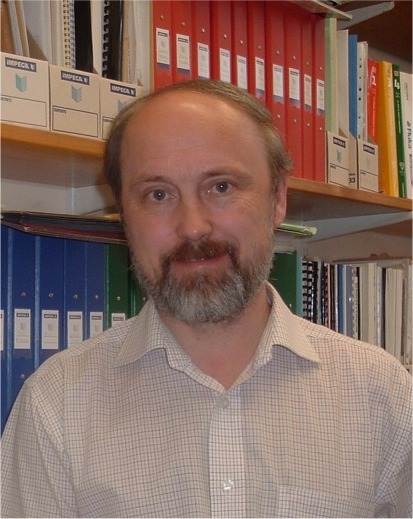
Dr Vladimir Kuznetsov is a Lecturer in Inorganic Chemistry at the University of Oxford, affiliated with Brasenose College. He holds a MSc and PhD from Moscow State University. His roles include Teaching Lab Supervisor and Manager at the Department of Chemistry (2005–2018), Senior Departmental Research Officer (2005–2015), and Stipendiary Lecturer at multiple Oxford colleges (2007–2019). His research focuses on functional materials for energy storage/ conversion, electronic materials, sustainable energy, hydrogen economy, and CO₂ conversion catalysts. Notable contributions include studies on zeolite catalysts, transparent conducting oxides, and microwave-assisted catalytic processes. Selected publications highlight advancements in coking mechanisms over zeolites, hydrogen bond dynamics in methanol-olefin systems, and ZnO thin film conductivity. His work bridges fundamental materials science with applied energy solutions. Dr Kuznetsov has held senior positions in Russia and Cardiff University, contributing to global collaborations in energy materials research. His lab investigates novel catalysts and sustainable energy systems, emphasizing practical applications for decarbonization challenges.
Ulrich Stimming is a Professor at the Technische Universität München (TUM), holding the Chair of Technical Physics and serving as Scientific Head of Division 1 at the Bavarian Center for Applied Energy Research (ZAE Bayern). He has held academic positions at Columbia University, the University of Bonn (as Full Professor), and an Honorary Professorship at the University of Ulm. He is Co-Director of the TUM-Tsinghua Joint Institute for Advanced Power Sources (IAPS) and coordinates TUM•Energy, TUM's largest interdisciplinary research program. Stimming also serves as Editor-in-Chief of the journal Fuel Cells – From Fundamentals to Systems and leads the Center of Nanotechnology and Nanomaterials (nanoTUM). His roles include membership in the European University Association (EUA) and participation in evaluation panels for the European Research Council (ERC). Education: Stimming earned his Diploma in Chemistry (1974) and Ph.D. in Physical Chemistry (1979) from Freie Universität Berlin. He held positions at Heinrich-Heine Universität Düsseldorf before joining IBM Watson Research Center and Columbia University. His academic journey includes leadership roles at the Research Center Jülich and the University of Bonn. Research interests focus on energy conversion/storage, solid-liquid interface physics, and fuel cell development from catalyst synthesis to system integration. He also explores catalytic reactions in biological systems, applying solid-state physics principles to interfacial challenges. Key areas include single nanoparticle electrochemical imaging, biomolecular interfaces, and nanomaterial design for sustainable energy technologies. Publications reflect a strong emphasis on electrocatalytic mechanisms, fuel cell materials, and nanoscale electrochemical phenomena. His work bridges fundamental physics with applied energy solutions, emphasizing interdisciplinary approaches. Notable awards include the Electrochimica Acta Gold Medal (2010) and Hellmuth Fischer Medal (1998). Advising and grants: Stimming actively coordinates large-scale research initiatives like TUM•Energy and has led innovation networks. His grants include the Carl von Linde Senior Fellowship. He contributes to academic governance through ERC panels and EUA representation. Labs/Teams: Leads ZAE Bayern's Division 1, nanoTUM, and the IAPS partnership with Tsinghua University. His research groups focus on advanced energy systems, nanotechnology applications, and interdisciplinary collaboration across physics, chemistry, and engineering.
Peter Lamp is a Rudolf Diesel Industry Fellow at the Technical University of Munich (TUM) and Head of the Battery Technology department at BMW Group. He holds a MSc in Physics from TUM (1989) and a PhD in Physics from the Max Planck Institute for Physics, Munich (1993). His research focuses on electrochemical energy storage, Li-ion/SOFC technologies, and charge transport in materials. He leads advanced battery R&D at BMW, collaborating with TUM’s Electrochemical Systems department under Prof. Hubert Gasteiger. His work bridges academic innovation and industrial application in sustainable energy systems. Education: MSc Physics, Technical University of Munich (1989) PhD in Physics, Max Planck Institute for Physics, Munich (1993) Research Highlights: His work spans battery materials development, fuel cell systems, and energy conversion. Key areas include optimizing lithium-ion conductors, understanding electron transport in gases, and advancing sorption cooling technologies. His recent TUM-IAS fellowship publications address solid-state electrolytes and energy material dynamics. Grants & Collaborations: Leverages industry-academia partnerships through BMW and TUM’s Institute for Advanced Study. Focuses on scalable battery solutions for electric mobility and sustainable energy systems. Labs & Teams: Leads BMW’s Battery Technology department and collaborates with TUM’s Electrochemical Interfaces in Batteries focus group. Engages in interdisciplinary projects on electrochemical interfaces and materials characterization.
Dr. Zhe Qiang is an Associate Professor at the University of Southern Mississippi, affiliated with the Thames Polymer Science Research Center (PSRC). His research focuses on polymer engineering and physics, nanomaterials, and sustainability solutions for a carbon-neutral society. He holds a PhD in Polymer Engineering from the University of Akron (2016), with postdoctoral training at Northwestern University's Department of Chemical and Biological Engineering. His work emphasizes converting plastic waste into functional materials and advancing nanoscale polymer characterization. Key achievements include developing additive manufacturing methods for carbon materials and creating porous sorbents for CO₂ capture. His research has garnered multiple awards and industry partnerships. Research interests include polymer upcycling, carbon-neutral manufacturing, and nanocomposite design. Over 40 peer-reviewed articles highlight his contributions to materials science and sustainability. Professional affiliations include the American Chemical Society and American Physical Society. His lab (www.qianglab.com) engages in interdisciplinary projects with undergraduates, focusing on practical sustainability solutions and community education through initiatives like plastic waste cleanup programs.
Prof. Louis de Smet is a Professor at Wageningen University & Research, leading the Advanced Interfaces & Materials group within the Laboratory of Organic Chemistry. His research focuses on developing functional organic materials for ion sensing, separation, and recovery, with applications in water technology and environmental sustainability. He holds an ERC Consolidator Grant and has pioneered projects such as phosphate recovery via ion-selective membranes. He also serves as a Senior Advisor at Wetsus and contributes to initiatives like the 4TU.Centre High-Tech Materials. Prof. de Smet teaches Analytical Chemistry and related courses, and his work integrates fundamental materials science with practical environmental solutions. Education: PhD from Wageningen University (2006), postdoctoral research at the Ian Wark Research Institute, and an NWO Veni Grant for polysaccharide studies. He transitioned to TU Delft as an Assistant Professor before becoming an Associate Professor at Wageningen in 2016 and later a full Professor. Research interests center on molecular control of chemical interfaces, with emphasis on materials for ion-selective applications. His lab explores polymers, surface chemistry, and sustainable technologies for resource recovery. Recent advancements include ERC-funded projects on nitrate-chloride separation and wastewater-derived salt extraction. Scientific awards include the NWO Veni Grant (2007), ERC Consolidator Grant (2015), and an ERC Proof of Concept Grant (2024). He collaborates with industry and academic partners, contributing to Wetsus and the Dutch Chemistry Council. Grants and advising span projects like the NanoNextNL program on sensors and Organic Solvent Nanofiltration (NWO ISPT). His lab’s innovations address global challenges in water treatment and sustainable resource management.
Dr. Julie L. Fenton is an Assistant Professor of Chemistry at Pennsylvania State University, specializing in synthetic materials chemistry. She leads the Fenton Lab, focused on creating novel materials at the interface of inorganic and organic chemistry, including colloidal nanosolids, porous materials, and hybrid solids. Her work emphasizes synthetic innovation and advanced material characterization. Education includes a B.S. in Chemistry from Messiah College (2014), a Ph.D. in Chemistry from Penn State (2018), and postdoctoral research at Northwestern University. She holds prestigious awards such as the Arnold O. Beckman Postdoctoral Fellowship and the ACS Inorganic Chemistry Young Investigator Award. Research interests span nanomaterial synthesis, structure-property relationships, and functional materials. Key projects include metastable nanocrystals, hybrid solids with tunable properties, and porous polymers for environmental applications. The Fenton Lab utilizes state-of-the-art facilities like X-ray diffractometers, gloveboxes, and advanced spectroscopic tools. Awards: Beckman Fellowship, ACS Young Investigator, Penn State Alumni Awards Labs/Teams: The Fenton Lab collaborates with Penn State’s Materials Characterization Lab for advanced microscopy and crystallography.
Professor Zhigang Chen is a Capacity Building Professor of Energy Materials at Queensland University of Technology (QUT), holding appointments in the Faculty of Science and School of Chemistry & Physics. He serves as founding director for the ARC Research Hub in Zero-emission Power Generation for Carbon Neutrality (ZeroPC), Academic Research Lead, and ARC Future Fellow. Previously, he held professorships at the University of Southern Queensland (USQ) and University of Queensland (UQ), where he was an ARC Australian Postdoctoral Fellow, QLD Smart Future Fellow, and Honorary Professor. His research program spans sustainable functional materials, thermoelectrics, advanced manufacturing, and advanced microscopy for energy applications. Professor Chen's research focuses on developing high-performance thermoelectric materials for energy conversion and waste-heat recovery through nanostructure engineering and band engineering. His work has led to world-record figure of merit (ZT) in several thermoelectric systems. He has pioneered cost-effective manufacturing processes like solvothermal and microwave-assisted methods for low-toxic thermoelectric materials achieving energy-conversion-efficiency above 15%. His research integrates advanced microscopy techniques to establish structure-property links in energy materials, resulting in significant scientific breakthroughs. His publications demonstrate a strong focus on sustainable energy materials, particularly thermoelectrics, with recent work emphasizing flexible thermoelectric devices, hybrid photovoltaic-thermoelectric systems, and novel material systems like SnTe-based compounds. The research spans fundamental materials science to practical applications, with increasing attention to industry implementation and commercialization potential. Many publications address the challenge of balancing high thermoelectric performance with cost-effective manufacturing. Fellow, Royal Society of Chemistry QUT Research Excellence Award, 2023 ARC Future Fellowship (Level 3) 2022 Clarivate Web of Science Highly Cited Researchers 2020-2021 USQ Research Excellence Award 2020 Mendeley Global Top 2% Researcher 2019-2023 Professor Chen has secured approximately A$50 million in research funding as lead Chief Investigator or Chief Investigator, including 7 ARC Discovery grants (5 as lead CI), 2 ARC Research Hubs, 4 ARC Linkage grants, and numerous industry investments from HBIS groups, NQ Minerals, Cook Medicals, BHP Billiton, and Defense Science and Technology Group. He has successfully supervised numerous HDR students and established significant research collaborations with institutions including CalTech, UCLA, and Shanghai Institute of Ceramics. His research program maintains strong industry connections focused on practical applications of energy materials. Professor Chen leads multiple research initiatives including the ARC Research Hub in Zero-emission Power Generation for Carbon Neutrality (ZeroPC) and has established advanced materials characterization facilities at QUT. His research team collaborates with international partners at CalTech, UCLA, and Chinese Academy of Sciences, maintaining a strong focus on translating fundamental materials research into practical energy solutions with commercial potential.
Xiaolong Liu is an Assistant Professor in the Department of Physics & Astronomy at the University of Notre Dame. His research focuses on creating and studying novel quantum states of matter, particularly unconventional superconductivity, using advanced scanning probe microscopy techniques such as spectroscopic imaging scanning tunneling microscopy (SI-STM) at cryogenic temperatures. He leads a lab specializing in atom-scale manipulation, in situ material synthesis via molecular beam epitaxy, and 2D heterostructure fabrication. His experimental approaches include ultra-high vacuum environments with magnetic fields up to 9 T and in situ transport measurements. Education: Liu earned a BS from the University of Science and Technology of China (2013) and a PhD from Northwestern University (2018). His work bridges quantum materials research with nanoscale fabrication, emphasizing both fundamental physics and technological applications. His group's research has led to breakthroughs in visualizing electron fluid dynamics and discovering Cooper-pair density waves in transition metal dichalcogenides. Research Interests: His lab explores quantum phenomena in engineered 2D materials and heterostructures, including borophene synthesis, topological superconductors, and electronic phase transitions under extreme conditions. Techniques include single-atom/molecule manipulation and quantum simulation through atomic-scale architectures. Awards & Recognition: Liu has received the 2023 Ralph E. Powe Junior Faculty Award, 2022 Blavatnik Regional Award for Young Scientists (Physical Sciences & Engineering), and the 2022 IUPAP Young Scientist Prize in Low Temperature Physics. His work has been published in top journals like Nature, Science, and Nature Materials. Labs & Teams: His research group operates within the Nieuwland Science Hall, focusing on advanced microscopy and nanofabrication. Collaborations involve theoretical physicists, materials scientists, and engineers to address grand challenges in quantum matter and next-generation electronics.
Jani Sainio is a Senior Lecturer at Aalto University's Department of Applied Physics and Atomic Scale Physics. He holds a doctoral degree (2005) and master's degree (2001) in Engineering and Technology from Helsinki University of Technology (now part of Aalto University). His research focuses on nanotechnology, material science, and electrochemistry, with particular emphasis on carbon-based materials like carbon nanotubes and their applications in energy storage systems, such as lithium-ion and sodium-ion batteries. He has contributed to sustainable development through recycling of battery waste into electrocatalysts. Sainio has authored over 80 peer-reviewed articles and actively collaborates internationally. His work bridges fundamental material characterization (e.g., monolayer heterostructures) and applied technologies like CO₂ reduction and water electrolysis. Key research themes include catalyst design, nanomaterial synthesis, and circular economy solutions for critical raw materials. Education: Doctoral degree in Engineering and Technology, Helsinki University of Technology (2005) Master's degree in Engineering and Technology, Helsinki University of Technology (2001) Research Interests: Carbon nanotubes, electrocatalysts for energy storage (e.g., zinc-air batteries), 2D material heterostructures, CO₂ reduction, and hydrometallurgical recycling processes. He explores material doping methods, surface functionalization, and scalable synthesis techniques to enhance electrochemical performance. His work aligns with UN Sustainable Development Goals related to clean energy and sustainable resource use. Collaborations: International collaborations include institutions in Estonia, China, and Germany. Research activities since 2000 include visiting scholar positions at foreign academic institutions. Labs/Teams: Active in Aalto's Atomic Scale Physics and Applied Physics groups, focusing on nanomaterial characterization and energy applications.
Lawrence Ziegler is a Professor of Chemistry and Materials Science & Engineering at Boston University, serving as Associate Division Head for Materials Science & Engineering. He holds a B.S. from SUNY Stony Brook (1971), M.S. and Ph.D. from Cornell University (1974–1978), and completed an NIH postdoctoral fellowship (1979–1981). His research focuses on ultrafast femtosecond laser spectroscopy and surface-enhanced Raman spectroscopy (SERS). Key projects include studying interfacial water dynamics in biological systems, developing SERS for rapid bacterial detection (e.g., Chlamydia, Neisseria), and investigating semiconductor materials like ZnO, Si nanocrystals, and GaN thin films. Collaborations include work with Shyam Erramilli (lipid bilayers/nucleic acids), Bjoern Reinhard and Luca Dal Negro (SERS substrates), and Ted Moustakas (GaN electronics). His scientific contributions include the National Research Council–NRL Cooperative Research Award (1981–1983). Research outputs span over 100 articles, emphasizing SERS applications in diagnostics, forensics, and materials analysis. His lab also explores plasmon-enhanced pathogen inactivation and metabolomics-based disease diagnosis platforms. Additional affiliations include roles in university administration and leadership in the Materials Science & Engineering division at BU.
Haifei Zhan is an Adjunct Associate Professor in the School of Mechanical, Medical & Process Engineering at Queensland University of Technology (QUT). His research focuses on nanomaterials, mechanical properties, numerical modelling, and thermal analysis. He holds a PhD from QUT and a Bachelor of Engineering. Research Interests: Zhan’s work spans nanotechnology, materials engineering, and mechanical engineering. Key areas include nanomaterials (e.g., diamond nanothreads, graphene), thermal transport in nanostructures, and computational mechanics. His research often integrates atomistic simulations and experimental validation. Awards & Grants: He has received awards such as the ICACM Young Investigator Award (2018) and the International Young Computational Award (2019). His grants include projects like 'A Novel Multilevel Modelling Framework to Design Diamond Nanothread Bundles' (DP200102546) and 'Breakdown of Hooke’s Law at the Nanoscale' (DP170102861). Publications & Supervision: Over 20+ peer-reviewed articles, including studies on ceramic coatings, graphene heterojunctions, and nanocomposite hydrogels. He has supervised PhD/Master’s projects on nanowire characterization, carbon-based nanosprings, and nanocomposite modelling.
Dr. David Halat is an Assistant Professor of Chemistry at the Colorado School of Mines, specializing in solid-state NMR methodology and energy storage materials. His research focuses on ion transport dynamics in electrolytes, battery technology, and advanced material characterization. He holds a B.S. in Chemistry and Mathematics from Montana State University and a Ph.D. in Chemistry from the University of Cambridge, where he studied under Prof. Clare Grey. Postdoctoral work at Lawrence Berkeley National Laboratory and UC Berkeley further developed his expertise in electrophoretic NMR and electrolyte design. Education: Bachelor of Science in Chemistry & Mathematics, Montana State University (2013) Ph.D. in Chemistry, University of Cambridge, UK (2018) Postdoctoral Researcher, University of California, Berkeley (2018–2023) Research interests include solid-state NMR applications, ion solvation structures, and the development of novel electrolytes for batteries and carbon capture systems. His work on electrophoretic NMR enables direct measurement of ion transport in materials, advancing understanding of energy storage dynamics critical for decarbonization efforts. His recent articles highlight breakthroughs in electrolyte characterization, including glyme-based systems, multivalent electrolytes, and nanoporous networks for CO₂ capture. These studies emphasize scalable technologies and precise ion transport analysis. Dr. Halat’s contributions bridge fundamental chemistry with applied energy solutions, focusing on sustainable materials and electrochemical systems.
Jeff Wood is an Associate Professor at the MESA+ Institute, University of Twente. His research focuses on ion transport phenomena, electrokinetic processes, and hybrid unit operations. He holds a PhD from Queen's University Kingston (2012), specializing in spatially non-uniform electric fields for colloidal assembly. Research Interests: Ion transport in electric-driven processes Membrane-based separation technologies Electroconvective instabilities Particle manipulation via AC electrokinetics Bubble dynamics in electrochemical systems Recent work emphasizes sustainable water treatment solutions (PFAS removal, electrodialysis optimization) and novel membrane functionalization techniques. Collaborations span material science, environmental engineering, and microfluidics. Over 74 publications since 2006 highlight contributions to electrokinetics, nanochannel dynamics, and colloidal assembly. Teaching includes advanced courses on colloids, fluid dynamics, and computational methods. Active in presenting at international conferences (2018–2023), focusing on electrochemical system design and process intensification.
Paul Van Tassel is a Professor of Chemical & Environmental Engineering at Yale University, with an additional appointment in Biomedical Engineering. His research focuses on biomolecules at interfaces, nanofilm biomaterials, and electrostatic interactions in complex systems. He holds a Ph.D. from the University of Minnesota. Van Tassel's work spans molecular simulations, experimental techniques like optical waveguide lightmode spectroscopy, and applications in biomedical materials. He has pioneered studies on polyelectrolyte assembly, carbon nanotube-based biomaterials, and controlled drug delivery systems. His awards include the NSF CAREER Award (1998) and Connecticut Academy of Science and Engineering membership (2011). Key research themes: Antimicrobial biomaterials, nanofilm porosity engineering, and protein adsorption dynamics. Notable contributions: Layer-by-layer assembly techniques for porous drug delivery systems and nanotemplated materials. His recent publications address electrostatic interactions in colloidal systems and polyelectrolyte complexation, advancing understanding of biomaterials' structural and functional properties. Grants: Supported by NSF, NIH, and industry partnerships. Labs: Active in Yale's Engineering and Biomedical research facilities, collaborating with groups like E. Pauthe's team in France.
Dr. Stephen Lyth serves as a Senior Lecturer in the Department of Chemical and Process Engineering within the Faculty of Engineering at the University of Strathclyde, where he holds the Strathclyde Chancellor's Fellow position and directs the Strathclyde Incubator for Green Hydrogen Technologies (SigH₂t). His academic journey includes a PhD in Field Emission from Chemically Modified Multiwall Carbon Nanotube Films from the University of Surrey (2007) and an MSc in Dye-Doped Polymer Dispersed Liquid Crystal Cells from the University of Durham (1999-2003). PhD: University of Surrey (2007) MSc: University of Durham (1999-2003) Lyth's research program focuses on sustainable materials for hydrogen technologies, specifically addressing how renewable energy systems can avoid dependence on critical raw materials. His interdisciplinary work spans carbon nanomaterials synthesis, nanocellulose applications, and electrocatalyst development, with strong connections to UN Sustainable Development Goals. Current research emphasizes creating environmentally responsible alternatives for fuel cells and hydrogen storage systems through novel material designs that eliminate reliance on scarce resources. His recent publication trend (2025) reveals concentrated activity in hierarchical carbon structures for gas adsorption, advanced electrocatalyst characterization, and innovative manufacturing techniques for fuel cell components. These works demonstrate a consistent focus on sustainable material solutions across six high-impact publications this year alone, spanning journals like Chemical Engineering Journal and Journal of Materials Chemistry A, with significant attention to nitrogen-doped carbons and biomass-derived hydrogen production. Major recognitions include: Daiwa Foundation Award (2023) Daiwa Foundation Award (2021) NICE STEP Researcher designation (2019) Lyth actively supervises PhD students on sustainable electrolyte development and carbon nanomaterial applications while leading multiple significant projects including the Entropyst HGSP Company Creation Project (2025-2026), Cross-linked Cellulose Nanocrystals research (2024-2026), and international collaborations through Japan's ASPIRE program with Kyushu University. His grant portfolio demonstrates strong industry and government support for translating fundamental research into practical hydrogen technologies. Strathclyde Incubator for Green Hydrogen Technologies (SigH₂t) ASPIRE Program collaboration with Kyushu University's Next Generation Fuel Cell Research Center International partnerships with RIKEN SPring-8 Centre and Mitsubishi Fuso