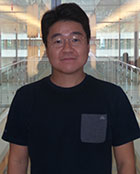
Jody Gale is an Extension Associate Professor at Utah State University , affiliated with the College of Agriculture and Applied Science and the Agricultural and Natural Resources Department . His work spans Sevier County (60% appointment) and the Central Southern Utah Area (40% appointment). Gale has 36 years of experience in Extension programs, focusing on agronomy, horticulture, and natural resource management. MS, Plant Science (Crop Management), Utah State University, 1988 BS, Plant Science (Agronomy & Biology), Utah State University, 1986 AAS, Building Construction , Utah Valley University, 1982 Gale’s research prioritizes irrigation water optimization , profitable soil fertility , crop rotation , invasive weed management , and alfalfa pest control . He also emphasizes agricultural economic development , government partnerships , and congressional education . His work integrates sustainability and community-based approaches . Recent publications by Gale focus on dairy relocation , nutrient management in irrigation water, and weed control strategies . These align with broad trends in agricultural economics , soil science , and extension education . Scientific Awards : USFS Chief Honor Award (2017), Innovation Award (NADO, 2017), Rural Honors Award (Utah Center for Rural Life, 2017), Distinguished Service (NACAA, 2016 and 2014), Search for Excellence in Sustainable Agriculture (2024), and multiple lifetime service recognitions. Gale’s career includes stakeholder collaborations , educational video production , and legislative outreach . He has served on initiatives like the Monroe Mountain Aspen Working Group (2011–2021) and focuses on practical, economically viable solutions for rural communities.
Abraham Bernstein is a Full Professor of Informatics at the University of Zurich (UZH), where he serves as Head of the Dynamic and Distributed Information Systems Group and Director of the UZH Digital Society Initiative. He leads a university-wide initiative with over 180 faculty members investigating the interplay between society and digitalization. His work bridges social science foundations (organizational psychology/sociology/economics) and technical disciplines (computer science, artificial intelligence), creating a unique interdisciplinary approach to digital transformation challenges. Education: Diploma in Computer Science from ETH Zurich Ph.D. in Management with concentration in Information Technologies from MIT's Sloan School of Management Professor Bernstein's research spans the Semantic Web, data mining/machine learning, recommender systems, crowd computing, and collective intelligence. His work uniquely integrates social science perspectives with technical computer science approaches, examining how social and technical elements interact in digital systems. Recent work focuses on explainable AI, ethical decision-making with AI systems, and the societal implications of digital transformation, reflecting his commitment to addressing both technical challenges and their broader societal context. His publication record shows a strong trajectory in multimodal information retrieval, knowledge representation, and human-AI collaboration, with increasing focus on ethical considerations and societal impact of AI technologies. The research demonstrates consistent innovation in bridging technical AI capabilities with human-centered design principles, particularly in areas like explainable recommender systems and democratic applications of AI. Scientific Recognition: Nominated Digital Shaper by Bilanz magazine (2017) Professor Bernstein has supervised over 30 PhD students whose work spans semantic technologies, data mining, recommender systems, and human-AI interaction. His research group has secured significant funding for projects related to digital society, knowledge representation, and AI ethics. As Director of the Digital Society Initiative, he coordinates cross-disciplinary research across UZH's faculties, bringing together scholars from humanities, social sciences, law, economics, and STEM fields to address complex digital transformation challenges. He leads the Dynamic and Distributed Information Systems Group at UZH, which maintains strong international collaborations and contributes significantly to both theoretical advances and practical applications in information systems. The group's work has influenced standards in semantic web technologies and continues to shape discourse on responsible AI development and deployment in society.
Professor Douglas Creighton is a Deakin Distinguished Professor and Director of the Institute for Intelligent Systems Research and Innovation (IISRI) at Deakin University. With a career spanning complex systems modeling, AI, and agent-based simulation, he leads a 100-strong research team working on real-world defense, transport, med tech, and advanced manufacturing solutions. His current research program includes three pillars: systems thinking and quantitative analytics, computational intelligence, and agent-based modeling. PhD in Industrial/Systems Engineering from Deakin University Bachelor of Engineering (Systems Engineering) and Bachelor of Science (Physics) from Australian National University His research strengths include smart transport systems, simulation modeling, robotics, and data analytics. Recent publications focus on stress quantification via EEG analysis, video instance segmentation, and ethical AI implementation in rail systems. He has developed trust estimation algorithms for autonomous agents and contributed to frameworks for rural community health engagement. Scientific recognition includes: SAE Mobility Engineering Excellence Gold Award (2016) IISRI Excellence in Industry Collaboration Award (2020) Three best paper awards at IEEE conferences As a supervisor, he currently guides research on: Mental stress quantification using brain connectivity Multi-cloud decision architecture Immersive technology for Industry 5.0 repair engineers Causal loop diagram representation for public health His industry collaborations span Australian Defence, Alstom Transport, Boeing, and rail/water organizations. Current grants include projects with the Australian Electoral Commission, Flame Security International, and advanced aerial mobility research.
Marek Kopel is an Assistant Professor at the Department of Applied Informatics, Faculty of Information and Communication Technology, Wrocław University of Science and Technology. He has held this position since 2011 and has been affiliated with the university since 2001. His teaching focuses on video games, information retrieval, and databases. Ph.D. in Computer Science Kopel's research spans game development, artificial intelligence, virtual reality, and music technology. He explores the intersection of games and AI, including real-time music adaptation in gameplay and VR interaction methods. His work also addresses procedural generation, optimization algorithms, and accessibility in educational materials. His publications highlight trends in VR immersion, game AI, and music industry analysis, often leveraging machine learning and semantic web technologies. He contributes to the organization of international conferences like ACIIDS and ICCCI. Kopel actively engages in interdisciplinary collaborations, notably through the InforMusic science club. He integrates his passion for music into research, playing instruments in university bands (WITelsi) and testing student-created games.
Stepan Yuriyovych Skrupsky is an Associate Professor at the Department of Computer Systems and Networks, Faculty of Computer Science and Technology, Zaporizhzhya National Technical University (ZNTU). He graduated with honors in 2010 as a Master in Computer Systems and Networks and defended his PhD thesis on "Models and methods of video information compression in distributed computer systems" in 2013 at the Institute of Modeling Problems in Energy. His research focuses on parallel and distributed computing , neural networks , video compression , and artificial intelligence systems . He teaches disciplines such as Computer Architecture, Mobile Application Architecture, and Cloud Technologies. Education : Master in Computer Systems and Networks, ZNTU (2010) PhD Thesis : "Models and methods of video information compression in distributed computer systems" (2013) His scientific works explore parallel computing architectures for AI applications, including neuro-fuzzy models , Internet of Things infrastructure , and rule extraction methods . Publications span topics like big data reduction , medical diagnostics , and software-defined networks . He uses computational intelligence and stochastic optimization for distributed system design. Key trends in his research include parallelization of AI algorithms , resource-efficient distributed systems , and cross-domain applications from medicine to IoT. His articles appear in venues such as Radio Electronics, Computer Science, Control and Automatic Control and Computer Sciences .
Dr. phil. Eva Thomm is a research associate at the Faculty of Education , University of Erfurt, and member of the Institute for Planetary Health Behaviour (IPB) . Her work focuses on educational psychology, science communication, and teachers' trust in research evidence. She serves as an Associate Editor for the German Journal of Educational Psychology (2023-2025) and reviews for 12 journals including Science Communication and PLOS One . Key research areas include: Teachers' source evaluation in belief-evidence conflicts Science communication in educational contexts Digital assessment of professional competencies Epistemic reasoning in teacher training Her 15 most recent publications (2016-2025) demonstrate expertise in: Source credibility assessment Conflict resolution in science communication Medical communication competence testing Belief persistence in educational research Notable award: EARLI Outstanding Publication Award 2021 for work on expert disagreement. Academic affiliations: University of Erfurt (since 2017) Westfälische Wilhelms-Universität Münster (2009-2016) Member of 5 research initiatives including Erfurter Open Science Initiative
Huamin Qu is a Chair Professor and founding Dean of the Academy of Interdisciplinary Studies at the Hong Kong University of Science and Technology (HKUST) . He leads the VisLab and coordinates the Human-Computer Interaction (HCI) group within the Department of Computer Science and Engineering. His academic journey began with a BS in Mathematics from Xi'an Jiaotong University , followed by an MS and PhD in Computer Science from Stony Brook University . Founding Head of HKUST's Division of Emerging Interdisciplinary Areas (EMIA) Founding Acting Head of Computational Media and Arts (CMA) at HKUST(GZ) Director of IPO and senior administration team member As a pioneer in data visualization and human-computer interaction , his research bridges urban computing , explainable AI , social media analysis , and E-learning . Recent work focuses on human-AI teaming , multimodal communication , and augmented reality applications . His publications reveal a trajectory from foundational graph visualization and volume rendering to cutting-edge AI-integrated visual systems . Scientific awards include induction into the IEEE Visualization Academy , IEEE VGTC Technical Achievement Award , and multiple best paper/honorable mention awards at top conferences like IEEE VIS, ACM CHI, and IEEE VAST. His lab has graduated 48 PhDs and 21 MPhil students , with 21 PhDs now faculty members at institutions including UC Davis, University of Minnesota, and Zhejiang University. Technologies developed by his group have been adopted by Microsoft , IBM , and Google . His work on projects like Pulse of HKUST and ATMSeer has received global media coverage from MIT News , IEEE Spectrum , and NHK TV . He has served as Associate Editor of IEEE TVCG and held leadership roles in major conferences including IEEE VIS , PacificVis , and VINCI .
Michael Ryoo serves as a SUNY Empire Innovation Associate Professor in the Department of Computer Science at Stony Brook University while concurrently working as a Research Scientist with Google Brain's "Robotics at Google" team. Previously, he held positions as an Assistant Professor at Indiana University Bloomington and a Staff Researcher at NASA's Jet Propulsion Laboratory. His academic background includes a Ph.D. from the University of Texas at Austin (2008) and a B.S. from Korea Advanced Institute of Science and Technology (KAIST) in 2004. Ryoo's research centers on deep learning and computer vision with specific focus on convolutional neural network (CNN) models for video semantic understanding. His work bridges visual perception and robotic action through applications in robot perception, robot learning, and human-robot interaction. Key innovations involve developing efficient architectures for processing multimodal data and translating visual understanding into robotic control systems. Analysis of his 15 most recent publications reveals strong emphasis on multimodal AI integration, particularly vision-language models applied to robotics. His 2025 work shows significant advancement in token-efficient video representation, motion-controllable diffusion models, and zero-shot learning frameworks specifically designed for robotic control systems. The research trajectory demonstrates consistent focus on making video understanding more accessible and applicable to real-world robotic scenarios. Scientific awards: No awards were mentioned in the provided source material. Regarding academic advising, the source text does not list any students or mentoring activities. Similarly, no grant funding information is provided, though his dual academic-industry role suggests substantial research support. His Google Brain affiliation likely involves industry-sponsored research initiatives. Ryoo maintains active laboratory affiliations through Stony Brook's AI Innovation Institute and Google's Robotics team. His prior work at NASA JPL indicates experience with space robotics systems, while his current Google role focuses on large-scale robot learning infrastructure. The LAM SIMULATOR project represents his current focus on advancing data generation techniques for training large action models.
Ariadna Fernandez-Planells is a Lecturer at Universitat Internacional de Catalunya in Barcelona, Spain, specializing in youth information behavior linked to social movements. Her academic affiliations include Universitat Politècnica de València (Departamento de Comunicación Audiovisual, Documentación e Historia del Arte) and Pompeu Fabra University (Communication). She earned a PhD in Social Communication under Supervisors Carles Feixa and Mònica Figueras. Her research interests span New Media , Social Movements , Youth Studies , Media Studies , Television Studies , and Digital Media . Recent publications focus on ethical design in mobile applications, journalism innovation, gang behavior in digital contexts, media consumption trends, and tourism communication strategies. Consumer-based brand equity in polarized media markets Longitudinal studies of youth media habits (15M and Umbrella movements) Educational podcasting and student prosumer dynamics Transnational gang mediation via social media Scientific recognition includes the FPU Fellowship (2020) , UIC Barcelona Outstanding Researcher award (2022) , and Premio a la Excelencia Docente (2021) . Her work addresses the intersection of technology, education, and political engagement, with over 30,000 public views and 23 co-authored publications.
Dr. Jun Li is a Senior Lecturer at the School of Computer Science, Faculty of Engineering and Information Technology, University of Technology Sydney (UTS), Australia. He received his Ph.D. in Computer Science from Queen Mary University of London in 2009 and is affiliated with the Australian Artificial Intelligence Institute (AAII) at UTS. His research spans multiple domains within artificial intelligence, with primary focus on Machine Learning applications in computer vision and 3D geometry. Dr. Li has published extensively in high-impact journals including IEEE Transactions (TPAMI, TIP, TNNSLS) and Pattern Recognition, with recent work expanding into interdisciplinary research in earth science and marine applications. His research output demonstrates consistent productivity with numerous publications each year across diverse AI application areas. Dr. Li's work shows strong thematic progression from foundational computer vision techniques to applied interdisciplinary research. Early work focused on face hallucination and video super-resolution, while more recent publications address environmental applications using Graph Neural Networks for wave prediction and damage classification for disaster response. His research consistently bridges theoretical AI advances with practical real-world applications across healthcare, autonomous systems, and environmental science. AI to assist disaster emergency response (2023-2026) Applying Generative Adversarial Network in Medical Image Analysis (2020-2021) Big Massive Open Online Course (MOOC) Data Retrieval (2017-2020) As an educator, Dr. Li teaches core courses including '31005 Machine Learning' and '32513 Advanced Data Analytics Algorithms' at UTS, and is available for Masters Research and PhD student supervision, contributing to the development of next-generation AI researchers.
Antonios Liapis is an Associate Professor at the Institute of Digital Games, University of Malta. He completed his PhD in September 2014 under the supervision of Georgios N. Yannakakis at the IT University of Copenhagen. His academic journey includes an M.Sc. in Information Technology from the same institution and a 5-year Diploma in Electrical and Computer Engineering from the National Technical University of Athens. Dr. Liapis has held various academic positions at the University of Malta: Post-doctoral Researcher (2014-2015), Lecturer (2015-2020), Senior Lecturer (2020-2022), and currently Associate Professor (2022-present). He has served as General Chair for multiple international conferences including FDG (2020), GALA (2019), and EvoMusArt (2018-2019). He is an Associate Editor of the IEEE Transactions on Games and a member of the Games Technical Committee of the IEEE Computational Intelligence Society. His research focuses on Artificial Intelligence as an autonomous creator and as a facilitator of human creativity. Key areas include computationally intelligent tools for game design and computational creators that blend semantics, visuals, sound, plot, and level structure to create various game genres including horror, adventure, shooter, and dungeon crawler games. His work has resulted in over 150 peer-reviewed publications and several research awards. Dr. Liapis has secured multiple research grants from the European Commission, including projects on AI-powered robotic material recovery, virtual reality aided design, and learning science through coding and play. His notable project series "Data Adventures" demonstrates the use of open data from Wikipedia, DBpedia, Wikimedia Commons, and OpenStreetMap to automatically generate adventure games with complete plots, characters, items, and locations. His scientific contributions have been recognized with several awards including Best Paper Awards at major conferences, Best Reviewer Award, and Runner-Up Best Student Paper Award. Dr. Liapis has also co-organized 16 workshops in diverse conferences throughout his career. Research interests include: Artificial Intelligence for creative applications Procedural Content Generation in games Computational Creativity systems Machine Learning for game design Affective Computing in virtual environments Human-AI collaboration in creative processes His recent work shows a strong trend toward integrating Large Language Models with game design, exploring quality diversity algorithms for creative applications, and advancing affect modeling for improved player experience. The research spans computer science, artificial intelligence, game studies, and human-computer interaction, with practical applications in education, entertainment, and design.
Pip Thornton is a Chancellor's Fellow at the University of Edinburgh's School of Geosciences, holding a prestigious early-career academic position equivalent to Assistant Professor. Thornton's work bridges geography, linguistics, and digital studies with a specific focus on the political economy of language in digital spaces. Their research examines how technology companies transform human language into extractable economic data through what Thornton terms 'linguistic capitalism.' Thornton's research interests center on the exploitation and monetization of language by digital technology companies, with particular emphasis on how the transformation of language into data negates its creative and poetic value. Key areas include critical AI studies, online disinformation, digital geopolitics, and creative interventions as research methodology. Thornton investigates how platforms like Google, Meta, and AI companies extract economic value from human language, resulting in what they describe as 'linguistic detritus' that fills search results and AI outputs. Thornton's recent publications (2023-2024) show a strong focus on creative responses to AI and linguistic capitalism, with multiple exhibitions, performances, and critical interventions. Their work demonstrates consistent engagement with both theoretical critique and tangible artistic responses to digital technology's impact on language and communication. Virginie Mamadouh Outstanding Research Award, AAG (2021) 'Best Paper' at ACM CHI Conference on Human Factors in Computing Systems (2022) Thornton maintains active research funding through multiple projects including 'Page Against The Machine: a comedy-drama about AI' (University of London), 'Writing the Wrongs of AI' (Arts & Humanities Research Council), and several projects examining creative interventions in digital technology. Their research approach combines academic scholarship with public-facing artistic work, regularly participating in major cultural festivals including the Edinburgh International Book Festival and Wigtown Book Festival. Thornton is currently accepting PhD students interested in linguistic capitalism, digital humanities, and critical AI studies. Thornton leads the Articulating Data Research Group, which explores vocalisation, machine listening, and the (in)security of language through creative and critical approaches. This work combines technical understanding of AI systems with artistic interventions to examine how language is processed, commodified, and transformed in digital environments.
Kijung Shin is an Associate Professor at KAIST (Korea Advanced Institute of Science and Technology), holding dual appointments in the Kim Jaechul Graduate School of AI and the School of Electrical Engineering (Computer Division). He leads the Data Mining Lab and teaches multiple courses including Graph Mining and Social Network Analysis, Data Mining and Search, and other foundational courses in electrical engineering and AI. Education Ph.D. in Computer Science, Carnegie Mellon University (February 2019) M.S. in Computer Science, Carnegie Mellon University (December 2017) B.S. in Computer Science and Engineering, Seoul National University (August 2015) B.A. in Economics (Double Major), Seoul National University (August 2015) Research Interests Professor Shin's research primarily focuses on data mining, graph algorithms, and network science, with particular expertise in hypergraph analysis, tensor decomposition, and graph neural networks. His work bridges theoretical foundations with practical applications, developing algorithms that can efficiently analyze complex real-world networks. His recent research has expanded into multimodal learning, integration of large language models with graph neural networks, and applications in recommendation systems, satellite imagery analysis, and biological data analysis. His approach combines rigorous mathematical analysis with practical implementation, resulting in numerous open-source software tools that have been widely adopted in both academia and industry. His research has significant implications for social network analysis, fraud detection, recommendation systems, and scientific discovery in various domains. Research Trends Professor Shin's recent publications show a clear trajectory toward more complex network structures, particularly hypergraphs that capture higher-order interactions beyond simple pairwise relationships. His work increasingly integrates traditional graph algorithms with deep learning approaches, especially focusing on how graph neural networks can be improved and made more interpretable. There's also a growing emphasis on practical applications in areas like satellite imagery analysis, medical data, and recommendation systems that address real-world challenges. Scientific Awards Received the PAKDD Best Survey Paper Award for 'Multi-Behavior Recommender Systems: A Survey' (2025) Selected as one of the best short paper candidates of ACM RecSys 2024 (top 7) for 'Revisiting LightGCN' (2024) Selected for oral presentation (2.6% of accepted papers) at AAAI 2024 for 'VITA: 'Carefully Chosen and Weighted Less' Is Better in Medication Recommendation' (2024) Received the IEEE ICDM Best Student Paper Runner-up Award for 'TensorCodec: Compact Lossy Compression of Tensors without Strong Data Assumptions' (2023) Received the SIGKDD Best Research Paper Award and CogX Award for Best Student Paper in AI for 'FRAUDAR: Bounding Graph Fraud in the Face of Camouflage' (2016) Received the Best Senior Thesis Award from Seoul National University (2015) Received the Samsung Humantech Paper Award (1st in Computer Science) (2015) Teaching and Mentoring Professor Shin has taught multiple graduate and undergraduate courses at KAIST since 2019, including Graph Mining and Social Network Analysis, Data Mining and Search, and foundational courses in electrical engineering. He has also co-organized tutorials at major conferences including AAAI, KDD, ICDM, and CIKM on advanced topics in hypergraph neural networks and real-world hypergraph analysis. As the leader of the Data Mining Lab, he mentors numerous graduate students and postdoctoral researchers, fostering a collaborative research environment that has produced significant contributions to the field of data mining and network analysis. Research Leadership Professor Shin leads the Data Mining Lab at KAIST, which focuses on developing novel algorithms for analyzing complex networks and high-dimensional data. The lab has produced numerous influential software tools including D-Cube, M-Zoom, CoreScope, and DenseAlert, which are widely used in both academic research and industry applications. His research group maintains active collaborations with institutions worldwide and has received funding from various sources to support their innovative work in data mining and network analysis.