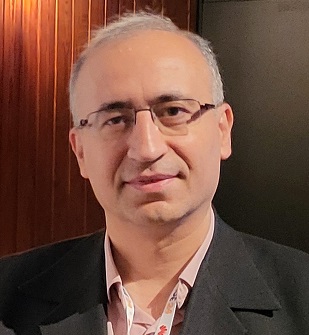
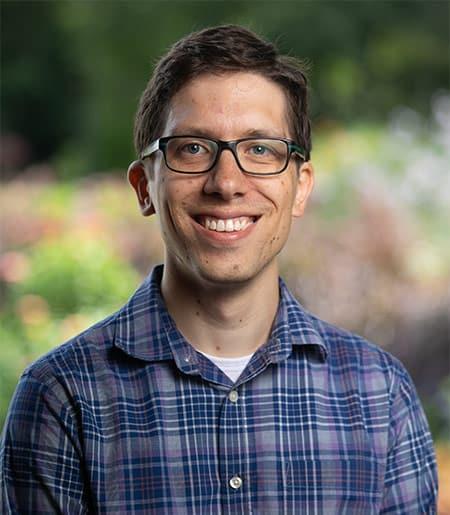
Abbas Heydarnoori is an Assistant Professor in the Department of Computer Science at Bowling Green State University (USA) since 2022, and previously held a faculty position at Sharif University of Technology (Iran) from 2012 to 2022. He earned his Ph.D. in Computer Science from the University of Waterloo (Canada, 2009), and M.Sc. and B.Sc. in Software Engineering from Sharif University of Technology (2001 and 1999). His research focuses on AI-driven software engineering (AI4SE/SE4AI), leveraging data science and AI to address challenges like fault localization, bug prediction, and code comprehension. He analyzes software repositories (e.g., GitHub, Stack Overflow) to improve developer productivity and software quality. He has contributed to tools like CrowdSummarizer and ExceptionTracer, and his work spans topics such as microservices architecture, API usage analysis, and code summarization. Teaching includes graduate/undergraduate courses on AI for Software Engineering, Database Systems, and Software Engineering. His service roles include editorial board membership at Science of Computer Programming , and PC membership in conferences like MSR, SANER, and FSE. His research group actively publishes on automated code analysis, documentation generation, and developer productivity tools, with a focus on empirical and data-driven approaches.
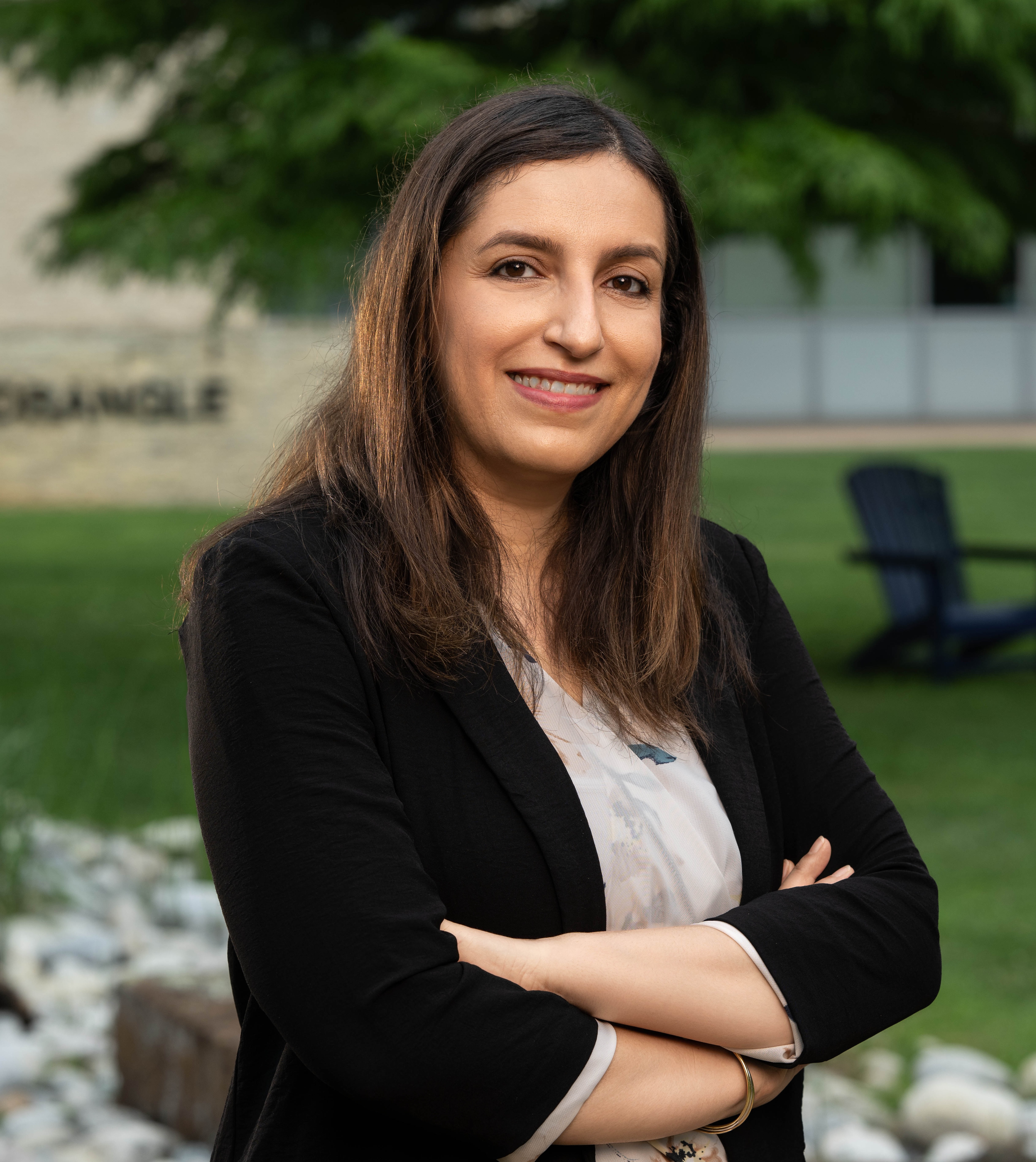
Dr. Shirin Nilizadeh is an Associate Professor in the Department of Computer Science and Engineering at The University of Texas at Arlington's College of Engineering. She leads the Security and Privacy Research Lab, conducting interdisciplinary research at the intersection of cybersecurity, privacy, machine learning, and social media analysis. Her work addresses critical societal issues related to online security, privacy, and safety through data-driven approaches. Dr. Nilizadeh received her PhD in Computer Science from Indiana University in 2014, followed by MS in Computer Science from Amirkabir University (2007) and BS in Computer Engineering from Islamic Azad University (2004). Her research focuses on security and privacy in systems and social networks, employing techniques from machine learning and big data analytics. She takes a highly interdisciplinary approach, integrating AI, NLP, social sciences, and public health to address societal issues in cybersecurity and privacy. Her research objectives include: (1) detecting and characterizing emerging threats in online social networks like social engineering attacks, misinformation, and online hate speech; (2) advancing the adversarial robustness and fairness of ML and NLG systems; and (3) studying humans' online behaviors through data-driven interdisciplinary research. Analysis of her recent publications reveals a strong focus on AI-generated security threats, particularly phishing scams using LLMs, NFT fraud detection, social media toxicity analysis, and content moderation systems. Her work bridges theoretical security research with practical applications, often addressing real-world security challenges through innovative technical solutions. Among her notable scientific achievements are the prestigious NSF CAREER award (2023), Comcast Innovation Awards (2022 and 2024), College of Engineering Outstanding Early Career Research award (2024), and IEEE SP 2024 Distinguished Paper Award. Her work has also received best paper and technical poster awards at eCrime 2021 and NDSS 2022. Dr. Nilizadeh has successfully mentored numerous doctoral and master's students while securing significant research funding, including multiple NSF grants and Comcast Innovation Fund awards. She leads a vibrant research group that has produced impactful work cited in official reports submitted to The Supreme Court and the EU Committee on Civil Liberties, Justice, and Home Affairs. Her lab has also received coverage from WIRED, MIT Technology Review, Orange's Hello Future, and Communications of the ACM. She serves on numerous program committees for top international conferences including ACM CCS, USENIX Security, and POPETS, and has organized outreach programs like OurCS@DFW to broaden participation of underrepresented students in computing.
Professor David Millard is a Professor of Computer Science at the University of Southampton's Electronics and Computer Science department. He serves as Head of the ECS Education Group, leading a team of 15 Teaching Fellows and Senior Fellows to improve teaching and learning across the department. Previously, he was Director of Admissions for ECS from 2012 to 2022. David is a founding member of the Web and Internet Science research group and has been active in the international hypermedia community for over twenty-five years. His professional affiliations include: Chair of the ACM Hypertext steering committee SIGWEB Liaison for ACM Web Science Former vice-chair of ACM SIGWEB (2015-2019) Editorial board member of the New Review of Hypermedia David Millard's research focuses on the intersection of hypertext, digital narratives, and mixed reality games, with particular emphasis on locative literature. His work has helped define 'Sculptural Hypertext' - hypertext governed by rules and constraints rather than navigational links - which is highly suitable for designing narrative structures within digital games. He has been a pioneer in locative narratives, interactive digital narrative games experienced on location-aware smart devices, with work dating back to 2002 at Chawton House. His recent research focuses on understanding the locative narrative design space and proposing the 'Balance of Attention' as the primary poetic of locative narrative. His research has been recognized with multiple awards including the Engelbart Award in 2013 and 2016 for his work on location-based storytelling and sculptural hypertext. His interdisciplinary StoryPlaces project explores the poetics of location-based narratives through digital storytelling deployments in Southampton, Bournemouth, and Crystal Palace. David has authored more than 230 peer-reviewed articles across Technology Enhanced Learning, Web Science, and Hypertext and Narrative, with over 4800 citations and an h-index of 35. His work has been published in prestigious journals including Springer Multimedia Tools and Applications, Elsevier Computers in Education, IEEE Intelligent Systems, PloS one, ACM Transactions on Information Systems, and ACM Transactions on Learning Technologies. He leads a team of PhD students focused on Interactive Narratives and Mixed Reality Spaces and has graduated 34 postgraduate students. His students have pursued careers in academia at institutions like Oxford, Winchester, Bournemouth, and East Anglia, as well as in industry at major technology firms including IBM and Google. David has been instrumental in Open Educational Resources development, creating EdShare in 2010 - an OER platform based on EPrints that now hosts over 20,000 learning items. He has also developed innovative teaching approaches, including modules on Multimedia Systems (which won the Vice-Chancellor's Teaching award), Programming 1, Social Media and Network Science, and Games Design and Development.
Tetsunori Kobayashi is a Professor in the School of Fundamental Science and Engineering at Waseda University, Japan, where he has served since 1997. He is renowned for pioneering research in human–robot interaction, spoken language processing, and multimodal conversational systems, leading to over 230 refereed papers and an h-index of 35 (Google Scholar). Education: 1980 B.Eng. in Electrical Engineering, Waseda University 1982 M.Eng. and 1985 Dr.Eng. from Graduate School of Science and Engineering, Waseda University Research Interests: His work spans intelligent robotics , perceptual information processing , pattern recognition , image and audio processing , and conversational AI . He develops algorithms for real-time dialogue systems, multi-party conversation facilitation robots, and non-autoregressive speech recognition leveraging CTC and pre-trained language models. Recent Publication Trends: Since 2020 his group has advanced non-autoregressive end-to-end ASR (Mask-CTC, Intermpl, BECTRA), noise-robust attention , multi-look-ahead conversational ASR , and neural speaker diarization . They integrate BERT-style pre-training with CTC losses to accelerate inference while maintaining accuracy. Parallel work explores vision-and-language topics such as scene-graph generation, video semantic indexing, and personalized summarization for spoken news delivery. Scientific Awards: IEICE Fellow 2023 – for multi-modal multi-party conversation research IPSJ Fellow 2016 – for pioneering robot conversation studies JST Award for Academic Start-ups 2024 Best Paper Awards from IEICE, IEEE BTAS, ACM SIGGRAPH VRCAI, and several IPSJ workshop prizes Advising & Grants: He has mentored dozens of PhD and Master’s students who now lead in academia and industry. Major funded projects include JST CREST on conversational robotics, NEDO and JST-support for AI-based speech interfaces, and industry collaborations with NHK, OKI, and NEC. Labs & Teams: Kobayashi heads the Perceptual Computing Laboratory at Waseda, conducting interdisciplinary research with domestic and international partners such as MIT, ATR, and NHK Science & Technology Labs.
Horacio Saggion is the Chair in Computer Science and Artificial Intelligence at the Department of Information and Communication Technologies, Universitat Pompeu Fabra. He leads the TALN Group and the Large Scale Text Understanding Systems Lab. His research focuses on Computational Linguistics, with specialties in Text Summarization, Information Extraction, and Semantic Analysis. He coordinates the Horizon Europe iDEM project on inclusive democratic spaces and previously led the SignON project for Sign Language Translation. Key technologies include the SUMMA Summarization system and the Dr Inventor Text Mining Library. Education: PhD, MSc, and Licenciatura in Computer Science. Research Interests: Text simplification for accessibility, sign language translation, misinformation detection, and ethical AI applications. His work bridges natural language processing with societal needs such as clear communication in public administration. Grants & Projects: Coordinator of iDEM (Horizon Europe), PI of SignON, Simplext, and Able to Include. Involved in BEA shared tasks and CLEF labs. Active in organizing workshops like TSAR at EMNLP. Labs & Teams: Head of TALN Group and Text Understanding Lab. Collaborations include Universitat Pompeu Fabra's interdisciplinary initiatives and industry partnerships for technology commercialization.
Anna Wilbik is a Professor in Data Fusion and Intelligent Interaction at the Department of Advanced Computing Sciences, Faculty of Science and Engineering, Maastricht University (The Netherlands). Her research bridges data understanding and human-machine synergy in complex systems, focusing on multi-criteria decision making, explainable AI, and data fusion techniques. PhD in Computer Science (with honors), Systems Research Institute, Polish Academy of Science (2010) Postdoctoral Fellow, University of Missouri (2011) Stanford University TOP500 Innovators Program Alumnus Research Pillars: Intelligent human-machine interaction for joint decision making Data fusion methods for heterogeneous data integration Contextualized multi-criteria decision frameworks Fuzzy logic and linguistic summaries for explainability Federated learning systems Article Trends: Recent work focuses on intuitionistic fuzzy sets for knowledge-intensive processes, federated learning with uncertainty handling, and linguistic summarization techniques for interpretable AI. She actively explores explainability , collaborative business models , and driver behavior analysis through attention-based models. Professional Leadership: Vice-chair of IEEE Fuzzy Systems Technical Committee Organizer of IEEE World Congress on Computational Intelligence (2024)
Arnab Nandi is a Professor in the Department of Computer Science & Engineering at The Ohio State University. His work bridges human interaction with data infrastructure, focusing on database systems, LLM-augmented analytics, and immersive query interfaces. Education: PhD in Computer Science & Engineering from the University of Michigan Leadership: Co-founder of OHI/O Hackathon Program and STEAM Factory interdisciplinary network Research spans human-in-the-loop data analytics , vibe querying (natural language + gestural interfaces), LLM integration into education, and climate response systems . Key projects include Omni (multimodal exploration), GestureDB , and Icarus (clinical pipelines). Recent publications analyze LLM-driven query stacks (HILDA 2025), video analytics (SIGMOD 2022), and data sunglasses for cognitive limits (HILDA 2025). Awards include NSF CAREER Google Faculty Research Award IEEE TCDE Early Career Award ACM Distinguished Member Advises students in database innovation , with alumni at Amazon, AWS, Roblox, and Meta. Teaches CSE 3241 (Database Systems), CSE 5889 (Software Startups), and CSE 5242 (Advanced Databases).
Kalina Bontcheva is a Senior Researcher in the Natural Language Processing Group within the Department of Computer Science at the University of Sheffield. She holds an EPSRC Career Acceleration Fellowship (working part-time since October 2015) focused on personalized summarization of social media content. Her research spans multiple EU-funded projects including PHEME (computing veracity of social media), TrendMiner, DecarboNet, and uComp, with significant contributions to the GATE (General Architecture for Text Engineering) open-source NLP infrastructure since 1999. Dr. Bontcheva's research interests focus on the intersection of natural language processing and social media analysis. Her work encompasses NLP for social media, semantic search, information extraction from social platforms, crowdsourcing of NLP corpora, collaborative text annotation, semantic technologies, and text mining and analytics. She has particular expertise in developing methods for personalized, abstractive multi-document summarization across different social media platforms, addressing the challenges of noisy, jargon-filled and dynamic content. Her interdisciplinary approach combines machine learning, semantic technologies, and social dimension analysis to create systems that adapt to individual users' information seeking goals. Analysis of her recent publications reveals a strong focus on social media processing challenges, with emphasis on Twitter analysis, temporal expression recognition, and handling noisy text. Her work consistently addresses the unique characteristics of social media content and develops specialized techniques for information extraction, sentiment analysis, and user geolocation within these platforms. The GATE framework serves as the foundation for much of her tool development, demonstrating her commitment to creating reusable, open-source NLP infrastructure. Her most significant award is the EPSRC Career Acceleration Fellowship, which supports her work on personalized social media summarization. This prestigious fellowship includes a substantial budget of £560k and involves collaborations with industry partners including The Press Association, British Telecom, and Fizzback. Dr. Bontcheva has led numerous major research projects throughout her career. She was Principal Investigator on three EU-funded projects (MUSING, TAO, and ServiceFinder) between 2006-2009, coordinating the TAO consortium with seven partner institutions. She currently leads the PHEME EU project and serves as PI for TrendMiner and DecarboNet European projects, while also contributing as Co-I on the uComp project. Her project portfolio demonstrates consistent success in securing competitive research funding across multiple domains within NLP and semantic technologies. She works within the Natural Language Processing Group at the University of Sheffield, which has been central to the development of the GATE infrastructure. Her work connects with various initiatives including the GATE Cloud platform and the TextVRE project for e-humanities textual studies. She has established collaborations with organizations including the Press Association, British Telecom, Oxford Internet Institute, and Sheffield's Department of Journalism to ensure her research addresses real-world needs across different user communities.
Ricardo Azambuja Silveira is a Professor at the Federal University of Santa Catarina, Brazil, with a distinguished research career spanning over two decades in the fields of multi-agent systems, intelligent tutoring systems, and semantic web technologies for education. His work bridges artificial intelligence with educational technology, creating innovative frameworks for adaptive learning environments and intelligent educational agents. Dr. Silveira's research interests focus on developing agent-based approaches to enhance educational experiences through technologies like BDI (Belief-Desire-Intention) architectures, ontology-based systems, and multi-context reasoning. His work particularly emphasizes the integration of intelligent agents with learning management systems to create personalized educational experiences. His recent publications demonstrate a continued evolution from foundational multi-agent frameworks to sophisticated neural-symbolic integrations and context-aware educational technologies. Throughout his career, he has published over 60 scholarly works, with consistent output from 2001 through 2024, demonstrating sustained research productivity. His publication trends show a clear trajectory from early work on JADE (Java Agent Development Framework) for distance education to current research on neural-symbolic integration in agent systems. The majority of his publications appear in prominent conferences like PAAMS, MICAI, and ICAART, reflecting his standing in the multi-agent systems community. Dr. Silveira has mentored numerous researchers who have become his frequent collaborators, including Arnoldo Uber Junior, Rodrigo Rodrigues Pires de Mello, and Thiago Ângelo Gelaim. His research has been supported through various academic grants that enabled the development of frameworks like Sigon (a multi-context system framework) and iEnsemble (for committee machine learning). He has been actively involved in the organization of academic events, particularly the Methodologies and Intelligent Systems for Technology Enhanced Learning (MIS4TEL) conference series, where he has served as both participant and organizer. His work contributes significantly to the theoretical foundations and practical implementations of intelligent educational technologies.
Dr. Stevan Rudinac is a Researcher at the University of Amsterdam's Faculty of Economics and Business , Section Business Analytics . His work focuses on interactive learning systems and multimodal data analysis, particularly in urban contexts and multimedia modeling. Education: PhD in Multimedia and Information Retrieval from Delft University of Technology (2013). Research Interests: Stevan specializes in multimedia modeling , hypergraph learning , and interactive video search . He develops frameworks for scalable analysis of social networks, urban imagery, and large multimodal datasets, bridging machine learning with practical applications in city planning and financial social media. Recent Trends: His 2024-2025 publications highlight large language model optimization , diffusion model evaluation , and dynamic graph embedding for meme stocks. Collaborative projects include the CASTLE 2024 dataset and Exquisitor , a system for 100 million image exploration. Labs & Teams: He contributes to the Business Analytics group at UvA, collaborating with Prof. Marcel Worring and Dr. Björn Þór Jónsson. He co-organized the UrbanMM'21 workshop and participates in ACM Multimedia and MMM conferences.
Jinghui Cheng is an Associate Professor at the Department of Computer Engineering and Software Engineering at Polytechnique Montréal . He holds a PhD in Computer Science from DePaul University (2017), preceded by an MSE and BSE from Xi’an Jiaotong University, China. His research uniquely bridges Human-Computer Interaction (HCI) with Software Engineering , focusing on technologies that support domain experts with specialized information needs. Awards : Canada Research Chair Tier 2 in User Experience Design of Data-Driven Systems His recent work examines playful AI interactions (e.g., ChatGPT), designer-developer collaboration , and privacy motivation in UI/UX. He actively supervises PhD and Master’s students in the HCD Lab , with over 20 completed theses. Collaborations span institutions like the École Polytechnique and partnerships with researchers such as Jin L. C. Guo and Bram Adams . Cheng’s 15 most recent publications (2023-2025) reflect trends in AI-assisted design , usability in open-source communities , and ethical technology development . His grants include the AUDACE grant (2020) co-led with Dr. Gabrielle Pagé, focusing on healthcare applications.
Kathleen R. McKeown is the Henry and Gertrude Rothschild Professor of Computer Science at Columbia University and the Founding Director of Columbia's Data Science Institute (2012-2017). She has been a faculty member since 1982 and served as Department Chair (1998-2003) and Vice Dean for Research in the School of Engineering and Applied Science. Her research focuses on natural language processing , text summarization , natural language generation , and social media analysis . Current projects include neural methods for extractive/abstractive summarization, electricity usage message generation via reinforcement learning, and social media sentiment analysis in low-resource languages like Uyghur. She leads the Columbia NLP Group and developed the long-running Newsblaster system (2001-present) for automated news tracking and multi-document summarization. Key scientific awards include NSF Presidential Young Investigator (1985) NSF Faculty Award for Women (1991) AAAI Fellow (1994) ACM Fellow (2003) ACL Founding Fellow (2012) Columbia Great Teacher Award (2010) Anita Borg Woman of Vision Award (2010) She has held leadership roles in major academic organizations: President of the Association for Computational Linguistics (1992), Vice President (1991), Secretary-Treasurer (1995-1997), and board member of the Computing Research Association with secretary role.
Ludwig Schmidt is an Assistant Professor in the Computer Science Department at Stanford University and a member of Stanford Data Science. He also serves as a member of the technical staff at Anthropic and LAION, contributing to both academic and industrial research in machine learning. Dr. Schmidt completed his PhD at MIT, where he received the prestigious George M. Sprowls Award for best PhD theses in computer science, followed by a postdoctoral position at UC Berkeley. His educational background provides a strong foundation for his research at the intersection of theoretical and applied machine learning. Dr. Schmidt's research focuses on the empirical foundations of machine learning, with particular emphasis on datasets, reliable generalization, multimodality, and language models. His work addresses critical challenges in ensuring machine learning models perform consistently across different domains and data distributions. His research group has made significant contributions to open source machine learning through projects like OpenCLIP, DCLM, and the LAION-5B dataset, which have become important resources for the machine learning community. An analysis of Dr. Schmidt's recent publications reveals a strong focus on dataset quality, multimodal learning, and language model training. His work spans from fundamental research on generalization and robustness to practical applications in vision-language systems and tabular data. A recurring theme is the importance of high-quality, diverse datasets for training robust machine learning models, with several papers addressing dataset curation, evaluation methodologies, and the impact of data quality on model performance. New Horizons Award at EAAMO Best paper awards at ICML & NeurIPS Best paper finalist at CVPR Sprowls dissertation award from MIT (George M. Sprowls Award) Dr. Schmidt actively mentors doctoral students and postdoctoral researchers. His current advisees include doctoral candidates Liangyu Chen, Shiye Su, Elaine Sui, Audrey Xie, John Yang, Yuhui Zhang, and Wanjia Zhao. He serves as Doctoral Dissertation Reader for Kyle Hsu and Aishwarya Mandyam, and as Postdoctoral Faculty Sponsor for Benjamin Feuer and Mike Merrill. His research has attracted significant funding that supports these students and enables his group to contribute to open source projects like OpenCLIP and LAION-5B. Dr. Schmidt leads a research group focused on empirical machine learning foundations. The group actively contributes to open source machine learning through code repositories and datasets, including OpenCLIP, OpenFlamingo, LAION-5B, and the DataComp datasets. Their work bridges theoretical insights with practical applications, developing tools and resources that advance the entire machine learning community.
Grzegorz Chrupała is an Associate Professor at the Department of Cognitive Science and Artificial Intelligence , Tilburg University, where he leads research in computational approaches to multimodal communication. Previously, he was a postdoctoral researcher at Saarland University's Spoken Language Systems group and earned his PhD from Dublin City University's School of Computing. His research bridges biological and artificial computation , focusing on enabling machines to learn language from multimodal data (speech, gestures, visual-auditory stimuli) as children do naturally. This involves developing and interpreting deep learning architectures, analyzing emergent representations, and advancing speech technology for under-resourced languages. Key themes include Visually grounded speech modeling Feature attribution and model interpretability Human-inspired learning paradigms BlackboxNLP workshop leadership His recent publications examine speech model reliability , lexical tone encoding , and contextual dependencies in NLP systems. He mentors a team of PhD candidates and alumni working on topics like user-centric interpretability, bioacoustics, and disentangled speech representations. He also serves on the board of the Dutch Open Speech Technology Foundation, chairs Interspeech 2025 tutorials, and contributes as an Action Editor for TACL.
Marten van Schijndel is an Assistant Professor of Computational Linguistics at Cornell University, affiliated with the Cognitive Science Program and the Department of Linguistics within the College of Arts and Sciences. His research focuses on incremental language processing, comparing human linguistic behavior with computational models like neural networks. He organizes the Computational Psycholinguistic Discussions (C.Psyd) and collaborates with the Cornell Computational Linguistics Lab (CLab) and Cornell NLP Group. Van Schijndel’s work bridges computational modeling and psycholinguistics, probing how humans and models process language incrementally, particularly through methodologies like fMRI and behavioral experiments. His research interests include computational modeling of language processing, neural network representations, and the interplay between syntax, semantics, and discourse. Notably, he investigates ungrounded learning in neural models, exploring what linguistic aspects emerge from statistical patterns alone. Recent contributions include studies on semantic change quantification, phonotactic effects in context, and discourse predictability in Hindi word order. Van Schijndel teaches courses such as Computational Linguistics II and leads seminars on natural language processing. He actively advises students like John R. Starr, Ashlyn Winship, and Zander Lynch, whose work spans experimental paradigms for semantic spaces, implicit arguments in sentence processing, and semantic role localization. His recent activities include co-organizing workshops on event representation (PEER 2025) and presenting at the University of Rochester on event construction from language. Media highlights include research on tracking anti-immigrant hate speech and semantic evolution in French texts.