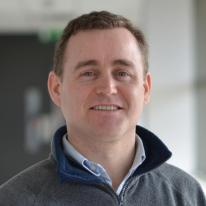
Alessandro Ragano is a Postdoctoral Researcher at the Insight Centre for Data Analytics , where he has been investigating Quality of Experience (QoE) aspects of audio archives and developing data-driven approaches for QoE estimation and audio restoration using deep learning since 2018. Education: MSc in Computer Science and Engineering from Politecnico di Milano (Italy) BSc in Computer Engineering from Università Degli Studi di Salerno (Italy) His research integrates machine learning , audio signal processing , and multimedia quality assessment to improve speech enhancement, audio restoration, and perceptual modeling. Recent trends in his publications focus on self-supervised learning , objective quality metrics , and audio dataset generation with applications in speech separation, music representation, and audio inpainting. He actively contributes to open-source tools like Binamix and AQP for audio research and quality evaluation.
Madeleine Lowery is a Professor in the School of Electrical and Electronic Engineering at University College Dublin. She leads the Personal Sensing research group, focusing on engineering approaches to study the human nervous system in health and disease, with applications in therapies for impaired motor function. Her interdisciplinary research integrates neural engineering, electromyography, and biomedical signal processing. Specializes in neuromuscular systems and neural control of movement Develops myoelectric control systems for artificial limbs Designs high-density electrode systems for neural activity recording Investigates deep brain stimulation mechanisms in Parkinson’s disease models Her research spans neurodegenerative disorders (ALS, Huntington’s disease) and rehabilitation technologies , including wearable sensors for gait and sleep analysis. Key methodologies involve computational modeling , adaptive control systems , and biomedical signal analysis .
Honghui Du serves as a Research Fellow at the Insight Centre for Data Analytics, a leading Irish research institution specializing in data science with nodes across multiple universities. The role centers within the Decision Making research group, focusing on algorithmic solutions for dynamic environments. Research spans transfer learning in non-stationary data streams , recommender systems (notably news personalization using LLMs and diffusion models), and medical imaging under label scarcity. Key emphases include handling concept drift, optimizing active learning for medical diagnostics, and developing generative approaches for user-item interaction modeling. Emerging work explores gamification for sustainable behavior change and entity resolution via language models. Recent publications (2023-2025) reveal accelerating integration of diffusion models and transformers into recommendation frameworks, while maintaining core expertise in transfer learning for evolving data streams. Medical imaging research increasingly addresses practical constraints like limited annotations through adaptive curriculum strategies. The work operates within the Decision Making research group at the Insight Centre, which investigates algorithmic decision processes under uncertainty and dynamic conditions.
Dr. Muhammad Sajid is an Assistant Professor in Automotive Engineering (Fluid Mechanics) at the School of Mechanical and Materials Engineering, University College Dublin. He holds a B.Eng. from NUST (Pakistan), a Master's from ENSAM ParisTech (France), a PhD from University of Cergy Pontoise (France), and completed postdoctoral research at Texas A&M University Qatar and NUST. His research focuses on integrating AI/ML with mechanical engineering challenges, particularly in fluid dynamics, renewable energy systems, and smart building technologies. He coordinates courses like Computational Fluid Mechanics and Mechanics of Fluids. His work spans experimental and numerical studies in energy harvesting, HVAC optimization, and sustainable urban infrastructure. As PI of the AIMS laboratory, he leads projects on AI-driven mechanical systems. He actively participates in international conferences and has authored over 50 peer-reviewed publications. Education: Bachelor of Engineering (B.Eng.), National University of Sciences and Technology Master’s Degree, École Nationale Supérieure d’Arts et Métiers (ENSAM) Paris Tech PhD, University of Cergy Pontoise Postdoctoral Research: Texas A&M University at Qatar and NUST Research interests include cloud-based high performance computing for fluid dynamics simulations, solar/wind energy forecasting using machine learning, IoT sensor analytics for HVAC systems, and aerodynamic design optimization. His recent work emphasizes achieving net-zero energy buildings through smart environmental control systems.
Dr. Meisam Gordan is an Assistant Professor in Civil Engineering at University College Dublin (UCD), affiliated with the School of Civil Engineering. Previously, he held Postdoctoral Research Fellow positions at UCD (2022–2024) and the University of Malaya (2021–2022), and was a Graduate Research Assistant at the University of Malaya (2019–2020). He earned his PhD in Civil Engineering (2020) from the University of Malaya, specializing in Structural Health Monitoring, Data Mining, and Artificial Intelligence, supported by a High Impact Research Scholarship. **Education**: PhD in Civil Engineering, University of Malaya (2020) MSc in Civil Engineering, University Technology of Malaysia (UTM) **Research Interests**: Focuses on integrating Civil Engineering with Computer Science using Industry 4.0 technologies such as IoT, Big Data, Blockchain, Digital Twins, and Circular Economy. Key areas include Structural Health Monitoring, Machine Learning, Vibration Control, and Smart Infrastructure. Current projects include the Di-Rail project (railway fault diagnosis) and the Horizon 2020-funded PRECINCT (critical infrastructure resilience). **Publications**: Over 40 peer-reviewed articles, with recent work emphasizing hybrid digital twins, smart cities, and cybersecurity. His articles analyze trends in SHM with AI, edge-IoV networks, and resilience frameworks for critical infrastructure. **Awards**: High Impact Research Scholarship (2014), recognized as a reliable peer reviewer for journals like Structural Health Monitoring and IEEE Access. **Teaching**: Coordinates modules on Environmental Engineering, Transportation, and Structural Dynamics at UCD. Teaches courses like CVEN30170 Analysis of Structures 2 and CVEN20070 Computer Applications in Civil Engineering. **Grants/Projects**: Lead roles in PRECINCT and Di-Rail. Previously contributed to projects on recycled rubber energy dissipation systems and blockchain-based sensor data storage. **Labs/Teams**: Collaborates with the Structural Dynamics and Assessment Laboratory (SDA-Lab) at UCD and the PRECINCT Living Labs. Active in the UCD Civil Engineering research community.
Ronan O'Higgins is a Professor at the University of Limerick, affiliated with the School of Engineering and the Bernal Institute. His research focuses on advanced composite materials, particularly thermoplastic composites, carbon fiber-reinforced polymers, and their applications in aerospace and structural engineering. He investigates manufacturing processes like laser-assisted tape placement (LATP), automated tape placement (ATP), and ultrasonic welding, emphasizing material properties, mechanical performance, and failure mechanisms. Key research areas include composite joint design, impact resistance, crystallinity analysis, and hybrid material systems. Collaborations span international institutions, with a focus on sustainable development goals related to advanced materials and structural integrity. His work addresses challenges in composite repair, interfacial behavior, and high-performance material optimization for aerospace and industrial applications. No specific scientific awards or grants are listed, though his extensive publications (72+ articles) highlight contributions to composite science. He advises on projects involving thermoplastic composites, automated manufacturing, and material characterization. His affiliation with the Bernal Institute underscores engagement with cutting-edge research infrastructure and interdisciplinary collaboration.
Dr. Michael Breen is an Associate Professor in the School of Law and Government at Dublin City University, part of the Faculty of Humanities & Social Sciences. He specializes in international political economy, focusing on power dynamics within international financial institutions and the socio-economic impacts of corruption. His research spans over 30 peer-reviewed articles and two books, addressing topics such as IMF governance, regulatory evasion, and corruption in public infrastructure. He co-directs DCU’s Anti-Corruption Research Centre (ARC) and advises the European Commission’s DG Home Affairs on anti-corruption strategies. Notable roles include presenting at the UN and European Commission, as well as supervising numerous PhD students and postdoctoral researchers. Dr. Breen has secured significant research funding from bodies like the Irish Research Council and Enterprise Ireland, leading projects on governance reform and financial stability. His work bridges theoretical frameworks with applied policy analysis, emphasizing the interplay between institutional structures and real-world outcomes. Key themes include regulatory compliance in multinational corporations, crisis management in disaster contexts, and transparency in global financial systems.
Dr. Vanessa Bretas is a Researcher affiliated with the University of Galway, where she is a member of the Centre for Entrepreneurial Growth and Scaling (CEGS). She previously served as faculty at Dublin City University and held a post-doctoral scholarship at the University of Galway. Her research focuses on global strategy, international business, and entrepreneurship, with a particular emphasis on franchise internationalization, entrepreneurial ecosystems, and crisis management in emerging markets. She is the National Representative for Ireland in the European International Business Academy (EIBA) from 2024–2027. Her work spans academic publications in journals such as the Journal of International Management and Journal of Business Research , as well as a book series on franchise chain internationalization and a chapter on pandemic impacts. Key research interests include international entry strategies, scaling ecosystems, and the governance of international franchise networks. She has taught International Business and Strategy at both undergraduate and postgraduate levels. Dr. Bretas’ recent articles explore topics like digital maturity in Brazilian franchise networks, NFT price prediction via machine learning, and FDI attractiveness using automated analysis. Her work consistently integrates empirical and analytical methods to address challenges in global business expansion and crisis resilience.
Stephen Roddy is a Lecturer in the Department of Digital Humanities at University College Cork (UCC) and Programme Director for the MA in Digital Arts and Humanities. He holds a Ph.D. in Sonification from Trinity College Dublin (2016), focusing on the use of sound to convey data. His research integrates auditory display, AI/ML, IoT, and creative coding, with theoretical roots in cybernetics and embodied cognition. He has led projects funded by the IRC Postdoctoral Fellowship and contributed to IEEE standards on ethics in AI in the arts. He maintains an active creative practice, including performances at the Wrong Biennale and New York Electroacoustic Music Festival. Notable works include Signal to Noise Loops and Corpus/Mimesis . Awards include the 2022 'Best Use of Sound' award from the International Community for Auditory Display. His work explores intersections between technology, art, and ethics, with over 20 peer-reviewed publications in journals like Leonardo and IEEE Communications Magazine . Research highlights include the use of FM synthesis for IoT sonification, cybernetic approaches to generative music, and embodied cognition frameworks for sound design. Grants and fellowships underscore his interdisciplinary impact in digital humanities and sound studies.
Pádraic Moran is a Senior Lecturer in Classics at the University of Galway, specializing in late Roman and early medieval cultural history with a focus on Irish-Latin interactions. He holds a PhD from the University of Galway (2007) and has held postdoctoral positions at the University of Cambridge (2007–2009) and University of Galway (2009–2012). His current role includes co-editing the Peritia—Journal of the Medieval Academy of Ireland from 2025. His research integrates textual analysis with digital humanities, focusing on manuscripts from 4th–9th century Western Europe, particularly Irish annotated manuscripts. Key projects include the GLOSSAM initiative (funded by Irish Research Council Laureate Award) and the Gloss Corpus digital platform. He explores multilingualism in medieval contexts and the impact of Latin pedagogy on Irish society. Dr. Moran has pioneered digital editions of early Irish glossaries and Latin grammatical texts, including the Early Irish Glossaries Database and the St Gall Priscian Glosses . His work intersects with data science, advocating for Linked Open Data in medieval studies through projects like Armarium and the Databases of Early Latin Manuscripts (DELM) network. Notable grants include the 2022–2026 Global and Local Scholarship on Annotated Manuscripts (GLOSSAM) project where he serves as Principal Investigator. He has advised on numerous collaborative research initiatives and publishes extensively on manuscript studies, medieval education, and digital philology. Professional activities include co-ordinating the DELM research network and organizing conferences/workshops on sustainable digital editions. His research bridges classical and Celtic studies, emphasizing interdisciplinary approaches to cultural transmission and textual preservation.
Siobhan Mullan is a Professor at the School of Veterinary Medicine, University College Dublin. A veterinary surgeon who transitioned from clinical practice to research and teaching, she focuses on delivering large-scale, long-term improvements in animal welfare. She serves on the Farmed Animal Welfare Advisory Committee (FAWAC) and the Advisory Council on Companion Animal Welfare (ACCAW), influencing national policy. Her educational background includes a PhD from the University of Bristol. As a foundation diplomate of the European College of Animal Welfare and Behavioural Medicine (AWSEL sub-speciality), she ranks among only 120 EU-recognized veterinary specialists in this field. Mullan's research centers on developing valid methodologies to assess animal welfare that drive large-scale improvements across multiple species. Her work spans: Farmed animal welfare assessment methodologies Companion animal ethics and welfare Racehorse welfare in training and post-racing careers Veterinary ethics through her 'Everyday Ethics' column and co-authorship of 'Veterinary Ethics- Navigating Tough Cases' Her recent publications reveal a focus on practical welfare assessment tools across diverse species, from cattle and pigs to racehorses and companion animals. She has pioneered innovative approaches including machine vision monitoring for dairy welfare and ethical frameworks for animal welfare labeling, often bridging traditional welfare science with cutting-edge technology. Her scientific recognition includes being a foundation diplomate of the European College of Animal Welfare and Behavioural Medicine. Her policy influence extends through FAWAC and ACCAW memberships, where she helps shape animal welfare standards. Mullan supervises PhD students and has led significant projects including the AssureWel project and the Christian Ethics of Farmed Animal Welfare funded by the Arts and Humanities Research Council. Her collaborative approach spans multiple disciplines, working with industrial partners to integrate welfare outcome assessments into farm assurance schemes, delivering documented benefits for over 2 million farm animals annually. Her research team develops welfare assessment protocols emphasizing both scientific validity and practical implementation. She champions multi-disciplinary collaborations that combine animal welfare science with ethics, policy development, and technological innovation to create meaningful improvements in animal lives.
Jonny O'Dwyer is a Lecturer in the Department of Accounting and Business Computing at the Faculty of Business and Hospitality. His research focuses on affective computing, leveraging eye tracking, speech, and head cues for continuous emotion prediction. He employs machine learning and computer vision techniques to advance human-computer interaction and emotion recognition systems. O'Dwyer has published four peer-reviewed conference papers, with two in 2017 and two in 2019, exploring multimodal data fusion and real-time affect prediction models. His work emphasizes interdisciplinary approaches, combining artificial intelligence with bioinformatics to address challenges in emotion analysis. Recent studies highlight applications in facial expression analysis, convolutional neural networks, and discrete-time feature extraction. O'Dwyer’s contributions aim to enhance communication environments and human-computer interfaces through multimodal sensing and open-source software integration.
Dr. Patrick O'Dwyer is a Lecturer in Pharmaceutics at the School of Pharmacy, University College Cork (UCC). He holds a PhD in Pharmaceutics from the National and Kapodistrian University of Athens (2020), an MPharm from the Royal College of Surgeons in Ireland (2016), and a BPharm from UCC (2015). His research focuses on advancing drug delivery systems through computational modeling, machine learning, and in vitro methods to optimize lipid-based formulations, co-milling, and amorphous solid dispersions. He leads the EU-funded InPharma and GENEGUT projects and has secured €950,000 from the Bill & Melinda Gates Foundation to develop AI tools for drug formulations targeting diseases in developing countries. Dr. O'Dwyer supervises multiple PhD students and is a Course Director for the MSc in Pharmaceutical Regulatory Sciences. His honors include the UCC School of Pharmacy Gold Medal and scholarships from the National University of Ireland and Quercus. His work emphasizes regulatory science and bridging academic research with industry applications. Education: PhD in Pharmaceutics, National and Kapodistrian University of Athens (2020) MPharm, Royal College of Surgeons in Ireland (2016) BPharm, University College Cork (2015) Postgraduate Certificate in Teaching and Learning in Higher Education, UCC (2021) Research Interests: Computational Pharmaceutics, Biorelevant Dissolution Testing, Machine Learning in Drug Formulation, Regulatory Science, and Novel Drug Delivery Systems. Grants: €950k from Bill & Melinda Gates Foundation (2024) EU-funded InPharma and GENEGUT projects Awards: School of Pharmacy Gold Medal (2015), Dr. H.H. Stewart Scholarship (2015), Abbvie Prize (2015), Quercus Scholarships (2013, 2011). Professional Roles: Member of Pharmaceutical Society of Ireland, PIER, and Course Director for MSc in Pharmaceutical Regulatory Sciences. His research integrates computational tools with experimental methods to address challenges in drug formulation, particularly for tropical diseases. Recent work emphasizes real-time analysis of lipid-based formulations and predictive modeling of co-milling effects. Collaborations include the European Medicines Agency and industry partners like Pion Inc. (UK) Ltd.
Dr. Martin Cunneen is an Associate Professor at the University of Limerick's Kemmy Business School, affiliated with the Data-Driven Computer Engineering Research Centre and Lero – the Irish Software Research Centre. He leads the AI-ERA (Ethics, Regulation, Accountability) Research Group and serves as Principal Investigator for the Horizon Europe-funded XTREME project (2024–2027), focusing on mixed reality technologies for art and culture. Active in AI governance, ethics, and interdisciplinary research Supervises 14 postgraduate students across 7 thematic areas Led €1.2 million in research funding in the past year His research spans AI/data governance , climate risk mitigation , extended reality , health technology , autonomous vehicles , and philosophy of AI , integrating technical and social science perspectives under the UN SDG framework. Scientific awards include: KBS Faculty Teaching Excellence Award (2022) Teaching interests include AI governance, explainable AI, data ethics, and sustainable AI practices. He actively participates in EU Horizon projects and collaborates with Science Foundation Ireland (SFI) and international research consortia. Labs: XTREME Mixed Reality Research Living Lab at Kemmy Business School (2024)
Paul Clarke is an Associate Professor in the School of Computing at Dublin City University (DCU), serving as Principal Investigator for the DTIF-funded Future Software Systems Architectures (FSSA) project focused on AI-driven software architectural transformation. He is a member of Lero (SFI Research Centre for Software) and represents Ireland on ISO/IEC JTC1 SC7 for software process standards, while providing industry advisory to Optimality Technologies Ltd and fourTheorem Ltd to bridge academia and practice. His research centers on continuous software engineering, serverless computing, and human aspects of development, with notable contributions to gamification in software engineering contexts and medical device software via the MDevSPICE® framework. He explores software process adaptive capability through empirical studies on occupational stress, virtual reality training environments, and blockchain applications for development integrity. Analysis of his 15 most recent publications (2023-2025) reveals three dominant trends: (1) AI/ML applications for software architecture modernization (microservices extraction, legacy system transformation), (2) gamification and virtual reality for developer training and process improvement, and (3) human factors investigations including occupational anxiety, sleep patterns, and avatar perception in metaverse environments. His work consistently employs multivocal literature reviews and empirical case studies across industrial contexts. Clarke leads the €2.1M FSSA project examining AI for monolith-to-microservices conversion and previously managed the MDevSPICE® medical device assessment framework. His industry advisory roles focus on commercializing research through Optimality Technologies (software analytics) and fourTheorem (cloud solutions), leveraging 15+ years of pre-academia experience at FINEOS, Arantech, and Logica Plc. He actively contributes to EuroSPI conference proceedings as both author and editorial board member.