Andrea Bruera is a Researcher at the Max Planck Institute for Human Cognitive and Brain Sciences in Leipzig, Germany, affiliated with the Cognition and Plasticity research group. His work bridges cognitive neuroscience, computational linguistics, and machine learning to investigate how the brain processes semantic information. Research Focus: Bruera's interdisciplinary research examines: Neural mechanisms of semantic processing using EEG/fMRI Applications of language models to decode brain activity Causal effects of brain stimulation on cognition Neuroplasticity in conceptual and executive control systems Computational modeling of semantic memory and entity representation Publication Trends: His 15 most recent articles (2019-2025) demonstrate consistent focus on: Brain-language interactions through multimodal neuroimaging Integration of AI models (GPT-2, distributional semantics) with neuroscience Experimental paradigms involving semantic control, entity recognition, and plasticity Methodological innovations in data generation and privacy-preserving techniques No awards, grants, or student mentorship details are available in the provided sources. Laboratory Affiliation: Bruera conducts research within the Cognition and Plasticity group, which employs interdisciplinary approaches to study adaptive neural mechanisms in cognitive processing.
Yuning Ding is a PhD Student and Research Assistant in the junior research group 'EduNLP' at the Research Center CATALPA (Center of Advanced Technology for Assisted Learning and Predictive Analytics), FernUniversität in Hagen, since January 2022. Her work focuses on Natural Language Processing applications for educational technology, specifically developing systems for automatic essay scoring and generating formative feedback for learners and summative feedback for teachers. Her educational background includes: M.Sc. in Applied Cognitive and Media Science with Specialization in Cognition & Artificial Intelligence at University of Duisburg-Essen (2017-2019) B.Sc. in Applied Cognitive and Media Science at University of Duisburg-Essen (2014-2017) B.A. in Communications at University of International Relations, Beijing (2009-2013) Ding's research centers on leveraging NLP to enhance writing education through AI-driven assessment and feedback systems. Her work bridges computational linguistics and pedagogy, with particular emphasis on argument mining, cohesion analysis, and cross-lingual content scoring. She investigates how transformer models and multi-task learning can improve the reliability and educational value of automated writing evaluation, while addressing critical issues like fairness and adversarial vulnerability in scoring systems. Her research demonstrates how NLP can provide actionable insights for both students and educators in writing development. Analysis of her publication trends reveals a strategic progression from foundational work on content scoring and error analysis toward sophisticated integrated systems. Recent work emphasizes multimodal feedback generation, argument-cohesion integration, and cross-lingual transfer, with increasing focus on real-world implementation challenges including fairness, robustness, and user experience. Her research spans multiple languages and educational contexts, reflecting a commitment to globally applicable educational technology. Within CATALPA, Ding actively collaborates across disciplines through the center's vibrant knowledge-sharing culture. She participates in project presentations and colloquia that facilitate cross-pollination of ideas between computer science, linguistics, and educational theory. Her work on the DARIUS corpus and FEAT-writing system demonstrates tangible contributions to educational resource development and interactive learning environments.
Niels Seidel is a computer scientist and researcher at FernUniversität in Hagen, where he serves as the Lead of project APLE II at the CATALPA research center and as an alternate/deputy member of the CATALPA executive board. He works within the Faculty of Mathematics and Computer Science, focusing on the development of adaptive personalized learning environments for higher education. His work bridges computer science and educational technology, with particular emphasis on supporting self-regulated learning, reading comprehension, and assessment activities across diverse student populations. Seidel's research interests span multiple interconnected domains in educational technology. His primary focus is on Adaptive Learning Environments , where he designs, develops, and evaluates systems that support learners in self-regulated learning, reading, and assessment. His work in Learning Analytics involves analyzing and visualizing learning behavior at individual, group, and organizational levels while accounting for learner diversity. He has made significant contributions to Video-Based Learning , examining how video content can be structured and presented to optimize learning outcomes. His research increasingly incorporates Artificial Intelligence to create more responsive and personalized educational experiences, as evidenced by his recent work on generative AI applications for evaluating self-regulated learning skills. His publication record shows a clear trajectory toward increasingly sophisticated adaptive learning systems. Early work focused on foundational aspects of video-based learning and interaction design patterns, while recent publications demonstrate sophisticated integration of AI, learning analytics, and adaptive techniques. His research consistently addresses practical challenges in distance education while contributing to theoretical frameworks in educational technology. The 2024-2025 publications reveal particular emphasis on self-regulated learning assessment, reading comprehension support, and the application of generative AI in educational contexts. As an academic advisor, Seidel has supervised numerous bachelor's, master's, and diploma theses since 2018, mentoring students working on diverse projects related to educational technology. His current leadership roles include serving as spokesman for the Working Group Learning Analytics within the SIG Educational Technology of the German Informatics Society since 2021. He has secured funding for multiple projects, including the Google.org-funded Theresienstadt explained project and the BMBF-funded Life Long Learning Open Operating Platform (L³OOP). Seidel leads the APLE II project at CATALPA research center, which aims to develop domain-independent adaptive personalized learning environments for higher education. His work leverages the research infrastructure at FernUniversität in Hagen, particularly the Moodle-based learning management system, to implement and test innovative educational technologies with large student cohorts in real-world settings.
Miguel D. Mahecha is a Full Professor for Earth System Data Science at Leipzig University and a research group leader at the Max Planck Institute for Biogeochemistry. He is affiliated with the German Centre for Integrative Biodiversity Research (iDiv) Halle-Jena-Leipzig and the Center for Scalable Data Analytics and Artificial Intelligence. As co-spokesperson for the National Research Data Infrastructure for Earth System Sciences (NFDI4Earth), he focuses on integrating empirical Earth observations with theoretical frameworks to address climate-ecosystem-human interactions. PhD in Environmental Sciences (2009), ETH Zurich Diploma in Geoecology (2006), Bayreuth University His research centers on climate extremes and ecosystem responses , Earth system data cubes , and human-environment feedbacks . He develops advanced data science methodologies, including nonlinear dimensionality reduction (Isomap) and causal inference, to analyze high-dimensional Earth observations. His work bridges macroecological gradients , vegetation-climate feedbacks , and data interoperability challenges in Earth sciences. Recent publications highlight applications of machine learning (e.g., DeepExtremeCubes , Explainable Earth Surface Forecasting ) and remote sensing (e.g., SpectralIndices.Jl , On-Demand Data Cubes ). His group pioneered the Earth System Data Cube concept to unify spatiotemporal data analysis. Collaborative efforts span ecological monitoring networks and planetary boundary interactions . Current projects emphasize global vegetation dynamics , compound climate-ecosystem events , and improving data availability through open-access databases (e.g., Ddeadtrees.Earth , Dheed ). He advocates for nonlinear methods in ecological pattern analysis and causal Earth system modeling , particularly in tropical montane forests and post-conflict ecological transitions.
Professor Rolf Werning serves as Professor for Inclusive School Development and Pedagogy for People with Learning Disabilities at the Institute for Special Education within the Faculty of Philosophy at Leibniz University Hannover. With a career spanning since 1997 at the university, he has established himself as a leading expert in inclusive education, having previously worked as a teacher at a special school in Hagen before his academic appointment. Werning's research interests focus on inclusive school education, educational support for children with special needs in learning, performance and behavior domains, systemic-constructivist theory in special education, institutional consulting, and research into living environments of socially disadvantaged children. His work emphasizes practical implementation of inclusive education principles within the German educational context, particularly addressing the tension between performance assessment and inclusion. Analysis of his recent publications reveals a strong focus on digital learning landscapes for inclusive education, graded digital learning aids for science teaching, teacher professionalization in inclusive settings, and the development of diagnostic tools for adaptive teaching. His work increasingly integrates digital technologies with inclusive pedagogical approaches, addressing both theoretical frameworks and practical implementation challenges in heterogeneous learning environments. Professor Werning actively contributes to teacher education reform, having served on expert commissions for teacher training in North Rhine-Westphalia, Berlin and Baden-Württemberg. He was also an advisory member of the authors' group for the National Education Report 'Education in Germany 2014' which included analysis of education for people with disabilities. His teaching includes courses on Digital Learning Landscapes: Inclusive Education, Development of Inclusive Schools, and Heterogeneity in Schools.
Dr. Katrin Ehrenberg is a researcher at the Institute for Special Education of Leibniz University Hannover , affiliated with the Faculty of Humanities. Her work focuses on inclusive education, school assistance, and autism spectrum support through ethnographic and grounded theory methodologies. Education: Master of Education (2018) and Bachelor of Arts (2016) in Special Needs and Inclusive Education, with a focus on German studies. Research: Explores peer relationships, power dynamics, and literacy acquisition in inclusive classrooms, particularly for students with autism and intellectual development impairments. Awards: 2019 President's Prize for Excellent Students 2014/2015 and 2016/2017 Deutschlandstipendium scholarship holder Publications: 15 recent works on topics like school assistance, autism, and inclusive pedagogy (2017-2024). Memberships: German Educational Research Association (DGfE), ISAAC – Society for Augmentative and Alternative Communication.
Prof. Dr.-Ing. Markus Fidler is a Professor of Communications Networks at the Institute of Communications Technology , affiliated with the Faculty of Electrical Engineering and Computer Science at Leibniz University Hannover since 2009. His academic journey began with a doctoral degree in Computer Engineering from RWTH Aachen University (2004), followed by post-doctoral fellowships at Institute Mittag-Leffler (2004), NTNU Trondheim (2005), and University of Toronto (2006). He led the Emmy Noether Research Group at Technische University of Darmstadt (2007-2008), where he also earned his habilitation (2008). His research interests span Network Calculus , Effective Bandwidths , Available Bandwidth Estimation , and Parallel Systems (e.g., Multi-path Protocols, Synchronization Constraints). He explores Future Internet architectures, Wireless Communication (including Cognitive Radio and Car-2-X systems), and Congestion Control for Cooperative ADAS and Platooning. His work integrates Machine Learning and Stochastic Modeling for network performance analysis. Recent publication trends emphasize Age-of-Information (AoI) in tandem queues, Statistical Bounds for parallel systems, and Granularity Trade-Offs in multi-server environments. He applies Min-plus Algebra to AoI modeling and investigates Hybrid Time-Event Triggered Systems for resource-efficient communication. His projects include ADINeMo (2024) on Deviation-of-Information for sensor sampling and VaMoS 2 (2024) on validated models for MapReduce scaling. Scientific Awards ERC Starting Grant (2012) Advising includes current doctoral students Sami Akin , Brenton Walker , and Mahsa Noroozi , alongside numerous past advisees now holding academic positions globally. He leads DFG-funded projects such as FeelMaTyC (2017-2020) and GRK SocialCars (2014-2023), focusing on IoT, cooperative mobility, and network calculus applications.
Dr. Alexander Skulmowski is a researcher at the Psychology of Digital Learning Media department of Technische Universität Chemnitz . His work focuses on embodied learning, virtual reality interaction design, and cognitive load theory in 3D environments. He also investigates visual aesthetics in human-computer interaction and metacognitive judgments. Doctoral researcher in DFG Research Training Group CrossWorlds (2014-present) Junior lecturer at TU Chemnitz (2014-2017, 2017-present) Master of Science in Cognitive Science (University of Osnabrück, 2013) Bachelor of Arts in Philosophy and Psychology (University of Bonn, 2011) His research combines tangible user interfaces with educational psychology to improve learning outcomes in immersive environments. Publications analyze the relationship between physical interaction and cognitive processing, including studies on haptic perception, gesture-based interfaces, and color visualization techniques.
Martin Merkt is a Research Fellow at the German Institute for Adult Education (DIE) in Bonn, Germany, specializing in the Teaching and Learning research area. Since 2024, he has served as a research associate, building on prior leadership of DIE's junior research group 'Audiovisual Knowledge and Information Media' (2018–2023) and extensive experience at the Leibniz Institute for Knowledge Media in Tübingen. Education Doctorate in Psychology (Dr. rer. nat.), University of Tübingen (2012) Diploma in Psychology, University of Tübingen (2009) Merkt's research centers on optimizing audiovisual media for learning, with emphasis on learner heterogeneity and critical digital media discourse. His work bridges formal education and informal settings like museums, examining how video design elements—such as instructor presence, pauses, and cueing—affect cognitive processing. Key methodologies include eye tracking, experimental design, and learning analytics to investigate multimedia principles in digital environments. His publication record (2021–2025) reveals consistent focus on video-based learning dynamics, particularly how structural features influence attention, comprehension, and knowledge retention. Recent studies dissect instructor embodiment effects, VR cueing efficiency, and mind wandering triggers, demonstrating evolving sophistication in isolating variables within complex digital learning ecosystems. Merkt actively contributes to professional communities including the European Association for Research on Learning and Instruction (EARLI), German Society for Psychology (DGPs), and Society for Empirical Educational Research (GEBF). He currently participates in DIE's NOVA:ea project while advancing research on equitable digital learning design.
Mohammad Lataifeh serves as an Assistant Professor in the Department of Computer Science at the University of Sharjah. He earned his transdisciplinary Ph.D. in Design and Information Technology from De Montfort University, UK, in 2015, and brings industry experience as a solution consultant specializing in ERP systems, e-commerce, and digital transformation initiatives. Education Ph.D. in Design and Information Technology, De Montfort University, UK (2015) Research Interests Dr. Lataifeh's work centers on AI-driven innovation across multiple domains: Generative AI for creative augmentation (particularly GANs in character design) Digital transformation in public sector governance Robust biometric systems for speech processing under emotional stress His research uniquely bridges cognitive science with machine learning to enhance human-AI collaboration in practical applications. Publication Trends His 2022-2024 publications reveal three converging research threads: (1) Human-AI co-creation frameworks using GANs for character design, (2) UAE government digital transformation initiatives analyzing IT competence and identity platforms, and (3) Hybrid neural architectures for speaker verification in challenging environments. This demonstrates consistent interdisciplinary work connecting theoretical AI advancements with real-world implementation challenges. Scientific Awards No awards documented in source material Advising and Grants While specific student supervision details are unavailable, his collaborative publications with UAE government entities and international researchers (Carrasco, Elnagar, Ahmed) suggest active participation in publicly funded digital transformation projects. His industry background indicates strong applied research orientation. Laboratory and Team Affiliations Based at the University of Sharjah's Department of Computer Science, Dr. Lataifeh collaborates with cross-institutional teams including De Montfort University's Institute of Creative Technologies and UAE government digital initiatives, though specific lab affiliations aren't detailed in the source.
Dr. Fabiola Iannarilli is a wildlife biologist and quantitative ecologist specializing in animal behavior, conservation ecology, and biodiversity monitoring. As a Marie Skłodowska-Curie Postdoctoral Fellow at the Max Planck Institute of Animal Behavior's Department of Migration , she leads cross-institutional research initiatives focused on understanding human-driven ecological changes and advancing camera trap data methodologies. Education: PhD in Conservation Sciences (University of Minnesota, 2020), MA in Ecobiology (Sapienza - University of Rome, 2012), BA in Biology (Sapienza - University of Rome, 2010) Her research examines how wildlife responds to habitat loss, domestic species interactions, and human presence across spatio-temporal scales. She promotes standardized monitoring programs and open data sharing through projects like WildEuro and Snapshot Europe , leveraging camera traps and AI tools to improve ecological inference. Recent projects include: WildEuro: Quantifying the 'landscape of fear' in Europe via camera trap networks. Snapshot Europe: Systematic continent-wide mammal surveys. Big_Picture: Overcoming data-sharing barriers with Biodiversa+ funding. She has developed tools like MLWIC2 for machine learning-based animal identification and published extensively on topics including observer bias, activity pattern modeling, and biodiversity tracking. Scientific Awards: Marie Skłodowska-Curie Postdoctoral Fellowship Collaborations: Active in Yale Center for Biodiversity and Global Change (2020-2023), Norwegian Institute for Nature Research (2014-2015), and Fondazione Ethoikos (2013-2014). Her work emphasizes legal and institutional barriers in data sharing, statistical best practices, and global conservation strategies.
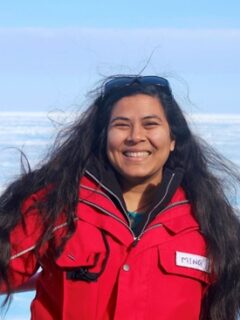
Dr. Tasnuva Ming Khan is a Postdoctoral Researcher at the Institute of Paleontology , GeoZentrum Nordbayern , Friedrich-Alexander-Universität Erlangen-Nürnberg (FAU) , where she focuses on paleoecology and marine biodiversity using interdisciplinary methods. She completed her PhD in Zoology at the University of Cambridge and British Antarctic Survey (expected 2025) and holds an MSc in Geosciences (2021) from FAU. Education: PhD Zoology (expected 2025) – University of Cambridge & British Antarctic Survey MSc Geosciences (2021) – Friedrich-Alexander-Universität Erlangen-Nürnberg BSc Earth Systems Science (2018) – Cornell University Research Interests include scale-dependent drivers of marine community structure, asymmetric range shifts in planktonic foraminifera under the AGELESS project , and the influence of colonial history/global economics on fossil record biases. Her work integrates Bayesian network inference , metacommunity theory , and spatial point process analyses to study modern and fossil marine ecosystems. Key Publications cover topics like deep-sea benthic community dynamics in Antarctica, thermographic studies of humpback whales, and geothermal energy projects at Cornell. Her recent studies (2024–2025) focus on automated detection of Antarctic benthic organisms and environmental heterogeneity impacts on polar ecosystems. Collaborations span institutions including University of Oxford , University of Colorado Boulder , and University of Washington , with affiliations in projects like Deep-time Ecology Group and AGELESS (Leveraging long-term planktonic diversity data for biodiversity protection in areas beyond national jurisdiction).
Herwig Schulz-Gade is a Researcher in the Department of Pedagogy at the University of Augsburg , affiliated with the Faculty of Humanities and Social Sciences . He has held academic roles at institutions including Kiel University and the University of Vechta, with a career spanning over two decades. Research Focus: All-day schooling (Ganztagsschule), historical education research, and general pedagogy. Projects: Co-leader of the Albert-Reble-Archive and key figure in the DFG-funded Klinkhardts Pädagogische Quellentexte (KPQ) project. Publications: 2023 article on optimizing learning times in all-day schools, 2022 work on educational media, and 2020-2019 studies on textbook series and their academic impact. Conference Engagement: Frequent contributor to Ganztagsschulkongress events, leading workshops on digital learning games and pedagogical models.
Dr. Patrick Ludwig is a Group Leader in Regional Climate Modeling at the Institute for Meteorology and Climate Research Tropospheric Research (IMK-TRO) of the Karlsruhe Institute of Technology (KIT) since 2023. Previously, he was a Research Associate at KIT (2017-2023) and the University of Cologne (2013-2017), where he earned his PhD (2014) and Diploma in Meteorology (2008). His work spans climate dynamics, paleoclimatology, and extreme weather analysis. Research Focus : Regional climate modeling (ICON-CLM), high-impact weather systems (winter storms, floods), Last Glacial Maximum climate, and human-climate interactions in the Quaternary period. Projects : SCENIC (extreme weather storylines), CEDIM (drought impacts on Rhine discharge), UDAG (climate adaptation in Germany), and decadal climate prediction initiatives. Teaching : Courses in Climatology (BSc), Synoptic Meteorology (BSc), IPCC Report seminars (MSc), and Climate Modeling with ICON (MSc) since 2017. His publications analyze climate extremes, dust cycles, and prehistoric human-environment relationships using models and proxy data. Collaborative work includes interdisciplinary flood analysis (July 2021) and machine learning applications for subseasonal weather prediction.
Professor Karl R. Gegenfurtner is a distinguished researcher in visual perception at Justus-Liebig-University Giessen, where he has served as Professor for General Psychology since 2001. His work bridges the gap between sensory processing, visual cognition, and motor control, with a particular focus on color vision and eye movement research. His educational background includes a Diploma in Psychology from the University of Regensburg (1986) and a Ph.D. in Experimental Psychology from New York University (1990), followed by postdoctoral work at the Howard Hughes Medical Institute and NYU's Center for Neural Science. Before joining Giessen, he was a research scientist at the MPI for Biological Cybernetics in Tübingen (1993-2000) and Professor for Biological Psychology at Otto-von-Guericke University Magdeburg (2000-2001). Professor Gegenfurtner's research centers on information processing in the visual system, particularly the relationship between low-level sensory processes, higher-level visual cognition, and sensorimotor integration. His work investigates how complex scenes and objects are perceived in natural environments, how they are represented in the brain, and how visual information drives motor systems. His specific interests include color vision, color constancy, eye movement control, visual processing during eye movements, and the neural mechanisms underlying visual perception. His recent publications reveal a strong focus on color processing in both biological and artificial systems, saccadic suppression mechanisms, color categorization, and the interaction between visual perception and eye movements. His work combines psychophysical methods with computational modeling and increasingly incorporates deep learning approaches to understand visual processing. 2024: Russell Devalois Memorial lecture UC Berkeley 2024: ICVS Verriest medal 2024: Pineapple Science Award 2019: Palmer Lecture of the Colour Group (GB) 2019: Turrell Lecture Berlin 2016: Wilhelm Wundt medal of the German Society for Psychology 2014: Rank Prize Funds Lecture at the European Conference of Visual Perception Since 2015: Member, German National Academy of Science (Leopoldina) Professor Gegenfurtner has served on numerous editorial boards including Journal of Vision (Associate editor since 2018), Vision Research, and Perception. He was President of the Vision Science Society (2012/2013) and serves on the fellowship selection committee for the Alexander von Humboldt-Foundation. His research has been supported by prestigious grants including an ERC Advanced Grant (2020-2025) for "Color 3.0: an object-oriented approach to color" and multiple DFG-funded collaborative research centers. He leads research projects investigating predictive mechanisms in peripheral vision, the origins of color categories, and neurOscientific workflow assistance (NOWA). His laboratory continues to push the boundaries of visual neuroscience, with recent work exploring color processing using deep neural networks and investigating visual phenomena in virtual reality environments.