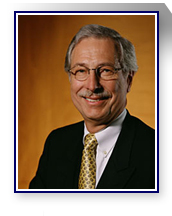
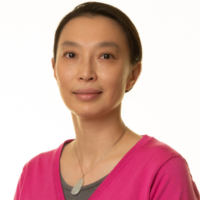
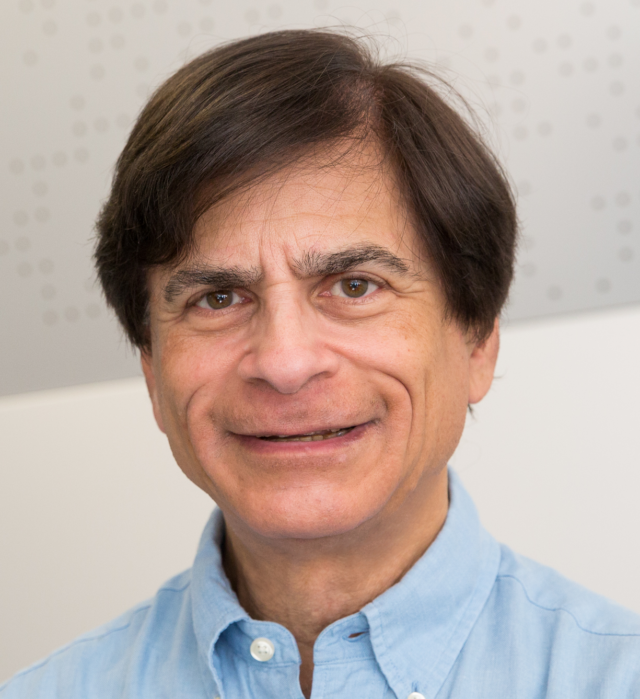
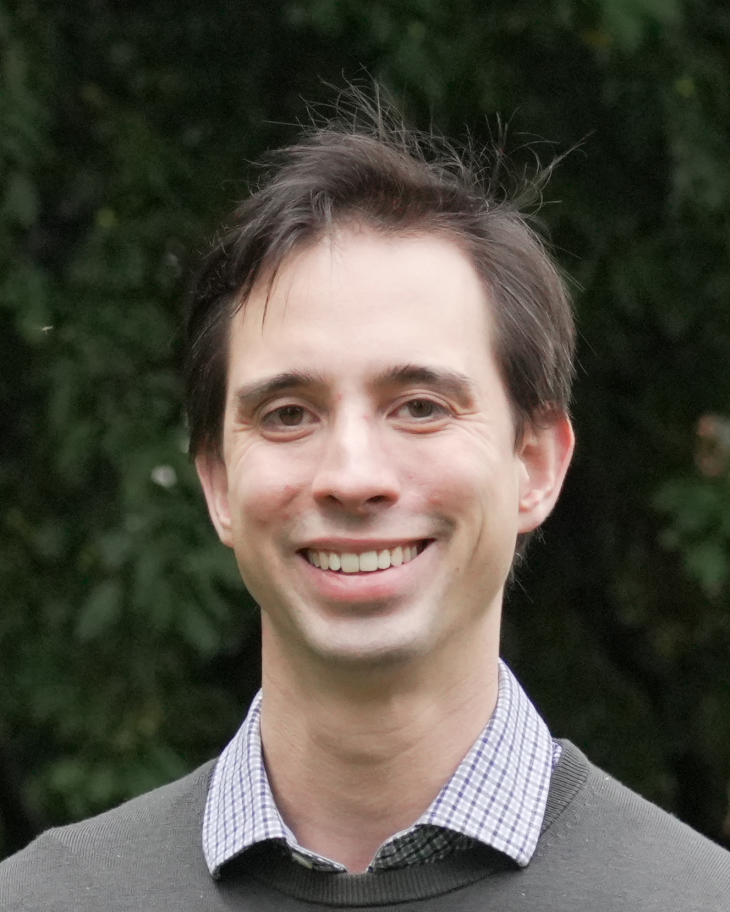
Deborah Richards is a Professor in the School of Computing at Macquarie University, affiliated with the Ethics and Agency Research Centre, Performance and Expertise Research Centre, and Frontier AI Research Centre. She holds roles as Industry and External Relations Director for the School and Director of the Virtual Reality Lab. Her research focuses on Intelligent Virtual Agents, Virtual Reality applications in education and health, knowledge acquisition, and cybersecurity ethics. She has authored over 425 publications and led 19 research projects, including studies on AI in healthcare and ethical AI design. Education: PhD (Artificial Intelligence, Macquarie University), MAppSc (Information Studies), BBus (Computing and MIS), and a Postgraduate Certificate in Higher Education (Leadership and Management). She advises on PhD and MRes students in Intelligent Virtual Agents research. Research interests include virtual agents for health behavior change, AI ethics, and educational technology. Notable projects include the eADVICE web-based management system for urinary incontinence and the development of embodied conversational agents for wellbeing support. Awards include the ABC Science Media Fellowship (2005) and Vice-Chancellor’s Citations for Outstanding Contributions to Student Learning (2017). Grants and collaborations span health informatics, cybersecurity, and AI ethics. She co-leads initiatives like the Respectful Maternity Care study and the Virtual Reality Lab’s immersive learning environments. Future work emphasizes ethical AI integration in education and healthcare.
Lauren A. Delisio is an Associate Professor of Special Education at Rider University's Department of Teacher Education. She has taught graduate and undergraduate courses in special education, inclusive practices, and assistive technology since 2015. Ph.D. in Exceptional Student Education (2015, University of Central Florida) Graduate Certificate in Autism Spectrum Disorders (2012, University of Central Florida) M.S. in Teaching (2005, Pace University) B.A. in Communications (2000, Rider University) Her research focuses on universal design for learning (UDL) , assistive technology , and inclusive education practices for students with autism spectrum disorders (ASD), attention deficit hyperactivity disorder (ADHD), and intellectual disabilities. She has explored trauma-informed instruction, STEM accessibility, and evidence-based practices in inclusive classrooms. Her recent publications analyze UDL implementation, video prompting for independence, and pandemic impacts on inclusive education. She has received grants through the Department of Education's Office of Special Education Programs (OSEP) for Project LEAD and served as a doctoral intern with OSEP. Delisio has contributed to STEM research via video game integration for students with disabilities and supported alumni engagement through data collection. She collaborates with service providers, universities, and policymakers to improve educational outcomes for neurodiverse learners.
Ron Fedkiw is the Canon Professor of Computer Science at Stanford University's School of Engineering. He holds a PhD in Applied Mathematics from UCLA. His research focuses on computational algorithms for applications in computational fluid dynamics, computer graphics, biomechanics, and machine learning. Fedkiw has pioneered techniques for simulating natural phenomena in film and video games, earning two Academy Awards for his contributions to visual effects. He leads the PhysBAM lab and collaborates with industry through consulting roles at Epic Games and former work with Industrial Light & Magic. Education: PhD in Applied Mathematics, UCLA (1996). Notable awards include the National Academy of Science Award, Packard Fellowship, and multiple teaching honors. His lab has graduated 40 PhD students, many of whom have made significant impacts in academia and industry. Research interests span fluid dynamics, cloth simulation, facial animation, and integrating machine learning with physical models. Key contributions include algorithms for two-way fluid-solid coupling, muscle-based facial modeling, and neural network approaches for cloth and deformable bodies. Current projects explore physics-informed machine learning and real-time interactive simulations. Scientific Awards include two Oscars, PECASE, and Okawa Foundation grants. His work bridges computational physics and visual effects, with over 140 research papers and a textbook on level set methods. Advising and grants: Supervised 40 PhD students, securing funding through NSF, ONR, and industrial partnerships. Lab collaborations include SAIL (Stanford AI Lab) and Epic Games. Future work focuses on AI-driven physical simulations and biomedical applications.
Michael J. Black is a Professor and Honorarprofessor at the University of Tübingen's Faculty of Science, Department of Computer Science, and a founding Director of the Max Planck Institute for Intelligent Systems, leading the Perceiving Systems department. He holds a B.Sc. from the University of British Columbia (1985), M.S. from Stanford (1989), and Ph.D. in Computer Science from Yale (1992). His research focuses on computer vision, 3D human modeling, motion capture, and AI-driven digital humans. Key contributions include the SMPL body model, optical flow algorithms, and datasets like Middlebury Flow and Sintel. He has received major awards such as the PAMI Distinguished Researcher Award, multiple Koenderink and Longuet-Higgins Prizes, and is a member of the German National Academy of Sciences Leopoldina and Royal Swedish Academy of Sciences. His commercial ventures include co-founding Body Labs (acquired by Amazon) and Meshcapade, advancing 3D human generation and interaction technologies. Recent work includes markerless motion capture systems (e.g., MAMMA, PICO), 3D hair and garment synthesis, and AI tools like ChatHuman for 3D human interaction analysis. His research bridges vision, graphics, and robotics, with applications in animation, healthcare, and robotics.
Dr. James D. Foley is a Professor in the College of Computing and the School of Electrical and Computer Engineering at Georgia Institute of Technology. He holds the Stephen Fleming Chair in Telecommunications. He earned his Ph.D. in Computer Information and Control Engineering from the University of Michigan and a BSEE from Lehigh University, where he was inducted into Phi Beta Kappa, Tau Beta Pi, and Eta Kappa Nu. Founded the Graphics, Visualization & Usability (GVU) Center at Georgia Tech, ranked #1 in graphics and user interaction. Directed Mitsubishi Electric Research Lab and later served as CEO of Mitsubishi Electric ITA. Executive Director of Yamacraw, Georgia's broadband development initiative. His research focuses on computer graphics, human-computer interaction (HCI), visualization, and user interface design. He co-authored foundational textbooks like Interactive Computer Graphics , translated into multiple languages. Professional leadership includes Chair of the Computing Research Association (CRA), Fellowships with ACM and IEEE, and the ACM/SIGGRAPH Stephen Coons Award. He advised over 30 graduate students and led numerous conferences, panels, and editorial roles in top journals. Contributions span academia and industry, including roles in NSF workshops, JTEC studies on HCI in Japan, and advisory boards for institutions like MIT and Lehigh University.
Rong Zheng is a Professor in the Department of Computing and Software and a member of the School of Biomedical Engineering at McMaster University, Canada. She holds a Tier-1 Canada Research Chair in Mobile Computing and serves as Acting Chair of the Computing and Software department from July to December 2025. She is also an Associate Member of the Electrical & Computer Engineering department. Education: Ph.D. in Computer Science, University of Illinois, Urbana-Champaign, USA Master of Engineering (thesis) in Electrical Engineering, Tsinghua University, Beijing, China Bachelor of Engineering in Electrical Engineering, Tsinghua University, Beijing, China Dr. Zheng's research lies at the intersection of mobile computing, wireless networking, and machine learning, with a strong focus on applications for aging populations. She directs the NSERC Smart Mobility for the Aging Population CREATE program. Her work encompasses sensor development, wireless network design, and mobile data analytics to address real-world challenges in healthcare, mobility, and data center monitoring. She has developed innovative solutions like the MacQuest campus navigation app and has captured first prize in indoor localization competitions. Her recent publications demonstrate a clear trajectory toward applying wireless sensing technologies (particularly acoustic, Wi-Fi, and mmWave) to health monitoring and mobility assessment for older adults. There's a strong emphasis on developing efficient edge computing solutions that can process data in real-time on resource-constrained devices, as exemplified by her TeamNet framework for collaborative inference on the edge. Her work bridges theoretical advances with practical applications that have social impact. Scientific Awards: Tier-1 Canada Research Chair in Mobile Computing US National Science Foundation CAREER Award (2006) Joseph Ip Distinguished Engineering Fellow (2015-2018) Dr. Zheng leads the Wireless System Research Group (WiSeR) at McMaster University, which has secured significant funding including a $1.65M NSERC CREATE grant for smart mobility research for older adults. Her research has been supported by multiple funding agencies including NSERC, NSF, UH GEAR, and DURIP. She actively mentors graduate students and has developed specialized courses including CAS 772 (Mobile Data Analytics) and CAS 781 (Mobility in the Aging Population). The WiSeR group conducts impactful research on communication, networking, and data analytics issues in Cyber Physical Systems, with applications spanning healthcare, smart infrastructure, and data center monitoring. Their work on data center infrastructure monitoring networks has been featured in EurekAlert and Data Center Dynamics, and they've made significant contributions to indoor localization technology.
Prof. Marc Stamminger is a Professor of Visual Computing at FAU since 2002, leading the Chair of Computer Science 9 (Computer Graphics). His work focuses on algorithms for synthesizing and analyzing images through 3D modeling, LiDAR/Radar capture, and light simulation. He co-leads FAU Solar, applying 3D modeling for environmental lighting analysis under varying conditions. Stamminger has published over 250 papers, winning prestigious awards like the Siggraph Test-of-Time Award. He holds executive roles in Eurographics and is Vice Dean of FAU's Technical Faculty. Research interests span neural rendering , 3D reconstruction , radar imaging , and medical visualization . Recent work emphasizes radiance field rendering (e.g., VR-Splatting, INPC) and radar-based human motion tracking. His lab's FAU Solar project integrates large-scale 3D models with environmental lighting simulations. Publications trends highlight neural rendering optimizations , radar-MIMO systems , and agricultural digital twins . Key collaborations involve medical imaging (e.g., vocal fold reconstruction) and autonomous driving data generation. Awards: Siggraph Test-of-Time (2023?), 2× Siggraph Best-Of-Show Grants/Teams: FAU Solar Lab, Eurographics leadership, FAU Vice Dean Labs: Chair of Computer Science 9, FAU Solar Initiative
Mark Lee is an Adjunct Professor in the People Analytics department at NYU’s Tandon School of Engineering, specializing in Technology Management and Innovation. He holds a Ph.D. in Engineering Psychology from Georgia Institute of Technology (1996). Currently, he serves as Head of Research, Analytics, and Business Development at UL ComplianceWire, focusing on pharmaceutical and medical device manufacturing training. His research leverages large datasets to improve healthcare safety through regulatory compliance and best practices. Courses taught include Human Factors Engineering, Workplace Design, and Predictive Analytics. Education: Ph.D. in Engineering Psychology, Georgia Tech (1996) Key Roles: Adjunct Professor, Head of Research at UL ComplianceWire Research Focus: Human Factors, Training Systems Design, Healthcare Compliance His work spans auditory display systems for aviation (e.g., 3D audio cockpit interfaces) and ergonomic design for industrial products. Recent projects emphasize data-driven solutions for regulatory challenges in life sciences. Publications highlight studies on visual search strategies, age-related cognitive performance, and application of signal detection theory in decision-making. He actively collaborates with industry and government entities, exemplified by the FDA-UL Cooperative Research Agreement.
Steven K. Feiner is a Professor of Computer Science at Columbia Engineering, where he directs the Computer Graphics and User Interfaces Lab. His career spans over 25 years of pioneering research in human-computer interaction, augmented reality (AR), and virtual reality (VR). Educational Background: PhD from Brown University (1987) Feiner's research focuses on advancing AR/VR systems, mobile and wearable computing, and information visualization. His lab has developed groundbreaking applications in tourism, journalism, medicine, and everyday computing, including the first mobile AR system using a see-through head-worn display and GPS in 1996. He has received numerous honors, including: ACM SIGCHI 2018 Lifetime Research Award IEEE ISMAR 2017 Career Impact Award IEEE VGTC 2014 Virtual Reality Career Award Shared IEEE ISMAR Impact Paper Awards (2022, 2019) ACM UIST 2010 Lasting Impact Award Feiner's work continues to shape modern AR/VR technologies and their practical implementations across diverse domains. He leads the Computer Graphics and User Interfaces Lab, which emphasizes experimental systems research and interdisciplinary collaboration.
Soumya Dutta is an Assistant Professor in the Department of Computer Science and Engineering at the Indian Institute of Technology Kanpur (IITK), where he leads the INSIGHT: Intelligent Scientific and Visual Computing of Big Data Research Group. He joined IIT Kanpur in October 2022 after working as a Scientist II at Los Alamos National Laboratory (LANL) from July 2019 to August 2022, and previously as a Postdoctoral Research Associate at LANL from June 2018 to July 2019. His educational background includes a Ph.D. and M.S. in Computer Science and Engineering from The Ohio State University (2011-2018), where he was part of the GRAVITY research group, and a B.Tech. in Electronics and Communication Engineering from West Bengal University of Technology, India (2005-2009). Research Interests: Dr. Dutta's research focuses on the intersection of machine learning, visual computing, big data, and high-performance computing. His primary research areas include Machine Learning for Visual Computing and Image Analysis, Big Data Visualization and Analytics, Data Science and HPC, Machine Learning for Scientific Computing, and Explainability and Interpretability of AI Models. His work addresses various big data characteristics including the 5 Vs: Volume, Velocity, Variety, Veracity, and Value. He develops techniques that make complex machine learning models more interpretable and explainable, enabling their effective adoption in real-life applications across scientific domains, social media, IoT, healthcare, and industry applications. Dr. Dutta's research group has secured multiple funded projects including: DAVi: An Intelligent Data Analytics and Visualization Framework (funded by ISRO), Intelligent Visual Computing of Extreme-scale Data for Accelerating Scientific Discovery (IIT Kanpur Initiation Grant), Enabling Interactive Big Data Analytics and Visualization at Exascale (SERB), Development of AI-Enabled National Portal for Efficient Search of Missing People (C3iHub), and Proactive and Generalized Deepfake Defense Mechanisms (C3iHub). Best Reviewer, Honorary Mention Award for IEEE Transactions on Visualization & Computer Graphics (TVCG), 2021 Best Paper Award at ISAV 2021, co-located with Supercomputing (SC) LAAP Award at Los Alamos National Laboratory, 2021 Best Paper Award at TopoInVis 2019 Best Paper Award at ISAV 2018, co-located with Supercomputing (SC) Best Poster Award in 12th Annual CSE Student Poster Exhibition, The Ohio State University, 2018 Best Poster Award in 11th Annual CSE Student Poster Exhibition, The Ohio State University, 2017 Best Paper Honorable Mention Award at IEEE Visualization Conference (IEEE VIS) 2016 Dr. Dutta actively mentors a large group of students including Ph.D., M.Tech., and B.Tech. students. His current Ph.D. students include Shanu Saklani, Sankhadeep Bhowmick, Ananya Chaturvedi, Arpita Santra, Anubhav Dixit (co-supervised), and Robin Shah. He has supervised numerous M.Tech. students with thesis topics ranging from uncertainty-aware neural networks to deepfake detection. Dr. Dutta currently teaches courses including CS360 - Introduction to Computer Graphics and CS661 - Big Data Visual Analytics. The INSIGHT research group collaborates internationally with researchers from Meta, Oak Ridge National Laboratory, and National Taiwan Normal University. The group's work focuses on building machine learning and data science-based solutions to analyze large-scale multifaceted data in a scalable way, enabling interactive and interpretable analytics of complex data from scientific simulations, social media, IoT, healthcare, and other application domains.
Olga Fink is a Tenure Track Assistant Professor at the École Polytechnique Fédérale de Lausanne (EPFL), affiliated with the Department of Intelligent Maintenance and Operations Systems (IMOS) within the School of Architecture, Civil and Environmental Engineering (ENAC). She also holds roles in PhD program committees for Civil and Environmental Engineering (EDCE) and Robotics, Control, and Intelligent Systems (EDRS). Her research focuses on machine learning for infrastructure monitoring, predictive maintenance, and physics-informed AI models. She teaches courses on machine learning, data science for infrastructure, and advanced deep learning topics. Fink advises multiple PhD students and is involved in interdisciplinary projects such as ThermoNeRF (multimodal 3D thermal modeling) and physics-informed neural networks for fault diagnostics. Her work bridges AI and engineering with applications in smart infrastructure, energy systems, and industrial IoT. Education: PhD in Engineering (inferred from role) Affiliations: IMOS Lab, ENAC-SGC, EPFL PhD Committees (EDCE, EDRS) Key Research Themes: Explainable AI, Digital Twins, Structural Health Monitoring, Domain Adaptation Her publications (2023–2025) emphasize robust AI for industrial systems, including fault detection in high-voltage equipment, multimodal data fusion, and physics-consistent models. She collaborates on EU and industry-funded projects, focusing on real-world applications like predictive maintenance and energy efficiency.
Wenhu Chen is an Assistant Professor at the University of Waterloo's Computer Science Department and a CIFAR AI Chair at the Vector Institute. He also holds a part-time role as a Senior Research Scientist at Google DeepMind (20% allocation). His research focuses on natural language processing, deep learning, and multimodal reasoning, with contributions to models like MAmmoTH, OpenCoderInterpreter, and VISTA. He received awards including the Canada CIFAR AI Chair (2022) and the UCSB CS Outstanding Dissertation Award (2021). Education: PhD in Computer Science from the University of California, Santa Barbara (under William Wang and Xifeng Yan). Research interests include complex reasoning, controllable GenAI, and multimodal benchmarks like MEGABench and MMMU. Grants include CIFAR AI Chair Funding (2022-2027), NSERC Discovery Fund (2023-2028), and multiple NRC Canada grants. He directs the TIGER Lab, advancing generative models in text, images, videos, and music. Recent talks include presentations on multimodal reasoning at Apple and NeurIPS workshops.
Dylan Campbell is a Lecturer in Computing at the Australian National University (ANU), affiliated with the ANU College of Systems & Society. His research focuses on computer vision, optimization, and robotics, particularly in 3D vision and deep learning applications. He has held prior roles as a Research Fellow at the University of Oxford’s Visual Geometry Group and ANU’s Australian Centre for Robotic Vision. Campbell holds a PhD from ANU (2018) and a BE in Mechatronic Engineering from UNSW (2012). Research interests include geometric sensor alignment, neural radiance fields, and differentiable optimization layers. He actively supervises students (7 PhD/DPhil, 3 MEng, 9 honours) and teaches advanced courses in computer vision and robotics. Notable awards include the Marr Prize Honourable Mention (2017) and the IEEE Australia Council Postgraduate Student Paper Competition (2018). He has organized workshops at ECCV and CVPR, served as a reviewer for top conferences like CVPR/ICCV/ECCV, and contributed to datasets like SEED4D and RefRef. His work emphasizes efficient training of neural networks and leveraging symmetries in data for long-range connections.
Vibhav Gogate is a Professor and Associate Head of Research at University of Texas at Dallas, specializing in machine learning and artificial intelligence. His research focuses on probabilistic graphical models, statistical relational learning, and integrating deep learning with graphical models. Professor Gogate has received numerous awards including the NSF CAREER Award (2017), Outstanding Researcher Award (2022, 2017), and Best Paper awards at top AI conferences. His research funding includes projects from NSF and DARPA. Education: PhD, University of California, Irvine MS, University of Maine BS, University of Mumbai Recent Publications: His research spans probabilistic inference, tractable models, and neural network approaches for efficient reasoning, with publications in NeurIPS, AAAI, UAI, and AISTATS. Recent work focuses on scalable inference methods and explainable AI systems for complex domains. Research Funding: Secured over $8M in grants from DARPA and NSF for projects in explainable AI and probabilistic reasoning. Teaching: Regularly teaches graduate and undergraduate courses in Machine Learning, Artificial Intelligence, and Advanced Statistical Methods.
Ira Kemelmacher-Shlizerman is a Full Professor of Computer Science at the Paul G. Allen School of Computer Science & Engineering at the University of Washington and Director of the UW Reality Lab. She also serves as a Principal Scientist at Google, where she leads the Shopping Gen AI visuals teams focusing on Virtual Try-On, 3D, and product videos. Her research spans computer vision, computer graphics, and Generative AI, with particular contributions to virtual try-on technology, 3D modeling, and augmented reality applications. Professor Kemelmacher-Shlizerman's research interests focus on Generative AI applications in visual computing. Her work bridges the gap between theoretical computer vision and practical applications, particularly in e-commerce and virtual reality. She has made significant contributions to virtual try-on technology, 3D editing with generative models, and AI applications for shopping experiences. Her research combines deep learning with traditional computer vision techniques to solve challenging problems in image and video synthesis. Her recent publications demonstrate a strong trend toward Generative AI applications for visual shopping experiences, virtual try-on technology, and 3D content creation. The work spans multiple top conferences including CVPR, SIGGRAPH, and ICCV, with a focus on practical applications of computer vision and graphics. Her research has evolved from foundational work in face reconstruction and aging to current applications in virtual shopping and 3D content generation. Google faculty award Madrona prize GeekWire Innovation of the Year Award Covers of CACM and SIGGRAPH Best student paper honorable mention at CVPR'21 Best demo runner up MobiSys'22 Senior member of IEEE Distinguished Member of ACM Professor Kemelmacher-Shlizerman has successfully tech-transferred multiple research projects to industry. She founded Dreambit, a startup acquired by Meta, and previously built and launched the Face Movies feature at Google. She currently leads Google's Shopping Gen AI visuals teams, focusing on 10x improvements to shopping journeys. Her UW Reality Lab serves as a hub for AR/VR research with industry partnerships. She has mentored numerous PhD students who have become researchers in both academia and industry, with several publications featuring student co-authors receiving recognition at top conferences. Professor Kemelmacher-Shlizerman leads the Graphics and Imaging Laboratory (GRAIL) and the UW Reality Lab, which focuses on augmented and virtual reality research with industry partnerships including Google. The labs work on cutting-edge projects in virtual try-on, 3D modeling, and immersive experiences, bridging academic research with real-world applications.