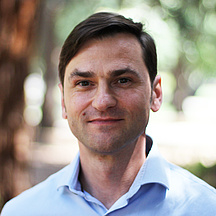
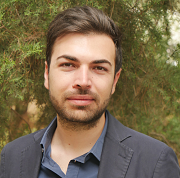
George Drettakis is a Senior Researcher at INRIA Sophia-Antipolis and leads the GRAPHDECO research group. He has held professorial roles at institutions including MIT, University of Reims, University of Toronto, and École Normale Supérieure. His research focuses on rendering for computer graphics and sound, with emphasis on image-based rendering, perceptual rendering, and audio-visual cross-modal effects. He has also explored interactive illumination, shadows, relighting, and generative models. Current Students: G. Kopanas (Neural Rendering), N. Violante (Generative Models), A. Petitjean (co-supervised), Y. Poirier-Ginter (co-supervised), P. Panantonakis (starting fall 2023). Postdoctoral Researchers: A. Gauthier at INRIA. His recent work includes 3D Gaussian Splatting , Diffusion-based Relighting , and Neural Radiance Fields . He has received the Eurographics Outstanding Technical Contributions Award (2007) and was named an Eurographics Fellow . He manages projects like ERC Advanced Grant FUNGRAPH and has participated in H2020 EMOTIVE , ANR SEMAPOLIS , and CROSSMOD . His group collaborates internationally and has hosted researchers from institutions such as UC Berkeley, Imperial College London, and TU Wien.
Dr. Denis Kalkofen serves as an Associate Professor at the Institute of Computer Graphics and Vision (ICG) at Graz University of Technology, Austria. His academic journey began with a Dipl.-Ing. (2004) from the University of Magdeburg, followed by a Dr. techn. (2009) from Graz University of Technology. University of Magdeburg - Dipl.-Ing. (2004) Graz University of Technology - Dr. techn. (2009) University of Michigan, Ann Arbor - Virtual Reality Laboratory member Stanford University - Visiting Assistant Professor at Computational Imaging Laboratory (2019) University of South Australia - Visiting Researcher at Wearable Computer Laboratory (2019) Dr. Kalkofen's research centers on developing visualization, interaction, authoring, and display technologies for Virtual and Mixed Reality environments, with particular emphasis on combining computer graphics and computer vision techniques to create comprehensible and accessible VR/MR experiences. His work spans situated visualization (addressing label placement and X-ray visualization), photometric rendering (recovering lighting properties for realistic AR), and content creation automation (leveraging existing data sources for AR content). His publication trends over the past 15+ years demonstrate consistent leadership in AR/MR research, evolving from foundational work on visualization techniques to current cutting-edge research in neural rendering, neuroadaptive systems, and industrial AR applications. Recent work shows increased focus on practical industrial implementations, error management in AR assembly, and multimodal learning applications. Best paper award for 'enRoute: Dynamic path extraction from biological pathway maps' (2012) Best short paper for 'TutAR: Augmented Reality Tutorials for Hands-only Procedures' (2018) Best paper for 'Tools for Teaching Mining Students in Virtual Reality' (2020) Honorable Mention for Best Paper for 'Adaptive User-Perspective Rendering' (2017) Dr. Kalkofen leads Team Kalkofen at ICG, supervising researchers including Peter Mohr, Shohei Mori, David Mandl, and Ana Stanescu. His team has secured significant funding for projects related to AR/VR content creation, visualization techniques, and industrial applications. They maintain strong collaborations with institutions including Stanford University, University of South Australia, and University of Michigan. Team Kalkofen operates within the Institute of Computer Graphics and Vision at TU Graz, focusing on three main research thrusts: situated visualization for AR, photometric rendering for realistic MR, and automated content creation for professional AR applications. The team maintains active partnerships with industry and academic institutions worldwide, contributing to the advancement of practical AR/MR technologies.
Chris Barker is a Senior Lecturer at RMIT University's School of Design, specializing in animation, computer graphics, and interactive media. As part of the Centre for Animation and Interactive Media (AIM), he focuses on augmented architecture, virtual heritage, and creative entrepreneurship. His work bridges art, technology, and industry, with notable roles as Creative Director and Production Designer for urbanskinning, creating immersive environments for stage and events. Industry Experience: Member of Melbourne ACM SIGGRAPH Professional Chapter Member of CG Society Research Interests: Barker explores animation studies, human-computer interaction, heritage preservation, and new media art. His projects include installations like Urban Skinning (2007) and collaborations with institutions like ACMI and QUT. Exhibitions & Awards: Final Notice (1999): Winner of the Planet X Award for Best Use of Digital Media Featured in international exhibitions, including ACMI’s Eyes, Lies and Illusions (2006–2007) Teaching & Projects: Barker supervises projects like New Tricks: Illusionary Experiences with 3D Animation (2025) and Crafting Vietnamese Digital Heritage (2024). His work emphasizes interdisciplinary innovation and community engagement through digital media.
Sarah Goodwin is an academic affiliated with City, University of London, focusing on visualization techniques, geodemographics, and energy consumption analysis. Her work bridges computer science and geographic information systems (GIS), emphasizing user-centered design and collaborative methodologies. She holds a PhD in Visualisation for Household Energy Analysis from City University London (2015). Her research explores multivariate data visualization, particularly in energy-based geodemographic classifications and the impact of scale and geography on data interpretation. Notable contributions include frameworks for creative visualization workshops and topology-preserving map deformations for dissimilarity data. She has received the VAST 2012 Mini Challenge Award for Efficient Use of Visualization. Publications span journals like IEEE Transactions on Visualization and Computer Graphics, and she has presented at conferences such as IEEE VAST and GIS Research UK. Her work addresses energy consumption patterns, network health monitoring, and spatial data analysis. Current research emphasizes innovative visual methods for complex data exploration across scales and geographic contexts.
Ms. Stephanie Andrews is a Lecturer and Program Manager for the Masters of Animation, Games, and Interactivity (MAGI) at RMIT University's School of Design. She holds a PhD in Virtual Reality (VR) and has a career spanning art, technology, and academia. Previously, she was a Technical Director at Pixar, led curriculum innovation at the University of Washington's DXARTS program, and served as Creative Director at Liminal, a VR and neuroscience company. Her research focuses on stereoscopic spatial hacking in VR, 3D graphics, and user experience design. She has received over $300,000 in grants for stereoscopic research and exhibited internationally in Australia, Iceland, the UK, and the USA. Education: PhD in VR creation, Technical Director experience at Pixar, and leadership roles in academic programs. Her work blends art and tech through interactive installations, digital media, and educational initiatives. Research interests include immersive VR experiences, spatial perception, and experimental art forms. She co-founded companies for the metaverse and 3D printing sectors, showcasing her entrepreneurial spirit. Recent projects include Existential Crisis (2024), an interactive VR artwork exploring embodiment, and Citizen Tree , presented at ISEA2024. Awards/Grants: Secured $300k+ USD in stereoscopic research grants and established a groundbreaking audio-video suite at the University of Washington. Service: Jury member for ISEA2024's art exhibition selection. Labs/Teams: Center for Digital Art and Experimental Media (DXARTS), Liminal VR.
Dr. Gamal ELGHAZALY is a Research scientist at the University of Luxembourg's Interdisciplinary Centre for Security, Reliability and Trust (SnT), affiliated with the Ubiquitous and Intelligent Systems department. His work focuses on autonomous driving technologies, V2X communication systems, robotics, and control systems. Key research areas include 5G-enabled teleoperated driving, high-definition map construction, and 3D perception for autonomous vehicles. He has developed platforms like RoboCar and contributed to frameworks like FastCycle for modular automated systems. Research interests span robotics kinematics (planar parallel manipulators), adaptive control methodologies (sliding mode control, fuzzy logic), and hybrid systems (cable-driven robots). His publications emphasize real-time motion planning, sensor fusion, and safety-critical systems. Recent works (2023-2025) highlight advancements in 4D perception, cloud-assisted 3D reconstruction, and V2X-enabled collaborative systems. Publications from 2017-2018 reflect early contributions on parallel manipulator modeling and control, while recent efforts focus on integrating cutting-edge technologies like 5G and edge computing into autonomous systems. His work bridges theoretical robotics with practical implementations, addressing challenges in both dynamic environments and industrial applications.
Jing Zhao is a Professor at Beijing Institute of Technology's School of Automation, Department of Computer Science, with an extensive publication record spanning artificial intelligence, computer vision, medical imaging, and robotics. Their interdisciplinary research bridges theoretical computer science with practical applications in healthcare, agriculture, and engineering. Research interests focus on cutting-edge AI methodologies including deep learning architectures, neural rendering techniques, and multimodal systems. Notable work includes advancements in 3D reconstruction (Gaussian Splatting), medical image analysis for cancer diagnosis, and novel approaches to EEG-based emotion recognition. The research demonstrates strong interdisciplinary connections between computer science and domain-specific applications. Recent publications reveal a consistent trend toward practical AI implementations across diverse fields. Jing Zhao's work shows expertise in adapting theoretical machine learning concepts to solve real-world problems in medical diagnostics, agricultural monitoring, and robotics. The research portfolio demonstrates particular strength in developing novel neural network architectures for specialized applications. As a corresponding author on numerous high-impact publications, Jing Zhao appears to lead a productive research group with collaborations spanning multiple institutions and disciplines. The publication record indicates significant contributions to both theoretical computer science and applied AI solutions across various domains.
Francesco Ragusa is a Research Fellow at the University of Catania, Italy, holding an Industrial Doctorate in Computer Science (2021). He spent part of his PhD at the University of Hertfordshire, UK. His work focuses on First Person (Egocentric) Vision, including Human-Object Interaction, Industrial Applications, and Augmented Reality. He co-founded NEXT VISION s.r.l., an academic spin-off from the University of Catania since 2021. Key projects include the MECCANO dataset for industrial human-object interactions and the EGO-EXO4D initiative analyzing skilled human activity from multi-perspective views. Research interests span Computer Vision, Pattern Recognition, and Machine Learning. He contributed to seminal datasets like MECCANO and ENIGMA-51, advancing understanding of human behavior in industrial settings. His work emphasizes practical applications, such as wearable assistive systems and visual navigation solutions. Ragusa has delivered tutorials at major conferences (e.g., ICIAP, VISIGRAPP) on First Person Vision’s history, challenges, and trends. He actively promotes industrial collaborations and has secured grants including PNRR MUR (Code E63C22001940006) and EU funding under Next Generation EU. His teaching and professional activities include organizing workshops on egocentric vision for AI-driven assistants and industrial safety systems. Current research directions involve multimodal synthetic data utilization, gaze-based interaction analysis, and cross-modal fusion for human-robot collaboration.
Joe Geigel is a Professor in the Department of Computer Science at Rochester Institute of Technology's Golisano College of Computing and Information Sciences. He holds a DSc in Computer Science from George Washington University, an MS in Computer Science from Stevens Institute of Technology, and a BS in Mathematics from Manhattan College. His career includes industry positions at Eastman Kodak, Bell Laboratories, and RCA Solid State before transitioning to academia. Geigel's research explores the intersection of computer graphics and performing arts, with expertise in: Virtual and augmented reality systems Facial expression analysis and motion capture Interactive theatre and dance technologies Human-computer interaction for creative applications Interdisciplinary education methods His publications demonstrate consistent innovation in virtual performance technologies, with recent work focusing on mixed reality theatre, museum interpretation systems, and educational applications of immersive technologies. He has directed over 15 technology-enhanced productions including Singring and the Glass Guitar and Farewell to Dawn . As co-director of the CS Graphics and Applied Perception Lab, Geigel leads the XRLive team developing extended reality solutions for live performances. He teaches graduate courses in computer graphics, animation algorithms, and virtual reality applications.
Benjamin Bach is a Lecturer in the School of Computer Science at the University of St Andrews, specializing in data visualization and visual analytics. His research focuses on creating interactive systems that enhance how people understand and engage with complex data through visualization. Dr. Bach's research interests span data visualization, information visualization, interactive systems, human-computer interaction, visual analytics, responsive design, and collaborative visualization. His work bridges theoretical foundations with practical applications, developing novel techniques for data exploration and communication that have implications across various domains including scientific research, education, and decision-making processes. His recent publications demonstrate a strong focus on responsive visualization design, collaborative storytelling through data, and the integration of narrative techniques with visualization. Notably, his work on 'Visualization Atlases' and 'Discursive Patinas' explores how to create more engaging and meaningful visualization experiences that support both individual exploration and group discussion. Dr. Bach's research has appeared in top-tier visualization venues including IEEE Transactions on Visualization and Computer Graphics (TVCG), demonstrating both the quality and impact of his contributions to the field. His work often involves interdisciplinary collaborations, as evidenced by his participation in projects spanning from immunology to cultural heritage. Within the visualization research community, Dr. Bach is recognized for his methodological rigor and innovative approaches to visualization design challenges, particularly in the areas of responsive design for diverse devices and facilitating collaborative engagement with visualized data.
Brett Stevens is a Principal Lecturer and Research and Innovation Lead at the School of Film, Media and Creative Technologies, Faculty of Creative & Cultural Industries, University of Portsmouth. He also serves as Director of Postgraduate Taught Programmes and coordinates postgraduate research (PhD/MPhil) in Digital and Creative Technologies. He is actively involved in research, innovation, and leadership in XR and digital heritage. Research Interests: His work centers on Virtual Reality, Augmented Reality, Computer Games, User Interface and Experience Design, and immersive technologies for heritage institutions. He explores how physical and digital interactions enhance engagement in museums and libraries. Recent Research Trends: His latest publications focus on locomotion classification in VR, saliency detection using GANs, digital preservation of archaeological data, and the role of avatar fidelity in human-computer interaction. These reflect a strong interdisciplinary approach combining computer science, design, and cultural applications. Scientific Awards: IEEE Outstanding Leadership Award (2023) Advising and Grants: He has successfully supervised 20 PhD students in areas including VR, AR, Game Design, and Computer Vision. He leads multiple research projects such as Supporting Elephant and Rhino Conservation and Ecology , CT Research Sprint Projects , and Photorealistic Asset Creation , often in collaboration with institutions like the University of Nottingham and University of York. He is actively involved in funding-driven innovation in XR and heritage. Labs and Teams: He is affiliated with the Centre of Excellence for Heritage Innovation and the Centre for Creative and Immersive XR at the University of Portsmouth, contributing to strategic innovation in immersive content creation and digital preservation.
Bin Chen is a Lecturer at the School of Computing and Information Systems, University of Melbourne, where he conducts research at the intersection of computer graphics, computational imaging, and human perception. He was previously a postdoctoral researcher at the Max-Planck-Institut für Informatik and a visiting scholar at the University of Cambridge. Research Interests: His work spans Computational Display , focusing on glass-free 3D and VR/AR systems; Perception , studying how humans perceive virtual materials and gloss; and Computational Imaging , developing AI-driven methods for HDR, deblurring, and depth synthesis. He uses both optical hardware and software rendering to enhance visual fidelity. Recent Research Trends: His recent publications emphasize deep learning for image restoration (e.g., deblurring, tone mapping), neural representations for image stacks, and perceptual validation of material rendering. The integration of light field displays and self-supervised learning is a key theme across his recent work. Scientific Awards: CVPR Best Paper Award Finalist (Top 0.4%) – 2022 Service and Mentoring: Bin Chen has served on the Technical Paper Committees for SIGGRAPH, SIGGRAPH Asia, CVPR, and AAAI. He actively mentors PhD students and invites self-motivated candidates to join his research group. He has advised students such as Tao Huang, Lingyan Ruan, Chao Wang, and Jizhou Li. Laboratory and Teams: While no formal lab name is specified, his research group at the University of Melbourne focuses on visual computing, with strong collaborations extending from City University of Hong Kong to Max-Planck-Institut and the University of Cambridge.
Prof. Dr. Andreas Bulling is Full Professor of Computer Science at the University of Stuttgart , leading the Collaborative Artificial Intelligence research group at the Institute for Visualization and Interactive Systems. He is also a founding director of the Stuttgart ELLIS Unit and serves on multiple prestigious boards including IEEE Transactions on Visualization and Computer Graphics . Education: MSc in Computer Science (KIT), PhD in Information Technology (ETH Zurich) Research Interests: Human-Computer Interaction, Eye Tracking, Wearable Computing, Computer Vision, and Privacy-Preserving AI Scientific Leadership: UbiComp Steering Committee member, ACM ETRA General Chair (2020), and extensive editorial/guest editor roles Key Awards: ERC Starting Grant (2018), Henriette Herz Scout (2024), and multiple best paper awards at CHI, ETRA, and UIST Technical Contributions: Developed datasets (LPW, VisRecall++), created novel methods for gaze estimation, mental face reconstruction, and saliency prediction in visualizations His work bridges AI and Human-Computer Interaction with applications in immersive systems and healthcare technologies.
Ashwin Natarajan is a doctoral candidate and researcher at the Department of Neuroscience and Biomedical Engineering (Aalto University). His work focuses on DNA/RNA nanostructures, self-assembly, and advanced microscopy techniques. Doctor of Technology (Tekn. toht.), Aalto University (2023) Master's in Engineering and Technology, Anna University (2017) Research spans DNA origami , RNA polyhedra , and nanostructure stability , with applications in biomolecular analysis and transmission electron microscopy . Articles highlight 3D nanofabrication , dynamic DNA systems , and protein-nanoparticle interactions . Received the NBE Best Paper Award (2022) for advances in DNA origami techniques. Collaborated with institutions including Max-Delbrück-Centrum , University of Würzburg , and INSERM U1184 .
James O'Brien is a Professor of Computer Science at the University of California, Berkeley , affiliated with the College of Engineering . His research spans computer graphics, physical simulation, human perception, and image forensics , with applications in film, gaming, and virtual reality. He serves as Chief Scientist/co-founder at Get Klothed and technical advisor to Juice Labs. Education : Ph.D. (2000), M.S. (1997) in Computer Science from Georgia Institute of Technology; B.S. (1992) in Computer Science from Florida International University. O'Brien's research focuses on destruction modeling , facial deformations , and VR motion data analysis , including forensic techniques for detecting image manipulation and adaptive cloth simulation. His work has been commercialized in over 200 feature films and games. Scientific Awards : Academy Award for Technical Achievement (2015) ACM Distinguished Scientist Award (2009) Sloan Research Fellow (2003) Okawa Research Grant (2000) O'Brien has directed ACM SIGGRAPH (2010–2016) and received recognition for teaching and innovation from MIT Technology Review and Georgia Tech.