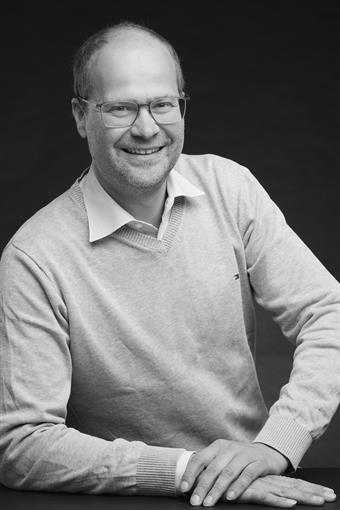
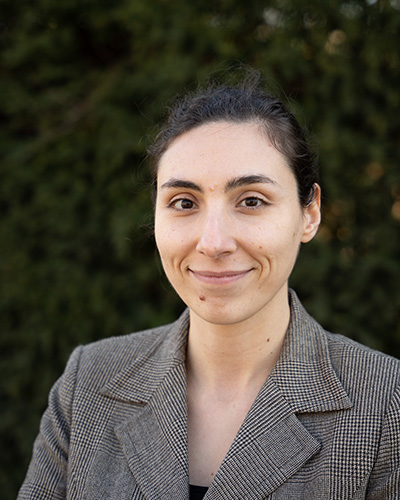
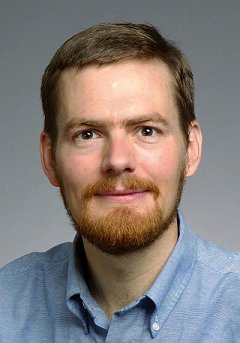
Antonello Monti is a Professor and Director of the Institute for Automation of Complex Power Systems at RWTH Aachen University. His research focuses on modern power systems, including smart grid technologies, hybrid AC-DC grids, and quantum computing applications in energy systems. Recent publications demonstrate innovations in grid resilience, EV charging optimization, quantum-assisted power system planning, and advanced simulation techniques. His team develops open-source tools like JuliaGrid for power system analysis and validates concepts through real-time testing platforms. Research addresses energy transition challenges including renewable integration, grid modernization, cyber-physical security, and next-generation optimization methods combining quantum computing with traditional power engineering approaches.
Prof. Dr. Oliver Crönertz serves as Dean and Professor of Business Administration and IT-Supported Business Processes at the Faculty of Digital Transformation , HTWK Leipzig. His work bridges digital transformation with business management, focusing on interdisciplinary project management, digital business models, and sustainability. Current roles: Dean, supervising professor for HTWK Robots/nao Team Research areas: Digital Transformation, Business Analytics, Industry 4.0, Stoffstrommanagement Research Trends : Recent publications emphasize digital solutions for environmental management, business process optimization, and smart urban logistics. His work connects Industry 4.0 with financial sustainability and societal impacts of digitalization. Projects : Leads Mittelstand-Digital Zentrum Leipzig-Halle, involved in EXIST-Potentiale, Future Parking, and FAssMII (Feedback-based E-Assessment in STEM).
Professor Alexander Koller is a leading academic in Computational Linguistics at Saarland University's Department of Language Science and Technology. He holds a courtesy appointment in Computer Science and contributes to the Saarland Informatics Campus - one of Europe's premier computer science research centers. He leads the Computational Linguistics group and serves as speaker for the DFG-funded Research Training Group 'Neuroexplicit Models of Language, Vision, and Action'. PhD in Computer Science (Saarland University) Former positions: University of Potsdam, Columbia University, University of Edinburgh Sabbatical experiences: Meta AI (Paris), Allen Institute for AI (Seattle) His research focuses on computational modeling of meaning and reasoning in NLP, combining neural and symbolic approaches. Key contributions include semantic parsing systems like the AM parser and Alto, neurosymbolic models, and the GIVE Challenge for NLG evaluation. His recent work explores LLMs' limitations in problem-solving and compositional generalization. Recent publications highlight diverse applications across semantic parsing, dialogue systems, and LLM evaluation. Awards include ACL 2020 Best Theme Paper and multiple Outstanding Paper recognitions at ACL conferences. 2025 - AI Action Summit keynote speaker 2023 - ACL Outstanding Paper Awards 2022 - ELLIS Faculty appointment He maintains the DialogOS system for spoken dialogue development and teaches advanced computational linguistics topics. His group includes multiple postdocs and PhD students working across LLMs, dialogue systems, and semantic modeling.
Dr. rer. nat. Thomas Hermann is a faculty member at Bielefeld University's Faculty of Engineering, leading the Ambient Intelligence Group and coordinating the Computer Science program. He specializes in sonification, auditory data science, and smart environments. Head of Ambient Intelligence Working Group Computer Science Program Coordinator Member of multiple academic advisory boards His research focuses on interactive sonification for biomedical applications, quantum systems, and smart environments. Key projects include ECG sonification for cardiac diagnosis, real-time auditory feedback in swimming, and sonic interfaces for AR cooperation. Recent publications span 2025 with Python-based sonification tools ( pya AGen ), quantum system sonification, and ST-elevation myocardial infarction monitoring. He contributes to open-access supplementary materials and interdisciplinary workshops. As a researcher , Hermann develops practical sonification frameworks like Panson for facial behavior analysis, CardioScope for portable ECG monitoring, and Base Cube One for smart environments. His work bridges academic research with industry applications.
Holger Wittges is the Managing Director of the SAP University Competence Center (UCC) at the Technische Universität München (TUM) . His work focuses on Digital Transformation , Next Generation ERP , and Hybrid Cloud infrastructure. He is affiliated with the KrcmarLab and collaborates with IBM via the OpenPOWER@TUM initiative. Educational Background: 2004: Dr. rer. oec. (Promotion), Universität Hohenheim 1996: Diplom Wirtschaftsinformatiker, Universität Bamberg Research Interests include Digital Transformation, Cloud Computing, Enterprise Resource Planning (ERP), XaaS (Everything as a Service), and Service-Oriented Architecture (SOA). His work bridges academic innovation with industry needs through SAP UCC TUM, which provides 40+ educational service bundles like SAP HANA and S/4HANA for teaching and research. Recent Publications highlight advancements in machine learning for ERP support ticket systems, energy efficiency in SAP S/4HANA, and educational frameworks for cloud-based enterprise software. Articles emphasize collaboration with institutions across Europe and contributions to digital ecosystems like the SAP University Alliances. Key Projects include the OpenPOWER@TUM initiative with IBM, focusing on accessible AI/ML infrastructure for academia, and the SAP UCC TUM, which drives Education as a Service (EaaS) strategies for digital business ecosystems.
Muhammad Ali Gulzar is an Assistant Professor in the Computer Science Department at Virginia Tech and an Amazon Scholar at Amazon Web Services. His research focuses on improving developer productivity through automated debugging and testing for applications in emerging domains, including data-intensive software such as dataflow programs, ML/AI applications, and computational notebooks. Education Ph.D. in Computer Science from University of California, Los Angeles (Google Ph.D. Fellow 2017-2020) Research Interests Gulzar's research spans three primary areas: (1) automated tracking-code localization techniques in web applications, (2) re-engineering testing and debugging for data-intensive applications, and (3) advancing current testing and debugging practices in Federated Learning Applications. His work addresses the challenges of debugging in complex systems where traditional approaches fail due to the scale and distributed nature of modern applications. His research has significant implications for improving software quality, developer productivity, and accessibility in web applications. Research Trends Recent publications demonstrate a strong focus on debugging and testing challenges in emerging application domains. His work bridges traditional software engineering with machine learning, data-intensive systems, and web technologies. Notably, he has made significant contributions to Federated Learning debugging (FedDebug), accessibility challenges in ad-driven web applications, and semantic caching for Large Language Models. His approach often combines novel algorithmic insights with practical implementations that address real-world challenges in software development and maintenance. Scientific Awards Google Ph.D. Fellow (2017-2020) $1.1 million NSF award for Federated Learning research ACM CCS 2024 Distinguished Artifact Award Advising and Grants Gulzar leads a productive research group with multiple students contributing to publications in top-tier venues. His NSF-funded research on Federated Learning demonstrates his ability to secure competitive funding for innovative projects. His advising style appears to emphasize practical impact alongside theoretical contributions, with students often taking lead roles in publications. Current research directions include debugging techniques for Large Language Models, accessibility challenges in modern web applications, and novel testing approaches for distributed data processing systems.
Dr. Philipp Allgeuer is a Postdoctoral Research Associate at the Knowledge Technology Research Group within the Department of Informatics at the University of Hamburg. His work focuses on humanoid robotics, bipedal locomotion, and sensor fusion. He holds a PhD from the Autonomous Intelligent Systems Group at the University of Bonn, alongside dual bachelor's degrees in Mechatronic Engineering and Mathematical/Computer Sciences (both with First-Class Honors). His research contributions include the development of the igus Humanoid Open Platform and the NimbRo-OP series of humanoid robots, recognized with awards like the RoboCup HARTING Open Source Award (2016) and the Best Humanoid Award (2018). He has authored influential papers on fused angles for robot balance, tilt phase space representations, and neuro-inspired control architectures. Allgeuer's teams have dominated RoboCup competitions, winning titles in AdultSize and TeenSize leagues multiple times. His open-source software frameworks (e.g., rot_conv_lib , attitude_estimator ) and hardware designs are widely used in robotics research. Recent work explores multimodal human-robot interaction and AI-driven robotic task coordination. He is affiliated with the Knowledge Technology Research Group and contributes to projects like the NICOL humanoid robot, bridging social interaction and reliable manipulation. His research spans from low-level control algorithms to high-level behavior planning systems.
Andrew Pavlo is a Professor in the Computer Science Department at Carnegie Mellon University's School of Computer Science. His research focuses on database management systems, particularly in the areas of transaction processing, in-memory databases, and self-driving database systems. He leads a productive research group that has published extensively in top database venues including VLDB, SIGMOD, and CIDR. Pavlo's research interests span database management systems, transaction processing, in-memory databases, non-volatile memory databases, and self-driving database systems. His work often bridges theoretical database concepts with practical system implementation, focusing on performance optimization, query processing, and system architecture. Recent work has explored machine learning applications for database tuning, novel storage techniques, and innovative approaches to transaction processing. An analysis of his recent publications reveals a strong focus on self-driving database systems, with significant work on the Database Gym framework for training machine learning models to optimize database performance. His research also examines columnar storage formats, transaction scheduling, and novel approaches to user-defined function optimization. The work demonstrates a consistent trajectory toward making database systems more autonomous and efficient through a combination of systems techniques and machine learning. Pavlo has been instrumental in mentoring numerous PhD students who have become active contributors to the database research community. His research has been supported by significant grants that have enabled the development of innovative database technologies and frameworks. His research group operates within CMU's vibrant database ecosystem, collaborating with other researchers on projects related to database systems, storage engines, and query processing frameworks. The group maintains close connections with industry partners to ensure practical relevance of their research contributions.
Prof. Dr.-Ing. Ralf Beck serves as Professor for Control and Regulation Technology and Automation Technology at Hochschule Düsseldorf University of Applied Sciences within the Faculty of Electrical Engineering & Information Technology. His academic responsibilities span multiple degree programs including BEng Electrical Engineering, BEng Industrial Engineering, and MSc Electrical Engineering and Information Technology. His educational background includes Mechanical Engineering studies at TU Braunschweig (1998-2004), followed by doctoral research at RWTH Aachen's Institute of Control Engineering where he earned his Dr.-Ing. in 2010 with a dissertation on predictive energy management for hybrid vehicles. Prior to his current professorship, he held progressive roles at FEV Europe GmbH from 2009-2018, culminating as Senior Project Manager for Vehicle and Powertrain Electronics. Beck's research focuses on control engineering systems with particular emphasis on automation technology, regulation systems, and model-based development approaches. His work bridges theoretical control methodologies with practical automotive applications, especially in hybrid vehicle energy management, multi-robot systems, and intelligent air path control. The Modellfabrik Fab21 serves as his primary experimental platform for model-based development applications. His publication record since 2005 demonstrates consistent contributions to control engineering, particularly in hybrid vehicle systems, emission control optimization, and calibration methodologies. Recent work shows increasing focus on distributed robotics and intelligent transportation systems, reflecting evolving research directions while maintaining core expertise in control theory applications. As an educator, Beck teaches foundational and advanced courses including Electrical Engineering III, Control and Regulation Technology, Model-Based Development, Technical Mechanics, and Advanced Control Engineering at the Master's level. His teaching integrates theoretical concepts with practical laboratory applications through the university's Moodle platform, emphasizing hands-on implementation of control algorithms and system modeling techniques.
Jelena Mirkovic serves as Principal Scientist at USC Information Sciences Institute (USC/ISI) and Research Associate Professor at the University of Southern California's Thomas Lord Department of Computer Science. She has held faculty positions at USC since 2010, progressing from Research Assistant Professor to her current role as Research Associate Professor since 2017, while also serving as Project Leader at USC/ISI. Her educational background includes: PhD in Computer Science from UCLA (2003) MS in Computer Science from UCLA (2000) B.Sc. in Computer Science from University of Belgrade, Serbia (1998) Mirkovic's research spans network security, human-centered attacks, and cybersecurity experimentation infrastructure. Her work focuses on critical security challenges including botnets, denial-of-service attacks, IP spoofing, vulnerability scanning, and user-centric privacy. She has pioneered methodologies for security experiments and led major infrastructure projects including the DETER testbed and SPHERE (Security and Privacy Heterogeneous Environment for Reproducible Experimentation). Analysis of her recent publications reveals consistent innovation across multiple security domains. Her work demonstrates strong technical depth in DDoS defense systems (particularly DNS protection), binary vulnerability analysis, privacy-preserving systems, and security experimentation infrastructure. A notable trend is her focus on bridging theoretical security concepts with practical implementation through large-scale testbeds and real-world data analysis. Her significant scientific achievements include: IEEE Senior Member distinction Best paper award at IEEE COMSNETS 2023 for DNS DDoS defense research Mirkovic has secured substantial research funding as Principal Investigator or Co-PI on numerous grants from NSF, DHS, and other agencies. Current major projects include SPHERE (Security and Privacy Heterogeneous Environment for Reproducible Experimentation), DISCERN (Datasets to Illuminate Suspicious Computations), and modernizing DeterLab education infrastructure. She has successfully led multiple REU sites focused on cybersecurity education and workforce development. She directs the STEEL (Security Research Lab) at USC/ISI, which develops innovative security solutions through interdisciplinary research in network security, human factors in security, and cybersecurity experimentation infrastructure. The lab emphasizes practical implementations that address real-world security challenges while advancing theoretical understanding of security systems.
Mariya Toneva is a tenure-track faculty member at the Max Planck Institute for Software Systems , conducting groundbreaking research at the intersection of Machine Learning , Natural Language Processing , and Neuroscience . She leads the Bridging AI and Neuroscience (BrAIN) group , focusing on computational models that align AI systems with human brain processes. Her work aims to enhance both AI capabilities and neuroscience understanding through this cross-disciplinary approach. Actively recruiting postdocs, PhDs, and research interns in areas like code/text representation, brain-AI alignment, and neuroimaging data analysis Collaborator on NIH-funded projects using fMRI and neuropixel data Research Themes : Her group explores neural mechanisms of language processing, event segmentation in narratives, memory reactivation via music, and effective human-AI collaboration frameworks. Key methods include LLM analysis, cross-modal similarity metrics, and naturalistic task-based fMRI studies. Key Publications (2024-2025): Brain-tuned speech models (INTERSPEECH 2025) Cognitive event boundaries in LLMs (Behavioral Research Methods 2025) Music-induced memory reactivation (biorxiv 2024) LLM-brain alignment reasons (EMNLP 2024) Advising : Mentors PhD candidates Omer Moussa (speech processing), Camila Kolling (representational similarity), and Gabriele Merlin (LLM alignment). Collaborates with institutions like MIT, NYU, and ETH Zurich.
Prof. Dr. Julius Schöning is a Professor at the Faculty of Engineering and Computer Science , Osnabrück University of Applied Sciences. His research focuses on Artificial Intelligence , Human-Computer Interaction , and Computer Vision within agricultural contexts. 2019–Present: Professor, Hochschule Osnabrück 2018–2019: System Architect, ZF Friedrichshafen AG 2014–2018: Researcher, University of Osnabrück 2009–2013: Project Lead/System Engineer, CLAAS Harsewinkel Education: M.Sc. in Intelligent Embedded Microsystems (Freiburg), B.Eng. in Mechatronics (DHBW Stuttgart) His research spans smart agriculture , quantum NLP , and explainable AI systems , with recent work on vibrotactile warning systems, AI compliance frameworks, and hybrid dataset applications in farming. Publications emphasize interdisciplinary approaches bridging technology and agricultural practice . Scientific honors include: DAAD Stipendium for conference participation Best Paper Award (2018) IEEE GHTC Student Paper Contest Winner (2016) Sonderpreis für gute Lehre (2017) Finalist/Falling Walls Lab (2015)
Dr.-Ing. Thomas Wild serves as an Academic Director at the Technical University of Munich (TUM), working within the TUM School of Computation, Information and Technology at the Chair of Integrated Systems. He maintains an active research and teaching role at the institution, with his office located in Building N1 (Theresienstr. 90), Room N2136 in Munich, Germany. Dr. Wild's research focuses on advanced computing architectures, with particular emphasis on manycore system on chip (SoC) architectures, network processor (NPU) architectures, on-chip communication architectures including networks on chip (NoC), and system level design methodologies. His work bridges theoretical research with practical implementation, often exploring design space exploration techniques to optimize system performance. The evolution of his research over two decades demonstrates a consistent focus on improving communication architectures and system-level design for embedded and high-performance computing platforms. His recent publications (2023-2025) reveal a growing integration of machine learning techniques with traditional hardware design, particularly in optimizing power-performance tradeoffs in embedded systems. There's a clear trend toward hardware-software co-design approaches, with significant work on SmartNICs, Linux system optimization, and network processing acceleration. His research shows strong interdisciplinary connections between computer architecture, networking, and machine learning. EUROPRACTICE representative for TUM city campus, facilitating access to commercial EDA tools for academic purposes Active collaborator with Professor Andreas Herkersdorf and other researchers at TUM Focus on practical implementations with FPGA-based prototyping and real system modifications Dr. Wild teaches several hardware design courses including VHDL Lab, SystemC Lab, and HW/SW Codesign, contributing to the education of next-generation computer engineers. His teaching directly complements his research in system design and hardware acceleration, providing students with hands-on experience in cutting-edge technologies.
Michael D. Ernst is a Professor in the Computer Science & Engineering department at the University of Washington's College of Engineering. His research aims to make software more reliable, more secure, and easier (and more fun!) to produce. Previously, he was a tenured professor at MIT and a researcher at Microsoft Research. Ernst's primary technical interests are in software engineering, programming languages, type theory, security, program analysis, bug prediction, testing, and verification. His research combines strong theoretical foundations with realistic experimentation, with an eye to changing the way that software developers work. He focuses particularly on programmer productivity and developing practical tools that can be integrated into developers' workflows. Analysis of his recent publications (2018-2025) reveals a continued focus on verification techniques, program analysis, and testing methodologies. His work spans from theoretical foundations of type systems to practical applications of NLP for test generation and LLMs for test oracle creation. A consistent theme is developing lightweight, modular approaches that can be practically applied in real-world development environments. Scientific Awards: ACM Fellow (2014) John Backus Award (2009) NSF CAREER Award (2002) ACM SIGSOFT Impact Paper Award (2013) 8 ACM Distinguished Paper Awards across multiple conferences ECOOP 2011 Best Paper Award Microsoft Academic Search ranked #2 in software engineering research (2013) Ernst has received significant research funding including the NSF CAREER Award, supporting his work on program analysis and verification techniques. His research combines theoretical rigor with practical impact, often resulting in tools that are adopted by the software engineering community. He actively collaborates with researchers across institutions and has served in leadership roles for major conferences in programming languages and software engineering. His research group develops practical tools that address real challenges in software development, with a focus on making verification and analysis techniques more accessible to working developers. Current projects include applying machine learning techniques to software engineering problems while maintaining strong theoretical foundations.
Yepang Liu is a tenured Associate Professor in the Department of Computer Science and Engineering at Southern University of Science and Technology (SUSTech) in Shenzhen, China. He leads the Software Quality Lab and serves as director of the Trustworthy Software Research Center within the Research Institute of Trustworthy Autonomous Systems. His educational background includes a B.Sc. with honors from Nanjing University (2010) and a Ph.D. from the Hong Kong University of Science and Technology (2015), where he was supervised by Prof. Shing-Chi Cheung. Prior to joining SUSTech, he worked as a postdoc at HKUST's CASTLE Lab and Cybersecurity Lab. Liu's research primarily focuses on software testing and analysis, empirical software engineering, AI for SE, software security, and trustworthy AI. His work bridges traditional software engineering with cutting-edge AI technologies, particularly in automated testing, security analysis, and quality assurance for mobile, blockchain, and extended reality applications. Recent projects explore how large language models can enhance bug detection, improve testing automation, and address fairness issues in machine learning systems. His contributions have been recognized with three ACM SIGSOFT Distinguished Paper awards (ICSE 2021, ASE 2016, ICSE 2014) and one Distinguished Artifact award (ICSE 2019). He has also received the ACM SIGSOFT Service Award and Distinguished Reviewer Award for his extensive service to the software engineering community. Top-10 Most Active Early-Stage Software Engineering Researcher (2013-2020) Top-10 Most Popular Instructor Among 2024 Undergraduate Graduates at SUSTech Junior Faculty of the Year (2021) SUSTech Teaching Excellence Award (2021) Outstanding Mentor Award (2020, 2024) Liu actively serves on the editorial boards of Empirical Software Engineering (EMSE) and Journal of Computer Science and Technology (JCST). He has participated in over 80 conference committees including leadership roles in ICSE, FSE, ASE, and ISSTA. His research is supported by the National Natural Science Foundation of China, National Key Research and Development Program, and leading Chinese IT companies. He regularly mentors PhD and MSc students and has guided multiple national competition award-winning teams. The Software Quality Lab under Liu's direction focuses on innovative approaches to software testing, security analysis, and quality assurance across various platforms including mobile, blockchain, and extended reality applications. Current projects emphasize the integration of AI techniques with traditional software engineering practices to address emerging challenges in software quality.