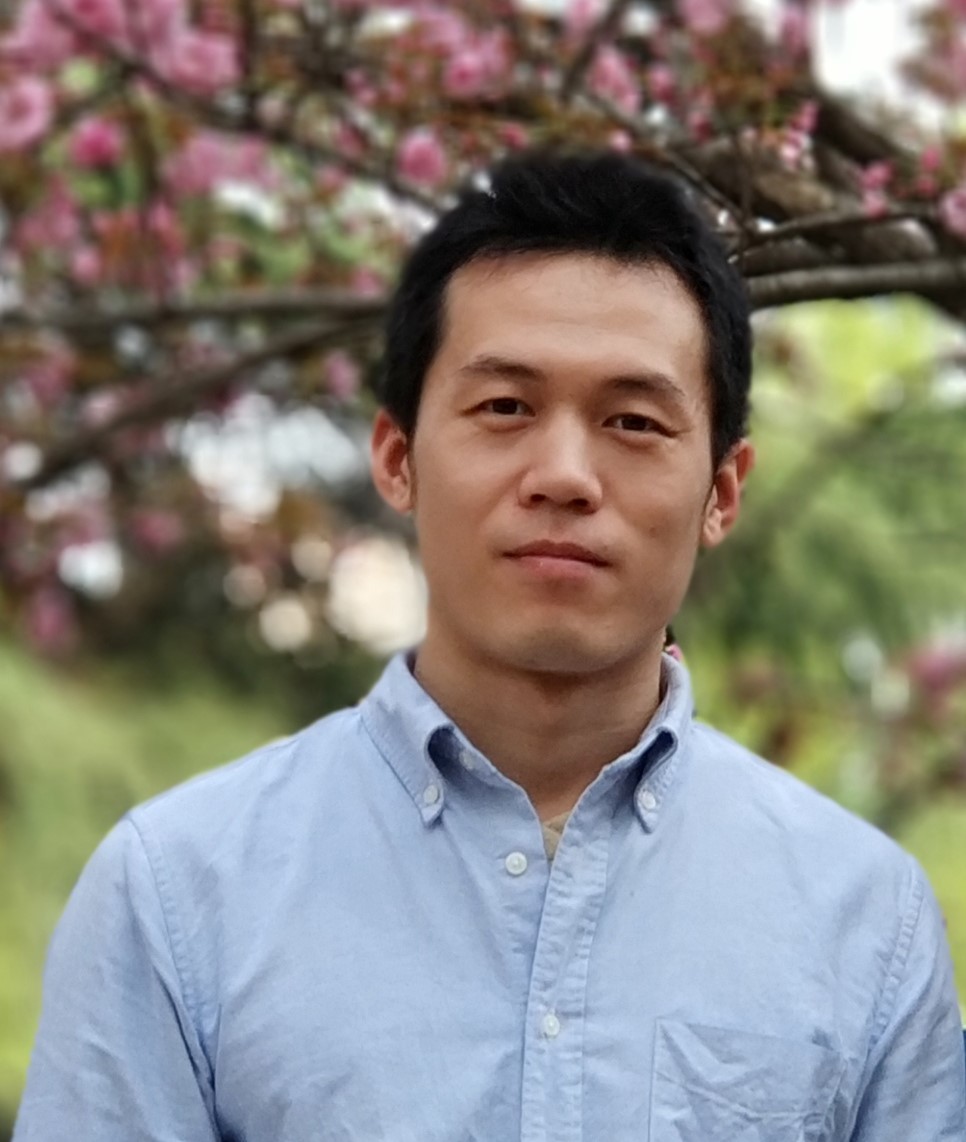
Anouk Waeijen-van Diepen is a PhD candidate at the Biomedical Diagnostics Lab within the Signal Processing Systems group at Eindhoven University of Technology (TU/e), focusing on integrating machine learning with mechanical ventilation systems. Her work aims to address patient-ventilator asynchrony through advanced algorithms and simulated clinical data . Education : MSc in Electrical Engineering (2017, TU/e) BSc in Bioinformatics/Biostatistics (2014, TU/e) Pre-Master in Electrical Engineering (2015, TU/e) Her research spans biomedical signal processing , machine learning applications in healthcare, and ventilator system optimization . She specializes in asynchrony detection using clinical and simulated data , with a focus on intensive care unit (ICU) environments. Key trends in her publications include adversarial learning for waveform generation, model-based approaches for patient effort estimation, and automated detection algorithms validated through peer-reviewed journals like Computer Methods and Programs in Biomedicine and Heliyon . She has contributed to IEEE symposia and European Signal Processing Conferences . Projects include: STW Zero 15-06 P2 (2017–2024): Autonomous Acoustic Systems Smart Monitoring (2015–2020): Real-time healthcare data analysis
Michalas Loukas is an Assistant Professor in the Department of Electrical and Computer Engineering at Democritus University of Thrace since May 2024. His research focuses on the intersection of nanotechnology, microelectronics, and artificial intelligence applications, with particular expertise in RF MEMS and memristive systems. Dr. Loukas received his PhD in Physics from the University of Athens in 2009. His academic journey includes postdoctoral positions at: Institute for Theoretical Physics (2020-2024), Heraklion, Greece University of Southampton (2016-2019), United Kingdom IMM-CNR (2014-2016), Rome, Italy University of Athens (2011-2014), Greece His research spans several cutting-edge areas in nanoelectronics, with significant contributions to understanding memristive systems, RF MEMS reliability, and applying AI to nanotechnology challenges. Dr. Loukas has developed methodologies for characterizing TiO2-based memristors and RF MEMS switches, addressing critical issues in device performance and sustainability. His work bridges fundamental device physics with practical applications in next-generation electronics. Dr. Loukas leads significant research initiatives including: AIMS5.0: Artificial Intelligence in Manufacturing leading to sustainability and Industry 5.0 (HORIZON-KDT-JU-2022-1-IA, GR. No. 101112089, Period: 2023 – 2026) as Principal Investigator PRIME: Predictive reliability for high power RF MEMS (H2020-MSCA IF-2020, GR. No. 101032925, Period: 2021 – 2023) as Marie-Sklodowska Curie Individual Fellow He teaches undergraduate courses in Materials Science, Sensors, and Special Chapters in Microelectronics, as well as a postgraduate course in Modeling and Simulation of Semiconductor Devices. Beyond his research and teaching, Dr. Loukas is actively engaged in science outreach activities to promote and disseminate scientific knowledge to the general public, reflecting his commitment to broader societal impact of scientific research.
Hamid Mehmood serves as an Adjunct Assistant Professor at McMaster University's School of Earth, Environment & Society, contributing to interdisciplinary environmental and societal research through computational methods. His scholarly focus spans multiple domains: Environmental Science (flood/reservoir mapping, carbon cycle analysis) Geospatial Informatics (GNSS/WLAN positioning, Landsat/GIS platforms) Machine Learning (neural networks for urban/environmental applications) Public Health (AMR, cardiovascular coping, clinical trials) ICT for Development (Urdu systems for farmers, mobile scaling) Recent publications demonstrate a shift toward urgent global challenges: 2024 machine learning-driven urban slum mapping in Indonesia, 2022 environmental health reviews on antimicrobial resistance, and 2021 geospatial platforms for flood management. His work consistently bridges technical innovation (e.g., Google Earth Engine, IVIG trials) with socio-economic contexts in Pakistan, Saudi Arabia, and Southeast Asia, while earlier research (2013-2015) established foundations in neural network-optimized positioning systems.
Edward Sykes serves as an Adjunct Associate Professor in the Department of Computing and Software within the Faculty of Engineering at McMaster University. His academic work bridges computer science with healthcare applications, focusing on innovative technological solutions for real-world medical challenges. Dr. Sykes' research interests span mobile healthcare systems, artificial intelligence applications in medicine, and context-aware computing. His work demonstrates a strong commitment to developing practical mHealth technologies that address critical healthcare needs, particularly in elderly care, remote patient monitoring, and diagnostic support systems. His research trajectory shows a consistent evolution from earlier work in educational technology toward increasingly sophisticated healthcare applications of AI and mobile computing. Analysis of his recent publications reveals a strong emphasis on AI-driven healthcare solutions, with particular focus on fall detection systems, fracture risk assessment, and remote patient monitoring. His work integrates multiple technical domains including machine learning, computer vision, mobile computing, and human-computer interaction to create comprehensive healthcare technology solutions. The interdisciplinary nature of his research demonstrates strong connections between computer science fundamentals and practical healthcare applications. His scholarly contributions include numerous publications in healthcare technology venues, with recent work appearing in Communications in Computer and Information Science, Health Systems, and Digital Health journals. His research has been referenced in patents and has garnered attention across academic platforms. Dr. Sykes has maintained an active research program with consistent publication output, demonstrating particular productivity in recent years with multiple publications in 2023-2025. His work shows strong potential for real-world healthcare impact, particularly in the areas of elderly care technology and AI-assisted medical diagnostics.
Dr. Valeriya Gritsenko is an Associate Professor at West Virginia University School of Medicine with multiple appointments across the Department of Physical Therapy, Department of Neuroscience, and Rockefeller Neuroscience Institute. She leads the Neuroengineering and Rehabilitation Laboratory (NERL) where she conducts interdisciplinary research at the intersection of neuroscience, engineering, and rehabilitation medicine. Dr. Gritsenko holds a PhD from the University of Alberta, Canada, completed a postdoctoral fellowship at the University of Montreal, and received specialized training including an intensive course in transcranial magnetic simulation at Harvard Medical School and a fellowship in Computational Neuroscience at Woods Hole. Her research focuses on understanding human sensorimotor control through experimental and computational approaches, employing techniques such as motion capture, electromyography, transcranial magnetic stimulation, and biomechanical modeling. Her work spans several key research domains including neuromechanics of movement, sensorimotor integration, and quantitative assessment of motor deficits. She has made significant contributions to understanding how proprioception combines with internal predictive signals for movement execution and has developed innovative methods for assessing movement impairments using low-cost motion capture systems. Her research has important applications in stroke rehabilitation, surgical training, and space medicine. Analysis of Dr. Gritsenko's publication record shows a clear progression toward developing computational tools for movement analysis, with increasing emphasis on AI applications and real-time assessment methods. Her recent work demonstrates strong integration between basic neuroscience principles and clinical applications, particularly in creating more sensitive measures of motor function that go beyond traditional joint angle measurements. Dr. Gritsenko is actively involved in major research initiatives including NASA's BioAISense project developing AI for autonomous sensorimotor assessment and an AFOSR project on sensation-to-action transformation frameworks. Her laboratory in the Erma Byrd Biomedical Research Facility serves as a hub for interdisciplinary research that combines engineering approaches with clinical neuroscience to improve rehabilitation outcomes.
Nagham Saeed serves as Associate Professor in Electrical and Electronic Engineering at the School of Computing and Engineering, University of West London, a position she has held since April 2023. Previously, she was Senior Lecturer in Electrical Engineering at the same institution from November 2017 to April 2023, following roles as Electronic Lecturer at Uxbridge College (2012-2017) and Electronic/Control Lecturer at Brunel University (2007-2012). Her academic credentials include: Ph.D. in Optimization in Wireless Networks and Communications (Brunel University, 2007-2011) M.Sc. in Mechatronics (University of Technology, Baghdad, 1997-1999) B.Eng. in Computer and Control (University of Technology, Baghdad, 1988-1992) DTLLS Diploma in Teaching (University of Westminster, 2012-2014) BAPP in Learning and Teaching (Brunel University, 2009-2010) Assessing Competence Certification (Uxbridge College, 2014) Dr. Saeed's research spans wireless communications, IoT, electric vehicles, and AI-driven energy optimization. Her work focuses on Bluetooth Low Energy applications for healthcare monitoring, battery management systems for EVs, sustainable ICT practices, and GIS-based land use analysis. She pioneers solutions for energy-efficient radio access networks and develops AI models for vehicle classification and low-resource language processing. Analysis of her 2022-2025 publications reveals three dominant trends: (1) AI integration for sustainable energy systems in telecommunications and transportation, (2) blockchain-secured vehicular networks for 6G infrastructure, and (3) cross-disciplinary applications of IoT in healthcare and environmental monitoring. Her research consistently bridges electrical engineering with computer science to solve real-world sustainability challenges. Professional recognition includes: MDPI Reviewer Acknowledgements (2020) for Algorithms, Applied Sciences, and Information journals While her 2022 educational research on feedforward teaching approaches demonstrates pedagogical engagement, no student supervision or grant management details are documented. Current institutional affiliations show no dedicated laboratory facilities or research teams specified in available records.
Dr. Simon Judge is an Honorary Research Fellow (Senior Clinical Scientist) at the University of Sheffield's School of Medicine and Population Health and Service Lead for the Barnsley Hospital Assistive Technology Team. With over £2m in successful grant funding, he has shaped national policy for AAC/EC services in England and led international research collaborations in assistive technology design. MEng in Electronic Engineering, Imperial College London PhD in Voice Output Communication Aids, University of Sheffield Research Themes Augmentative and Alternative Communication (AAC) systems Environmental Control (EC) interface design User-centered design for people with complex needs EMG and gaze-control assistive devices Health service delivery optimization Policy impact through real-world implementation Scientific Recognition Honorary Fellow, Royal College of Speech and Language Therapists (2016) As head of the Rehabilitation and Assistive Technology Group at Barnsley Hospital, he leads NHS England's specialized AAC/EC services for 5.5m residents. His work bridges clinical practice, engineering innovation, and policy reform in disability technology.
Sepidar Sayyar is a Research Fellow and materials scientist at the Australian National Fabrication Facility-Materials Node at the University of Wollongong, where he has been actively involved in research since 2014. He works at the Innovation Campus, AIIM Facility in Wollongong, Australia, focusing on advanced materials development and characterization. Dr. Sayyar earned his PhD in Materials Engineering from the University of Wollongong between 2011 and 2015. His academic journey has been centered at this institution, where he has developed expertise in composite materials, 3D printing technologies, and nanomaterials for biomedical applications. His research interests span multiple cutting-edge areas including Materials Engineering, Nanoscale Characterisation, Composite and Hybrid Materials, Nanobiotechnology, Nanotechnology, and Functional Materials. Dr. Sayyar's work particularly emphasizes the development and characterization of composite materials for various applications, with a strong focus on biomedical implementations. Analysis of his recent publications reveals a consistent research trajectory focused on 3D printing technologies for advanced materials, particularly in biomedical contexts. His work spans graphene applications, hydrogel development, and novel fabrication techniques for medical devices and electronics. The publications demonstrate interdisciplinary collaboration across materials science, biomedical engineering, and electronics. Dr. Sayyar actively supervises research students and has successfully guided multiple PhD and Master's candidates to completion. His supervision portfolio includes projects on cellulose composites, biocompatible conductive inks, degradable stents, flexible electrodes, and graphene-based fibers for health applications. He has been involved in several research funding projects including '3D Printed Conductive Flexible Strain Sensors for Skin-Interface Electronics' (2022-2023), 'Global Challenges: Next Generation Sustainable Crafting' (2019), 'Slow Textiles' (2019), and 'Material Science, Slow Textiles, and Ecological Futures' (2017-2019), demonstrating his diverse research interests and ability to secure funding across different domains. Working within the Intelligent Polymer Research Institute environment at the University of Wollongong, Dr. Sayyar collaborates with multidisciplinary teams focused on advanced materials development, contributing to the institute's reputation for innovation in polymer science and engineering applications.
Anu G. Bourgeois is an Associate Professor in the Department of Computer Science at Georgia State University. She holds a Master’s and Ph.D. in Electrical and Computer Engineering from Louisiana State University (1997 and 2000, respectively). Her work is supported by NSF and CDC grants, and she is a Senior Member of the IEEE. Bourgeois’s research spans parallel computing, wireless networks, cybersecurity, and STEM education. Notable projects include the RISE program for Black women in computing and studies on UAV control via AI. Her recent work emphasizes educational equity, m-health interventions for opioid use, and fault-tolerant systems. Her 2025 publications highlight pathways for underrepresented students in computing and resilient data transmission frameworks. Earlier work includes contributions to cosmic ray detection and mobile health applications. Awards include recognition as an IEEE Senior Member. Bourgeois advocates for industry-aligned pedagogy, as seen in her virtual tutoring center projects and collaborations on cybersecurity education. She leads the Evidence-Based Cybersecurity Research Group and maintains a lab at grid.cs.gsu.edu/agb .
Phivos Mylonas is an Associate Professor at the Department of Informatics and Computer Engineering within the School of Engineering at the University of West Attica. He also maintains academic appointments at Ionian University where he previously served as Associate Professor and Assistant Professor in the Department of Informatics. His academic journey includes adjunct professor positions at several Greek institutions including University of Central Greece, University of the Aegean, and University of Crete. Dr. Mylonas holds a PhD in Electrical and Computer Engineering from the National Technical University of Athens, a Master's Degree in Advanced Information Systems from the National and Kapodistrian University of Athens, and a Diploma in Electrical and Computer Engineering from the National Technical University of Athens. His research spans Artificial Intelligence applications, data science, user modeling, personalization technologies, and semantic frameworks. His scholarly output shows a clear trajectory toward increasingly sophisticated AI applications, with recent publications focusing on ChatGPT integration, fuzzy logic systems, and multimodal interaction. The research demonstrates strong interdisciplinary connections between computer science, education, and cultural heritage preservation. Thomaidio Grant for Science and Art Progress (2005, 2006) ICCS-NTUA Short Term Research Grant (2005-2006) As an academic leader, Dr. Mylonas has served as Director of the Humanistic and Social Informatics Laboratory at Ionian University (2013-2022) and as a Senior Researcher at the Image, Video and Multimedia Laboratory at National Technical University of Athens. He has been instrumental in organizing numerous international conferences and has served on over 200 conference program committees. His laboratory work spans multiple institutions including collaborations with University of Patras and Ionian University.
Prof. Domenico Prattichizzo holds the position of Full Professor in the Department of Information Engineering and Mathematical Sciences at the University of Siena. His research focuses on advanced robotics, human-robot interaction, and biomedical engineering applications, with a strong emphasis on haptic feedback systems, soft robotics, and assistive technologies. He leads educational activities in control systems, robotics, and biotechnological engineering, contributing to the university’s Bachelor’s and Master’s programs. His work bridges robotics with healthcare, developing wearable devices for rehabilitation and neuromodulation solutions for neurological disorders. Key research areas include: Design of soft and rigid robotic grippers Haptic interfaces for teleoperation and human augmentation Neural control of robotic limbs for tetraplegia patients Wearable exoskeletons for stroke rehabilitation Sensory substitution devices for time perception Recent publications emphasize innovations in collaborative robotics, tactile feedback systems, and biomedical applications, with a focus on safety, adaptability, and human-centric design. His contributions to robotics education include developing open-source toolboxes and resources for undergraduate and graduate students.
Hossain Muhammad Muctadir is a researcher at Eindhoven University of Technology’s Department of Software Engineering and Technology within the School of Mathematics and Computer Science. His work focuses on digital twin technology, model management, and model-driven software engineering. He holds a BSc in Information Technology from the University of Dhaka (2013), an MSc in Software Systems Engineering from RWTH Aachen University (2017), and a Professional Doctorate in Engineering (PDEng) in Software Technology from TU/e (2020). Research Interests: Digital Twin Development & Maintenance Model Management Systems Model-Driven Software Engineering Graph-Based Consistency Solutions Artifact Reuse in Software Systems Key Contributions: His work includes developing a consistency management framework for digital twin models, conducting industry interview studies on digital twin practices, and creating the LaMa web application for thematic labeling. He contributed to the NWO-funded Digital Twin project and the Internet of Food consortium involving Unilever and Wageningen University. Professional Experience: Five+ years as a software developer in Bangladesh and Germany, specializing in desktop/web applications and AR for HoloLens. Participated in projects with global partners like ASML and Philips Healthcare during his PDEng.
Dimitrios Kanoulas is a Professor in Robotics and AI at the Department of Computer Science, University College London (UCL). He holds the UKRI Future Leaders Fellowship and leads research in perception and learning for robotics, focusing on articulated robots navigating and manipulating in uncertain environments. His work emphasizes theoretical advancements in sensing, real-time mapping, and modeling of surface contact areas for locomotion on uneven terrain, leveraging SLAM systems and manipulation techniques. Research interests include robotics perception, SLAM, path planning, and reinforcement learning. His recent work explores adversarial attacks in path planning, high-fidelity simulators (e.g., Unreal Robotics Lab), and robust localization methods like AIR-HLoc and LiteVLoc. He also investigates humanoid robot stability, teleoperation systems, and autonomous mobile manipulators. Key contributions span legged locomotion, manipulation under uncertainty, and safety-critical control systems. His articles reflect trends in combining neural networks with traditional robotics frameworks, emphasizing real-world deployability and robustness. Beyond technical work, he emphasizes human-robot interaction through teleoperation interfaces and wearable technologies. Awards: UKRI Future Leaders Fellow Labs/Teams: RPL Lab at UCL Grants/Advising: No specific grants listed, but his research is supported by UKRI funding. Advising details not explicitly provided in text.
Shiliang Zhang is a Postdoctoral Fellow at the University of Oslo working with the Networks and Distributed Systems research group. His research focuses on privacy preservation in smart grid and transactive energy management systems, including the Privacy preserving Transactive Energy Management (PriTEM) project. He teaches Energy Informatics and Artificial Intelligence for Energy Informatics courses while developing interactive visualization tools for Norwegian energy infrastructure. His primary research areas encompass Smart Grid systems, Transactive Energy Management, and Privacy Preservation through Differential Privacy techniques. He applies Artificial Intelligence and Energy Informatics to address renewable energy integration challenges, grid resilience, and autonomous navigation systems. Recent work explores bionic data-driven approaches for underwater navigation and anomaly-resistant control mechanisms. Publications from 2022-2025 reveal strong interdisciplinary focus on machine learning applications for energy systems and navigation. Key themes include privacy-preserving pricing schemes for smart grids, robust control under system uncertainties, and deep reinforcement learning for geomagnetic navigation. His work spans IEEE Transactions, SmartGridComm, and Mathematics journals with significant contributions to resilient energy infrastructure. No scientific awards were mentioned in available sources. Zhang has no listed advisees but actively contributes to the PriTEM project within Networks and Distributed Systems. His research leverages collaborations across energy informatics domains, evidenced by publications in high-impact venues and development of practical tools like Norway's energy consumption and solar panel distribution maps. He operates within the Networks and Distributed Systems research group, developing interactive visualizations for Norwegian energy infrastructure including municipal energy consumption (May 2025), Oslo's solar panel distribution (April 2025), and national power lines (May 2025). His work bridges theoretical control systems with real-world energy applications through the PriTEM project.
Margaret E. Kosal is an Associate Professor and Director of Graduate Studies in the Sam Nunn School of International Affairs at Georgia Institute of Technology. She specializes in national security, emerging technologies, and weapons of mass destruction (WMD). Her research focuses on the intersection of technology, strategy, and governance, with expertise in biological, chemical, and nuclear defense. Kosal has held roles as a Senior Adjunct Scholar at West Point’s Modern War Institute and a Strategic Studies Group advisor to the U.S. Army Chief of Staff. She co-founded a sensor company developing medical and explosives detection technologies. Education: Ph.D., Chemistry, University of Illinois at Urbana-Champaign B.S., Chemistry, University of Southern California Research Interests: Her work addresses the security implications of emerging technologies like nanotechnology, biotechnology, and AI, emphasizing nonproliferation and dual-use risks. She explores how technological diffusion affects national security, particularly in the context of WMD proliferation and strategic stability. Her recent focus includes neurotechnology, CRISPR, and the role of cognitive neuroscience in defense. Publications: Kosal authored Nanotechnology for Chemical and Biological Defense (2009) and co-edited volumes such as Disruptive and Game Changing Technologies in Modern Warfare (2019), recognized as a NATO Top Book. Her articles analyze topics like BCI adoption, AI governance, and synthetic biology risks. Awards: 2015 CETL/BP Junior Faculty Teaching Excellence Award 2012 Ivan Allen Jr. Legacy Faculty Award 2007 OSD Award for Excellence Advising & Grants: She mentors students in international affairs and technology policy, with grants from DoD, DTRA, and NATO. Her work with the Army and intelligence community addresses institutional and technological challenges in modern warfare. Labs/Teams: Co-founder of a sensor company and member of editorial boards for Journal of Strategic Security and Politics and the Life Sciences . She chairs U.S. National Academies committees on WMD terrorism and serves on defense-related advisory groups.