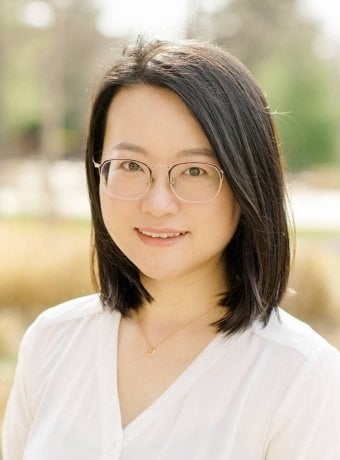
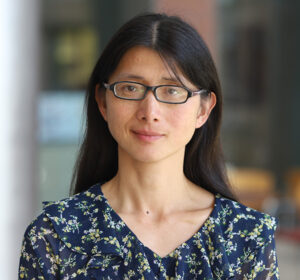
Dr. Yixin Liu is an Assistant Professor in Chemical Engineering and Affiliated Assistant Professor in Biomedical Engineering at Michigan Technological University. She holds a PhD from the University of Connecticut and previously worked at ABB US Corporate Research Center. Her research specializes in chemical/biosensors, nanomaterials, and data-driven sensor optimization. Key areas include non-enzymatic glucose detection, cortisol monitoring, and gas/explosive sensing using advanced materials (e.g., laser-induced graphene, carbon nanotubes). She develops electronic nose/tongue systems and applies machine learning for sensor analytics. Liu teaches Fundamentals of Chemical Engineering and serves as a reviewer for leading materials science journals. Her industrial experience informs product-translatable sensor designs.
Professor Pavana Prabhakar holds a joint appointment in Civil & Environmental Engineering and Mechanical Engineering at the University of Wisconsin-Madison, leading the Manufacturing and Mechanics Lab (MaMeL). Her research focuses on damage-tolerant composite materials for aerospace, marine, and automotive applications, emphasizing multi-physics environments (e.g., dynamic impact, extreme temperatures, moisture). She explores architected composite designs through computational and experimental methods, intersecting advanced manufacturing, materials science, and computational science. Education: PhD 2013 (University of Michigan), MS 2008 (UC Berkeley), B.Tech 2007 (National Institute of Technology Karnataka). Research interests include damage mechanics of architected composites, advanced manufacturing techniques, and life prediction under multi-physics conditions. Her work bridges computational modeling with experimental fabrication, aiming to develop resilient materials through innovative designs like architected syntactic foams and flexible hybrid sensors. Recent publications highlight advancements in moisture diffusion in layered materials, woven composite fracture energy, and additive manufacturing of syntactic foams. Awards include the NSF CAREER Award (2023), ONR-YIP (2019), and Amelia Earhart Fellowship (2011). Teaching focuses on composites, structural analysis, and research supervision. Lab activities emphasize interdisciplinary approaches to material design, leveraging AI and physics-based models for optimization.
Dr. Alex Apeagyei is an Associate Professor in the Department of Engineering & Construction at the University of East London (UEL), part of the School of Architecture Computing and Engineering. He specializes in pavement engineering, with a focus on sustainable infrastructure, asphalt materials, and the application of machine learning in transportation systems. His research bridges academic innovation and industry practice, emphasizing recycling methods and smart technologies for infrastructure resilience. Dr. Apeagyei holds a PhD in Civil Engineering and has extensive qualifications including MSc and BSc degrees in Civil Engineering. His work spans pavement distress classification using deep learning, moisture damage analysis in asphalt mixtures, and low-carbon road construction techniques. He has collaborated with organizations such as the National Co-operative Research Programme (NCHRP) and the Transportation Research Board, contributing to standards and policy development. His research interests include sustainable transport systems, intelligent transport systems (ITS), and materials characterization. He has been recognized with prestigious awards, including the Jack H. Dillard Award (2010) and the Golden Leaf Award (2011). Dr. Apeagyei also serves on expert panels for organizations like the Institute of Highway Engineers and the ASTM Committee, reflecting his leadership in advancing industry practices. Teaching responsibilities include modules on highway engineering, transportation systems, and structural engineering at both undergraduate and postgraduate levels. His research outputs emphasize practical solutions for infrastructure challenges, with a focus on machine learning applications and sustainable construction materials.
Robert C. Roberts is an Assistant Professor in the Department of Electrical and Computer Engineering at The University of Texas at El Paso (UTEP). His research focuses on additive manufacturing techniques for sensors, actuators, and microelectromechanical systems (MEMS) with applications in healthcare, robotics, and energy. He earned his B.S. and M.S. in Systems & Control Engineering from Case Western Reserve University (2005, 2006) and his Ph.D. in Electrical Engineering from CWRU (2012), where he studied under Norman C. Tien. From 2012 to 2018, he held research and teaching positions at The University of Hong Kong, contributing to the DARPA Robotics Challenge with Boston Dynamics ATLAS humanoid robots. His technical expertise spans additive microfabrication (inkjet printing, micro laser sintering), sensor systems, and thermal management in microsystems. He has collaborated on projects involving biomedical implants, microwave waveguides, and chipless RFID sensors. Recent publications highlight advancements in metal additive manufacturing, microfluidic cooling systems, and flexible electrochemical sensors. His work addresses challenges in nanomaterial processing, heterogeneous semiconductor integration, and soft robotics testing frameworks. Scientific Awards: HKU Research Output Prize in Engineering (2014-2015) Key Collaborations: DOE Grant for Nuclear Security Workforce Training NASA MUREP Award for Hispanic Student Engineering Engagement DoD/NSA Semiconductor Workforce Development
Peter Gustafson is a Professor in the Department of Mechanical and Aerospace Engineering at Western Michigan University. His research spans Finite Element Modeling, Multi-Scale Methods, Machine Learning, Aerospace Structures, Composite Materials, Biomechanics, Tissue Mechanics, and Medical Devices. He works on integrating computational techniques with material analysis and structural simulations. Overarching affiliation: Department of Mechanical and Aerospace Engineering, Western Michigan University Research Interests : Gustafson focuses on computational micromechanics and multiscale modeling, particularly applied to composite materials and aerospace structures. His work combines machine learning with traditional finite element methods to enhance predictive accuracy and efficiency. He also explores biomechanics and tissue mechanics, with applications in medical devices such as surgical tools and orthopedic implants. Publication Trends : Recent articles emphasize multiscale modeling of composite materials, machine learning integration for structural analysis, and biomedical applications. Topics include thermal conductivity in aerospace composites, neural networks for material localization, and additive manufacturing simulations. His work bridges mechanical engineering, computational science, and biomedical innovation. Contact Details : Office: (269) 276-3423 | Location: G-215 Floyd Hall, Western Michigan University, Kalamazoo, MI 49008-5343, USA.
Sourav Ghosh is a Senior Lecturer in Sensor Technologies at Loughborough University, affiliated with the Centre for Biological Engineering (CBE) and the EPSRC Centre for Innovative Manufacturing in Regenerative Medicine. He holds a PhD from the University of Cambridge, an MSc from the University of Oxford, and a BEng from the Indian Institute of Engineering Science and Technology (IIEST). His research focuses on acoustic sensor technologies for biomedical and energy applications, including biosensing, nonlinear acoustic methods, and sustainable battery development. He has pioneered innovations such as the nonlinear acoustic technique for biosensing and a novel aluminum electrolyte for recyclable batteries. His work spans interdisciplinary collaborations with industry and clinical partners in the UK and EU, addressing challenges in infection management, antimicrobial resistance, and renewable energy. Education: PhD in Acoustic Biosensors, University of Cambridge (2011) MSc in Biomedical Engineering, University of Oxford (2007) BEng in Mechanical Engineering, IIEST, India (2001) Research interests include sensor technologies, biomedical engineering, and sustainable energy systems. His team’s advancements in acoustic sensors have enabled rapid diagnostics for viruses, bacteria, and polymers. Recent projects include a mining-free recyclable battery and clinical trials for rapid coronavirus detection. He has led EU FP7 and EPSRC-funded projects, contributing to over 40 publications and multiple patents. His scientific awards include the Fellowship of the Higher Education Academy (2016) and scholarships from the UK Secretary of State and Cambridge Commonwealth Trust. He has supervised 5 PhD graduates and 5 postdoctoral researchers, fostering interdisciplinary training through the Loughborough University Doctoral Training Centre in ‘Fighting Infectious Disease’. Current initiatives focus on aptamer-based detection systems, clinical trials for wound infection tests, and sustainable battery technology. His work bridges engineering, biology, and medicine to address global challenges in healthcare and energy.
Kiki Adi Kurnia is a Research Fellow at the University of Aveiro's Department of Chemistry, affiliated with the Virtual Materials and Artificial Intelligence (G6) and Sustainability (L3) research groups. His work focuses on sustainable chemistry and advanced materials, supervised by Dinis O. Abranches and João Manuel Costa Araújo Pereira Coutinho. His research spans ionic liquids, deep eutectic solvents, and sustainable separation technologies. Key areas include: Thermophysical property characterization of green solvents Computational modeling of solvent systems (QSPR, molecular dynamics) CO 2 capture solvent design Chromatography optimization using computational methods Surface/wetting behavior of ionic liquids Aqueous biphasic systems for separation processes His publications demonstrate consistent focus on ionic liquid chemistry (2015-2022), with recent expansion into AI-driven solvent screening and CO 2 capture applications. The work combines experimental characterization with computational modeling across thermodynamics, surface science, and separation technology.
Ying Diao is a Professor at the University of Illinois at Urbana-Champaign, holding positions in Chemical and Biomolecular Engineering, Materials Science and Engineering, Chemistry, and the Materials Research Lab. She also serves as Theme Lead at the Beckman Institute for Advanced Science and Technology. Her research focuses on materials science, organic electronics, polymer science, and their applications in energy, nanotechnology, and wearable devices. Key research interests include conjugated polymers, structural color, organic solar cells, and flexible electronics. She has pioneered studies on solution-processing techniques for advanced materials and their integration into functional devices. Her work bridges fundamental material assembly principles with scalable manufacturing methods. Recent articles highlight innovations in organic solar cell efficiency, bottlebrush block copolymer design, and wearable sensors for plant growth monitoring. Her research emphasizes the interplay between molecular design, self-assembly, and device performance. Awarded the Allan P. Colburn Award (2024), MIT 'Innovators Under 35' (2016), and NSF CAREER Award (2019), Diao's work has been recognized for advancing renewable energy and materials innovation. Her lab collaborates widely, addressing challenges in sustainable energy, flexible electronics, and biointegrated systems.
Andreas Hornig is a Visiting Fellow at Technische Universität Dresden (TU Dresden University of Technology), where he co-heads the Computational Methods and Simulation research group at the Institute of Lightweight Engineering and Polymer Technology (ILK). He is a member of TU Dresden's Steering Committee and serves as a core member of the Dresden Rolls-Royce University Technology Centre (UTC) for Lightweight Structures and Materials. Additionally, he leads the Engineering & Business Topic Area at the Center for Scalable Data Analytics and Artificial Intelligence (ScaDS.AI) Dresden/Leipzig. As the Grant Holder Scientific Representative of the EU COST Action Histrate (CA21155), he focuses on fostering international collaboration and translating academic research into industrial applications. His research emphasizes deformation and failure phenomena of composite materials and structures under crash/impact scenarios, with a focus on aerospace applications. He develops physics-based simulation approaches and data-driven methodologies to bridge the Sim2Real gap, enabling predictive modeling and certification strategies. Key collaborations include the High Strain Rate Group and Impact Engineering initiatives. Dr. Hornig holds a doctoral degree from TU Dresden and actively engages in interdisciplinary projects, such as the EU-funded HISTRATE action, which aims to advance composite materials certification through analysis-driven methods.
Rifka Vlijm is an Assistant Professor at the University of Groningen's Faculty of Science and Engineering, within the Molecular Biophysics department. She specializes in super-resolution microscopy, particularly STED, to study cellular protein structures and cell division mechanisms. Her research emphasizes developing live-cell imaging techniques, including high-throughput protocols, machine-learning integration, and non-toxic imaging methods. Education and Career: PhD at TU Delft with Prof. Cees Dekker (single-molecule chromatin studies), Postdoc at NIH (centromere DNA stability), and STED microscopy expertise under Nobel laureate Stefan Hell. Joined Groningen in 2019 as a tenure-track faculty member. Research Interests: Focus on ESCRT-III polymer dynamics, centrosome linkers, peroxisomal proteins, and microscopy innovations. Key contributions include STED-based cell division visualization in archaea and live-cell yeast protocols. Awards and Grants: 2022 NWO-M1 Grant, FSE Research Grant, NWO-XL Grant (consortium). Nominated for Aspasia Prize (2023). Active in national advisory roles, including NWO committees and the Dutch Biophysics organization. Grants and Networks: Member of APNet (national network for assistant professors), advisory boards for NWO work councils, and conference leadership roles. Her lab's innovations span microscopy automation and interdisciplinary collaborations.
Hamed Shahsavan is an Assistant Professor in the Department of Chemical Engineering at the University of Waterloo, where he has been employed since 2020 after completing an NSERC postdoctoral fellowship at the Max Planck Institute for Intelligent Systems. His research focuses on soft, stimuli-responsive materials for small-scale robotics and devices. Education: Doctorate in Chemical Engineering (Nanotechnology), University of Waterloo, Canada (2017) Master of Applied Science in Chemical Engineering (Nanotechnology), University of Waterloo, Canada (2012) Bachelor of Science in Chemical Engineering, Sharif University of Technology, Iran (2009) His research centers on smart polymers, liquid crystal elastomers, and 4D printing for soft robotics. Key innovations include light-responsive hydrogels, zwitterionic nanocomposites, and programmable shape-morphing materials that enable medical microrobots and adaptive structures. His work bridges nanotechnology, interfacial engineering, and microfabrication to create cytocompatible robotic systems. Analysis of his 15 most recent publications (2022-2025) reveals a dominant focus on liquid crystal networks (40% of articles) and hydrogel-based actuators (35%), with emerging work on biohybrid microrobots. Key trends include multi-stimuli responsiveness (light/thermal/chemical), microscale 4D printing techniques, and applications in medical robotics and adaptive mechanical systems. Scientific Awards: NSERC Postdoctoral Fellowship He teaches core courses including CHE 102 (Chemistry for Engineers) and NE 335 (Soft Nanomaterials), but is not currently accepting graduate students. His research is conducted through the SMART-Lab, which develops stimuli-responsive materials for medical and industrial robotics applications. Recent news coverage highlights plant-based microrobots for medical use and recognition for top 2020 research papers.
Dr. Sudharshan N. Raman is an Associate Professor and Head of the Civil Engineering Department at Monash University Malaysia. He leads the Monash Climate-Resilient Infrastructure Research Hub (M-CRInfra), focusing on sustainable construction practices and decarbonization. His research spans ultra-high-performance concrete (UHPC), circular economy, and structural resilience. He holds fellowships from the Higher Education Academy (UK) and CABE (UK), and serves on editorial boards of international journals. Dr. Raman has supervised 11 PhD and 5 Master's students to completion, leading seven external grants. He co-founded the CoRE Research Group and is active in standards development through Malaysian and international committees. Education: BEng (Hons) Civil & Structural Eng., Universiti Kebangsaan Malaysia MSc Structural Engineering, Universiti Sains Malaysia PhD Structural Engineering, University of Melbourne Research Interests: Concrete engineering and technology Circular economy in construction Structural resilience Sustainable infrastructure materials Asset utilization and regeneration Key Projects: REACH: Regional Hub for Asia Climate Change and Health (2024–2028) Qualifying UHPC Sustainability (2023–2027) Hydration Mechanism of Composite Cementitious Binders (2021–2025) Professional Roles: Adjunct Member, Centre for Innovative Construction Technology, Universiti Malaya International Visiting Faculty, Chandigarh University Member of ACI Committees on UHPC and Ferrocement His work contributes to UN SDGs related to affordable and clean energy (SDG 7), industry innovation (SDG 9), climate action (SDG 13), and sustainable cities (SDG 11). Recent research emphasizes AI-driven environmental management, blast-resistant materials, and sustainable construction waste solutions.
Dr. Yavuz Yardim is a Research Fellow and university teacher at the School of Engineering, University of Edinburgh, specializing in structural engineering, sustainability, and AI-driven structural health monitoring. His research focuses on enhancing infrastructure resilience through innovative materials and techniques, including fiber-reinforced polymers and sustainable low-carbon bricks. Current academic role: University Teacher/Research Fellow Research institutes: Infrastructure and Environment Specialties: Structural performance assessment, earthquake-resistant design, historical masonry, sustainable materials Dr. Yardim holds a PgCAP in Academic Practice (University of Edinburgh, 2025), Associate Professorships from Turkey and Albania (2013), a Ph.D. in Structural Engineering (University Putra Malaysia, 2008), and degrees from University Putra Malaysia and University of Gaziantep. He is a Chartered Civil Engineer (ICE) and member of Turkey's Chamber of Civil Engineers. His teaching includes Conceptual Design and Sustainability for Civil Engineers , Engineering Principles 1 , and Behaviour and Design of Structures 2 , alongside prior roles in reinforced concrete design, bridge engineering, and advanced structural analysis. Research projects emphasize experimental and computational studies on reinforced concrete, historical masonry, and AI-driven bridge inspection using Retrieval-Augmented Generation and knowledge graphs. Recent publications highlight advancements in ultra-high-performance concrete hybridization, FRP retrofitting for non-circular columns, and sustainable construction materials like water-based polymeric binders. His work bridges structural resilience with modern technologies, addressing global challenges in civil infrastructure. 2025 : Steel/glass fiber hybridization for UHPC 2024 : Bridge engineering innovations 2023 : FRP strengthening for RC columns, ferrocement in masonry 2022 : URM shear resistance, bridge deficiencies 2019-2016 : Masonry retrofitting, historical structure analysis
Lihong Lao is an Assistant Professor in the Department of Mechanical and Aerospace Engineering at Syracuse University, affiliated with the College of Engineering & Computer Science. He leads the Environmental Control Materials (ECM) Lab and is associated with the Syracuse Center of Excellence in Environmental and Energy Systems (SyracuseCoE) and the BioInspired Institute. His work bridges materials science, engineering, and sustainability, focusing on biomimetic approaches to create smart materials for thermal and moisture management in both human-centric systems and built environments. Education: Ph.D., Cornell University B.S. and M.S., Zhejiang University Research Interests: Lao’s expertise spans polymers, fibers, and textiles ; soft and smart materials ; bio-inspired design ; and innovative manufacturing techniques . His lab integrates disciplines like chemistry, electrical engineering, and architecture to address global challenges such as energy efficiency, environmental sustainability, and human health through interdisciplinary innovation. Key projects include developing 'skin-like' fabrics for moisture management and smart materials responsive to environmental stimuli. Awards: He has received the AATCC Foundation Student Research Grant, was a finalist in the Woolmark Performance Challenge, earned Six Sigma Green Belt certification as a Project Leader at Dow Chemical, and holds the Chu Kochen President Scholarship from Zhejiang University. Grants & Funding: Highlighted grants include his work on biomimetic systems and advanced materials development. The ECM Lab collaborates across departments and leverages IoT, machine learning, and artificial intelligence to optimize material performance and reduce energy consumption. Labs/Teams: Director of the ECM Lab, which emphasizes interdisciplinary research to create sustainable solutions for human and environmental thermoregulation. Affiliated with SyracuseCoE and the BioInspired Institute for environmental and energy systems innovation.
David Watts is a Professor of Dental Biomaterials Science at the University of Manchester's School of Dentistry. He holds adjunct positions at Oregon Health & Science University and the University of Padova. His research focuses on biomaterials for dentistry and orthopaedics, including polymer systems, composites, adhesives, and photopolymerization kinetics. He has pioneered quantitative methods for evaluating biomaterial handling properties and developed novel instrumentation. His work bridges dental materials science with biomechanics, theology, and sustainable practices. Education: BSc, PhD, DSc from the University of Wales and Manchester. Key roles include Head of Research Theme in Adhesive Biomaterials, Editor-in-Chief of Dental Materials , and leadership in international collaborations. Awards include the Humboldt Research Award (2010) and IADR Distinguished Scientist Award (2003). Research emphasizes biomaterial-tissue interfaces, polymerization shrinkage, and material characterization using advanced techniques like X-ray micro-tomography. His lab explores fiber-reinforced biomaterials, electrospun drug delivery systems, and aesthetic properties of materials. Over 70 PhD students have been supervised, contributing to over 500 publications. Grants and collaborations span institutions worldwide, addressing biomaterials for bone regeneration, CAD-CAM applications, and sustainable dental materials. He also contributes to theology-science dialogues through the Faraday Institute and CTNS.