معرفی
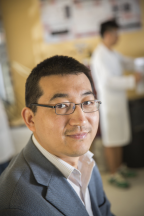
Hamed Shahsavan is an Assistant Professor in the Department of Chemical Engineering at the University of Waterloo, where he has been employed since 2020 after completing an NSERC postdoctoral fellowship at the Max Planck Institute for Intelligent Systems. His research focuses on soft, stimuli-responsive materials for small-scale robotics and devices.
Education:
- Doctorate in Chemical Engineering (Nanotechnology), University of Waterloo, Canada (2017)
- Master of Applied Science in Chemical Engineering (Nanotechnology), University of Waterloo, Canada (2012)
- Bachelor of Science in Chemical Engineering, Sharif University of Technology, Iran (2009)
His research centers on smart polymers, liquid crystal elastomers, and 4D printing for soft robotics. Key innovations include light-responsive hydrogels, zwitterionic nanocomposites, and programmable shape-morphing materials that enable medical microrobots and adaptive structures. His work bridges nanotechnology, interfacial engineering, and microfabrication to create cytocompatible robotic systems.
Analysis of his 15 most recent publications (2022-2025) reveals a dominant focus on liquid crystal networks (40% of articles) and hydrogel-based actuators (35%), with emerging work on biohybrid microrobots. Key trends include multi-stimuli responsiveness (light/thermal/chemical), microscale 4D printing techniques, and applications in medical robotics and adaptive mechanical systems.
Scientific Awards:
- NSERC Postdoctoral Fellowship
He teaches core courses including CHE 102 (Chemistry for Engineers) and NE 335 (Soft Nanomaterials), but is not currently accepting graduate students. His research is conducted through the SMART-Lab, which develops stimuli-responsive materials for medical and industrial robotics applications. Recent news coverage highlights plant-based microrobots for medical use and recognition for top 2020 research papers.