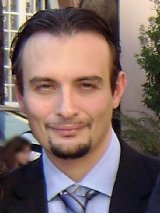
Yanbo Wang is an Associate Professor and Vice Head of the Wind Power Research Programme at AAU Energy, part of Aalborg University's Faculty of Engineering and Science. He leads research in Electric Power Systems and Microgrids, focusing on intelligent energy systems and flexible markets. His work emphasizes stability analysis, control strategies for hybrid AC/DC systems, and renewable energy integration. He supervises multiple PhD projects on topics like multi-port energy routers and wind power converter optimization. Research interests include power electronics, microgrid stability, and energy storage systems. Key projects include the EU-funded 'S3SF: Smart Energy Solutions for Sustainable Future' and machine learning-based control strategies for multi-energy systems. He has authored over 176 publications, with recent work on DC microgrid reliability, converter design, and offshore wind energy systems. His team collaborates internationally to advance grid-friendly technologies and smart energy solutions. Notable contributions include advanced control schemes for retired batteries in DC microgrids and stability assessment methodologies for offshore wind inverters. He advises on six PhD projects and maintains a lab focused on renewable energy systems and power electronics innovation.
Hans Klein is an Associate Professor and Director of Undergraduate Studies at the Jimmy and Rosalynn Carter School of Public Policy, part of the Ivan Allen College of Liberal Arts at Georgia Institute of Technology. His research focuses on institutions and policy processes related to large technical systems like the Internet and surface transportation. He has held visiting roles at Princeton University, the Hertie School of Governance, and the Paris School of Mines. Education: Ph.D. in Political Science, MIT (1996) M.S. in Technology and Policy, MIT (1993) B.S. in Electrical Engineering & Computer Science, Princeton University (1983) Research Interests: Internet governance, globalization, and democratic accountability mechanisms Media institutions, digital persuasion, and propaganda Intelligent transportation systems (ITS) policy and institutional design Urban transit policy, including the Atlanta Beltline project Social construction of technology and policy frameworks Professional Experience: Prior roles as software developer, international marketer, and policy analyst Service on advisory committees for ICANN, the Transportation Research Board, and Atlanta’s Telecommunications Policy Advisory Committee Presentations on information warfare and political warfare at institutions like the US Special Operations University Advising & Grants: Contributed to policy design for ICANN, ITS national programs, and the Atlanta Beltline Recipient of DAAD and Chateaubriand fellowships for international academic collaborations Labs & Teams: Active in interdisciplinary policy teams focused on transportation infrastructure, digital governance, and media ethics.
Dr. Tim Oates is a Professor in the Department of Computer Science and Electrical Engineering at the University of Maryland, Baltimore County . His research spans machine learning, artificial intelligence, and brain-machine interfaces, with a focus on weakly supervised methods, human-in-the-loop reinforcement learning, and grounded policy development for robotics. Ph.D., Computer Science, University of Massachusetts, Amherst, 2000 M.S., Computer Science, University of Massachusetts, Amherst, 1997 B.S., Computer Science and Electrical Engineering, 1989 Current research threads include: Developing non-invasive brain injury severity assessment via medical time series Modeling human brain development through computational frameworks Designing algorithms for autonomous robotic learning Recent publications highlight AI security mechanisms (backdoor detection via tensor decomposition, matrix factorization) Medical applications (3D artery reconstruction, skin lesion diagnosis, EEG denoising) Neuro-symbolic integration (holographic representations, language-guided reinforcement learning) Mathematical reasoning (schema-based problem solving, subitizing algorithms) Contact: oates@cs.umbc.edu | Office: 336 Information Technology and Engineering (ITE) Building
Professor Zoheir Sabeur is Professor of Data Science and Artificial Intelligence at Bournemouth University (2019–present) and Head of the Processes and Behaviour Understanding (PRO_BU) Research Group. He concurrently serves as Visiting Professor of Data Science at Colorado School of Mines (2017–present) and held the position of Science Director at the IT Innovation Centre, University of Southampton (2009–2019). Over three decades he has led more than 30 large-scale projects as Principal Investigator, securing over £12 million of funding from the European Commission, UKRI, DSTL, NERC, EPSRC and industry. Education PhD in Theoretical Physics, University of Glasgow (1990) MSc in Theoretical Physics, University of Glasgow (1986) BSc First-Class Honours in Physics and Applied Mathematics, Université d'Oran (1984) Advanced Leadership Programme, Ashridge Business School (2011) Research Interests Professor Sabeur’s research focuses on the fundamental theory and application of data science and artificial intelligence to understand complex human, natural and industrial processes and behaviours. His work spans multi-modal sensing, big-data analytics and machine-learning algorithms that extract actionable knowledge from large heterogeneous datasets. Application domains include: Healthcare: AI-driven diagnostics and prognostics for chronic diseases such as COPD, asthma and cancers through omics and phenotypic data integration. Environmental & Climate: Earth-observation analytics for wildlife migration and climate-change impact assessment using satellite data and global grid systems. Maritime & Cyber-Physical Security: Real-time risk assessment for shipping in extreme environments, smart-city safety and critical-infrastructure protection using computer vision and sensor fusion. Recent research has produced novel AI classifiers that analyse lung-auscultation audio signals to grade COPD severity, as well as digital-twin frameworks for detecting malicious behaviour in urban spaces. Scientific Awards & Recognition Fellow of the British Computer Society (FBCS) Fellow of the Institute of Marine Engineering, Science & Technology (FIMarEST) Chartered Engineer (CEng) and Chartered Physicist (CPhys) Multiple ORS Awards (1987, 1988, 1989) Grants & Doctoral Supervision Professor Sabeur has secured and led more than 40 funded projects since 1996, including recent grants such as INSIGHT (NIHR, 2024) and S4AllCities (H2020, 2020). He currently supervises three ongoing PhD students at Bournemouth University and has successfully graduated three others, covering topics from computational hydrodynamics to AI-based respiratory-disease analytics. He welcomes enquiries from prospective postgraduate researchers interested in data science, AI and interdisciplinary applications under schemes such as UKRI and Horizon Europe.
Abdeldjelil Belarbi is the Hugh Roy and Lillie Cranz Cullen Distinguished Professor of Civil and Environmental Engineering at the University of Houston’s Cullen College of Engineering. He holds fellowships from the American Concrete Institute (ACI), Structural Engineering Institute (SEI), American Society of Civil Engineers (ASCE), and other leading organizations. His academic career spans over three decades, including roles as Department Chair (2009–2013) and faculty positions at the University of Missouri-Rolla (now Missouri S&T), where he contributed to research centers like the Intelligent Systems Center and Materials Research Graduate Center. Belarbi’s education includes a Ph.D. (1991) and M.S. (1986) in Civil/Structural Engineering from the University of Houston, and a B.S. (1983) from the University of Sciences and Technology of Oran, Algeria. His research focuses on sustainable infrastructure, corrosion-resistant materials, FRP-reinforced concrete, and seismic resilience. He has pioneered studies on prestressed concrete girders, bridge pile repair, and shape memory alloy confinement for columns. His 150+ publications emphasize FRP applications, structural durability, and innovative repair techniques. Awards include the Cullen Distinguished Professorship and recognition as a Fellow in multiple engineering societies. Belarbi has advised numerous students and led interdisciplinary projects on infrastructure sustainability and advanced materials. Awards: Cullen Distinguished Professorship, ACI Fellow, ASCE Fellow, IIFC Fellow Key Research: FRP-reinforced concrete, corrosion-resistant steels, bridge retrofitting, shape memory alloys Leadership: Department Chair (UH), Dean’s Teaching Scholar (MU-Rolla)
Dr Mark J. Hill is a Lecturer in Cultural Computation at King's College London's Department of Digital Humanities within the Faculty of Arts & Humanities. He holds a DPhil from the University of Oxford, an M.Sc. in Political Theory from the London School of Economics, and a B.A. in Political Science from Concordia University. His interdisciplinary work bridges digital humanities, computational social science, and intellectual history. Research Focus: Social network analysis, public discourse analysis via large datasets, quantitative text analysis, and critical evaluation of digital methods. Current Projects: Investigating discourse patterns across historical and contemporary contexts, including Early Modern Nonconformist networks and digital discourse around football fandom. He collaborates with institutions like the University of Helsinki and engages with public sectors on digital research projects. Teaching includes digital research methods and critical thinking in the digital age. His affiliations include the Computational Humanities Research Group and the Centre for Digital Culture at King's College London.
Brian Kulis is an Associate Professor at Boston University with appointments in the Department of Electrical and Computer Engineering, Computer Science, Systems Engineering, and the Faculty of Computing and Data Sciences. He holds the Peter J. Levine Career Development Professorship and has previously been an Amazon Scholar at Alexa AI (2019–2023) and an assistant professor at Ohio State University (2012–2015). His research focuses on machine learning, including large-scale optimization, metric learning, deep learning, Bayesian methods, and applications in audio and visual data analysis. He earned his PhD in Computer Science from the University of Texas at Austin (2008) and a BS in Computer Science and Mathematics from Cornell University. Key awards include the NSF CAREER Award (2015), CVPR Best Student Paper (2008), and ICML Best Student Paper (2007, 2005). His work spans publications in top venues like CVPR, NeurIPS, ICML, and ECCV, emphasizing scalable algorithms and domain adaptation. Current research explores metric learning, adversarial audio augmentation, and HPC anomaly detection. He advises multiple PhD students and collaborates on grants such as the NSF Traineeship for Sustainable Energy Solutions (2024). He teaches advanced courses in machine learning, deep learning, and data structures. His lab focuses on foundational and applied ML challenges, with affiliations in the Intelligent, Autonomous & Secure Systems group. Recent service includes senior area chair roles at AAAI, NeurIPS, and ICML.
Eun Jeong Cha is an Associate Professor in the Department of Civil and Environmental Engineering at the University of Illinois at Urbana-Champaign. She holds a Ph.D. (2012) and M.S. (2009) from Georgia Institute of Technology, and a B.S. (2006) from Seoul National University. Her research focuses on risk-informed decision-making for infrastructure resilience under natural hazards, including hurricane risk assessment under climate change, interdependent infrastructure systems analysis, and seismic risk mitigation. Education: Ph.D. in Civil Engineering, Georgia Tech (2012) M.S. in Civil Engineering, Georgia Tech (2009) B.S. in Architectural Engineering, Seoul National University (2006) Her research interests span structural reliability, disaster risk management, and the integration of climate change impacts into infrastructure design. Key areas include hurricane risk modeling, interdependent infrastructure recovery, and socially-aware retrofit prioritization. She has received awards such as the ASCE/EMI Probabilistic Methods Committee Student Paper Award (2012) and is a Fellow of the Next Generation of Hazards and Disasters Researchers (2015). Dr. Cha leads the R4 Group, advancing methodologies for resilient infrastructure systems. She actively contributes to professional societies like ASCE, serving on committees for load combinations and climate adaptation. Her work bridges engineering, risk analysis, and policy to enhance community resilience against extreme events.
Youssef M A Hashash is the W. W. Grainger Chair and Professor in the Department of Civil and Environmental Engineering at the University of Illinois. His research focuses on geotechnical and earthquake engineering, with emphasis on seismic site response analysis, soil-structure interaction, and advanced computational methods like the Discrete Element Method (DEM). He has led projects on infrastructure resilience, including studies of buried water reservoirs, railway systems, and post-earthquake reconnaissance. Hashash has developed influential models for site amplification in Central and Eastern North America, contributing to seismic hazard assessments. His work integrates experimental centrifuge testing, numerical simulations, and field data. Notable contributions include guidelines for implementing NGA-East ground motion models and advancements in pore-water pressure generation models for liquefaction evaluation. Key Research Areas: Ground movement, seismic response, soil dynamics, and geotechnical data systems Major Projects: NGA-East Geotechnical Working Group, Beirut Explosion Analysis, and LA Metro Tunnel Projects Recipient of prestigious awards including the NAE Membership (2022), PECASE (2000), and Walter L. Huber Prize (2006), he collaborates internationally on earthquake engineering and geotechnical innovations. His lab develops tools like the DEEPSOIL software for nonlinear site response analysis and explores AI applications in geotechnical data interpretation.
Pavlos S. Georgilakis is a Professor at the School of Electrical and Computer Engineering, National Technical University of Athens (NTUA), specializing in modern techniques for power system analysis, optimization, and renewable energy integration. He holds a Diploma (1990) and PhD (2000) in Electrical Engineering from NTUA. His career includes roles as Lecturer (2009) and Associate Professor (2018–2023) at NTUA, and Assistant Professor at the Technical University of Crete (2004–2009). Research focuses on power transmission/distribution systems, transformer design, and applying AI/optimization for grid efficiency. He led 10 research projects, including Horizon 2020 initiatives SHAR-Q, WiseGRID, and NobelGrid. He authored 3 books and over 230 publications (SCOPUS citations: >5,500). Editor of IET Smart Grid, Energies, and Electricity journals; senior IEEE member. He supervised 4 doctoral, 9 master’s, and 76 diploma theses. Awards include the 2013 Best Reviewer Award from Electric Power Systems Research. Active in energy storage, smart grids, and decentralized energy resource integration.
Dr. Marjan Alavi is an Assistant Professor at McMaster University's W Booth School of Engineering Practice and Technology, affiliated with the Mechanical Engineering department as an Associate Member. She holds a Professional Engineer (P.Eng.) license in Ontario and has over 15 years of academic and industrial experience in electrical engineering. Her research focuses on model-based and data-driven approaches for fault diagnosis, prognosis, and fault-tolerant control in hybrid systems, with applications in power electronics, energy systems, and smart infrastructure. Education: B.Sc. (2004) from K.N. Toosi University of Technology, M.Sc. (2007) from Sharif University of Technology, Ph.D. (2014) from Nanyang Technological University (Singapore), and a Postdoc (2015) at the University of Toronto's Energy Systems Group. Teaching: Instructs courses on Real-Time Systems (SEP 6ES3, SFWRTECH 4ES3), Smart Cities and Communities (SMRTTECH 4SC3), integrating real-world engineering challenges with theoretical frameworks. She emphasizes hands-on learning through remote labs and experiential projects. Professional Contributions: Serves as IEEE Toronto Section Executive Member, Technical Reviewer for IEEE Transactions on Industrial Electronics, and Vice Chair of IEEE Industrial Applications Society (2015). Founded Intelligent Diagnosis Corporations, a Canadian startup focused on research and innovation in diagnostics technologies. Key Projects: Developed fault diagnosis strategies for electro-hydraulic actuators, vehicle-mounted infrastructure monitoring systems, and remote laboratory platforms for emergency traffic control. Research spans predictive maintenance, smart city technologies, and railway systems certification benefits. Awards: Recipient of the Singapore International Graduate Award (SINGA) 2010. Recognized for her work in bridging academic research with industrial applications, particularly in enhancing system reliability through advanced control methodologies.
Professor David Wagg is a Professor of Nonlinear Dynamics and Departmental Director of Research and Innovation at the School of Mechanical, Aerospace and Civil Engineering, University of Sheffield. His research focuses on nonlinear structural dynamics, digital twins, vibration suppression, and real-time hybrid testing. He holds a BEng and PhD from University College London and previously served as a Professor at the University of Bristol (2008–2013). Notable awards include the EPSRC Advanced Research Fellowship (2004–2009). Education: BEng and PhD in Nonlinear Dynamics from University College London. Research Interests: Digital twins for dynamics applications, nonlinear structural dynamics, vibration control, real-time hybrid testing, and identification methods for nonlinear dynamics. His work emphasizes applying nonlinear models and control strategies to engineering challenges like wind turbines and large civil infrastructure. Grants & Leadership: Co-Investigator for EPSRC grants on CITCoM and Digitwin, coordinator of the Marie Curie ETN DyVirt, and PI for the EPSRC programme on Engineering Nonlinearity (2012–2017). He co-authored Nonlinear Vibration with Control (2015) and edited books on structural dynamics. Lab/Teams: Involved in the Laboratory for Verification and Validation (LVV) and leads research groups focused on digital twin applications, inerter-based systems, and structural health monitoring.
Angelo Cervone is a Professor at Delft University of Technology's Department of Astrodynamics & Space Missions within the Faculty of Aerospace Engineering. His research focuses on advanced propulsion systems, CubeSat technology, additive manufacturing for space applications, and space systems design. He leads projects like LUMIO, a CubeSat mission to monitor lunar meteoroid impacts, and has contributed to the development of green propellants and smart composite structures with embedded sensors. His work integrates cutting-edge manufacturing techniques like laser powder directed energy deposition with propulsion system optimization, emphasizing sustainable and robust space technologies. Cervone has authored over 130 publications and edited the book Adaptive On- and Off-Earth Environments , reflecting his expertise in off-world infrastructure and robotic production systems. He received the Rhizome Award (2021) for advancing autarkic systems in off-Earth habitat development. Key Projects: LUMIO CubeSat mission, Rhizome habitat system development, smart propellant tank design Research Themes: CubeSat propulsion, lunar exploration, additive manufacturing for space, in-situ resource utilization His articles highlight advancements in micro-thrusters, structural health monitoring via fiber optics, and autonomous navigation systems for deep-space CubeSats. Cervone collaborates globally on missions requiring innovative propulsion architectures and materials science breakthroughs.
Dr. Abubakar Bello is a Senior Lecturer in Criminal Justice and Program Leader at Edge Hill University's School of Law, Policing, and Criminal Justice. Previously, he held roles at Western Sydney University, including Academic Program Advisor and Lecturer in Cyber Security and Behaviour. He holds a PhD in Cyber Criminology, an MBA in Business Law and Technology, and degrees in Computer Science. His research focuses on interdisciplinary approaches to cyber security risks, threat intelligence models, and behavioral aspects of cyber crime. Education: PhD (Cyber Criminology, Murdoch University), MBA (Business Law & Tech, Western Sydney University), MSc & BSc (Computer Science, University of Wolverhampton). Research Interests: Combating cyber crime through AI and machine learning, secure systems design, and behavioral cybersecurity. Key areas include ransomware defenses, social engineering, and cybersecurity frameworks for diverse populations. Grants & Projects: Awarded funding for initiatives such as 'Social Engineered Payment Diversion Fraud' (NSW Cyber Security Network), 'Brain-Inspired Algorithm for Network Anomaly Detection' (DST Group), and 'Cyber Security Awareness Framework' (ECR Grant). Awards: 'Award for Teaching and Learning Contributing to Public Good.' Active in professional networks like the International Centre on Racism and Centre for Applied Criminal Justice Research. Labs & Collaboration: Engages in cyber investigations, forensics, and community outreach through initiatives like Western Cyber Aid. Serves as a consultant for corporate espionage cases and a speaker on ransomware and AI in law enforcement.
Prof. Dr. Ben Wagner is a Professor of Media, Technology & Society at Inholland University, Director of TU Delft's AI Futures Lab on Rights and Justice, and Professor of Human Rights & Technology at IT:U. His work bridges social sciences, technology, and human rights, focusing on digital governance, AI ethics, and societal impacts of technological change. He holds a PhD from the European University Institute (2013) and has led institutions like the Center for Internet & Human Rights (Viadrina) and the Sustainable Computing Lab (WU Wien). Key initiatives include Inholland's Digital Rights Research Team (DRRT), Sustainable Media Lab (SML), and contributions to the European Cloud for Heritage OpEn Science (ECHOES). His research emphasizes designing accountable tech systems, digital rights frameworks, and sustainable digital infrastructures. Recent work addresses gaps between legal/ethical guidelines and public sector data practices, AI governance across nations, and audit mechanisms for platform transparency. Awards include the 2023 Best Paper Award at HICSS for AI governance research and a 2013 Best Student Paper at Internet Science. Collaborations span academia, governments, and industries to shape equitable tech policies. Active in advisory roles for ENISA, Patterns Journal, and the UKRI Trustworthy Systems Hub.