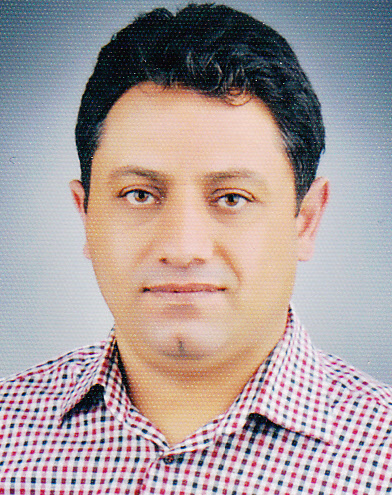
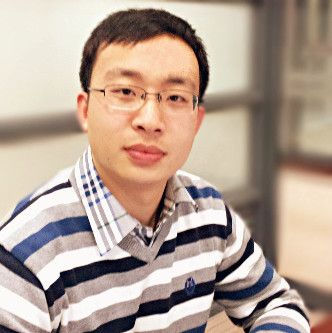
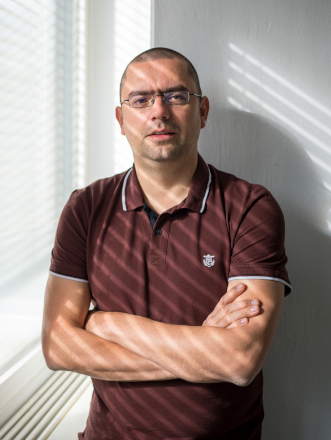
Dr. Amir Taherizadeh is an Assistant Professor in Strategic Management at the DeGroote School of Business, McMaster University . His research focuses on innovation dynamics and digital transformation in small and medium-sized enterprises (SMEs), particularly analyzing how organizations leverage emerging technologies to gain competitive advantage in volatile markets. His scholarly work spans AI-driven digital transformation frameworks Critical analysis of open innovation theories Comparative studies of innovation practices in Germany, China, and Malaysia Coordination mechanisms in open-source software development Business-technology integration strategies Dr. Taherizadeh partners with businesses and non-profits to develop management case studies, enriching his teaching with real-world insights. His recent publications emphasize artificial intelligence in healthcare , cross-sector collaboration , and organizational adaptation to disruptive technologies. Contact: amir.taherizadeh@mcmaster.ca
Alessandro Vespignani serves as the Director of the Network Science Institute and Sternberg Family Distinguished University Professor at Northeastern University with interdisciplinary appointments across the College of Computer and Information Science, College of Science, and Bouvé College of Health Sciences. He leads the MOBS Lab, which focuses on developing innovative mathematical models and computational tools for understanding complex networks and systems. His work bridges theoretical network science with practical applications in public health, particularly in epidemic modeling and forecasting. Vespignani's research centers on computational epidemiology and the application of network science to public health challenges. His primary interests include complex systems and networks, data-driven computational modeling of epidemics, and the integration of within-host and between-host dynamics. He investigates biological and health systems through network medicine frameworks and develops predictive models for complex systems. Recent work has expanded into examining the network structures underlying both natural and artificial learning systems, exploring human-AI coevolution. His pandemic response research has gained significant attention, particularly his work on aircraft-based wastewater surveillance as an early warning system for emerging diseases. Analysis of Vespignani's recent publications reveals a strong emphasis on methodological advances in epidemic modeling combined with practical public health applications. His work spans from theoretical multi-scale modeling frameworks to practical tools like Epydemix, an open-source Python package. A notable trend is the increasing integration of AI and machine learning with traditional epidemiological approaches. His research demonstrates growing focus on spatial dimensions of disease transmission and collaborative forecasting efforts across multiple disease contexts including influenza, West Nile virus, and SARS-CoV-2 variants. Vespignani has received significant scientific recognition: Named among the Highly Cited Researchers 2024 by Clarivate Recognized as one of the top 2% scientists worldwide by the 2024 Stanford University Annual Assessment Previously named among the Highly Cited Researchers 2023 by Clarivate While specific advisees aren't detailed in available materials, Vespignani's leadership of the Network Science Institute and MOBS Lab indicates substantial mentoring responsibilities. His research has attracted significant funding, including CDC collaborations to establish a 'National Weather Service' for infectious diseases and partnerships with Ginkgo Bioworks supported by the Gates Foundation. The Epistorm Innovation Center represents another major collaborative research initiative under his direction, with its first annual meeting hosted at Northeastern University. Vespignani directs the MOBS (Modeling Of Biological and Social) Lab, which maintains joint affiliations with the Department of Physics, Department of Health Sciences, and Khoury College of Computer Sciences. The lab focuses on developing mathematical models to characterize, understand, and anticipate large-scale complex networks. Current research directions include computational epidemiology for pandemic response, with particular emphasis on innovative surveillance approaches. The MOBS Lab is actively expanding its team with expertise in computational and applied statistics to address increasingly complex challenges at the intersection of network science, epidemiology, and artificial intelligence.
Professor AYTAÇ GÜVEN is a faculty member at Gaziantep University's College of Engineering, Department of Civil Engineering, specializing in Fluid Mechanics and Numerical Modeling . With a PhD from Gaziantep University (2008), he progressed from Research Assistant (2001-2008) to Professor (2017). His research focuses on Hydrology , Climate Change Impact on water resources, Dam Safety , and Hydropower Assessment using Genetic Programming and Neural Networks . He served as Department Head (2020-present) and Vice Head (2009-2014). Education: PhD (Civil Engineering, Gaziantep University, 2008) MS (Civil Engineering, Gaziantep University, 2005) BS (Civil Engineering, Gaziantep University, 2000) His research interests span: Climate change adaptation in water resources Advanced numerical modeling for hydraulic structures Hydropower potential assessments Scour and sediment yield prediction Machine learning applications in hydrology Dam failure risk analysis His 57 peer-reviewed publications (including 2 books) emphasize hybrid modeling techniques, with recent work on CMIP6 climate scenarios , steppe spillways , and dam safety tools . He has advised 5 PhD and 21 Master's theses. Scientific awards include: 2024 Stanford Career Impact Award 2018 Best PhD Thesis (Baraj Güvenliği Derneği) 2016 Gaziantep University Science Award 2010 Best Master's Thesis (Baraj Güvenliği Derneği) 2018 Best Presentation (International Academic Association)
Dr. Viet-Huong Nguyen serves as an Associate Professor in Pharmacy Practice at Chapman University's School of Pharmacy, located at the Rinker Health Science Campus. Her expertise spans epilepsy, stroke, genetics, neuropharmacology, and epidemiology, with a focus on clinical and translational research. Her educational background includes: Bachelor of Arts in Biology and Classics with emphasis in Literature and Mythology from University of Southern California (2001) Master of Science in Cell and Neurobiology from University of Southern California (2003) Doctor of Pharmacy from University of California, San Francisco (2007) Master of Public Health in Epidemiology from University of California, Los Angeles (2014) Dr. Nguyen's research primarily focuses on epilepsy and stroke, with particular interest in the pharmacogenetics of drug response and resistance in epilepsy. She is an active member of GENESS, an international consortium dedicated to identifying genes causing genetic epilepsies including Juvenile Myoclonic Epilepsy, Childhood Absence Epilepsy, and Lafora Epilepsy to develop curative therapies. Her work bridges basic neuroscience with clinical applications, investigating molecular signaling pathways of the central nervous system and their implications for pharmacotherapy. She has contributed significantly to stroke outcomes/health services research, examining risk factor management and treatment protocols across multiple healthcare settings. Her extensive publication record demonstrates a consistent focus on neuropharmacology, with particular emphasis on epilepsy management and stroke care. The publications span clinical guidelines, pharmacogenetic research, and innovative approaches to treatment. Her work shows progression from basic pharmacokinetic studies to complex clinical applications and health services research, with increasing focus on genetic factors influencing drug response. The publications reveal a strong collaborative approach, frequently working with international research teams across multiple institutions. Her notable recognition includes: Fellowship grant from the American Foundation of Pharmaceutical Education (AFPE) to study drug transporters and pharmacogenetics in drug resistant epilepsy Dr. Nguyen has mentored and precepted over 80 students and residents from VAGLAHS, USC, UCSF, UOP, and Western University Schools of Pharmacy. She previously served as an Adjunct Assistant Professor of Pharmacy Practice at USC School of Pharmacy for 8 years, contributing to curriculum development for epilepsy and stroke education. Her clinical work has included developing the Anti-Epileptic Drug Response Phenotype Database and establishing pharmacist-managed Epilepsy and Stroke Prevention clinics with expanded scope of practice. She was instrumental in developing the PGY2 specialty pharmacy practice residency in Neurology at VA Greater Los Angeles Healthcare System (VAGLAHS), the first neurology pharmacy residency eligible for ASHP accreditation. Her clinical practice has centered around the VAGLAHS Epilepsy Center of Excellence and Stroke Program, where she implemented innovative pharmacy services that have improved patient outcomes through specialized pharmacotherapy management.
Darius Plikynas is a Senior Researcher at the Smart Technologies Research Group within the Institute of Data Science and Digital Technologies at Vilnius University . His research integrates computational intelligence methods with agent-based simulation to model cognitive and social processes. Position: Senior Researcher, Chief Researcher in the Project Address: Akademijos St. 4, room 224, Vilnius Contact: +370 5 210 9333, +370 620 95101 Email: darius.plikynas@mif.vu.lt Personal page: http://www.dariusplikynas.eu Dr. Plikynas' research spans interdisciplinary domains including neuroscience, physics methods, complexity theory, and distributed cognitive systems. He led the 2017–2019 project "Development of a metric, conceptual and simulation model of the social impact of cultural processes" under the LMT Research Group Funding Program. His recent publications (2016–2025) reflect trends in combining machine learning with social science questions (fake news analysis, propaganda detection) and agent-based modeling of cultural/social capital dynamics. Key collaborations include Leonidas Sakalauskas, Rimvydas Laužikas, and Arunas Miliauskas. Scientific supervision includes doctoral students: Andrius Budrionis (University of Tromsø, Norway) Ieva Rizgelienė (PhD topic: "Propaganda detection and classification in social media using hybrid deep learning") He also serves as an expert at Vilnius University and has contributed to projects involving: 2D financial market visualization Neural oscillation-based cognitive modeling Indoor navigation for blind individuals Cultural participation impact on social capital
Prof. Vicente Carabias-Hütter is a full Professor at the Zurich University of Applied Sciences (ZHAW), Winterthur, where he heads the Research Group "Sustainable Energy Systems and Smart Cities" and serves as Coordinator of the cross-institute "ZHAW Platform Smart Cities & Regions". Since 2013 he also lectures in Technology Foresight within the School of Engineering. Education & Continuous Learning MSc ETH in Environmental Sciences, ETH Zurich (1996–2000) Certificate of Advanced Studies in Management Education, ZHAW (2014) Continuing-education certificates in foresight, scientific writing & team leadership, JRC-IPTS (2011–2014) Research Interests Carabias-Hütter’s work integrates sustainable energy systems , smart-city innovation , and technology foresight . He investigates socio-technical transitions at neighbourhood, city and regional scales, combining participatory scenario development, behavioural energy research, and living-lab experimentation. Key themes include: Co-creation of smart-city visions and pathways Community-centred energy interventions (apps, games, social norms) Life-cycle and social sustainability assessment of emerging energy technologies Policy-oriented foresight to support the Swiss Energy Strategy 2050 and EU grand challenges Publications & Knowledge Outputs From 1997 to 2021 he (co-)authored 28 peer-reviewed journal articles plus numerous book chapters and policy briefs. Recent outputs (2018-2021) reveal a shift from methodological foresight papers toward empirical, intervention-based studies that evaluate digital community platforms, game-based energy savings, and integrative smart-city governance frameworks. Scientific & Professional Service Principal investigator or co-lead on >20 Swiss and EU projects (PEDvolution-WIN, Swiss Smart City Outreach, Living Labs Interfaces, etc.) Advisor to MSc programmes in Environment & Natural Resources and in Engineering at ZHAW Member of Future City Alliance, Smart City Hub Switzerland, EELISA European alliance Active reviewer for SNF Ambizione and various EU framework programmes Labs, Teams & Networks He leads the Team Sustainable Energy Systems within the ZHAW Institute of Sustainable Development and co-steers the WinLab Winterthur living-lab infrastructure. He also coordinates interdisciplinary teams across the ZHAW Platform Smart Cities & Regions, linking engineering, social sciences, and digital technologies.
Zhicheng Ji is an Assistant Professor of Biostatistics & Bioinformatics at Duke University, affiliated with the Division of Integrative Genomics. His research focuses on developing computational methods for single-cell RNA-seq , spatial transcriptomics , and genomic data analysis . He teaches courses like BIOSTAT 824: Case Studies in Biomedical Data Science . Research Highlights : Statistical modeling of microbiome data Machine learning for cell segmentation T cell immunology in cancer Multi-omics data integration Spatially variable gene detection Foundation models for epigenetics Scientific Awards : NIGMS Grant (2024-2029) for spatial transcriptomics NIEHS Grant (2023-2028) on PFAS exposure NSF ERC PreMiEr (2022-2027) NCI Grant (2022-2027) on ferroptosis
Dr. rer. nat. Joscha Grüger is a researcher at the Experience-based Learning Systems department of the University of Trier . His work bridges artificial intelligence, medical informatics, and software engineering, focusing on AI-driven solutions for healthcare and data-intensive applications. Current research projects include: KI-AIM : AI-based anonymization in medicine KIAFlex : Interactive AI assistance for predictive and flexible control in discharge management DaTreFo : Encrypted data stewardship for medical research Pre-OnkoCase : Case-oriented decision support for skin cancer treatment His publications highlight expertise in probabilistic programming, IoT-enhanced event logs, and clinical decision support systems. Collaborations span international conferences like Petri Nets 2025, ICCBR, and RCIS. Contact: Joscha.Grueger@dfki.de .
Professor Dilek Cetindamar Kozanoglu is a prominent academic at the School of Computer Science , University of Technology Sydney (UTS), holding a formal title of Professor of Contemporary Technology Management . With a distinguished career spanning multiple continents and institutions, she contributes to global research on digital transformations, entrepreneurship, and technology-innovation management. B.S. in Industrial Engineering (Bogazici University) MA in Economics (Bogazici University) Ph.D. in Management (Istanbul Technical University) Entrepreneurship Certificate (Harvard Business School) Regional Entrepreneurship Acceleration Program Certificate (MIT) Her research intersects technology management and entrepreneurship, focusing on digital transformation , startup ecosystems , AI literacy , and gender equality in tech industries . Through empirical studies on Turkish accelerators, Australian digital workplaces, and global technology policies, she develops frameworks for organizational resilience and innovation orchestration. Notable scientific awards include: Turkish Academy of Sciences Encouragement Award (2003) Best Book Award, International Association for Management of Technology (2012) PICMET Fellow Award (2019) She leads UTS initiatives like Techcelerator (2021-2024) and co-directs the iDEAS Research Hub (2025-present), while maintaining affiliations with DigiSAS.Lab and the Centre for Research on Education in a Digital Society.
Sven Apel is Professor of Computer Science at Saarland University, where he holds the Chair of Software Engineering and directs the Saarbrücken Graduate School of Computer Science within the Saarland Informatics Campus. His research aims to advance software engineering into an era of intensive automation by developing methods, tools, and theories for building efficient, reliable, and maintainable software systems, with a strong emphasis on the human factor and interdisciplinary inquiry. His primary research interests include software variability and configuration, AI-based program generation and optimization, socio-technical software analysis, and the application of empirical and neurophysiological methods to study program comprehension. He actively collaborates with industry partners such as Siemens AG, Bosch Engineering, and Airbus Helicopters to apply his research in real-world contexts. His recent publications demonstrate a strong trend towards integrating artificial intelligence and neurocognitive methods into software engineering, focusing on configurable systems, performance modeling, debugging processes, and the scientific validity of empirical studies. His work spans top venues like ICSE, FSE, ASE, and IEEE TSE. ERC Advanced Grant “Brains On Code” ASE Fellow ACM Distinguished Member Hugo Junkers Award for Research and Innovation Heisenberg Professorship (DFG) Emmy-Noether Fellowship (DFG) Best Doctoral Dissertation Awards (University of Magdeburg, Ernst-Denert Foundation, 2007) Most Influential Paper Awards (SPLC'19, ICPC'22, GPCE'23) ACM SIGSOFT Distinguished Paper Awards (ICSE'15, ICSE'21) Best Paper Awards (SPLC'11, Modularity'15, Academy of Management'18) Distinguished Reviewer Awards (ASE'18, ICSE'24, FSE'24) Sven Apel has secured significant research funding, including an ERC Advanced Grant (€2.5M) and multiple DFG grants as Principal Investigator and Project Leader. He has advised numerous PhD and Master’s students and is actively involved in the academic community through program committees for major conferences like ICSE, FSE, and ASE. His work is conducted within a collaborative environment that includes close partnerships with researchers at the Max Planck Institute for Informatics and other institutions within the Saarland Informatics Campus.
Oliver Karras is a researcher, data scientist, and lecturer at the Data Science and Digital Libraries research group at TIB – Leibniz Information Centre for Science and Technology. He holds a BSc, MSc, and PhD in Computer Science from Leibniz University Hannover. His research focuses on FAIR scientific knowledge, Open Research Knowledge Graph (ORKG), and national research infrastructure projects like NFDI-4Ing and FAIR-DS. He is a member of the German Informatics Society (GI) and spokesperson of the Requirements Engineering (RE) group, contributing to conferences and journals as a reviewer. Previously, he was a research associate and PhD student in the Software Engineering group at Leibniz University, leading the DFG project ViViReq on video integration in requirements engineering. His research interests include Data Science, AI, Knowledge Representation, Software Engineering, Requirements Engineering, Empirical Research, and Open Science. He has published over 60 papers in these areas, with notable contributions to knowledge graphs, FAIR data, and reproducibility frameworks. His work emphasizes organizing scientific knowledge for accessibility and collaboration across disciplines. He is actively involved in initiatives like the ORKG, promoting sustainable literature reviews and open science practices. His professional contributions extend to tool development, such as OntoAligner for ontology alignment and SciKGTeX for semantic annotation in LaTeX. Oliver Karras collaborates with institutions like Leibniz University, contributing to the NFDI consortium and energy research projects. His expertise bridges technical innovation and academic rigor, addressing challenges in knowledge management and reproducibility. His current roles include advancing TIB’s research infrastructure and fostering interdisciplinary collaboration through knowledge graph applications.
Dr. Charlotte Backerra is a Senior Lecturer for Modern History at Alpen-Adria-Universität Klagenfurt, with academic affiliations at Georg-August-Universität Göttingen, Technische Universität Darmstadt, Universität Stuttgart, and Johannes Gutenberg-Universität Mainz. Her research and teaching focus on early modern European history, dynastic structures, economic history, diplomatic practices, and intelligence studies. PhD in History from Johannes Gutenberg-Universität Mainz Certificate for Teaching at Universities from TU Darmstadt Co-editor of Studies in Monarchy & Money book series Board member of International Intelligence History Association Speaker for Women in Economic History network Her research explores the intersection of cultural, political, and economic history, emphasizing dynastic economic strategies in the Holy Roman Empire (1550–1650), crisis management, and environmental history of premodern Europe. Recent projects include source editions on the Pragmatic Sanction and environmental history. She has published extensively in peer-reviewed journals and edited volumes, with a 2018 monograph on Anglo-Austrian relations (1727–1735). Articles span legal pluralism, intelligence case studies, royal economic power, and environmental history. Scientific Awards: Christine de Pizan Mentoring Distinction (Mainz, 2015) Backerra advises graduate students and collaborates in academic networks, including editorial roles for Royal Studies Journal and Transnational Histories of the 'Royal Nation' . She has designed historical exhibitions on Mainz Citadel and public history initiatives.
Suchi Rajendran is an Assistant Professor with a joint appointment in the Department of Industrial and Systems Engineering and the Department of Marketing at the University of Missouri, Trulaske College of Business. She is also the Director of Undergraduate Studies in ISE and actively leads research in prescriptive analytics, operations research, and data-driven decision-making across healthcare, transportation, and business systems. Education: PhD in Industrial Engineering, Pennsylvania State University Her research focuses on applying advanced analytics to solve complex real-world problems. Key areas include optimizing healthcare delivery systems, supply chain and logistics (notably blood supply chains and port operations), marketing data analytics, and emerging transportation systems such as air taxis and electric vehicle infrastructure. She leverages predictive and prescriptive artificial intelligence to forecast demand and recommend optimal operational strategies. Her recent work, highlighted in university news up to 2025, demonstrates a strong trend toward interdisciplinary, AI-powered solutions in logistics, sustainability, and public service. She frequently collaborates with industry partners like Case New Holland and Schneider Electric, and has secured funding from agencies such as the Alaska Department of Transportation and the National Science Foundation. Scientific Awards and Recognitions: Richard Wallace Faculty Incentive Grant Bob Bloss Faculty Enhancement Grant Winemiller Excellence Award in Data Analytics NSF CHOT Scholar (Penn State) Service Enterprise Engineering Fellow DAAD-WISE Fellowship (Germany) Lean Six Sigma Black Belt Dr. Rajendran is actively involved in mentoring students, having advised honors-winning graduate and undergraduate researchers. She leads an NSF-funded Research Experiences for Undergraduates (REU) program that brings 10 students annually to Mizzou to work on AI-enabled operations engineering. Her grants support hands-on, interdisciplinary research that prepares the next generation of engineers and data scientists. She is affiliated with cutting-edge research initiatives involving simulation modeling, digital communication platforms, and AI integration in industrial systems. Her lab and team focus on developing practical, scalable solutions for logistics, healthcare, and sustainable transportation, often through collaborative, real-world projects with public and private stakeholders.
Yusaf Akbar is a Professor at the Department of Economics and Business at Central European University (CEU). His research focuses on business strategy, public policy, and emerging markets, particularly the sharing economy and non-market strategies. He has held research fellowships at the Institute for Advanced Study and visiting roles at the University of Trieste and Wirtschaftsuniversität Wien. His work bridges academic research with practical applications, including advising the European Commission and multinational corporations like Accenture and Siemens. Education: DPhil in Economics from the University of Sussex (2000). Key publications include EU Enlargement and Central Europe: Regulatory Convergence and the Multinational Enterprise and Global Antitrust: Trade and Competition Linkages . Upcoming books include Digitalization in Emerging Markets (Cambridge University Press, 2024) and an edited volume on emerging markets research agendas (Edward Elgar, 2025). Research interests emphasize strategic calibration in complex environments, AI-augmented decision-making, and systemic vulnerability management. He advises global firms on non-market strategies and has authored case studies for companies like ING Insurance, Vienna International Airport, and Hummus Bar. Professional roles include Founding Editor of the International Journal of Emerging Markets and Editorial Advisory Board member for Journal of Asia-Pacific Business . Teaching spans universities worldwide, including University of Michigan, Stockholm School of Economics, and Queen’s University.
Ivano Malavolta is an Associate Professor in Software Engineering at the University of Urbino , focusing on energy-efficient software, software architecture, and model-driven engineering (MDE). His research bridges robotics, mobile systems, and sustainability, emphasizing empirical methods and industrial applicability. Key Research Areas: Energy-efficient software, microservices, robotics systems, collaborative modeling, mobile application performance. Affiliations: Department of Software Engineering, University of Urbino. His recent publications highlight empirical studies on energy consumption patterns in robotics, mobile apps, and AI systems. He has contributed to frameworks like the Green Software Measurement Model (GSMM) and tools for architectural technical debt analysis. Notably, he has co-authored 15+ peer-reviewed articles in venues such as Journal of Systems and Software , Information and Software Technology , and ACM/IEEE conferences . His work often involves cross-platform comparisons (e.g., Electron vs. Web, Pandas vs. Polars) and systematic mappings of software engineering practices.