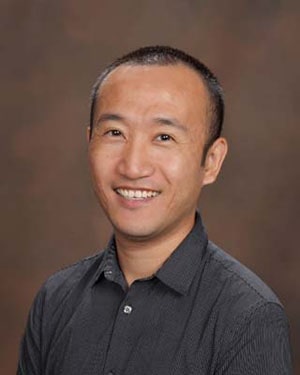
Min Ding is the Bard Professor of Marketing at Penn State's Smeal College of Business with a joint appointment in Information Sciences. Holding dual Ph.D.s (Marketing from UPenn; Molecular Biology from Ohio State), his interdisciplinary research spans artificial empathy, logical creativity methods, digital intelligence, and cultural theory. Research Domains: Develops frameworks including Logical Creative Thinking (LCT), Bubble Theory (socioeconomic development), and Hualish Culture. His technical work focuses on audio-visual analytics applications in marketing, including privacy-preserving face recognition and brand voiceprints. Leadership: Editor-in-Chief of Customer Needs and Solutions. Former VP of INFORMS Society for Marketing Science. Authored books on creativity methods, Chinese culture, and socioeconomic development. Awards: Recognized with the Journal of Marketing's Maynard Award (2007) and Journal of Retailing's Davidson Award (2012).
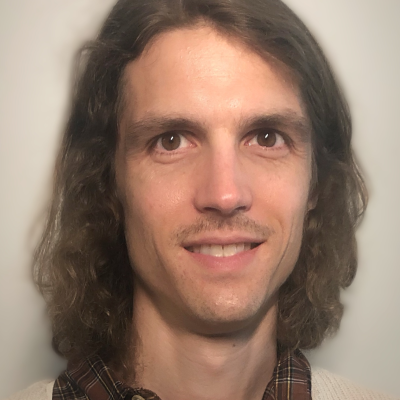
Nathan Dahlin is an Assistant Professor in the Department of Electrical and Computer Engineering at the University at Albany's College of Nanotechnology, Science, and Engineering. He holds a BS, MS, and PhD in Electrical Engineering and an MA in Applied Mathematics from the University of Southern California. Prior to joining UAlbany, he was a Postdoctoral Research Associate at the University of Illinois Urbana-Champaign and a senior audio DSP research engineer at Audyssey Laboratories. Dr. Dahlin's research focuses on fundamental problems in machine learning, stochastic control, optimization, and microeconomics, with applications in developing computationally efficient decision-making approaches for smart energy systems. His work emphasizes reliability in uncertain environments and risk management. His recent publications demonstrate strong focus on machine learning applications in control systems, energy management, and algorithm design. Articles frequently address topics like imitation learning, economic dispatch optimization, neural network transformation, and kernel-based learning methods, often with practical implementations in energy systems and smart grids. Dr. Dahlin is active in professional organizations including the Institute of Electrical and Electronics Engineers (IEEE) and the Association for the Advancement of Artificial Intelligence (AAAI). He serves as a reviewer for leading conferences and journals including AAAI Conference on Artificial Intelligence, IEEE Transactions on Control of Network Systems, IEEE Transactions on Power Systems, and IEEE Transactions on Smart Grid.
Marcella ASTRID is a Researcher at the University of Luxembourg's Interdisciplinary Centre for Security, Reliability and Trust (SnT), specifically within the CVI2 department. Her research focuses on advanced machine learning techniques applied to cybersecurity and computer vision challenges, particularly in the detection of synthetic media (deepfakes) and anomaly detection systems. She specializes in developing robust models that address vulnerabilities in adversarial scenarios and improve generalizability across diverse datasets. Key research areas include deepfake detection through spatio-temporal analysis, anomaly detection via novel training paradigms, and efficient neural network compression for resource-constrained environments. Her work bridges theoretical advancements in machine learning with practical applications in surveillance systems, autonomous robotics, and cybersecurity infrastructure. Recent contributions emphasize leveraging autoencoder weaknesses, pseudo anomaly generation, and localized attention mechanisms to enhance detection accuracy and model robustness. Marcella’s research also explores cross-modal learning (audio-visual synchronization) and semi-supervised methodologies to tackle data scarcity issues in critical domains like battery thermal imaging and multi-camera traffic classification. She actively publishes in top-tier venues and collaborates on interdisciplinary projects addressing real-world security and reliability challenges.
Prof. Frederic Fol Leymarie is a Professor in the Department of Computing at Goldsmiths, University of London. He specializes in AI, robotics, and computer graphics, with a focus on creative systems and their applications in art and biosciences. His work includes developing robots capable of artistic skills, interactive platforms like FoldSynth for molecular visualization, and projects like Mutator VR. He co-leads the MSc in Computer Games & Entertainment and teaches advanced topics in graphics and game design. His research spans shape understanding, AI-driven art, and interdisciplinary collaborations with bioscience specialists. Education: PhD in Computer Science from Brown University (2003) Key Projects: Mutator VR (2016–2020): An artistic VR project FoldSynth: Interactive tool for visualizing molecular structures Bioblox: Educational game for protein docking Research Interests: AI creativity, human-robot interaction, computer vision, and art-technology interfaces Prof. Leymarie leads London Geometry , a consulting group applying geometric algorithms to solve complex problems. His work bridges computational methods with artistic and scientific domains, emphasizing interdisciplinary innovation.
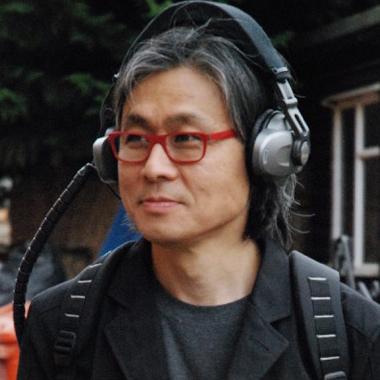
Prof Atau Tanaka is a Professor of Media Computing at Goldsmiths, University of London. His research focuses on embodied musical interaction, integrating physiological sensing, machine learning, and participatory design methodologies. He leads the EAVI (Embodied AudioVisual Interaction) group, exploring gestural interfaces, bio-interfaces, and audiovisual systems. Tanaka has held roles at institutions worldwide, including Sony CSL and Apple, and his work spans academic research and artistic performance. His educational background includes a Doctor of Musical Arts from Stanford University and degrees from Harvard and Peabody Conservatory. Research Interests: Embodied interaction, gestural computing, EMG-based musical interfaces, HCI, machine learning for live performance, and interdisciplinary art-science collaborations. Awards include recognition from Ars Electronica and Fraunhofer Institute. Publications highlight his work on telematic performance, EMG-based instruments, and audiovisual user interfaces. He explores topics like latency in networked performance and the entanglement of body signals with artistic expression. Tanaka’s projects include installations like Sonic Womb and collaborations with institutions such as the ZKM and SFMOMA.
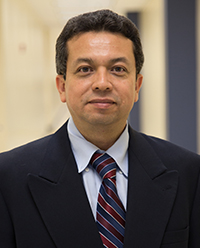
Armando Barreto is a Professor in the Department of Electrical & Computer Engineering at Florida International University (FIU). He holds a Ph.D. in Electrical Engineering from the University of Florida (1993), an M.S.E.E. from FIU (1989), and a Mechanical-Electrical Engineering degree from the National Autonomous University of Mexico (1987). His research focuses on digital signal processing with applications in biomedical systems, including EEG analysis, adaptive algorithms, neural networks, and real-time embedded systems. He also explores human-computer interaction through sensor technologies like MEMS, inertial measurement units, and multi-touch interfaces. His work addresses accessibility challenges for visually impaired users through dynamic image precompensation and assistive technologies. Key contributions include innovations in signal denoising, affective computing via pupil dynamics analysis, and multimodal data fusion for early detection of neurodegenerative diseases like Alzheimer’s. His research bridges theoretical signal processing with practical applications in healthcare, virtual reality, and wearable devices. Barreto’s publications span over three decades, demonstrating sustained leadership in sensor-based systems, medical signal processing, and computational neuroscience. He collaborates with interdisciplinary teams to advance technologies addressing clinical and accessibility challenges.
Carlos Busso is a Professor in the Department of Electrical and Computer Engineering at The University of Texas at Dallas (UTD), affiliated with the Erik Jonsson School of Engineering & Computer Science. He leads the Multimodal Signal Processing (MSP) Laboratory and holds IEEE Fellow status. His research focuses on affective computing, multimodal human-machine interfaces, and machine learning applications in healthcare, transportation, and education. Education: PhD in Electrical Engineering (University of Southern California, 2008), MS/BS in Electrical Engineering (University of Chile, 2000-2003). Awards include the NSF CAREER Award, ICMI Ten-Year Technical Impact Award, and Best Paper recognitions at IEEE ICME and AAAC ACII. Research interests span human-centered multimodal intelligence, in-vehicle safety systems, and speech-based emotion recognition. He has contributed to landmark datasets like the MSP-GEO Corpus and pioneered label-free metabolic imaging techniques for oral cancer detection. Professional activities include leadership roles as General Chair of ACII 2017 and ICMI 2021, and editorial positions with IEEE Transactions on Affective Computing and IEEE Signal Processing Letters.
Professor Eduardo Miranda is a visionary academic and composer specializing in computer music, AI, and neuroscience. As Head of the Interdisciplinary Centre for Computer Music Research (ICCMR) at the University of Plymouth, he pioneers innovations like brain-computer music interfaces (BCMI) and quantum computing applications in music. His work bridges art and science, focusing on assistive technologies for people with disabilities and dementia through projects like RadioMe. He holds a PhD from the University of Edinburgh (1995), specializing in AI for music, and has supervised over 20 doctoral students globally. His research spans biocomputing, quantum music systems, and neurotechnology, with grants exceeding £5M. Notable collaborations include work with the BBC Concert Orchestra and Jarvis Cocker, and his opera Lampedusa uses particle physics data from the Large Hadron Collider. Research Interests: - AI and Machine Learning in Music - Quantum Computing for Creativity - Biocomputing and Living Organisms as Processors - Music Neurotechnology for Health - Ethical AI in Creative Industries - Historical Computing (e.g., Charles Babbage’s legacy) - Music-Based Palliative Care Projects & Impact: - RadioMe : AI-driven radio personalization for dementia patients. - QuTune : Quantum computing tools for musicians. - Music and the Brain research group at the Brain Research & Imaging Centre (BRIC). - Development of bio-inspired algorithms for composition and performance. Teaching: Courses in AI, quantum computing, unconventional computing, and music technology. Advising & Grants: Supervised 22+ PhD completions. Secured £5M+ in research funding. Doctoral alumni work globally in academia (e.g., McGill University) and industry (e.g., Arm microprocessors). Recognition: Featured in Forbes for quantum music innovation. Keynote speaker at Royal Institution and EG Conference. First classical composer to perform in the Metaverse.
Arashdeep Kaur is a Senior Lecturer in the Department of Computer Science at New Jersey Institute of Technology (NJIT). She holds a Ph.D. in Computer Science and Engineering from Amity University (2017), an M.Tech. from Punjab Technical University (2008), and a B.Tech. (2006) in the same field. Her research focuses on artificial intelligence, audio watermarking, deep learning applications, environmental science, and IoT-based healthcare solutions. She has contributed to crop freshness assessment using deep learning, ethanol production optimization from food waste, and heavy metal adsorption using nanotechnology. Dr. Kaur’s work spans over 20 years, with notable contributions in audio watermarking algorithms for security and robustness, including methods leveraging multi-resolution decomposition and neural networks. Her environmental projects address waste valorization and sustainable energy solutions. She actively teaches courses in AI and computer science fundamentals at NJIT. Her publications highlight interdisciplinary applications of CS in agriculture, cybersecurity, and environmental engineering. While no scientific awards are explicitly mentioned, her prolific research output indicates impactful contributions to multiple fields. She has advised no listed students, but her courses mentor future computer science professionals. Labs or collaborative teams are not detailed in the provided information, but her work intersects with NJIT’s strategic research areas in technology and sustainability.
Ramzi Djemai is a Lecturer in Computer Science and Applied Computing at the School of Computing and Digital Media, London Metropolitan University. His work focuses on accessibility technologies, digital forensics, and artificial intelligence applications. He contributes to inclusive computing through assistive tools for visually impaired users and explores cutting-edge methods in steganography detection and emergency path planning. Research interests include: Design of accessible computing solutions Steganography analysis in digital evidence Autonomous systems for evacuation routing Human-centered AI applications Recent articles highlight advancements in: Image recognition systems for visual impairment support Hybrid methods for steganographic evidence recovery Dynamic path planning frameworks No scientific awards or grants are listed in the provided information. Advising records are unavailable. No specific lab affiliations are mentioned.
Ickjai Lee is an Associate Professor at the School of IT, James Cook University, specializing in geoinformatics and intelligence informatics. He leads the Information Technology department and has held roles including Senior Lecturer and Lecturer since 2003. He obtained his PhD in 2002 from the University of Newcastle, Australia. Research Interests: Geospatial data mining, trajectory analysis, Voronoi tessellations, mobile AR, and IoT applications. Projects: Includes VR healthcare trials, AI-driven vehicle damage assessment, and environmental monitoring systems. His work focuses on applying machine learning and geospatial techniques to solve real-world problems in health, environmental, and urban domains. Notable achievements include best paper awards at international conferences and faculty citations for teaching excellence. He collaborates on interdisciplinary projects, such as using AR for marine growth monitoring and developing tools for crime pattern analysis. His research also involves large-scale ecoacoustic data analysis and VR-based education platforms. Lee has supervised numerous PhD students exploring topics like differential privacy in biokinetics, spatio-temporal anomaly detection, and VR in cultural heritage preservation.
Dr. Xiaokun Yang is an Associate Professor of Computer Engineering in the College of Science and Engineering at the University of Houston-Clear Lake. With extensive industry experience at AMD and CEC, his research bridges hardware design and AI acceleration. Research focuses on FPGA acceleration for AI/ML, hardware/software co-design, and IoT system architectures. Publications demonstrate innovations in neural network accelerators, hardware-efficient AI, secure SoC design, and edge computing solutions. Recent work explores ReRAM-based accelerators, blockchain-secured hardware, and federated learning systems. Awards include Best Ph.D Forum Paper at ISVLSI 2014. Education includes a Ph.D. in Electrical and Computer Engineering from Florida International University (2016) and dual M.S. degrees from FIU and Beihang University. Courses taught include Advanced Digital Systems Design, Electronics, and Senior Project. Current research projects investigate FPGA-based AI acceleration and IoT architectures.
Qi Ma is a Professor at the College of Electronics and Information, Hangzhou Dianzi University. His research focuses on VLSI/SoC design, IC design methodologies, and intelligent audio/voice processing. He holds a B.E. in Radio Technology (1990) and a Ph.D. in Electronic Science and Technology (2000) from Zhejiang University, as well as an M.E. in Computer Application (1997) from Hangzhou Dianzi University. Education: Ph.D. in Electronic Science and Technology, Zhejiang University (2000) M.E. in Computer Application, Hangzhou Dianzi University (1997) B.E. in Radio Technology, Zhejiang University (1990) Dr. Ma's work emphasizes advancing integrated circuit design and audio signal processing techniques. Despite no listed publications or awards in the provided text, his academic trajectory reflects expertise in electronics and information science. Grants and advising activities are not detailed here. No labs or teams are explicitly mentioned in his profile.
Dr. Sheela Ramanna is a Professor and Chair of the Applied Computer Science Graduate Program at the University of Winnipeg , with an adjunct appointment in the Department of Computer Science at the University of Manitoba. She holds a Ph.D. in Computer Science from Kansas State University (2003), an M.S. in Computer Science (1998), and a B.S. in Electrical Engineering (1996) from Osmania University , India. Adjunct Professor, University of Manitoba Professor & Chair, University of Winnipeg Graduate Program Her research focuses on Artificial Intelligence , Machine Learning , and Soft Computing (Rough Sets, Fuzzy-Rough Sets, Tolerance-based Methods) with applications in Multimodal Information Processing , Natural Language Processing , and Topological Data Analysis . She has developed novel tolerance near-set algorithms for sentiment classification, named entity recognition, and community detection in social networks. Recent publications include 2025 work on speech emotion recognition, 2024 studies on diabetic retinopathy detection and plant species recognition, and 2023 research on text summarization and NLP applications. Her work spans 15+ peer-reviewed articles in journals like Scientific Reports , Information Fusion , and Frontiers in Artificial Intelligence . Scientific Awards include the UW Merit Award for Exceptional Performance (multiple years), MITACS Globalink Research Intern (2024), and 3MT People's Choice Award (2018). She has served as Editor for EAAI Journal , Associate Editor for KES Journal , and Organizing Co-Chair for ISCMI 2025 . She supervises 22+ graduate students and postdocs, including Vrushang Patel (President's Scholarship), Habib Ben Abdallah (MITACS Fellow), and Anil Rahate (collaborative PhD with SIT Pune). Her NSERC-funded projects include precipitation forecasting with WeatherLogics Inc., road condition classification, and LULC mapping using satellite imagery.
Jean-Marc Odobez is a Senior Scientist at the IDIAP Research Institute and Adjunct Professor at the Swiss Federal Institute of Technology Lausanne (EPFL), where he is affiliated with the School of Engineering and serves on the Electrical Engineering Doctoral committee (EDEE). He leads the Perception & Activity Understanding Group at Idiap and has extensive teaching responsibilities across multiple departments. Dr. Odobez received his PhD in Computer Science from Rennes University in 1994. His research focuses on multimodal perception systems combining computer vision, statistical machine learning, and deep learning for activity recognition, behavior understanding, and human-robot interaction. His work spans diverse application domains including human health assessment, social robotics, and media content analysis. His recent research shows strong trends in gaze estimation, human activity recognition, and multimodal processing. His team has developed innovative solutions for gaze tracking, head pose estimation, and activity recognition using depth sensors and neural networks. His work increasingly bridges computer vision with digital humanities, particularly in the analysis of ancient Maya glyphs. IEEE member Associate Editor of Machine Vision and Applications journal Dr. Odobez has supervised numerous PhD students and serves as a committee member for the Electrical Engineering Doctoral program. He has been principal investigator for over 16 European and Swiss research projects and has worked on 10 technology transfer projects with SMEs. He co-founded Klewel SA and Eyeware SA, focusing on eye tracking and attention modeling technologies. His research group actively collaborates with industry partners and maintains strong connections with the computer vision and human-computer interaction research communities.