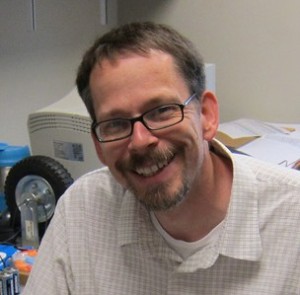
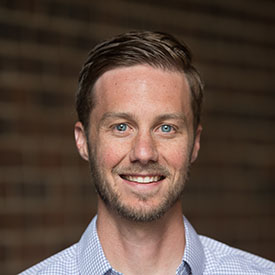
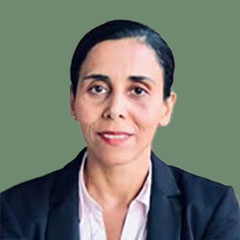
Professor Dian Tjondronegoro is a leading academic at Griffith University's Department of Management within the Griffith Business School. He holds roles such as Acting Head of Department and Deputy Head (Research), and is affiliated with the Centre for Work, Organisation and Wellbeing, Griffith Asia Institute, and the Griffith Inclusive Future Beacon. His research focuses on AI ethics, eHealth systems, and digital governance, with over $9M in grants from bodies like the ARC and NHMRC. He has published 145+ peer-reviewed papers and leads initiatives like the 'Governing in the Digital Age' program. A Fellow of the Australian Computer Society and Senior Member of IEEE/ACM, he has won the Gold Disrupters Award (2019) and multiple teaching accolades. Education: PhD in Information Systems (Deakin University, 2005), BIS (QUT, 2001). Research Interests: AI, machine learning, healthcare innovation, responsible AI, workplace design, and digital economy strategies. His articles emphasize AI applications in healthcare monitoring, workplace productivity, and ethical surveillance. Recent work explores post-COVID workplace trends and AI-driven public health solutions. He advises on government policy and innovation through roles like Gold Coast Health's Digital Innovation Advisory Committee. His teaching includes courses on digital strategy and innovation management.
Stefano CAMPOSTRINI is a Full Professor in the Department of Economics at Ca' Foscari University of Venice, specializing in Social Statistics (STAT-03/B). He serves as a Member of the technical-scientific Committee of the Ca' Foscari Challenge School and the Department of Economics' Committee. His research activities are supported by affiliations with the Research Institute for Social Innovation and the Research Institute for Innovation Management. Professor CAMPOSTRINI's research spans the intersection of statistical methodology, public health, and social policy. His work demonstrates expertise in advanced statistical techniques including Bayesian modeling, spatial analysis, and complex survey methodology. His primary focus areas include healthcare systems analysis, social innovation, public administration, and the economic aspects of health policy. He frequently addresses issues related to comorbidity patterns, healthcare service accessibility, and the application of artificial intelligence in healthcare settings. His publication record from 2021-2025 reveals significant trends in healthcare innovation, with particular emphasis on virtual hospital systems, AI applications in medicine, sustainable healthcare practices, and the statistical analysis of social services like early childhood education. His methodological contributions include novel approaches to analyzing regional health disparities and developing web-based tools for disease prevalence estimation. His research often employs expert consensus methods like Delphi techniques to address complex healthcare organizational challenges. Professor CAMPOSTRINI maintains active involvement in research initiatives through the Research Institute for Social Innovation and the Research Institute for Innovation Management. His work bridges advanced statistical methodology with practical applications in healthcare policy and social service delivery, making significant contributions to evidence-based decision making in public health and social policy domains across Italy and European contexts.
Dr. Tim Oates is a Professor in the Department of Computer Science and Electrical Engineering at the University of Maryland, Baltimore County . His research spans machine learning, artificial intelligence, and brain-machine interfaces, with a focus on weakly supervised methods, human-in-the-loop reinforcement learning, and grounded policy development for robotics. Ph.D., Computer Science, University of Massachusetts, Amherst, 2000 M.S., Computer Science, University of Massachusetts, Amherst, 1997 B.S., Computer Science and Electrical Engineering, 1989 Current research threads include: Developing non-invasive brain injury severity assessment via medical time series Modeling human brain development through computational frameworks Designing algorithms for autonomous robotic learning Recent publications highlight AI security mechanisms (backdoor detection via tensor decomposition, matrix factorization) Medical applications (3D artery reconstruction, skin lesion diagnosis, EEG denoising) Neuro-symbolic integration (holographic representations, language-guided reinforcement learning) Mathematical reasoning (schema-based problem solving, subitizing algorithms) Contact: oates@cs.umbc.edu | Office: 336 Information Technology and Engineering (ITE) Building
Professor Zoheir Sabeur is Professor of Data Science and Artificial Intelligence at Bournemouth University (2019–present) and Head of the Processes and Behaviour Understanding (PRO_BU) Research Group. He concurrently serves as Visiting Professor of Data Science at Colorado School of Mines (2017–present) and held the position of Science Director at the IT Innovation Centre, University of Southampton (2009–2019). Over three decades he has led more than 30 large-scale projects as Principal Investigator, securing over £12 million of funding from the European Commission, UKRI, DSTL, NERC, EPSRC and industry. Education PhD in Theoretical Physics, University of Glasgow (1990) MSc in Theoretical Physics, University of Glasgow (1986) BSc First-Class Honours in Physics and Applied Mathematics, Université d'Oran (1984) Advanced Leadership Programme, Ashridge Business School (2011) Research Interests Professor Sabeur’s research focuses on the fundamental theory and application of data science and artificial intelligence to understand complex human, natural and industrial processes and behaviours. His work spans multi-modal sensing, big-data analytics and machine-learning algorithms that extract actionable knowledge from large heterogeneous datasets. Application domains include: Healthcare: AI-driven diagnostics and prognostics for chronic diseases such as COPD, asthma and cancers through omics and phenotypic data integration. Environmental & Climate: Earth-observation analytics for wildlife migration and climate-change impact assessment using satellite data and global grid systems. Maritime & Cyber-Physical Security: Real-time risk assessment for shipping in extreme environments, smart-city safety and critical-infrastructure protection using computer vision and sensor fusion. Recent research has produced novel AI classifiers that analyse lung-auscultation audio signals to grade COPD severity, as well as digital-twin frameworks for detecting malicious behaviour in urban spaces. Scientific Awards & Recognition Fellow of the British Computer Society (FBCS) Fellow of the Institute of Marine Engineering, Science & Technology (FIMarEST) Chartered Engineer (CEng) and Chartered Physicist (CPhys) Multiple ORS Awards (1987, 1988, 1989) Grants & Doctoral Supervision Professor Sabeur has secured and led more than 40 funded projects since 1996, including recent grants such as INSIGHT (NIHR, 2024) and S4AllCities (H2020, 2020). He currently supervises three ongoing PhD students at Bournemouth University and has successfully graduated three others, covering topics from computational hydrodynamics to AI-based respiratory-disease analytics. He welcomes enquiries from prospective postgraduate researchers interested in data science, AI and interdisciplinary applications under schemes such as UKRI and Horizon Europe.
Dimitra Dritsa is a Postdoctoral Researcher in the Department of Industrial Design at Eindhoven University of Technology (TU/e), specializing in human-computer interaction applied to urban health, physiological data analysis, and remote patient monitoring systems. Her work bridges design research with healthcare innovation, particularly in cancer surgery prehabilitation and wellbeing technologies. Her academic foundation includes a Master's degree from Delft University of Technology and a PhD from the University of Technology Sydney, where her dissertation focused on Spatiotemporal dynamics of urban health: Physiological data driven strategies for enhancing urban health and wellbeing . Dr. Dritsa's research centers on leveraging physiological data and AI to improve urban health outcomes and clinical interventions. She investigates user-centered design for telemonitoring systems, uncertainty-aware data visualization in design processes, and experience sampling methods for office wellbeing. Her work emphasizes contextual data integration and ethical AI applications in healthcare settings. Recent publications (2023-2025) reveal a clear trajectory toward human-AI collaboration in health contexts, with significant contributions to remote patient monitoring frameworks and data-driven design methodologies. Key themes include physiological response tracking in urban environments, AI-guided wellbeing interventions, and multidimensional data exploration tools for design researchers. She actively contributes to the STRAP project ( Self Tracking for Prevention and diagnosis of heart disease , 2020-2025) as a core project member, focusing on big data solutions and AI-driven healthcare innovations. Her supervisory role includes guidance for two students as indicated in institutional records, and she teaches the course Making sense of sensors since 2016.
Kay C. Wiese is a Professor and Software Systems Chair at the School of Computing Science, Simon Fraser University. His research focuses on computational intelligence and bioinformatics, particularly RNA secondary structure prediction and visualization. He leads the Bioinformatics Research Lab and has contributed to RNA design and gene finding. Wiese holds a PhD in Computer Science from the University of Regina (1999) and degrees in Computer Science and Mathematics from the Universität des Saarlandes (Germany). He has extensive editorial roles, including Associate Editor for the IEEE/ACM Transactions on Computational Biology and Bioinformatics, and has organized major conferences like the IEEE Symposium on Computational Intelligence in Bioinformatics. His teaching interests include Bioinformatics, Computational Biology, and Discrete Mathematics. Wiese has supervised numerous graduate students, including Boris Shabash, Wenbo Jiang, and Andrew Hendriks. His research group developed tools like jViz.RNA for RNA visualization and SARNA-Predict for structure prediction. His work bridges computational methods with biological applications, emphasizing algorithmic innovation and practical software solutions.
Tom Spencer is an Emeritus Professor of Coastal Dynamics and Director of the Cambridge Coastal Research Unit at the University of Cambridge's Department of Geography. He holds the title of Professorial Fellow at Magdalene College, where he previously served as Dean and Tutor for Graduate Students. His academic career spans over four decades, including roles as Senior Lecturer, Reader, and full Professor at Cambridge since 2016. Affiliations: Department of Geography, Cambridge Coastal Research Unit, Magdalene College Research Groups: Biogeography and Biogeomorphology, Geographies of Knowledge Spencer's research focuses on coastal dynamics, integrating geomorphology, ecology, and environmental science. Key areas include coral reef ecosystems, mangroves, sediment dynamics, and climate change impacts. His work emphasizes coastal resilience to rising sea levels and extreme events like storm surges. His career includes supervising MPhil students but has ceased taking new PhD candidates. Notable contributions include the Atlas of the Amirantes and collaborations on global coastal wetland models (DIVA). Publications span over 40 years, addressing topics like salt marsh stability, tidal dynamics, and energy-climate scenarios for India. His work bridges field observations, modeling, and policy implications for coastal management.
Professor Michael Thompson is a tenured faculty member in the Department of Materials Science and Engineering at Cornell University's College of Engineering. He holds the Dwight C. Baum Professorship in Engineering and specializes in advanced materials processing, particularly semiconductor materials under pulsed laser exposure. His research focuses on transient thermal processing (nanosecond to sub-second timescales) for material property modification and characterization, with applications in semiconductors, EUV lithography, and photonic materials. Thompson has authored over 120 papers and 20 patents, emphasizing industrial challenges like front-end junction formation and flexible electronics. Education: B.S. in Physics (CalTech, 1979), M.S./Ph.D. in Physics (Cornell, 1982/1984). He has received prestigious awards including the North American Award for Technical Contribution to the Semiconductor Industry (2009), multiple Cornell Excellence in Teaching Awards, and the Stephen H. Weiss Presidential Fellow designation (2021). His teaching focuses on thermodynamics and electronic properties, with a commitment to making abstract concepts accessible through real-world examples. Service: Leads curriculum development, ABET accreditation, and industry outreach. His lab develops novel methods for autonomous materials discovery using AI-driven approaches. Current projects include laser spike annealing for semiconductor doping and high-throughput synthesis of metastable materials.
Sanmi Koyejo is an Assistant Professor of Computer Science at Stanford University and holds an adjunct position as Associate Professor at the University of Illinois at Urbana-Champaign. He leads the Stanford Trustworthy AI Research (STAIR) group, focusing on fairness, robustness, and healthcare applications in machine learning. His work bridges theoretical foundations with practical systems, emphasizing ethical AI and clinical informatics. Affiliations: SAIL, HAI, CRFM, AIMI, AI Safety, and the Machine Learning Group. Research Interests: His expertise spans trustworthy AI, federated learning, and neuroimaging. He actively addresses challenges in algorithmic fairness, particularly in healthcare, where he collaborates with institutions like OSF Healthcare on projects like federated learning for clinical data. Key Contributions: Co-developed frameworks for unlearning in large language models, evaluated AI systems' societal impacts, and advanced benchmarks for medical applications. His work has been featured in venues like NeurIPS, ICML, and AAAI. Awards: NSF CAREER Award, Alfred P. Sloan Fellowship, and Terman Faculty Fellowship. Grants & Teams: Leads NSF-funded projects on domain adaptation and fairness in breast cancer risk scoring. Collaborates with interdisciplinary teams on NIH's MIDRC and NSF's AIFARMS initiative for agricultural sustainability. Labs/Teams: STAIR lab drives interdisciplinary research in ethical AI, with emphasis on real-world deployment and policy implications.
Andreawan Honora is a Lecturer in Marketing at the UWA Business School, University of Western Australia, since February 2024, previously serving as a Postdoctoral Research Associate at Ivey Business School, Western University, Canada. His academic qualifications include: Ph.D. in Business Administration (Marketing) from National Dong Hwa University (awarded January 31, 2022) Master of Management (Marketing) (awarded July 31, 2017) Bachelor of Science in Management (Marketing) (awarded February 1, 2016) Honora's research examines how digital technologies shape consumer and employee behavior, focusing on service management, consumer-brand relationships, and psychological impacts. His work explores business applications of technology and contributions to social goals like health and well-being through experimental methodologies. His 2024-2025 publications reveal interdisciplinary trends spanning healthcare informatics (telemedicine, electronic health records), AI-driven workplace dynamics, and social media psychology. Key themes include technology-induced behavioral changes, service recovery mechanisms, and health-focused digital interventions, bridging marketing, information systems, and public health. Honora serves as co-applicant on a 2025 SSHRC Insight Development Grant (CAD 58,165) from Canada's Social Sciences and Humanities Research Council. No student advising information is available.
Judith Good is a Professor affiliated with the Informatics Institute at the Faculty of Science of the University of Amsterdam. Her office is located at Science Park 904, room L6.12. Contact information includes email j.a.good@uva.nl and phone +31 (0)20 525 3035. Research interests are inferred from her department's focus to include advanced computational methods, data analysis, and interdisciplinary informatics applications. Specific research topics are not explicitly listed in the provided text. Publications and ancillary activities are noted in her profile but no detailed descriptions are available in the current text block.
Jisun An is an Assistant Professor at the Luddy School of Informatics, Computing, and Engineering, Indiana University Bloomington (IUB), leading the Social Data and AI (SODA) Lab. Previously, she held positions at Singapore Management University (SMU) and the Qatar Computing Research Institute (QCRI). She earned a Ph.D. in Computer Science from the University of Cambridge (2015), supported by EPSRC, and received the Google European Scholarship. Her research focuses on computational social science, leveraging NLP and machine learning to analyze social media, political communication, health informatics, and journalism. Education: Ph.D. in Computer Science (University of Cambridge, 2015). Notable roles include Associate Editor of EPJ Data Science and PC member for conferences like ICWSM, ACL, and AAAI. She co-organized the News and Public Opinion (NECO) workshop (2016-2020). Teaching includes courses on Performance Analytics and Computational Social Science. Research highlights include studies on media attention patterns, user engagement, hate speech detection, and public health campaigns. Her work bridges interdisciplinary gaps, combining theoretical foundations with practical computational methods. Recent projects explore discursive power in media systems and predictive modeling of collective behavior. Awards: Google European Scholarship Key Projects: Discursive Power in Media, Precision Public Health Campaigns, and Algorithmic Bias Analysis Labs/Teams: SODA Lab at IU, previously contributed to QCRI's research initiatives
Daniel Loveless is Associate Professor of Intelligent Systems Engineering and Director of the IU Center for Reliable and Trusted Electronics (CREATE) at Indiana University. He holds B.S. (Georgia Tech), M.S./Ph.D. (Vanderbilt) degrees in Electrical Engineering. Loveless's research focuses on radiation effects/reliability in electronic/photonic integrated circuits, radiation-hardened digital/mixed-signal design, embedded systems, FPGAs, microprocessors, SoCs, and CubeSats. With over 120 peer-reviewed publications, his work advances radiation-tolerant electronics for space/defense applications. Leadership and Honors: Director, IU Center for Reliable and Trusted Electronics Senior Member, IEEE Associate Editor, IEEE Transactions on Nuclear Science 2019 NPSS Radiation Effects Early Achievement Award Recipient of five best conference paper awards
Jiangwen Sun is an Assistant Professor in the Department of Computer Science at Old Dominion University (ODU), within the College of Science. He directs the ODU Computational Systems Medicine Lab and focuses on machine learning approaches for analyzing multi-dimensional biological data (phenome, genome, transcriptome, etc.) to advance precision medicine and its automation. His research is supported by ODU and federal agencies like NIH and NSF. Education: Ph.D., University of Connecticut M.E., Nanjing University, China B.M., Secondary Military Medical University, China Research Interests: Machine learning/data mining for medicine, health, drug discovery, and bioinformatics Multi-view bi-clustering and integrative analysis of genomic/phenotypic data Phenotype refinement and genetic association studies for complex diseases Applications in addiction medicine, cardiovascular biology, and bovine development Publications: Over 40 peer-reviewed articles in top venues like NIPS, ICML, Bioinformatics, and BMC Genomics. Recent work focuses on cryo-EM protein structure analysis, single-cell multiomics, and epigenetic modeling. Awards/Grants: NIH/NSF funding pending; previously supported by UConn's Health Informatics Lab and collaborations with University of Pennsylvania. Teaching: Courses include Machine Learning (CS722/822), Data Structures (CS361), and Deep Learning in Medicine (CS795/895). Labs/Teams: Leads the ODU Computational Systems Medicine Lab and collaborates with UConn Health Informatics Lab, Penn Medicine, and others.
Ajita Rattani is an Assistant Professor in the Department of Computer Science and Engineering at the University of North Texas, affiliated with Discovery Park. Her research focuses on biometrics, AI fairness, deepfake detection, and machine learning applications in health and security. She holds a Ph.D. in Computer Science and Engineering, with expertise in facial recognition, ocular biometrics, and multimodal authentication systems. Research Interests: Her work addresses algorithmic fairness in facial attribute classification, robustness of biometric systems against adversarial attacks, and developing lightweight models for on-device authentication. She also explores applications of machine learning in health informatics, such as BMI prediction from facial images and analyzing social determinants of health. Publications Trends: Recent work emphasizes bias mitigation in AI systems (e.g., gender/racial fairness), deepfake detection through fusion of audio-visual cues, and advancing ocular biometric recognition under challenging conditions. Notable contributions include frameworks like CodeIT for data-efficient deepfake detection and PatchBMI-Net for lightweight BMI prediction. Advising & Grants: Leads research projects funded by NSF SaTC grants (e.g., probing fairness in ocular biometrics). Active in organizing competitions like VISOB 2.0 for mobile ocular biometrics evaluation. Her lab develops practical solutions for real-world challenges in biometrics and AI ethics. Labs/Teams: Involved in interdisciplinary teams addressing transdisciplinary collaboration challenges and applying AI to disaster detection (wildfires, droughts) using satellite and sensor data fusion.