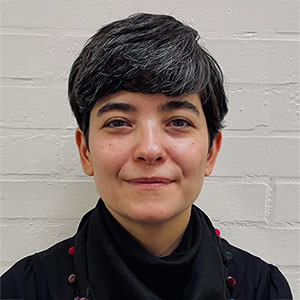
Norma Dawson is a Professor at Queen's University Belfast's School of Law. She holds honorary titles including Honorary LLD from the University of Edinburgh (2023), and has served as an Honorary Professor at the University of Edinburgh (2018–present) and Visiting Full Professor at University College Dublin (2017–2020). Her research focuses on intellectual property law (especially trademarks), cultural property law, legal history, land law, and business tenancies. Her academic career includes roles such as Dean of the Faculty of Law (1994–1997), British Academy Senior Research Fellow (2005–2006), and President of the Irish Legal History Society (2009–2012). She was awarded a CBE in 2017 and the Irish Legal History Society Gold Medal in 2022. Recent publications include Law and Constitutional Change (2025), a study on the Ulster Plantation legal case (2025), and analyses of trademark law and historical land legislation. She actively contributes to legal education through seminars and serves as an external examiner for QMUL/UCL's LLM programs.
Subra Suresh is a Professor at Large at the School of Engineering, Brown University. His email is Subra_Suresh@brown.edu . He focuses on interdisciplinary research at the intersection of technology and society, emphasizing algorithmic fairness, AI ethics, and computational law. His research interests include addressing biases in machine learning systems, ensuring equitable access to technology, and developing frameworks for ethical AI governance. He explores topics such as data privacy, social network disparities, and legal implications of emerging technologies. Recent publications highlight trends in auditing algorithms for fairness, mitigating bias in decision-making systems, and designing policies for responsible AI deployment. His work bridges technical innovation with societal impact, advocating for transparent and accountable technologies. No scientific awards or grants are explicitly listed in the provided materials. He has not disclosed advisee information, and there is no mention of lab affiliations or teams in the text.
Ezgi Tascioglu is a Senior Lecturer and Postgraduate Research Law Lead at Keele University's School of Law. She joined in 2019 with a focus on socio-legal studies, intellectual disability, and legal capacity regulation. Her roles include supervising postgraduate research and directing the LLM in Law and Society (2019–2024). She holds a PhD from the University of Milan and prior experience as a Research Fellow at Birmingham Law School. Educational background: BA in Cultural Studies (Sabancı University, Turkey), MA in Sociology of Law (Oñati Institute, Basque Country), PhD in Law and Society (University of Milan, Italy). Awards include an ESRC New Investigator Grant (2022–2025) for her project on legal capacity in Turkey and membership in the ESRC Peer Review College. She is a Fellow of the Higher Education Academy. Research focuses on intersectional legal challenges faced by marginalized groups, including intellectually disabled individuals and transgender communities. Key themes include supported decision-making, disability rights implementation, and socio-legal critiques of carceral systems. Current grants explore guardianship practices in Turkey through an interdisciplinary lens. Teaching responsibilities include Disability Law modules and leadership in safeguarding law programs. Active in PhD supervision across socio-legal studies, gender studies, and disability law. Advises four ongoing doctoral projects with co-supervisors. Labs/Teams: Part of Keele Law School’s socio-legal research cluster and collaborates with international networks on disability justice and legal capacity initiatives.
Arielle Zibrak is a Professor of English and Gender and Women's Studies at the University of Wyoming’s College of Arts and Sciences. She directs the English Honors Program and founded the Bruce Richardson Lectures in the Humanities and the Dinner with Direction program. Her work bridges literary analysis and public engagement, focusing on 19th- and 20th-century American literature, feminist theory, and social reform movements. She has authored multiple books, including Avidly Reads Guilty Pleasures (2021) and Writing Against Reform (2023), and edited volumes like Edith Wharton's The Age of Innocence (2019). Zibrak’s research explores intersections of aesthetics, gender, and reform, with notable projects on the New Thought movement and historical trauma. She has been honored with the College of Arts and Sciences’ Extraordinary Merit in Teaching (2017) and Research (2021) awards. She also serves as secretary of The Edith Wharton Society and directs the Complete Works of Rebecca Harding Davis Online archive. Her teaching spans courses like Writing for the Public Humanities , 19th-Century American Literature , and African American Novel . Public-facing writing appears in The Los Angeles Review of Books and Lithub , showcasing her commitment to accessible scholarship.
Jason Smith is Associate Professor in Economics and Finance and Director of China Cooperative Academic Programs at Utah State University's Jon M. Huntsman School of Business. He holds a Ph.D. in Finance from Washington University in St. Louis and previously taught at the University of Kentucky. His research examines theoretical/empirical corporate finance, information economics, and financial markets, with recent work on bank bailouts and agricultural biotechnology licensing. Smith received the 2012 Jensen Prize for his work on cash flows and leverage adjustments. He teaches courses in corporate finance, financial economics, and risk management at undergraduate, MBA, and MSFE levels.
Hakeem Yusuf is Professor of Global Law at the University of Derby's College of Business, Law and Social Sciences. His research examines transitional justice mechanisms, post-colonial legal systems, and human rights frameworks in developing contexts. Through interdisciplinary approaches, he analyzes judicial accountability gaps and constitutional legacies in post-authoritarian states. Key research themes include colonial constitutionalism in British territories, truth-seeking commissions in Nigeria, and corporate accountability frameworks. His work contributes to critical legal studies and political theory while addressing practical governance challenges in Africa and the Middle East. Research explores how legal systems address historical injustices while balancing international obligations with local realities. Recent investigations analyze pandemic impacts on economic rights enforcement and pharmaceutical access in developing nations. He maintains active engagement through editorial roles and publications advancing discourse on decolonization methodologies and human rights protections globally.
Jon Cavicchi is a Professor of Legal Skills and Intellectual Property Librarian at the University of New Hampshire's Franklin Pierce School of Law. He serves as a Faculty Fellow at the Franklin Pierce Center for Intellectual Property, Faculty Advisor for IDEA Law Review, and Copyrights Permissions Officer for UNH Law academic journals. As the chief administrator of the Intellectual Property Library, he oversees its development and teaches courses like Mining Patent Information and Legal Research and Information Literacy. Education: Ph.D. (Honors) in Information Science/Studies, IIS University J.D., Franklin Pierce Law Center LL.M. in Intellectual Property, Franklin Pierce Law Center B.A. (Honors) in International/Global Studies, Stonehill College Research Interests: Cavicchi focuses on bridging the gap between raw data and actionable knowledge in intellectual property. His work emphasizes information literacy, patent informatics, and effective teaching strategies for legal professionals. He explores how advanced tools like AI and open web resources can enhance IP research while addressing challenges in copyright, trademark, and patent lifecycle management. His research also extends to evaluating IP programs and fostering interdisciplinary collaboration. Articles Trends: His publications span patent data analysis, legal research methodologies, and the ethical dimensions of IP practice. They highlight innovations in global IP systems, the role of technology in education, and navigating complex copyright laws in the digital age. His work often intersects with public health challenges, such as accelerating HIV vaccine innovation through patent mining. Scientific Awards: Top 10% of Authors on SSRN by all-time downloads (continuously 2018) Advising & Grants: Cavicchi secured a National Science Foundation grant to bring internet capacity to the law school and pioneered the first law school website. He advises student journals, mentors visiting scholars, and oversees programs like the Visiting Scholars Program. His grants and collaborations have enabled global patent landscape reports on diseases like Dengue Fever and Malaria, aligning with NGO goals in health and agriculture. Labs/Teams: Co-founder and Director of the International Technology Transfer Institute (ITTI), Cavicchi leads the Patent Landscape Clinic producing open-source reports for public interest challenges. He collaborates with NGOs on projects such as Telemedicine Technologies and Prosthetic Limb Innovations through this initiative. His work also includes managing the IP Mall website, a critical resource for IP professionals worldwide.
Dr. James P. Purdy is a Professor of English/Writing Studies and Director of the University Writing Center at Duquesne University, located in Pittsburgh, PA. He holds a Ph.D. in English/Writing Studies from the University of Illinois at Urbana-Champaign (2006), an M.A. (2001), and a B.A. in English from Penn State (2000). His research focuses on digital humanities, writing center theory, and the intersection of digital technologies with scholarly practices. He is particularly interested in intellectual property law, student research behaviors, and the evolving role of digital spaces in academia. Dr. Purdy has authored/co-authored multiple books, including The Effects of Intellectual Property Law in Writing Studies (2020) and Making Space: Writing Instruction, Infrastructure, and Multiliteracies (2017). He has also edited volumes such as The Future Scholar: Researching and Teaching the Frameworks for Writing and Information Literacy (2016). His work emphasizes ethical considerations in digital scholarship, design thinking in pedagogy, and fostering information literacy across disciplines. Awards: 2016 Presidential Award for Excellence in Teaching, 2019 John G. Rangos Prize, Ellen Nold Award (2011), and multiple NEH grants. Teaching: Courses include "Authorship and Ownership in Digital Writing" and "Writing for Digital Media," with a focus on integrating technology and ethical practices. Grants: Received over $15,000 in NEH and Presidential grants for research and scholarly projects. As Director of the Writing Center, Purdy oversees staff training and professional development, emphasizing best practices in peer tutoring. His presentations and workshops address topics like plagiarism detection, library partnerships, and teaching digital literacies. He actively contributes to national conferences such as the Conference on College Composition and Communication and Computers and Writing.
Peter Charlish is a Senior Lecturer at Sheffield Hallam University, serving as acting Deputy Head of the Department of Law, Criminology and Community Justice and Head of University Academic Workplanning. He leads the sports law module at undergraduate level and oversees academic workplanning across the Department. His roles include managing staff and developing courses such as the Graduate Diploma in Law and LLB Business Law degree. Education: BA (Hons), PGCE, MA (Law), MPhil, and Senior Fellow of the Higher Education Academy (SFHEA). Current roles also include Operations Manager for the Department and Academic Conduct Panel Chair. Research focuses on sports law, particularly legal regulation of doping and negligence in sports violence. Publications include analyses of anti-doping policies, high-profile doping cases (e.g., Lance Armstrong), and negligence frameworks in sports injury incidents. He contributes to the International Sports Law Review editorial board. Media engagement includes BBC Radio interviews on doping scandals and parliamentary consultations on volunteering legislation. His work has been cited in Hansard for contributions to the Private Members Promotion of Volunteering Bill and Childhood Review submissions.
Leonard J. Feldman, currently serving as a Distinguished Jurist in Residence at the University of Washington School of Law , is a prominent figure in appellate law and torts. Appointed to the Washington Court of Appeals in March 2023, he continues to teach courses such as torts and federal courts while maintaining an active role in legal education and pro bono initiatives. Education: BS in Psychology, University of Washington (1987, summa cum laude) JD, Harvard Law School (1991, magna cum laude) Feldman’s research and practice focus on appellate law , tort law , and legal writing . His work often intersects with civil rights , insurance law , and judicial decision-making . He has co-authored influential articles on discretionary review, oral argument strategies, and the application of the Americans with Disabilities Act in arrest scenarios. The trends in his 15 most recent publications reflect a deep engagement with appellate procedure , negligence claims , pro bono legal work , and effective legal communication . These works often address practical challenges in litigation, insurance coverage, and civil rights, with a recurring emphasis on judicial clarity and ethical advocacy. Scientific and professional accolades: Recognized as one of Washington's Top 10 Appellate Law Lawyers (2020) Certificate of Appreciation from the Ninth Circuit for Pro Bono Coordination Certificate of Appreciation from the Ninth Circuit for teaching appellate practice Washington State Bar Association Pro Bono Award (2006) Fellow of the American Academy of Appellate Lawyers Nominated for the Outstanding Faculty Award (2021, 2023, 2024) Feldman’s career spans nearly three decades of appellate litigation, including arguments before the U.S. Supreme Court in City and County of San Francisco v. Sheehan (2015) and County of Los Angeles v. Mendez (2017). He has served as a mentor and district coordinator for the Ninth Circuit Pro Bono Program and is a frequent speaker on appellate practice. His collaborative work with Judge Stephen Dwyer on legal writing and oral argument strategies underscores his commitment to legal education and procedural reform.
John B. Kirkwood is a Professor of Law and the William C. Oltman Professor of Teaching Excellence at Seattle University School of Law. His work, focusing on antitrust law and economics, has been cited by the U.S. Supreme Court, the Ninth Circuit, and the Washington State Supreme Court. He is a leading expert in the antitrust field, with significant contributions to legal and economic analysis. Education: A.B. from Yale University (1970), M.P.P. from Harvard University (1974), and J.D. from Harvard Law School (1974). Kirkwood’s research centers on antitrust law, administrative law, and economic regulation. His scholarship addresses critical issues such as market power, predatory pricing, buyer power, and the legal frameworks governing mergers and acquisitions. His writings have been downloaded over 6,000 times, reflecting their influence in academia and practice. A synthesis of his recent articles reveals a focus on modern antitrust challenges, including the regulation of digital markets, the impact of big tech on competition, and the evolution of legal standards for anticompetitive behavior. His work often bridges legal theory and practical enforcement, advocating for consumer protection over efficiency-driven approaches. Scientific Awards: Winner of the Jerry S. Cohen Award for top antitrust scholarship (2012) Four national awards for pathbreaking scholarship First recipient of Seattle University School of Law’s Faculty Award for Scholarship Elected to the American Law Institute Kirkwood has served as a consultant on antitrust cases, drafted amicus briefs for high-profile appeals, and testified before Congress and federal agencies. He was Co-Editor of Research in Law and Economics for eight years and held leadership roles in the Antitrust and Economic Regulation Section of the Association of American Law Schools.
Yair Tauman is a Leading Professor and Director of the Stony Brook Center for Game Theory at Stony Brook University, Department of Economics. His research focuses on game theory, industrial organization, and strategic economic behavior, with notable contributions to patent licensing models, market competition, and conflict resolution. Tauman has organized the annual Summer Game Theory Conference since 1990 and serves as an associate editor for major journals including Games and Economic Behavior and International Journal of Game Theory . His academic career spans over four decades, with publications addressing topics such as optimal patent licensing schemes, deterrence strategies in conflict scenarios, and welfare economics. Courses taught include graduate-level Game Theory and Industrial Organization, as well as undergraduate Microeconomics and Strategic Thinking. Tauman’s work bridges theoretical frameworks with real-world applications in innovation economics and regulatory policy. Recent research explores strategic interactions in nuclear deterrence, the role of intelligence in conflict, and licensing dynamics in oligopolistic markets. His contributions to game theory have influenced both academic discourse and policy-making in areas like patent law and antitrust regulation.
Dr. Mirko HIRSCHMANN is a Postdoctoral researcher at the University of Luxembourg's Interdisciplinary Centre for Security, Reliability and Trust (SnT) , specializing in the Entrepreneurship, Innovation, and New Technology department. His research focuses on the intersection of entrepreneurship with sustainability, impact investing, and socio-economic challenges such as climate change, conflict zones, and economic inequality. He explores themes like B Corp certification, social enterprise financing, and policy-driven entrepreneurial behavior. His work spans environmental entrepreneurship (e.g., biodiversity loss impacts), conflict-driven economic adaptation, and institutional roles of family firms. Recent studies analyze how climate policies and conflict environments shape entrepreneurial strategies, alongside the role of trademarks in social innovation measurement. He has published widely on topics including impact investor vs. VC performance and social incubator selection criteria. Research trends show a strong emphasis on sustainability-driven entrepreneurship, with particular attention to certification systems (e.g., B Corp) and their signaling effects in finance markets. He also investigates how social enterprises balance market and social goals through IP strategies and funding mechanisms. No scientific awards are listed, though his contributions to interdisciplinary research are notable. His work is part of SnT’s broader mission to address societal challenges through innovative solutions. He collaborates on projects analyzing entrepreneurial resilience in crises and policy frameworks for equitable economic development.
Gary Hall is a Professor of Media and Performing Arts and Executive Director of the Centre for Postdigital Cultures at Coventry University. His research explores digital culture, radical publishing, and institutional critique, emphasizing collaborative, non-profit models and hyper-political approaches to media theory. He co-founded Open Humanities Press (OHP) and led the COPIM project, advocating for community-led open access infrastructures. Key projects include the COPIM initiative (2019–2023), which developed open access book publishing systems, and the Combinatorial Books series. His work interrogates capitalism, academia, and technology through publications like Pirate Philosophy (2016) and Masked Media (2025). He blogs at garyhall.info , blending theory with activism. Research interests span media philosophy, posthumanities, open access advocacy, and institutional reform. Collaborative projects include the Living Books About Life series and the Radical Open Access Collective. His experimental methods challenge traditional academic frameworks, prioritizing collective action and non-rivalrous models.
Dr. Eunsuk Hong is a Senior Lecturer in International Business and Management (China) at the School of Finance and Management, SOAS University of London. He has been with SOAS since 2011 after previously holding a lectureship in Strategy at Queen's University Belfast from 2006 to 2011. Dr. Hong received his academic qualifications from prestigious institutions: BA in Asian History from Korea University BBA in Business Administration from Korea University MSc in International Business from Korea University MSc in International Business for China from SOAS University of London PhD in Finance & Management from SOAS University of London Dr. Hong's research focuses on three interconnected areas. First, he examines location strategies of multinational enterprises, foreign direct investment, and cross-border M&As from a management perspective. Second, he investigates the East Asia region, particularly the contemporary Chinese political and economic environments and their implications for multinational enterprises operating in China. Third, he applies spatial econometrics to quantitatively analyze spatial dependence in economic, business, and political activities. His work bridges management, geography, and methodology to provide comprehensive insights into international business dynamics, with recent publications showing particular emphasis on emerging market firms' cross-border activities and technology acquisition strategies. Dr. Hong's scientific contributions have been recognized with numerous awards: Winner of the McGraw-Hill/Irwin Distinguished Paper Award for the Academy of International Business Mid-West Finalist of the International Management Division CEIBS Best Paper Award for the Academy of Management Finalist of the International Management Division HKUST Best Paper Award in Strategy for the Academy of Management Finalist for the 2020 Best Paper Award for International Business Review Nominee of the Carolyn Dexter Best International Paper Award for the Academy of Management Selected as one of the Best Papers for the Academy of Management (International Management Division and Entrepreneurship Division) Selected as one of the Best Papers for the Global Innovation and Knowledge Academy Dr. Hong has supervised several PhD students including Katherine Moe (researching entry modes of emerging market firms), Jingyuan Tuo (studying the influence of FDI on regional inequality in post-reform China), and Minhye Zoh (examining the (in)effectiveness of corporate disclosure in reducing corporate scandals). His research has been supported by various academic collaborations and institutional resources that have enabled extensive data collection and analysis across multiple countries, particularly focusing on China and East Asia. Dr. Hong maintains active connections with international business scholars worldwide and participates in major academic conferences where his work has consistently been recognized with best paper awards and nominations. His methodological expertise in spatial econometrics provides a distinctive analytical approach to international business research that complements traditional management and economic perspectives.