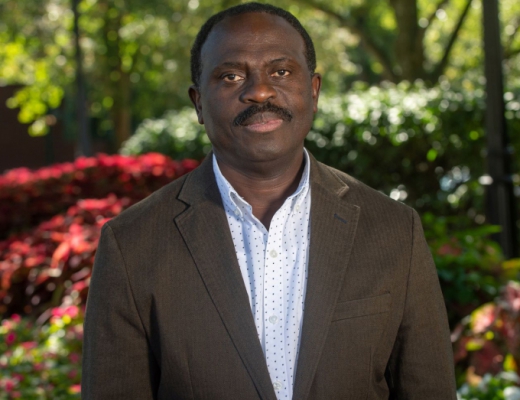
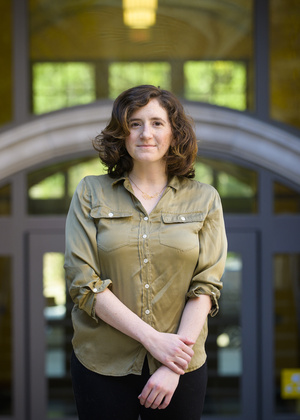
Teresa Scassa is a Full Professor in the Common Law Section of the University of Ottawa's Faculty of Law and holds the Canada Research Chair in Information Law and Policy. She is affiliated with the Centre for Law, Technology and Society and cross-appointed to the School of Information Studies. Dr. Scassa earned her LL.B. from McGill University and LL.M. and SJD from the University of Michigan. Her research focuses on law and technology intersections, including AI regulation, data governance, privacy law, and intellectual property. She has authored influential books like Artificial Intelligence and the Law in Canada and Canadian Trademark Law . Scassa advises Canadian government bodies, including the Advisory Council on Artificial Intelligence and Ontario’s Law Commission. She has contributed to privacy law debates through high-profile cases like Clearview AI litigation and public sector data governance challenges. Her work bridges legal frameworks with emerging technologies, emphasizing interdisciplinary approaches. Recent publications address facial recognition surveillance, data privacy enforcement, and ethical challenges in AI. Scassa’s academic leadership includes roles on data policy working groups and international collaborations, reflecting her role as a leading voice in information law policy.
Catherine Anne Brown is a Professor at the Faculty of Law, University of Calgary with extensive international experience, having held visiting professorships at Stanford University (as a Fulbright Fellow), University of Toronto, UCLA, McGeorge School of Law, and Whittier Law School. Her expertise spans taxation, international trade law, and estate planning across multiple jurisdictions. Her research focuses on the critical intersection of tax and trade agreements, particularly how non-discrimination principles operate within services trade frameworks. Current work examines tax treaty mechanisms for addressing discriminatory practices in cross-border commerce, building on her 2017 monograph "Tax Discrimination and Trade in Services". She actively explores evolving regulatory challenges in digital services taxation and international compliance. Professor Brown's scholarship demonstrates consistent engagement with practical legal applications, bridging academic theory and professional practice through textbooks, treatises, and policy-oriented analyses. Her publications reveal progressive specialization in tax-trade interfaces while maintaining foundational contributions to estate planning education. Her distinguished career has been recognized through: Lifetime Achievement Award (Canadian Tax Foundation, 2017) Doug Sherbaniuk Award for Distinguished Writing (Canadian Tax Foundation, 2014) Award for Distinguished Service in Legal Scholarship (Law Society of Alberta/Canadian Bar Association, 2011) Widdifield Award for estate planning scholarship (2006, 2012) Induction into the International Academy of Estate and Trust Law (2012) As an educator, she directed the Business Clinical program until 2014, providing practical training in business law applications. She maintains active professional engagement through appointments to the NAFTA Chapter 19 roster (2018), STEP Canada's Public Policy Committee (2016), and the Canada Revenue Agency's Offshore Compliance Advisory Committee (2016), while serving on the Legal Education Society of Alberta's Board of Directors.
Eric Beeko is a Teaching Assistant Professor in the Department of Africana Studies at the University of Pittsburgh, affiliated with the Kenneth P. Dietrich School of Arts and Sciences. His teaching focuses on African studies, including courses like African Civilization, Liberation Movements, and Music in Africa. He holds a Ph.D. in Ethnomusicology from the University of Pittsburgh (2005), alongside advanced degrees from institutions in Ghana. His research explores African musical traditions, cultural practices, and performance aesthetics. Current projects include studies on Neo-Pentecostal/Charismatic church music in Ghana and the interplay between tradition and modernity. Future research plans involve multi-volume studies on African linguistic-cultural distribution and Black performance practices globally. Publications include analyses of Akan music rights, Ghanaian choral innovations, and African cultural heritage. He is developing works on Neo-Pentecostal worship aesthetics and the role of music in identity expression across the African diaspora. Advising and grants are not explicitly listed, but his scholarly activities emphasize collaborative research in ethnomusicology and cultural studies. He is based in Posvar Hall, Office #4152.
Professor Lionel Bently is the Emmanuel College Professor of Intellectual Property Law (Herchel Smith) at the University of Cambridge's Faculty of Law. He holds a B.A. in Law from Cambridge (1986) and has held academic positions at King's College London and visiting roles at institutions like Columbia University and the University of Toronto. His research focuses on intellectual property law, copyright, trademark law, and legal history, with particular emphasis on historical developments and European frameworks. He directs the Centre for Intellectual Property and Information Law (CIPIL) and co-founded the International Society for the History and Theory of Intellectual Property (ISHTIP). His publications include seminal works such as Intellectual Property Law (co-authored) and Between a Rock and a Hard Place: The Problems Facing Freelance Creators in the UK Media Market Place . He serves as Editor-in-Chief of the Cambridge Law Journal and contributes to multiple editorial boards, including the European Intellectual Property Review . Bently's work spans theoretical and practical dimensions of IP law, with a strong emphasis on historical analysis. His articles and book chapters address topics like the Berne Convention's签署, utility models in UK law, and pharmaceutical trademark limitations. He also leads initiatives such as the Primary Sources on Copyright project, digitizing historical IP materials. His professional network includes roles as Honorary Legal Advisor to the Royal Historical Society and advisory positions with UCL’s Institute of Brands and Innovation Law. Bently’s research has influenced both academic discourse and policy-making in intellectual property, reflecting his dual commitment to historical scholarship and contemporary legal challenges.
Abdi Aidid is an Assistant Professor at the University of Toronto Faculty of Law , teaching Civil Procedure and First Year: Tort Law . He is also a Visiting Associate Professor at Yale Law School (2024–2025) and a Faculty Affiliate at the Centre for Ethics and the Future of Law Lab, focusing on interdisciplinary research at the intersection of law and artificial intelligence. Education: LL.M, University of Toronto J.D., Yale Law School B.A., University of Toronto His research explores access to justice , legal ethics , and the transformative potential of artificial intelligence and machine learning in legal systems. He has published extensively on topics including AI regulation, procedural fairness, and the ethical challenges of integrating technology into legal practice. Recent publications span juridification , human-computer labor division , and generative AI in legal contexts, reflecting his focus on the convergence of law, ethics, and technology. His work has been recognized with awards such as the PROSE Award and a Donner Prize nomination. Scientific Awards: PROSE Award (Association of American Publishers) The Donner Prize (finalist)
Harry R. Lloyd is an Assistant Professor of Philosophy at the University of North Carolina at Chapel Hill, serving as Core Faculty for the PPE Program and Research Affiliate at the Center for AI Safety. He joined UNC Chapel Hill in Fall 2025 after completing his PhD at Yale University, where his dissertation examined moral uncertainty and bargaining under Shelly Kagan. His academic foundation includes a Ph.D. in Philosophy from Yale University (2020-2025) and a first-class B.A. in Philosophy, Politics, and Economics from the University of Oxford's Lady Margaret Hall (2016-2019), where he graduated top of his cohort and won multiple prizes including the Hicks/Webb Medley Prize and Uehiro Essay Prize. He attended Monmouth Comprehensive School (2009-2016), becoming the first comprehensive school student to win Trinity College Cambridge's Philosophy Essay Prize. Lloyd's research integrates Ethics, Political Philosophy, and Philosophy of AI through innovative frameworks for moral uncertainty and bargaining theory. His work bridges abstract theory with urgent real-world applications in AI alignment, distributive justice, and urban policy. He critically examines how normative disagreement should be resolved in AI systems, challenges conventional views on gentrification's moral dimensions, and develops resource-rational approaches to contractualism in animal ethics and intergenerational justice. His publication trajectory reveals a cohesive intellectual project: advancing bargaining-theoretic solutions to moral uncertainty while applying these frameworks across AI safety, political philosophy, and bioethics. Recent work in Philosophical Studies and Ergo establishes novel connections between moral uncertainty and collective decision-making, while his Journal of Urban Affairs article redefines gentrification's ethical analysis beyond displacement metrics. Awarded significant fellowships and prizes including the Rocky Mountain Ethics Congress Young Ethicist Prize (2024) and Global Priorities Institute Essay Prize (2021), his honors demonstrate impact across multiple domains: Institute for Humane Studies Junior Fellowship (2025) Forethought Foundation Global Priorities Fellowship (2022-2024) Rocky Mountain Ethics Congress Young Ethicist Prize (2024) Global Priorities Institute Early Career Conference Programme (2022) Research funding includes the Global Priorities Fellowship (2022-2024) and Institute for Humane Studies Junior Fellowship (2025). He actively shapes academic discourse through peer review for journals including Philosophical Studies and Journal of Applied Philosophy, and co-organizes the Yale Moral Philosophy Working Group. Though newly appointed, his teaching portfolio spans Environmental Ethics, PPE Capstone, and Philosophy of Technology, building on Yale teaching experience where he served as primary instructor for Philosophy and Technology. Lloyd maintains active research affiliations with the Center for AI Safety and previously contributed as a Resident Fellow at Yale's Information Society Project (2023-2025). His collaborative networks extend to the Global Priorities Institute at Oxford and Happier Lives Institute, driving interdisciplinary work at the AI-society interface through regular presentations at PPE Society meetings and ethics conferences.
Asia J. Biega is a tenure-track faculty member (W2) at the Max Planck Institute for Security and Privacy (MPI-SP), where she leads the interdisciplinary Responsible Computing group. She is also a principal investigator of the Cluster of Excellence CASA and the FINDHR consortium. Her work sits at the intersection of computing and society, focusing on responsible computing, data protection & governance, and digital well-being within data-driven and AI-based systems. Dr. Biega's research spans multiple disciplines including computer science, law, philosophy, and social sciences. Her work examines how principles of responsible computing can be computationally operationalized, with particular attention to data protection frameworks, privacy technology governance, and digital well-being. She actively collaborates across disciplinary boundaries to make technical contributions while supporting research in other fields. Her approach combines theoretical rigor with practical applications, often drawing from her industry experience at Microsoft and Google. Her publication record reveals a strong focus on the intersection of fairness, privacy, and transparency in information retrieval systems. She has pioneered work on data minimization compliance, fair ranking algorithms, and user perceptions of data collection practices. Her research consistently bridges technical and legal perspectives, particularly examining how GDPR principles can be computationally implemented. Recent work shows increasing attention to generative AI governance, algorithmic hiring systems, and the relational aspects of data in recommender systems. Dr. Biega has received several prestigious awards including the Council of Europe's Rodotà Award for innovative research in data protection, the SaTML Notable Reviewer Award, the GI-DBIS Dissertation Award of the German Informatics Society, and recognition as one of the '100 Brilliant Women in AI Ethics' in 2025. She has advised numerous PhD students and postdocs who have gone on to faculty positions at institutions including the University of Trieste, Penn State, and the University of Washington. Her research is funded by the Max Planck Society, Alexander von Humboldt Foundation, and the European Union (Horizon Europe FINDHR). She serves as General Co-Chair for ACM FAccT 2025 and has held leadership roles in multiple academic conferences.
Florian Jacques is a Researcher at the University of Namur, affiliated with the Faculty of Law and the Namur Digital Institute. He holds a Doctorate from the University of Namur (2019). His research focuses on digital law, data protection, AI ethics, and EU regulatory frameworks. Jacques has led and collaborated on projects like the eIDAS legal study and a training initiative on government-to-government information exchange. His work bridges legal challenges posed by emerging technologies, with notable contributions to AI policy, pandemic governance, and digital identity regulations. He has published extensively across journals and edited volumes, including analyses of the DSA/DMA frameworks and APD jurisprudence. Education: Doctorate in Law, University of Namur (2019) His research interests center on digital transformation’s legal implications, particularly in data governance, e-commerce, and public policy. Jacques has analyzed how pandemic responses exposed gaps in legislative frameworks and explored ethical dimensions of AI applications like ChatGPT. His publications reflect a cross-disciplinary approach to modern legal challenges in digital spaces. Notable projects include a 2025 study on eIDAS modernization and a training program on international data exchange protocols. While no formal awards are listed, his active research output (24+ publications since 2019) underscores his academic engagement. He collaborates with institutions like the Centre de Recherche Information, Droit et Société (CRIDS) and contributes to policy-oriented research teams.
Helen Rees is Professor of Ethnomusicology at UCLA and Director of the World Music Center, specializing in Chinese musical traditions with emphasis on southwest China's ethnic minorities, ritual practices, and intellectual property frameworks within intangible cultural heritage policies. Her academic foundation includes: B.A. in Chinese, Oxford University, 1987 M.A. in Chinese, Oxford University, 1991 Ph.D. in Music, University of Pittsburgh, 1994 Diploma in flute teaching, Royal College of Music, London Diploma in baroque flute performance, Trinity College, London Diploma in recorder teaching and performance, Trinity College, London Rees's research integrates fieldwork from southwest China and Shanghai to examine tourism's impact on musical traditions, organology (instrument studies), and transnational transmission of Asian musics. Recent scholarship critically engages East Asia's intangible cultural heritage policies and material culture frameworks, reflecting deep interdisciplinary connections between musicology, anthropology, and legal studies. Her publication trajectory reveals consistent focus on Naxi musical traditions and evolving methodological approaches—from historical analysis in Echoes of History (2000) to contemporary multimedia projects like the award-winning documentary Playing the Flute in Shanghai (2021) and the cross-cultural edited volume Instrumental Lives (2024), demonstrating expanding scope from regional studies to pan-Asian material culture networks. Through the World Music Center, Rees bridges academic research and public engagement by facilitating international cultural exchanges at venues including the Smithsonian Folklife Festival, while maintaining active performance practice in Chinese flutes and recorder as integral to her scholarly methodology.
Wolfgang Forster is a Professor of Civil Law, Comparative Legal History and Legal Philosophy at the University of Tübingen, where he has been teaching since 2011. He served as Dean of the Faculty of Law from October 2020 to September 2022. Prior to his appointment at Tübingen, he was Professor of Civil Law and Legal Philosophy at the University of Giessen from 2007 to 2011. He completed his habilitation at LMU Munich in 2005 with a thesis on insolvency law history and earned his doctorate in 2000 with research on Karl Christian Friedrich Krause's legal philosophy. Forster studied law and philosophy at the Ludwig Maximilian University of Munich from 1987 to 1992, supported by the German Academic Scholarship Foundation and the Bavarian Scholarship for Gifted Students. He passed his first state examination in law in 1992 and his second in 1995. Between 1995 and 2000, he served as a research assistant at KU Eichstätt/Ingolstadt before becoming a research assistant at FAU Erlangen from 2000 to 2003 and at LMU Munich from 2003 to 2007. His research focuses on Civil Law, particularly the general part of the law of obligations, contract law, and family law; German and Spanish legal history, especially regarding insolvency law; History of Canon Law; and Legal philosophy and history of legal philosophy, with special emphasis on Karl Christian Friedrich Krause's legal philosophy. His work bridges historical legal scholarship with contemporary legal theory, examining how historical legal concepts inform modern jurisprudence. Forster's approach combines meticulous historical research with philosophical analysis, revealing continuities and transformations in legal thought across centuries. His publications demonstrate a consistent focus on the intersection of legal history, philosophy, and practical application. Forster has published extensively on Krausist legal philosophy, Spanish legal history, insolvency law development, and historical aspects of family law. His work shows particular strength in analyzing how legal concepts migrate across national boundaries and historical periods, with recurrent attention to German-Spanish legal connections. Hermann Conring Prize 2010 (for his habilitation thesis) Max Weber Prize of the Bavarian Academy of Sciences (for his dissertation) Faculty Prize of the Faculty of Law of the LMU Munich (for his dissertation) Forster has received significant research funding, including publishing support from the German Research Foundation for his habilitation thesis. He co-organized the 40th German Legal Historians' Day in 2014 and was a co-applicant for the interdisciplinary research training group 'Ambiguity: Production and Reception' approved by the DFG in 2013. He has also served as a visiting professor at the University of Wisconsin Law School in Madison, USA. His work demonstrates strong institutional support and recognition within the German and international legal academic community.
Raymond Ku is the John Homer Kapp Professor of Law at Case Western Reserve University School of Law. He has served as Associate Dean for Academic Affairs and Co-Director of the Center for Law, Technology and the Art. His work focuses on Constitutional Law, Cyberlaw, Privacy, and Copyright, with an emphasis on how technology and evolving societal norms intersect with individual liberties. Education Juris Doctor (J.D.), New York University (1995) Bachelor of Arts (A.B.), Brown University (1992) Professor Ku’s research explores the tensions between free speech and copyright, the implications of digital technology on privacy, and the constitutional boundaries of surveillance. His publications span topics like peer-to-peer file sharing, reproductive rights, and data privacy, reflecting a commitment to addressing contemporary legal challenges through interdisciplinary lenses. His scholarship appears in prestigious law reviews, including Berkeley, Chicago, and Vanderbilt. He authored the first casebook on cyberspace law. Awards include the 2009 Distinguished Teacher Award and being voted Professor of the Year by the 2009 graduating class. Raymond Ku clerked for Judge Timothy K. Lewis and practiced constitutional, intellectual property, and antitrust law before transitioning to academia. He has taught at multiple institutions, contributing to legal education and research related to technology and civil liberties.
Abigail Jacobs is an Assistant Professor at the University of Michigan , jointly appointed in the School of Information and the College of Literature, Science, and the Arts . She is also affiliated with the Center for Ethics, Society, and Computing (ESC) and the Michigan Institute for Data Science (MIDAS) . Education: PhD in Computer Science, University of Colorado Boulder (2015-2019) BA in Mathematical Methods in the Social Sciences and Mathematics, Northwestern University (2011-2015) Research Interests: Dr. Jacobs examines measurement and validity in machine learning , focusing on hidden assumptions in AI systems, governance structures in sociotechnical systems, and inequality in algorithmic design. Her work bridges AI, data science, and social science methodologies, emphasizing interdisciplinary collaboration. Recent Publications (2024-2025) explore generative AI evaluation, algorithmic transparency in government (e.g., US Census Bureau), motion capture data ethics, and sociotechnical frameworks for AI governance. Earlier works (2023) address fairness in ranking systems and racial categorization in algorithmic bias studies. Scientific Awards: Microsoft Research AI & Society Fellowship (2024) NSF Graduate Research Fellowship (during PhD) Advising & Grants: She co-advises Ph.D. students Amina Abdu and Meera Desai . Her research includes a Notre Dame-IBM Tech Ethics Lab grant on AI audits and collaborations with institutions like UC Berkeley, Microsoft Research, and the National Academies .
Raymond Boyle is a Professor of Communications (Theatre, Film & Television Studies) at the University of Glasgow, where he directs the Centre for Cultural Policy Research (CCPR). He holds a BA in Media Studies and History from the University of Ulster and an MA in Communications from Dublin City University. Previously, he taught at Glasgow Caledonian University and Stirling University before joining CCPR in 2007. His research focuses on media policy, cultural policy, and sports media, with particular attention to digital media's impact on television, sports journalism, and cultural intermediaries. Notable projects include studies of the UK Film Council, the Commonwealth Games 2014, and UEFA's Football Management programs. He has authored/co-authored books such as The Talent Industry: Television, Cultural Intermediaries and New Digital Pathways (2018) and edited volumes like Changing Sports Journalism Practice in the Age of Digital Media (2019). Boyle serves on the editorial boards of Media, Culture and Society and collaborates with institutions like UEFA. His work bridges academic research with consultancy, addressing media rights, sport governance, and public policy. Grants include AHRC-funded projects on UK film policy transitions and copyright issues in European football media rights. Teaching includes the MSc Media Management program. He has delivered keynote addresses on media digitization, sport and identity, and participated in public discussions on topics like FC Barcelona's cultural impact and Scottish media engagement.
Timo Minssen is Professor of Law at the University of Copenhagen (UCPH) and the Founding Director of UCPH's Center for Advanced Studies in Bioscience Innovation Law (CeBIL). He also holds affiliations as an LML Research Affiliate at the University of Cambridge and an Inter-CeBIL Research Affiliate at Harvard Law School's Petrie-Flom Centre. With extensive expertise in Intellectual Property, Competition, and Regulatory Law, Minssen focuses on the legal aspects of emerging health and life science technologies, including genome editing, big data, artificial intelligence, and quantum technology. His educational background includes a German law degree (Staatsexamen) from Georg-August-University in Göttingen, and Swedish biotech & IPR related LL.M., LL.Lic., and LL.D. degrees from Lund University and Uppsala University. His PhD thesis on the patentability of biopharmaceutical technology in the US & Europe received the prestigious Swedish King Oscar award. 2024: TUM Global Visiting Professor, Technical University of Munich (Germany) 2016: Visiting Research Fellow, University of Cambridge (UK) 2014: Visiting Research Fellow, University of Oxford (UK) 2013-14: Visiting Scholar, Harvard Law School (US) 2012: LL.D. - Doctor of Laws (Swedish "juris doktor"), EU/US patent law, Lund University, Sweden Minssen's research spans AI & Big Data in Health & Life Sciences, Sustainable and responsible innovation & tech transfer, Pharmaceutical-, Life Science- & Biotech Law, Comparative European & US Patent Law, Intellectual Property Law & Open Innovation, and EU Competition- & US Antitrust Law. His work addresses legal issues throughout the lifecycle of health and life science products and processes, from R&D regulation to technology transfer and commercialization. His extensive publication record includes 7 books and over 200 articles and book chapters published in leading journals such as Science, Nature Biotechnology, JAMA, and Harvard Business Review. His research has been featured in The Economist, Financial Times, and other major media outlets. Minssen's recent work shows a strong focus on AI regulation, quantum technology law, and data governance in health contexts, reflecting the evolving landscape of technology and law. Scientific Awards and Recognition King Oscar award for best Jur. Dr. thesis (2014) Jorcks Fonds Forsknings Pris (Jorck's Foundation Research Prize) (2017) Awapatent Research Prize (2009) Max Planck Research Scholarship (2005) Visiting Scholar appointments at Harvard Law School, University of Oxford, and University of Cambridge Recipient of a Novo Nordisk Foundation Grant for a "Collaborative Research Program in Biomedical Innovation Law" (2018) As an advisor, Minssen serves international organizations including the WHO, WIPO, and EU Commission. He has supervised numerous PhD students in areas including pharmaceutical law, biotechnology patents, and antimicrobial resistance. His current research projects include the Novo Nordisk Foundation's International Collaborative Bioscience Innovation & Law (Inter-CeBIL) Programme (50 million DKK), CLASSICA: EU Horizon Project on AI-assisted surgery, and AI@Care: Law and Ethics and Algorithmic Bias in Healthcare. Minssen leads the Center for Advanced Studies in Bioscience Innovation Law (CeBIL), which serves as a hub for interdisciplinary research on the intersection of law, technology, and innovation in the health and life sciences. The center collaborates with institutions worldwide to address pressing legal challenges in emerging technologies.
Professor Dinusha Mendis is a leading academic in Intellectual Property and Innovation Law at Bournemouth University, where she serves as Director of the Centre for Intellectual Property Policy and Management (CIPPM). Her expertise bridges copyright law with emerging technologies like 3D printing, AI, blockchain, and the Metaverse, informed by extensive research and consultation with entities such as the European Parliament, UKIPO, and corporations like HP and Chanel. She holds a PhD from Edinburgh University and has authored seminal works on the intersection of technology and IP. BSc in Law from Aberdeen University LLM and PhD from Edinburgh University Called to the Bar of England and Wales Her research focuses on copyright challenges in immersive environments , AI-generated content regulation , and blockchain/NFTs . She led major studies for the European Commission and UKIPO , including the first peer-reviewed work on 3D printing and IP. Her 2019 co-edited book with Stanford and QUT scholars established foundational frameworks for additive manufacturing legal analysis. Recent publications highlight AI copyright disputes (2024 The Conversation ), NFT legal ambiguities (2022), and pandemic-era 3D printing (2020). Trends show increasing emphasis on decentralized IP systems and machine learning's impact on creative industries . Scientific Awards & Grants JSPS Visiting Professorship (2023) Daiwa Anglo-Japanese Foundation Grant (2024) EU Commission Research Funding (2020) AHRC Grant for 3D Jewellery Study (2017) As a PhD supervisor, she mentors researchers on AI copyright (Benjamin White), crypto-art (Bahar Dagli), and music creation law (Elizabeth Bailey). She contributes to global IP policy through the World Economic Forum's Metaverse Governance Team and EU IPR Enforcement Projects .